
Research Highlights
Oceanus Magazine
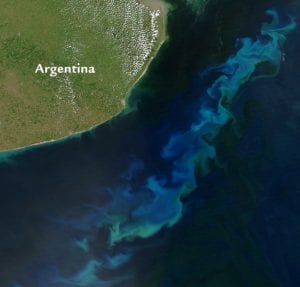
“Give me half a tanker of iron, and I’ll give you an ice age” may rank as the catchiest line ever uttered by a biogeochemist. The man responsible was the late John Martin, former director of the Moss Landing…
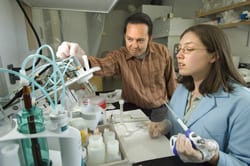
Your mother was right: You need your vitamins. And that turns out to be true for life in the oceans, too. B12—an essential vitamin for land-dwelling animals, including humans—also plays a vital and previously overlooked role in determining how microscopic…
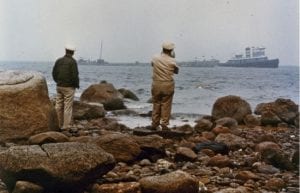
This is a story about persistence—of oil, and of people. It began in 1969 when the barge Florida ran aground off Cape Cod, spilling 189,000 gallons of fuel. But it began for me in 2000, when Aubrey Hounshell kept calling…
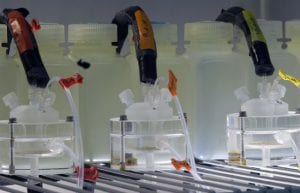
Climate shifts are a repeating feature in Earth’s history, but humans have added so much greenhouse gas (especially carbon dioxide) to the atmosphere that climate is warming in our lifetimes. We know that past climate changes have concurred with changes…
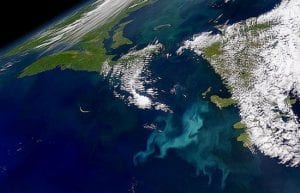
Carbon makes the world go around. It is the building block of life on Earth, and in the form of carbon dioxide gas in the atmosphere, it has a powerful impact on the planet’s climate. In the process, carbon also…
News Releases
A new National Academies report lays out a research strategy for studying the ocean’s ability to sequester carbon
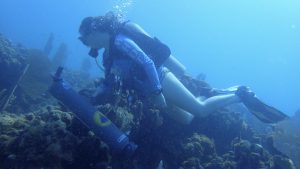
An interdisciplinary approach reveals how chemistry, microbes, and ocean circulation work together to shape reef ecosystems
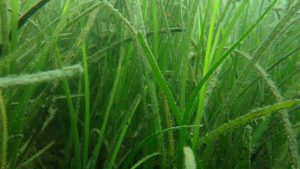
The Massachusetts Department of Environmental Protection is supporting a two-year study to quantify carbon storage in both natural and restored eelgrass meadows in coastal waters.
Researchers have identified a diverse set of molecules released by marine phytoplankton that fuel microbial life and help drive Earth’s carbon cycle
A new paper argues that larger, longer studies with rigorous monitoring and clear safeguards are needed to accurately assess OIF as a potential long-term CO2 storage solution.
News & Insights
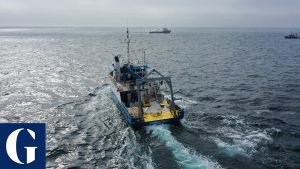
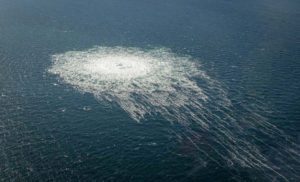
WHOI marine chemist Chris Reddy weighs in on a methane leak in the Baltic Sea
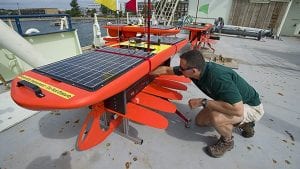
WHOI geochemist Chris German pairs an autonomous surface vehicle (ASV) called a Wave Glider with other vehicles to expand research here and on other Ocean Worlds
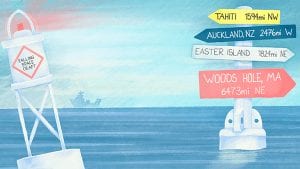
Researchers investigate dust from the ocean’s farthest point from land to reconstruct the climactic history of the Southern Hemisphere, and understand how micronutrients have influenced biological productivity in this oceanic desert.
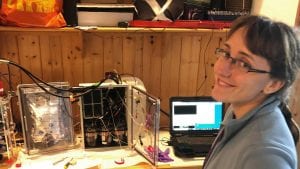
WHOI-MIT joint program student outfits her basement to do vital work on a marine carbon sensor