
News Releases
Why Is Sea Level Rising Faster in Some Places Along the U.S. East Coast Than Others?
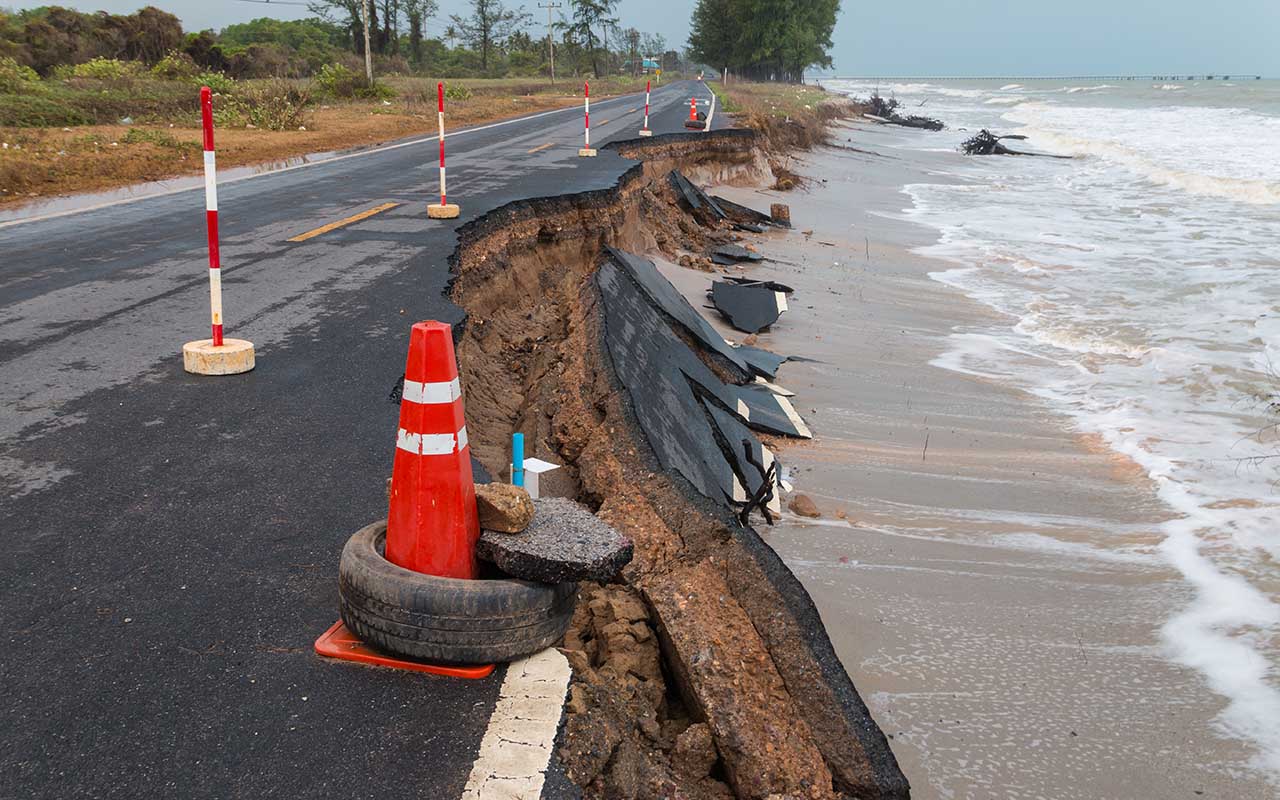
Sea levels are rising globally from ocean warming and melting of land ice, but the seas aren’t rising at the same rate everywhere. Sea levels have risen significantly higher in some U.S. East Coast regions compared to others. A new study led by the Woods Hole Oceanographic Institution (WHOI) reveals why.
Read MoreGreenland Ice Sheet Melt ‘Off the Charts’ Compared With Past Four Centuries
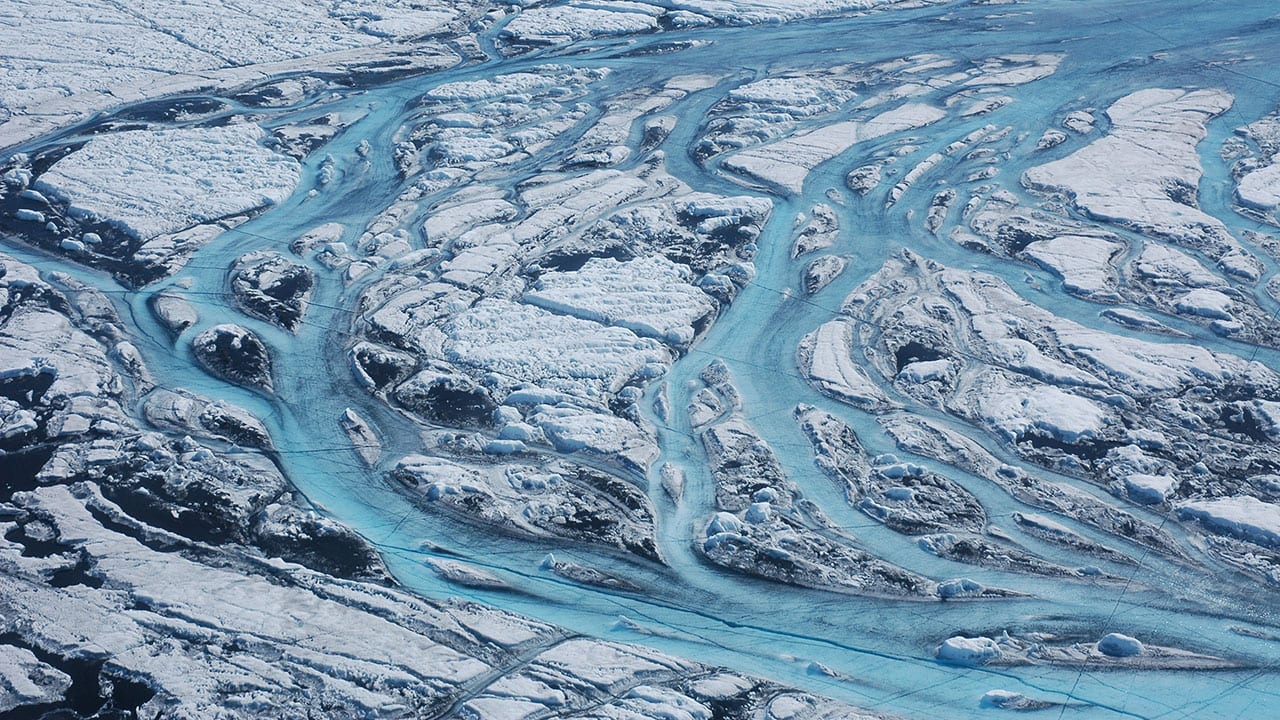
Surface melting across Greenland’s mile-thick ice sheet began increasing in the mid-19th century and then ramped up dramatically during the 20th and early 21st centuries, showing no signs of abating, according to new research published Dec. 5, 2018, in the journal Nature. The study provides new evidence of the impacts of climate change on Arctic melting and global sea level rise.
Read MoreClimate Change Likely Caused Migration, Demise of Ancient Indus Valley Civilization
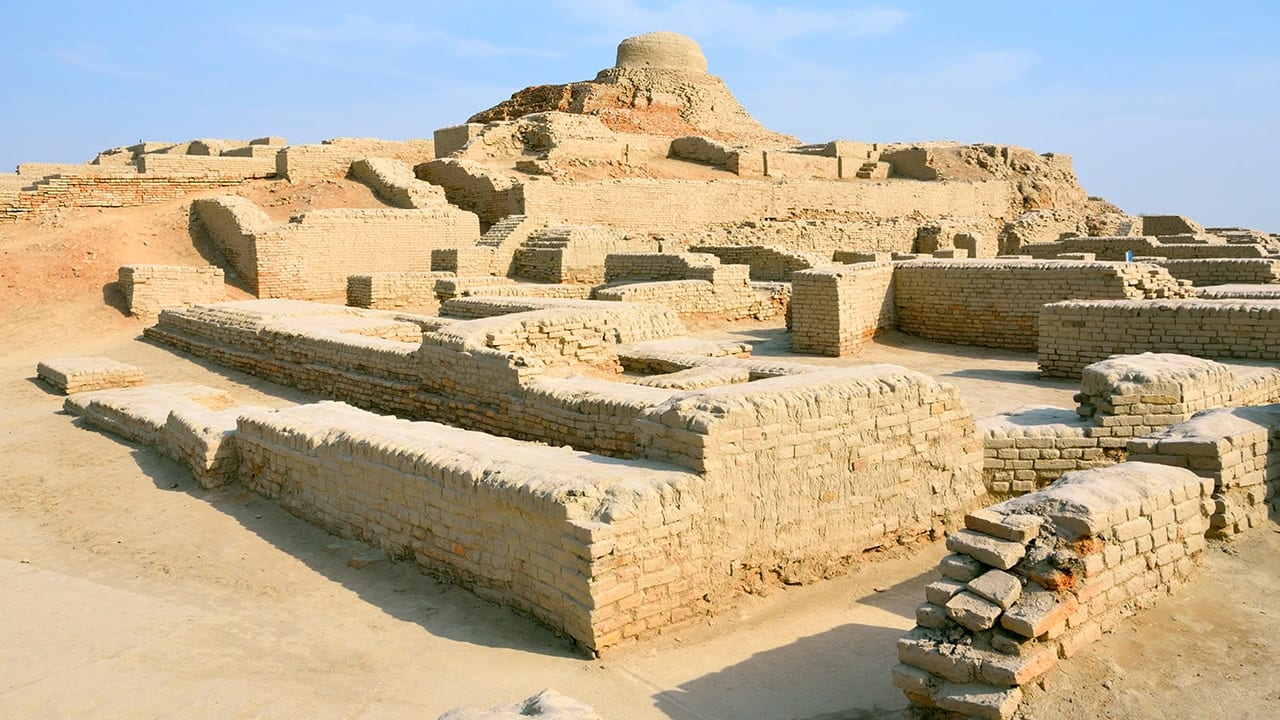
More than 4,000 years ago, the Harappa culture thrived in the Indus River Valley of what is now modern Pakistan and northwestern India, where they built sophisticated cities, invented sewage systems that predated ancient Rome’s, and engaged in long-distance trade with settlements in Mesopotamia. Yet by 1800 BCE, this advanced culture had abandoned their cities, moving instead to smaller villages in the Himalayan foothills. A new study from the Woods Hole Oceanographic Institution (WHOI) found evidence that climate change likely drove the Harappans to resettle far away from the floodplains of the Indus.
Read MoreStudy Finds Link Between River Outflow and Coastal Sea Level
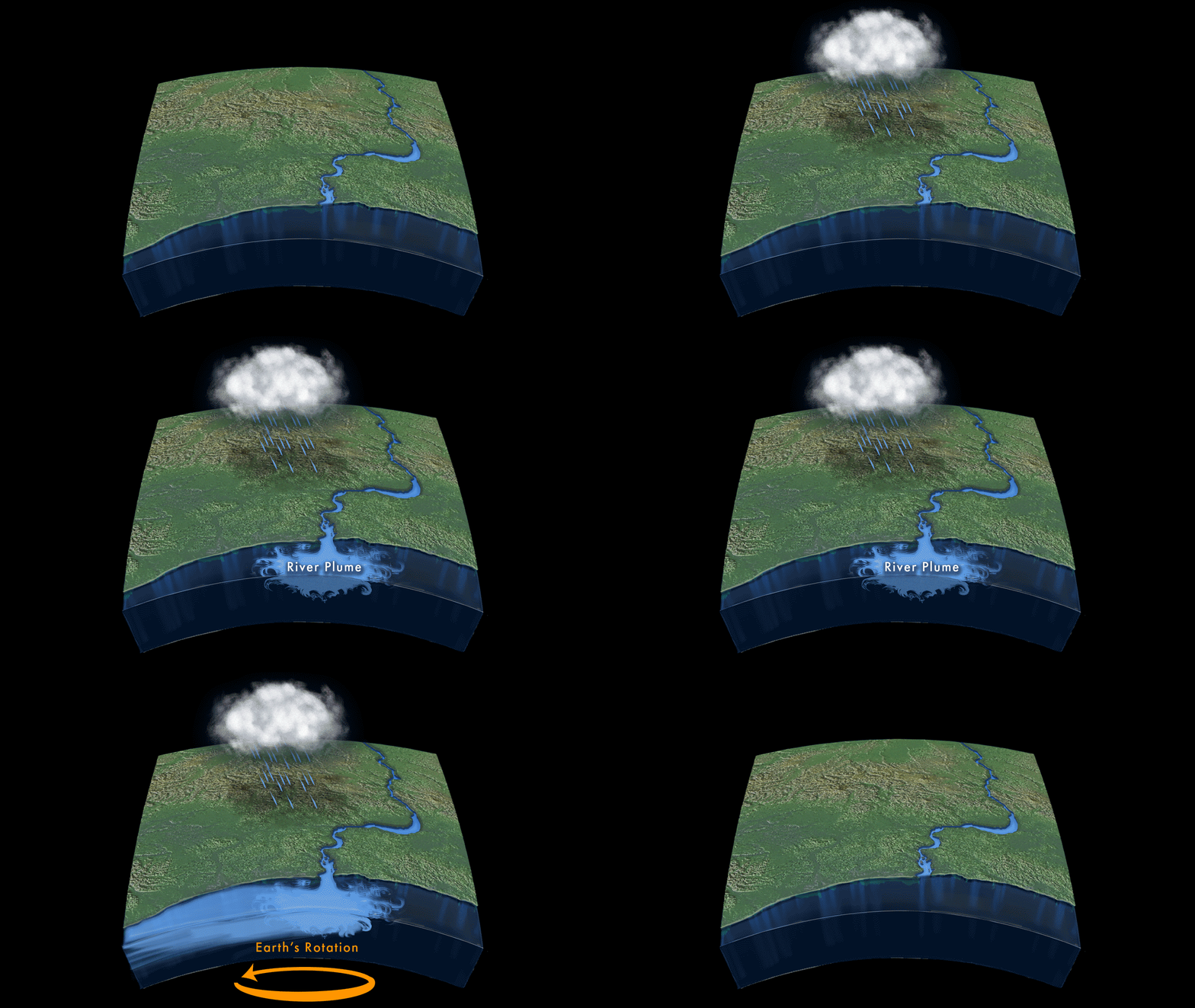
Sea levels in coastal areas can be affected by a number of factors: tides, winds, waves, and even barometric pressure all play a role in the ebb and flow of the ocean. For the first time, however, a new study led by the Woods Hole Oceanographic Institution (WHOI) has shown that river outflow could play a role in sea level change as well.
Read MoreGeologic History of Ayeyawady River Delta Mapped for the First Time
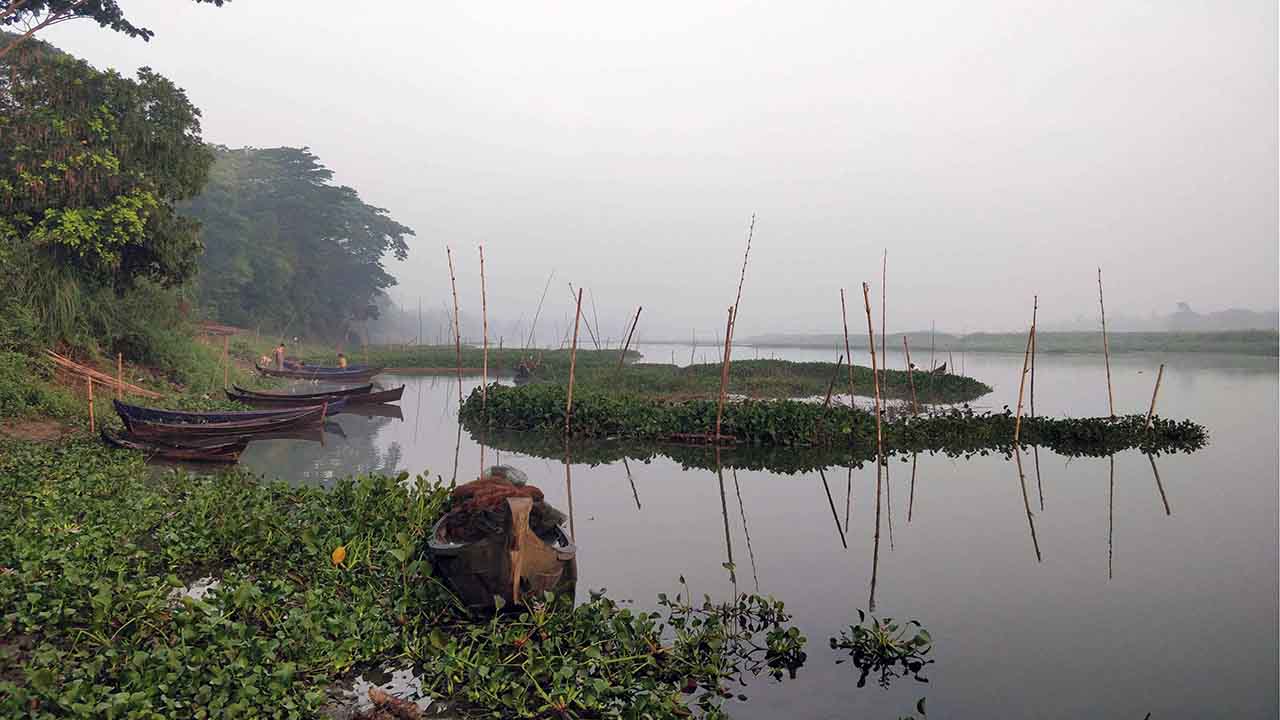
The Ayeyawady River delta in Myanmar is home to millions of people, and is a hub of agricultural activity. Unlike other large rivers across the world, however, the Ayeyawady has been relatively untouched by large infrastructure and dam projects for the past 50 years, and its geologic evolution has never previously been studied.
Read MoreAre Emperor Penguins Eating Enough?
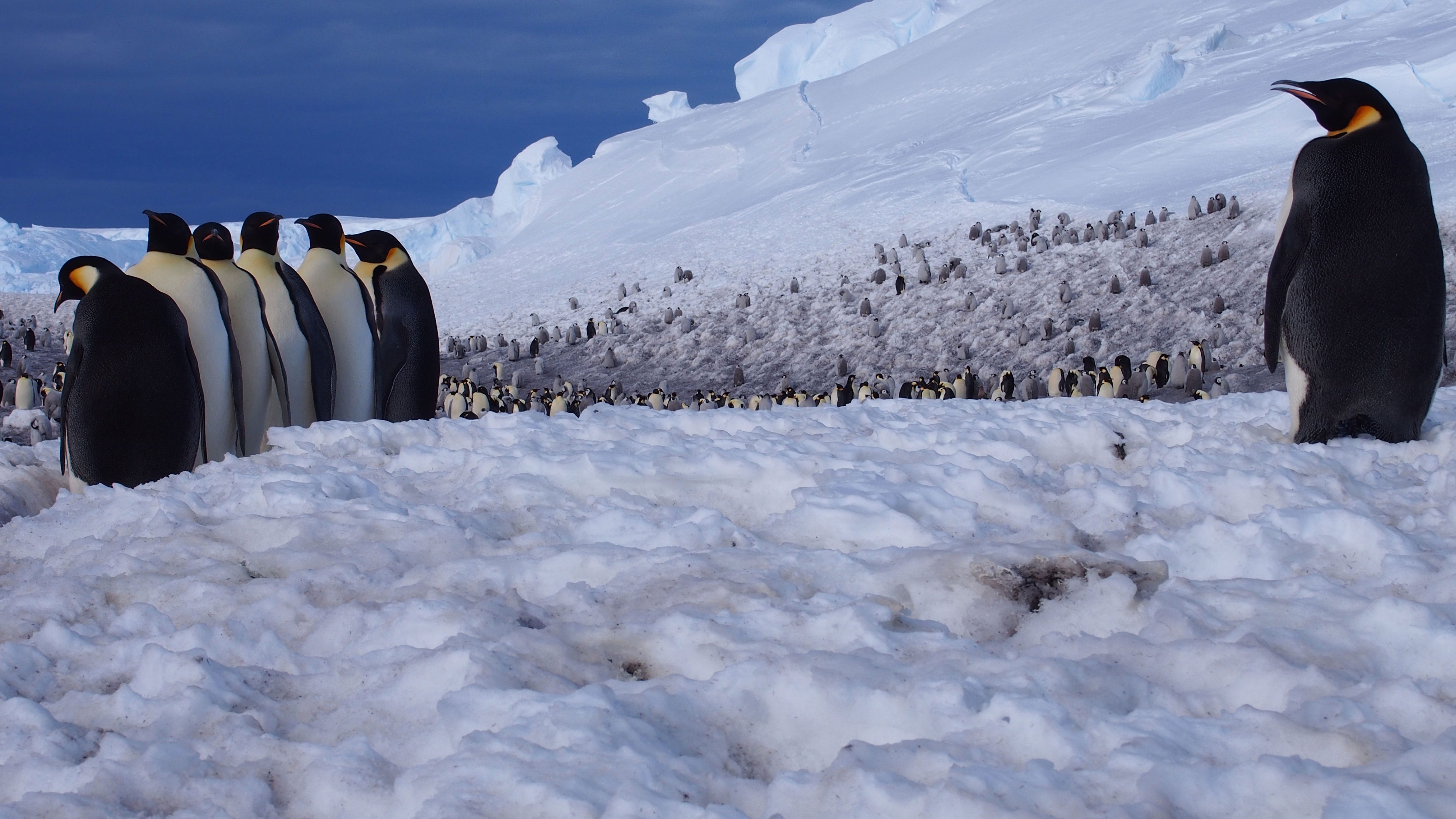
For Emperor penguins waddling around a warming Antarctic, diminishing sea ice means less fish to eat. How the diets of these tuxedoed birds will hold up in the face of…
Read MoreSunlight Reduces Effectiveness of Dispersants Used in Oil Spills
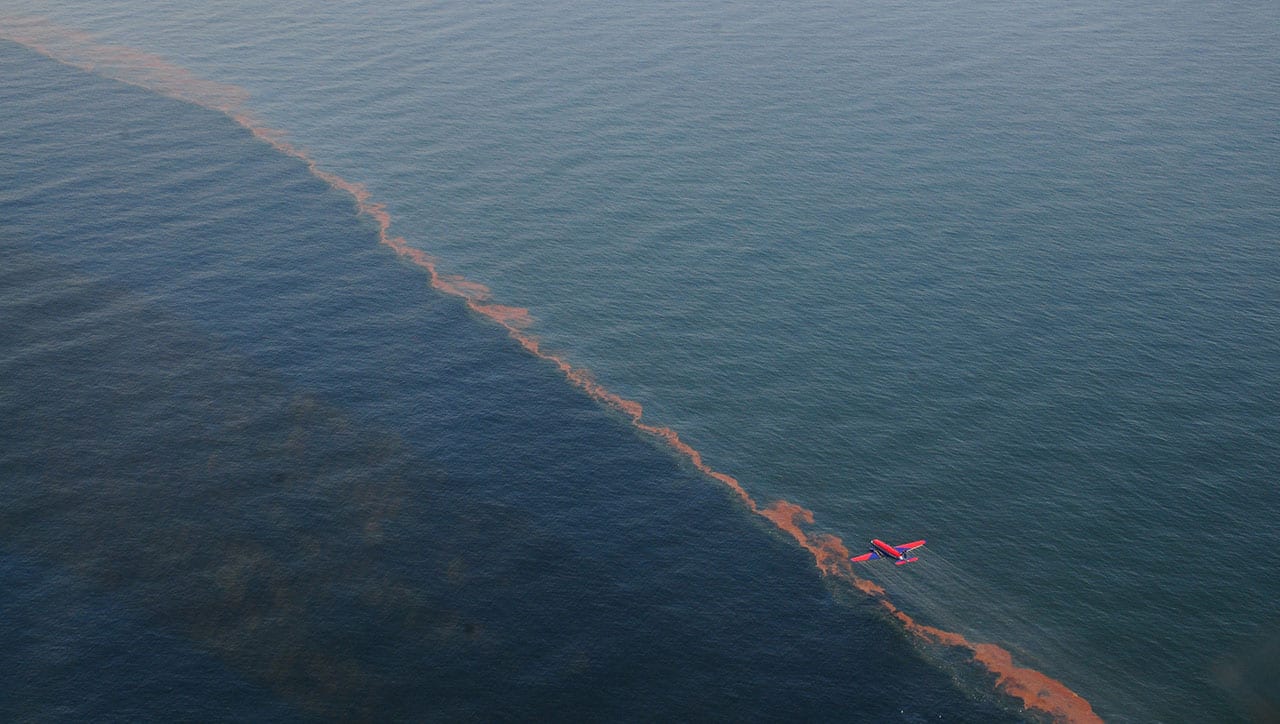
A research team led by Woods Hole Oceanographic Institution (WHOI) found that sunlight chemically alters crude oil floating on the sea surface within hours or days. In a follow-up study the team reported that sunlight changes oil into different compounds that dispersants cannot easily break up. The results of these two studies could affect how responders decide when, where, and how to use dispersants.
Read MoreMountain Erosion May Add Carbon Dioxide to Atmosphere
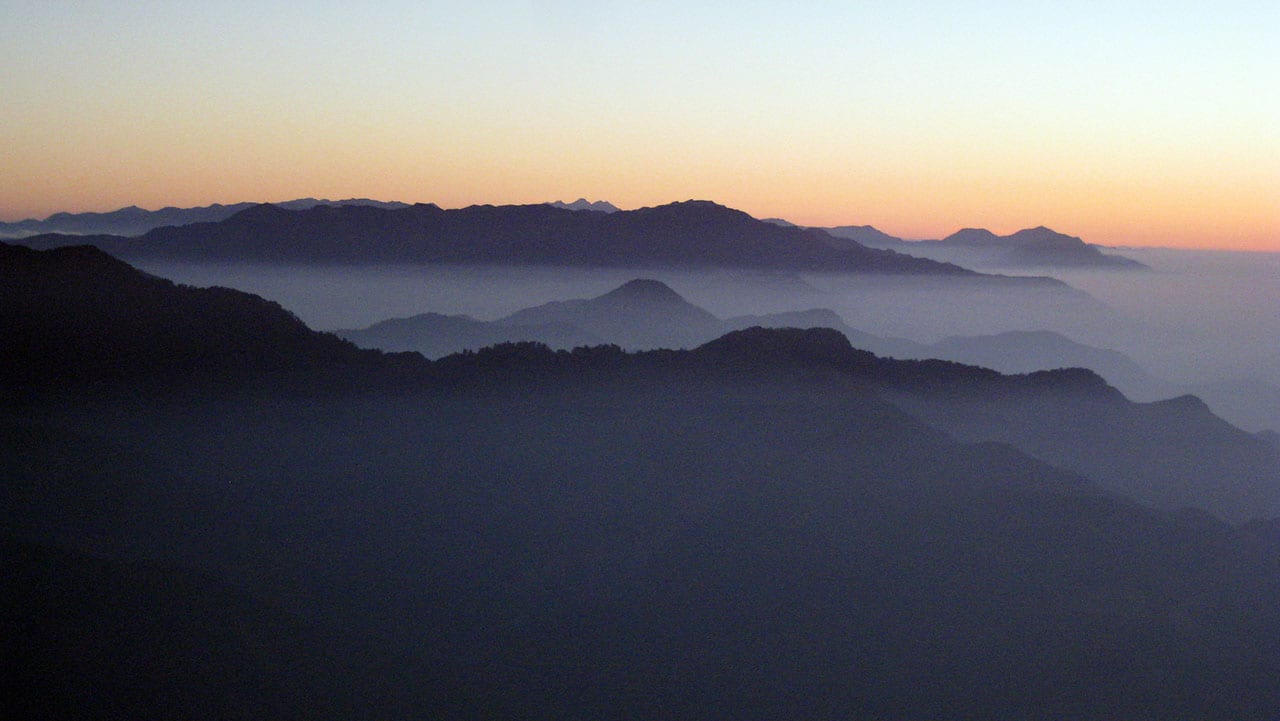
Scientists have long known that steep mountain ranges can draw carbon dioxide (CO2) out of the atmosphere as erosion exposes new rock, it also starts a chemical reaction between minerals on hill slopes and CO2 in the air, weathering the rock and using CO2 to produce carbonate minerals like calcite.
Read MoreAtlantic Ocean Circulation at Weakest Point in 1,600 years
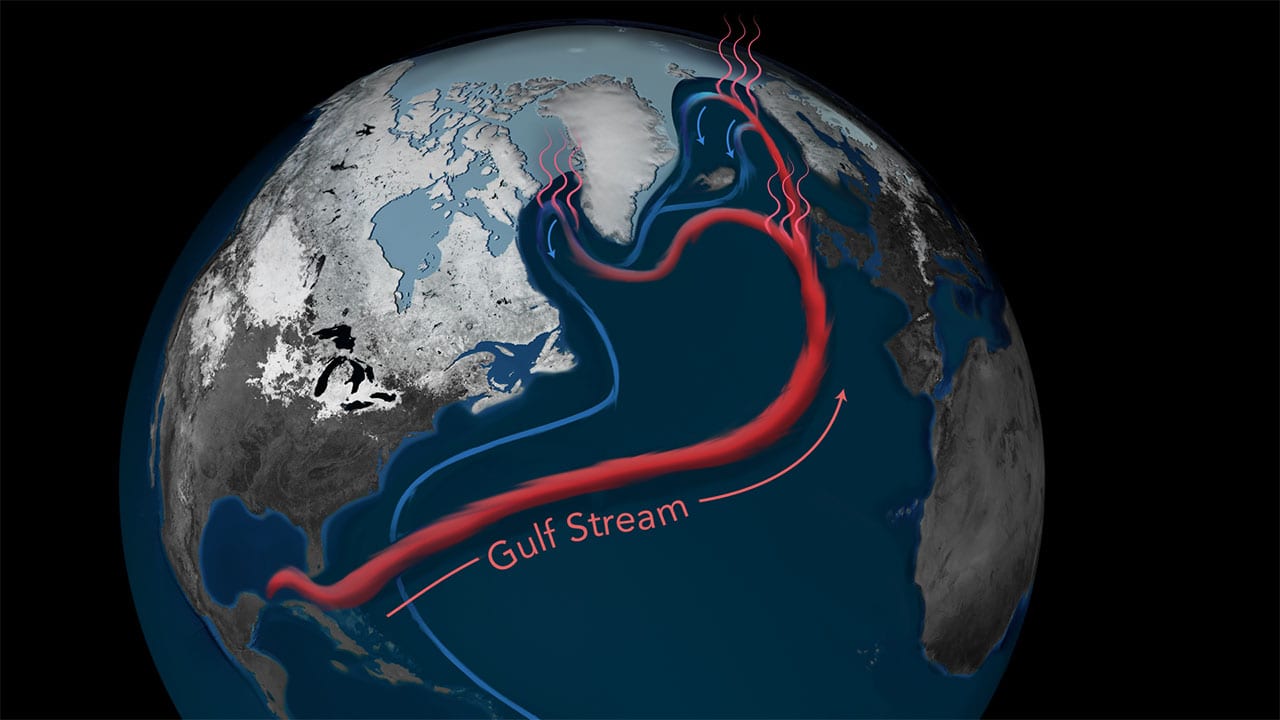
Atlantic Ocean Circulation at Weakest Point in More Than 1500 years New research led by University College London (UCL) and Woods Hole Oceanographic Institution (WHOI) provides evidence that a key cog in the global ocean circulation system hasn’t been running at peak strength since the mid-1800s and is currently at its weakest point in the past 1,600 years. If the system continues to weaken, it could disrupt weather patterns from the United States and Europe to the African Sahel, and cause more rapid increase in sea level on the U.S. East Coast.
Read MoreWHOI Among First Funding Recipients of The Audacious Project
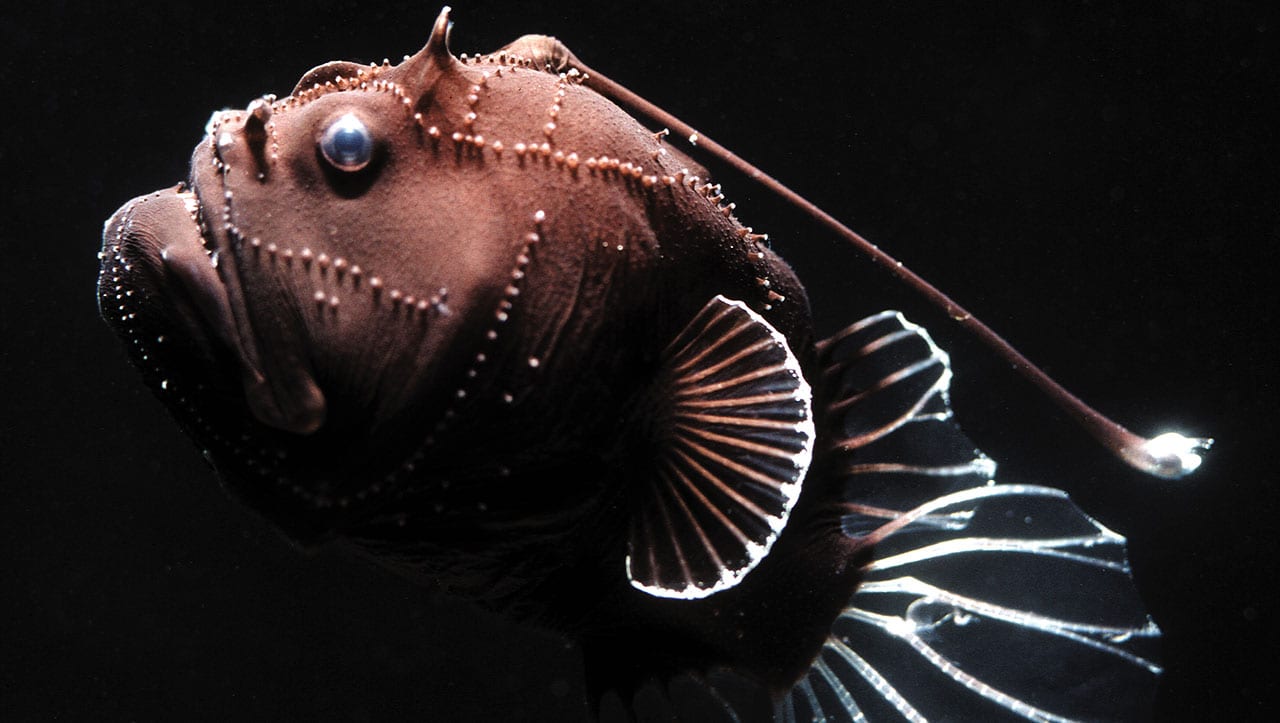
What if we explored the ocean’s vast twilight zone, teeming with undiscovered life? Today, the Woods Hole Oceanographic Institution (WHOI) was awarded $35 million – the largest philanthropic gift in the Institution’s history – to do just that. The award comes from The Audacious Project, a bold new philanthropic collaboration housed at TED to fund critical ideas that have potential to create massive, global change.
Read MoreHuman-Engineered Changes on Mississippi River Increased Extreme Floods
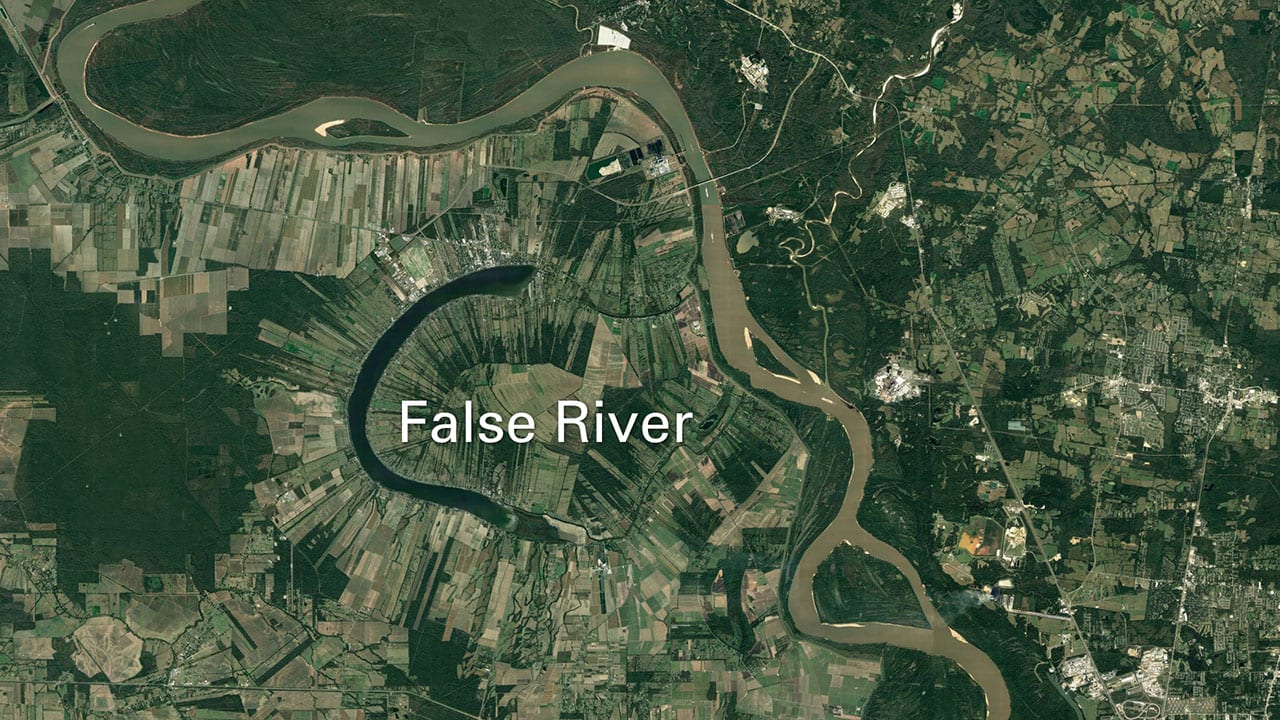
Over the last century, many of the world’s major rivers have been modified for the purposes of flood control, power generation, and commercial navigation. A new study out of Woods Hole Oceanographic Institution suggests that engineering modifications to the Mississippi River interact with the have increased the risk of extreme floods to unprecedented levels.
Read MoreWhere Fresh is Cool in Bay of Bengal
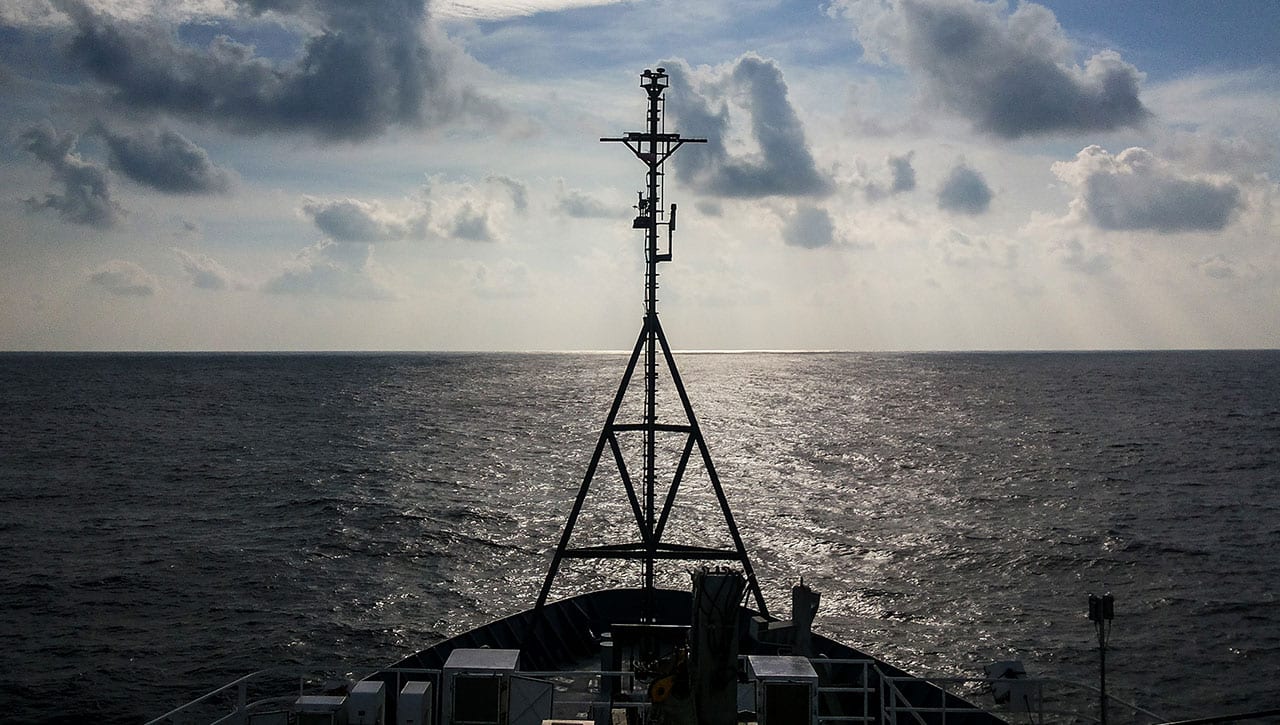
Each summer, the South Asian monsoon transforms parts of India from semi-arid into lush green lands able to support farming. The annual infusion of rainfall and resulting runoff into the Ganges, Brahmaputra, and other rivers in the region also has a very different, but no less dramatic, impact on the Bay of Bengal in the northeast Indian Ocean.
Read MoreMonitoring Bacteria on Whale Skin
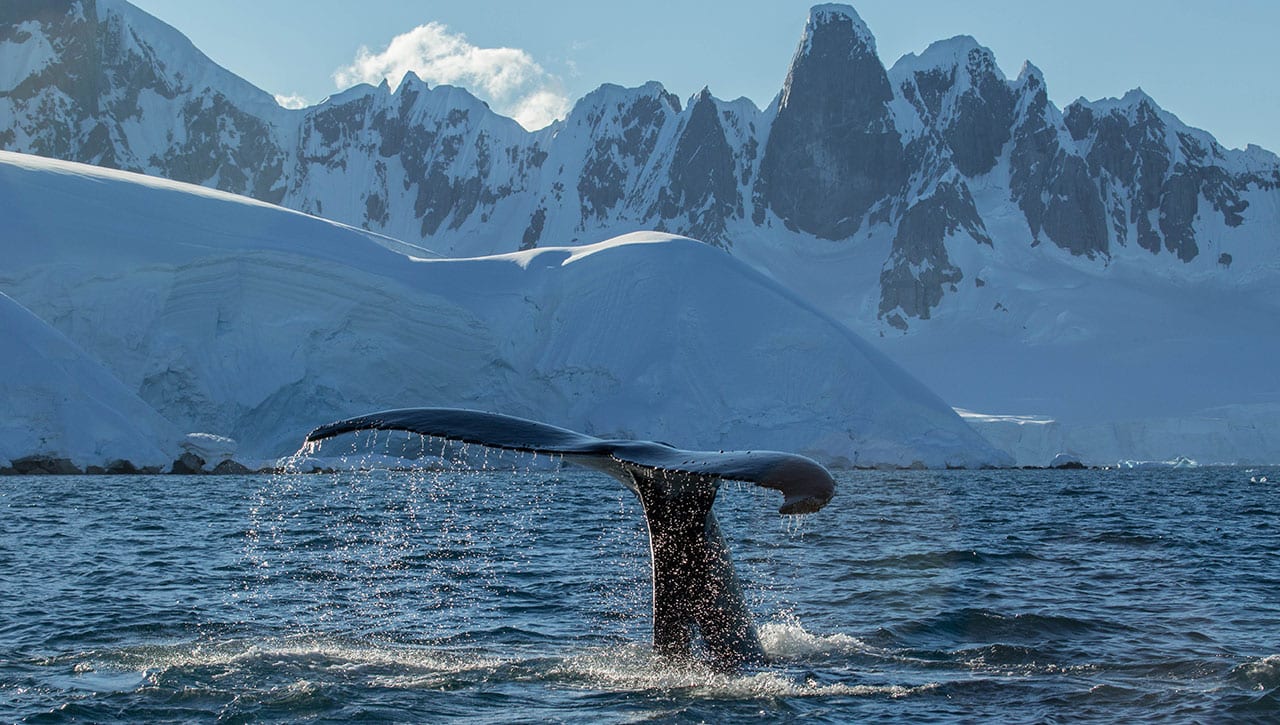
Just like with humans, the skin on marine mammals serves as an important line of defense against pathogens in their environment. A new study sheds light on the skin microbiome – a group of microorganisms that live on skin – in healthy humpback whales, which could aid in future efforts to monitor their health.
Read MoreScientists Pinpoint How Ocean Acidification Weakens Coral Skeletons
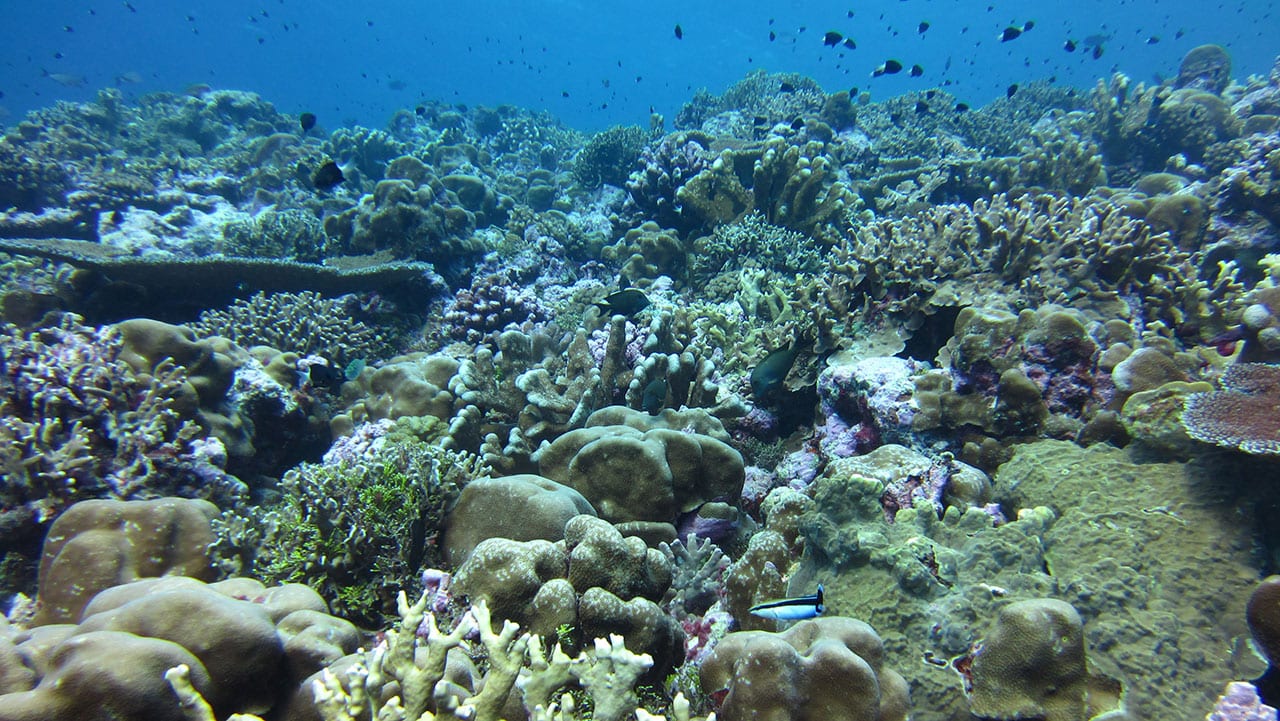
The rising acidity of the oceans threatens coral reefs by making it harder for corals to build their skeletons. A new study identifies the details of how ocean acidification affects coral skeletons, allowing scientists to predict more precisely where corals will be more vulnerable.
Read MoreA Close-up Look at a Rare Underwater Eruption
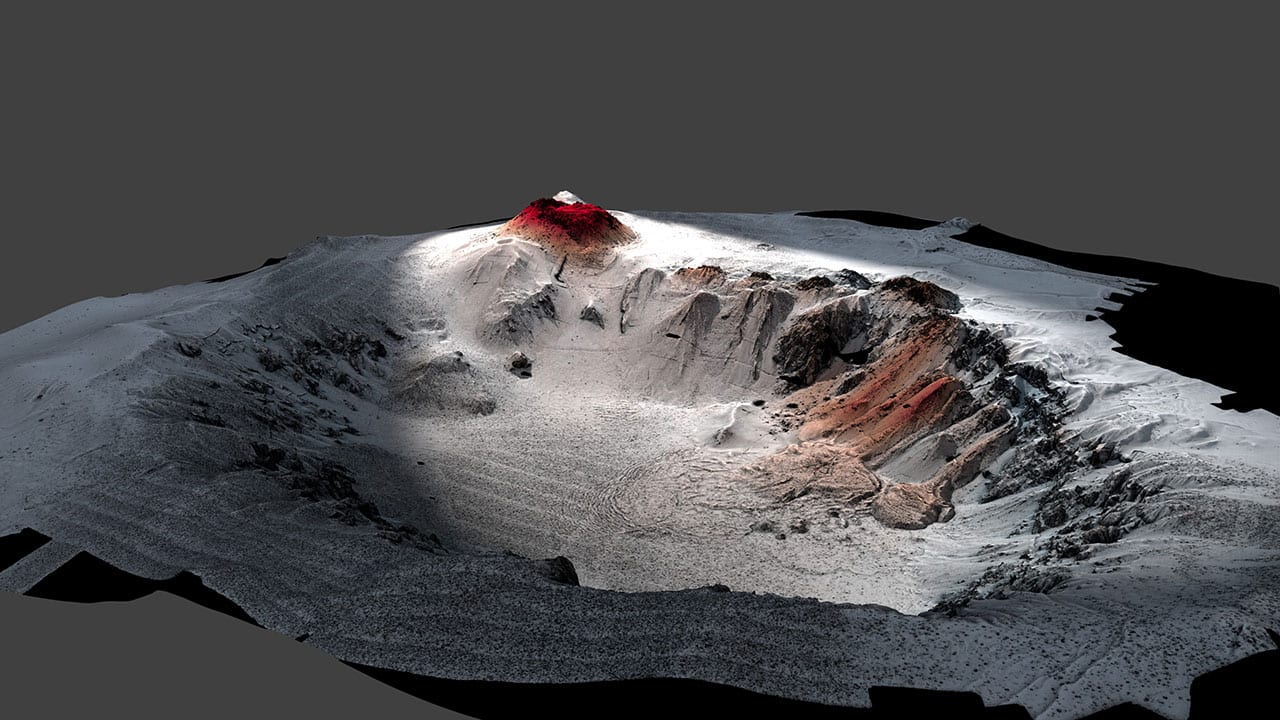
A new paper published January 10, 2018, in the journal Science Advances describes the first up-close investigation of the largest underwater volcanic eruption of the past century. The international research team led by the University of Tasmania and the Woods Hole Oceanographic Institution (WHOI) used the autonomous underwater vehicle (AUV) Sentry and the remotely operated vehicle (ROV) Jason to explore, map, and collect erupted materials from the Havre volcano during a 2015 expedition. They found that the eruption was surprising in many ways.
Read MoreScientists Find Surprising Evidence of Rapid Changes in the Arctic
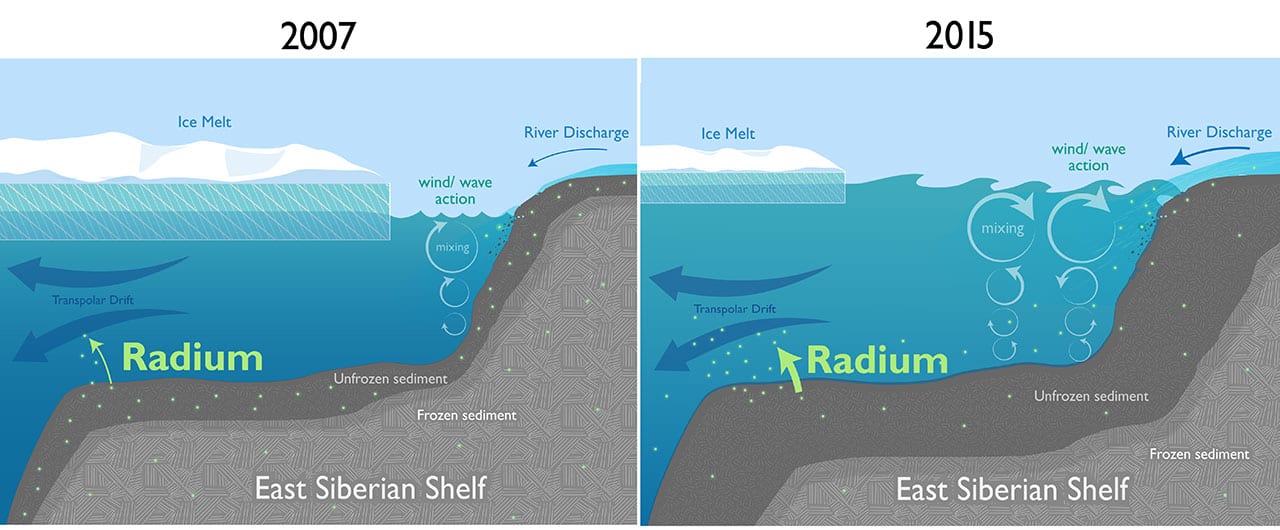
Scientists have found surprising evidence of rapid climate change in the Arctic: In the middle of the Arctic Ocean near the North Pole, they discovered that the levels of radium-228 have almost doubled over the last decade.
Read MoreVolcanic Arcs Form by Deep Melting of Rock Mixtures
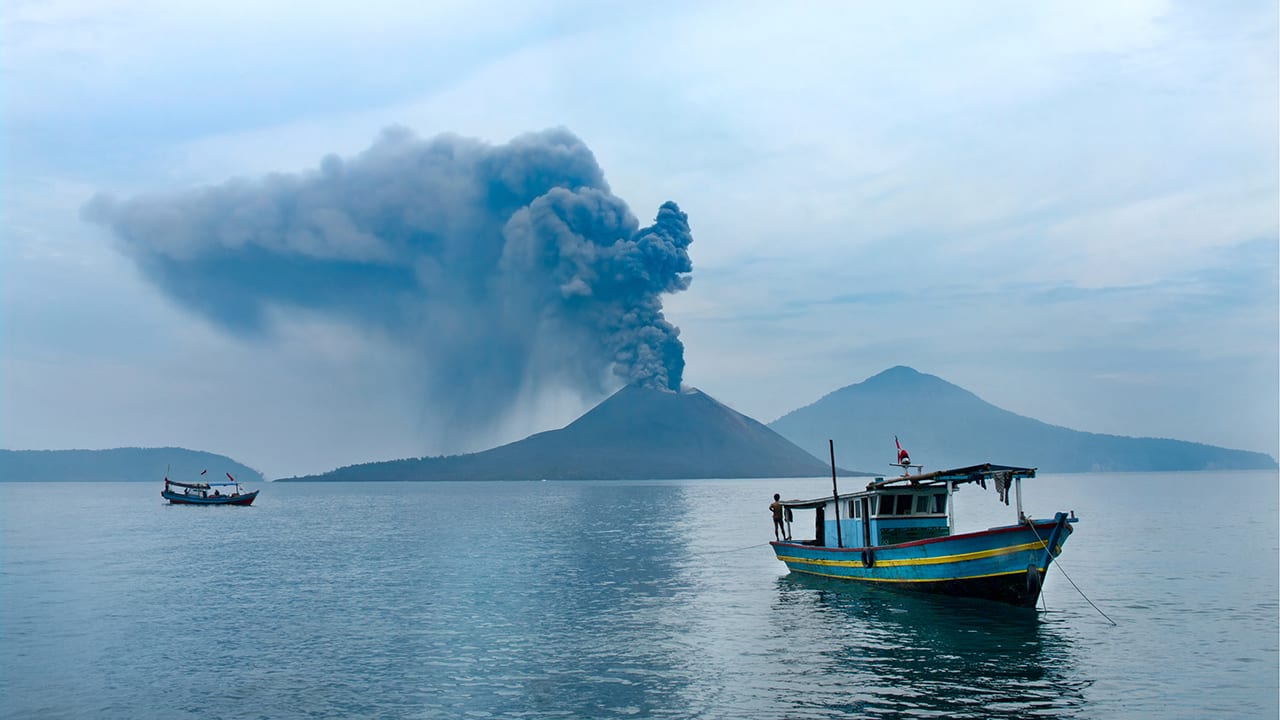
A new study published in the journal Science Advances changes our understanding of how volcanic arc lavas are formed, and may have implications for the study of earthquakes and the risks of volcanic eruption.
Read MorePanel to Discuss Deep-Sea Mining at AAAS Meeting
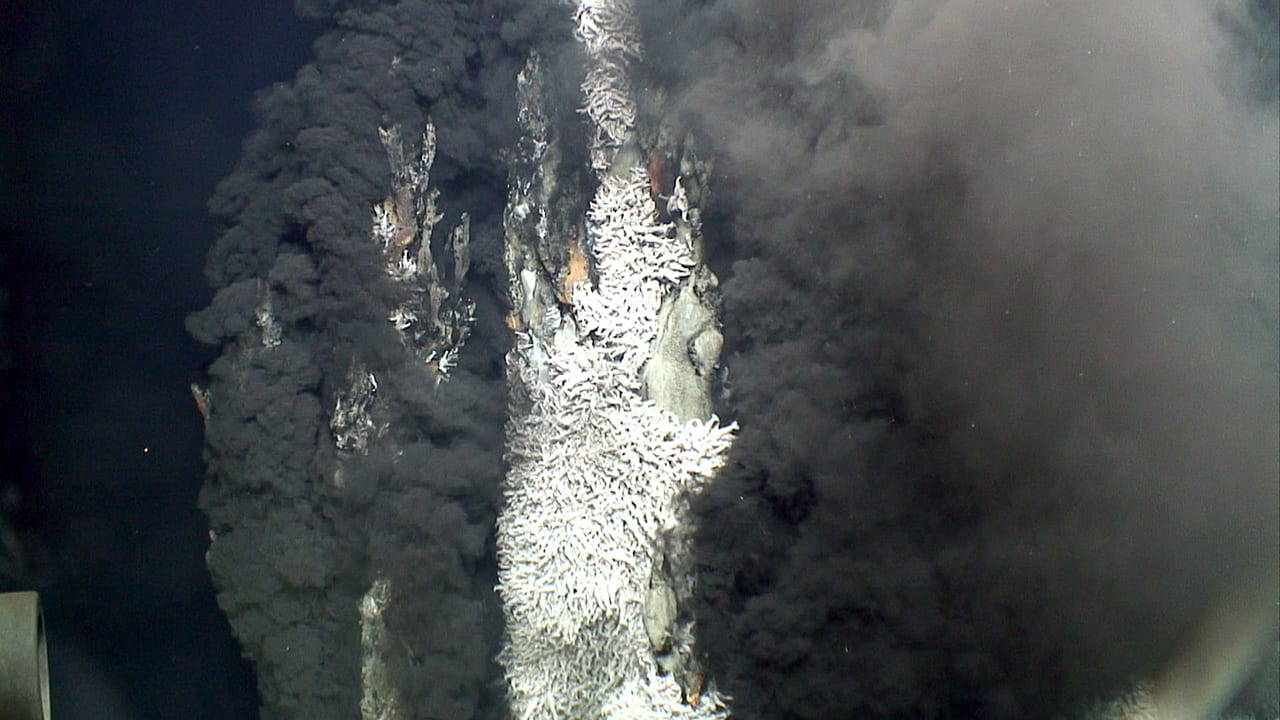
Home to an immense diversity of marine life, the deep ocean also contains valuable minerals with metals such as nickel, copper, cobalt, manganese, zinc, and gold, and rare-earth elements used in electronic technology like smart phones and medical imaging machines. As demand for these resources increases and supplies on land decrease, commercial mining operators are looking to the deep ocean as the next frontier for mining.
Read MoreAntarctic Bottom Waters Freshening at Unexpected Rate
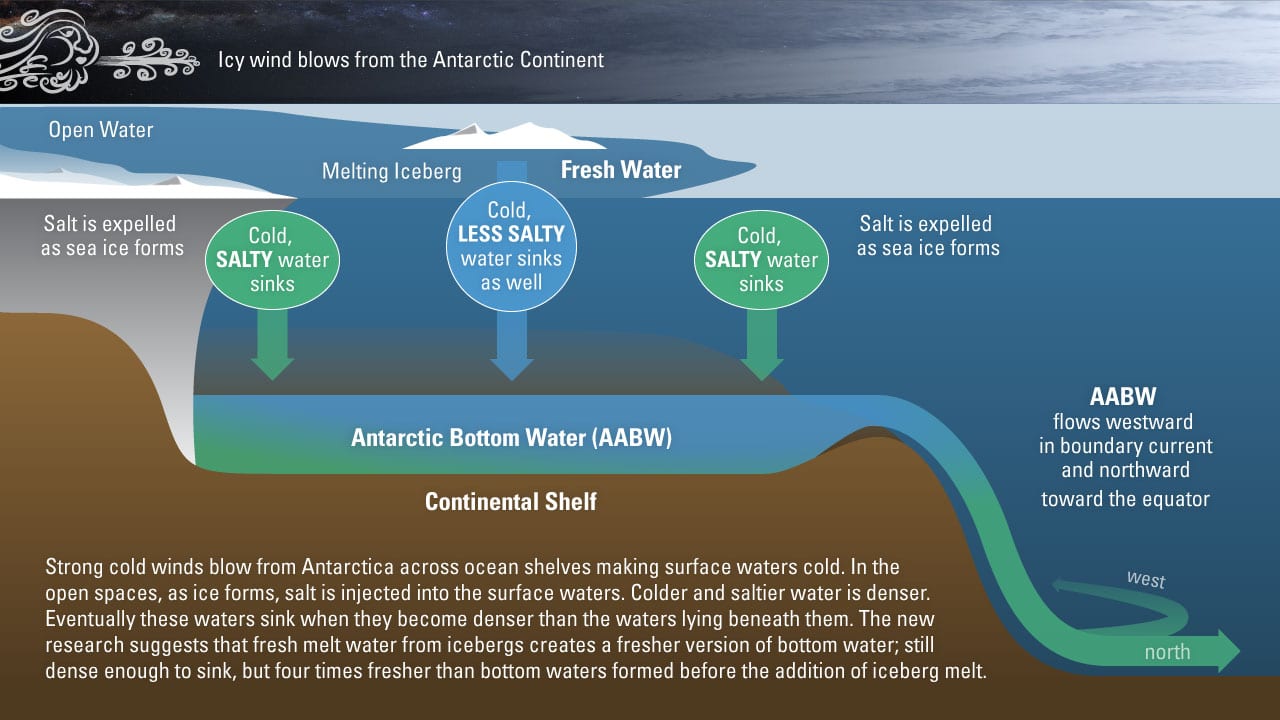
In the cold depths along the sea floor, Antarctic Bottom Waters are part of a critical part of the global circulatory system. Over the last decade, scientists have been monitoring changes in these waters, but a new WHOI study suggests these changes are themselves shifting in unexpected ways, with potentially significant consequences for the ocean and climate.
Read MoreSalty Oceans Can Forecast Rain on Land
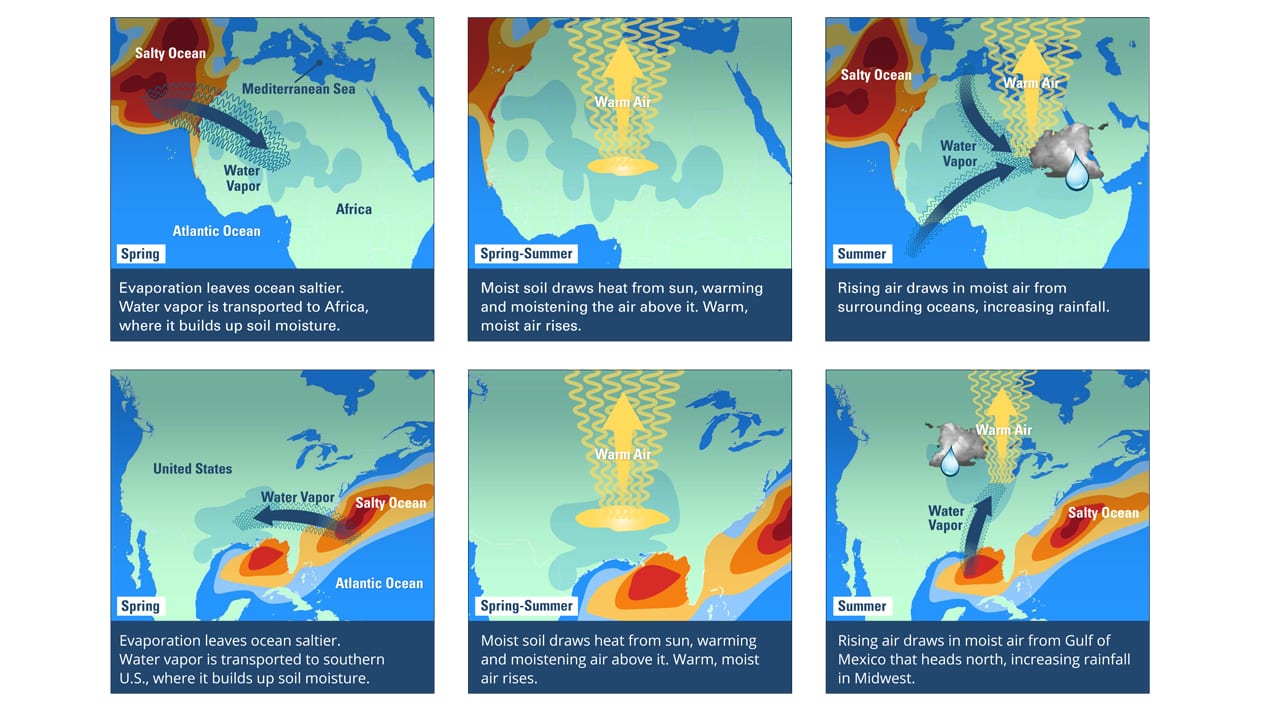
At this week’s American Geophysical Union meeting, a team of researchers from the Woods Hole Oceanographic Institution (WHOI) presented their latest research findings on the long-range predictions of rainfall on land. Their method is based on ocean salinity rather than sea surface temperatures, which has been the standard for decades.
Read MoreNew Studies Take a Second Look at Coral Bleaching Culprit
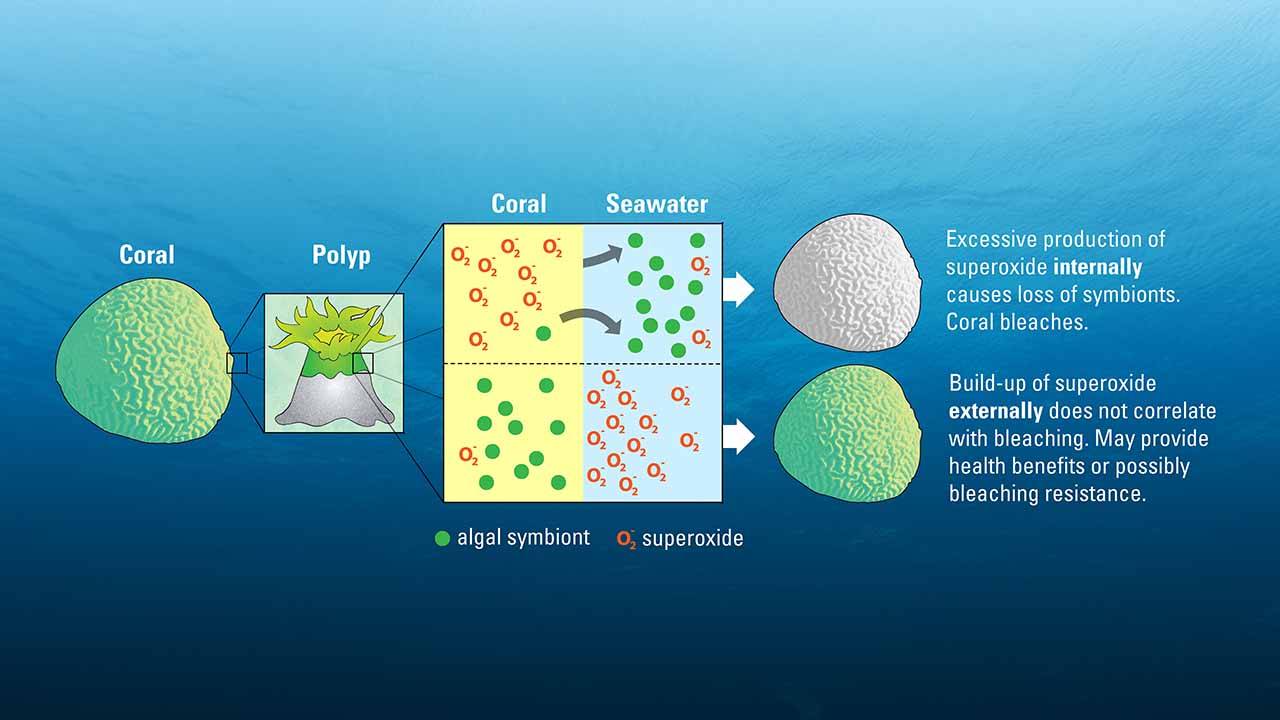
A new study from WHOI indicates that superoxide’a natural toxin believed to be the main culprit behind coral bleaching’may actually play a beneficial role in coral health and resilience.
Read MoreNew Study Explains Mysterious Source of Greenhouse Gas Methane in the Ocean
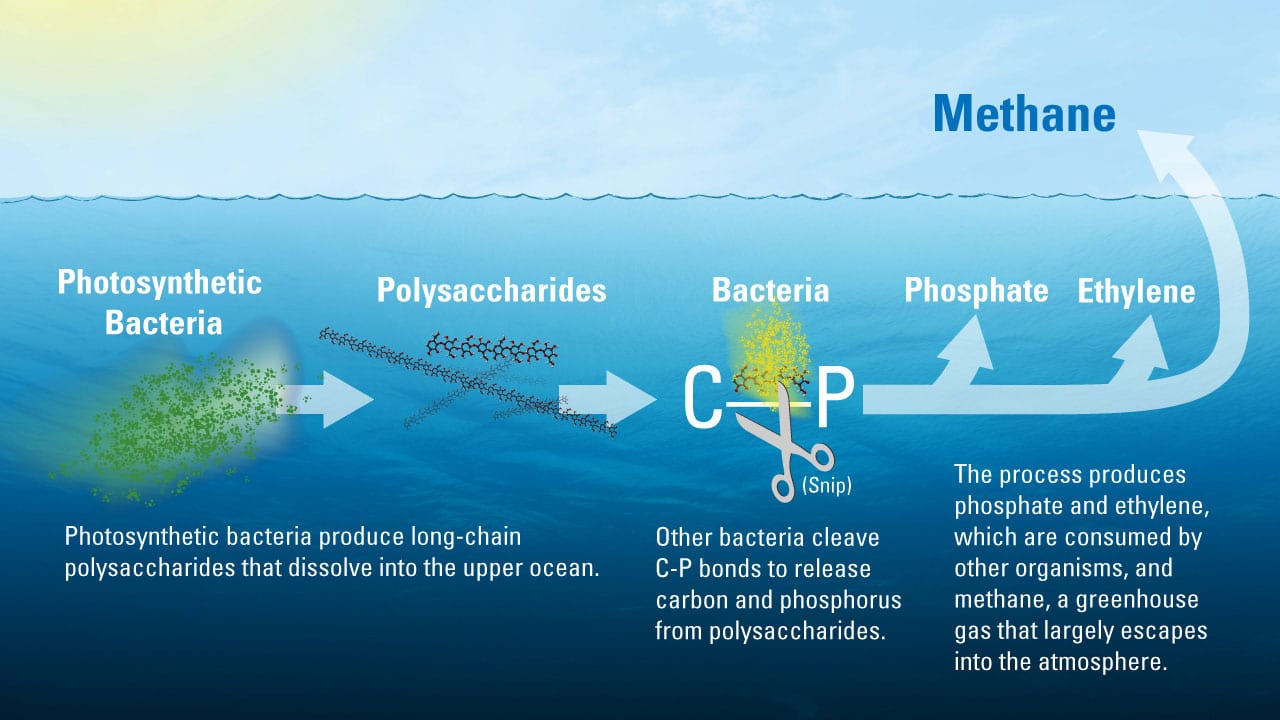
A new study may have cracked the longstanding ‘marine methane paradox,’ finding that the answer may lie in the complex ways that bacteria break down substances excreted into seawater by living organisms.
Read MoreStudy Reveals Corals’ Influence on Reef Microbes
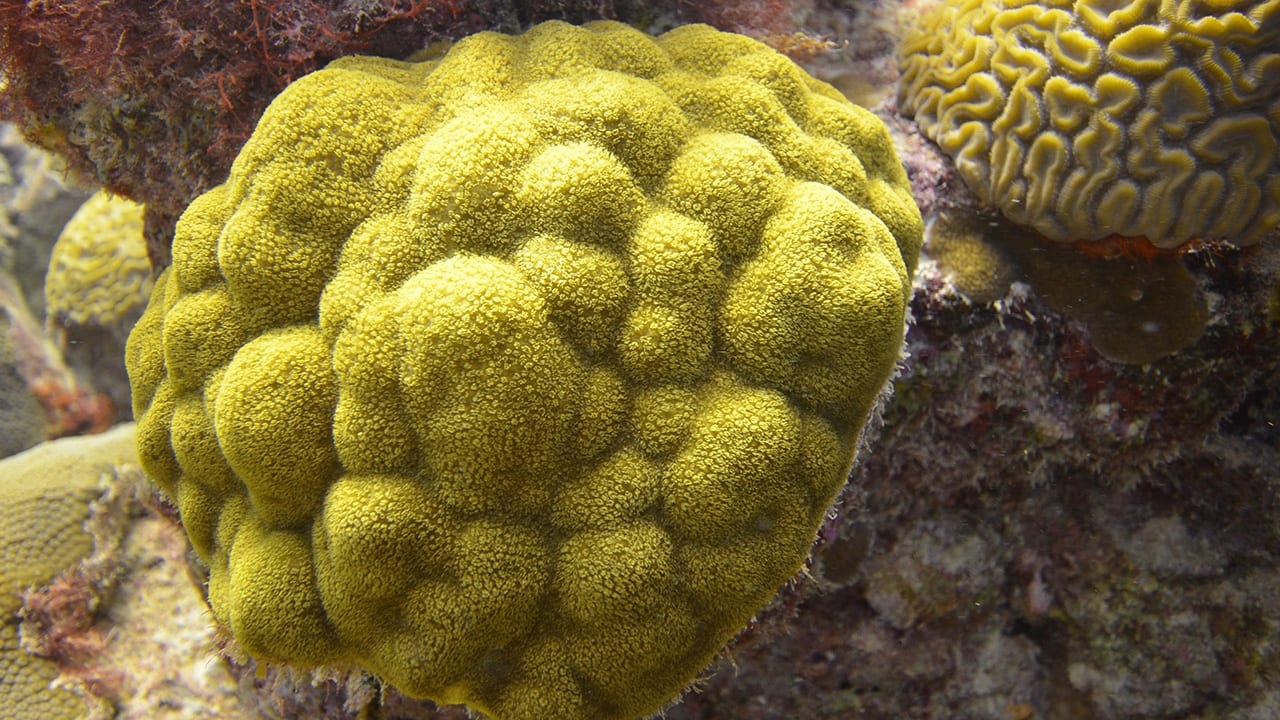
As they grow, corals are bathed in a sea of marine microbes, such as bacteria, algae, and viruses. While these extremely abundant and tiny microorganisms influence coral communities in a variety of ways, a new study by researchers at the Woods Hole Oceanographic Institution (WHOI), the Bermuda Institute of Ocean Sciences (BIOS) and University of California, Santa Barbara (UCSB) reveals that corals also have an impact on the microbes in waters surrounding them
Read MoreStudy Offers Clues to Better Rainfall Predictions
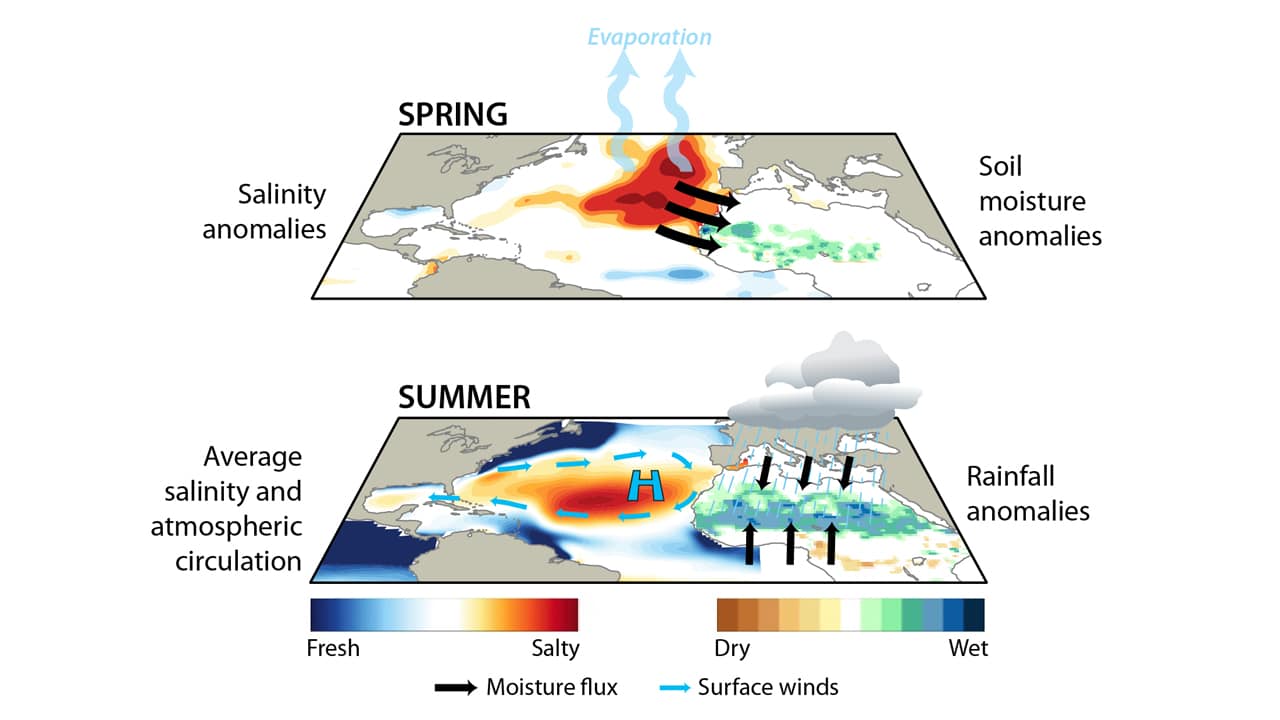
WHOI scientists have found a potential path to better seasonal rainfall predictions. Their study shows a clear link between higher sea surface salinity levels in the North Atlantic Ocean and increased rainfall on land in the West African Sahel, the area between the Sahara Desert and the savannah in Sudan.
Read More