
Biology
A Summer of Science by the Sea, 2014 (Part II)
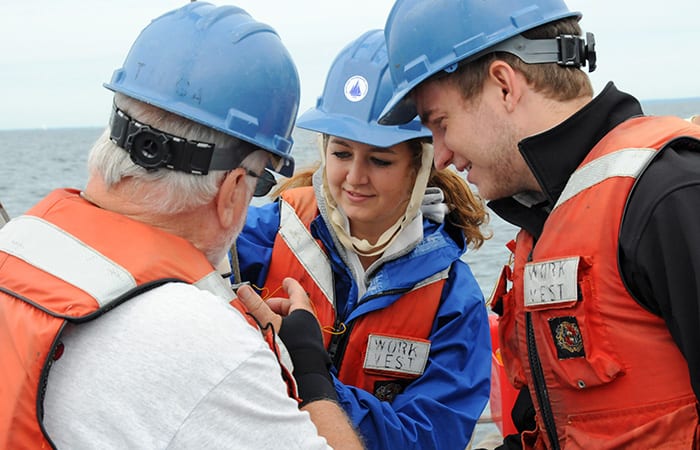
Every summer since 1959, undergraduates from around the world have come to Woods Hole Oceanographic Institution for a program to learn about ocean science and conduct research under the guidance of WHOI scientists. Read the second and final installment of our series of profiles of this year’s young scholars.
Read MoreIs Ocean Acidification Affecting Squid?
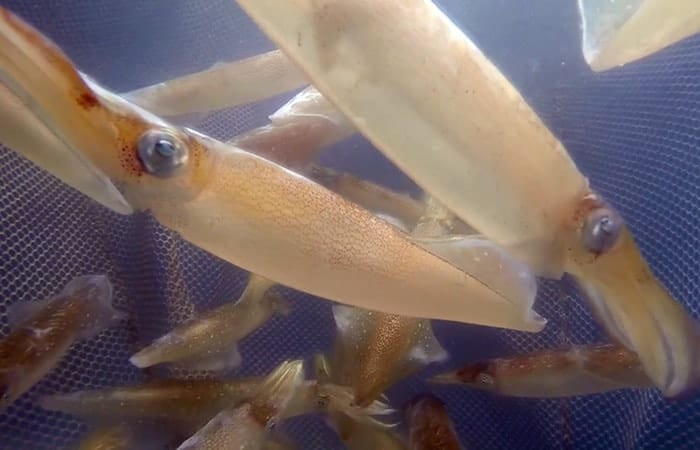
The rise in carbon dioxide in the ocean from fossil-fuel burning may have insidious impacts on marine life.
Read MoreSwimming in Low-pH Seas
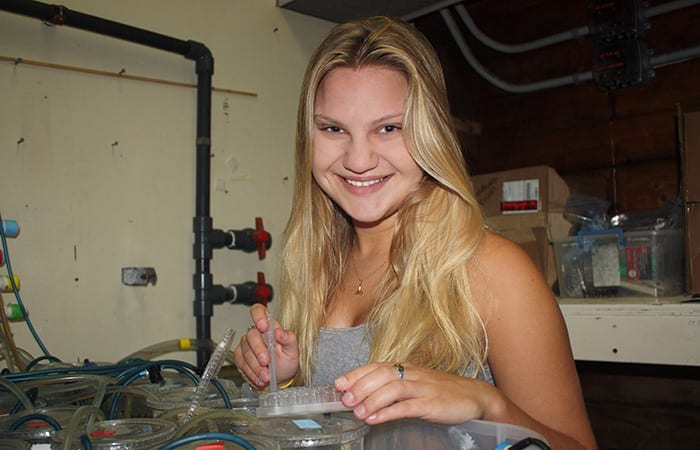
Researchers knew that squid raised in acidified water developed abnormal balance organs. To find out whether the young squid could still balance and swim normally, Summer Student Fellow Doriane Weiler mapped their movements.
Read MoreA Summer of Science by the Sea, 2014 (Part I)
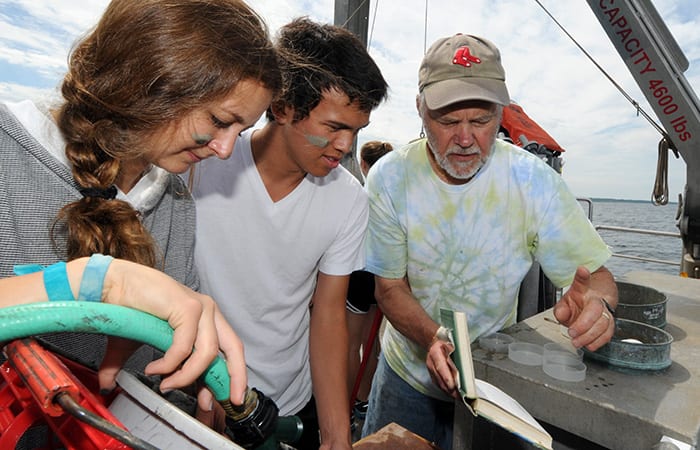
Every summer since 1959, undergraduates from around the world have come to Woods Hole Oceanographic Institution for a program to learn about ocean science and conduct research under the guidance of WHOI scientists.
Read MoreFrom Penguins to Polar Bears
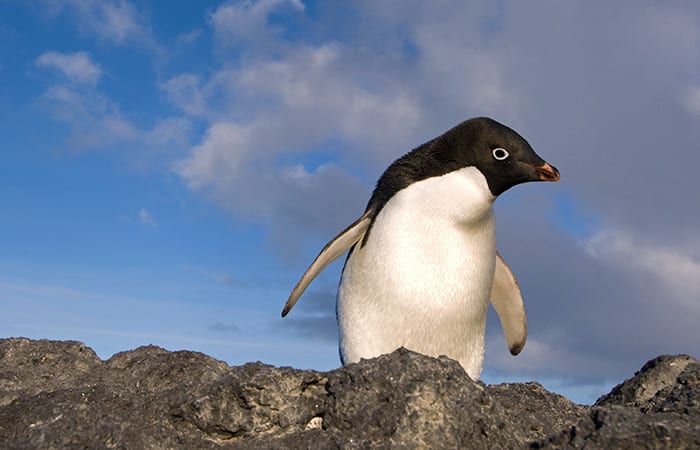
Polar ecosystems are especially vulnerable to climate change. They are also notably hard to study and to manage. Scientists came to WHOI recently for a Morss Colloquium to address the issues.
Read MoreA Haven for Whale Sharks
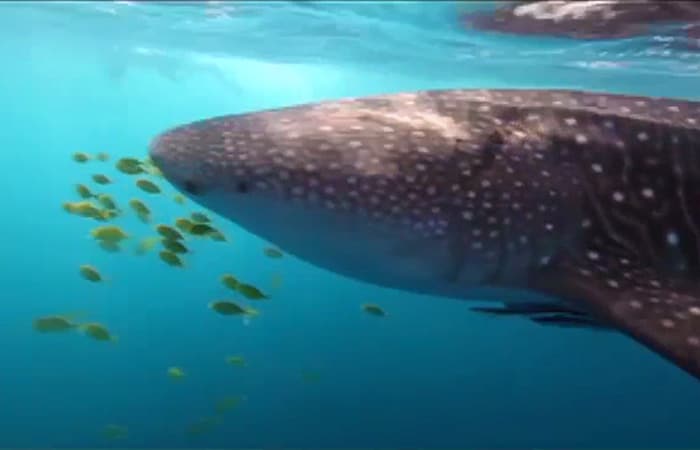
Scientists discovered an aggregation of juvenile whale sharks in the Red Sea and used satellite tags to track the elusive migrations of this endangered species.
Read MoreAlvin‘s Animals
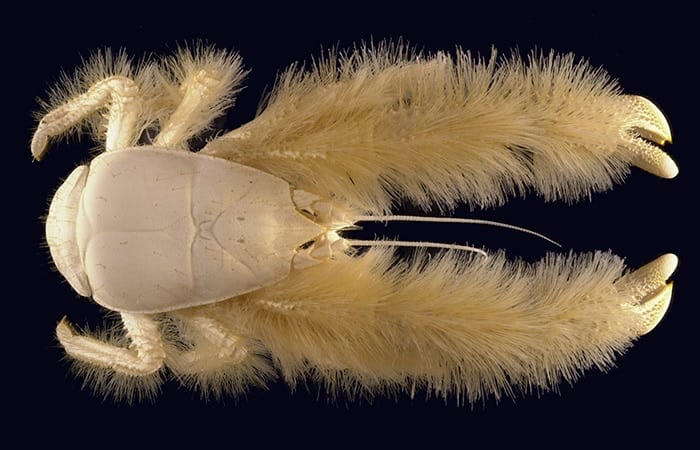
From orange octopi and furry yeti crabs to the largest known anemone, pilots and scientists diving in the Alvin submersible continue to find amazing marine creatures.
Read MoreTags Reveal Chilean Devil Rays Are Among Ocean’s Deepest Divers
Mainly thought to be surface dwellers, Chilean devil rays (Mobula tarapacana) are most often seen gliding through shallow, warm waters. But a new study by scientists at Woods Hole Oceanographic Institution (WHOI) and international colleagues reveals that these large and majestic creatures are actually among the deepest-diving ocean animals.
Read MoreStudy Finds Emperor Penguin in Peril
An international team of scientists studying Emperor penguin populations across Antarctica finds the iconic animals in danger of dramatic declines by the end of the century due to climate change.…
Read MoreClimate Change Winners and Losers
The Antarctic Peninsula, the northern most region of Antarctica, is experiencing some of the most dramatic changes due to climate warming, including population declines of some penguin species. This is…
Read MoreWHOI Scientist Collaborates with Falmouth High School Art Students
Woods Hole Oceanographic Institution (WHOI) biologist Dr. Rebecca Gast and Falmouth (Mass.) High School art teacher Jane Baker have teamed up to bring the excitement of polar research to Falmouth…
Read MoreCaswell Selected for Mindel C. Sheps Award
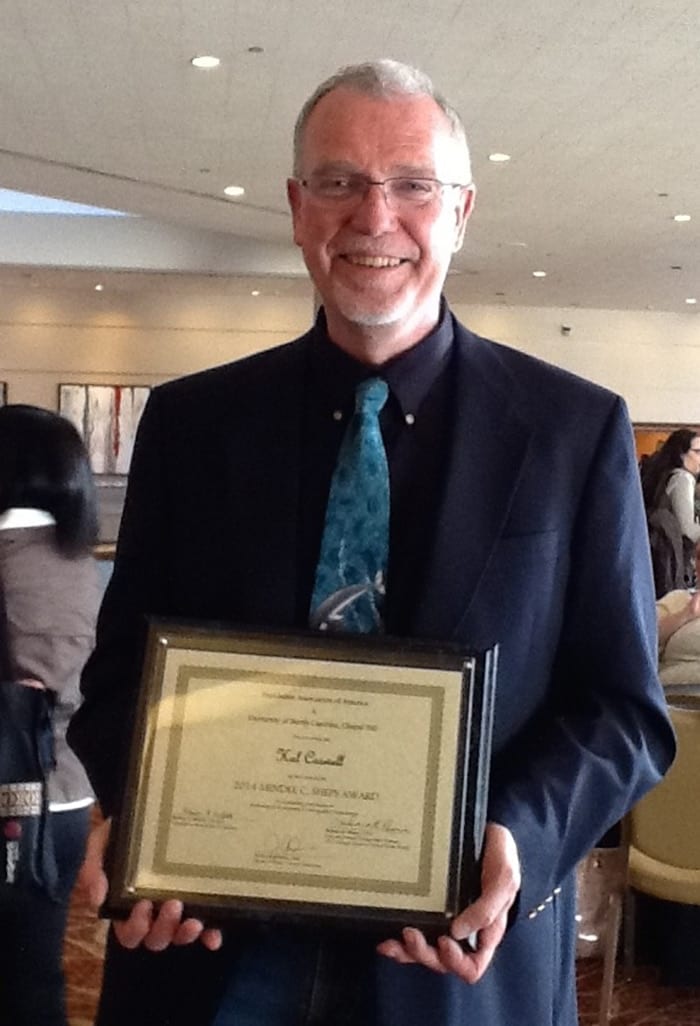
The Population Association of America (PAA) selected biologist Hal Caswell of the Woods Hole Oceanographic Institution (WHOI) to receive the 2014 Mindel C. Sheps Award for his contributions to mathematical demography. The PAA is the major professional society devoted to the study of human populations. The prestigious honor is awarded to one scientist biennially on the basis of important contributions to knowledge either in the form of a single piece of work or a continuing record of high achievement.
Read MoreScientists Test Hearing in Bristol Bay Beluga Whale Population
The ocean is an increasingly industrialized space. Shipping, fishing, and recreational vessels, oil and gas exploration and other human activities all increase noise levels in the ocean and make it…
Read MoreNew Sensor Array to Monitor Impacts of Changing Gulf of Maine Conditions on New England Red Tide
Scientists from the Woods Hole Oceanographic Institution (WHOI) are kicking off an innovative NOAA-funded pilot program using robotic instruments and computer modeling analysis to shed light on changing ocean conditions in the Gulf of Maine as they relate to the harmful algal bloom (HAB) phenomenon commonly known as the New England red tide.
Read MoreWHOI CSI Lab Investigates Rare Whales
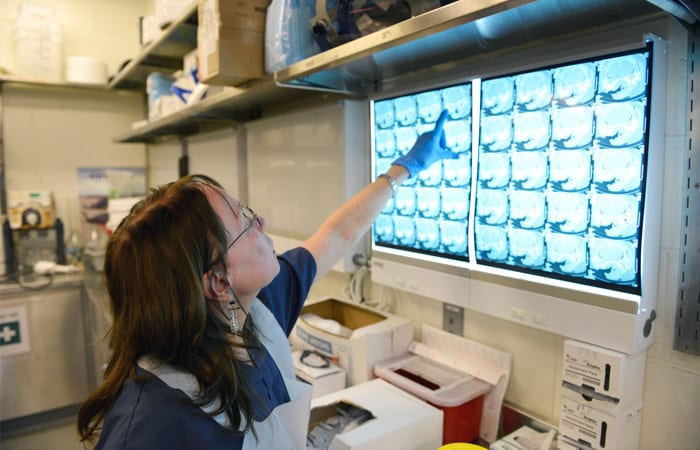
Two seldomly seen deep-diving whales called True’s beaked whales were found dead on a beach on Long Island, N.Y. Why did the whales, an adult female and male juvenile,die?
Read MoreCan Squid Abide Ocean’s Lower pH?
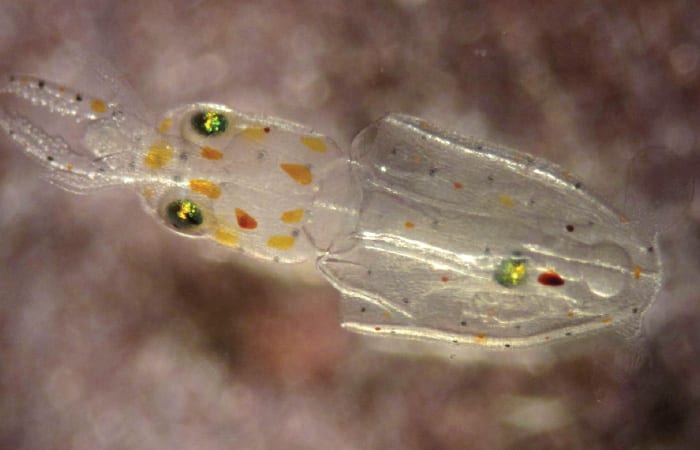
To most people, squid are calamari: delicious when fried. But to WHOI researchers Max Kaplan and Aran Mooney, squid are another reason to be concerned about ocean acidification.
Read MoreNew Study Finds Extreme Longevity in White Sharks
Great white sharks—top predators throughout the world’s ocean—grow much slower and live significantly longer than previously thought, according to a new study led by the Woods Hole Oceanographic Institution (WHOI). In the first successful radiocarbon age validation study for adult white sharks, researchers analyzed vertebrae from four females and four males from the northwestern Atlantic Ocean. Age estimates were up to 73 years old for the largest male and 40 years old for the largest female.
Read MoreWHOI Scientists Garner Awards in 2013
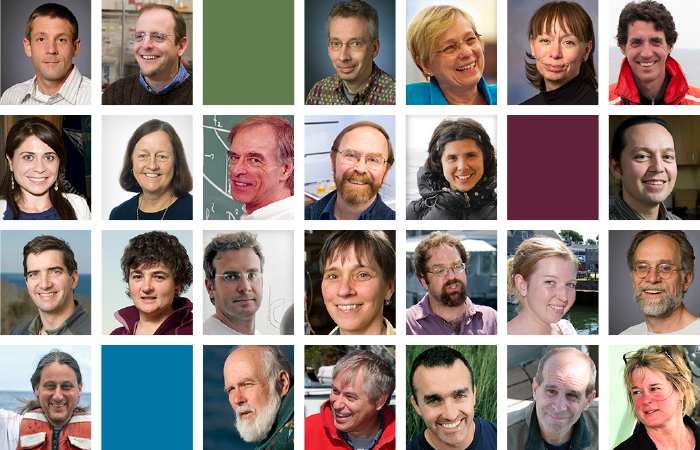
As the year 2013 ends, we profile scientists who recently received awards and recognition for their work.
Read MoreDropping a Laboratory into the Sea
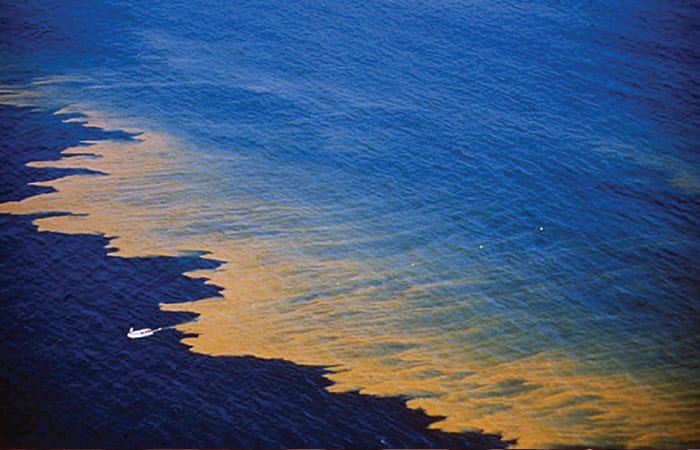
Scientists at WHOI deploy moored robotic laboratories in the Gulf of Maine for long-term monitoring of red tide algae
Read MoreThe Return of the Seals
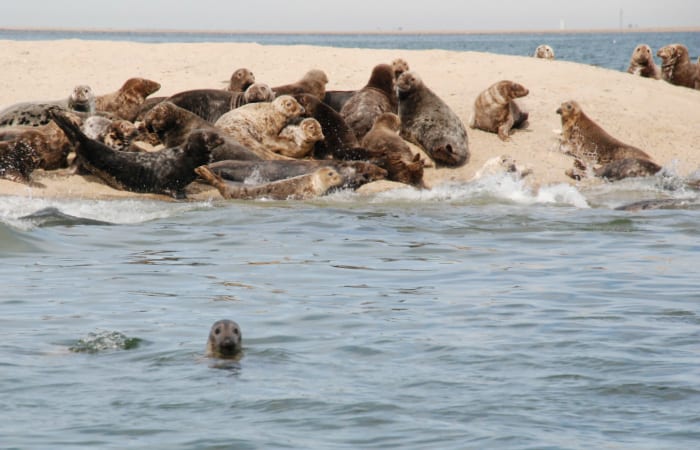
WHOI biologist Rebecca Gast examines whether the recovered and thriving population of gray seals in Cape Cod waters has affected water quality off the beaches they frequent.
Read MoreThe Decline and Fall of the Emperor Penguin?
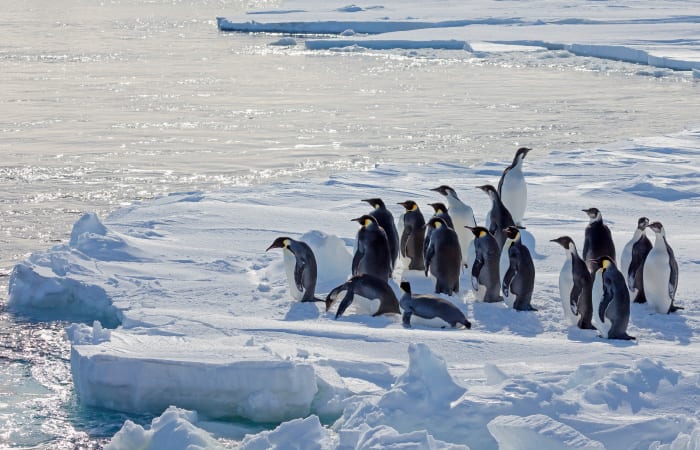
Climate change is shifting conditions on which Emperor penguins in Antarctica depend to sustain their populations.
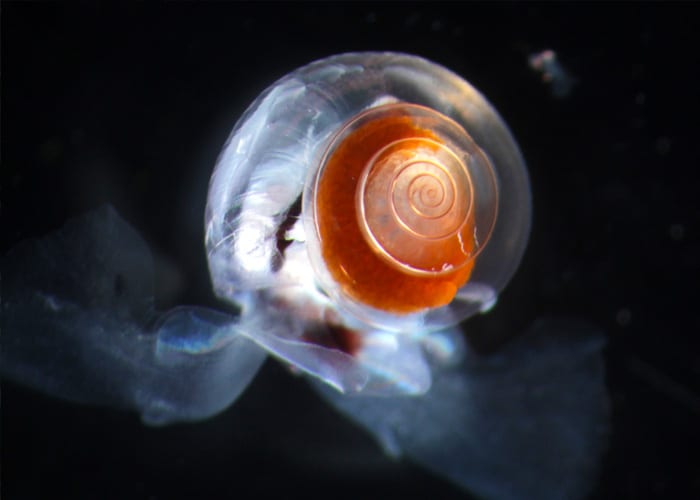
Read MoreTiny. Ubiquitous. Vital. Delicate. Vulnerable.
Dolphins Assist Scientists Studying Effects of Data-logging Tags
For scientists studying marine mammals in the wild, data-logging tags are invaluable tools that allow them to observe animals’ movements and behaviors that are otherwise hidden beneath the waves much…
Read MoreAn Ocean That’s No Longer Wild
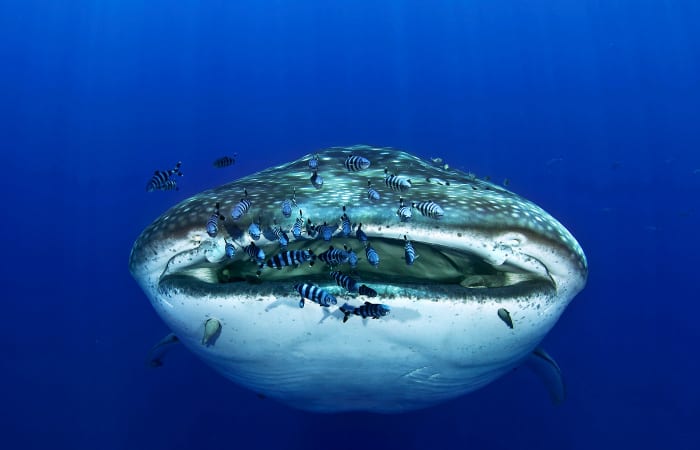
Like most fathers, Simon Thorrold plays tag with his young daughter. But Thorrold, a biologist at Woods Hole Oceanographic Institution, also plays tag with 30-foot-long whale sharks, like the one…
Read More