
Biology
Caught in the Middle of the Marine Mammal Protection Act
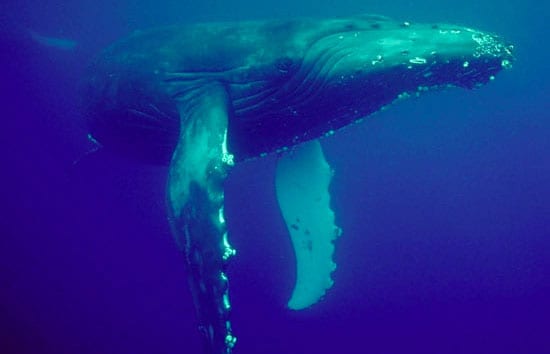
In the past few years, several research projects have been halted because of conflicting interpretations of the Marine Mammal Protection Act. Energy, shipping, and naval interests claim the MMPA hampers their ability to work in the sea. Environmentalists and animal rights want the act strictly enforced. In between are scientists.
Read MoreWhat Brings the Food that Brings the Whales?
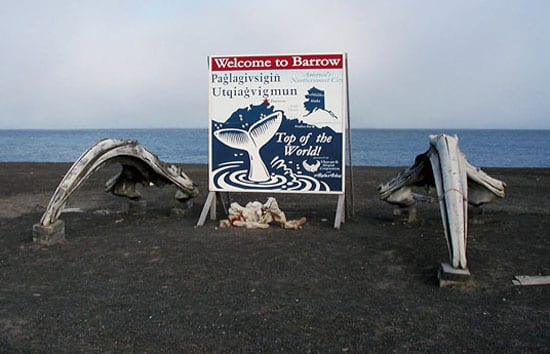
Watching the gray, pitching ocean from the beach in Barrow, Alaska, Carin Ashjian, a biologist at Woods Hole Oceanographic Institution (WHOI), wonders if the seas are too rough for the…
Read MoreGraduate Student Discovers an Unusual New Species
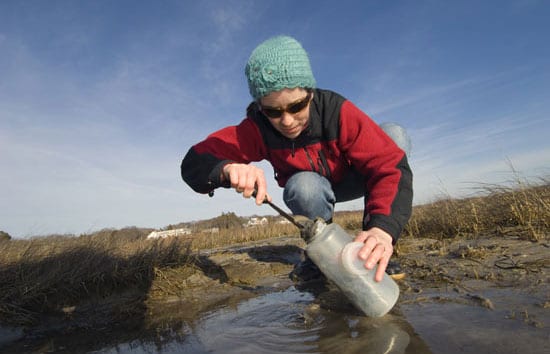
Sheri Simmons gets into the rugged wilderness as often as she can, backpacking in Newfoundland, the Sierras, the Adirondacks, and Alaska—where she once encountered a grizzly bear on a trail.…
Read MoreTo Find Whales, Follow Their Food
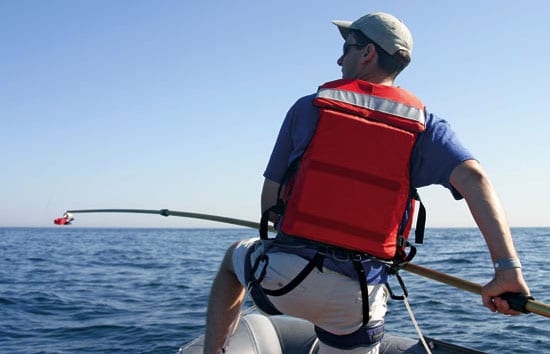
The average adult right whale consumes about a ton of food a day, eating billions of tiny crustaceans called copepods that are packed with protein and calorie-rich oils. “To whales,…
Read MoreDiving into the Right Whale Gene Pool
Like forensic detectives, a multi-institutional team of scientists has followed a thread of DNA from the highly endangered right whale population across the oceans and back through generations.
Read MoreDoing the Right Thing for the Right Whale
The situation is urgent: Seventy years after whaling was banned, the North Atlantic right whale population has not recovered. Only 300 to 350 remain, and the species is headed toward…
Read MoreScientific (and Surfing) Safari
Eric Montie has a great tan, photos of huge waves taped above his computer, and a penchant for grabbing his short board and racing to the beach at a moment’s notice.…
Read MoreA Mysterious Disease Is Infecting Northeast Clam Beds
Scientists follow clues to the mysterious disease that is killing off clams on Cape Cod and along the Eastern Seaboard.
Read MoreFinding Nemo…and Other Endangered Fish
A novel method to track fish larvae?using tetracycline to tag otoliths, or ear bones?sheds lights on which marine areas to protect
Read MoreCold Comfort for Barnacles
A WHOI research team reports that barnacle larvae can remain frozen up to seven weeks and still revive, settle, and grow to reproduce. The discovery offers a new understanding of barnacle larvae, which are abundant sources of food for larger animals in the coastal ocean. It also provides possible clues to how other intertidal marine invertebrates may settle and survive harsh winters.
Read MoreBig Whale, Big Sharks, Big Stink
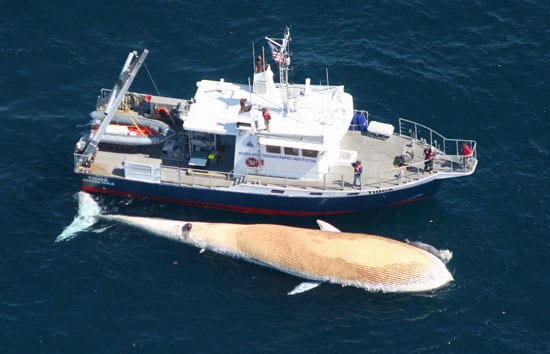
A shipping tanker first spotted the whale on Sept. 9 about 24 miles southeast of Nantucket, Mass. It floated belly up—species unknown, cause of death a mystery. Like a detective,…
Read MoreAnderson Addresses UN Ocean Commission

Senior Scientist Don Anderson of the WHOI Biology Department was invited to deliver the Bruun Memorial Lecture in June at the 23rd annual meeting of the Intergovernmental Oceanographic Commission (IOC) of the United Nations Educational, Social, and Cultural Organization (UNESCO).
Read MoreA Whale Expert is Called in to Decipher Odd Elephant Calls
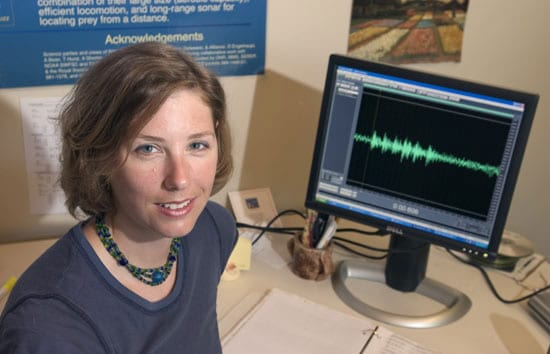
An article about work done by WHOI postdoctoral investigator Stephanie Watwood to analyze atypical sounds made by two African elephants, one imitating a truck and one the calls of another elephant species
Read MoreRed TideGone for Now, But Back Next Year?
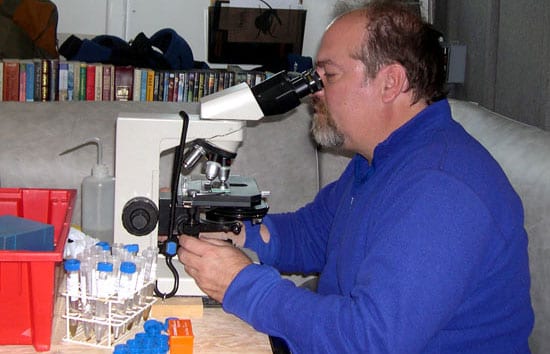
The historic bloom of toxic algae that blanketed New England’s waters and halted shellfishing from Maine to Martha’s Vineyard in the spring of 2005 is over. But scientists are now wondering if there will be an encore.
Before departing, the algae likely left behind a colonizing population that may promote blooms in southern New England for at least the next few years.
Settling on the Seafloor
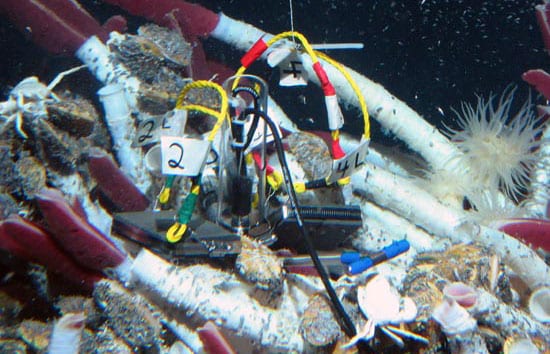
People may search for a long time, but they know it when they see it—the right job in the right town, or the right house in the right neighborhood. Then…
Read MoreOn the Seafloor, a Parade of Roses
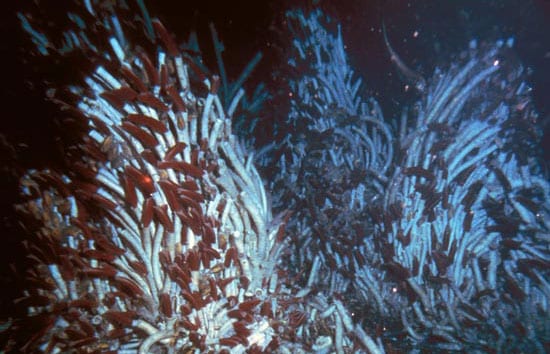
Third generation of scientists finds third generation of hydrothermal vent sites.
Read MoreSeeing Red in New England Waters
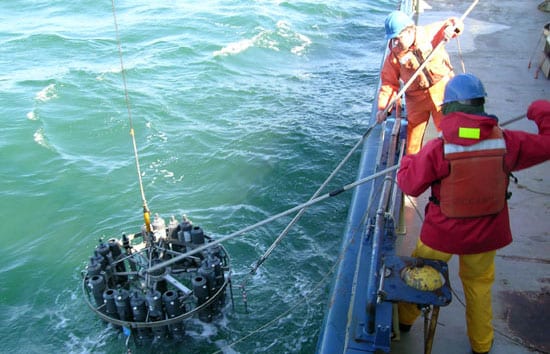
Coastal resource managers shut down shellfish beds in three New England states in mid-May—including rare closures of Massachusetts Bay and Cape Cod Bay—because of an intense bloom of the toxic algae Alexandrium fundyense. Researchers from the Woods Hole Oceanographic Institution saw the ‘red tide’ coming before its toxic effects reached the shore.
Read MoreSensors to Make Sense of the Sea
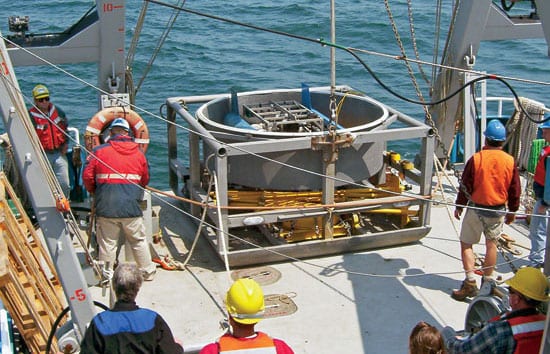
It is difficult and expensive to go to sea, hard to reach remote oceans and depths, and impossible to stay long. Like scientists in other fields, oceanographers use sensors to project their senses into remote or harsh environments for extended time periods. But the oceans present some unique obstacles: Instruments are limited by available power, beaten by waves, corroded by salt water, and fouled by prolific marine organisms that accumulate rapidly on their surfaces.
Read MoreRisks and Remedies from the Sea

Researchers from Woods Hole Oceanographic Institution, the Marine Biological Laboratory (MBL), and the Massachusetts Institute of Technology (MIT) have embarked on a novel collaboration to investigate harmful algal blooms, ocean-borne pathogens, and potential pharmaceuticals from marine sources.
Read MoreDown to the Sea on (Gene) Chips
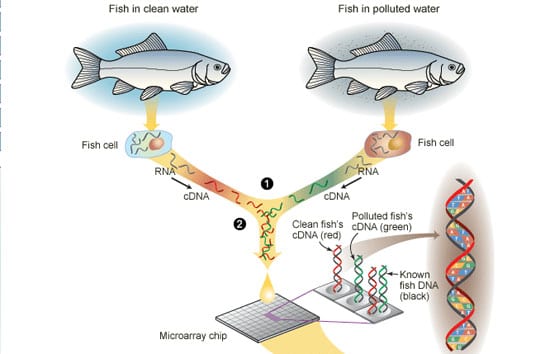
The genomics revolution has reached the oceans. New genomic techniques are being used to find previously unknown life forms in the oceans; to learn how species, and genes themselves, evolved over Earth?s long history; to understand the genetic tools that allow species to adapt to diverse and often harsh environments; and to investigate species? responses to pollutants.
Read MoreVoyages into the Antarctic Winter
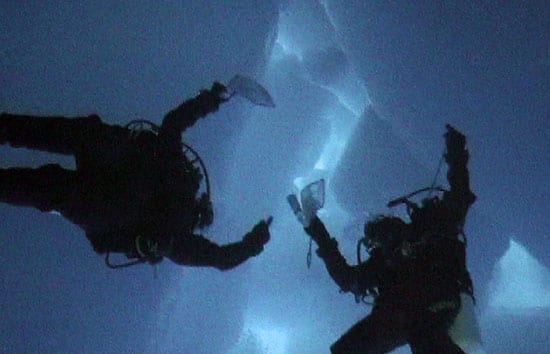
At the extreme ends of the Earth, Antarctica is a vast, rocky continent, mostly ice-covered and barren. Surrounding Antarctica, the Southern Ocean is equally vast, cold, and ice-covered. But unlike the land, it teems with life, ranging from microscopic plankton to top predators: whales, seals, penguins, fish, and sea birds.
Read MoreHow to See What Whales Hear
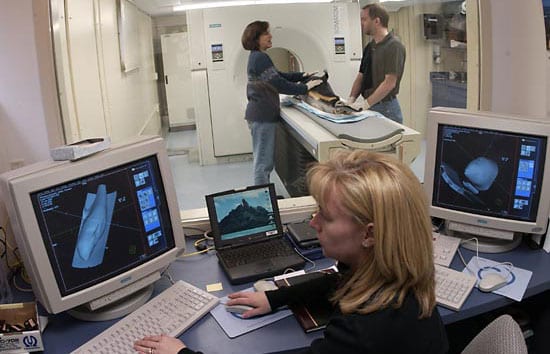
On summer nights, if you sit quietly at the edge of a field or watch the edges of the light pools around street lamps, you will see bats swooping through…
Read MoreBig Trouble from Little Squirts
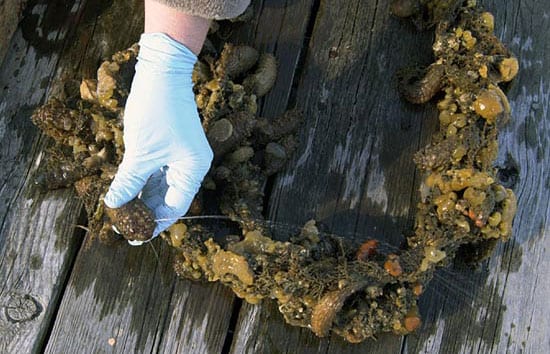
Welcome to the online version of Oceanus, the magazine that explores Earth’s last frontier. Oceanus delivers news and commentary on the meaning and value of ocean research, engineering, and education at Woods Hole Oceanographic Institution.
Read MorePlaying Tag with Whales
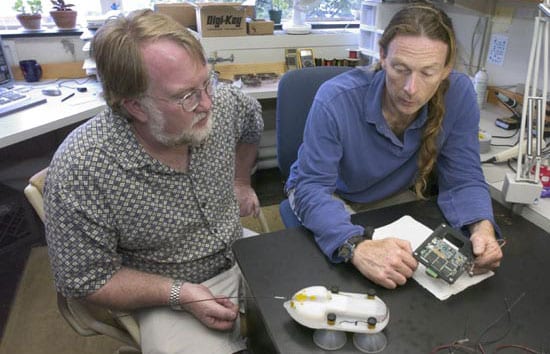
The challenge of designing a device to learn what marine mammals do on dives is the stuff of dreams for an electronics engineer.
Read More