
Feature
A Whole New Kettle of Fish
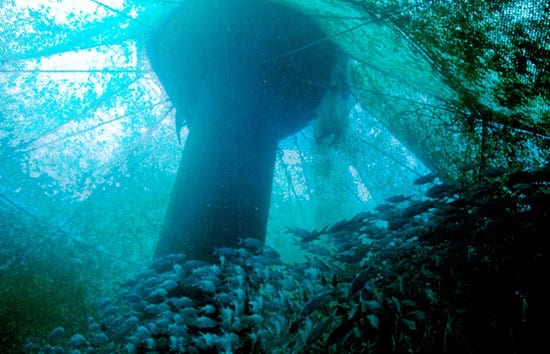
With most of the world?s fisheries already fully exploited or overexploited, the wild catch will not meet increasing worldwide demand for seafood?which the U.S. Department of Commerce projects will triple by 2025. The United States also imports nearly 70 percent of the seafood Americans consume, resulting in an $8 billion shellfishing industry trade deficit.
Read MoreAnderson Addresses UN Ocean Commission
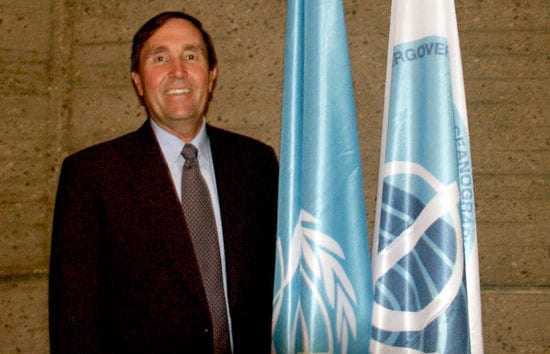
Senior Scientist Don Anderson of the WHOI Biology Department was invited to deliver the Bruun Memorial Lecture in June at the 23rd annual meeting of the Intergovernmental Oceanographic Commission (IOC) of the United Nations Educational, Social, and Cultural Organization (UNESCO).
Read MoreIn and Out of Harm’s Way
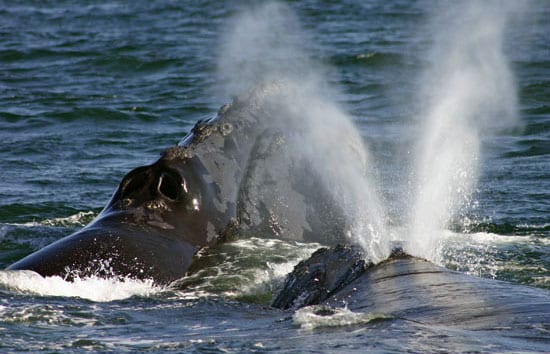
Just a few more miles or a few more minutes. That’s what scientists and some federal managers think it would take to improve the plight of the highly endangered North…
Read MoreAt the River’s End
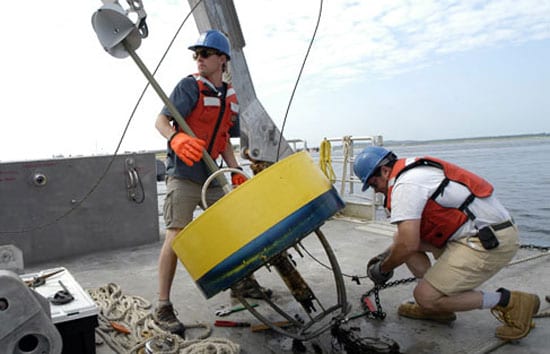
In science, some of the most confounding and interesting questions come from the borderlands, where one physical world collides with another. In marine science, one of the most dynamic environments…
Read MoreWhat Is the Alvin Training Program Like?
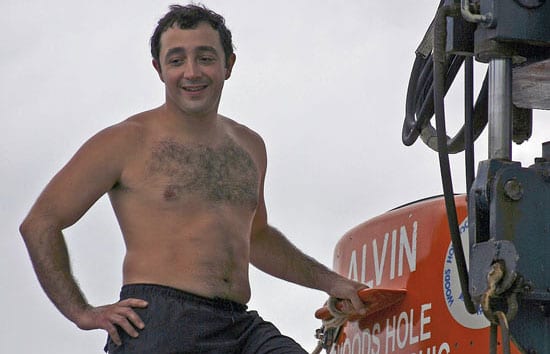
Like many boys who spend their youths throwing baseballs in Massachusetts parks, Tarantino dreamed of playing for the Red Sox. When not pitching, he liked to take apart his toys…
Read MoreLife After Alvin
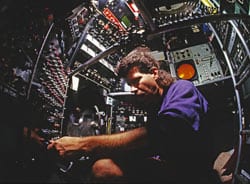
‘Ever Get Scared in the Sub?’ and Other Questions
Alvin‘s Pilots
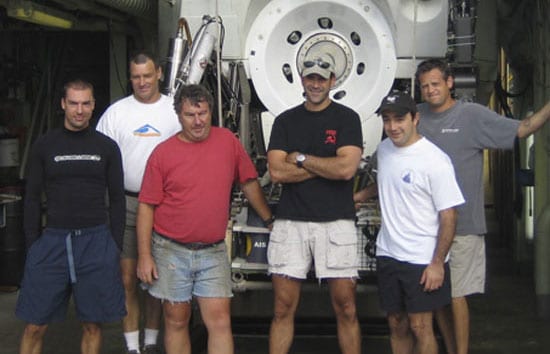
Forty summers ago in the Bahamas, two men climbed inside a 23-foot white submarine named Alvin and drove it to a depth 6,000 feet, a dive that certified them as…
Read MoreA Whale Expert is Called in to Decipher Odd Elephant Calls
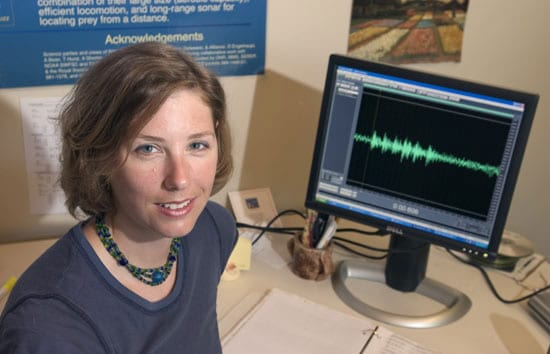
An article about work done by WHOI postdoctoral investigator Stephanie Watwood to analyze atypical sounds made by two African elephants, one imitating a truck and one the calls of another elephant species
Read MoreRed TideGone for Now, But Back Next Year?
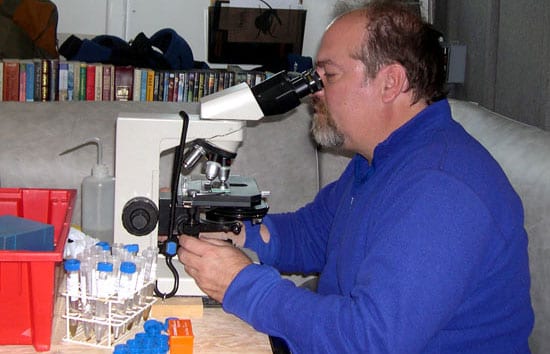
The historic bloom of toxic algae that blanketed New England’s waters and halted shellfishing from Maine to Martha’s Vineyard in the spring of 2005 is over. But scientists are now wondering if there will be an encore.
Before departing, the algae likely left behind a colonizing population that may promote blooms in southern New England for at least the next few years.
The Once and Future Danube River Delta
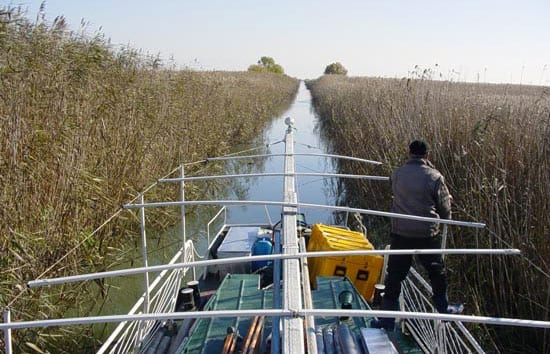
?The Danube River Delta is like the Everglades,? said Liviu Giosan, who grew up near the Romanian wetlands. The triangle-shaped, sediment-rich region at the mouth of the Danube River is also rich with human history. A traditional maritime culture persists on the delta, and the United Nations has declared the region a World Heritage site. The Danube Delta is also a great place for a geologist to study how the coast stretches, contracts, and undulates with time?and human interference.
Read MoreSettling on the Seafloor
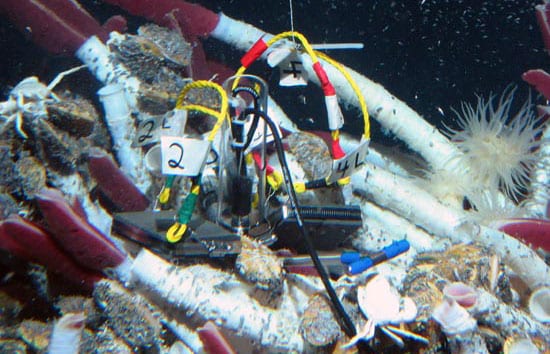
People may search for a long time, but they know it when they see it—the right job in the right town, or the right house in the right neighborhood. Then…
Read MoreA Tropical Research Paradise
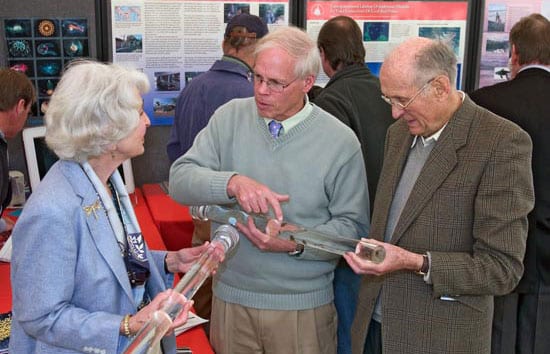
WHOI Trustees Frank and Lisina Hoch have issued a one-to-one $1.125 million challenge to seize new opportunities and expand the Institution’s research in tropical regions.
Read MoreWHOI Announces $200 Million Capital Campaign
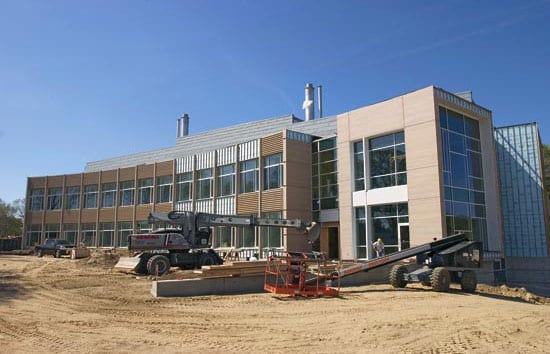
article about WHOI’s capital campaign
Read MoreInstitution Celebrates 75th Birthday in 2005
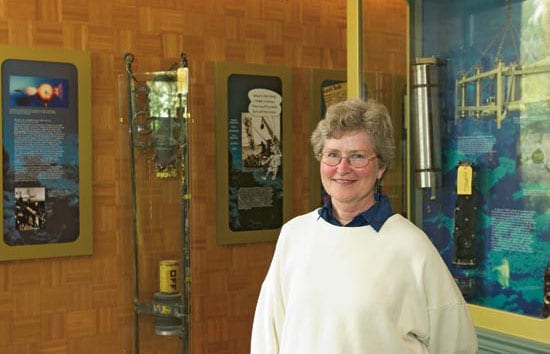
WHOI celebrates 75 years of ocean research, education, and exploration this year with several events planned for August and September.
Read MoreSeafloor Reconnaissance Reveals Hidden Dangers Off Antarctica
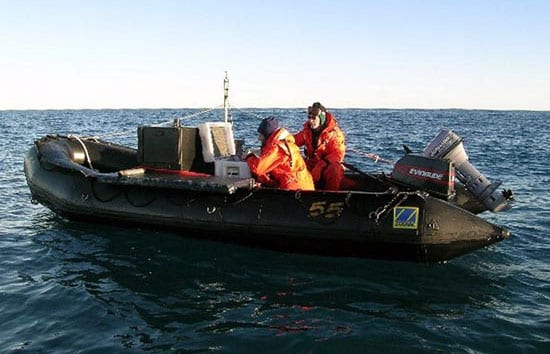
For five frigid weeks in April and May 2005, a team of scientists and engineers sat in inflatable boats off the coast of the western Antarctic Peninsula, steering clear of…
Read MoreGuy Nichols: Transforming Institutions
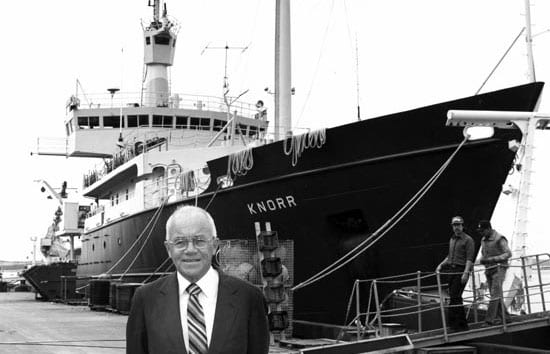
Guy Nichols never shied away from tough jobs. And he never lost sight of the fact that an organization needs all its people, not just those at the top.
Read MoreRemembering a Scientist/Student/Artist
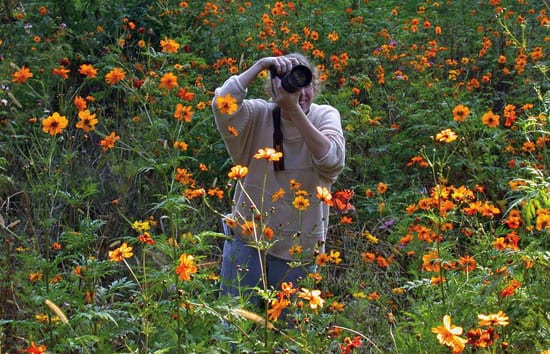
Celeste Fowler joined the MIT/WHOI Joint Program (JP) in June 2003 and quickly made her presence felt.
Read MoreWHOI Associates Have a New President
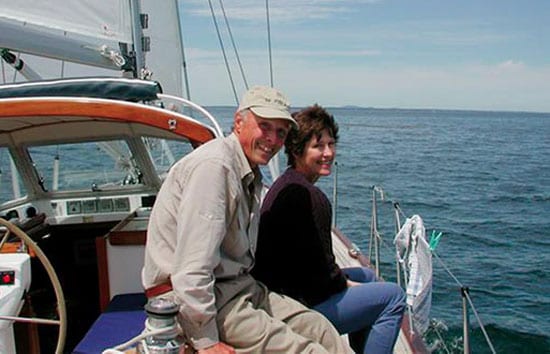
In May 2005, Carl Peterson was named president of the WHOI Associates, whose membership supports research at WHOI.
Read MoreNewest Alvin Pilot Comes Aboard
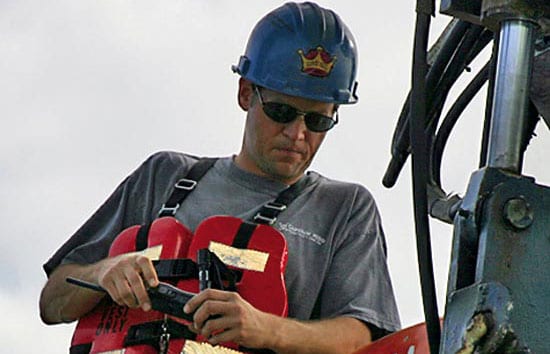
Gavin Eppard became WHOI?s newest Alvin pilot on March 21, 2005.
Read MorePittenger Fellowship Awarded to Naval Graduate Student
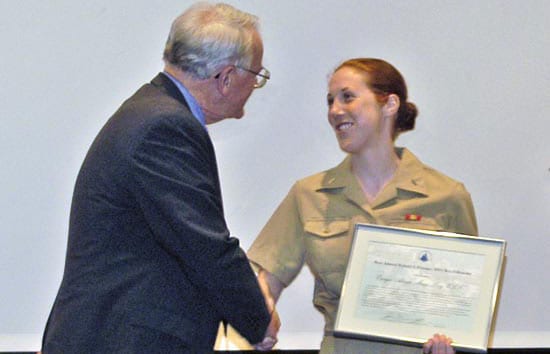
WHOI presented its first Rear Admiral Richard F. Pittenger Fellowship in March to Ensign Allison Berg, a master’s degree candidate in the MIT/WHOI Joint Program.
Read MoreHart Elected to American Academy of Arts and Sciences
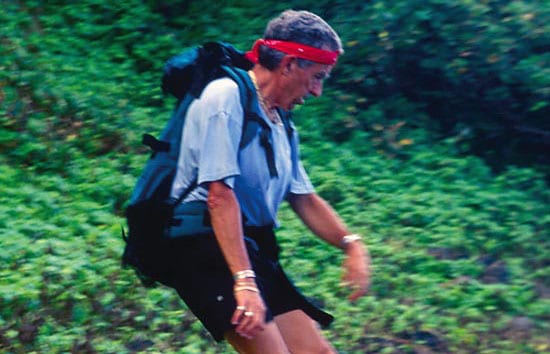
Senior Scientist Stanley Hart of the WHOI Geology and Geophysics Department has been elected a Fellow of the American Academy of Arts and Sciences, one of the oldest learned societies in the nation.
Read MoreOn the Seafloor, a Parade of Roses
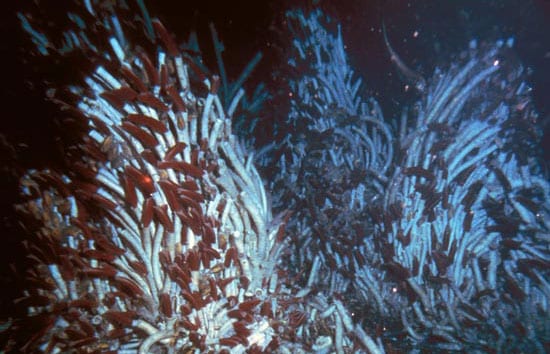
Third generation of scientists finds third generation of hydrothermal vent sites.
Read MoreFrom Ancient Roman Omens, New Data on Solar Activity
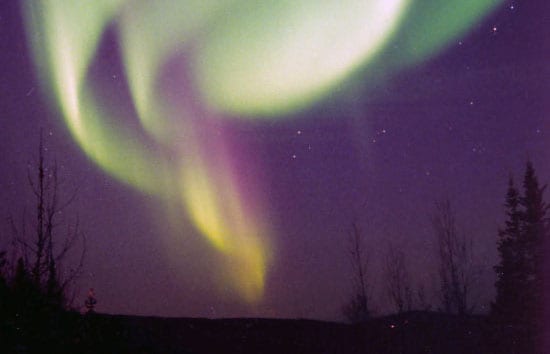
Because aurorae, comets, and meteors were omens, the Romans and other ancient peoples observed the sky fastidiously, recording heavenly observations alongside detailed accounts of earthly events and military triumphs. Twenty centuries later, those historical records have become scientific data for researchers such as WHOI Senior Scientist Andy Solow.
Read More