
Feature
On the Trail of an Invader
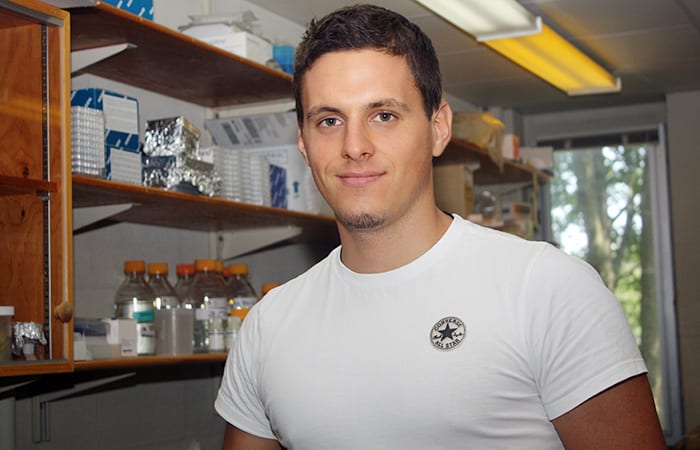
To find out when and how fast a small gray barnacle came to New England waters, WHOI researchers turn to forensic techniques.
Read MoreRecovering After a Hurricane

Summer Student Fellow Maya Becker studied how vulnerable four coastal communities were to major hurricanes—and how fast they recovered.
Read MoreA Summer of Science by the Sea, 2014 (Part II)
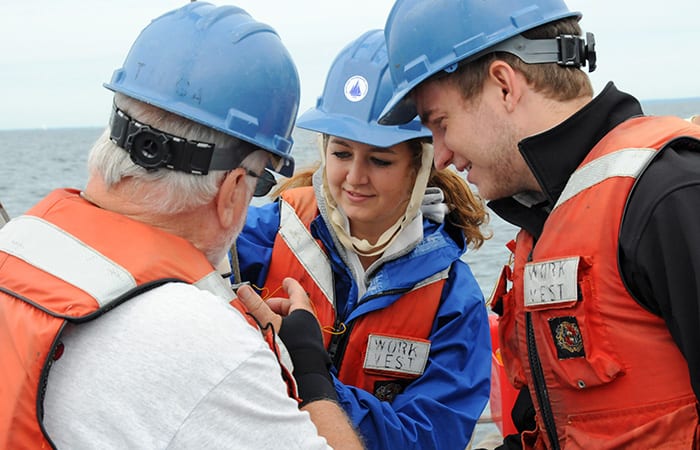
Every summer since 1959, undergraduates from around the world have come to Woods Hole Oceanographic Institution for a program to learn about ocean science and conduct research under the guidance of WHOI scientists. Read the second and final installment of our series of profiles of this year’s young scholars.
Read MoreSea Science in the Space Age
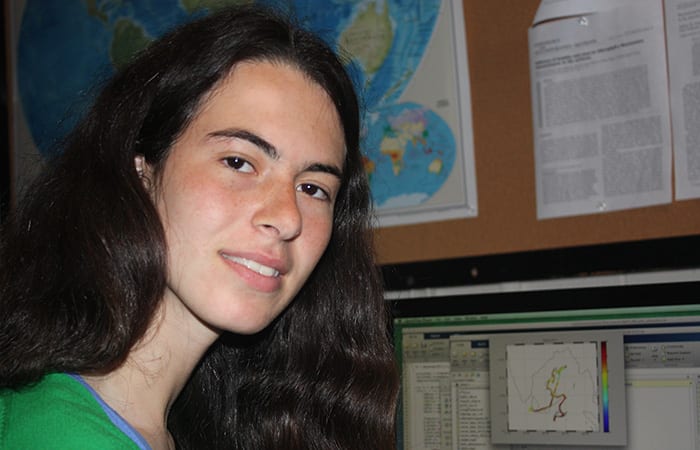
South Asian monsoons bring huge amounts of fresh water into the Bay of Bengal. Summer Student Fellow Mara Freilich used huge data sets from satellites to how and where the salinity of the Bay changes as a result.
Read MoreSwimming in Low-pH Seas
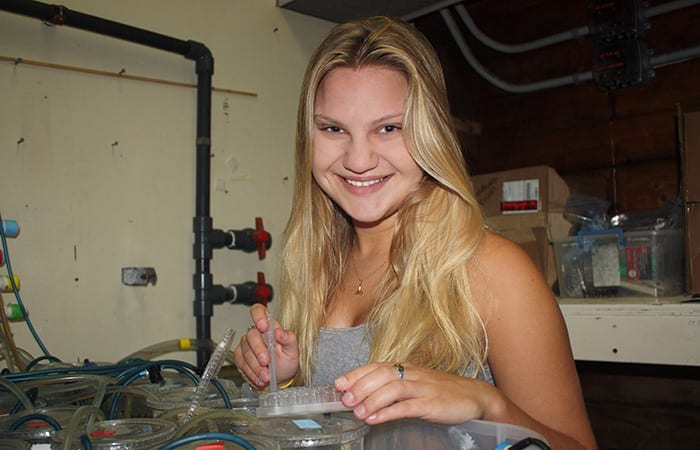
Researchers knew that squid raised in acidified water developed abnormal balance organs. To find out whether the young squid could still balance and swim normally, Summer Student Fellow Doriane Weiler mapped their movements.
Read MoreSurface Waters Go Their Own Way
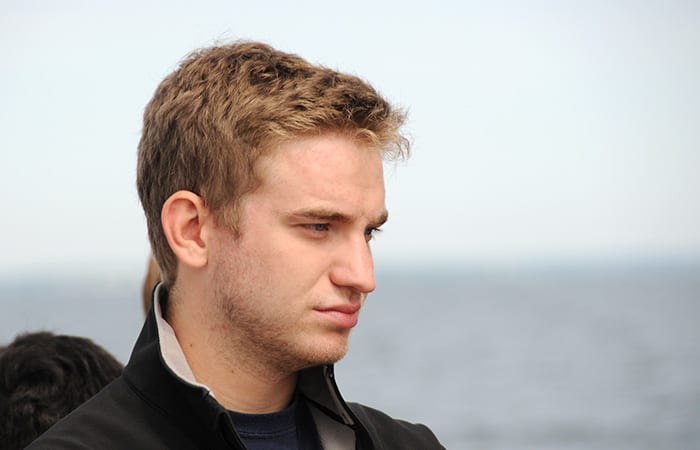
Summer Student Fellow Sam Kastner found that at a given spot in the ocean, water at the surface may not be moving the same direction or speed as water deeper downâwhich can make predicting the path of nutrients or pollutants very challenging.
Read MoreScallops Under Stress
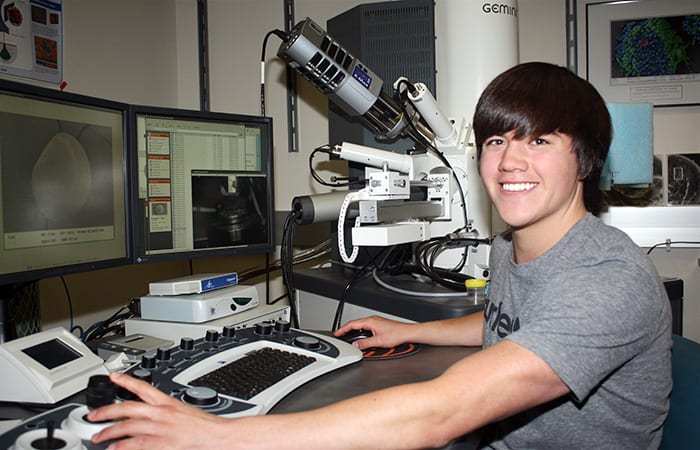
Like other marine species, scallops face multiple climate change-related problems. Summer Student Fellow Cailan Sugano studied how scallops respond to acidification and lack of foodâand whether extra food can help them resist damage due to more acidic seawater.
Read MoreA Summer of Science by the Sea, 2014 (Part I)
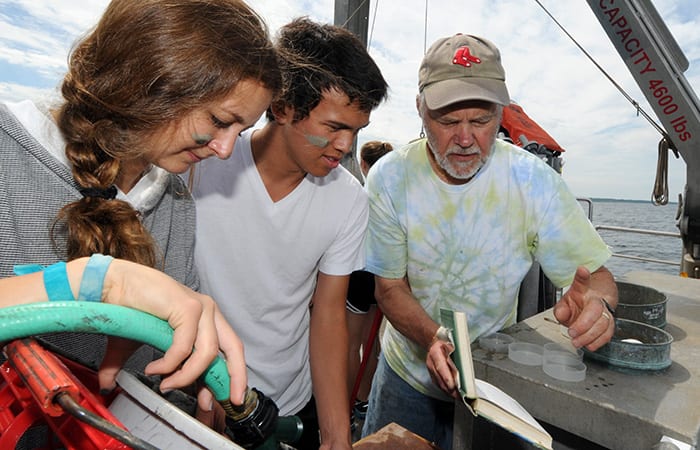
Every summer since 1959, undergraduates from around the world have come to Woods Hole Oceanographic Institution for a program to learn about ocean science and conduct research under the guidance of WHOI scientists.
Read MoreThe Exosuit Comes Aboard
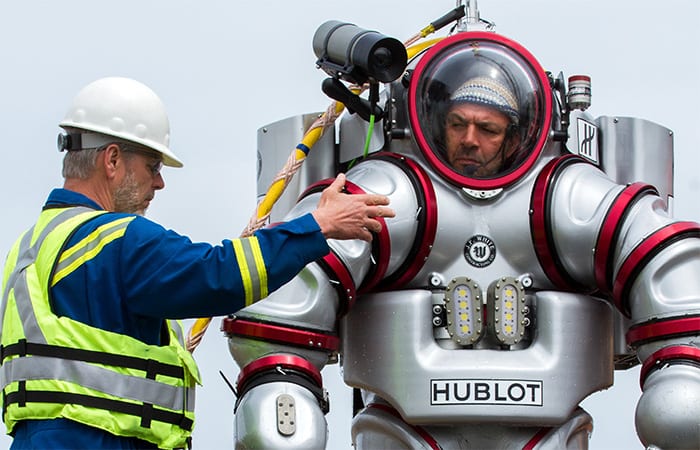
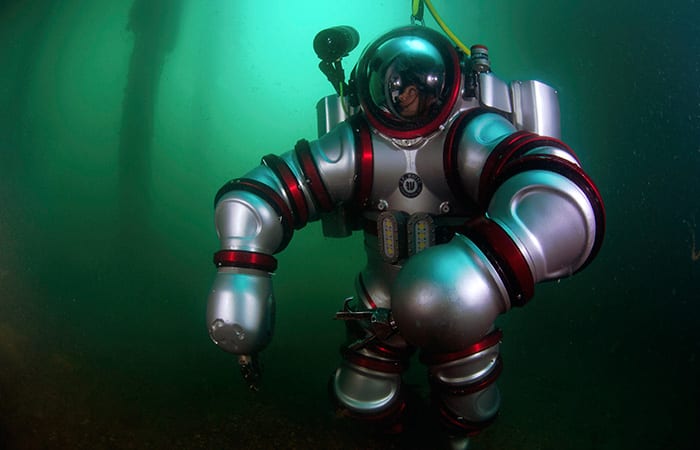
One of the ocean’s least studied places is actually the realm between 200 and 500 feet deep. This zone has resisted exploration because it’s too deep for SCUBA and not…
Read MoreHigh-tech Dives on an Ancient Wreck
When sponge divers first chanced upon the shipwreck off the Greek isle of Antikythera in 1900, they couldn’t have known that it would become the richest ancient shipwreck ever discovered.…
Read MoreProteomics Reveals Ocean’s Inner Workings
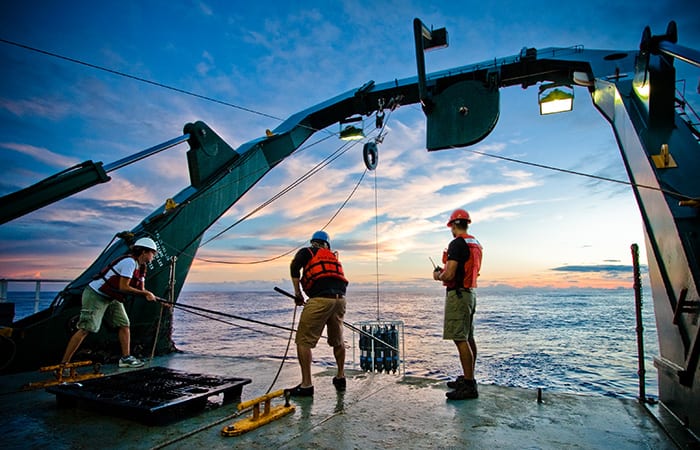
In a new study, WHOI scientists have demonstrated how the emerging biomedical technique of measuring proteins—a field called proteomics—can be applied to the ocean to reveal the inner biochemical workings of microbial life and ocean ecosystems.
Read MoreFrom Penguins to Polar Bears
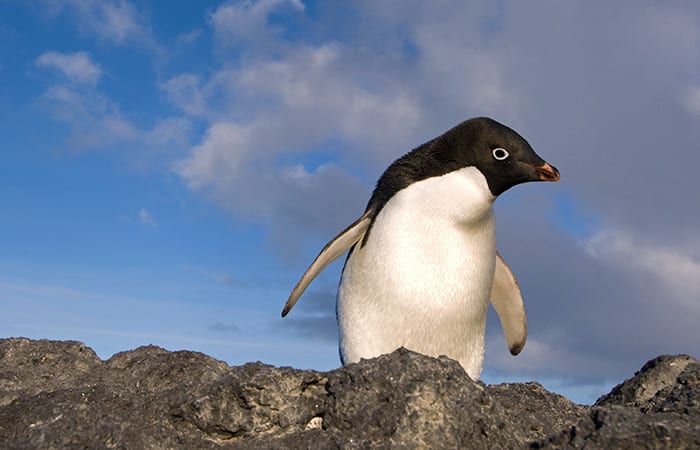
Polar ecosystems are especially vulnerable to climate change. They are also notably hard to study and to manage. Scientists came to WHOI recently for a Morss Colloquium to address the issues.
Read MoreA Mooring in Iceberg Alley
WHOI scientists knowingly put a mooring in a fjord filled with icebergs near the terminus of a Greeland glacier. But it was their only way to learn if changing ocean conditions might be affecting how fast the glacier flowed into the ocean.
Read MoreA Drop in the Ocean
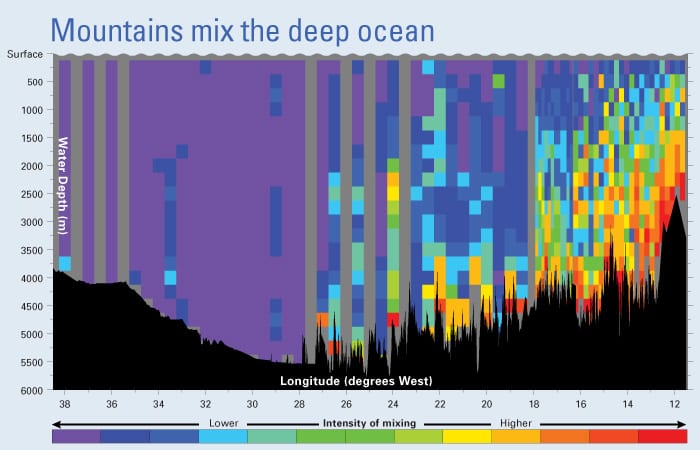
How can you follow a wisp of water within the turbulent immensity of the ocean? Jim Ledwell figured out a way. He developed a method to inject a harmless chemical…
Read MoreRebuilding Alvin: Chris German
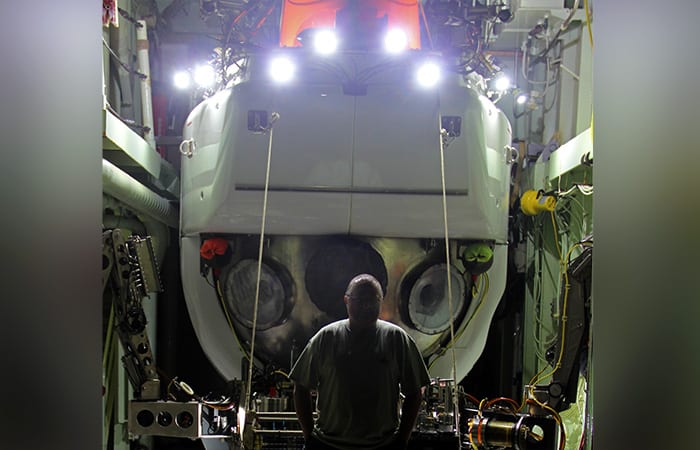
From the beginning of 2011 to May 2013, Alvin, the U.S. science community’s only human-occupied submersible dedicated to deep-sea research, underwent a major overhaul and upgrade to greatly enhance its capabilities.…
Read MoreAt 50, Alvin Gets an Extreme Makeover
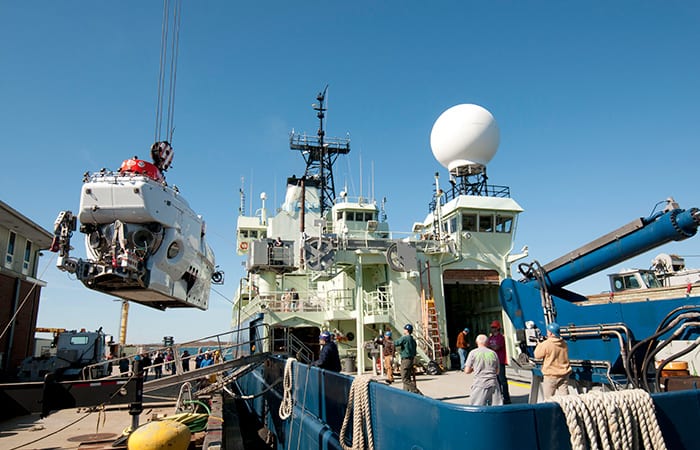
The deep-sea research submersible Alvin returned to service in March 2014 after undergoing an historic overhaul that significantly enhanced its capabilities.
Read MoreBringing Alvin Back on Board
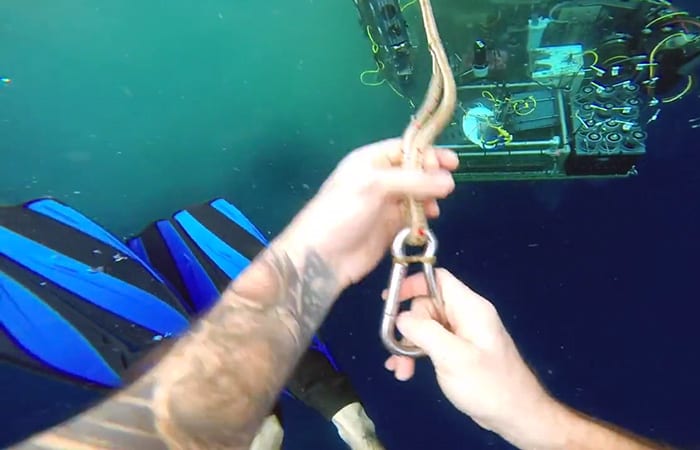
Crew members of the research vessel Atlantis play crucial roles in recovering the submersible after its day on the bottom of the ocean.
Read MoreHappy 50th Birthday, Alvin
Five years before we landed a man on the moon, a stubby submersible was built to take people to the bottom of the ocean. Alvin was commissioned on June 5, 1964.
Read MoreTrailblazer in the Ocean
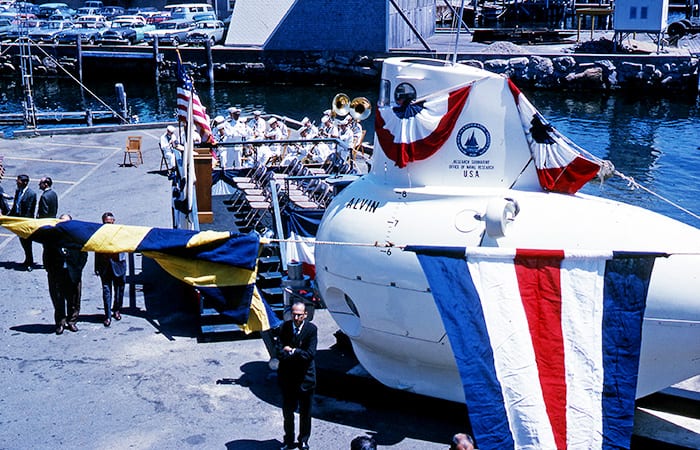
On June 5, 1964, a stubby submersible with a not-so-bold name was commissioned on the dock of Woods Hole Oceanographic Institution, marking the beginning of a new era of deep-sea exploration
Read MoreRebuilding Alvin: Don Peters
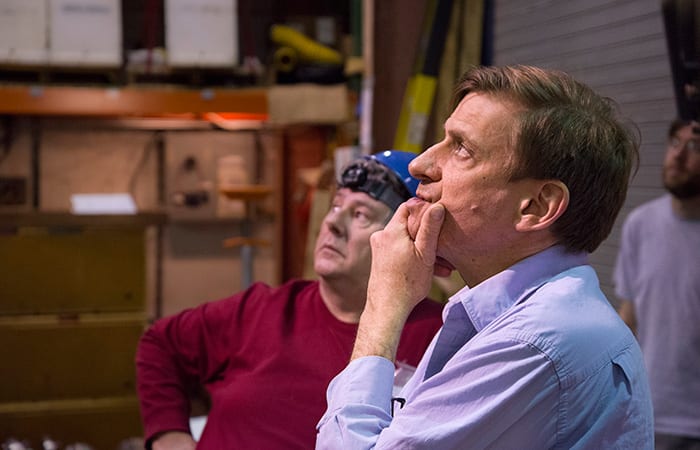
More than 100 people at WHOI played roles in redesigning and reconstructing the new Alvin. Don Peters, senior engineer, headed the team that reconfigured the sub to accommodate a larger sphere and added weight.
Read MoreRebuilding Alvin: Logan Driscoll
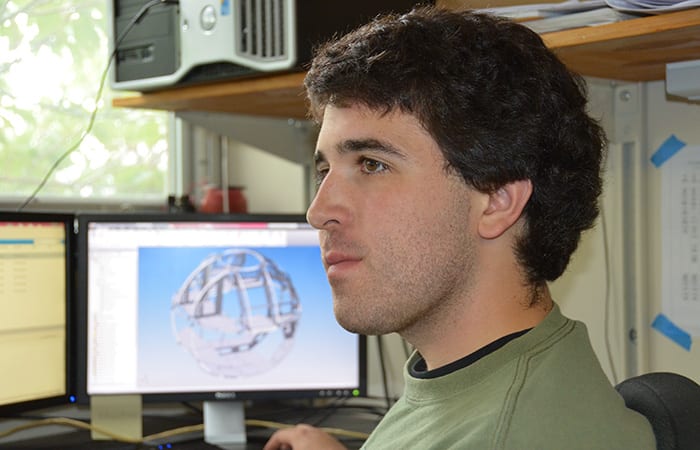
The new Alvin has a new, slightly larger personnel sphere. Still, getting all the necessary equipment to fit inside the sphere took a Herculean effort.
Read MoreRebuilding Alvin: Durante & Skowronski
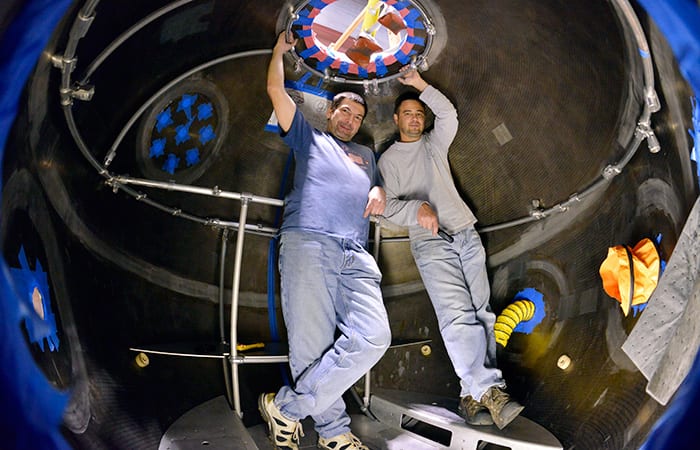
The new Alvin has a new, slightly larger personnel sphere. Still, getting all the necessary equipment to fit inside the sphere took a Herculean effort.
Read MoreRebuilding Alvin: Bruce Strickrott
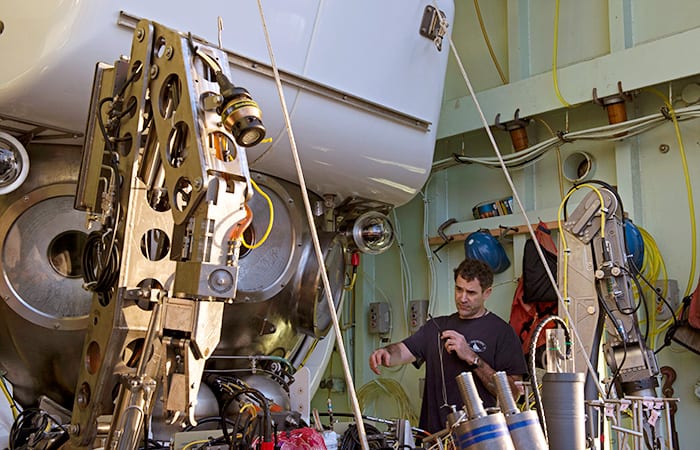
Now that the newly upgraded Alvin has resumed operations, a pilot and scientist describe how some of the new features of the submersible are changing the way they are using the vehicle.
Read MoreRebuilding Alvin: Humphris & Strickrott
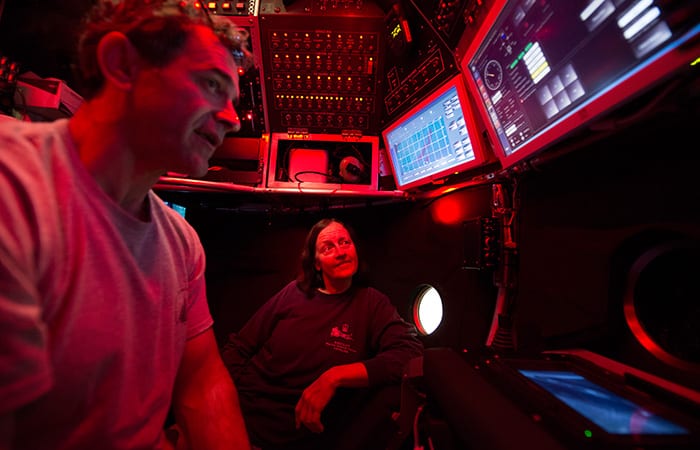
Now that the newly upgraded Alvin has resumed operations, a pilot and scientist describe how some of the new features of the submersible are changing the way they are using the vehicle.
Read More