
Press Room

Following the sinking of the SS United States, researchers will track how marine life, microbes, and chemistry build a new reef from the ground up

Scientists from the Woods Hole Oceanographic Institution explore why swordfish are pushing the boundary of the ocean twilight zone.

The International Union of Geological Sciences recognizes the site of the world’s first hydrothermal vent discovery, made during a 1977 expedition using WHOI’s submersible Alvin

Renewed funding will support new research, advanced chemical and modeling tools, and interdisciplinary training to uncover how marine microbes influence ocean chemistry and carbon cycling.

Recognition celebrates Harris’ leadership in ocean conservation and Bloomberg Philanthropies’ work to strengthen protections for more than 11 million square miles of ocean

The Academy’s highest honor, the fellowship recognizes blind and low-vision scientists advancing science and the blind community.

238-foot research vessel will navigate rivers, locks, and inland waterways to deploy underwater detector arrays and fiber-optic cables in Lake Superior, supporting study of subatomic particle physics
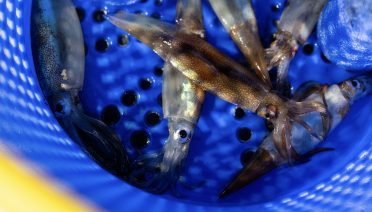
A new WHOI-led study traces an unusual influx of cold, fresh water that disrupted fisheries from New England to the Mid-Atlantic.
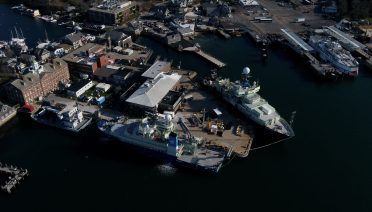
Gifts include four transformative gifts of $10 million or more since October 17, 2025.
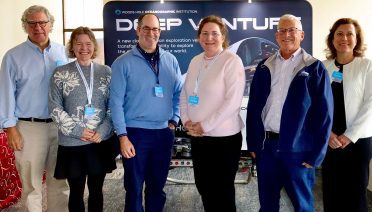
WHOI welcomes seven new Corporation members, bringing valuable expertise and perspectives to advance ocean science, innovation, and the Institution’s mission.
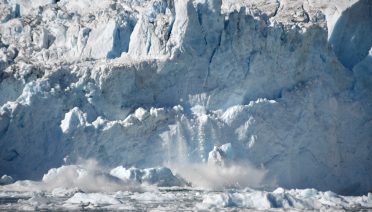
WHOI researchers use more than 15,000 satellite observations of ice cliffs to reduce uncertainty in future sea level rise projections
United Nations COP31 event in Türkiye seeks to foster more substantial ocean-based action to address risks posed by climate change

Leslie-Ann McGee will serve as the board’s Vice President of Industry, Research, and Technology, while Jacquelyn Veatch will serve as Vice President of the Early Career Ocean Professionals (ECOPs).
The coalition aims to advance scientific understanding through greater coordination, information sharing, transparency, and common standards for responsible research.
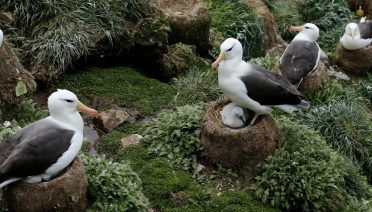
New WHOI-led study of black-browed albatrosses finds that climate mitigation may matter more than evolution for population persistence
A new National Academies report lays out a research strategy for studying the ocean’s ability to sequester carbon
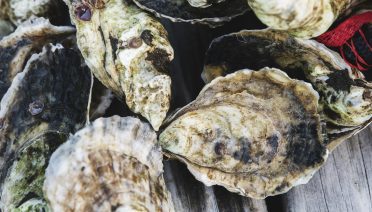
High-speed imaging reveals how oyster larvae’s dense shell helps them feed—and may offer clues to why ocean acidification threatens their survival
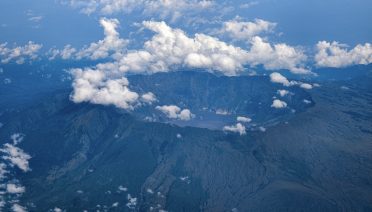
A new study combines paleoclimate data and climate models to show that large volcanic eruptions can disrupt the relationship between atmospheric circulations of the tropical Indian and Pacific oceans.

New, nationwide collaboration among public aquariums and research institutions finds new methods to breed more than 20 marine fish species in human care

An interdisciplinary approach reveals how chemistry, microbes, and ocean circulation work together to shape reef ecosystems