
Volcanic eruptions and a warming climate have disrupted close connections between the Indian and Pacific Oceans
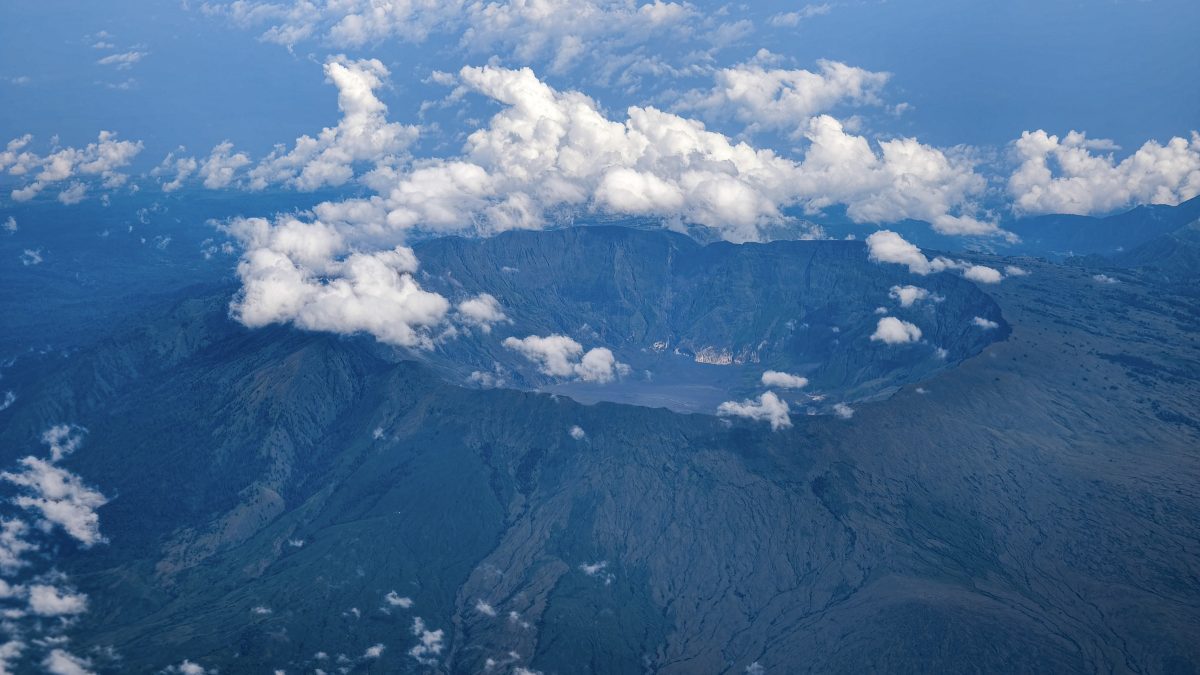 The volcanic eruption of Mt. Tambora in Indonesia in 1815 became one of the largest eruptions in recorded history. It was among a series of large tropical volcanic eruptions in the early 19th century that temporarily disrupted the connection between the Indian and Pacific Oceans. (Photo by Jimmy Tandjoeng/Getty Images)
 August 26, 2026
Images available for use with credit can be found here.
Woods Hole, Mass. (August 26, 2026) - A new study that combines paleoclimate data and climate models suggests that large volcanic eruptions can disrupt the relationship between atmospheric circulations of the tropical Indian and Pacific oceans. In addition, human-caused greenhouse gas emissions are now driving an unprecedented breakdown in inter-basin coupling, according to researchers at the Woods Hole Oceanographic Institution (WHOI).
Volcanism can temporarily weaken connections between ocean basins, but anthropogenic forcings in recent decades have caused an “exceptional” shift in the relationship between Indian and Pacific Ocean climate variability, according to a Nature Communications study, “Coupling of Pacific and Indian Ocean variability disrupted by 19th century volcanism.”
Climate conditions in the Indian Ocean typically follow the behavior of the Pacific Ocean. However, since the 1980s, scientists have observed a breakdown of this co-variability linked to climate change. With less than a hundred years of quality instrumental data, it is difficult to assess how unusual these recent changes really are. To provide long-term context, WHOI scientists used tropical paleoclimate archives – corals, tree rings, and stalagmites – to extend the record of Indian and Pacific Ocean climate back to the early 1600s.
Consistent with modern observations, the paleo-records show that the two ocean basins were largely coupled for most of the last four hundred years. But a key finding from this study is that the Indian-Pacific relationship appeared notably different during the early 19th century (1810–1850). The researchers link this unusual period to a series of large tropical volcanic eruptions that disrupted the usual connections between the two ocean basins, with computer simulations covering the past millennium supporting this explanation. The extent to which volcanic eruptions weakened Pacific influences on Indian Ocean climate depended on the strength of the eruptions and the climate conditions at the time. “This is one of the first studies to examine the breakdown in the connection between the Pacific and Indian oceans using evidence from past climates, modern observations, and climate models,” said co-author Caroline Ummenhofer, a senior scientist at WHOI.
"Showing how volcanic eruptions can weaken the Indian-Pacific relationship is only one outcome; this study helps frame how unprecedented and how exceptional the recent breakdown is. The modern data we have is limited and doesn’t go back far enough. With climate models and paleo-records, we are now able to say with more confidence that the recent changes we are seeing are really quite exceptional,” said lead author Shawn Wang. Wang is a former WHOI graduate student and postdoctoral researcher, and he is currently a postdoc at the University of Colorado Boulder.
Understanding this breakdown is important because connections between ocean basins help scientists predict future changes in rainfall and other aspects of the climate. While previous studies have often focused on individual ocean basins, this study looks at how the oceans influence one another.
“A key finding is that global warming and human emissions are now overwhelming the Pacific’s natural influence on the Indian Ocean,” Ummenhofer said.
“The Indian Ocean is a huge heat reservoir, and it can decouple from what the Pacific Ocean is doing. The results of this study underscore the independent behavior of the Indian Ocean,” said co-author Delia Oppo, an emeritus research scholar at WHOI.
This study was supported by the U.S. National Science Foundation, the WHOI Investment in Science Program, and the WHOI Academic Programs Office.
Authors: Shawn Wang1, Delia Oppo2, and Caroline Ummenhofer3
Affiliations:
1Former graduate student and postdoctoral researcher, Woods Hole Oceanographic Institution, Woods Hole, MA; current postdoc, University of Colorado Boulder
2Emeritus Research Scholar, WHOI
3Senior Scientist, WHOI
###
About Woods Hole Oceanographic Institution
The Woods Hole Oceanographic Institution (WHOI) is a private, non-profit organization on Cape Cod, Massachusetts, dedicated to marine research, engineering, and higher education. Established in 1930, its primary mission is to understand the ocean and its interaction with the Earth as a whole, and to communicate an understanding of the ocean’s role in the changing global environment. WHOI’s pioneering discoveries stem from an ideal combination of science and engineering—one that has made it one of the most trusted and technically advanced leaders in basic and applied ocean research and exploration anywhere. WHOI is known for its multidisciplinary approach, superior ship operations, and unparalleled deep-sea robotics capabilities. We play a leading role in ocean observation and operate the most extensive suite of data-gathering platforms in the world. Top scientists, engineers, and students collaborate on more than 800 concurrent projects worldwide—both above and below the waves—pushing the boundaries of knowledge and possibility. For more information, please visit www.whoi.edu
Key Takeaways
- A new study that uses paleoclimate data and climate models suggests that large volcanic eruptions can disrupt the relationship between atmospheric circulations of the tropical Indian and Pacific oceans. In addition, human-caused greenhouse gas emissions are now driving an unprecedented disruption in inter-basin coupling, according to the study by researchers at the Woods Hole Oceanographic Institution.
- “The current inter-basin breakdown of relationships is unprecedented compared with anything we have seen in the last 1,000 years or so. Even though volcanic eruptions in the past can weaken the relationship between these two ocean basins, the global warming that we are experiencing now can disrupt the inter-basin connection much more than any eruption we have seen in the past millennium,” said lead author Shawn Wang.
- The researchers used tropical paleoclimate archives – corals, tree rings, and stalagmites – to reconstruct Indo-Pacific sea surface temperature patterns over the past four centuries.