
Geology & Geophysics
Paving the SeafloorBrick by Brick
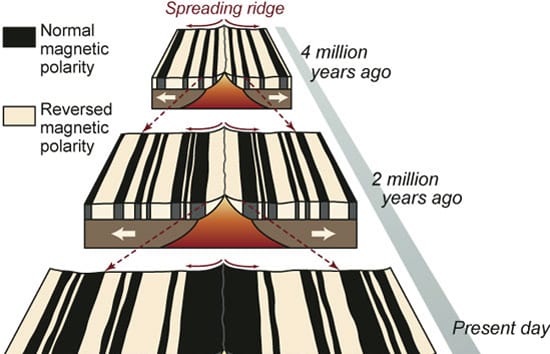
Most of Earth’s crust is manufactured at the bottom of the sea. Deep beneath the waves and beyond our view, magma erupts along a 40,000-mile volcanic mountain chain that bisects the ocean floors and encircles the globe. The lava flowing from these mid-ocean ridges solidifies into new ocean crust that spreads out and paves the surface of our planet.
Read MoreListening Closely to ‘See’ Into the Earth
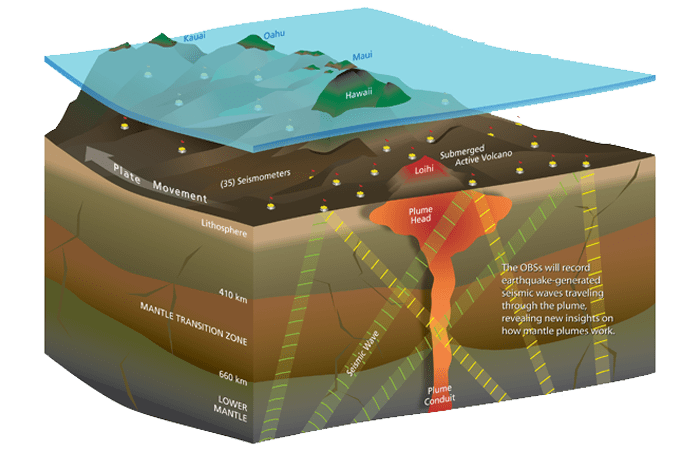
Today, excitement and anticipation is growing because of new generations of seismographs designed for use in the oceans. These new instruments will comprise a new national pool of instruments for use by the scientific community.
Read MoreMoving Earth and Heaven
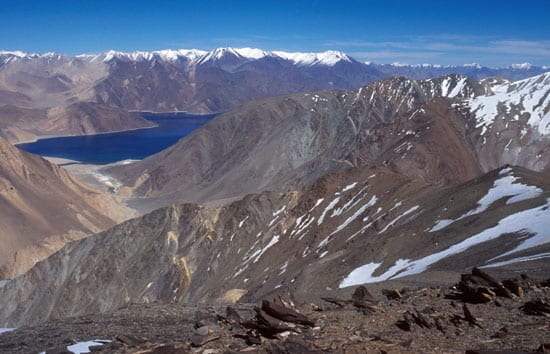
The mountains rise, are lashed by wind and weather, and erode. The rivers carry mud and debris from the mountains into the ocean, where they settle onto the relatively tranquil seafloor and are preserved. The sediments bear evidence about where they came from, what happened to them, and when. By analyzing, measuring, and dating these seafloor sediments, scientists can piece together clues to reconstruct when and how fast their mountain sources rose to great heights millions of years ago, and how the climate and other environmental conditions may have changed in response.
Read MoreConduits Into Earth’s Inaccessible Interior
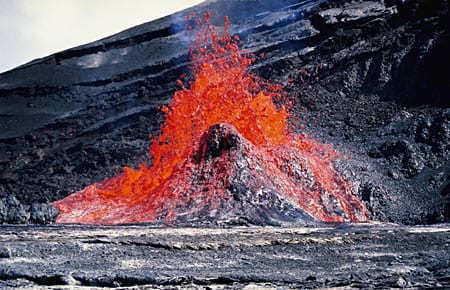
Jules Verne wrote about a way to journey to the center of the earth, but unfortunately, we haven’t found it yet. So we really don’t know what happens deep inside our planet.
Read MoreThe Engine that Drives Earth
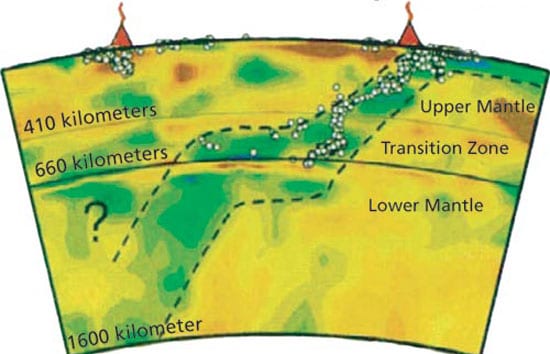
Poets and philosophers have celebrated the timelessness of the land around us for eons, but the solid Earth is actually a very dynamic body. Great tectonic plates are in constant motion at Earth’s surface.
Read MoreIf Rocks Could Talk…
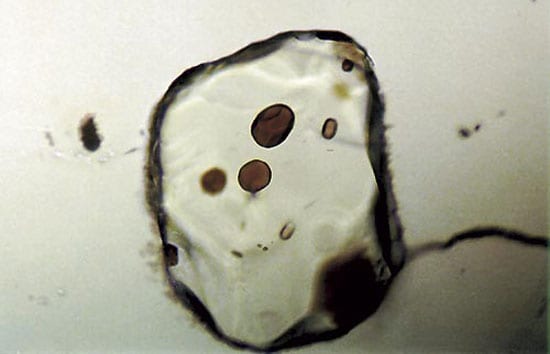
Every rock on Earth contains a clock, a thermometer, and a barometer.
Read MoreTwo WHOI Scientists Recognized with Endowed Positions
Two scientists have been recognized by the Woods Hole Oceanographic Institution (WHOI) for their contributions to ocean sciences research. Drs. Daniel J. Fornari of the Geology and Geophysics Department and Rui Xin Huang of the Physical Oceanography Department have been named recipients of a W. Van Alan Clark Chair for Excellence in Oceanography at the Institution. Each endowed chair brings financial support for a period of five years, allowing the recipient the freedom to pursue a variety of career interests. The awards were announced today during the Institution’s fall meeting of the Board of Trustees and Members of the Corporation and are effective January 1, 2002.
Read MoreSeafloor to Surface to Satellite to Shore
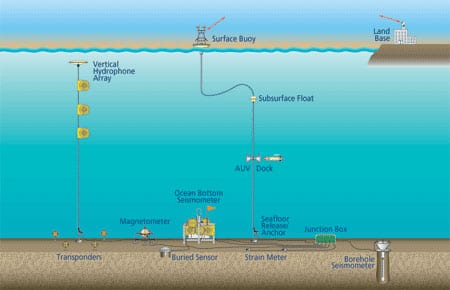
The next great leap in our understanding of the earth-ocean system will require us to put our “eyes” and “ears” in the ocean to observe the dynamic processes going on there as they are happening, in real time.
Read MoreALISS in Wonderland
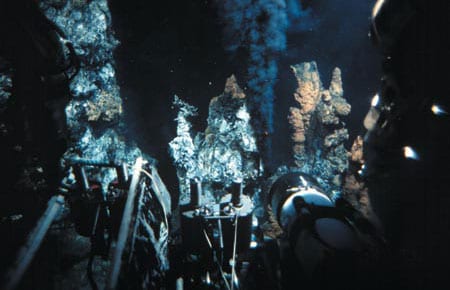
In 1985, Cindy Van Dover, then a graduate student in biology in the MIT/WHOI Joint Program, discovered a novel light-sensing organ on a unique species of shrimp that lives at high-temperature, black smoker chimneys on the Mid-Atlantic Ridge. If this photoreceptor were indeed some sort of primitive “eye,” the question instantly arose: At depths of some 3,600 meters, where sunlight cannot penetrate, what are these shrimp looking at? The search for a source of light in deep-sea hydrothermal environments began.
Read MoreHitting the Hotspots
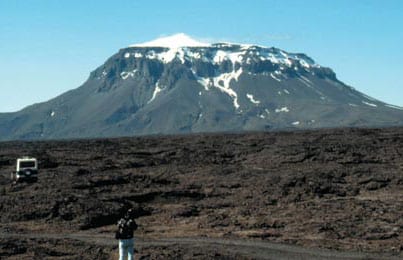
The great volcanic mid-ocean ridge system stretches continuously around the globe for 60,000 kilometers, nearly all of it hidden beneath the world’s oceans.
Read MoreThe Cauldron Beneath the Seafloor
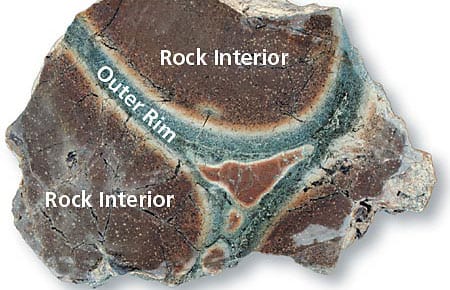
Just over 20 years ago, scientists exploring the mid-ocean ridge system first made the spectacular discovery of black smokers—hydrothermal chimneys made of metal sulfide minerals that vigorously discharge hot, dark, particulate-laden fluids into the ocean.
Read MoreMid-Atlantic Ridge Volcanic Processes
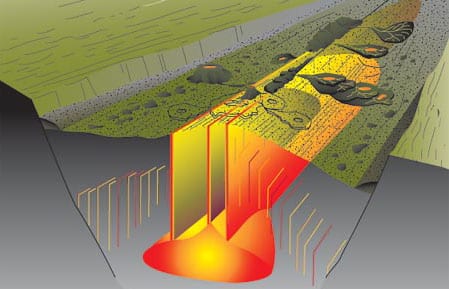
Long before the plate-tectonic revolution began in the 1960s, scientists envisioned drilling into the ocean crust to investigate Earth’s evolution.
Read MoreIndian Ocean’s Atlantis Bank Yields Deep-Earth Insight
I never imagined I would spend six weeks of my life “wandering around” the seafloor exploring an 11 million year old beach, and it never occurred to me to look for a fossil island. But that’s what I did, and that’s what we found on two research voyages separated by more than a decade.
Read MoreMelt Extraction from the Mantle Beneath Mid-Ocean Ridges
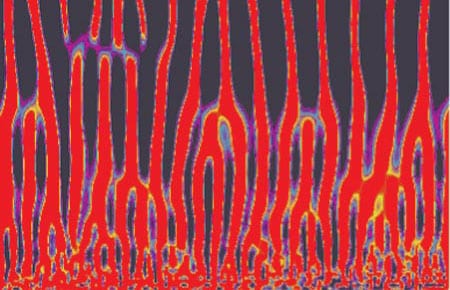
As the oceanic plates move apart at mid-ocean ridges, rocks from Earth’s mantle, far below, rise to fill the void, mostly via slow plastic flow.
Read MoreExploring The Global Mid-Ocean Ridge
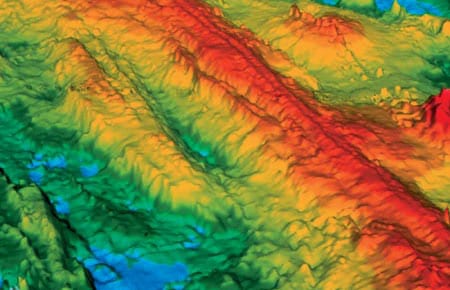
There is a natural tendency in scientific investigations for increased specialization. Most important advances are made by narrowing focus and building on the broad foundation of earlier, more general research.
Read MoreDiscovery of “Megamullions” Reveals Gateways Into the Ocean Crust and Upper Mantle
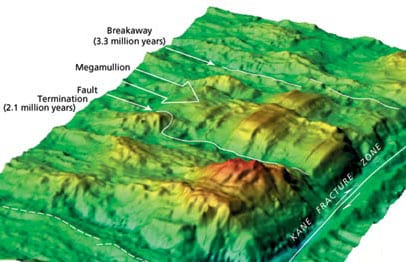
urposes. From the end of the nineteenth into the first half of the twentieth century, drilling was used to penetrate the reef and uppermost volcanic foundation of several oceanic islands, and these glimpses of oceanic geology whetted the scientific community’s appetite for deeper and more complete data.
Read MoreOcean Seismic Network Seafloor Observatories
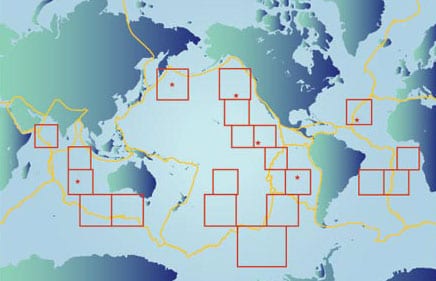
Our knowledge of the physical characteristics of Earth’s deep interior is based largely on observations of surface vibrations that occur after large earthquakes. Using the same techniques as CAT (Computer Aided Tomography) scans in medical imaging, seismologists can “image” the interior of our planet. But just as medical imaging requires sensors that surround the patient, seismic imaging requires sensors surrounding the earth.
Read MoreA Current Affair
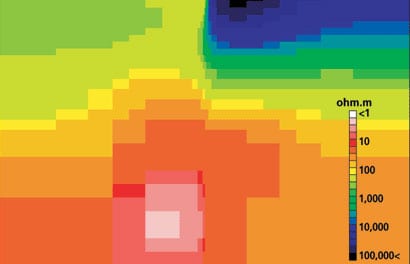
oal of probing the earth’s inaccessible deep interior. But the technique remains something of a mystery even to many marine scientists. It has been used widely on land, particularly for regional-scale surveys, but only a few full-scale MT surveys have been carried out on the seafloor.
Read MoreMarine Snow and Fecal Pellets
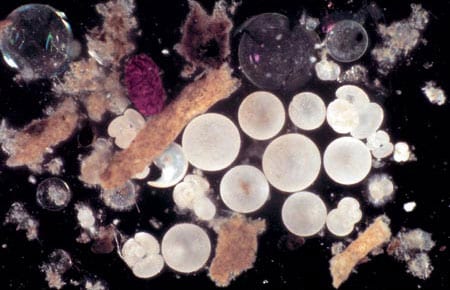
Until about 130 years ago, scholars believed that no life could exist in the deep ocean. The abyss was simply too dark and cold to sustain life. The discovery of many animals living in the abyssal environment by Sir Charles Wyville Thompson during HMS Challenger’s 1872-1876 circumnavigation stunned the late 19th century scientific community far more than we can now imagine.
Read MoreExtreme Trapping
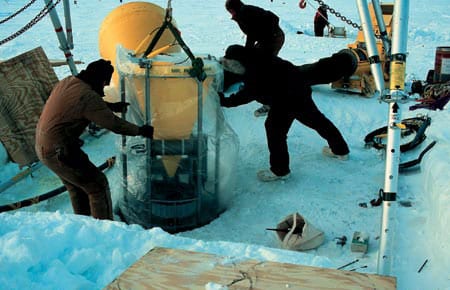
One of oceanography’s major challenges is collection of data from extraordinarily difficult environments. For those who use sediments traps, two examples of difficult environments are the deepest oceans and the permanently ice-covered Arctic Basin.
Read MoreThe Rain of Ocean Particles and Earth’s Carbon Cycle
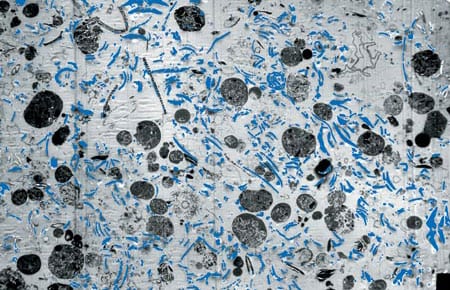
WHOI Phytoplankton photosynthesis has provided Earth’s inhabitants with oxygen since early life began. Without this process the atmosphere would consist of carbon dioxide (CO2) plus a small amount of nitrogen, the atmospheric pressure would be 60 times higher than the air we breathe, and the planet’s air temperatures would hover around 300°C. (Conditions similar to these are found on Earth’s close sibling Venus.
Read MoreDeploying the Rain Catchers
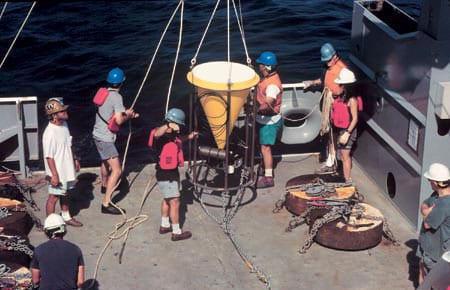
Deployment of a deep-ocean sediment trap mooring begins with the ship heading slowly into the wind.
Read MoreMonsoon Winds and Carbon Cycles in the Arabian Sea
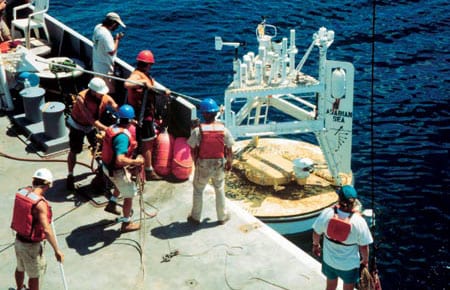
The monsoon, a giant sea breeze between the Asian massif and the Indian Ocean, is one of the most significant natural phenomena that influences the everyday life of more than 60 percent of the world’s population.
Read MoreGround-Truthing the Paleoclimate Record
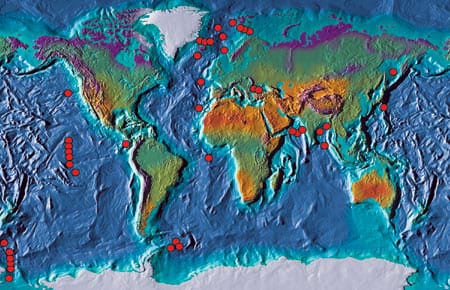
Sediment Trap Observations Aid Paleoceanographers
The geological record contains a wealth of information about Earth’s past environmental conditions. During its long geological history the planet has experienced changes in climate that are much larger than those recorded during human history; these environmental conditions range from periods when large ice sheets covered much of the northern hemisphere, as recently as 20,000 years ago, to past atmospheric concentrations of greenhouse gases that warmed Earth’s polar regions enough to melt all of the ice caps 50 million years ago. Since human civilization has developed during a fairly short period of unusually mild and stable climate, humans have yet to experience the full range of variability that the planet’s natural systems impose. Thus, the geological record has become an extremely important archive for understanding the range of natural variability in climate, the processes that cause climate change on decadal and longer time scales, and the background variability from which greenhouse warming must be detected