
Feature
The Coastal Ocean Institute
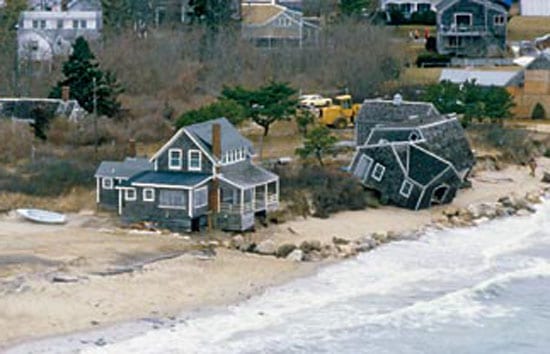
We are all stewards of the coastal ocean. For some of us, the connection to the sea is clear and immediate; for others, it is subtle and distant. But whether you live on waterfront property or in a land-locked hamlet, your everyday activities affect this most sensitive and most threatened portion of the world?s oceans.
Read MoreDo Marine Protected Areas Really Work?
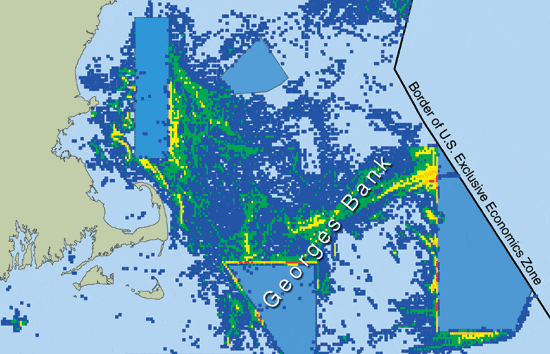
Today, Marine Protected Areas, or MPAs—areas of the ocean temporarily or permanently closed to harvesting—are being proposed to restrict not only fishing, but also mineral and hydrocarbon extraction, and other activities. Some advocates of MPAs suggest that at least 20 percent of the coastal and open ocean should be set aside and permanently zoned to protect ecosystems, sustain fish stocks, and reduce conflicts between users of the oceans.
Read MoreRobo-Sailors
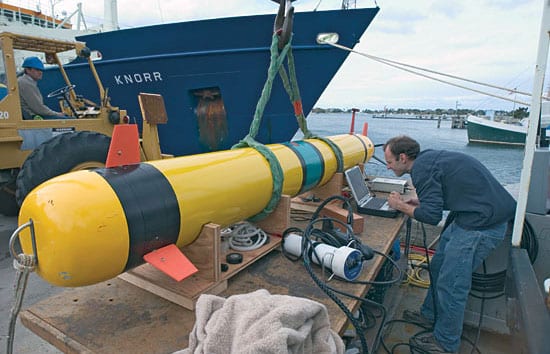
In the mid-1990s, the Navy began funding research for small, robotic vehicles to perform unmanned reconnaissance in coastal waters. At WHOI, that helped spark the development of REMUS (Remote Environmental Monitoring UnitS), designed and built by Chris von Alt, Ben Allen, and colleagues in the Oceanographic Systems Laboratory.
Read MoreThe Cacophony on the Coast
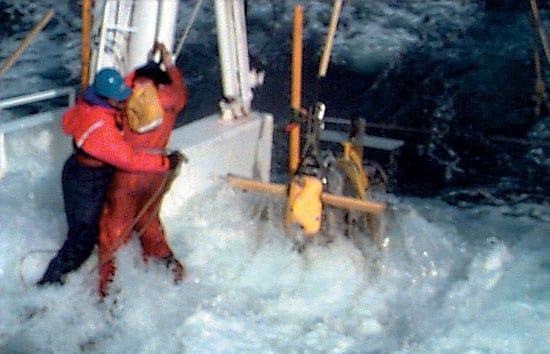
Unlike light, sound travels efficiently through water, and the Navy uses sound to monitor what’s going on in the ocean. To understand the sound messages transmitted through the seas, you need to understand the medium through which they are transmitted.
Read MoreNew Instrument Sheds Light on Bioluminescence
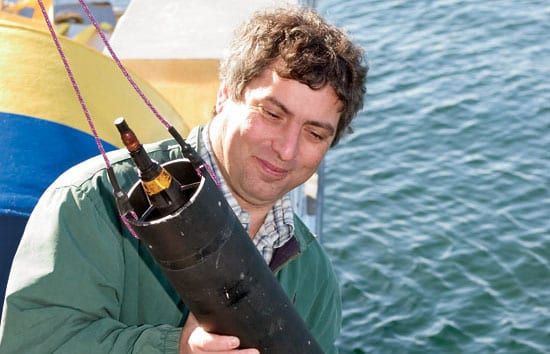
Bioluminescence is ubiquitous in the oceans, and especially prevalent in coastal regions where nutrients are abundant and life thrives. Yet scientists have little basic understanding of how bioluminescence is influenced by water temperatures, depths, seasons, geographic locations, even different times of day.
Read MoreFor the Navy, the Coast Isn’t Clear

Every so often, circumstances can conspire to make a battleship turn on a dime. Fifteen years ago, two geopolitical events prompted the U.S. Navy to abruptly change long-standing research priorities and steer rapidly in a new direction.
Read MoreWhere Are Mines Hiding on the Seafloor?
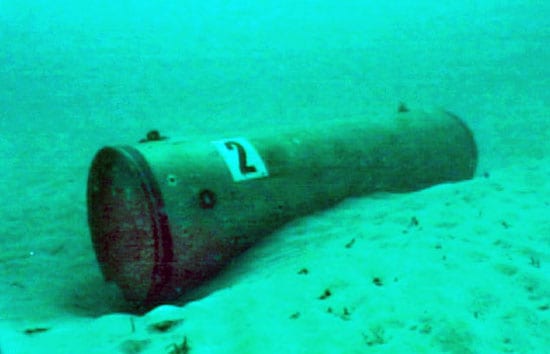
Eternally and incessantly, waves and currents stir up sand from the seafloor near the coast. Sediments get suspended in the ocean, carried onshore and off, and deposited elsewhere. In the process, objects on the seafloor—natural and unnatural—can get buried and uncovered.
Read MoreCan We Catch More Fish and Still Preserve the Stock?

People have always fished. But the history of fishing is also the history of overfishing. For hundreds of years, the establishment and enforcement of fishery management policies have generated controversy, as competing authorities have searched for a way to balance competing goals—to catch as many fish as possible while conserving the resource. To resolve this dilemma, we have applied mathematics—and we are finding that the ancient solution may still prove effective in modern times.
Read MoreA Fatal Attraction for Harmful Algae
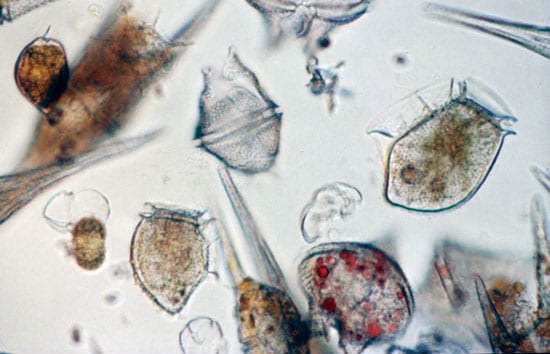
Estuaries are the borderlands between salt and freshwater environments, and they are incredibly diverse
both biologically and physically. The diversity and the high
energy of the ecosystem make estuaries remarkably resilient.
With a better understanding of these systems, we can reverse
their decline and restore the ecological richness of these
valuable, albeit muddy, environments.
Rites of Passage for Juvenile Marine Life
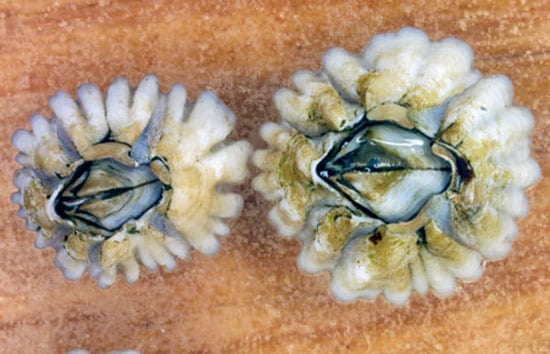
The childhood of a barnacle is fraught with challenges. It hatches in shallow waters close to shore as a tiny larva, no bigger than a speck of dust. Currents sweep it to deeper, choppy waters, sometimes miles offshore. In these proving grounds each larva floats, at the mercy of hungry fish and swift ocean currents. Billions of larvae?including fish, lobsters, clams, starfish, and sea cucumbers?begin life this way. Only a few survive and return to shore, where they settle on rocks or sandy seafloor to become adults. Why larvae make their offshore journey remains unclear, but we are beginning to uncover the intricacies of their return trip?learning how waves, currents, eddies, tides, and other phenomena bring larvae back toward the shore.
Read MoreThe New Wave of Coastal Ocean Observing
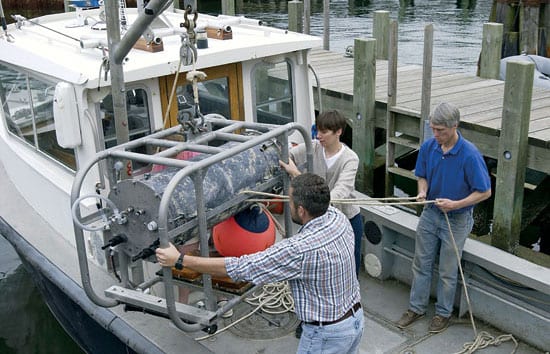
Estuaries are the borderlands between salt and freshwater environments, and they are incredibly diverse both biologically and physically. The diversity and the high energy of the ecosystem make estuaries remarkably resilient. With a better understanding of these systems, we can reverse
their decline and restore the ecological richness of these valuable, albeit muddy, environments.
Read MoreRed Tides and Dead Zones
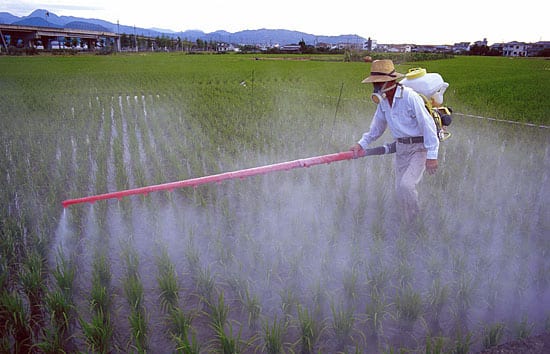
The most widespread, chronic environmental problem in the coastal ocean is caused by an excess of chemical nutrients. Over the past century, a wide range of human activities—the intensification of agriculture, waste disposal, coastal development, and fossil fuel use—has substantially increased the discharge of nitrogen, phosphorus, and other nutrients into the environment. These nutrients are moved around by streams, rivers, groundwater, sewage outfalls, and the atmosphere and eventually end up in the ocean.
Read MoreWater Flowing Underground
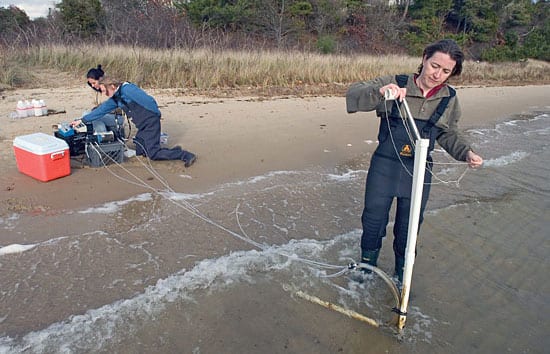
Groundwater discharge appears to be an important factor for determining the chemistry of the coastal ocean. As fresh groundwater flows toward the sea, it rises up over denser, salty water. The fresh and salty water mix along the interface, and the resulting fluid discharges at the shoreline. This interface between underground water masses has recently been described as a “subterranean estuary,” a mixing zone between fresh and salty water analogous to the region where a river meets the ocean.
Read MoreRising Sea Levels and Moving Shorelines
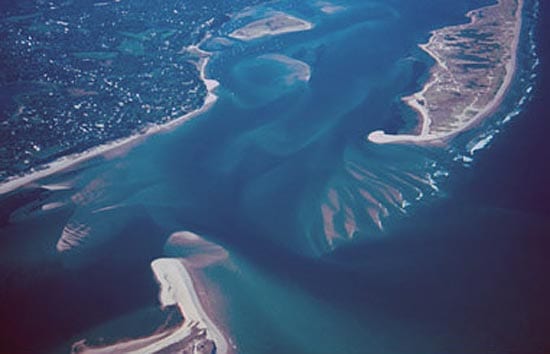
Changes to the shoreline are inevitable and inescapable. Shoals and sandbars become islands and then sandbars again. Ice sheets grow and shrink, causing sea level to fall and rise as water moves from the oceans to the ice caps and back to the oceans. Barrier islands rise from the seafloor, are chopped by inlets, and retreat toward the mainland. Even the calmest of seas are constantly moving water, sand, and mud toward and away from the shore, and establishing new shorelines.
The Growing Problem of Harmful Algae
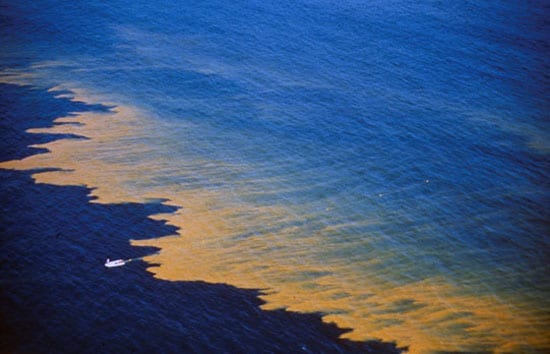
Harmful algal blooms are natural and they are not new. But ocean scientists are growing concerned that they are now all too common. The unprecedented growth of human activities in coastal watersheds—including agriculture, aquaculture, industry, housing, and recreation—has drastically increased the amount of fertilizer flowing into coastal waters and fueled unwanted algal growth.
Read MoreIntroducing…the Asian Oyster
As native oysters decline, officials seek to restore fishery with disease-resistant species “O Oysters,” said the Carpenter, “You’ve had a pleasant run! Shall we be trotting home again?” But answer…
Read MoreScientists Muster to Help Right Whales
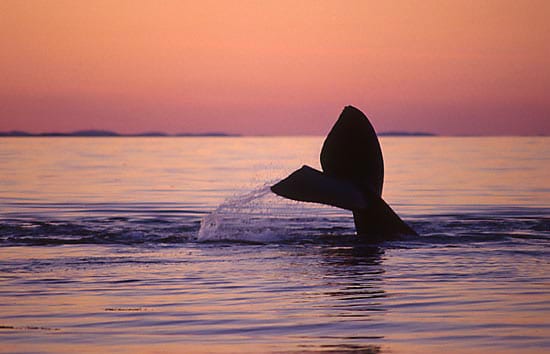
It is a sad irony that we have cataloged individual photographs of the remaining North Atlantic right whales and given each of them unique numbers and sometimes names, yet still know too little about their physiology, behavior, and habitats to take effective steps toward ensuring their survival as a species.
Read MoreWhither the North Atlantic Right Whale?
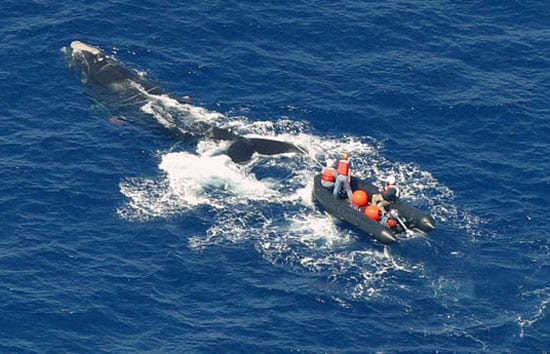
“Today only a remnant of the population survives, no more than 350 whales clustered in calving and feeding grounds along the eastern seaboard of North America. Only occasional right whale sightings in the Gulf of St. Lawrence or in the waters between Iceland, Greenland, and Norway give echoes of their once substantially greater range.
Read MoreRevealing the Ocean’s Invisible Abundance
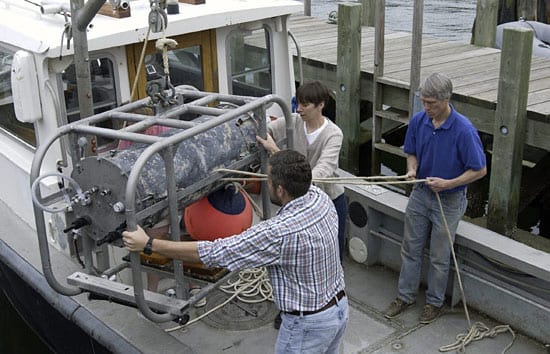
Finding minuscule life forms in a seemingly infinite ocean isn’t trivial. But in recent years, oceanographers have been developing new techniques and instruments to identify and count marine microorganisms. Year by year, we are learning more and more about them and discovering that they are even more numerous, varied, and important than we previously thought.
Read MoreShedding Light on Light in the Ocean
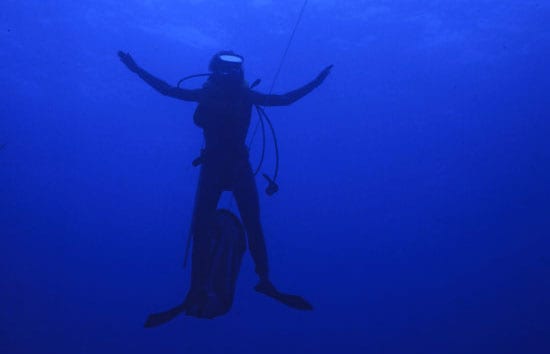
Light in the ocean is like light in no other place on Earth. It is a world that is visibly different from our familiar terrestrial world, and one that marine animals, plants, and microbes are adapted to in extraordinary ways. Light behaves very differently when it moves from air into water. It moves through the expansive depths of an ocean that is devoid of solid surfaces. These and other factors combine to create an environment that has no equivalent on land.
Read MoreOil in Our Coastal Back Yard
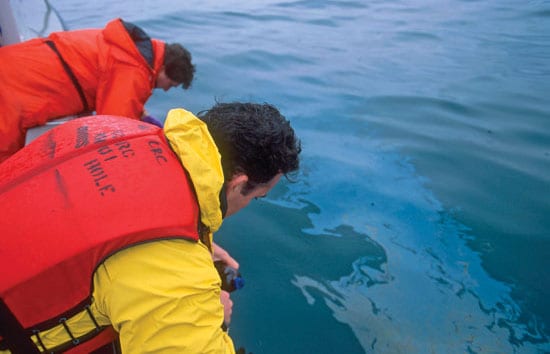
On September 16, 1969, the barge Florida ran aground off Cape Cod, rupturing its hull and spilling 189,000 gallons of No. 2 fuel oil. Winds and waves pushed the oil onto the beaches and marshes of West Falmouth, Massachusetts, carrying with it dead lobsters, scup, and cod.
Read MoreShaping the Beach, One Wave at a Time
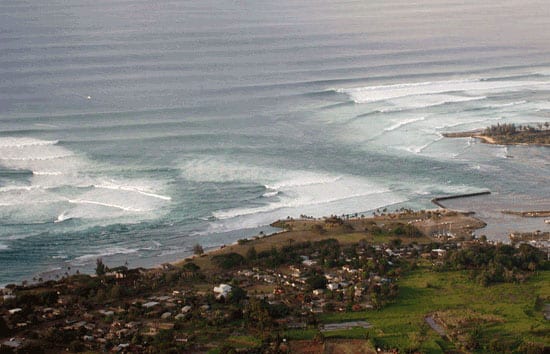
For years, scientists who study the shoreline have wondered at the apparent fickleness of storms, which can devastate one part of a coastline, yet leave an adjacent part untouched. How can this be? The answer lies in the physics of the nearshore region?the stretch of sand, rock, and water between the dry land behind the beach and the beginning of deep water far from shore.
Read MoreDown on the Farm…Raising Fish
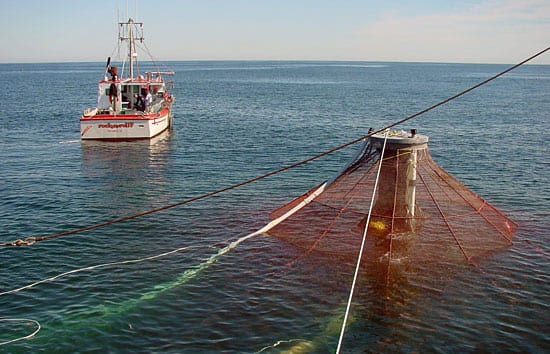
Aquaculture, or fish farming, is changing how we think about one of our main sources of protein. With many fish stocks shrinking due to overfishing or environmental degradation, aquaculture holds the promise of more reliable and more sustainable seafood production. The economic and social benefits could be significant for both consumers and producers.
Read MoreLife in the Arctic Ocean
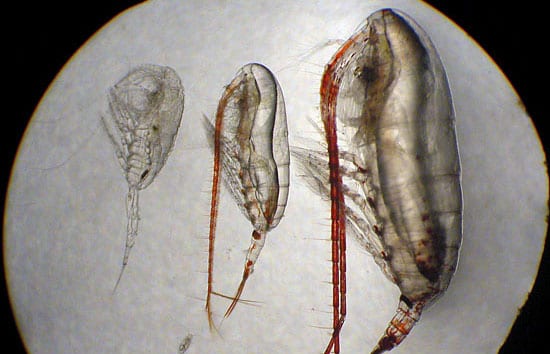
Capped with a formidable ice and snow cover, plunged into total darkness during the winter, buffeted by blizzard winds,and bitterly cold, the Arctic Ocean is one of the most inaccessible and yet beautiful environments on Earth. Life here endures some of the greatest extremes in light and temperature known to our planet. Yet despite these inhospitable conditions, the Arctic Ocean is teeming with life.
Read More