
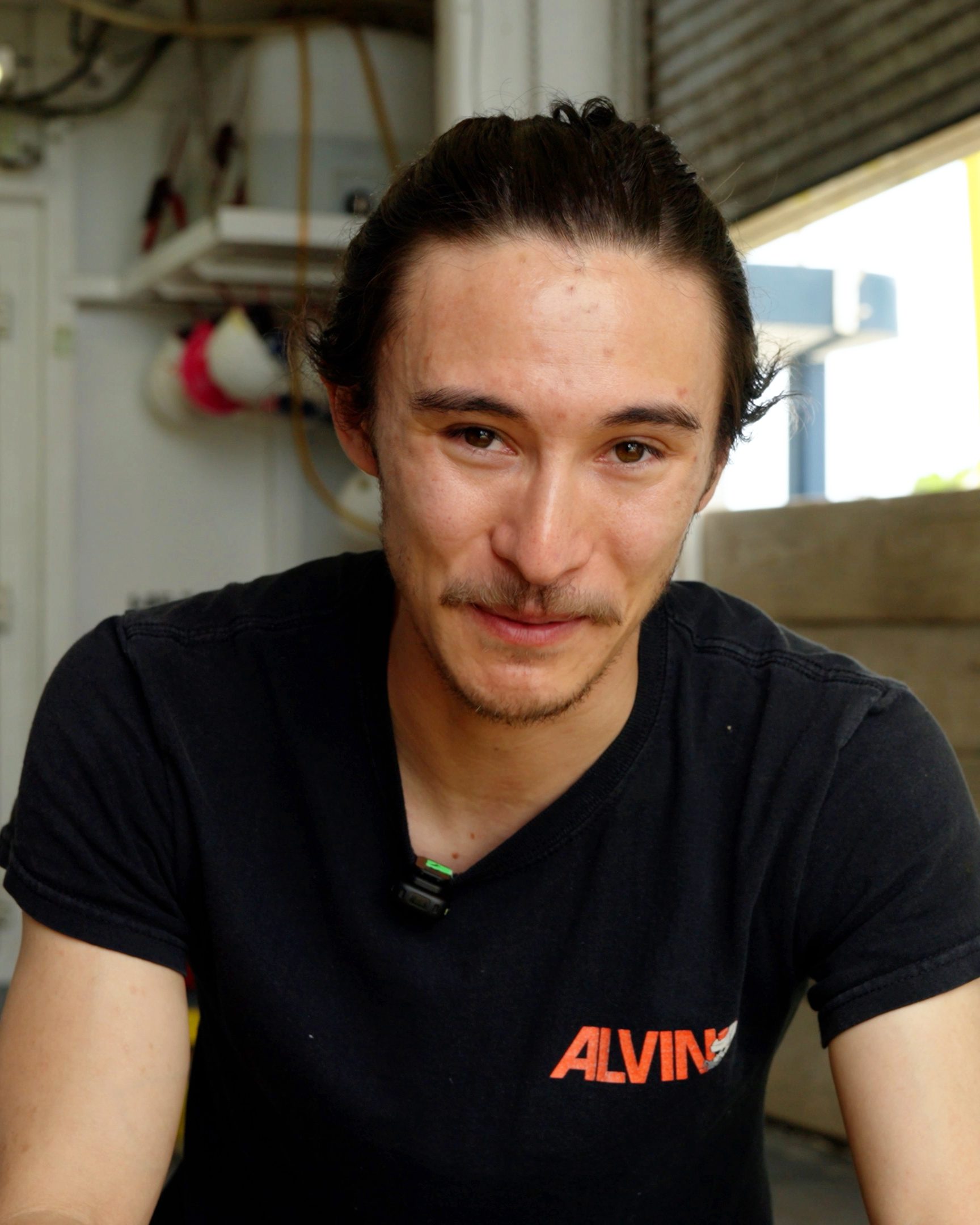
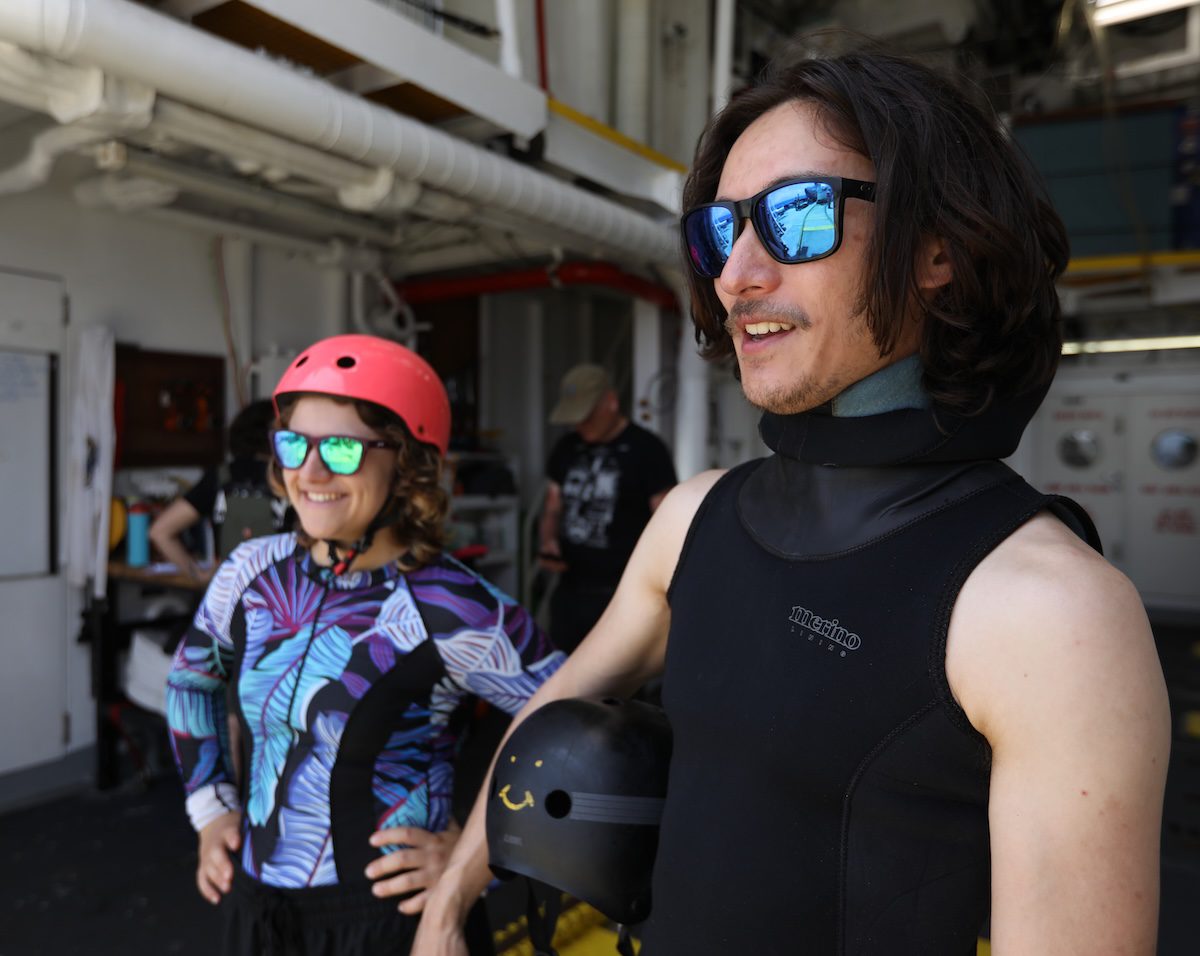
I came from more of an engineering background than a science background. Back when I was in college, I got very into underwater robotics through the Marine Advanced Technology Education (MATE) competition. From there, I took various odd jobs working with underwater engineers over the years. And the last one before starting at WHOI was a stint with the Ocean Exploration Trust, sailing on the R/V Nautilus as an ROV [remotely-operated vehicle] engineering intern. Not only did have the opportunity to work with undersea robots, but I also got to meet Bob Waters, who is an ex-member of the Alvin Ops group.
He recommended I apply, so I did. And now I am here. Working in the Alvin Operations Group has been a great opportunity to get on the ship, explore, and dive in Alvin. It's both extremely fun and extremely fulfilling and a very, very cool job that I enjoy very much.
When I started working with HOVs [human-occupied vehicles], I wasn't 100% sure it would be that much different from working with ROVs. And then I actually got down there in the sub, and I realized that operationally, the sub is a completely different field than an ROV. They fill very different niche roles as far as deep-sea research goes. Actually being there in person and not being tethered to the ship makes a large difference. So that capability with Alvin is extremely unique in the deep submergence community, the ocean science community.
Through working here, I've learned that the ocean and its health play a very significant role in our day-to-day lives, even in ways we don't fully realize. Everything from how our environment performs to commerce, to energy.
It's an interconnected system that plays a big role in people's lives. The techniques we deploy here can be applied to other areas like clean energy, dirty energy, or things like space exploration and medicine. One of the people who dove with us on my first dive was a biologist who studied how deep-sea chemicals can be used to treat various cancers. So things like that are very exciting to me. It's very, very relevant, very important. I don't think many people would expect something like that from deep-sea ocean research.