
Environmental Science
Illustration of Alexandrium life cycle Red tide research
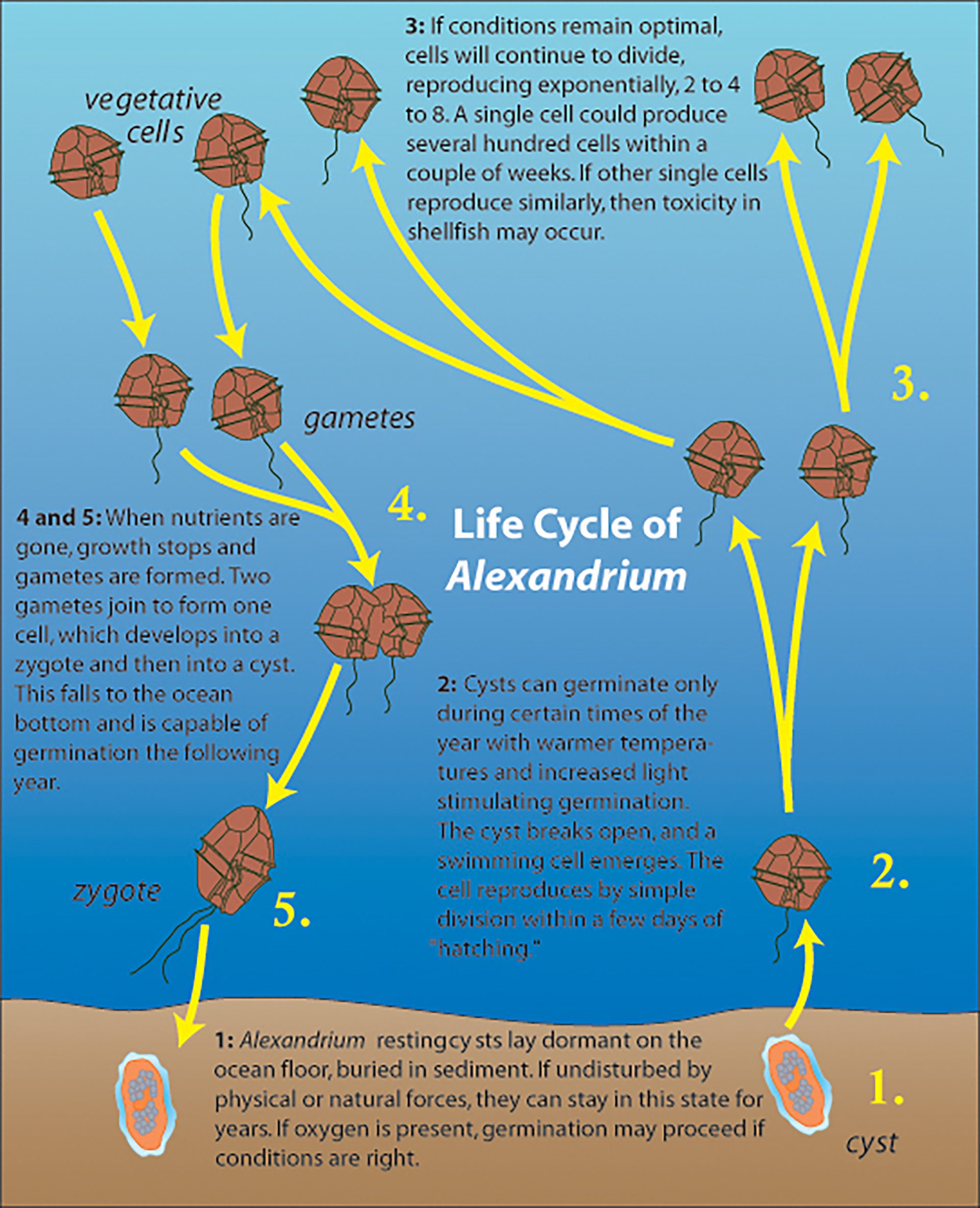
Dinoflagellates such as Alexandrium, which can cause harmful algal blooms, have effective strategies for survival and dispersal.
Read MoreHow dispersants were used during the Gulf oil spill
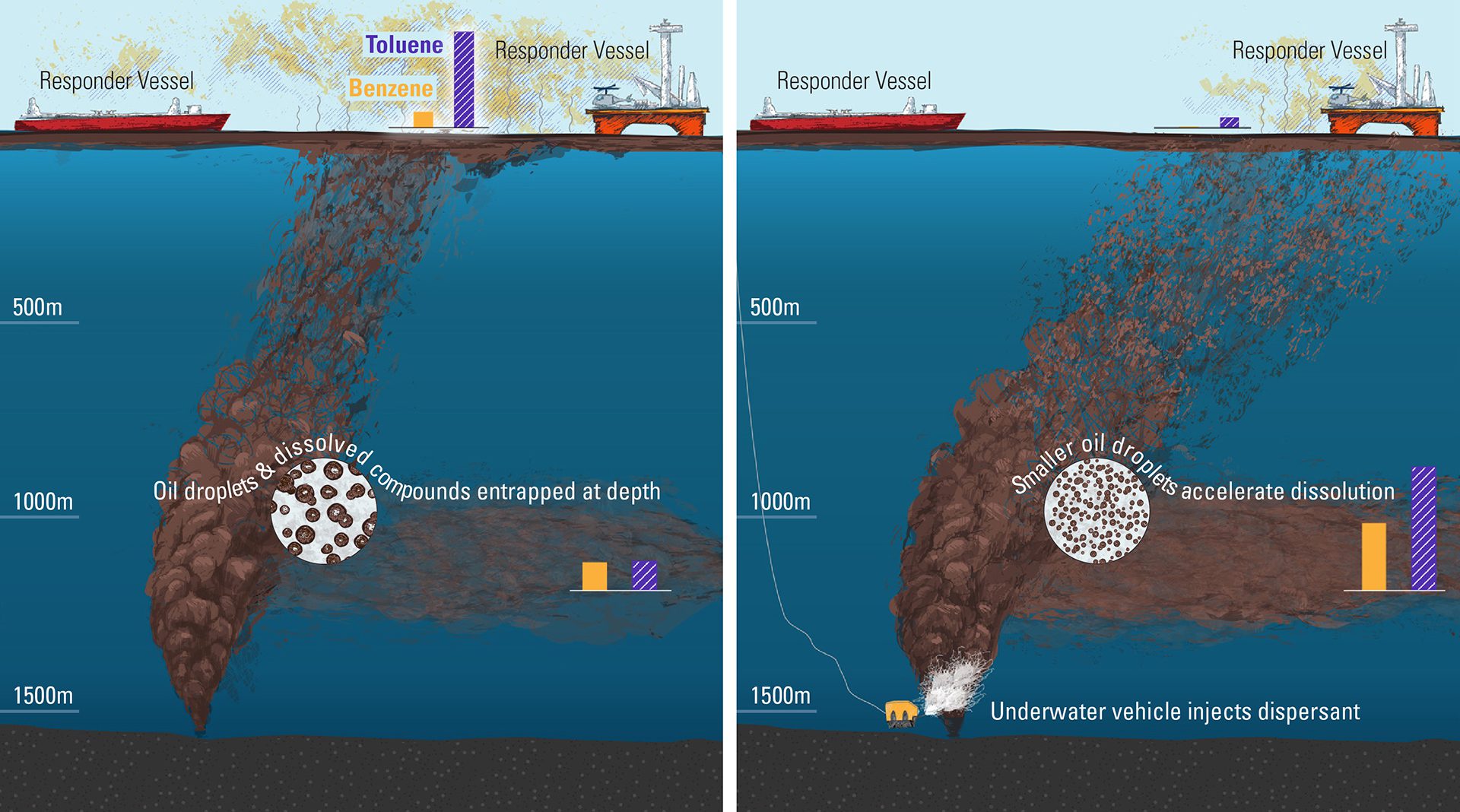
A study modeled the impact of dispersants during Deepwater Horizon, showing they reduced oil droplets, limiting toxic gas levels and health risks.
Read MoreAir France Flight 447 travel path
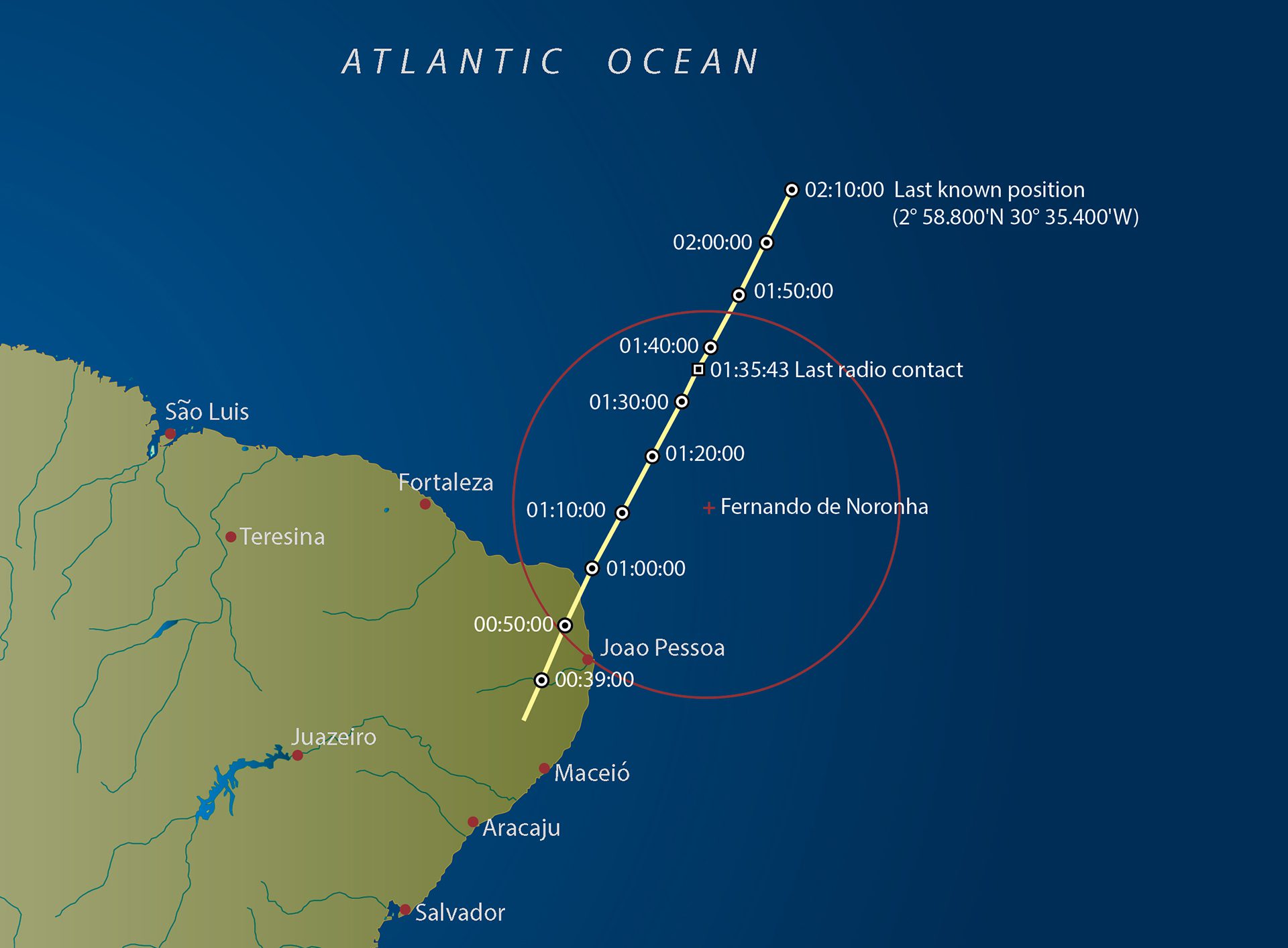
Map showing the approximate travel path of the ill-fated Air France Flight 447
Read MoreThe effects of ocean acidification on sound waves
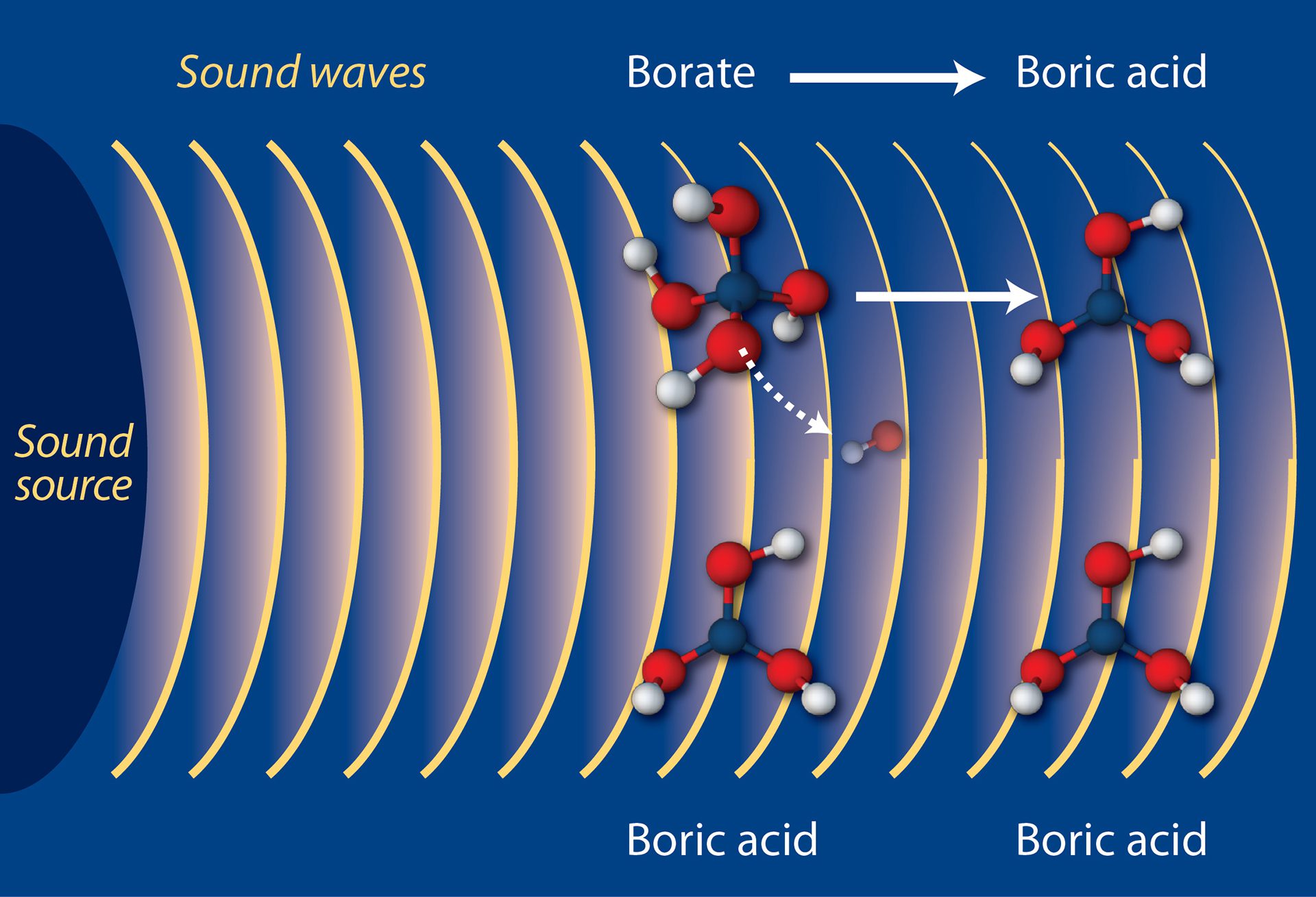
Low-frequency ocean sound causes borate to change to boric acid, absorbing energy. Ocean acidification may reduce this, but WHOI scientists found the effect on sound travel is minimal.
Read MoreHow Monsoon Shifts Transformed Ancient South Asian Civilizations
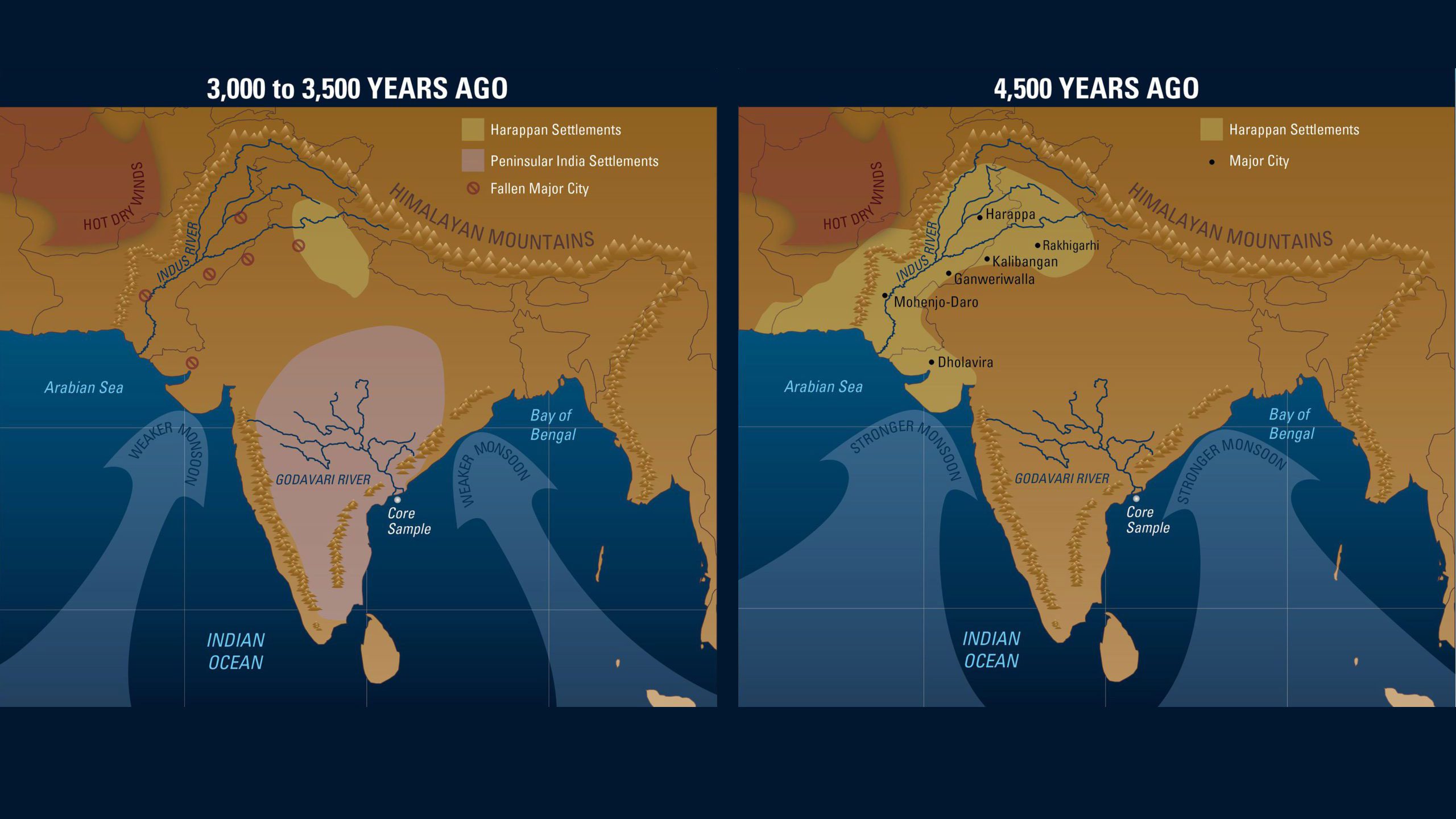
Maps showing changing monsoons led to the fall of Indus Valley cities and spurred the rise of farming communities across the Indian peninsula 4,500 years ago.
Read MoreAir-sea daily rhythm
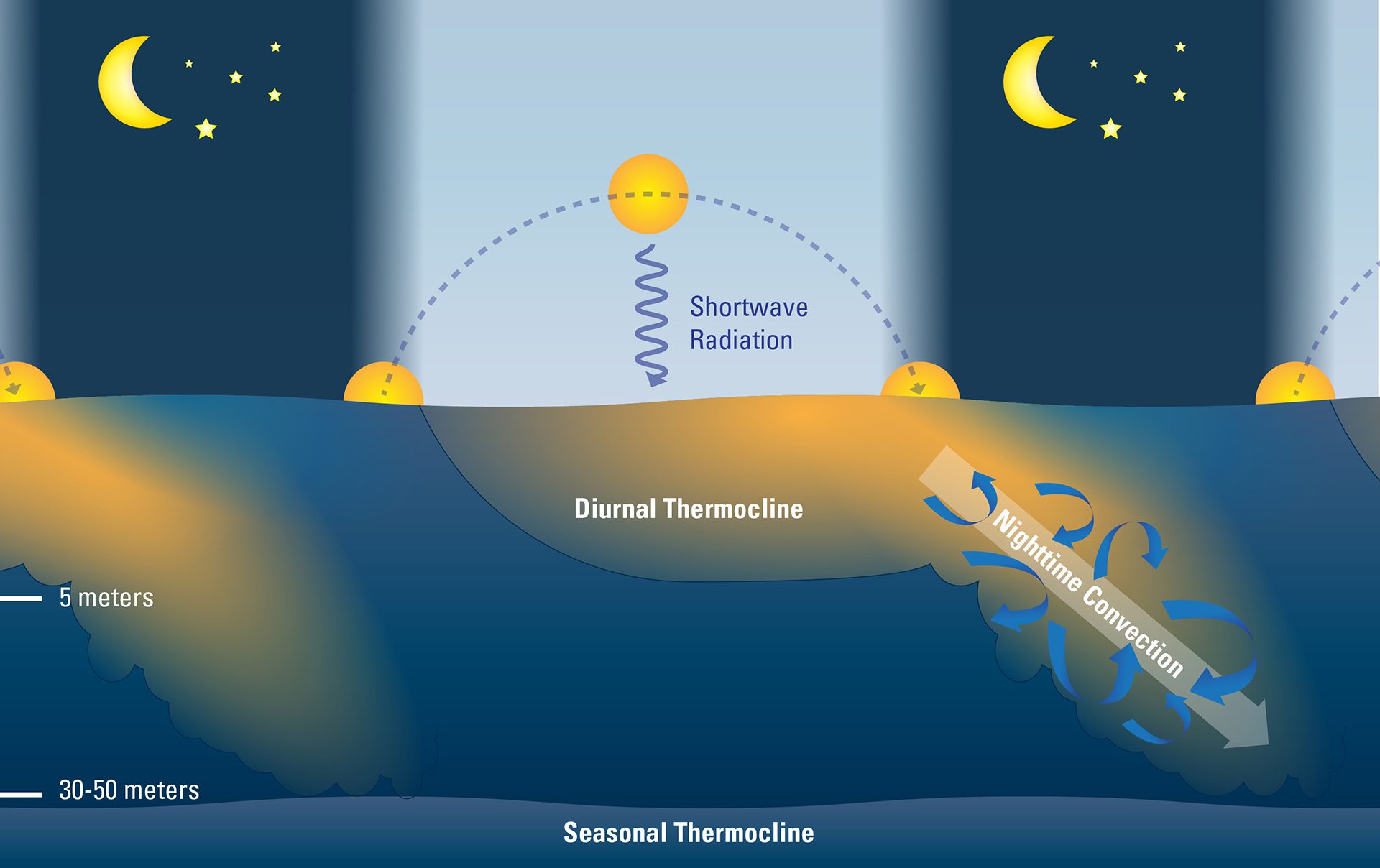
Daily, sunlight warms ocean surface waters; at night, cooled, heavier water sinks and mixes down, renewing the surface for the next day’s heat exchange cycle.
Read MoreHow biomagnification works
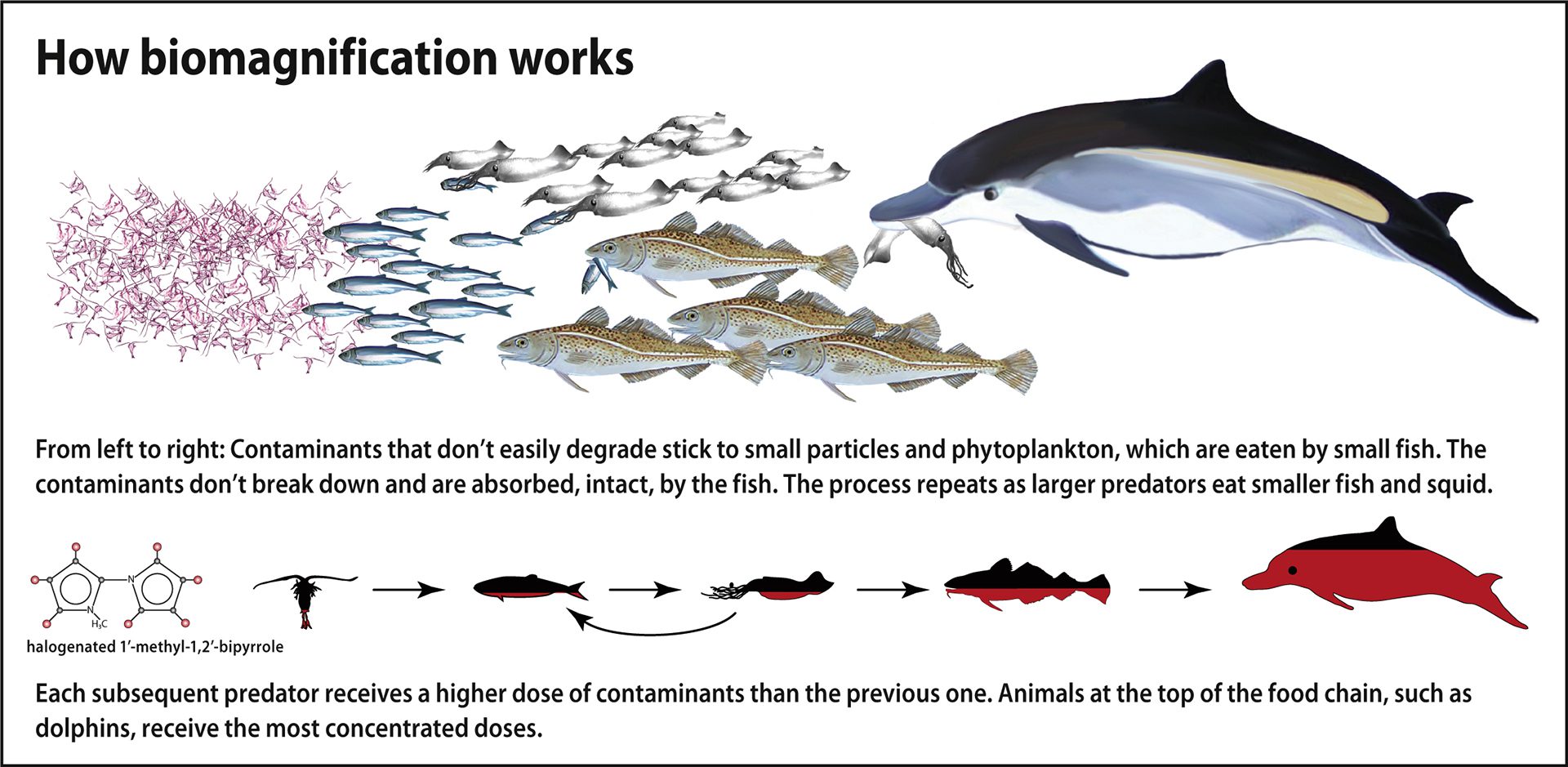
Contaminants cling to tiny particles eaten by small fish, then concentrate up the food chain. Top predators like dolphins get the highest contaminant doses.
Read MoreIllustration depicting the chemical journey of leaf wax
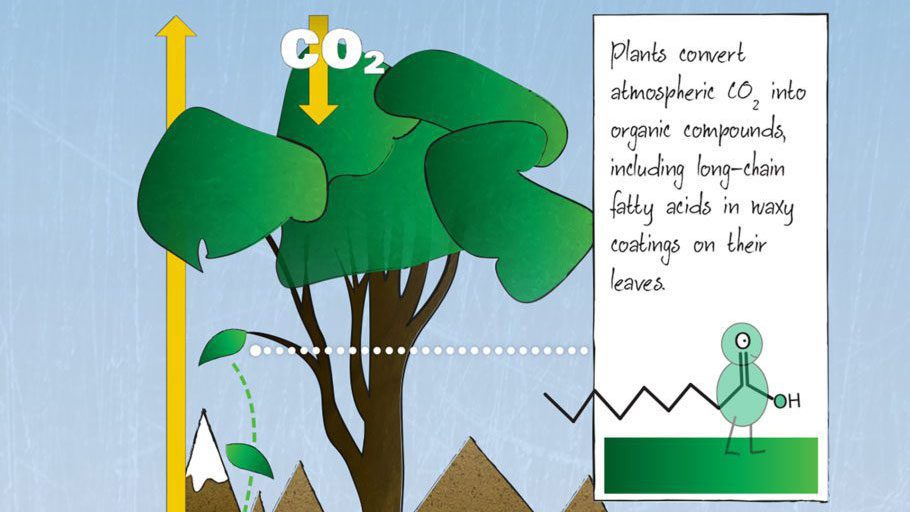
By dating leaf waxes, scientists can examine links between climate changes and carbon storage on land.
Read MoreFormation cycle of piteraq winds
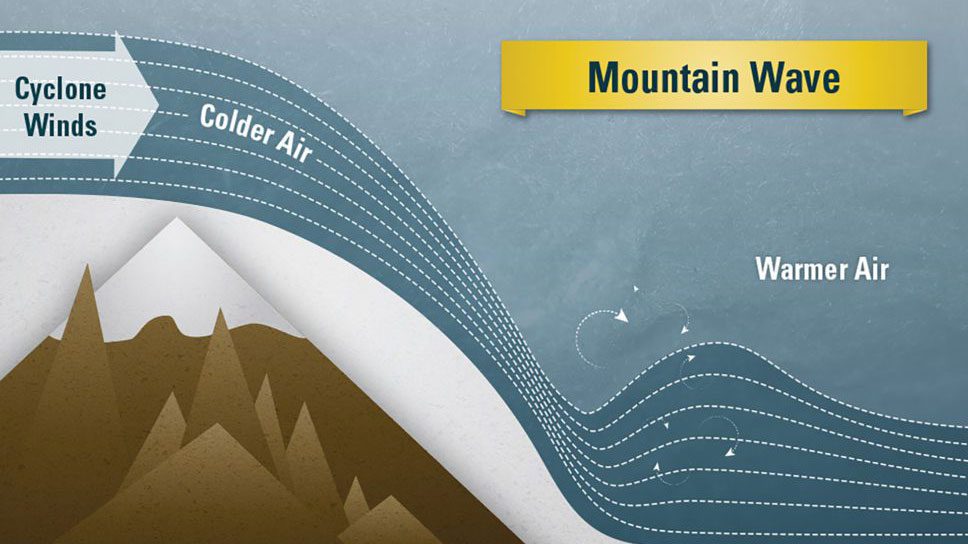
Piteraqs form when cyclones push cold air downhill, creating fast, turbulent winds funneled by valleys that accelerate and crash like giant mountain waves.
Read MoreThe ocean’s Biological Carbon Pump
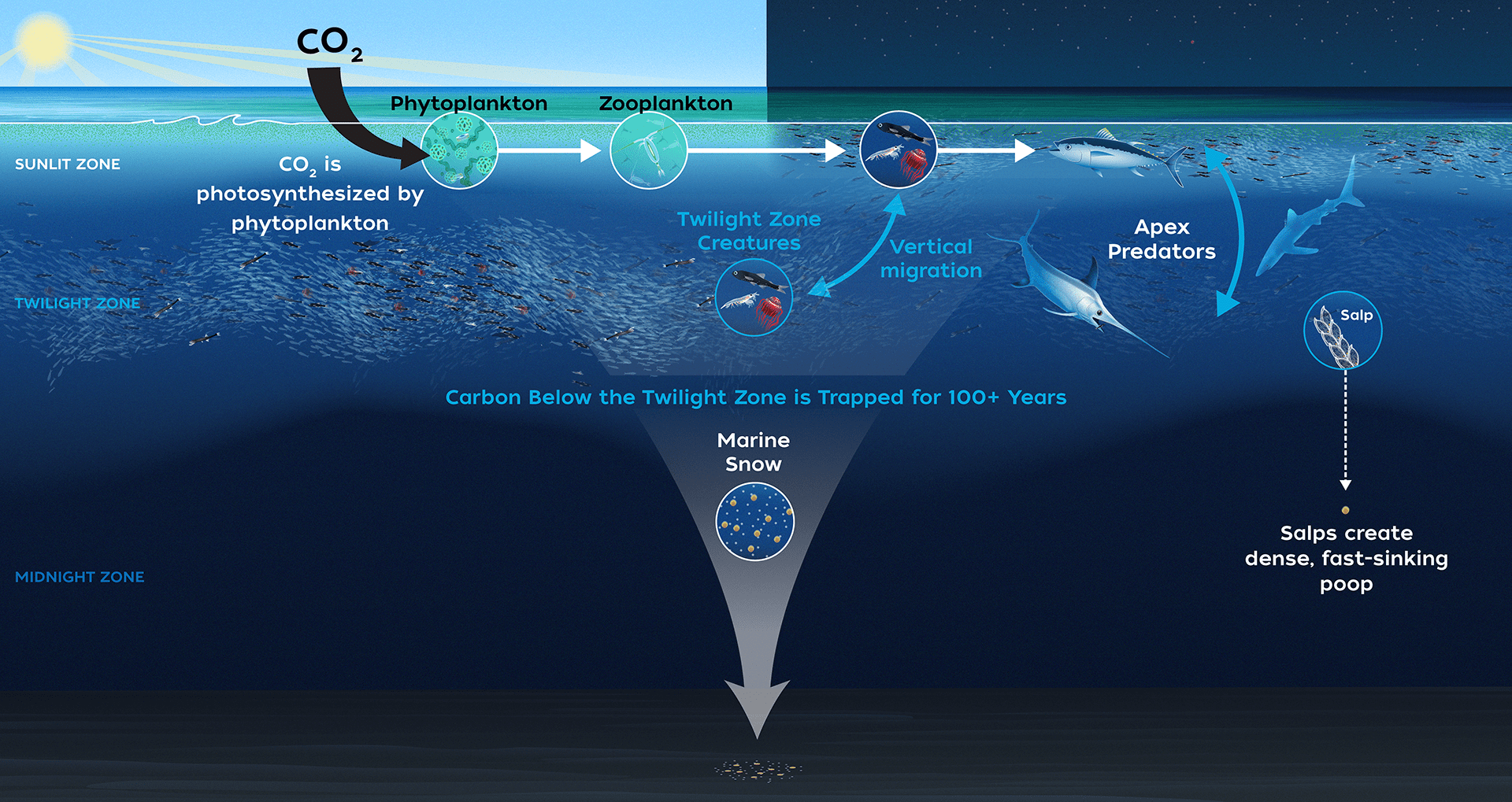
Tiny ocean plants absorb CO? via photosynthesis, then sink or get eaten, moving carbon from surface waters to deep ocean—key to Earth’s carbon cycle.
Read MoreHow a biofilm forms in the sea
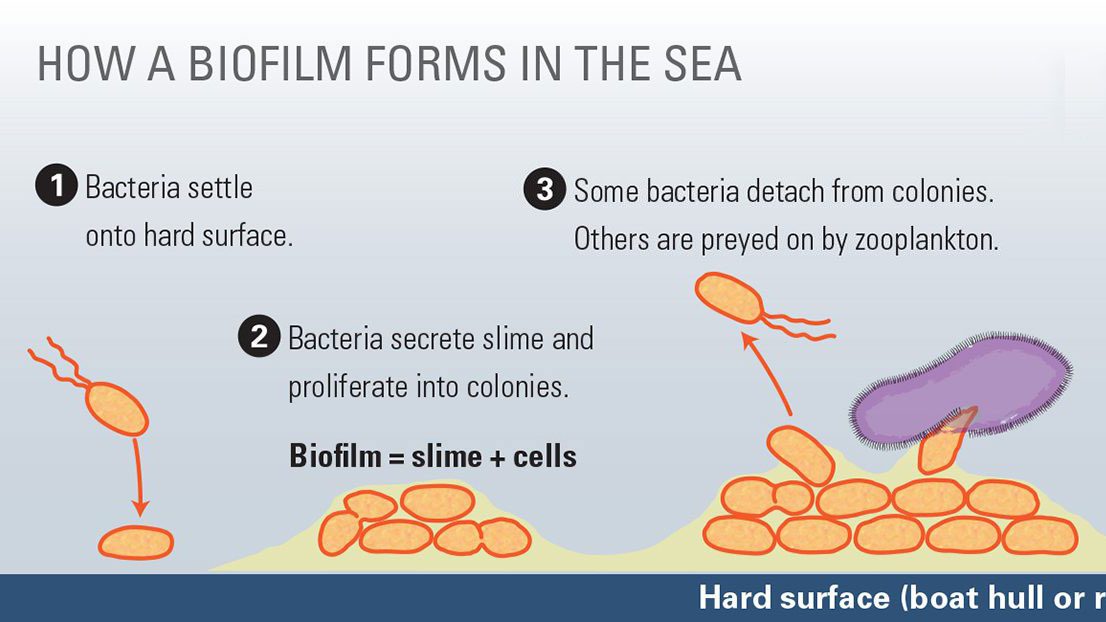
Bacteria settle on surfaces, secrete slime, and grow into colonies. Some detach or are eaten by zooplankton. Large organisms can attach if the biofilm becomes thick enough.
Read MoreHow blue holes are formed
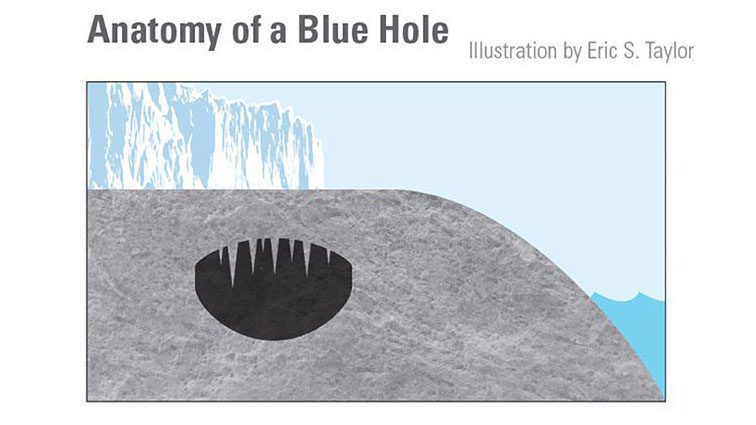
These sinkholes formed on dry land during the last ice age, when much of the Earth’s water was frozen in ice sheets and sea levels were almost 400 feet lower than today.
Read MoreAir-sea exchange mechanisms
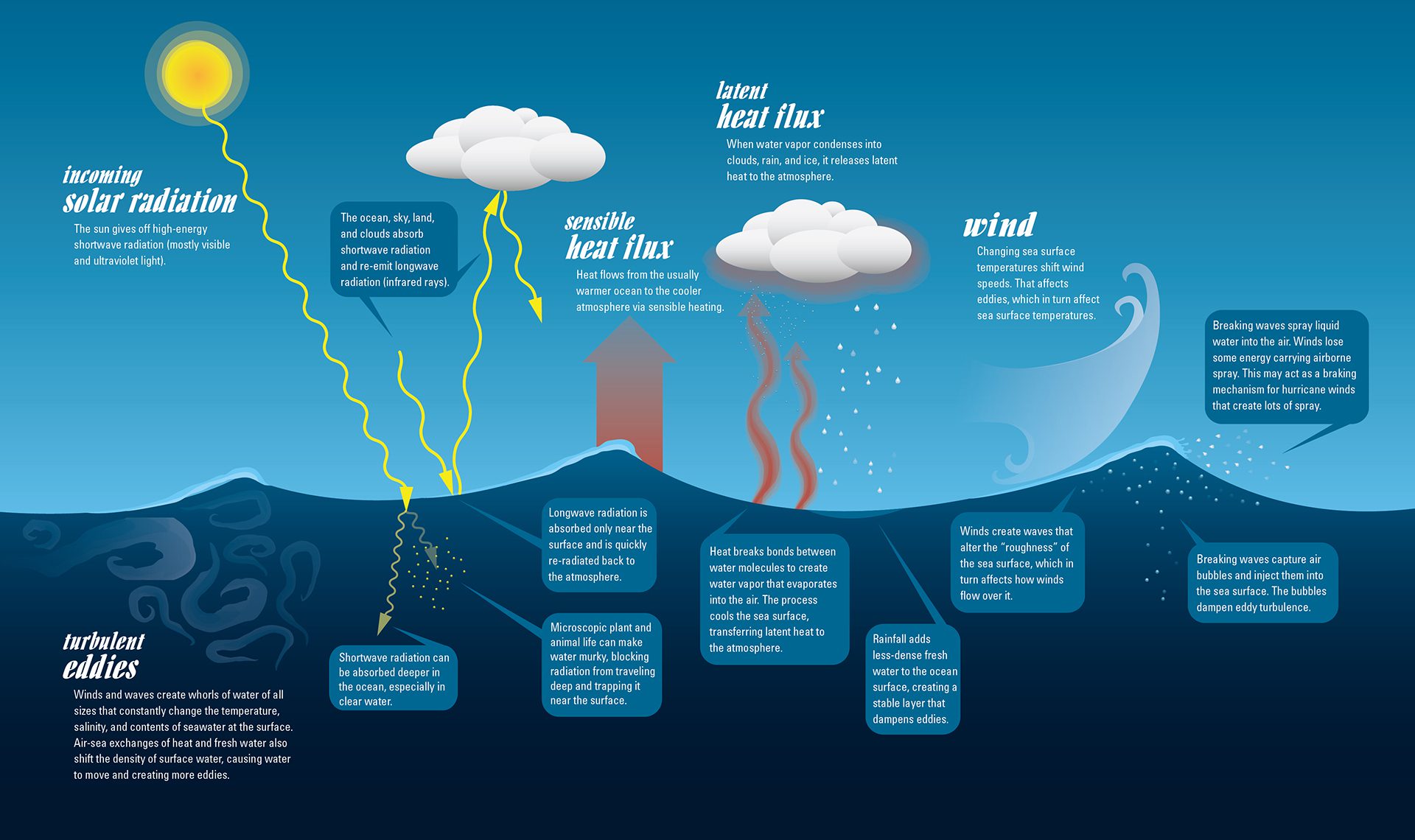
Climate change shifts Earth’s water cycle, increasing rain in wet areas and drought in dry ones. Scientists study how water moves between ocean and air.
Read MoreDeep Water Horizon oil spill dispersant theory scenarios
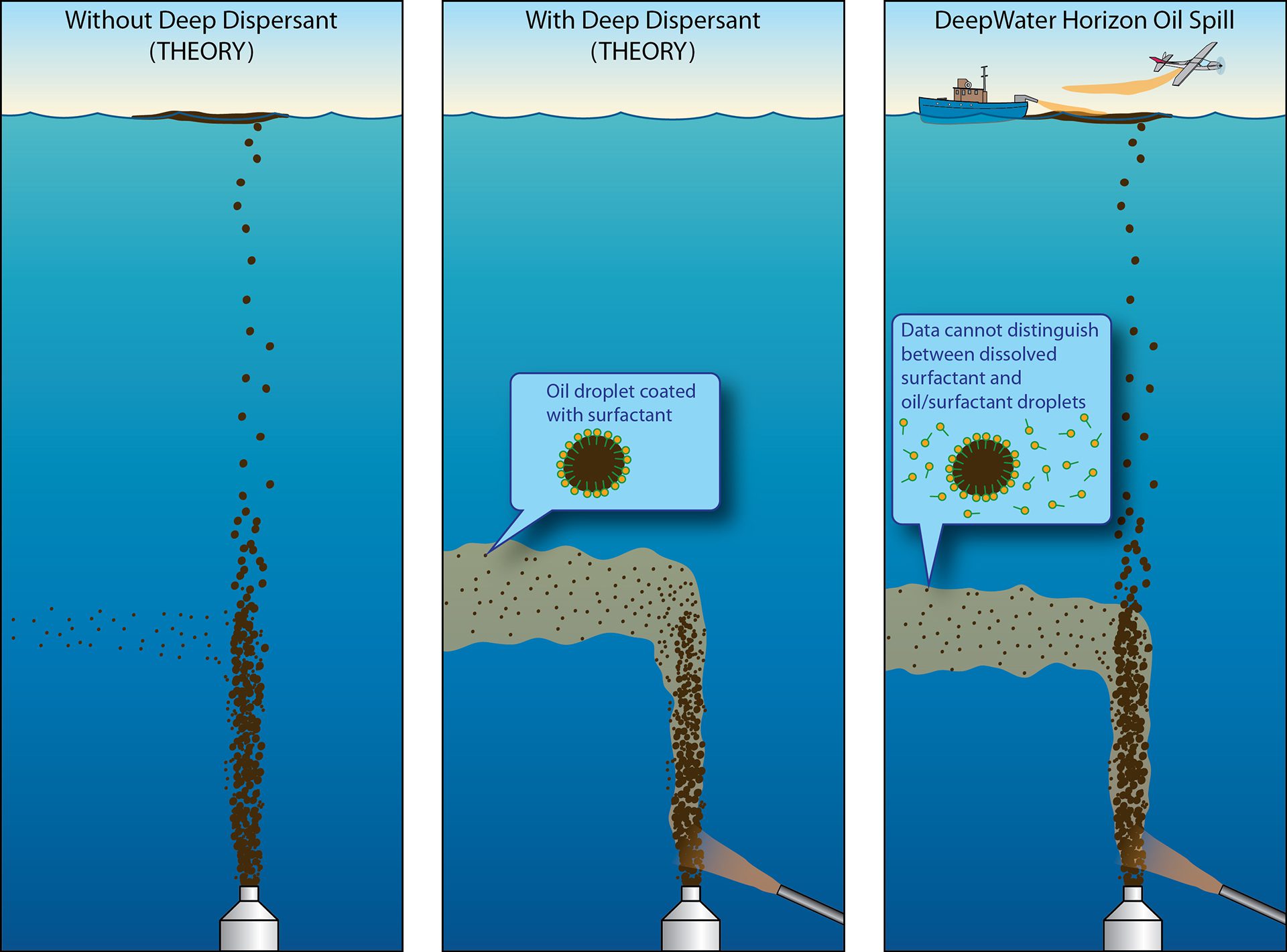
Oil droplets from deep wells can be broken into small, neutrally buoyant droplets by dispersants, helping microbes degrade them before they reach the surface.
Read MoreDeepwater Horizon Gulf oil spill timeline of events
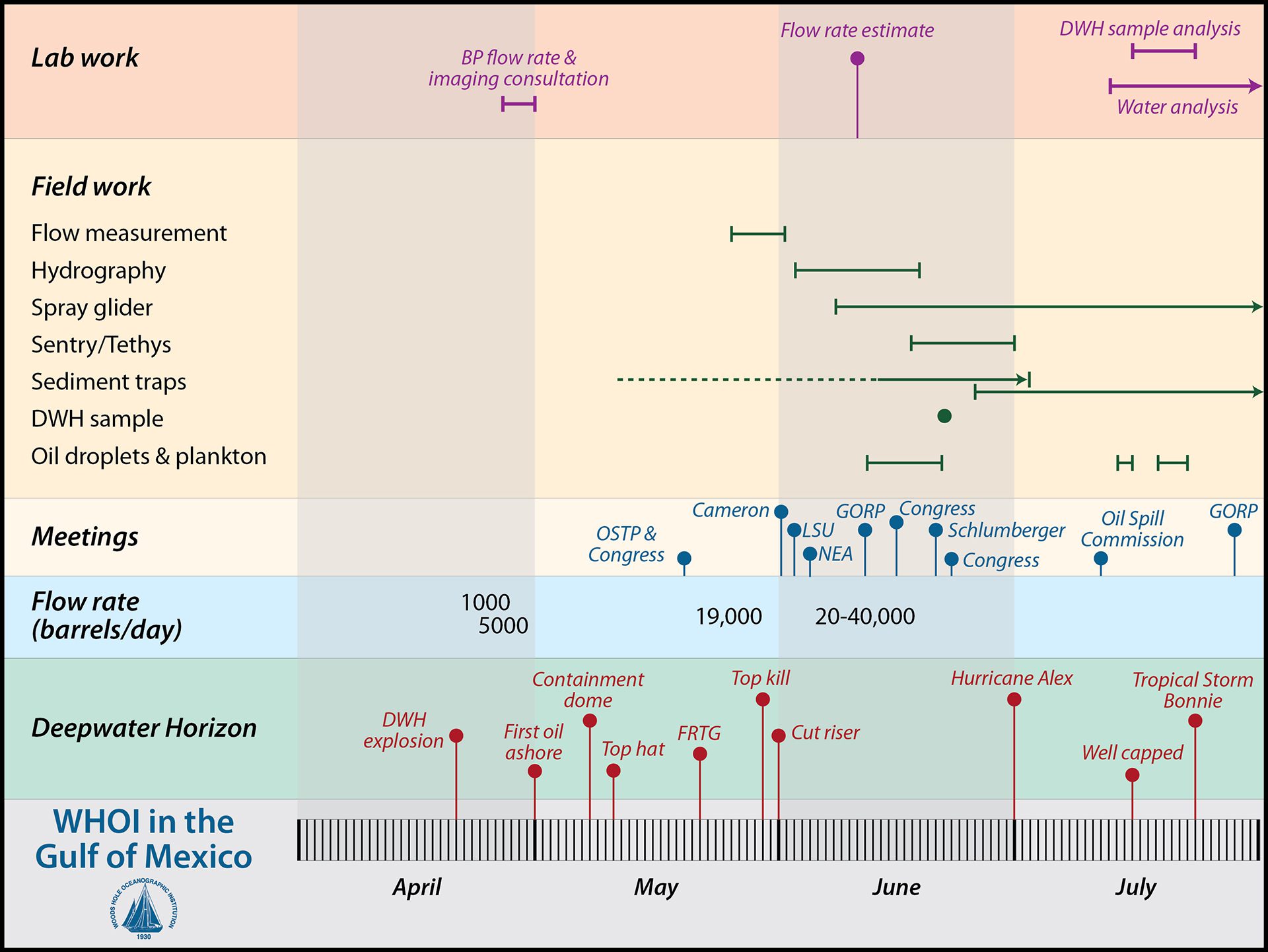
Deepwater Horizon Gulf oil spill timeline of events.
Read MoreDTAG data plot showing whale could dive deeper after disentanglement
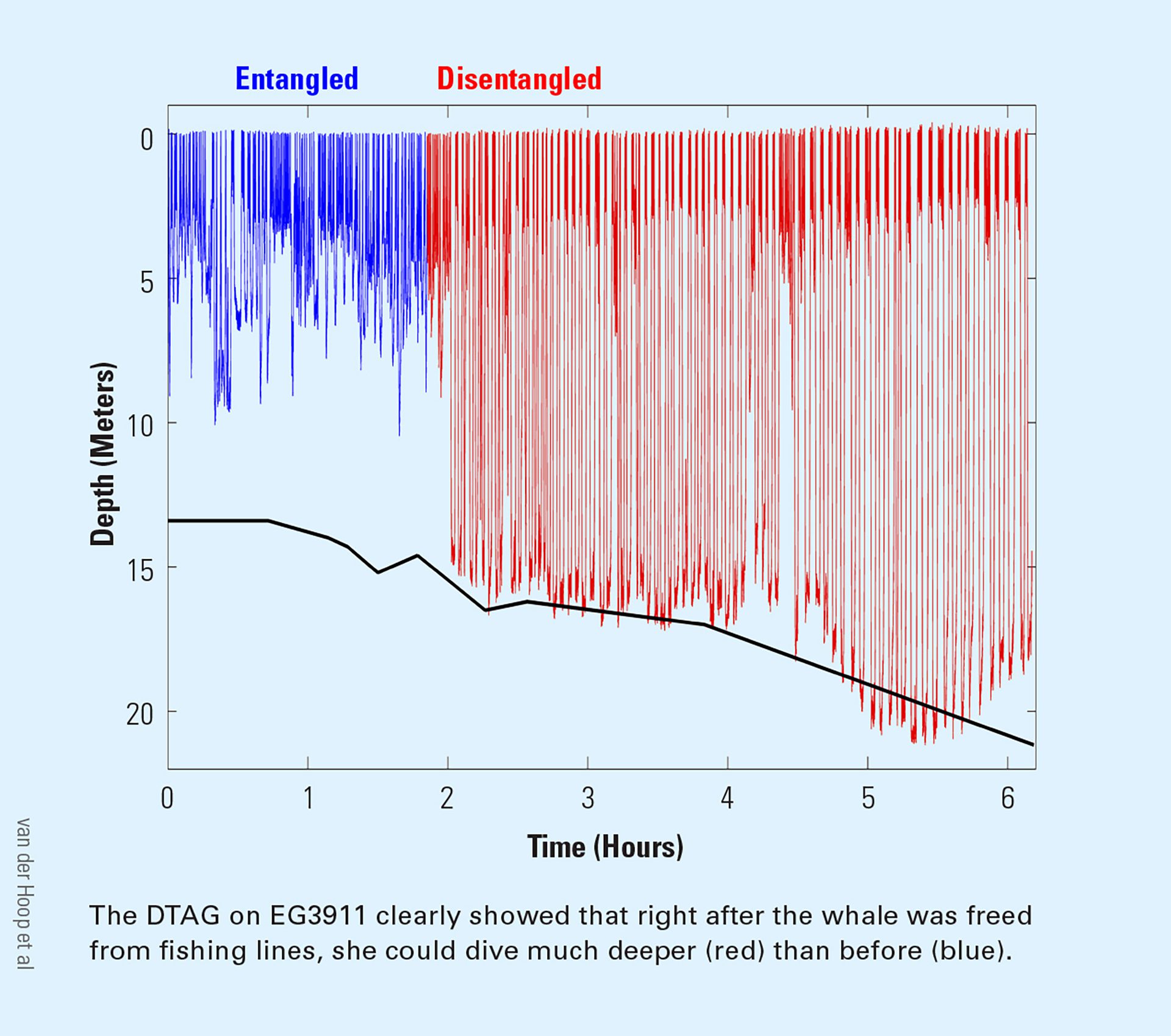
Tracking showed an entangled right whale dove shallowly, but after rescue, dove much deeper—revealing how gear hinders whale movement and effort.
Read MoreCarbon drawn into the ocean by plankton sinks and dissipates with depth
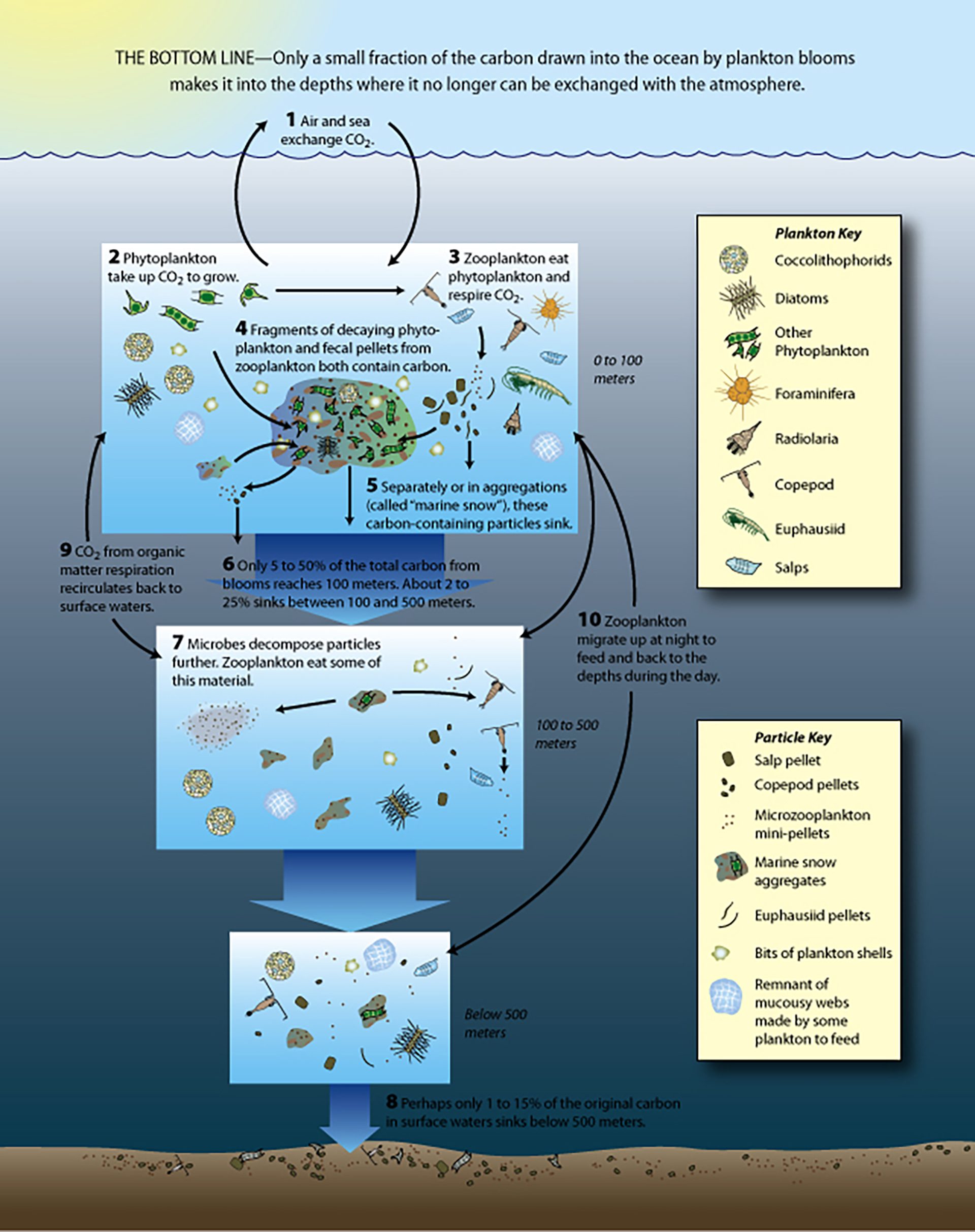
Only a small fraction of the carbon drawn into the ocean by plankton blooms makes it into the depths where it no longer can be exchanged with the atmosphere.
Read MoreCarbon emissions projection featuring possible reduction methods called "wedges"
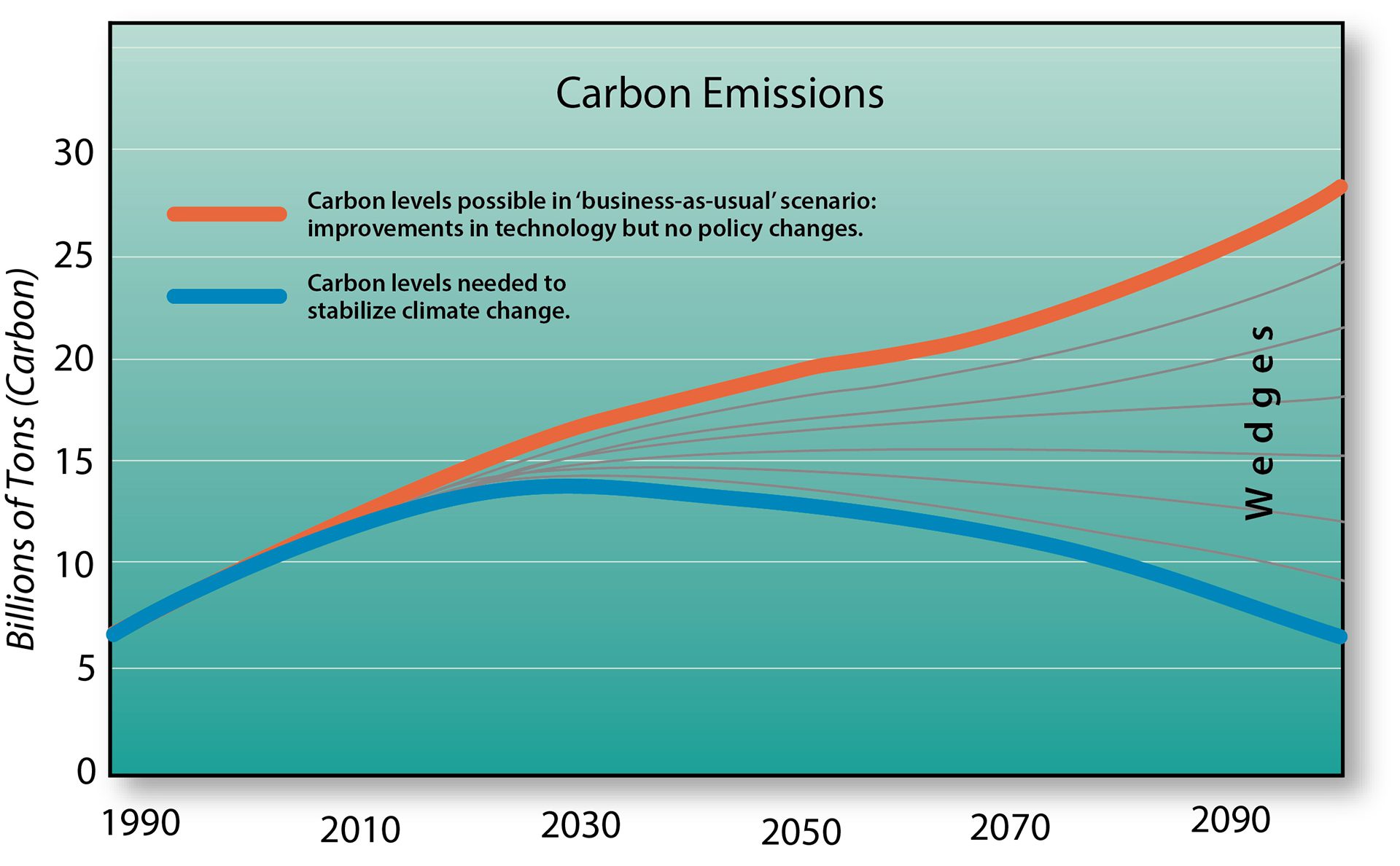
Without climate action, emissions will keep rising. To close the gap, multiple solutions—including ocean iron—may be needed to reach carbon reduction targets.
Read MoreCarbon-14 natural cycle
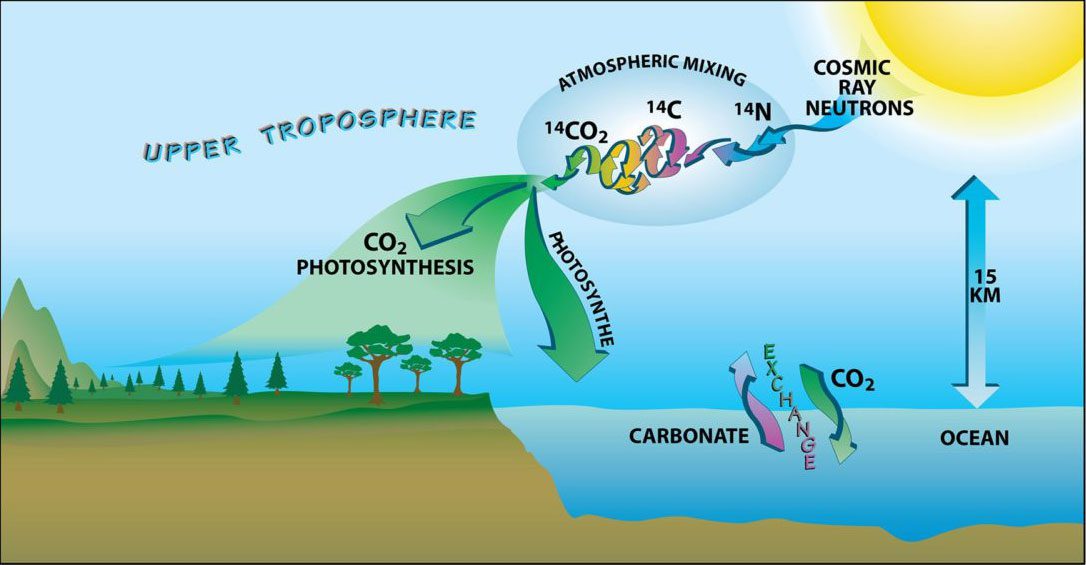
An illustration showing the natural carbon-14 cycle through the atmosphere, land and ocean.
Read MoreCiguatera Fish Poisoning cycle
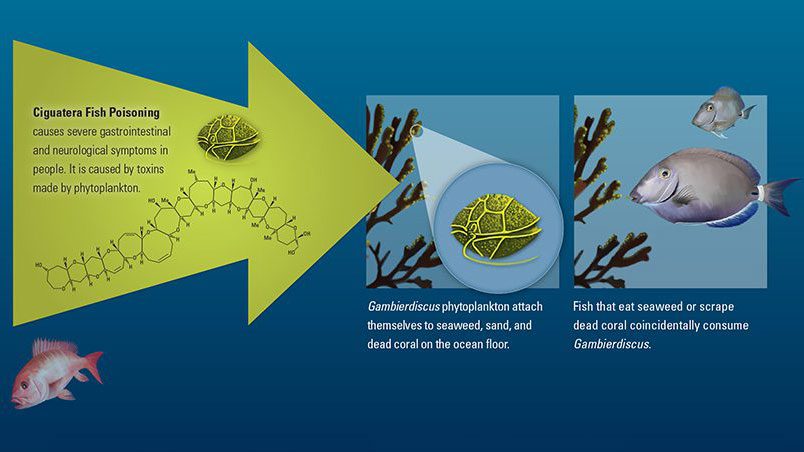
Ciquatera fish poisoning, caused by toxins made by phytoplankton, can cause several gastrointestinal and neurological symptoms in people.
Read MoreCO Solubility Pump
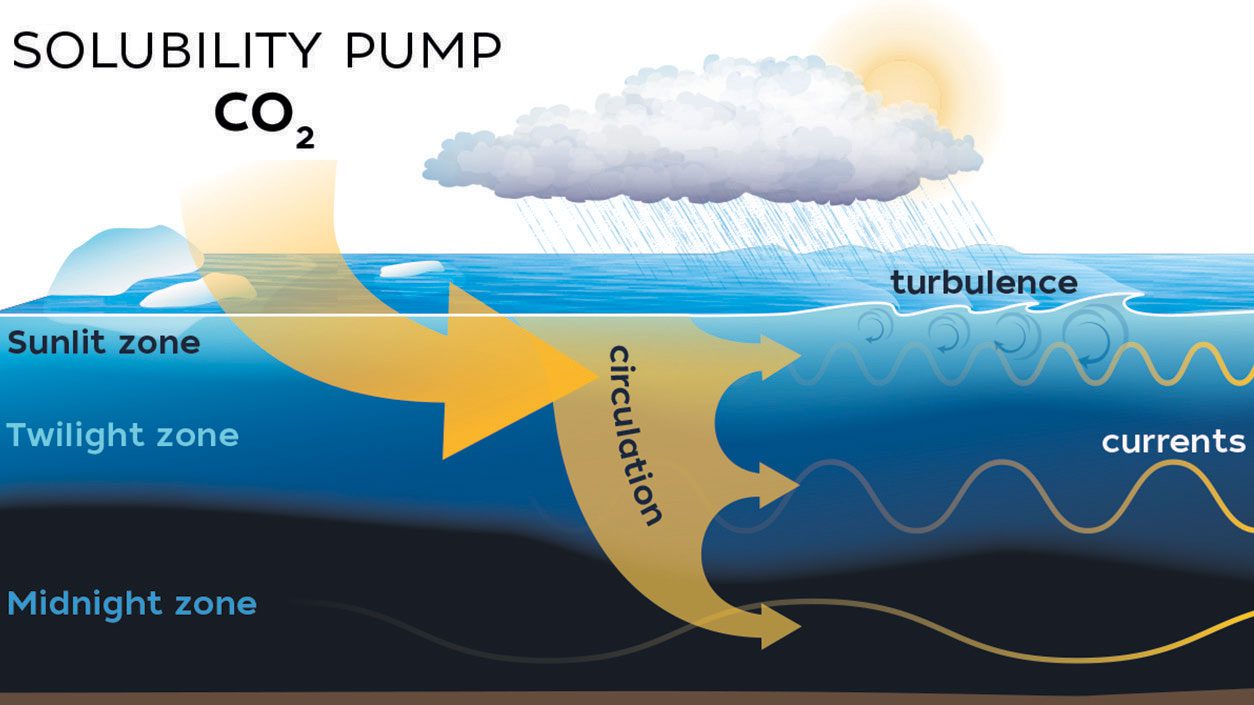
Cold seawater absorbs CO? from the atmosphere, which sinks to the deep ocean via circulation, storing carbon long-term in the solubility pump process.
Read MoreComparing carbon loss considering different sunlight penetration depths
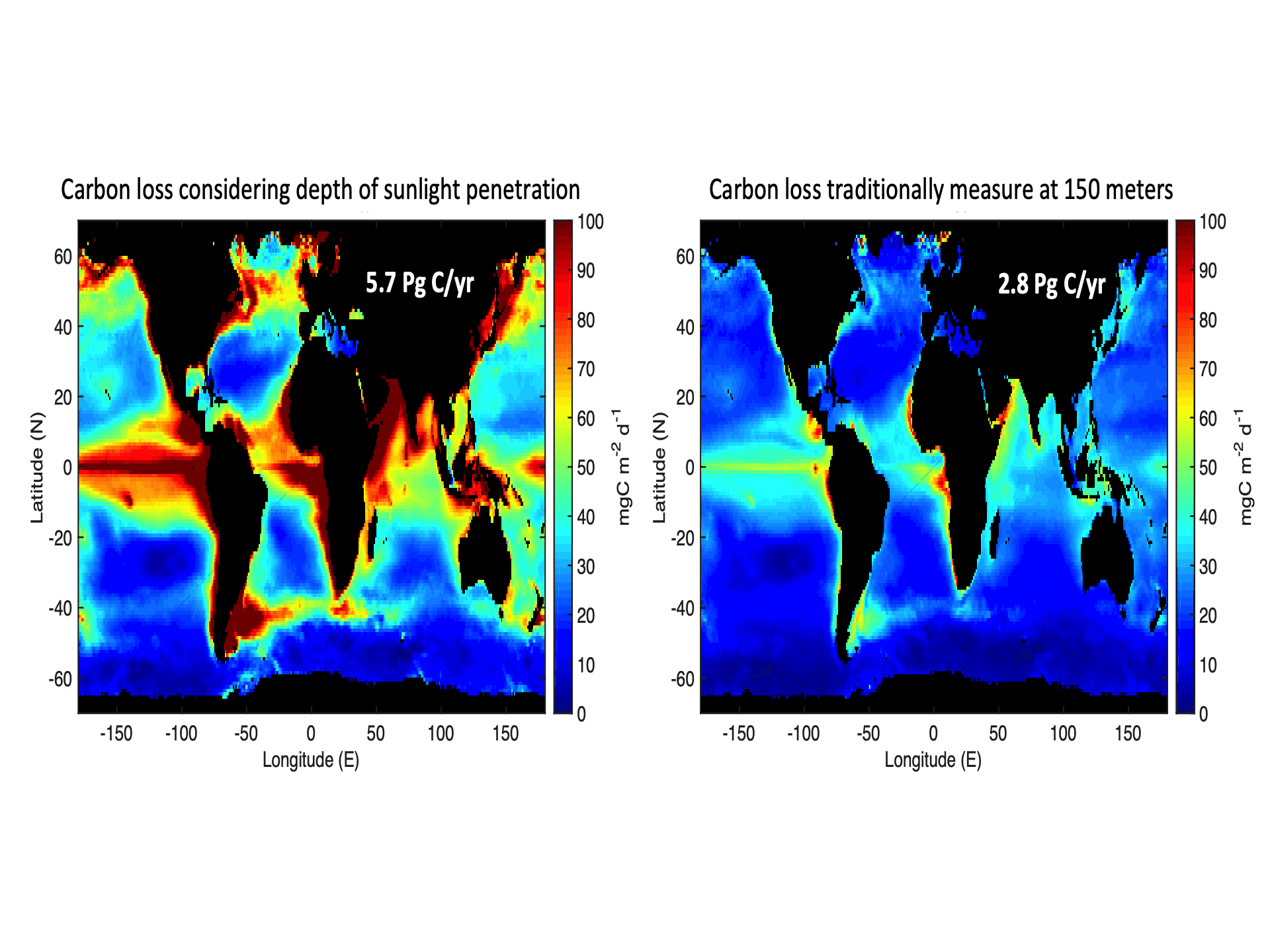
Global maps of ocean carbon estimates highlighting the need to account for sunlight (Buesseler et al., 2020).
Read MoreComparison of oil dispersant effectiveness in different weather
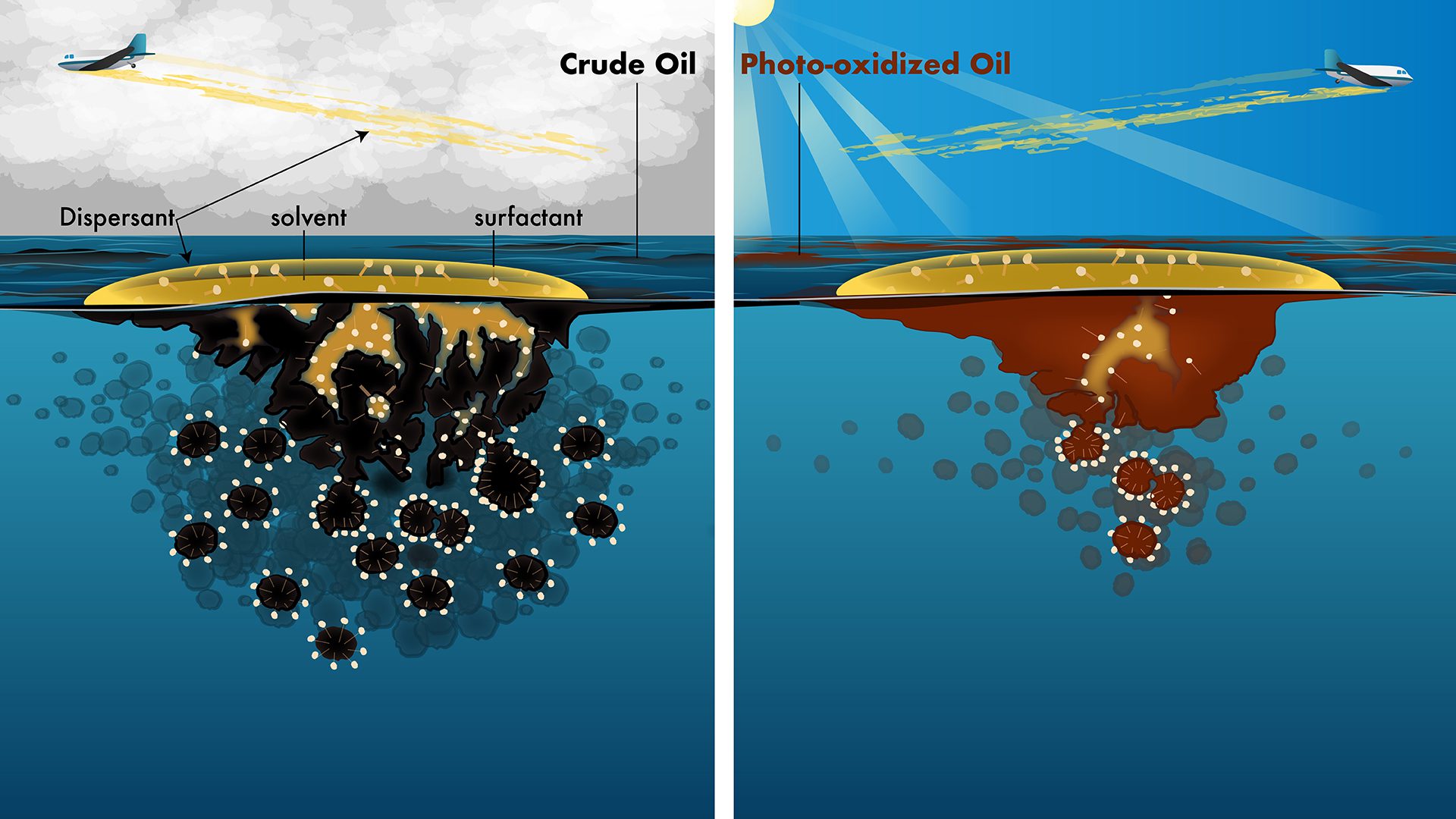
Sunlight changes oil chemistry on the ocean surface, reducing dispersant effectiveness by limiting how well surfactants break oil into small droplets.
Read MoreComparison of radioactivity sources in the ocean
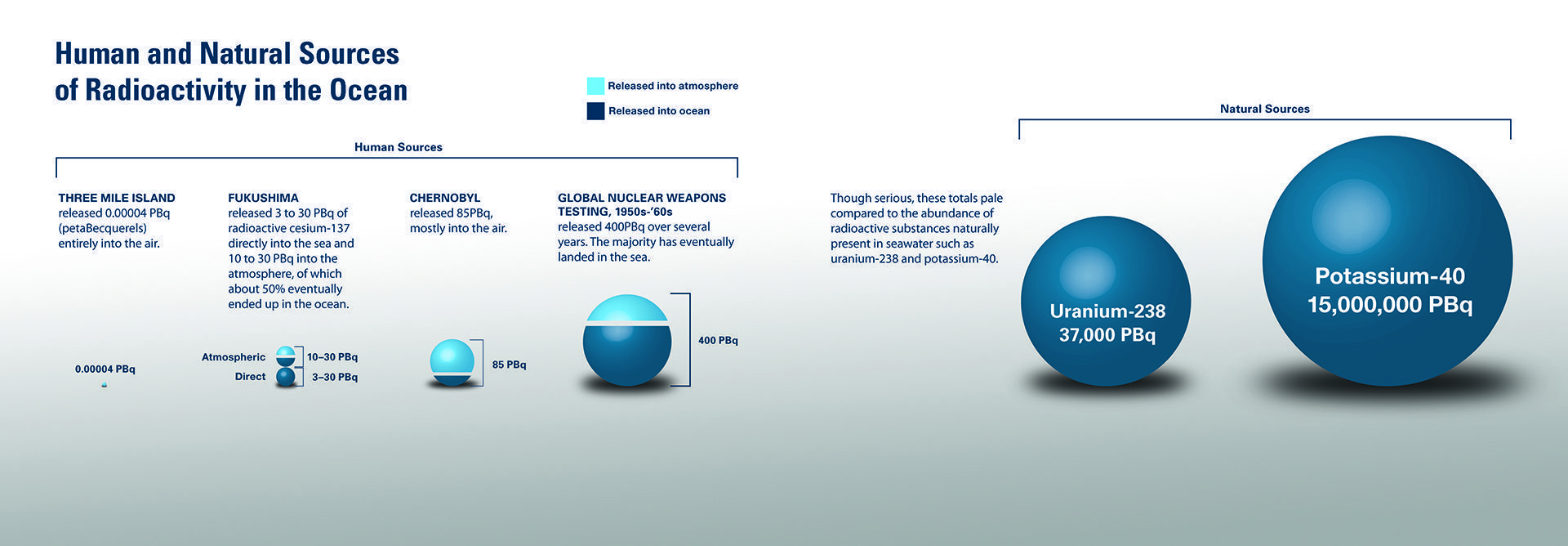
The background level of radiation in the ocean varies around the globe. The primary source has been nuclear weapons testing in the Pacific Ocean.
Read More