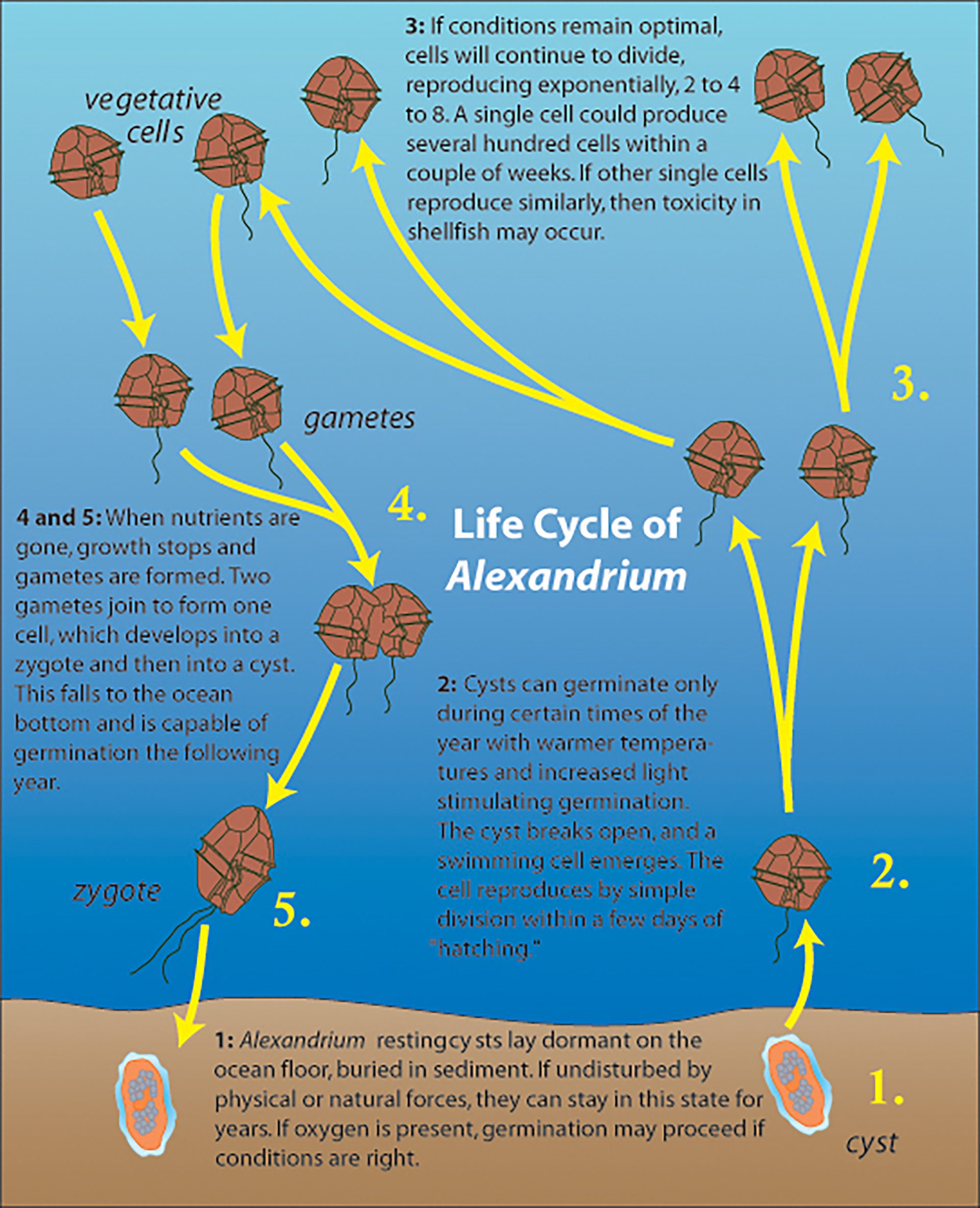
Dinoflagellates such as
For some species, a decline in available nutrients provokes a switch to sexual reproduction and a new life stage. Cells produce gametes, which fuse to form motile diploid zygote (called a planozygote). Planozygotes will form dormant resting cyst that settle into bottom sediments. These cysts can survive for years, allowing a species to withstand nutrient starvation, extreme winter temperatures, or even ingestion by animals. When favorable conditions resume, the cysts germinate and populate the water column with a new generation of photosynthetically active cells primed for another bloom.
The cyst stage represents an effective strategy for survival and dispersal. With every switch into the cyst stage, a bloom can be carried into new waters by ocean currents, fish, or even humans (via ballast water discharge) and then deposited as a “seed” population that colonizes a new area. (Illustration by Jack Cook, © Woods Hole Oceanographic Institution)
More content from : Ocean & human lives



Image and Visual Licensing
WHOI copyright digital assets (stills and video) on this website can be licensed for non-commercial use upon request and approval. Please submit your request via our Media Request Form.
For assistance or accessibility accommodations, call (508) 289-2647.