
News Releases
A Close-up Look at a Rare Underwater Eruption
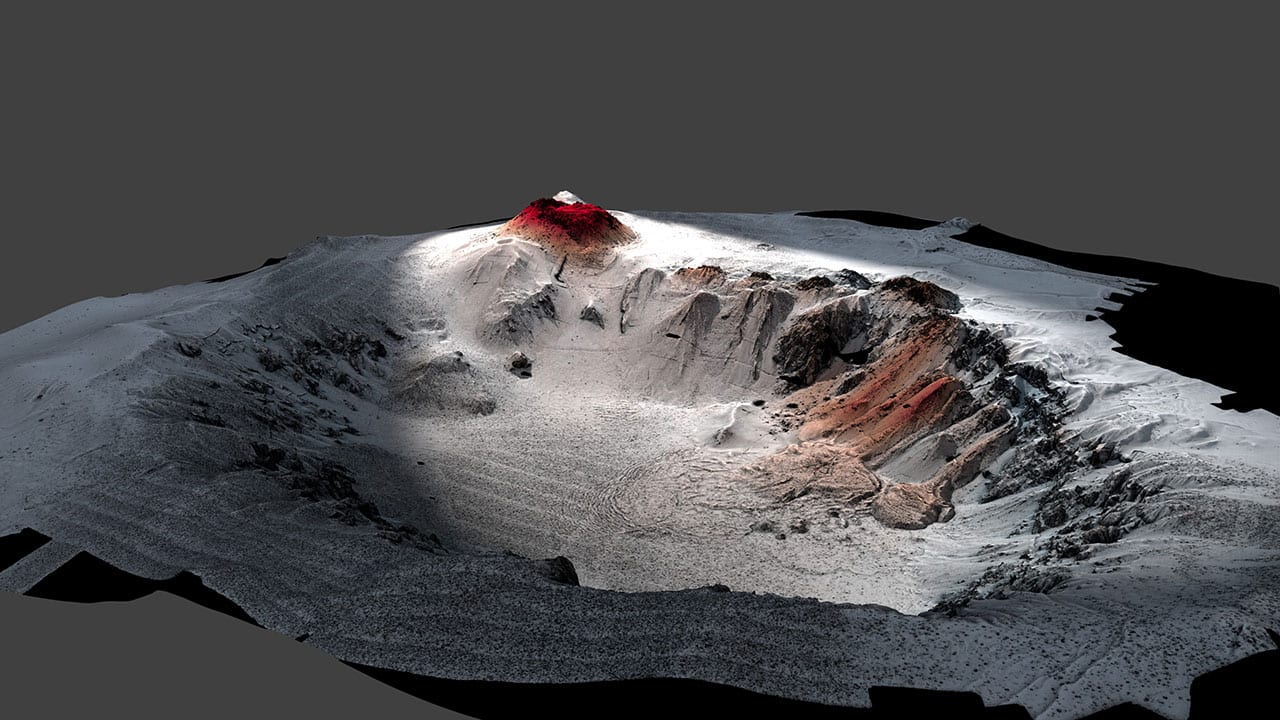
A new paper published January 10, 2018, in the journal Science Advances describes the first up-close investigation of the largest underwater volcanic eruption of the past century. The international research team led by the University of Tasmania and the Woods Hole Oceanographic Institution (WHOI) used the autonomous underwater vehicle (AUV) Sentry and the remotely operated vehicle (ROV) Jason to explore, map, and collect erupted materials from the Havre volcano during a 2015 expedition. They found that the eruption was surprising in many ways.
Read MoreVolcanic Arcs Form by Deep Melting of Rock Mixtures
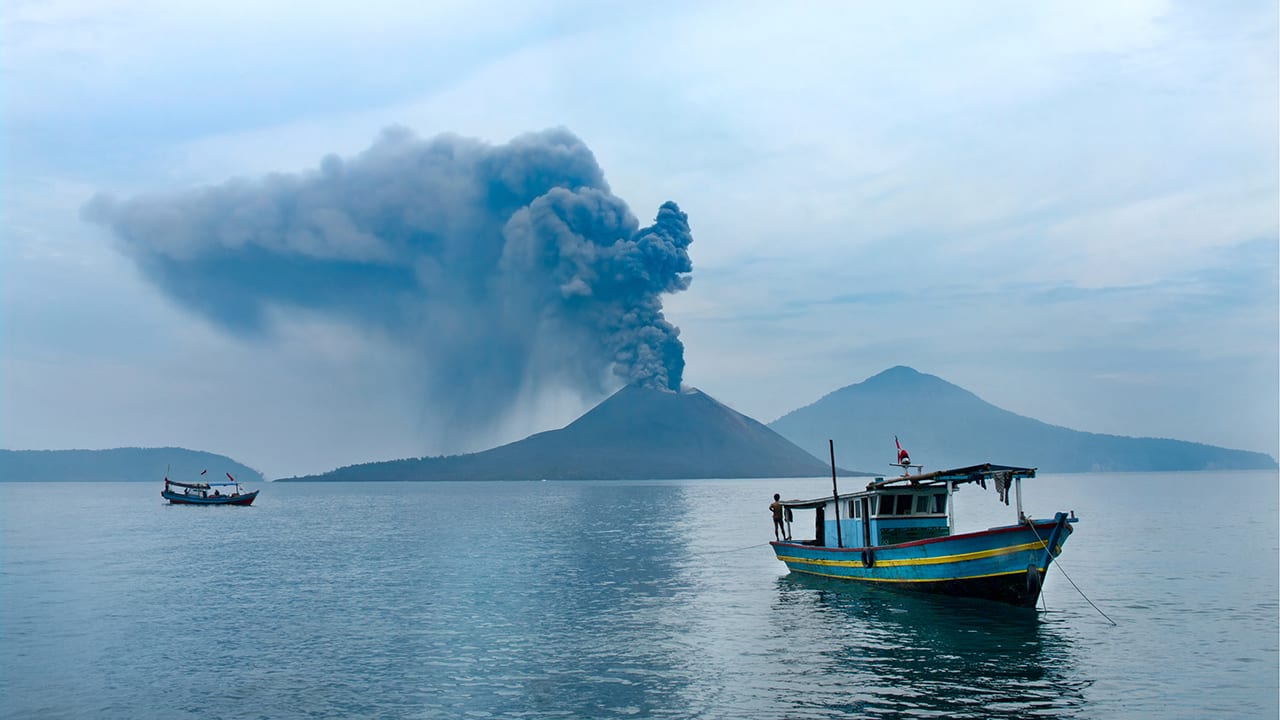
A new study published in the journal Science Advances changes our understanding of how volcanic arc lavas are formed, and may have implications for the study of earthquakes and the risks of volcanic eruption.
Read MorePanel to Discuss Deep-Sea Mining at AAAS Meeting
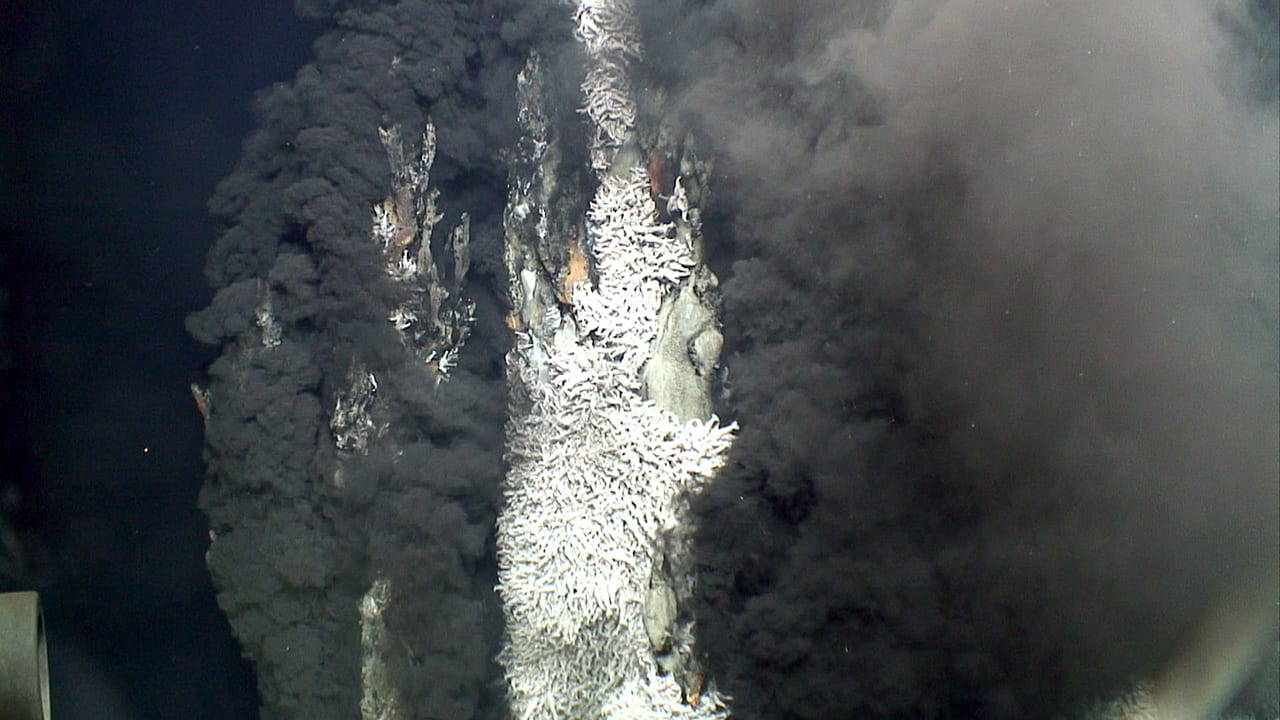
Home to an immense diversity of marine life, the deep ocean also contains valuable minerals with metals such as nickel, copper, cobalt, manganese, zinc, and gold, and rare-earth elements used in electronic technology like smart phones and medical imaging machines. As demand for these resources increases and supplies on land decrease, commercial mining operators are looking to the deep ocean as the next frontier for mining.
Read MoreSwarming Red Crabs Documented on Video
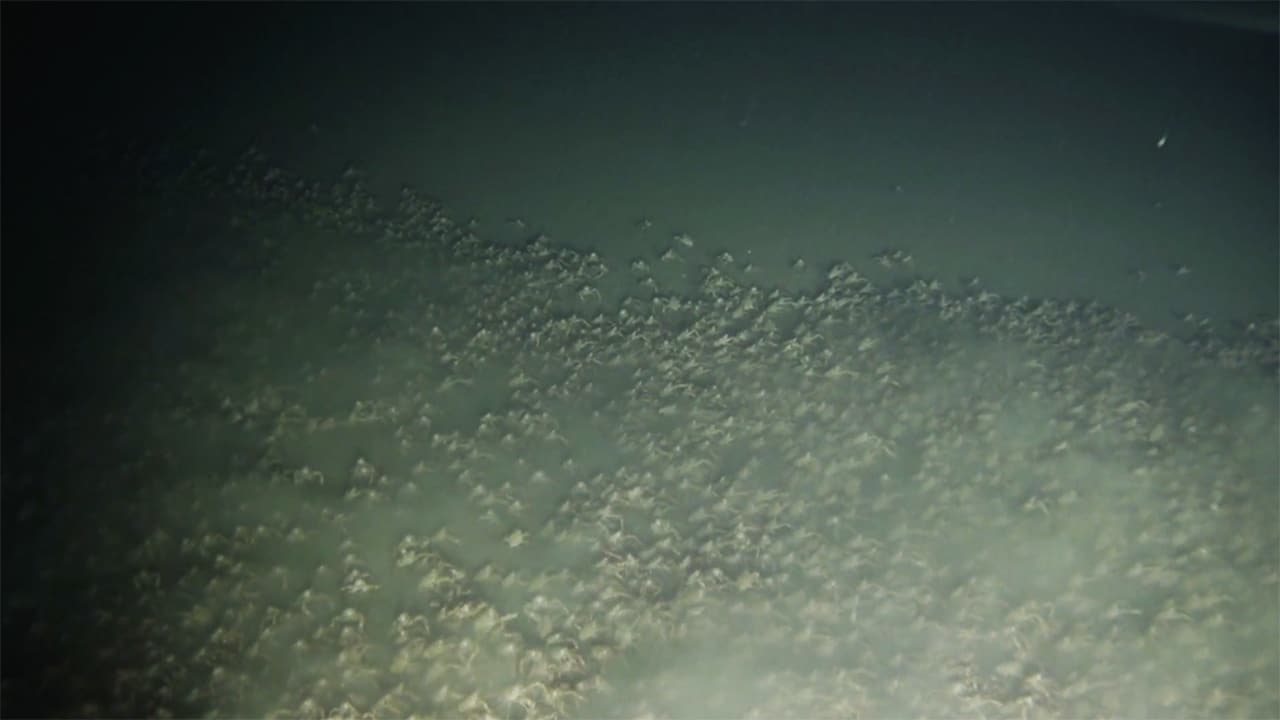
A research team studying biodiversity at the Hannibal Bank Seamount off the coast of Panama has captured unique video of thousands of red crabs swarming in low-oxygen waters just above the seafloor.
Read MoreGalapagos Expedition Reveals Unknown Seamounts, New Species
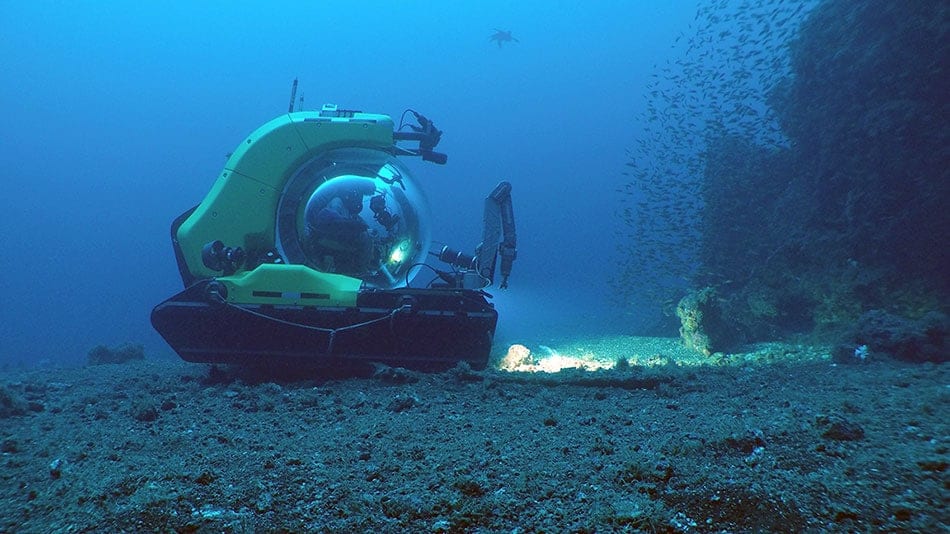
During a three-week expedition in August, an international team led by the Woods Hole Oceanographic Institution (WHOI), in partnership with the Charles Darwin Foundation for the Galápagos Islands and in close collaboration with the Galápagos National Park Directorate, conducted the first scientific expedition to map and characterize the seamounts on the Galápagos platform and the diverse marine life that these underwater mountains support.
Read MoreCarbon Dioxide Pools Discovered in Aegean Sea
The waters off Greece’s Santorini are the site of newly discovered opalescent pools forming at 250 meters depth. The interconnected series of meandering, iridescent white pools contain high concentrations of carbon dioxide (CO2) and may hold answers to questions related to deepsea carbon storage as well as provide a means of monitoring the volcano for future eruptions.
Read MoreDeep-Sea Images Give New View of Arctic Ocean Methane Seeps
Working with colleagues from the Centre for Arctic Gas Hydrate, Environment and Climate (CAGE) in Norway, Dan Fornari from Woods Hole Oceanographic Institution’s (WHOI) Geology & Geophysics Department collected nearly 30,000 high definition images at known methane release sites in the Arctic Ocean north of Norway. The detailed images will provide new insights into the most remote areas of natural methane releases in the world.
Read MoreAnna Michel Receives Gulf Research Program Early-Career Research Fellowship

Anna Michel, an assistant scientist in theApplied Ocean Physics and Engineering Department at Woods Hole Oceanographic Institution (WHOI), was chosen by the National Academy of Sciences (NAS) to receive a 2015 Gulf Research Program Early-Career Research Fellowship.
Read MoreMaking Organic Molecules in Hydrothermal Vents in the Absence of Life
In 2009, scientists from Woods Hole Oceanographic Institution embarked on a NASA-funded mission to the Mid-Cayman Rise in the Caribbean, in search of a type of deep-sea hot-spring or hydrothermal vent that they believed held clues to the search for life on other planets. They were looking for a site with a venting process that produces a lot of hydrogen because of the potential it holds for the chemical, or abiotic, creation of organic molecules like methane – possible precursors to the prebiotic compounds from which life on Earth emerged.
For more than a decade, the scientific community has postulated that in such an environment, methane and other organic compounds could be spontaneously produced by chemical reactions between hydrogen from the vent fluid and carbon dioxide (CO2). The theory made perfect sense, but showing that it happened in nature was challenging.
Now we know why: an analysis of the vent fluid chemistry proves that for some organic compounds, it doesn’t happen that way.
New research by geochemists at Woods Hole Oceanographic Institution, published June 8 in the Proceedings of the National Academy of Sciences, is the first to show that methane formation does not occur during the relatively quick fluid circulation process, despite extraordinarily high hydrogen contents in the waters. While the methane in the Von Damm vent system they studied was produced through chemical reactions (abiotically), it was produced on geologic time scales deep beneath the seafloor and independent of the venting process. Their research further reveals that another organic abiotic compound is formed during the vent circulation process at adjacent lower temperature, higher pH vents, but reaction rates are too slow to completely reduce the carbon all the way to methane.
Read MoreWHOI Receives $150,000 Grant from Tower Foundation
The Peter and Elizabeth C. Tower Foundation has awarded the Woods Hole Oceanographic Institution (WHOI) a $150,000 grant that will help fund a three-year collaborative project with Cape Abilities—a nonprofit organization dedicated to finding good jobs for Cape Cod residents with disabilities.
Read MoreStudy Finds Deep Ocean is Source of Dissolved Iron in Central Pacific
A new study led by scientists at the Woods Hole Oceanographic Institution (WHOI) points to the deep ocean as a major source of dissolved iron in the central Pacific Ocean. This finding highlights the vital role ocean mixing plays in determining whether deep sources of iron reach the surface-dwelling life that need it to survive.
Read MoreNewly discovered ocean plume could be major source of iron
Scientists have discovered a vast plume of iron and other micronutrients more than 1,000 km long billowing from hydrothermal vents in the South Atlantic Ocean. The finding, published online Aug.…
Read MoreExplorer and Filmmaker James Cameron Gives DEEPSEA CHALLENGER Sub to Woods Hole Oceanographic Institution
Explorer and filmmaker James Cameron and Woods Hole Oceanographic Institution (WHOI) have formed a partnership to stimulate advances in ocean science and technology and build on the historic breakthroughs of the 2012…
Read MoreWHOI Researchers, Collaborators Receive $1.4 Million to Study Life in Ocean’s Greatest Depths
Scientists from the Woods Hole Oceanographic Institution (WHOI), University of Hawaii, Whitman College and international colleagues will conduct the first systematic study of life in the deepest marine habitat on…
Read MoreWHOI scientists find ancient asphalt domes off California coast
They paved paradise and, it turns out, actually did put up a parking lot. A big one. Some 700 feet deep in the waters off California?s jewel of a coastal resort, Santa Barbara, sits a group of football-field-sized asphalt domes unlike any other underwater features known to exist. About 35,000 years ago, a series of apparent undersea volcanoes deposited massive flows of petroleum 10 miles offshore. The deposits hardened into domes that were discovered recently by scientists from the Woods Hole Oceanographic Institution (WHOI) and UC Santa Barbara (UCSB).
Long-Distance Larvae Speed to New Undersea Vent Homes
Working in a rare, ?natural seafloor laboratory? of hydrothermal vents that had just been rocked by a volcanic eruption, scientists from the Woods Hole Oceanographic Institution (WHOI) and other institutions have discovered what they believe is an undersea superhighway carrying tiny life forms unprecedented distances to inhabit the post-eruption site.
Read MoreWHOI contributes to special seamount issue of Oceanography magazine
Woods Hole Oceanographic Institution (WHOI) biologist Timothy M. Shank is among five guest editors of a newly published special edition of the research journal Oceanography on the oceans? seamounts, submerged isolated mountains in the sea. Shank is also a contributor to the special Oceanography edition.
Read MoreWHOI-Operated ROV Jason Images the Discovery of the Deepest Explosive Eruption on the Sea Floor
Oceanographers using the remotely operated vehicle (ROV) Jason discovered and recorded the first video and still images of a deep-sea volcano actively erupting molten lava on the seafloor. Jason, designed…
Read MoreHybrid Remotely Operated Vehicle Nereus Reaches Deepest Part of the Ocean
A new type of deep-sea robotic vehicle called Nereus has successfully reached the deepest part of the world’s ocean, reports a team of U.S. engineers and scientists aboard the research…
Read MoreNatural Petroleum Seeps Release Equivalent of 8-80 Exxon Valdez Oil Spills
A new study by researchers at Woods Hole Oceanographic Institution (WHOI) and the University of California, Santa Barbara (UCSB) is the first to quantify the amount of oil residue in…
Read MoreCarbon Acts Like Rustoleum Around Hydrothermal Vents
The cycling of iron throughout the oceans has been an area of intense research for the last two decades. Oceanographers have spent a lot of time studying what has been…
Read MoreCold Water Corals Conference to be Held in Woods Hole
On October 24, 2008, scientists from North America and Europe will meet at the Woods Hole Oceanographic Institution (WHOI) to develop the first coherent plan for studying and conserving cold-water…
Read MoreStudy Reveals Microbes Dine on Thousands of Compounds in Oil
Thousands of feet below the bottom of the sea, off the shores of Santa Barbara, CA, single-celled organisms are busy feasting on oil. Until now, nobody knew how many oily…
Read MoreGeologists Discover Signs of Volcanoes Blowing their Tops in the Deep Ocean
A WHOI research team has uncovered evidence of explosive volcanic eruptions deep beneath the ice-covered surface of the Arctic Ocean. Such violent eruptions of splintered, fragmented rock?known as pyroclastic deposits?were not thought possible at great ocean depths because of the intense weight and pressure of water and because of the composition of seafloor magma and rock.
Read More