
Press Room

On Saturday, May 11, WHOI welcomed students from Perkins School for the Blind’s Outreach Program.

The Communicator Awards recognizes organizations committed to excellence, effectiveness, and innovation across all areas of communication.
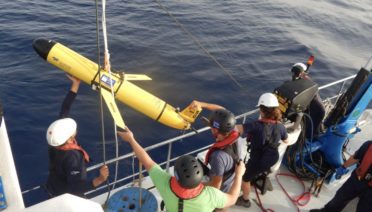
New research shows how tiny plant-like organisms hitch a ride on ocean currents to reach darker and deeper depths, where they impact carbon cycling and microbial dynamics in the subtropical oceans.
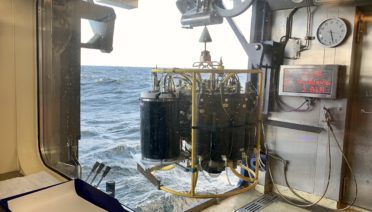
Human activities account for a substantial amount – anywhere from 20% to more than 60% – of toxic thallium that has entered the Baltic Sea over the past 80 years, according to new research by scientists affiliated with WHOI and other institutions.
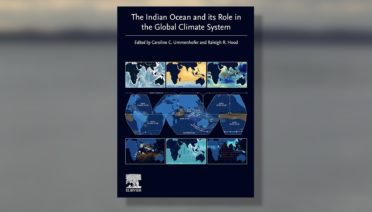
The Indian Ocean and Its Role in the Global Climate System takes a deep dive into warming trends and extreme weather events
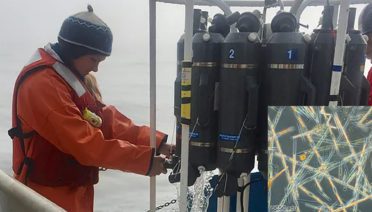
The National Institute of Environmental Health Sciences (NIEHS) and National Science Foundation (NSF) have announced that the Woods Hole Oceanographic Institution (WHOI) will receive funding to continue operating the Woods Hole Center for Oceans and Human Health (WHCOHH).
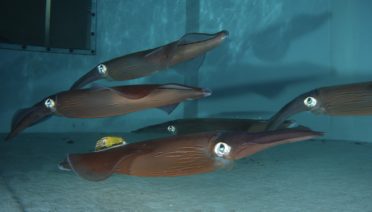
Newly developed bioadhesive sensors (BIMS) are effective and less invasive than traditional tagging. Scientists can attach them with a thin layer of dried-hydrogel in less than 20 seconds.
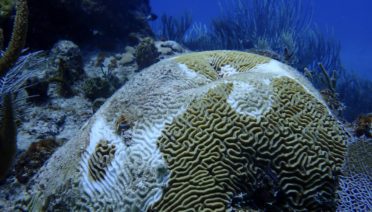
Researchers from WHOI studied the microbes in coral reef water by examining eight reefs in the U.S. Virgin Islands over a period of seven years, which included periods of hurricane and coral disease disturbance.

Woods Hole Oceanographic Institution (WHOI) has been nominated for two Webby Awards for its work in sharing mostly never-before-seen footage of the wreckage of the RMS Titanic.
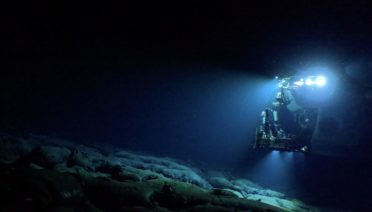
Ocean scientists discovered the new deep-sea hydrothermal vent sites on the seafloor at 2,550 meters (8366 feet, or 1.6 miles) depth.
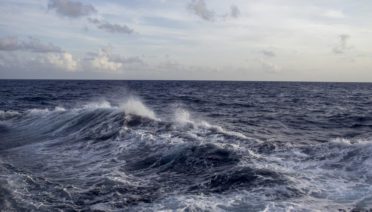
New oceanic research provides clear evidence of a human “fingerprint” on climate change and shows that specific signals from human activities have altered the seasonal cycle amplitude of sea surface temperatures.
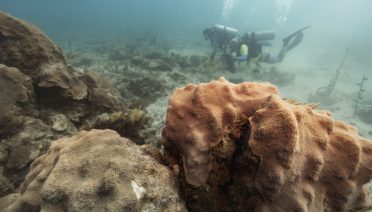
Researchers at WHOI demonstrated that replaying healthy reef sounds could potentially be used to encourage coral larvae to recolonize damaged or degraded reefs.
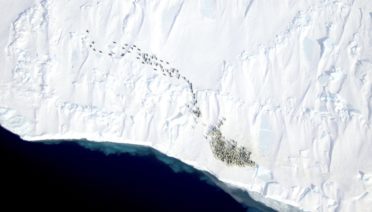
High resolution satellite imagery and field-based validation surveys have provided the first multi-year time series documenting emperor penguin populations.
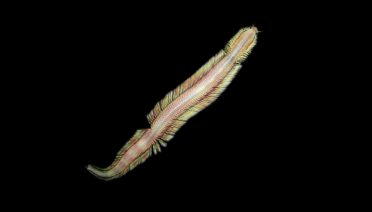
New Deep-Sea Worm Discovered at Methane Seep Off Costa Rica Named after Alvin Pilot Bruce Strickrott
The creature raises the number of new species found by scientists studying these seemingly inhospitable ecosystems to 48
Woods Hole, Mass. — Woods Hole Oceanographic Institution (WHOI), along with UC San Diego’s Scripps Institution of Oceanography (Scripps) and other researchers, […]

WHOI-led team receives funding to help small businesses prepare communities across the nation for climate change
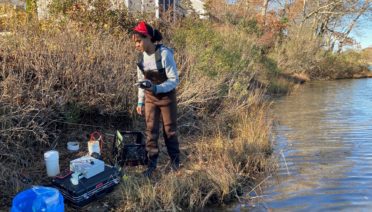
The funding will support five major projects from watershed contaminant monitoring to data collection for sustainable fisheries and more
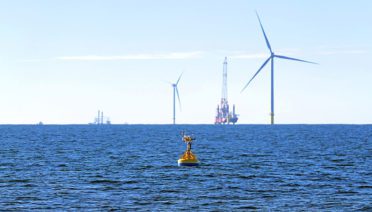
The U.S. DOE, WHOI, and partners to collect data near an East Coast offshore wind site
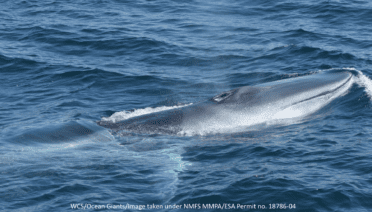
Researchers aim to use their science to help inform best practices and strategies to better protect fin whales in waters off NY and NJ
Woods Hole, Mass. – The New York Bight is an important year-round habitat for endangered fin whales, […]

Woods Hole, Mass. — Each year, the Association for the Sciences of Limnology and Oceanography (ASLO) honors scientists for their outstanding achievements in aquatic science research, service, and education. The G. Evelyn Hutchinson Award recognizes a mid-career scientist who has […]

Woods Hole, Mass. – Studying a rock is like reading a book. The rock has a story to tell, says Frieder Klein, an associate scientist in the Marine Chemistry & Geochemistry Department at the Woods Hole Oceanographic Institution (WHOI).
The rocks […]