
Zoology
How do manatees stay hydrated?
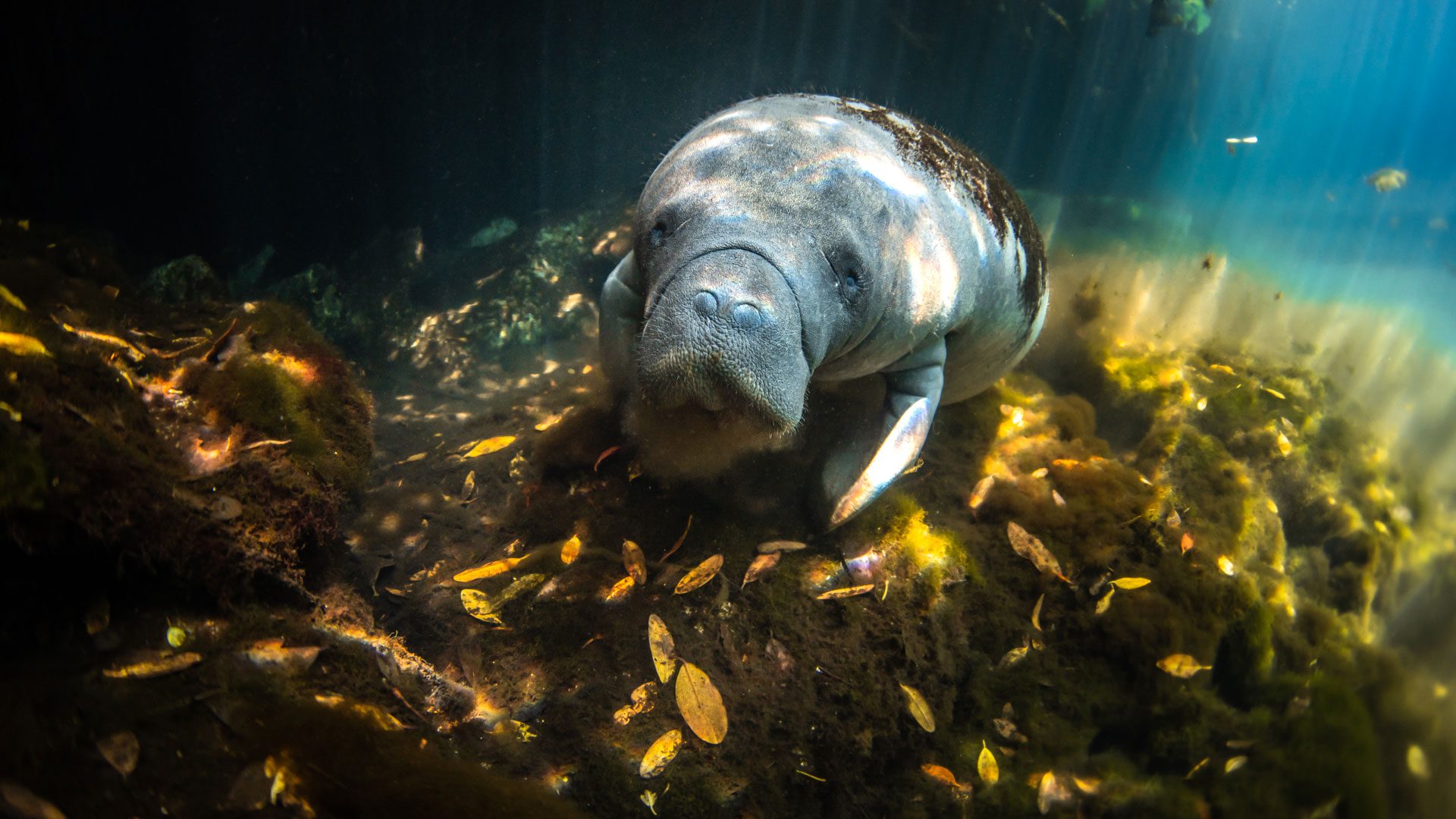
Marine mammals need to hydrate—even in the saltiest of seas. Here’s how manatees stay fresh wherever they go.
Read MoreBiological Carbon Pump
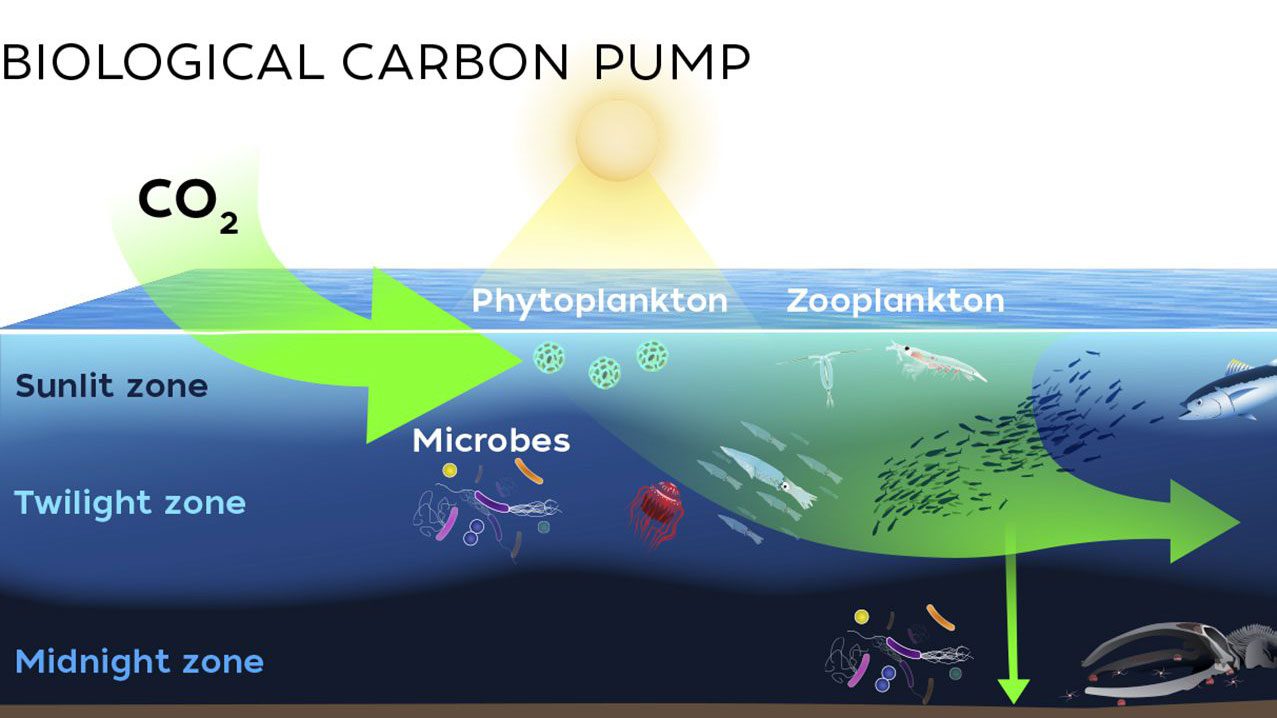
The ocean’s biological carbon pump moves carbon from surface waters to the deep sea, helping regulate climate by keeping some heat-trapping gases out of the air.
Read MorePlankton blooms at ocean fronts
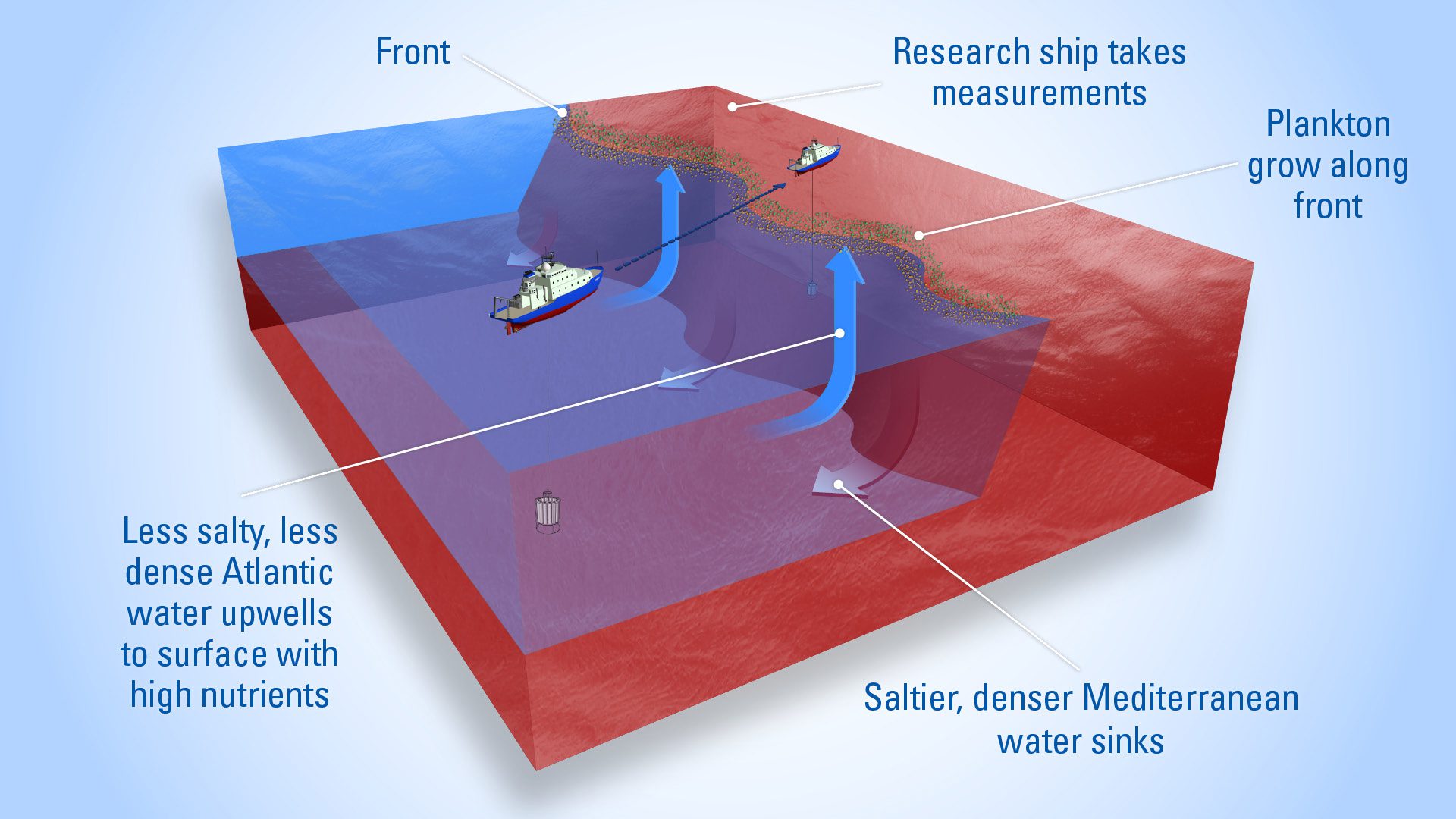
Plankton thrive where water masses meet—rising lighter water brings nutrients to the surface, fueling blooms in sunlit layers of the ocean.
Read MoreDiatoms and Bacteria: A Complex Ocean Partnership
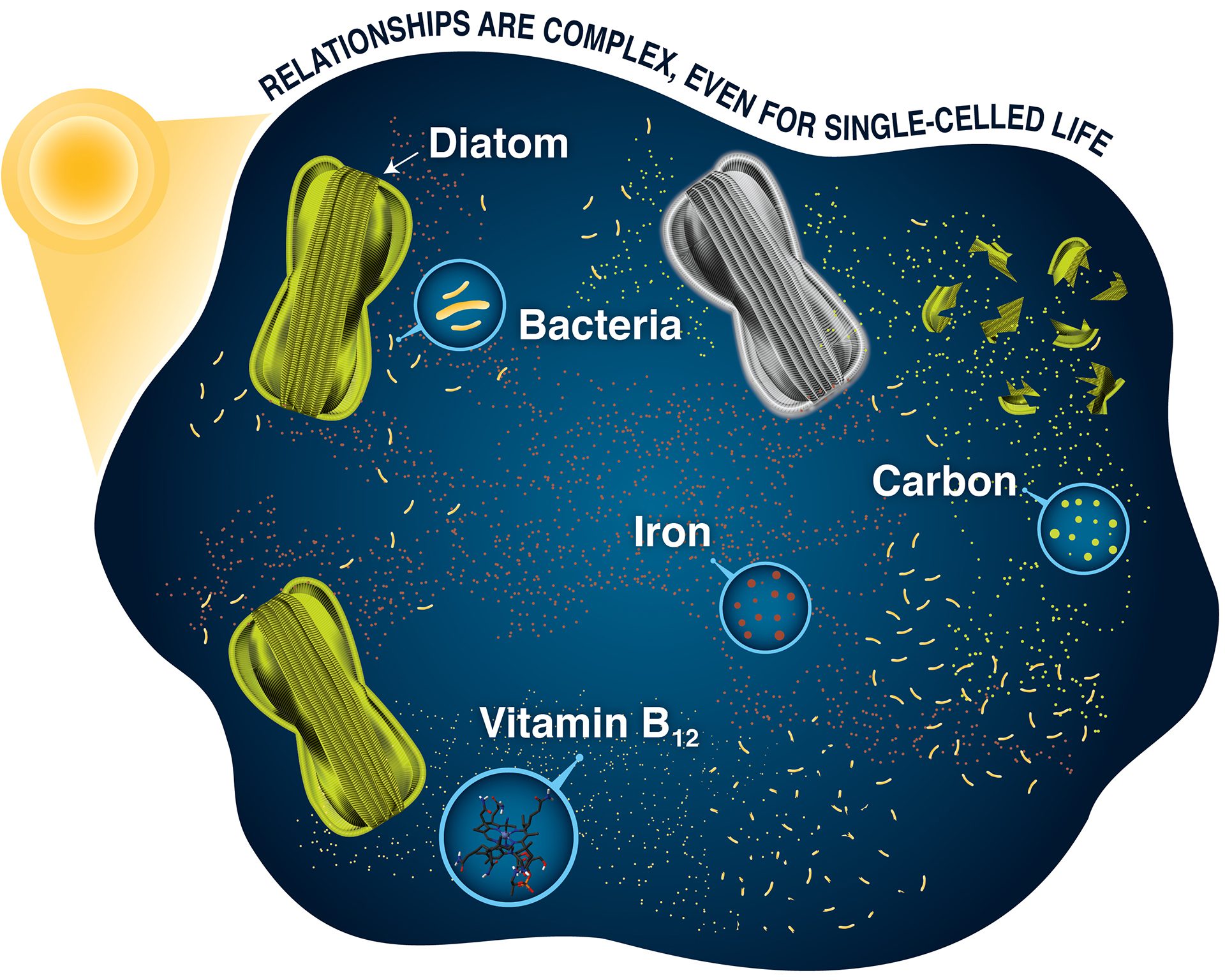
Diatoms and bacteria rely on each other for nutrients like organic carbon and B12 but compete for scarce iron, creating a delicate balance in ocean chemistry.
Read MoreOcean carbon cycle to twilight zone depth
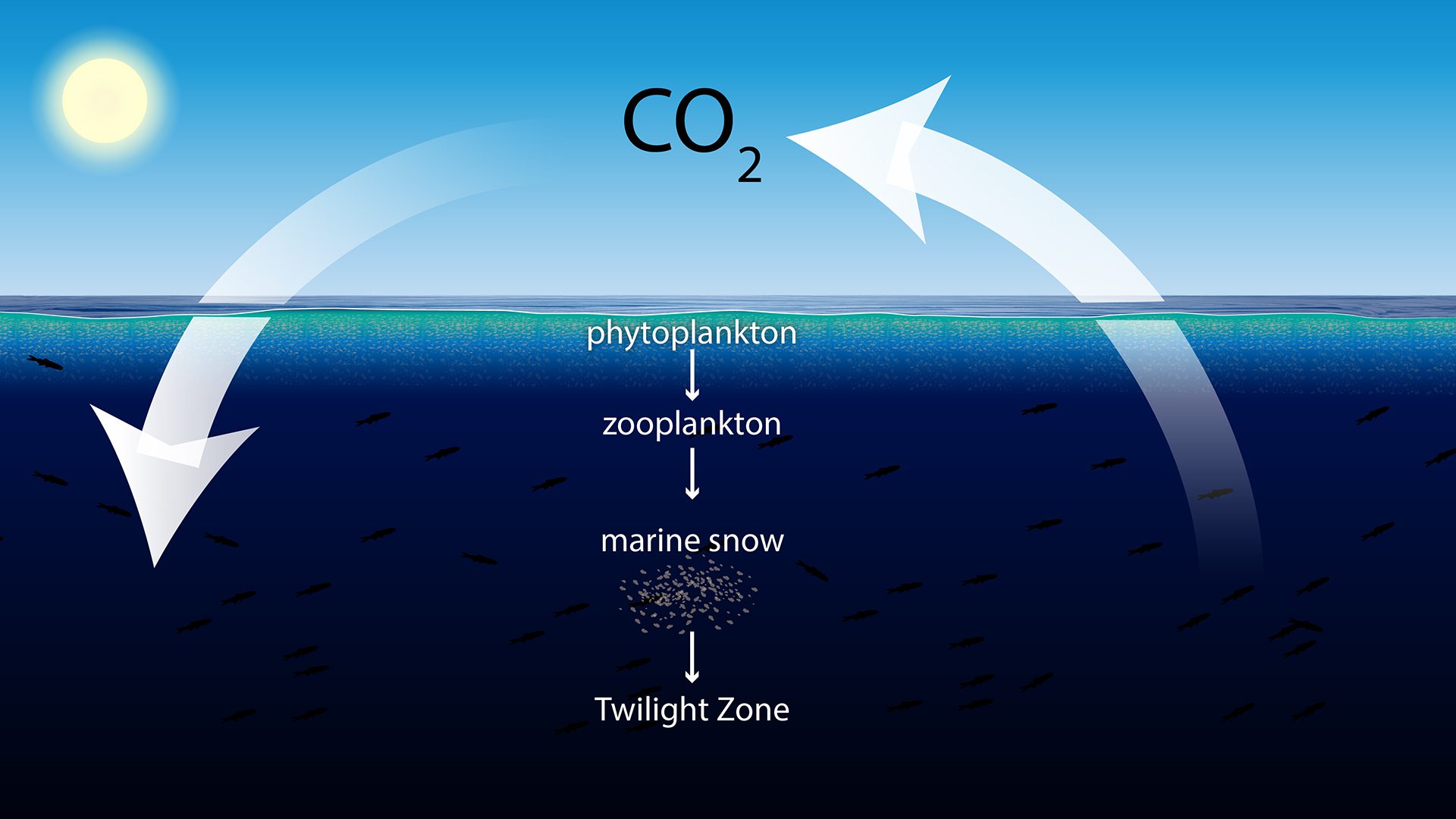
The ocean is a significant carbon sink, absorbing a large amount of CO2 from the atmosphere. This process helps regulate Earth’s climate but can also lead to ocean acidification.
Read MoreDust distribution across the ocean
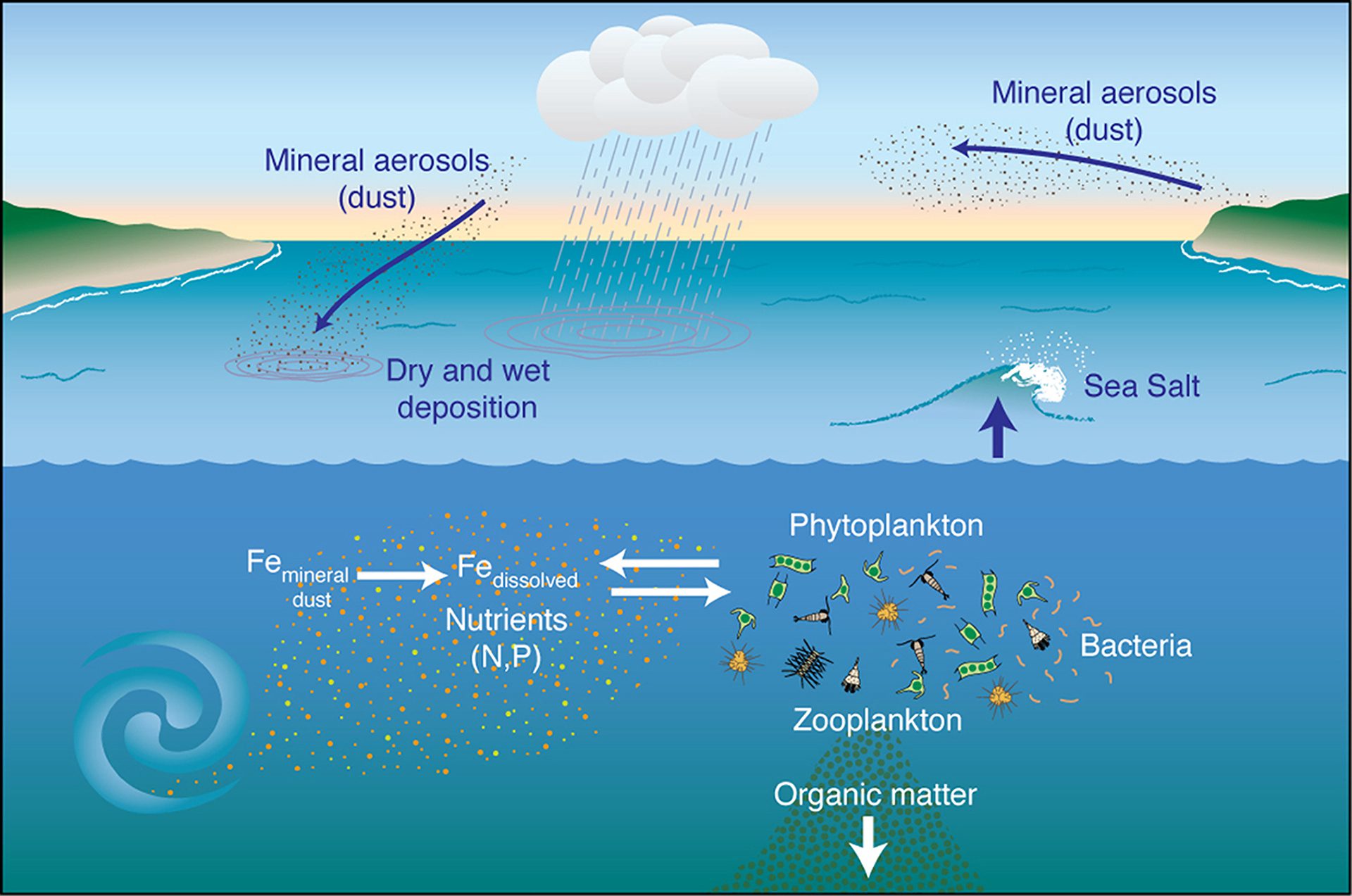
Iron-rich dust from land settles in the ocean, feeding phytoplankton. These support marine life and help transfer carbon to the deep sea through sinking matter.
Read MoreOTZ Mixing Pump and Migration Pump
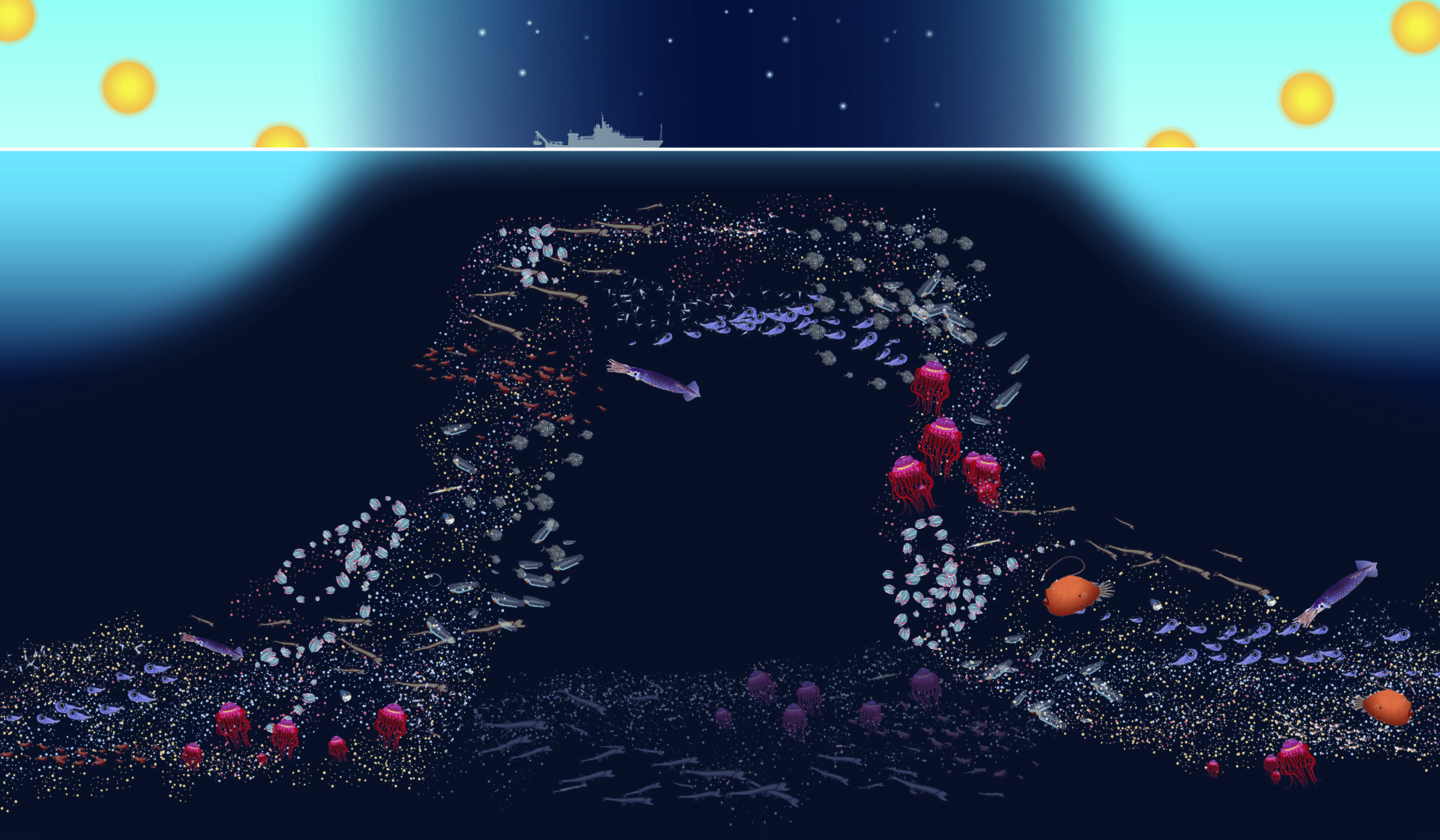
Each night, millions of ocean animals migrate upward to feed, then descend at dawn, actively transporting carbon from surface waters to the deep in Earth’s largest animal migration.
Read MoreProcess showing how methane is derived from photosynthetic bacteria
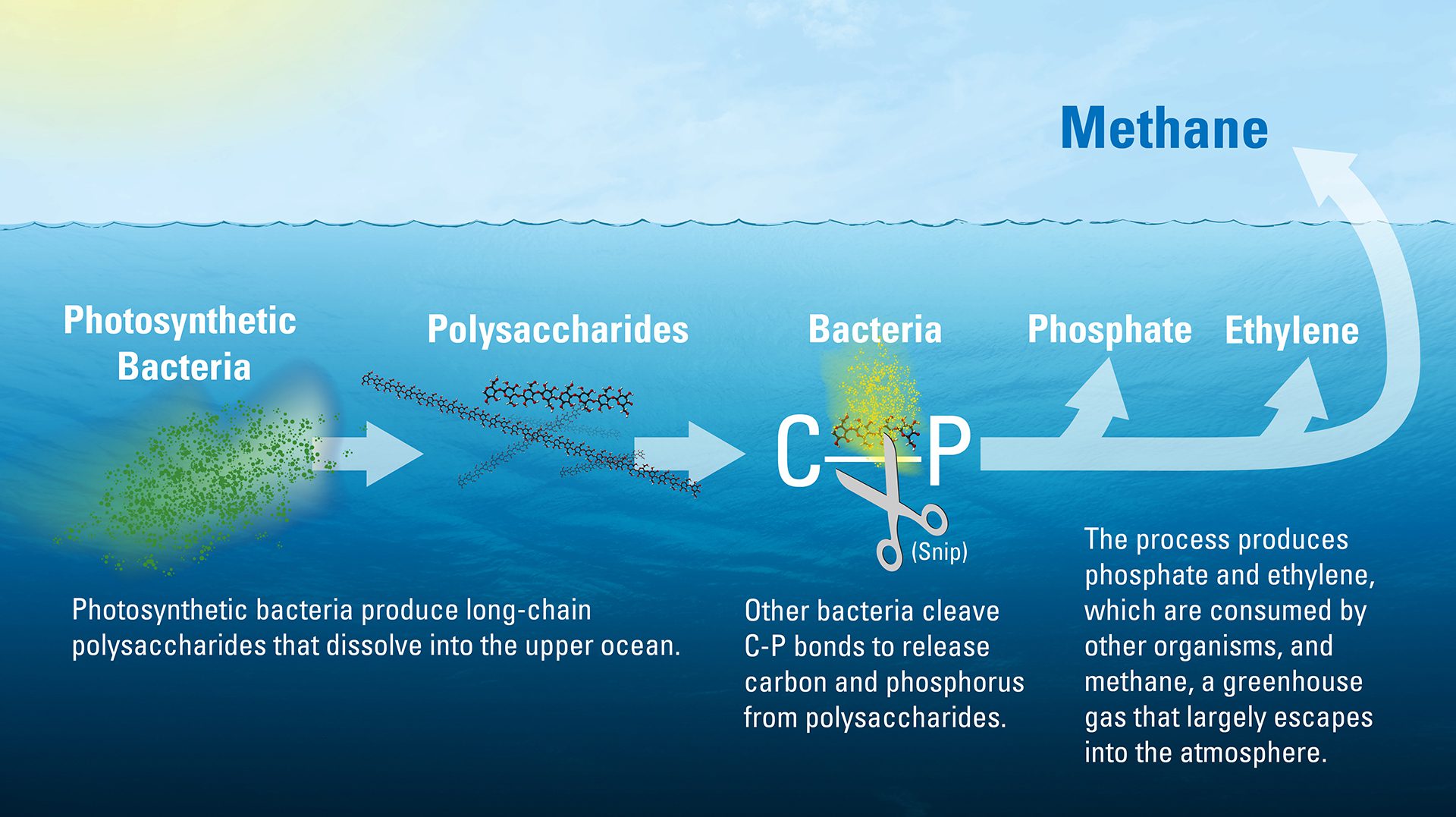
Scientists discovered that photosynthetic bacteria in surface waters produce sugar chains broken down by other bacteria, releasing methane—a new microbial source of this greenhouse gas.
Read MoreA Krill’s Life Cycle
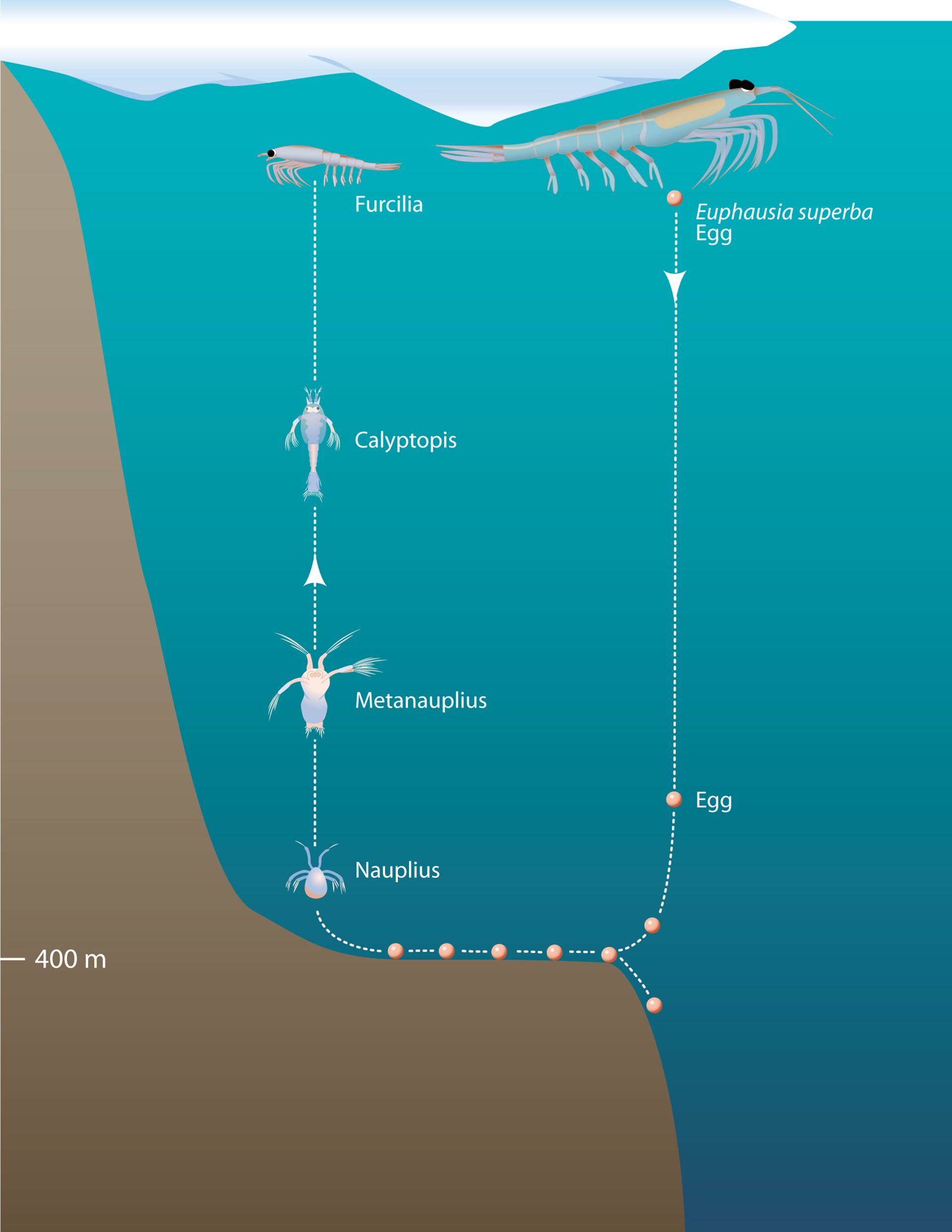
Krill hatch deep and race upward to survive—only those reaching the surface before winter can feed, grow, and live through their first icy Antarctic season.
Read MoreOcean iron recycling illustration
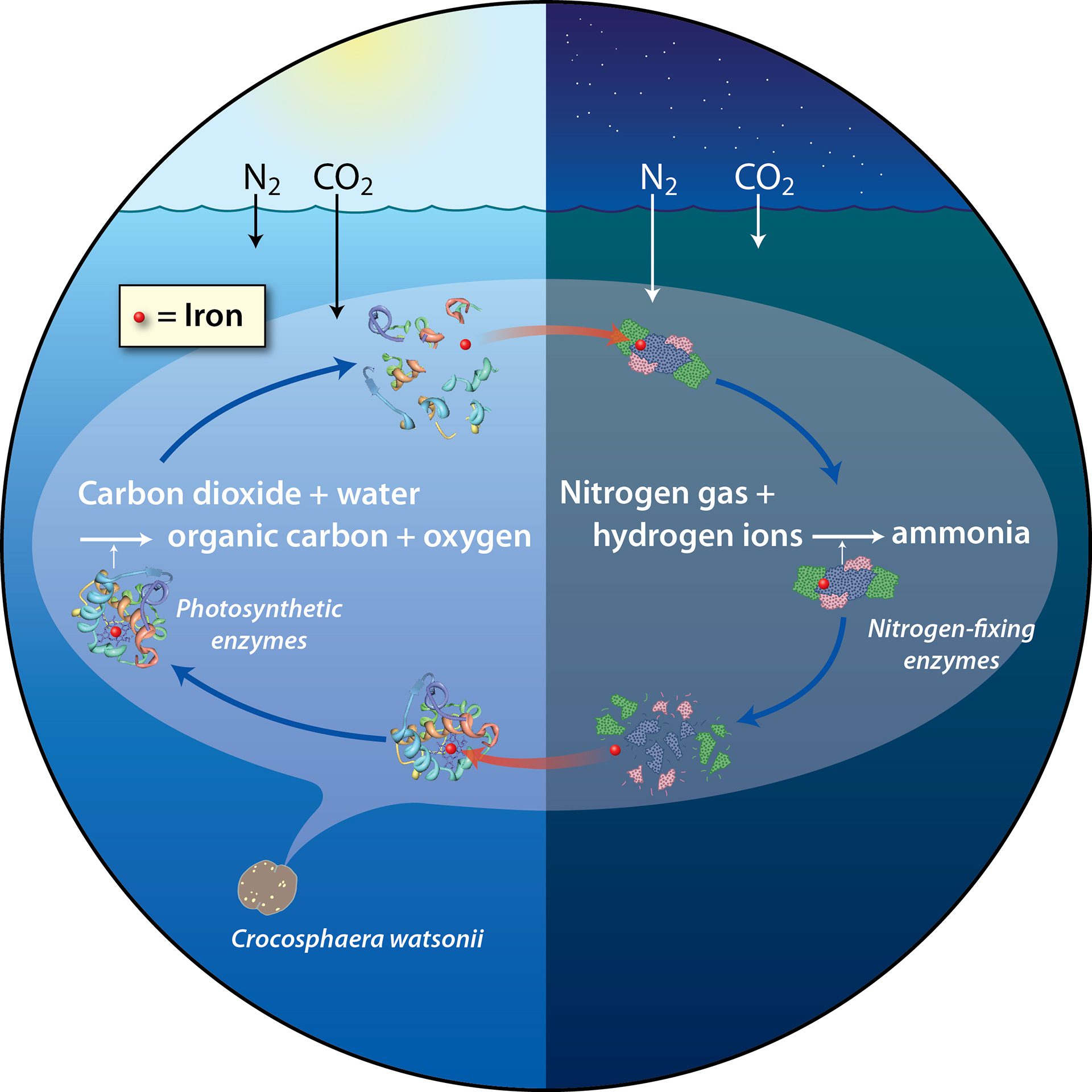
One ocean bacterium halves its iron needs by recycling enzymes—using iron-rich enzymes for photosynthesis by day, then switching to others for ammonia production at night.
Read MoreOcean food web processes that drive carbon cycle
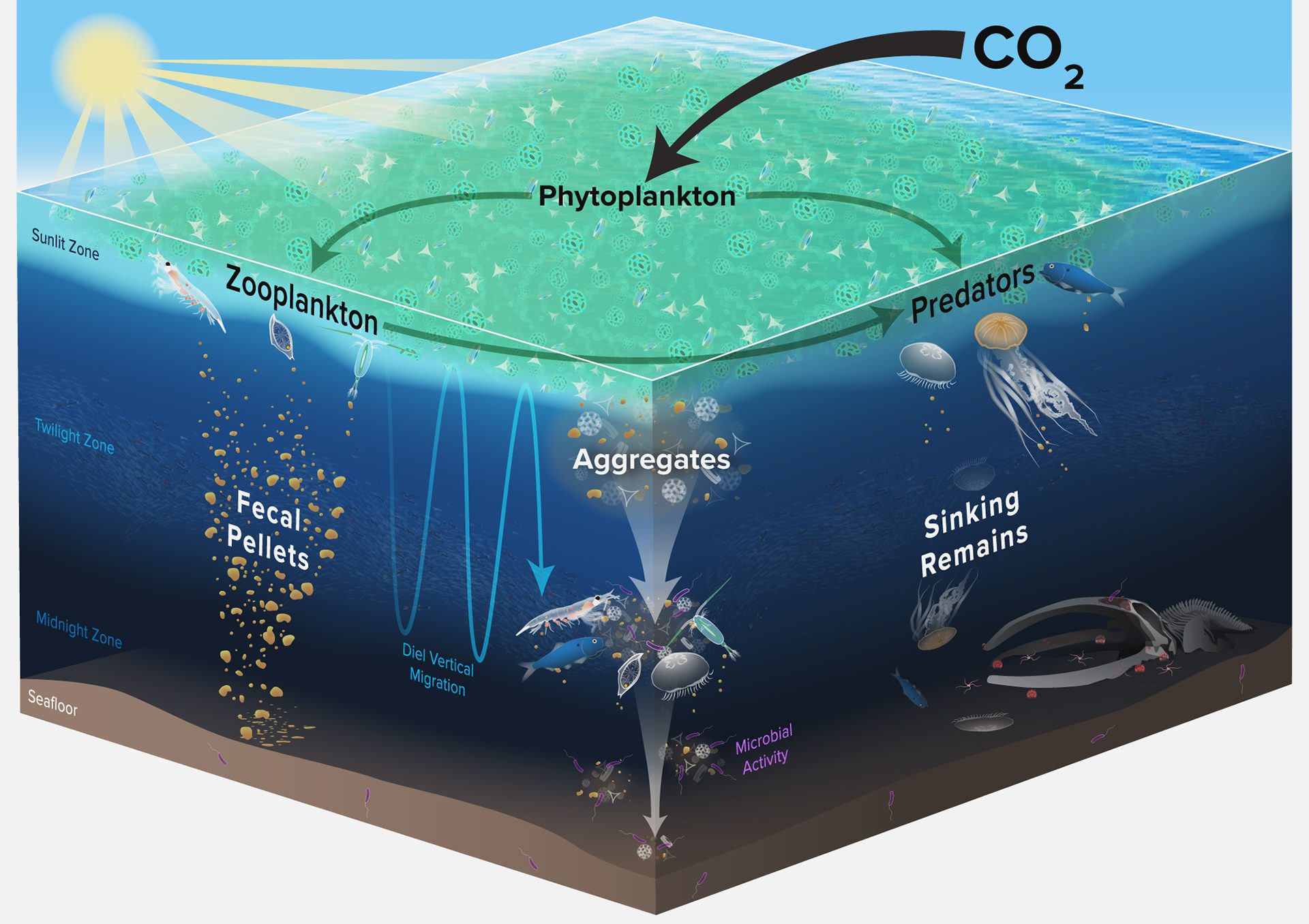
Ocean carbon cycles as phytoplankton convert CO2 into organic carbon, feeding zooplankton that respire CO2; some carbon sinks or is mixed into deeper ocean layers by various pumps.
Read MoreOcean eddies transporting plankton throughout the water column
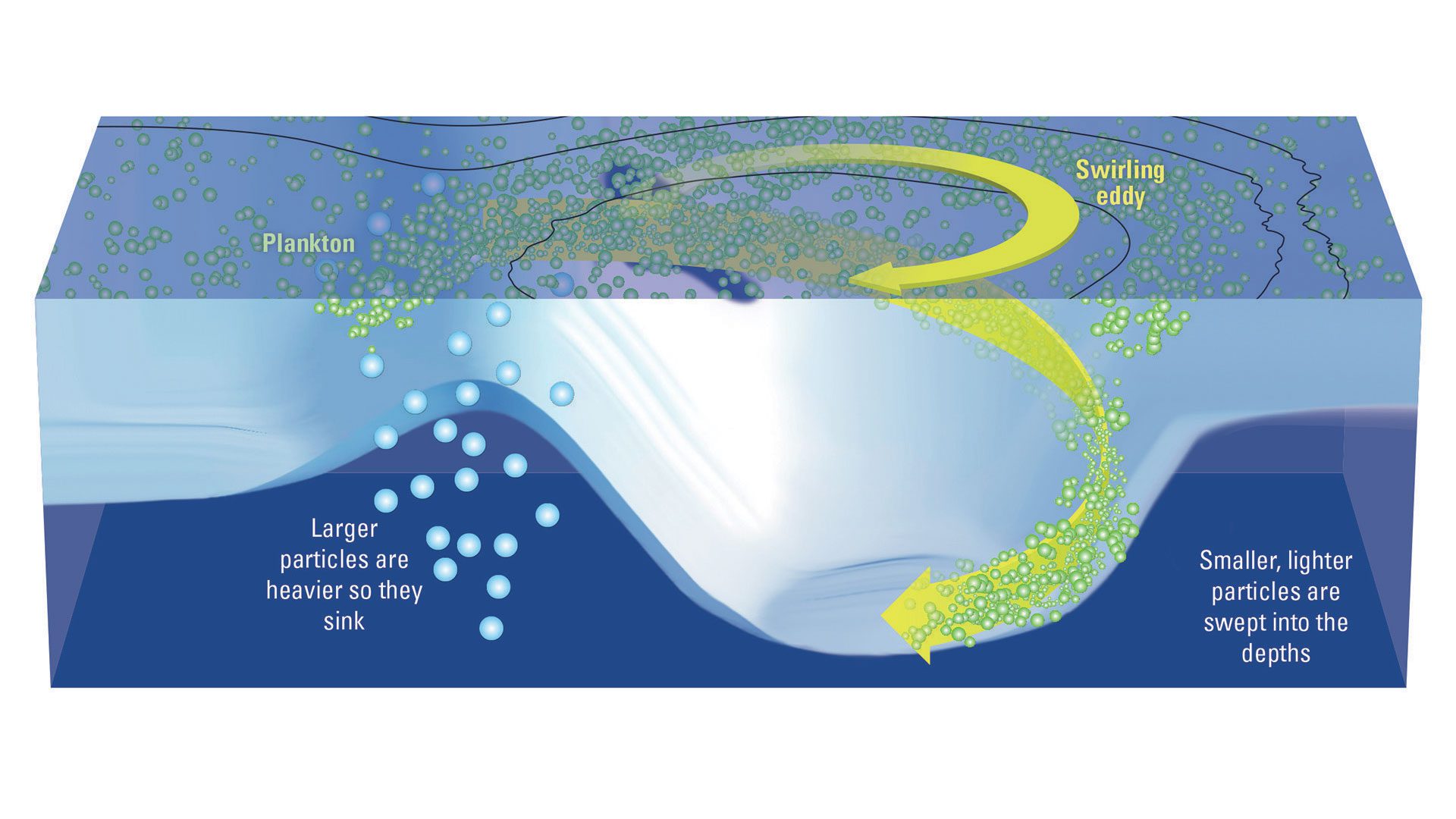
Plankton help reduce atmospheric carbon dioxide by using it to grow. Larger particles sink to store carbon, while scientists study how smaller particles might also descend.
Read MoreMicrobial "Trojan horses" stages
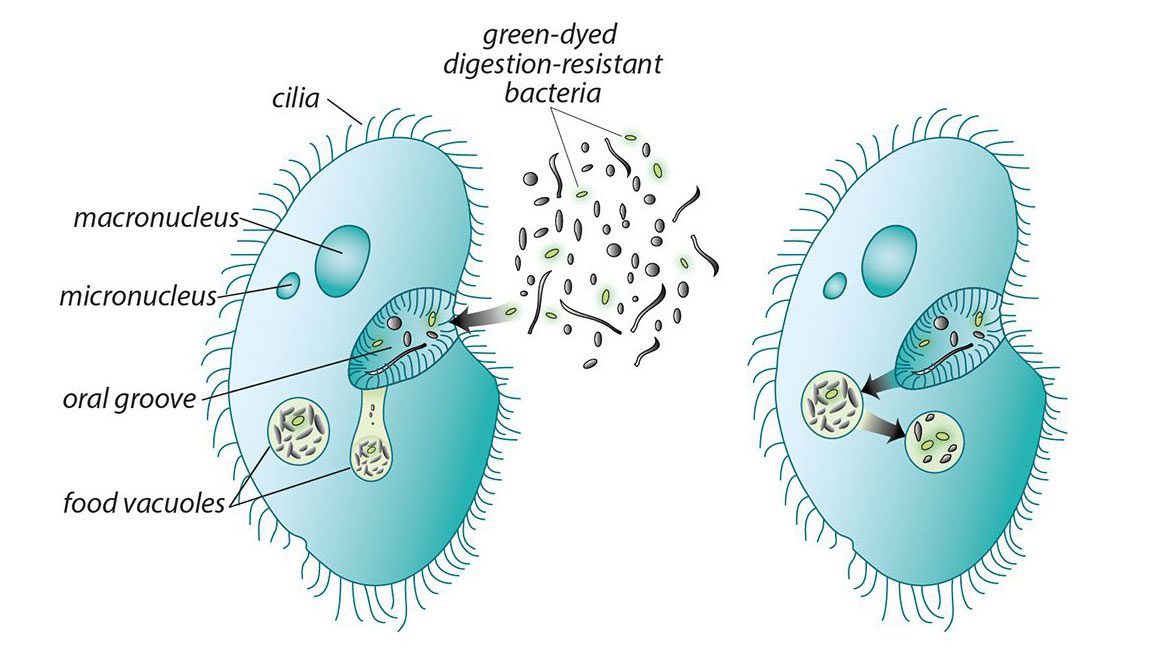
Some bacteria ingested by protists escape digestion, survive, and even reproduce—eventually returning to the environment, potentially still infectious.
Read MoreMesodinium rubrum Boom-and-bust Cycles
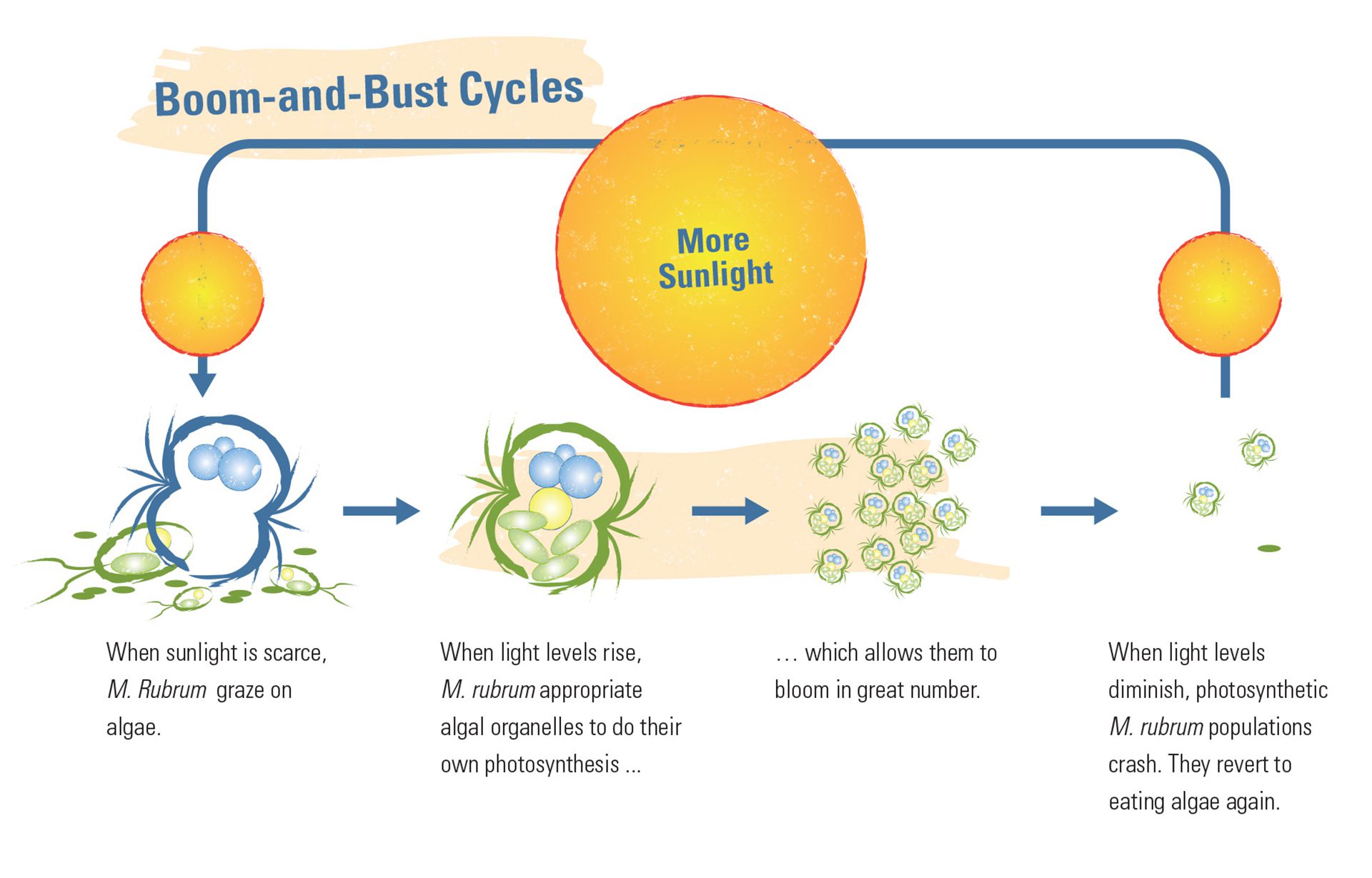
Mesodinium rubrum usually grow by eating algae, but it can also steal cellular machinery from algae and use it to make its own food via photosynthesis.
Read MoreMarine Life Size vs Abundance
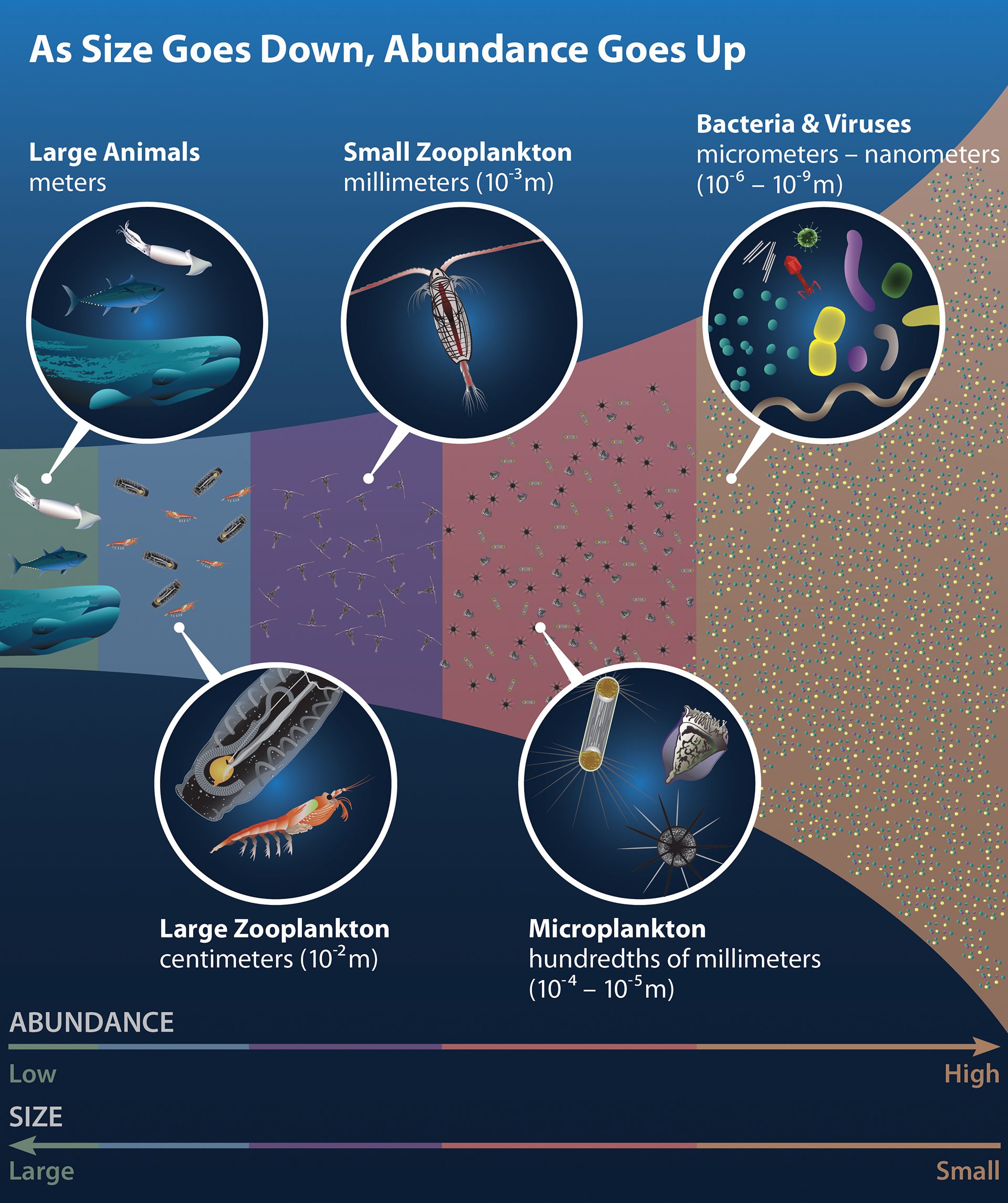
Ocean life spans from tiny bacteria and viruses to massive whales, with fewer larger animals. Most creatures prey on organisms just smaller than themselves in the food chain.
Read MoreLife cycle of dinoflagellate Alexandrium
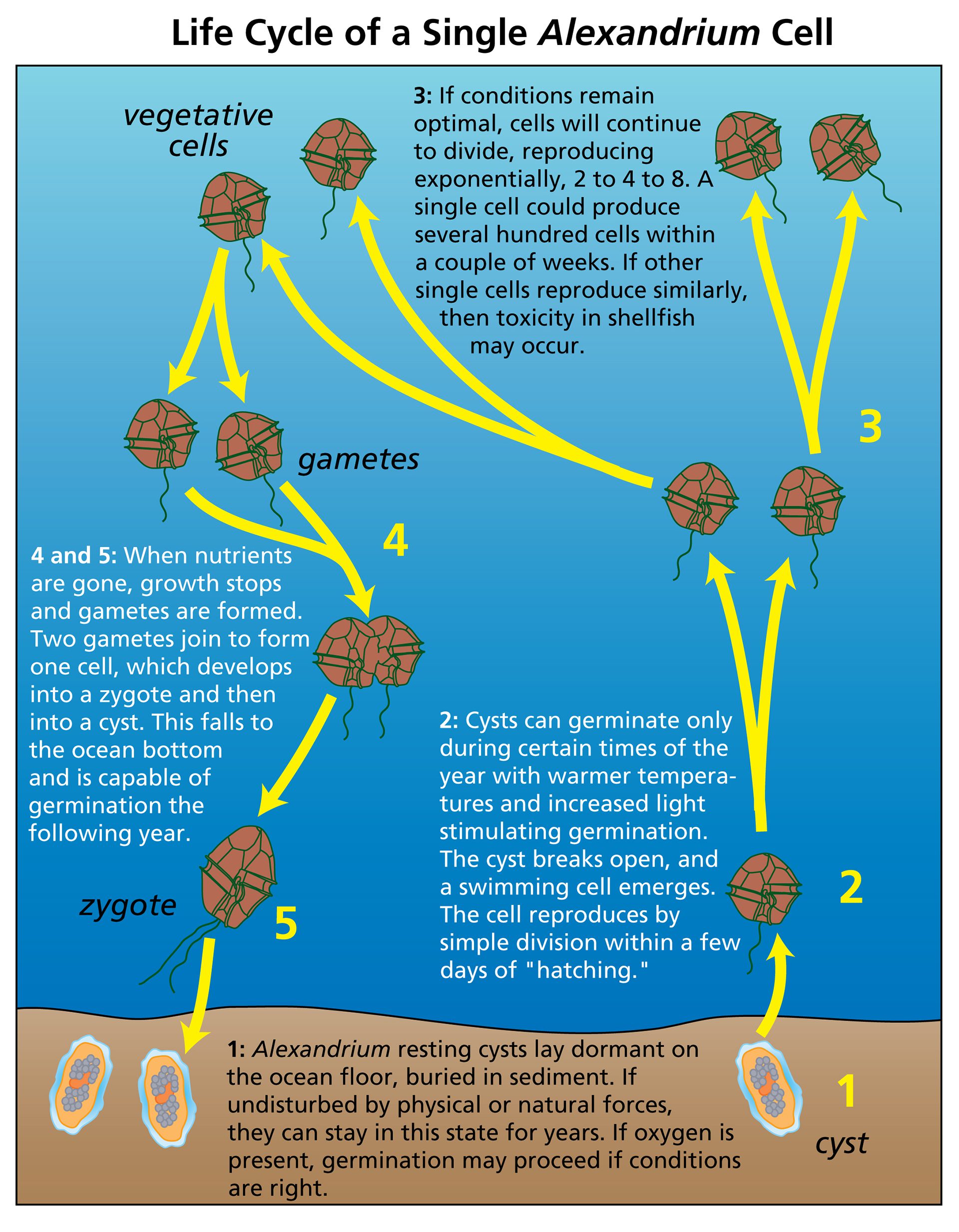
The dinoflagellate Alexandrium grows, divides, and blooms in surface waters, then forms dormant cysts that settle on the seafloor to survive tough conditions.
Read MoreTransport of copepods through the water column
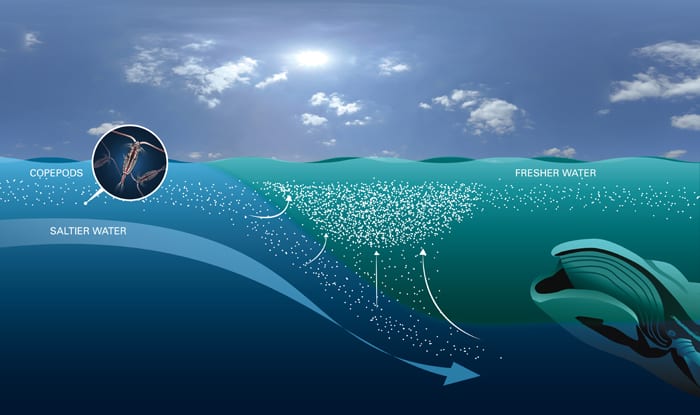
The Great South Channel ocean front forms where fresh coastal water meets saltier water, causing copepods to gather in dense patches as they sink and swim back up the front.
Read MoreHow fast deoxygenation can happen
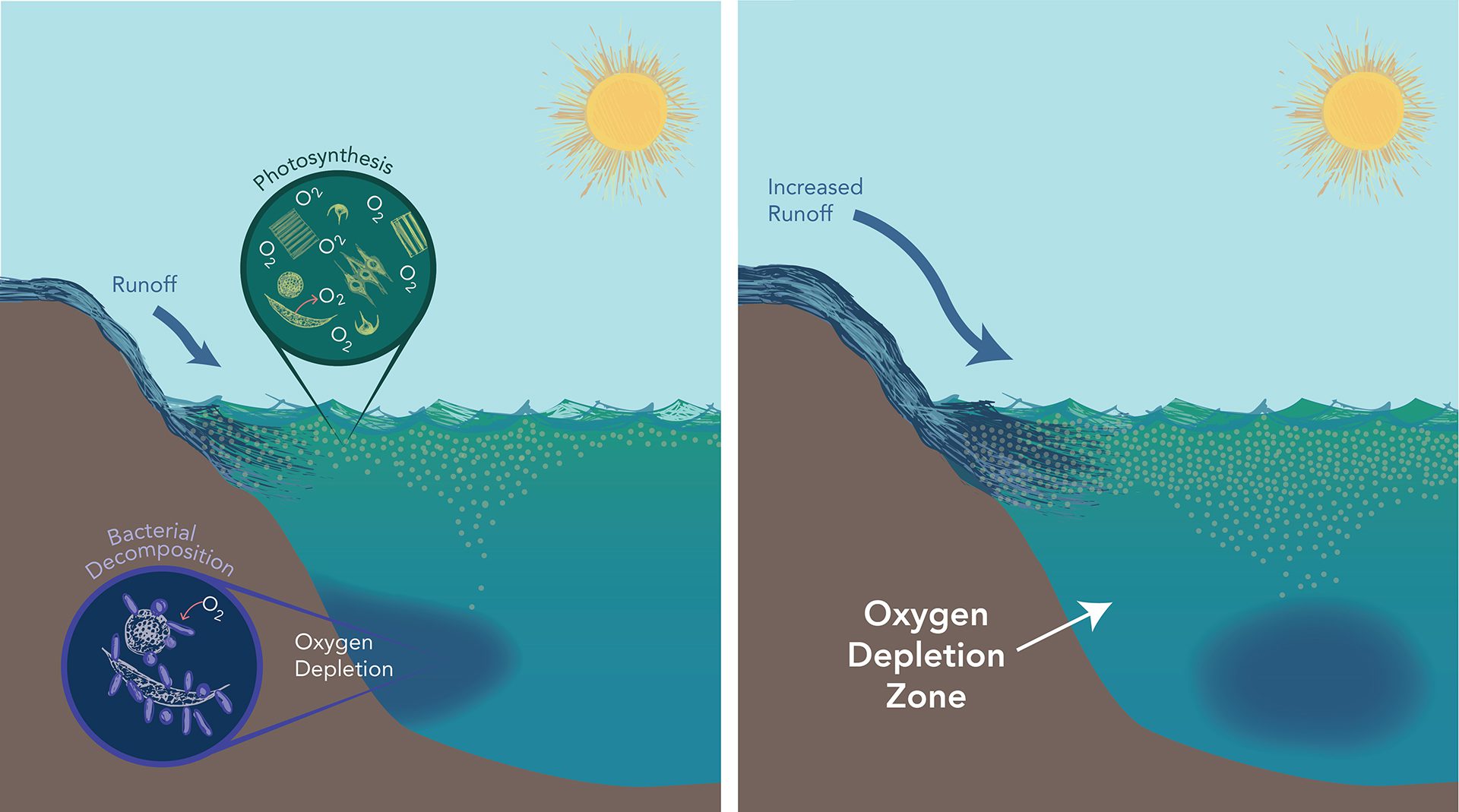
Phytoplankton use nutrients and sunlight to produce oxygen. Past nutrient spikes caused oxygen-depleted zones, echoing today’s ocean symptoms.
Read MoreHow the Dimethylsulfoniopropionate (DMSP) compound affects the environment
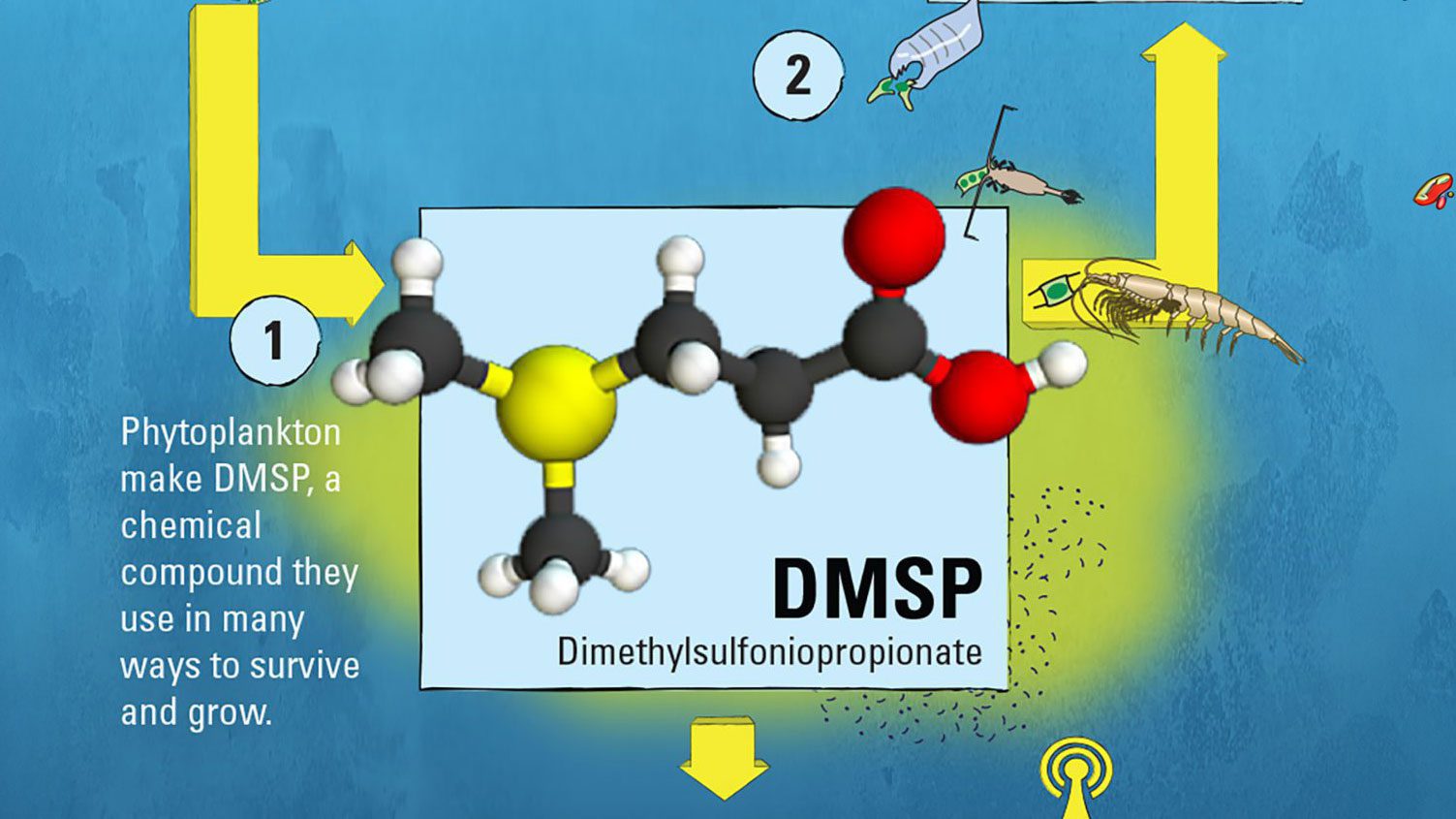
DMSP is synthesized by phytoplankton—the microscopic marine plants at the heart of the ocean food web—for a variety of beneficial uses.
Read MoreHow Cyanobacteria Crocosphaera watsonii recycles iron
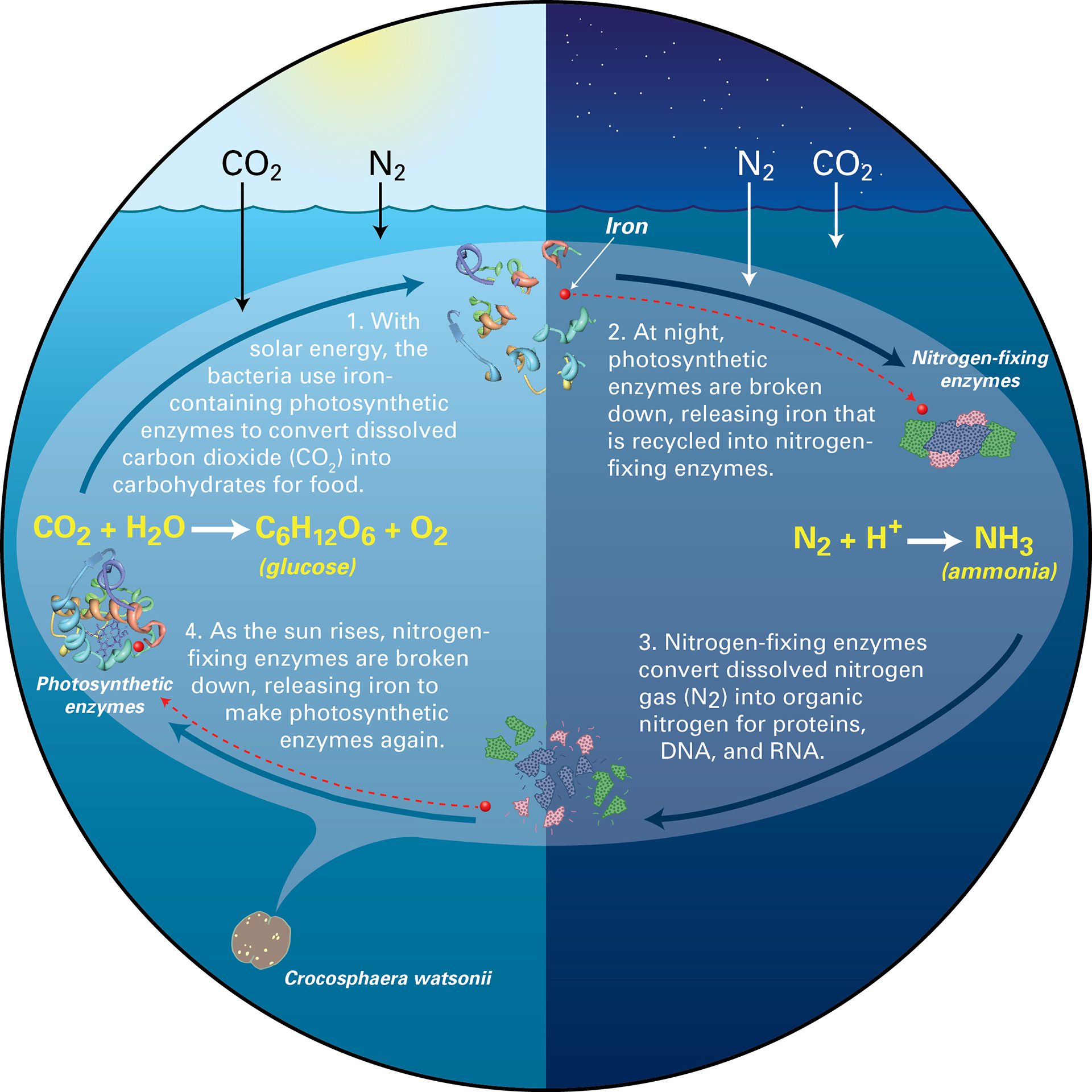
Iron is scarce in the ocean, but a key marine bacterium may have evolved a remarkable biochemical way to recycle it and reduce its iron requirements by half.
Read MoreBiomass of mesopelagic organisms in Ocean Twilight Zone (OTZ)
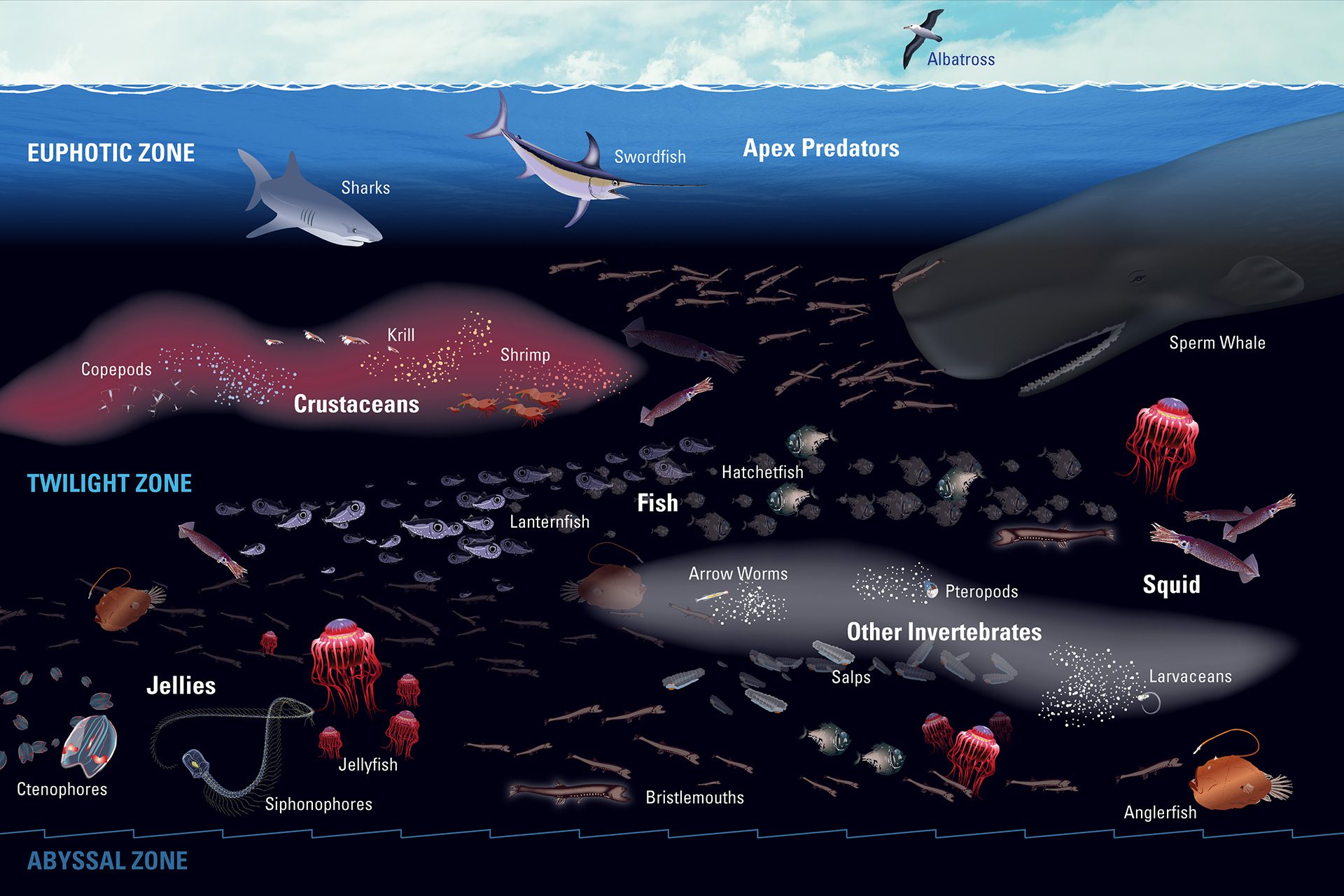
The ocean twilight zone hosts Earth’s largest animal migration and plays a key role in the climate by helping move carbon from the surface to the deep sea.
Read MoreCarbon drawn into the ocean by plankton sinks and dissipates with depth
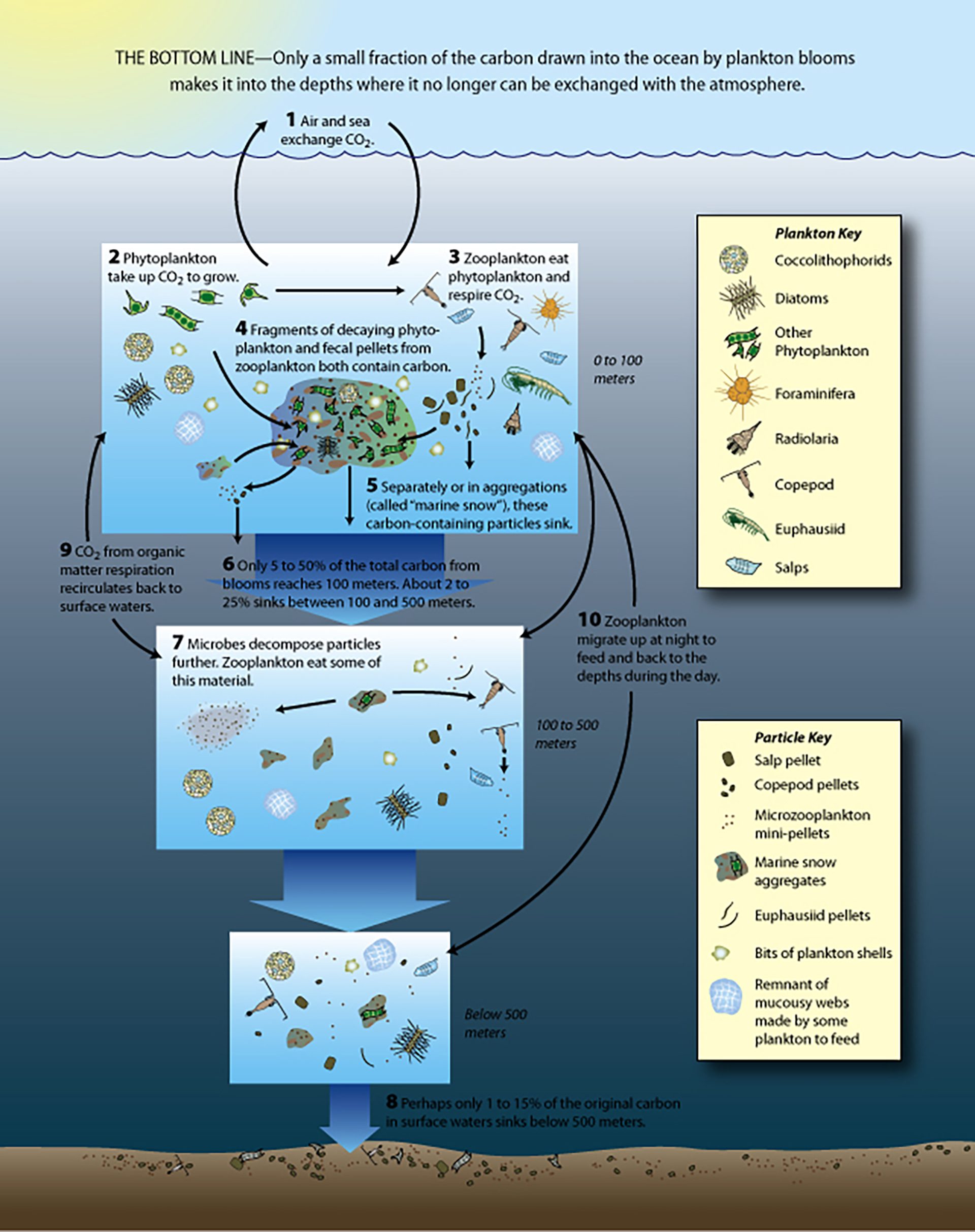
Only a small fraction of the carbon drawn into the ocean by plankton blooms makes it into the depths where it no longer can be exchanged with the atmosphere.
Read MoreChemical process by which phytoplankton and harmful algal blooms grown
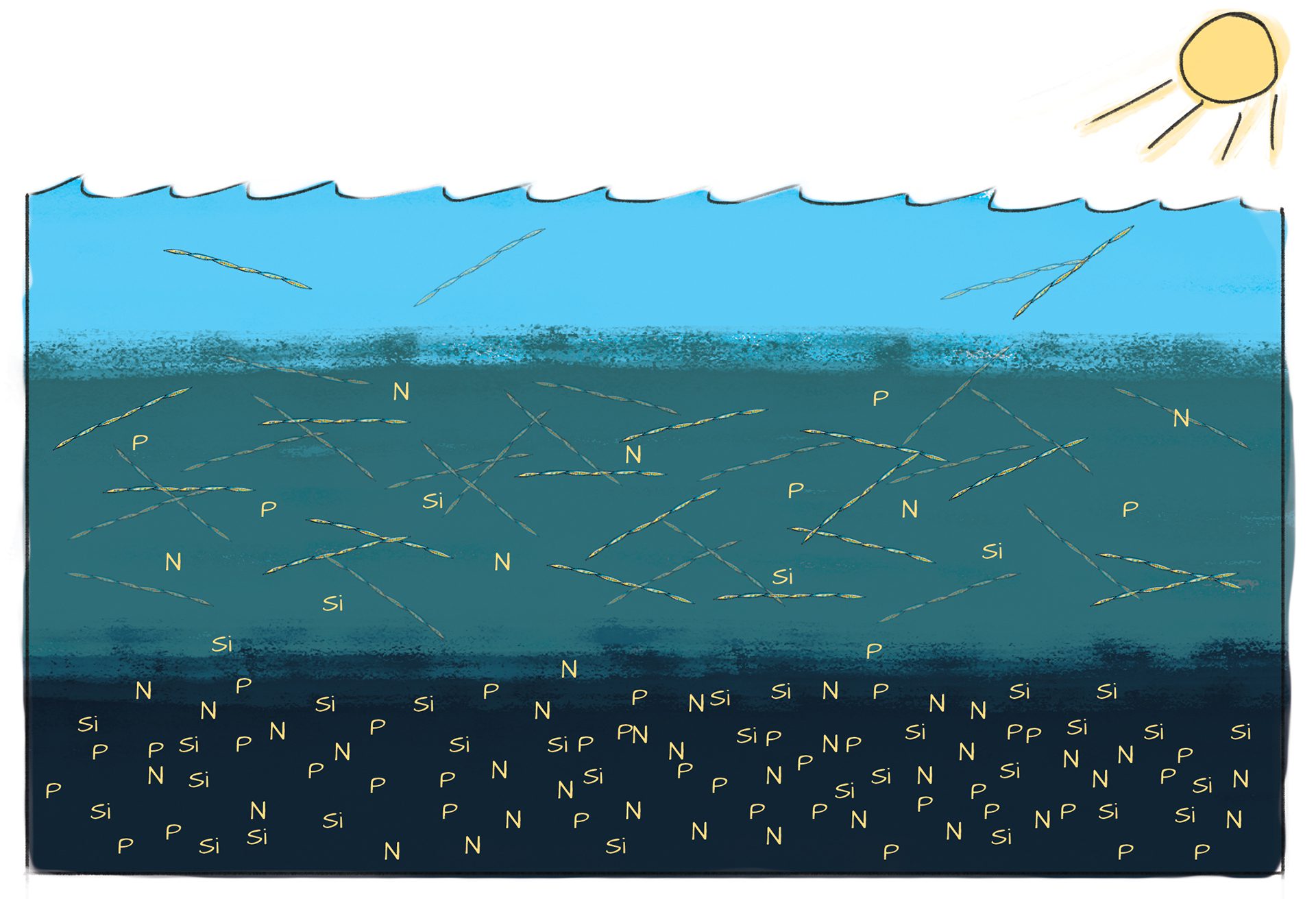
Phytoplankton thrive where sunlight and nutrients overlap—often just below the surface—creating a “sweet spot” for growth that fuels ocean life and ecosystems.
Read MoreAntarctic ecosystem, summer environment
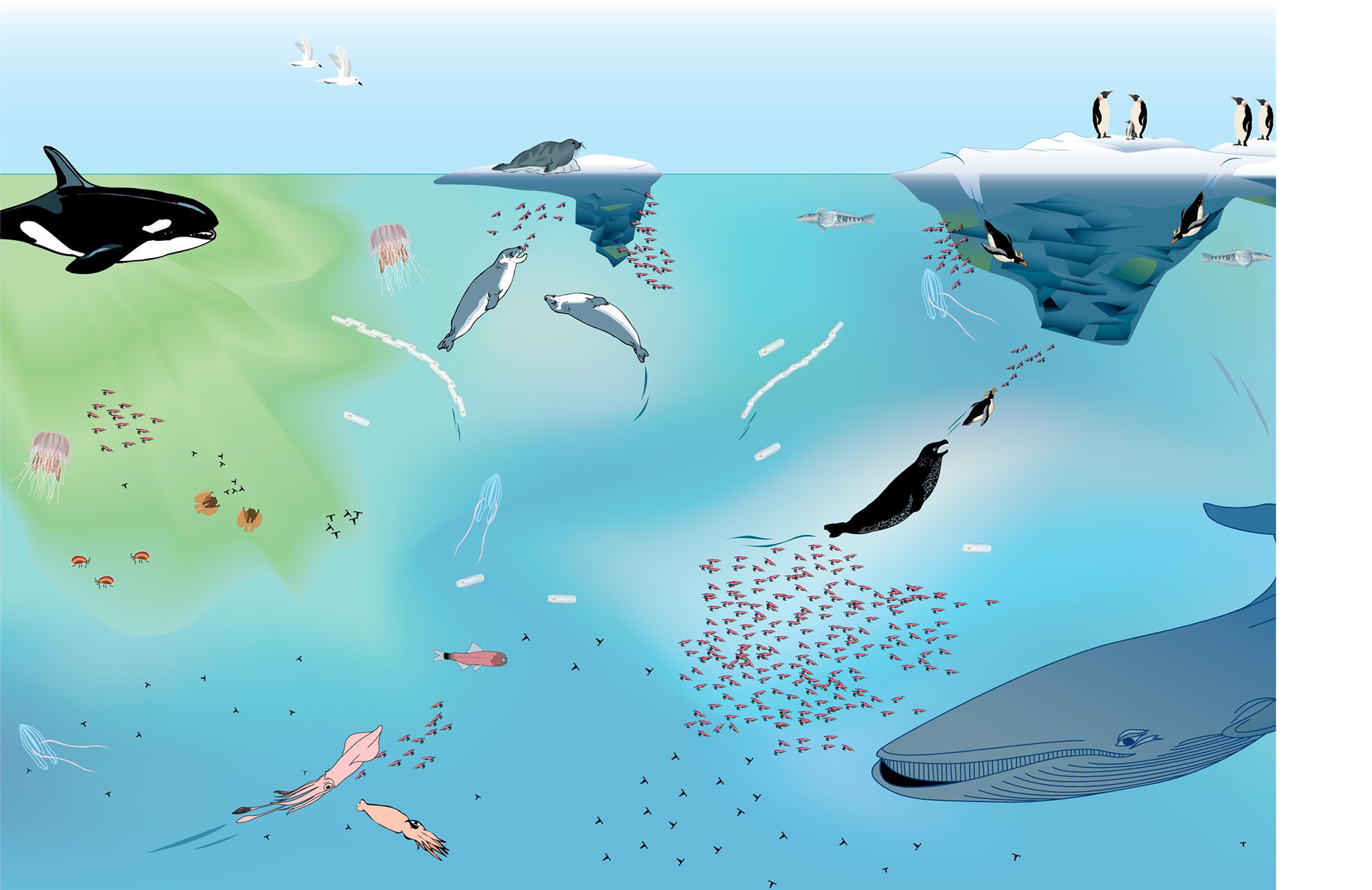
Antarctic animals all make their living in the ocean, because the land is too cold, dry, and dark for plants and animals.
Read More