
WHOI Sea Grant supports $1.6 million in critical aquaculture and fisheries research
April 7, 2026
Woods Hole, Mass. (April 7, 2026) – Woods Hole Oceanographic Institution Sea Grant has awarded $1.6 million to four new research projects that will investigate pressing concerns related to Massachusetts’ vital aquaculture and fisheries industries, including oysters, soft-shell clams, and black sea bass. The awards are the result of WHOI Sea Grant’s 2026 to 2027 biennial research competition.
“Each of these projects addresses a question we’re hearing directly from those working on the water: how to keep shellfish beds open, how to manage emerging fisheries, how to improve aquaculture practices, and how to restore oyster reefs more effectively,” said WHOI Sea Grant Director Matt Charette. “This is science driven by real needs, with outcomes that will directly benefit coastal communities.”
Over the next two years, these projects will generate new tools and data to support species economically and environmentally important to coastal Massachusetts. The Commonwealth-based researchers will also share this work with the people who will directly benefit from the findings. The projects reflect a coordinated effort to address several pressing challenges facing Massachusetts’ coastal waters and communities.
“For almost a century, the residents of Massachusetts - especially Cape Codders - have had the great benefit of living in proximity to one of the most prestigious and progressive oceanographic institutes in the world,” said Congressman Bill Keating. “WHOI has continually provided world-class research and initiatives that help us understand the ocean better and keep the Massachusetts shoreline pristine for wildlife and residents alike.”
“The latest round of research funded by the WHOI Sea Grant program will continue this important work by bolstering the shellfish aquaculture industry at all points of the process. Scientists will be able to make better environmental decisions based on the grants’ research, and our small business owners will be able to make better business decisions. WHOI Sea Grant’s commitment to awarding grants where they are most needed demonstrates how an entire community can and will benefit.”
Read more about the four projects selected for funding.
Keeping Clams Clean: Tracking microbial contamination of clam flats
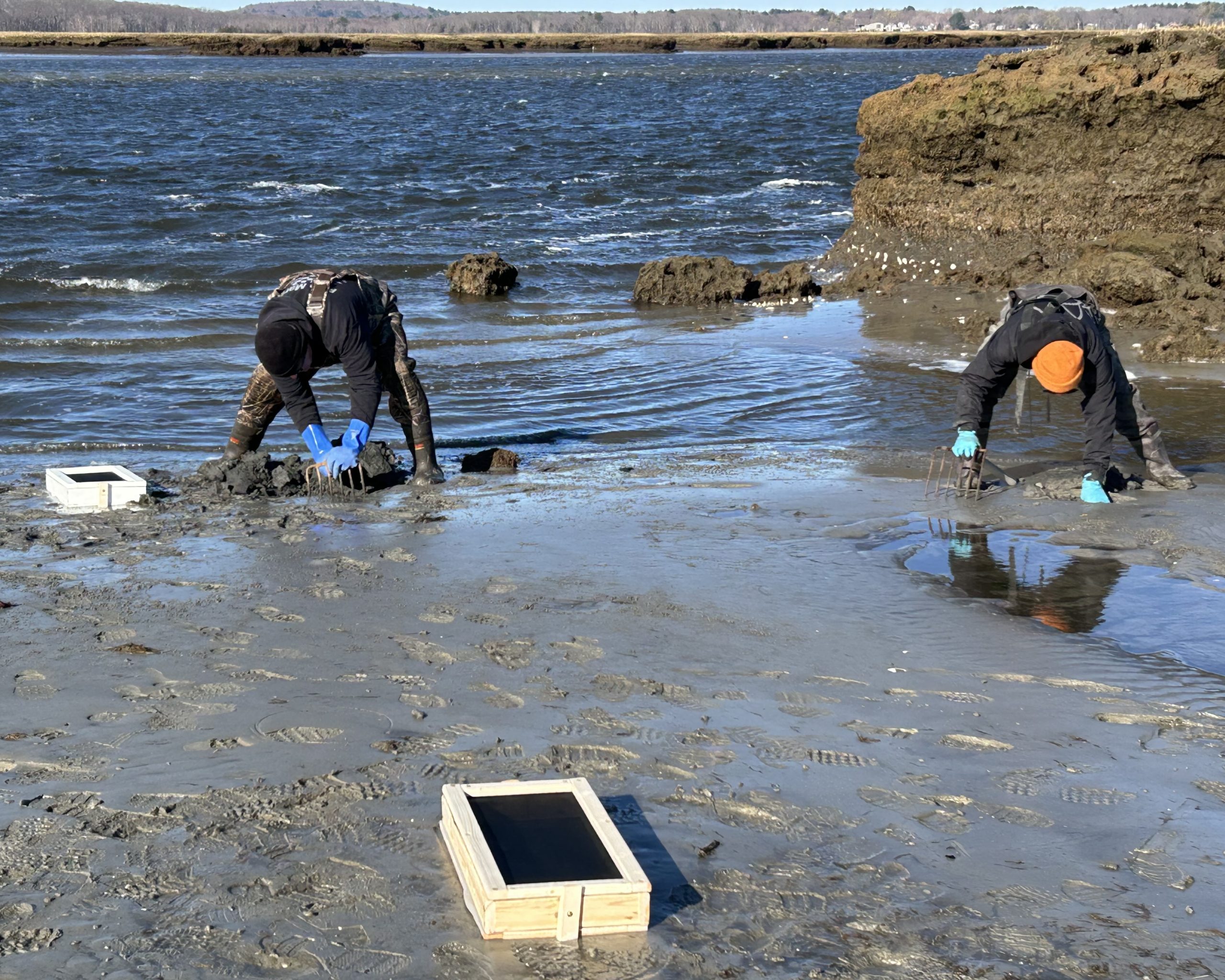
(Photo by David Kimbro, Northeastern University)
Fried clam shacks are iconic to Massachusetts' working waterfronts, and the soft-shell clam is amongst the state’s top 10 fisheries – valued in 2019 at $6.5 million. Plum Island Sound’s typical harvest of soft-shelled clams was more than halved in 2023, when an unusually wet year caused repeated shellfish bed closures due to bacterial contamination. Fishers want more information on sources of microbial contamination to help mitigate conditional closures. Researchers, led by Jennifer Bowen (Northeastern University) and Wayne Castonguay (Mass. Division of Marine Fisheries), answer their call by investigating the source and turnover time of contamination using molecular techniques, community science-led sampling, public databases, and machine learning. They will work to create a more efficient and information-rich way of monitoring shellfish sanitation.
Just Keep Swimming (North): Building a sustainable black sea bass fishery
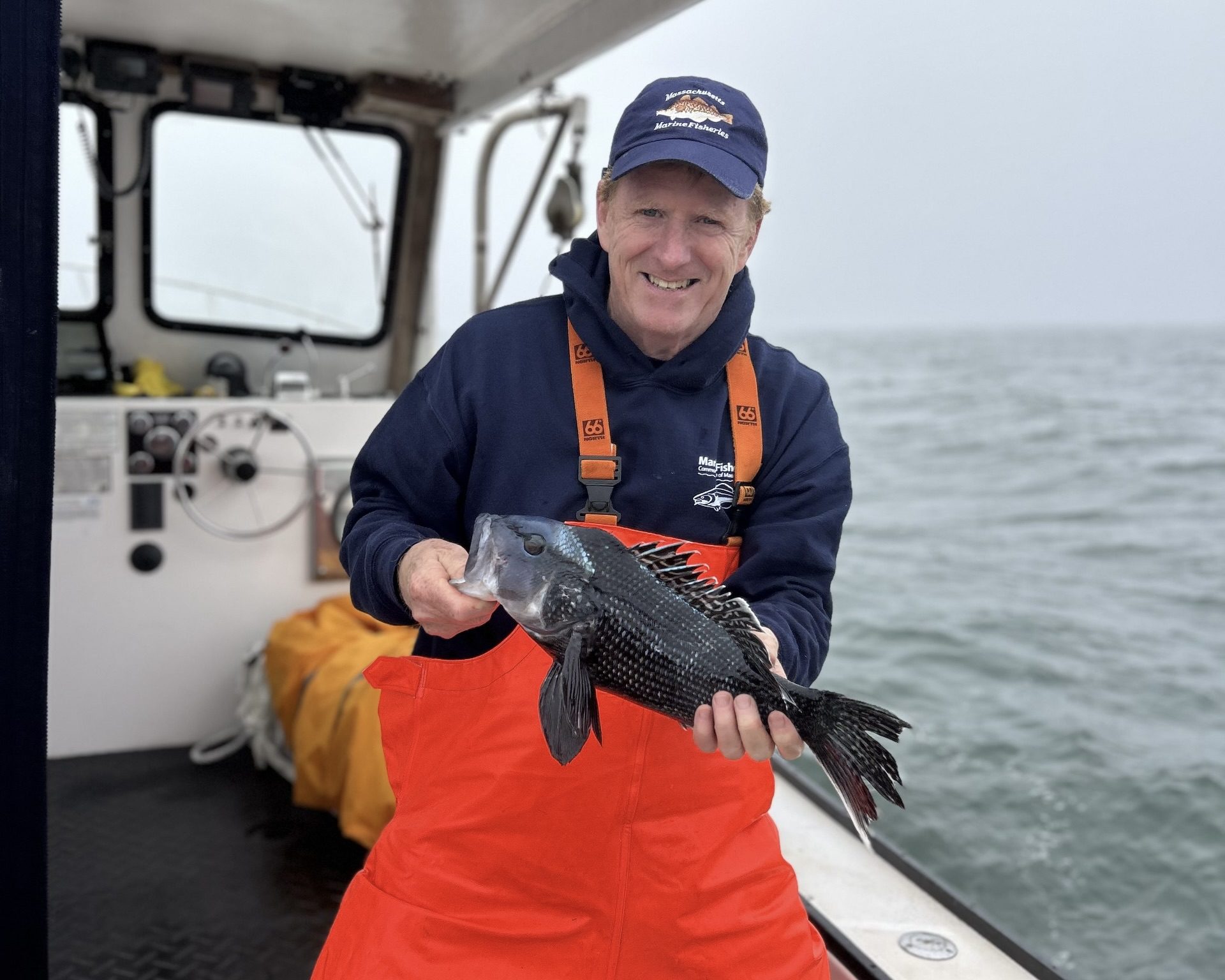
(Photo by Micah Dean, Mass. DMF)
Black sea bass are moving up the U.S. East Coast, evidenced by increased landings in Massachusetts over the last decade. Changing ocean conditions are likely to encourage black sea bass fisheries to grow in the Gulf of Maine. University of Massachusetts Amherst researchers Brian Cheng and Lisa Komoroske study fundamental aspects of the black sea bass populations north and south of Cape Cod to fill gaps in knowledge necessary for sustainably managing fisheries. Employing acoustic telemetry, genetic kinship approaches, and environmental data assessments, they will garner a better understanding of how and why black sea bass are migrating north.
Winter is Changing: Enhancing oyster overwintering practices
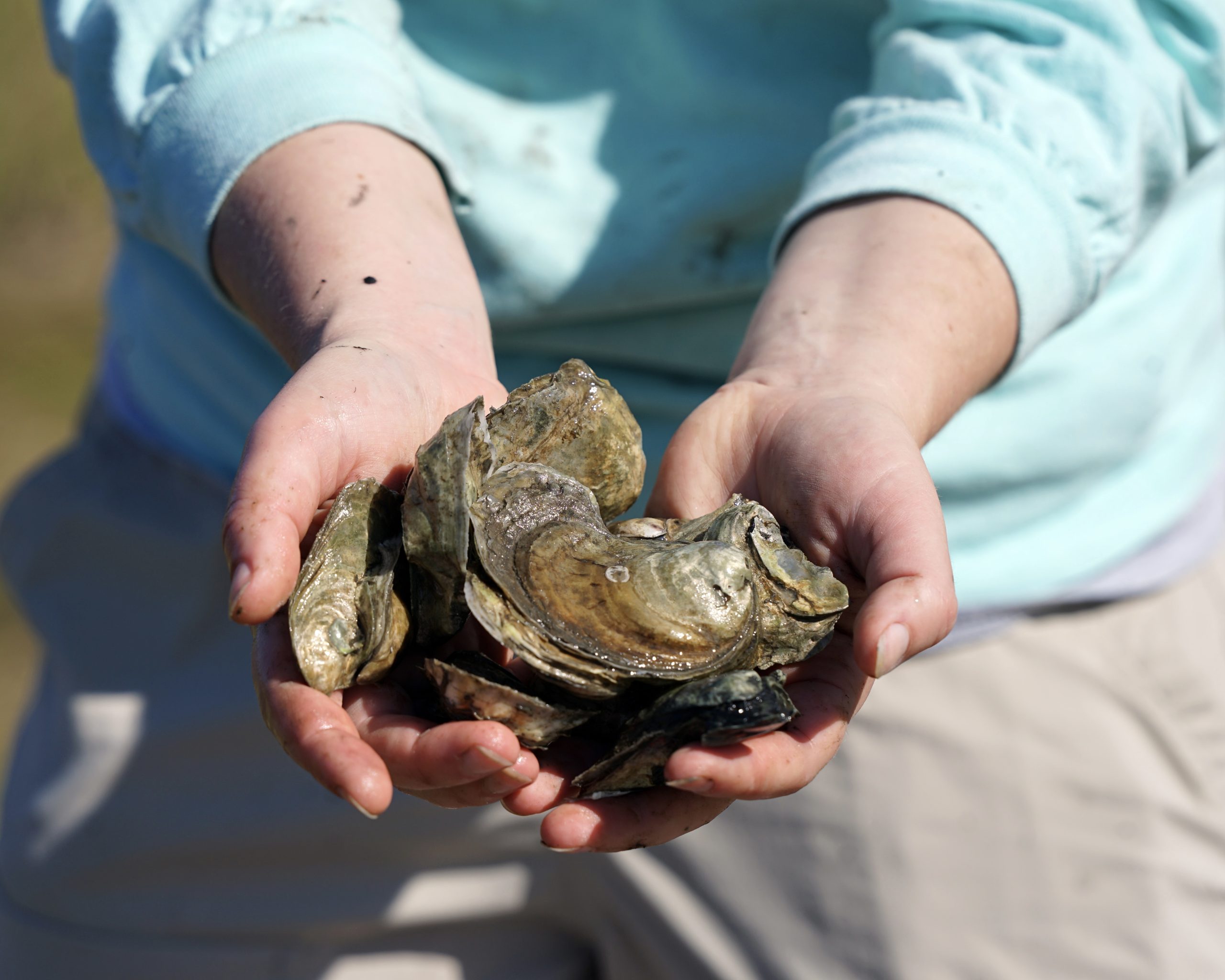
Photo by Edward Brennan / UMass Lowell
In New England, oysters are often grown for at least two summers, requiring maintenance during at least one winter. To cope with winter’s challenges (extreme temperatures, storms, and ice), growers employ different strategies to protect their gear and oysters, but overwintering still poses health risks to the bivalves. With this study, researchers Sarah Donelan of the University of Massachusetts Dartmouth and Sarah Gignoux-Wolfsohn of the University of Massachusetts Lowell will offer growers more data to help guide overwintering decisions. The research team will assess the impacts of different winter conditions and husbandry practices on oyster growth, survival, and disease.
Finding a Restoration Lullaby: Using soundscapes to support oyster reefs
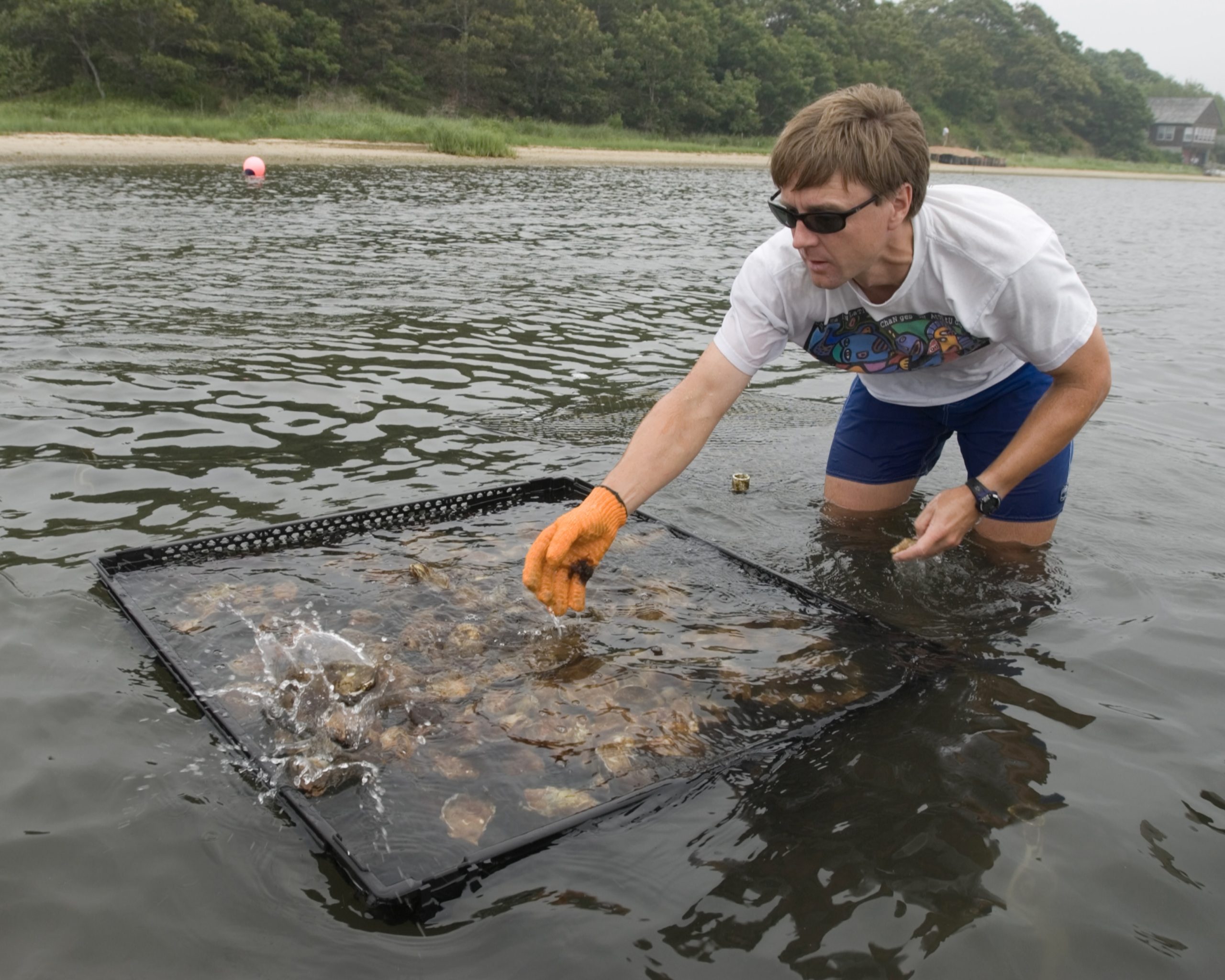
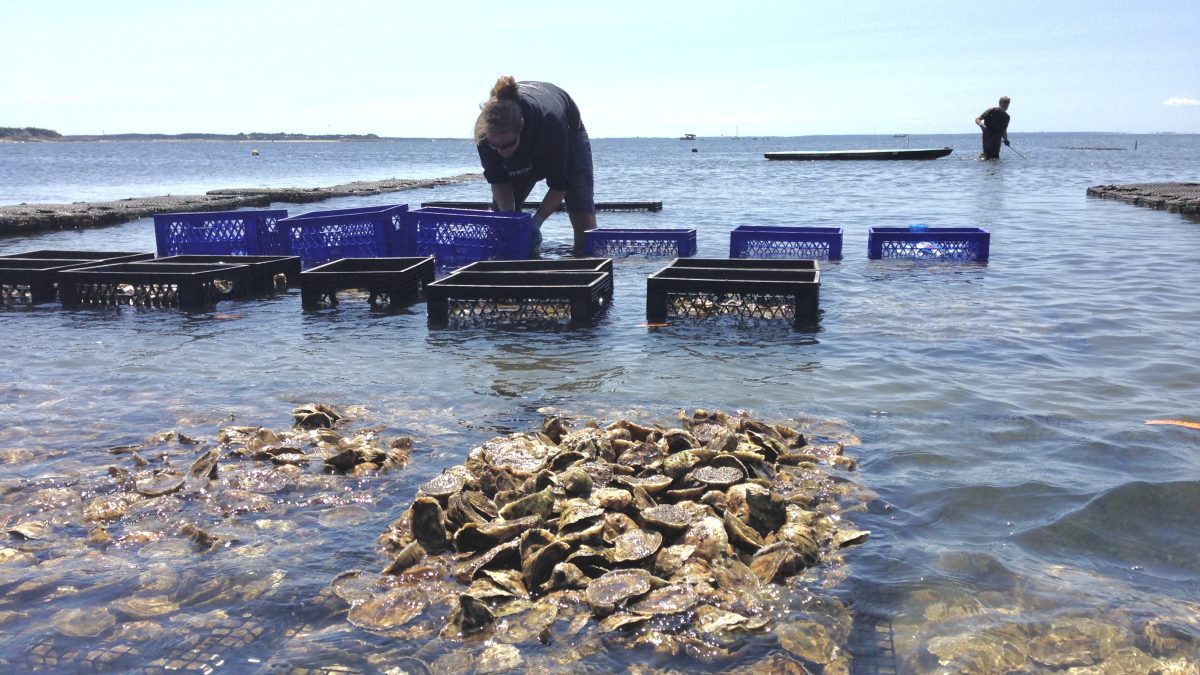
(Photo by Tom Kleindinst, ©Woods Hole Oceanographic Institution)
The Eastern oyster supports a $30 million annual aquaculture industry in Massachusetts while also providing shoreline protection, improving water quality, and enhancing coastal ecosystems. Town shellfish managers and restoration groups have noted that increasing oyster settlement rates can help stimulate the growth of healthy reefs, once prolific in the area. Oysters in the settlement phase of development have responded well to healthy reef soundscapes (the collection of sounds produced by fish, invertebrates, and the physical environment) in various experiments. Applying these novel methods from soundscape ecology, Woods Hole Oceanographic Institution researchers Aran Mooney and Andria K. Salas work to better understand which acoustic cues can initiate settlement most effectively in New England waters.
Media Contact:
Poonam Narotam (she/her)
Woods Hole Sea Grant Communications Specialist
Woods Hole Oceanographic Institution
poonam.narotam@whoi.edu
###
About Woods Hole Oceanographic Institution Sea Grant
Based at Woods Hole Oceanographic Institution, the Sea Grant program encourages environmental stewardship, long-term economic development, and responsible use of the nation’s coastal and ocean resources. The program supports research and education, and an extension program in collaboration with the Cape Cod Cooperative Extension. It is part of the NOAA-funded National Sea Grant College Program, a network of 34 individual programs located in each of the coastal and Great Lakes states. More information can be found at seagrant.whoi.edu.