
News Releases
Scientists Discover New Trigger for Immense North Atlantic Ocean Spring Plankton Bloom
On this July 4th week, U.S. beachgoers are thronging their way to seaside resorts and parks to celebrate with holiday fireworks. But across the horizon and miles out to sea…
Read MoreBacterial Communication Could Affect Earth’s Climate
Woods Hole Oceanographic Institution (WHOI) scientists have discovered that bacterial communication could have a significant impact on the planetÃÂs climate.
Read MoreIdentical Virus, Host Populations Can Prevail for Centuries, WHOI Researcher Reports
A Woods Hole Oceanographic Institution (WHOI) scientist, analyzing ancient plankton DNA signatures in sediments of the Black Sea, has found for the first time that the same genetic populations of a virus and its algal host can persist and coexist for centuries. The findings have implications for the ecological significance of viruses in shaping algae ecosystems in the ocean, and perhaps fresh water as well.
Read MoreWHOI Helps Form International Consortium on Iron and the Oceans
With a mission of exploring the potential impact of iron fertilization of the oceans to reduce the amount of carbon dioxide (CO2) in the Earth’s atmosphere, Woods Hole Oceanographic Institution…
Read MoreWHOI’s Avery, Doney Selected AAAS Fellows
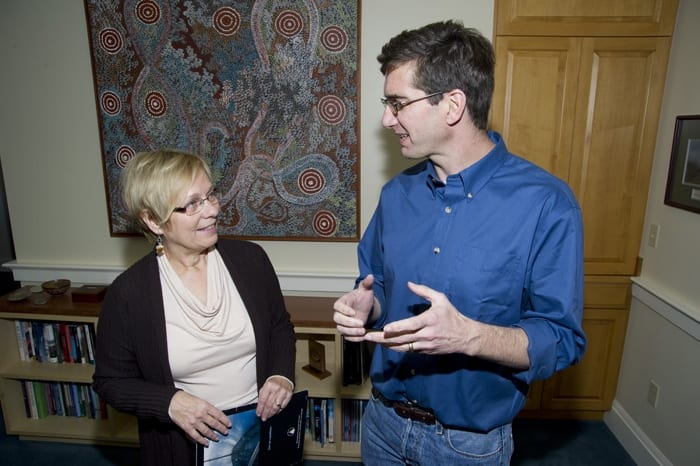
Woods Hole Oceanographic Institution (WHOI) President and Director Susan K. Avery and Senior Scientist Scott C. Doney have been elected Fellows of the American Association for the Advancement of Science (AAAS).
Read MoreWHOI Scientist Takes Comprehensive Look at Human Impacts on Ocean Chemistry
Numerous studies are documenting the growing effects of climate change, carbon dioxide, pollution and other human-related phenomena on the world?s oceans. But most of those have studied single, isolated sources of pollution and other influences. Now, a marine geochemist at the Woods Hole Oceanographic Institution (WHOI) has published a report in the latest issue of the journal Science that evaluates the total impact of such factors on the ocean and considers what the future might hold.
Read More