
News Releases
The ocean’s ‘biological pump’ captures more carbon than expected
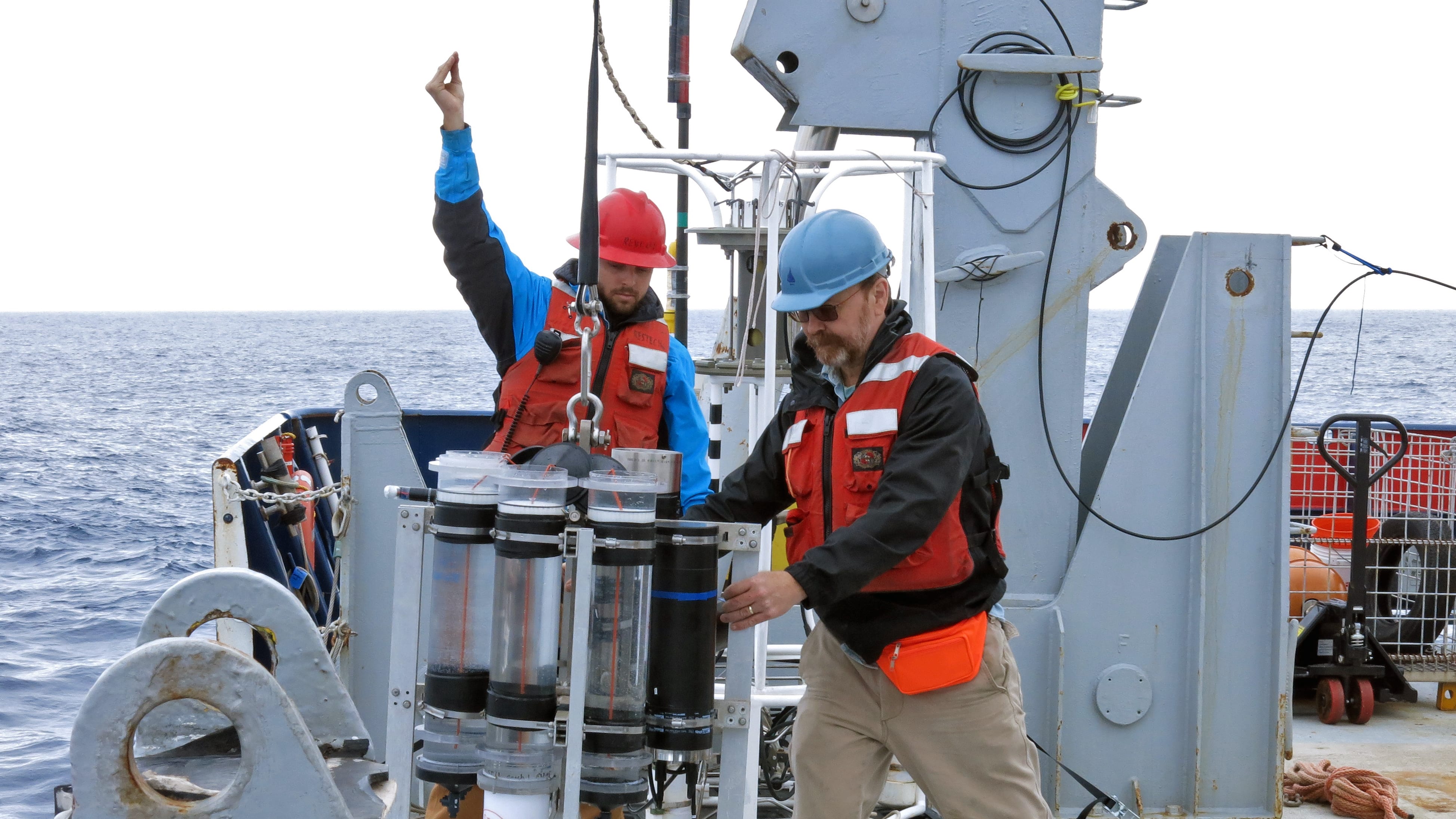
Scientists have long known that the ocean plays an essential role in capturing carbon from the atmosphere, but a new study from Woods Hole Oceanographic Institution (WHOI) shows that the efficiency of the ocean’s “biological carbon pump” has been drastically underestimated, with implications for future climate assessments.
Read MoreNew Study Finds Distinct Microbes Living Next to Corals
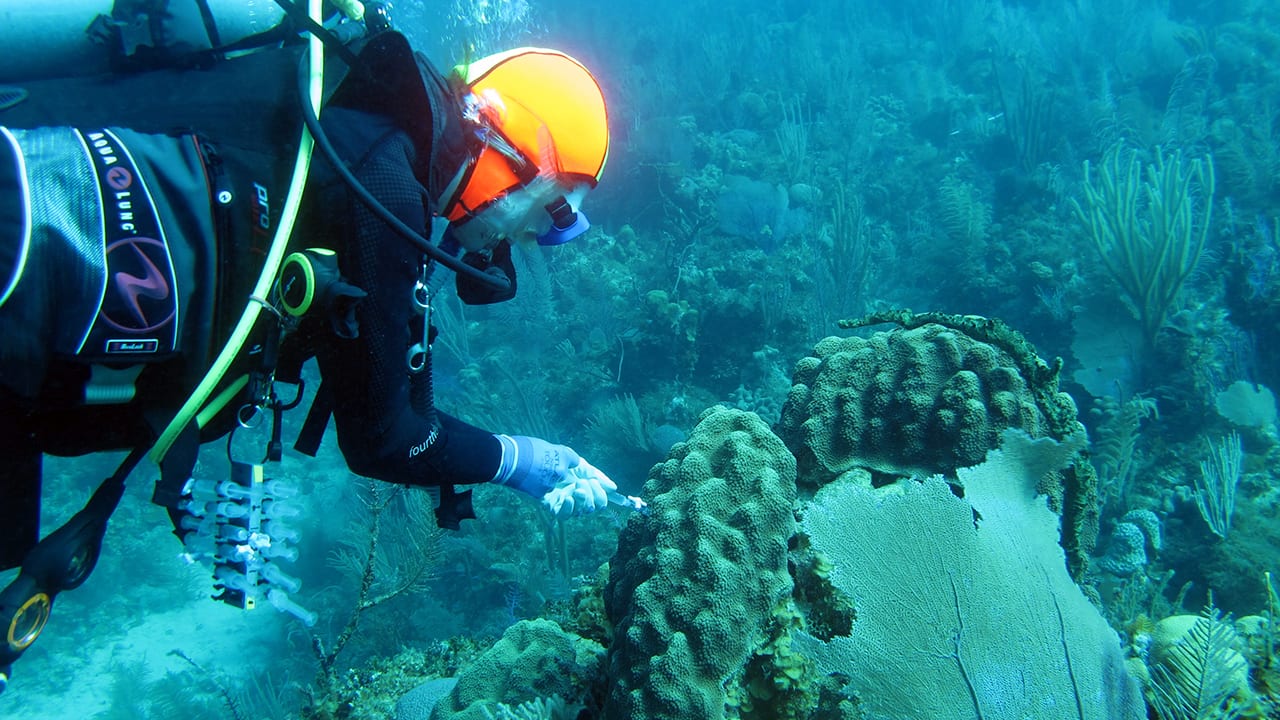
WHOI scientists distinct discover microbes living just a few centimeters from the surface of corals near the southern coast of Cuba. The discovery may yield clues about the ecological functions of microbes, and how they find and infect coral colonies.
Read MoreSunlight Reduces Effectiveness of Dispersants Used in Oil Spills
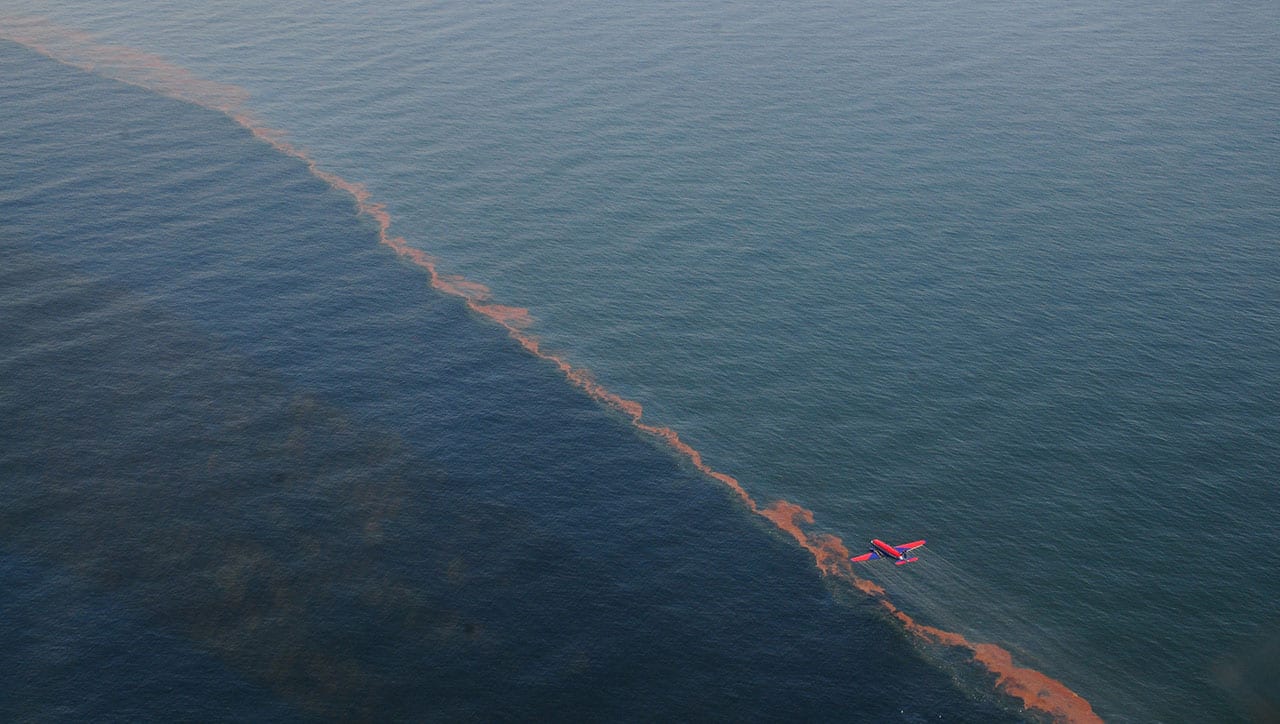
A research team led by Woods Hole Oceanographic Institution (WHOI) found that sunlight chemically alters crude oil floating on the sea surface within hours or days. In a follow-up study the team reported that sunlight changes oil into different compounds that dispersants cannot easily break up. The results of these two studies could affect how responders decide when, where, and how to use dispersants.
Read MoreScientists Pinpoint How Ocean Acidification Weakens Coral Skeletons
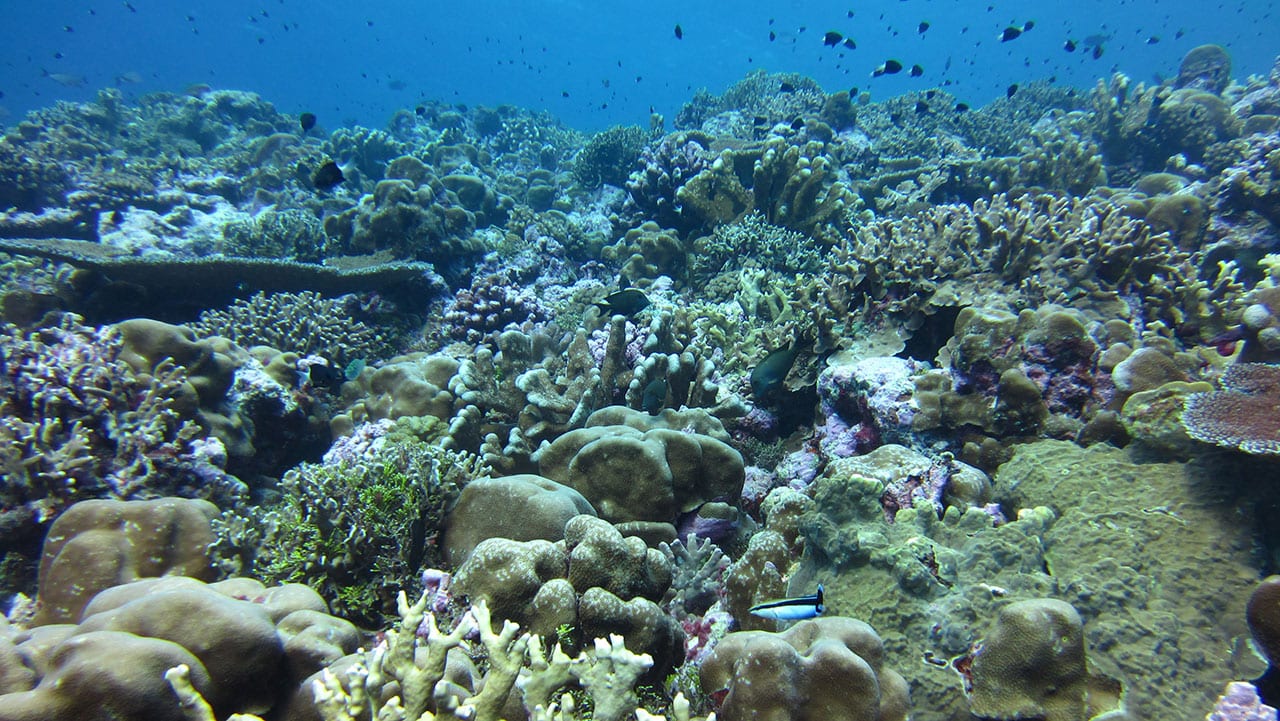
The rising acidity of the oceans threatens coral reefs by making it harder for corals to build their skeletons. A new study identifies the details of how ocean acidification affects coral skeletons, allowing scientists to predict more precisely where corals will be more vulnerable.
Read MoreScientists Find Surprising Evidence of Rapid Changes in the Arctic
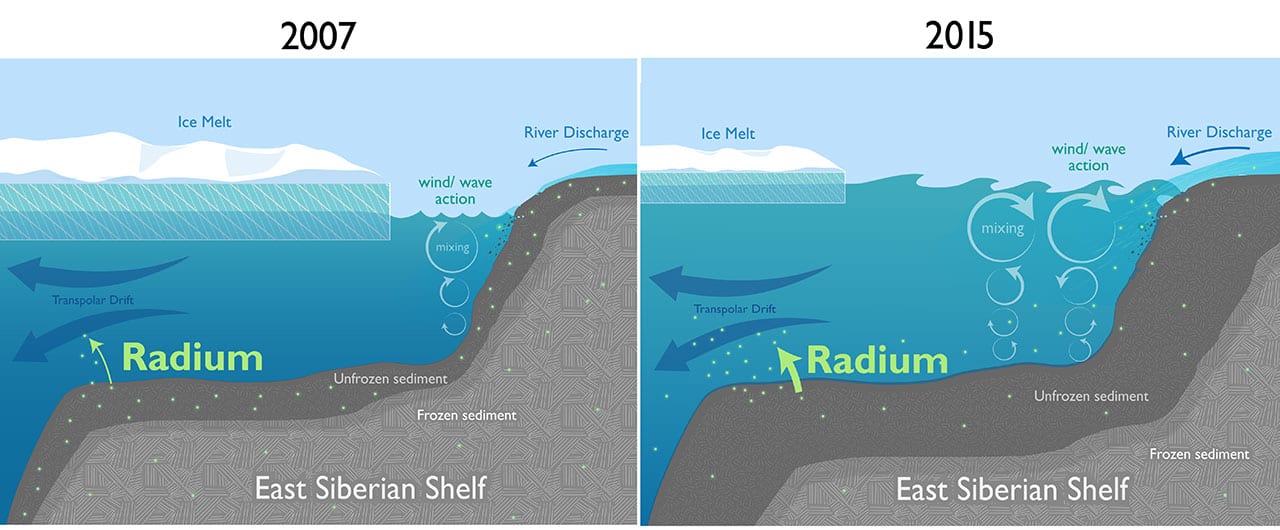
Scientists have found surprising evidence of rapid climate change in the Arctic: In the middle of the Arctic Ocean near the North Pole, they discovered that the levels of radium-228 have almost doubled over the last decade.
Read MoreNew Studies Take a Second Look at Coral Bleaching Culprit
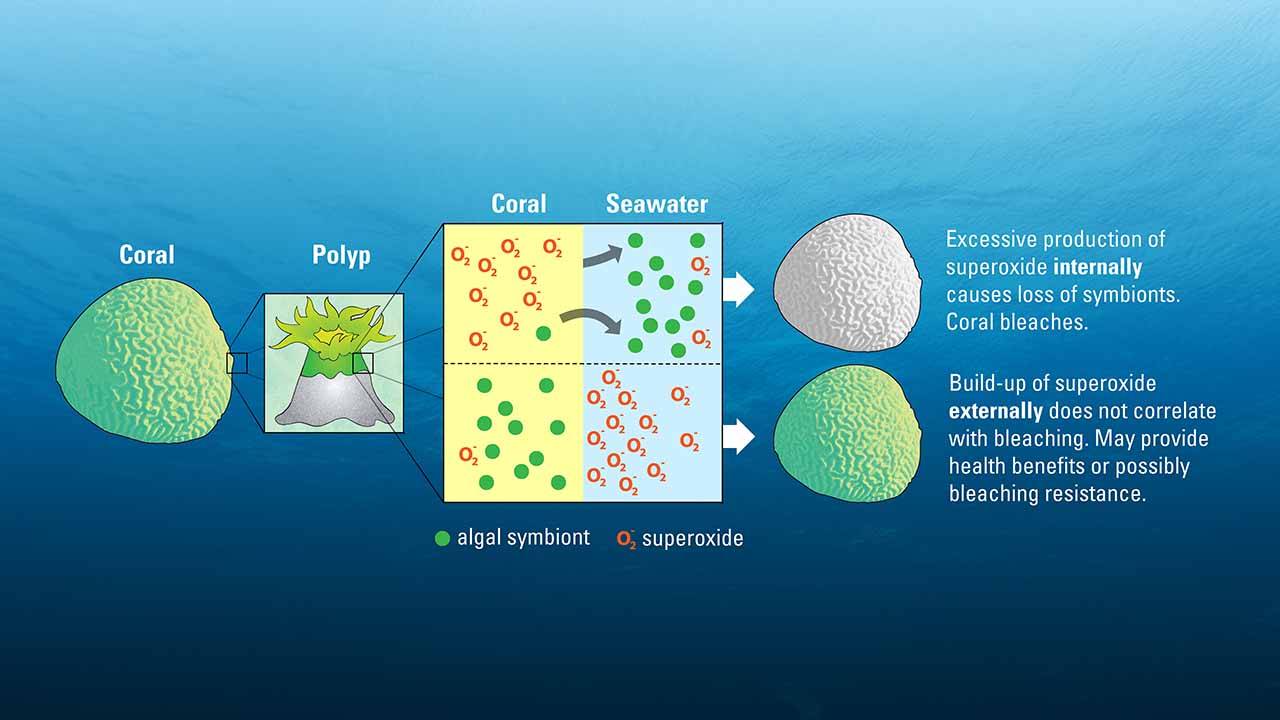
A new study from WHOI indicates that superoxide’a natural toxin believed to be the main culprit behind coral bleaching’may actually play a beneficial role in coral health and resilience.
Read MoreStudy Reveals Corals’ Influence on Reef Microbes
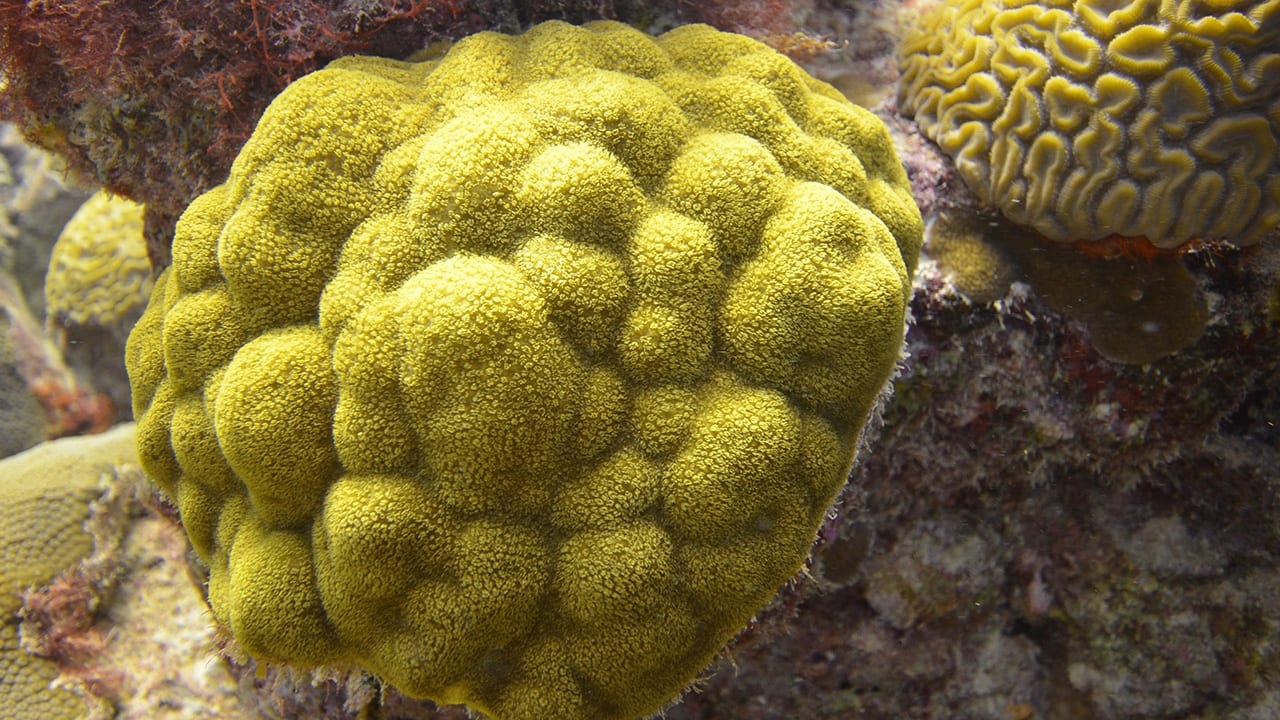
As they grow, corals are bathed in a sea of marine microbes, such as bacteria, algae, and viruses. While these extremely abundant and tiny microorganisms influence coral communities in a variety of ways, a new study by researchers at the Woods Hole Oceanographic Institution (WHOI), the Bermuda Institute of Ocean Sciences (BIOS) and University of California, Santa Barbara (UCSB) reveals that corals also have an impact on the microbes in waters surrounding them
Read MoreClimate Change Will Irreversibly Force Key Ocean Bacteria into Overdrive
A new study from University of Southern California and Woods Hole Oceanographic Institution (WHOI) shows that changing conditions due to climate change could send Tricho into overdrive with no way to stop – reproducing faster and generating lots more nitrogen. Without the ability to slow down, however, Tricho has the potential to gobble up all its available resources, which could trigger die-offs of the microorganism and the higher organisms that depend on it.
Read MoreEvidence of Ancient Life Discovered in Mantle Rocks Deep Below the Seafloor
Ancient rocks harbored microbial life deep below the seafloor, reports a team of scientists from the Woods Hole Oceanographic Institution (WHOI), Virginia Tech, and the University of Bremen. This new…
Read MoreWhere Iron and Water Mix
A new study by researchers from University of Washington (UW), Woods Hole Oceanographic Institution (WHOI), and the University of Southern California, demonstrates that chemical-laden plumes erupted from vents at one section of Mid Ocean Ridge in the SE Pacific can be traced all the way across the Pacific for more than 4000 kilometers. Further, the study shows how the iron transported by this process is ultimately brought to the surface oceans of Antarctica where it is serves as a key life-sustaining micro-nutrient supporting up to 30 percent of all the organic carbon uptake in that ocean.
Read MoreAnna Michel Receives Gulf Research Program Early-Career Research Fellowship

Anna Michel, an assistant scientist in theApplied Ocean Physics and Engineering Department at Woods Hole Oceanographic Institution (WHOI), was chosen by the National Academy of Sciences (NAS) to receive a 2015 Gulf Research Program Early-Career Research Fellowship.
Read MoreDiverse Corals Persist, But Bioerosion Escalates in Palau’s Low-pH Waters
As the ocean absorbs atmospheric carbon dioxide (CO2) released by the burning of fossil fuels, its chemistry is changing. The CO2 reacts with water molecules, lowering ocean pH in a process known as ocean acidification. This process also removes carbonate ions, an essential ingredient needed by corals and other organisms to build their skeletons and shells.
Read MoreSecuring the Supply of Sea Scallops for Today and Tomorrow
Good management has brought the $559 million United States sea scallop fishery back from the brink of collapse over the past 20 years. However, its current fishery management plan does not account for longer-term environmental change like ocean warming and acidification that may affect the fishery in the future. A group of researchers from Woods Hole Oceanographic Institution (WHOI), NOAA’s National Marine Fisheries Service, and Ocean Conservancy hope to change that.
Read MoreStudy Finds Deep Ocean is Source of Dissolved Iron in Central Pacific
A new study led by scientists at the Woods Hole Oceanographic Institution (WHOI) points to the deep ocean as a major source of dissolved iron in the central Pacific Ocean. This finding highlights the vital role ocean mixing plays in determining whether deep sources of iron reach the surface-dwelling life that need it to survive.
Read MoreCoral Reefs Threatened by a Deadly Combination of Changing Ocean Conditions
As the ocean ‘s pH decreases and acidifies, coral reefs are more likely to begin dissolving and “drown”. A new study shows exposing corals to added nutrients increases their erosion and dissolution rate tenfold.
Read MoreScientists Apply Biomedical Technique to Reveal Changes Within the Body of the Ocean
For decades, medical researchers have sought new methods to diagnose how different types of cells and systems in the body are functioning. Now scientists have adapted an emerging biomedical technique…
Read MoreCoral Reefs in Palau Surprisingly Resistant to Naturally Acidified Waters
Ocean researchers working on the coral reefs of Palau in 2011 and 2012 made two unexpected discoveries that could provide insight into corals’ resistance and resilience to ocean acidification and to aid in the creation of a plan to protect them.
Read MoreAcidifying oceans could spell trouble for squid
Acidifying oceans could dramatically impact the world’s squid species, according to a new study led by Woods Hole Oceanographic Institution (WHOI) researchers and just published online in the journal PLOS…
Read MoreNew Study Reveals How Sensitive U.S. East Coast Regions May Be to Ocean Acidification
A continental-scale chemical survey in the waters of the eastern U.S. and Gulf of Mexico is helping researchers determine how distinct bodies of water will resist changes in acidity. The…
Read MoreWHOI Research Projects Awarded $5.2 M to Support Marine Microbial Research
There are more microbes in a bucket of seawater than there are people on Earth. Despite their abundance, humans are only just beginning to fathom the complex role marine microbes…
Read MoreWHOI Scientist Receives Gordon and Betty Moore Foundation Marine Microbiology Initiative Investigator Award
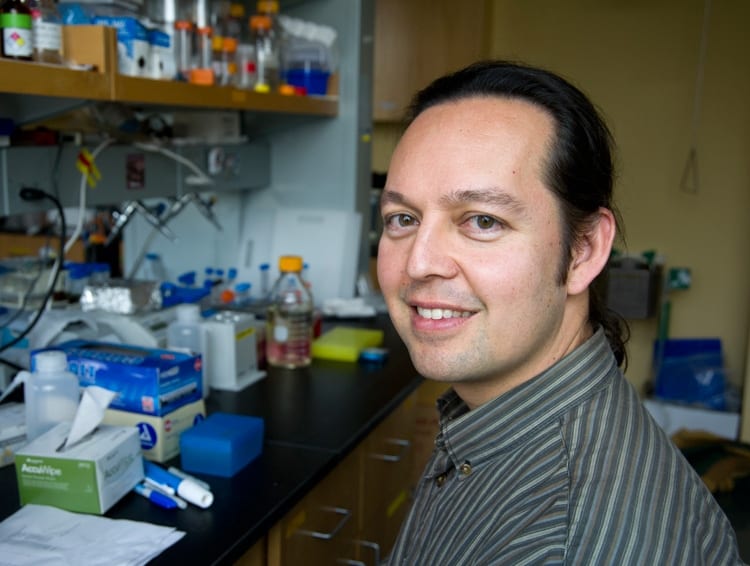
Mak Saito, a biogeochemist at Woods Hole Oceanographic Institution, has been selected for a Marine Microbiology Initiative (MMI) investigator award by the Gordon and Betty Moore Foundation. Saito is one…
Read MoreWHOI to Host Public Event on Ocean Acidification
The Woods Hole Oceanographic Institution (WHOI) will host a public forum on ocean acidification and its effects on ocean life. Ocean acidification is a global problem that results from the…
Read MoreResearchers from WHOI and MBL Receive $1.2 Million Grant for Collaborative Salt-Marsh Study
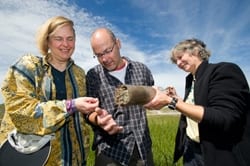
Scientists from the Marine Biological Laboratory (MBL) and the Woods Hole Oceanographic Institution (WHOI) were recently awarded a $1.2 million collaborative grant from the National Science Foundation (NSF) for studies on the role of sulfur-oxidizing bacteria in salt marsh nitrogen and carbon cycling. The fieldwork will be conducted at the Plum Island Ecosystem Long-Term Ecological Research (LTER) site on the North Shore of Boston.
Read MoreStudy Assesses Nations’ Vulnerabilities to Reduced Mollusk Harvests from Ocean Acidification
Changes in ocean chemistry due to increased carbon dioxide (CO2) emissions are expected to damage shellfish populations around the world, but some nations will feel the impacts much sooner and more intensely than others, according to a study by scientists at Woods Hole Oceanographic Institution (WHOI).
Read More