
News Releases
Volcanic Arcs Form by Deep Melting of Rock Mixtures
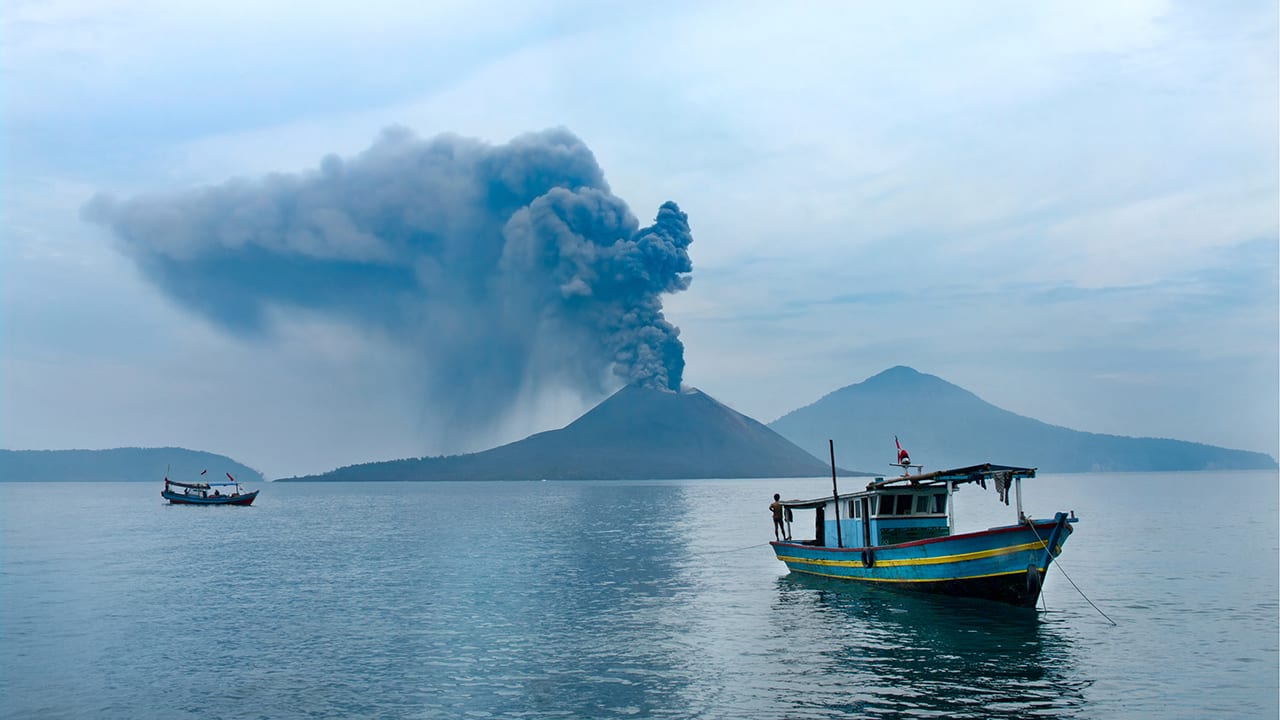
A new study published in the journal Science Advances changes our understanding of how volcanic arc lavas are formed, and may have implications for the study of earthquakes and the risks of volcanic eruption.
Read MoreWHOI Receives $1Million from Keck Foundation for First Real-Time Seafloor Earthquake Observatory at Cascadia Fault
One of the most dangerous faults in North America is the Pacific Northwest’s Cascadia fault – an offshore, subduction zone fault capable of producing a magnitude 9 earthquake that would damage Portland, Tacoma, Seattle, and Victoria, British Columbia, and generate a large tsunami. Yet there are currently no instruments installed offshore, directly above the fault, for measuring the strain that is currently building up along the fault.
But a recent $1 million grant from The W. M. Keck Foundation to scientists at the Woods Hole Oceanographic Institution (WHOI) will change that. An interdisciplinary project led by WHOI geologist Jeff McGuire, an expert in global earthquake seismology and geodesy, and John Collins, director of WHOI’s Ocean Bottom Seismometer Lab, will build and install the first seafloor geodesy observatory above the expected rupture zone of the next great Cascadia earthquake.
Lessons from the 2004 Indian Ocean Tsunami Topic of Public Forum
How coastal communities manage risks associated with major tsunamis is an issue of global importance following the devastating 2004 Indian Ocean tsunami that killed an estimated 200,000 people and caused…
Read MoreMajor Caribbean Earthquakes and Tsunamis a Real Risk
A dozen major earthquakes of magnitude 7.0 or greater have occurred in the Caribbean near Puerto Rico, the U.S. Virgin Islands and the island of Hispaniola, shared by Haiti and…
Read MoreTsunami Warning Buoy Deployed off Chile
Scientists from the Chilean Navy Hydrographic and Oceanographic Office (SHOA), in cooperation with the Woods Hole Oceanographic Institution (WHOI), deployed a SHOA tsunami warning buoy off Northern Chile in the…
Read MoreUndersea Cracks along Continental Shelf Could Trigger Tsunamis along U.S. East Coast
Potential landslides on the outer continental shelf and slope along the Mid-Atlantic coast could trigger tsunamis that might have devastating effects on populated coastal areas. In a paper published in the May 2000 issue of the journal Geology,Neal Driscoll of the Woods Hole Oceanographic Institution and colleagues Jeffrey Weissel of Columbia University??A?s Lamont-Doherty Earth Observatory and John Goff of the University of Texas at Austin say newly discovered cracks along the edge of the continental shelf could be an early warning sign that the seafloor is unstable in these areas.