
News Releases
Woods Hole Oceanographic Institution and CMA CGM expand their partnership

CMA CGM, which has long been committed to preserving biodiversity through multiple initiatives in the U.S. and worldwide, will support two key WHOI projects
Read MorePapers Explore Massive Plankton Blooms with Very Different Ecosystem Impacts
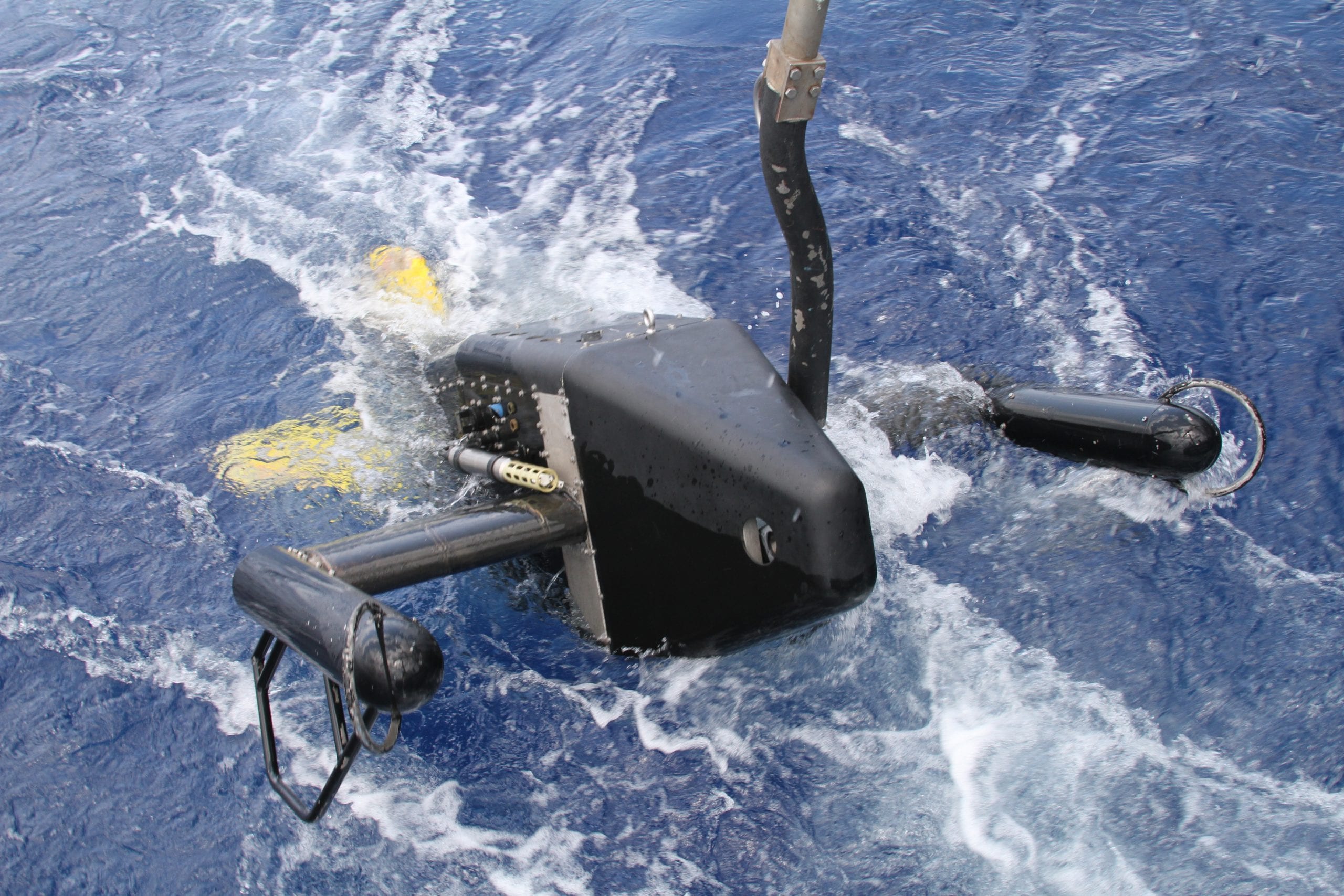
Two papers explore the distribution and abundance of plankton and what conditions lead to big plankton blooms with vastly different potential impacts on the ecosystem.
Read MoreHeidi Sosik Selected as a Fellow of The Oceanography Society
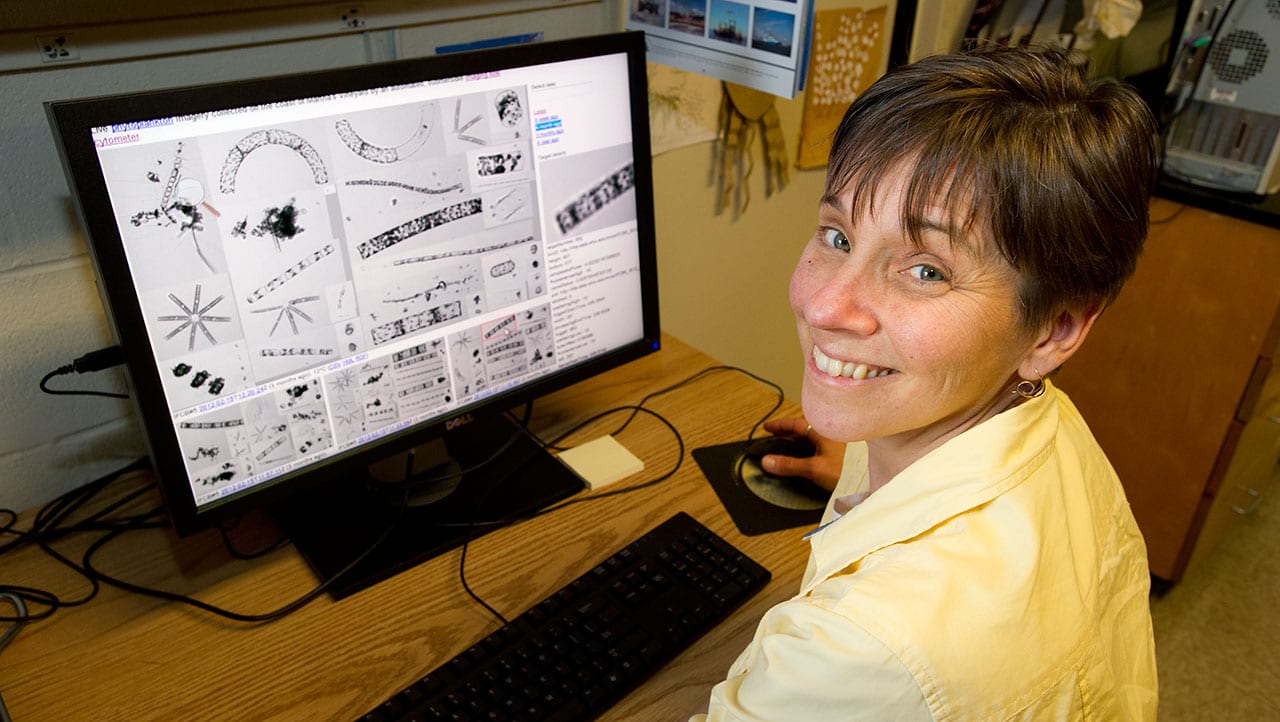
Heidi Sosik, a senior scientist in the Biology Department at Woods Hole Oceanographic Institution (WHOI) has been named a 2018 Fellow of The Oceanography Society (TOS). Sosik’s accomplishments will be formally recognized on Feb. 13, 2018, during a ceremony at the 2018 Ocean Sciences Meeting in Portland, Oregon.
Read MoreA New Long-Term Ecological Research Site Announced for the Northeast U.S. Shelf
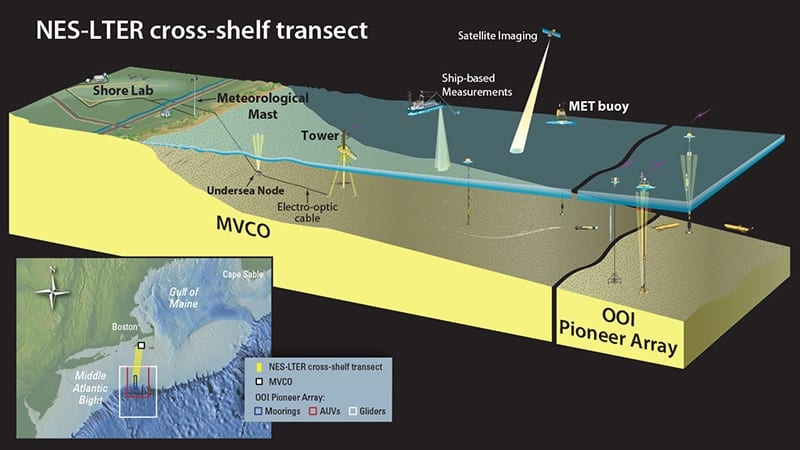
To better understand and manage the intricate ecosystem off the Northeast U.S. coast, the National Science Foundation has announced the selection of this critical ocean region for a new Long Term Ecological Research (LTER) site led by WHOI.
Read MoreNew 13-year Study Tracks Impact of Changing Climate on a Key Marine Food Source
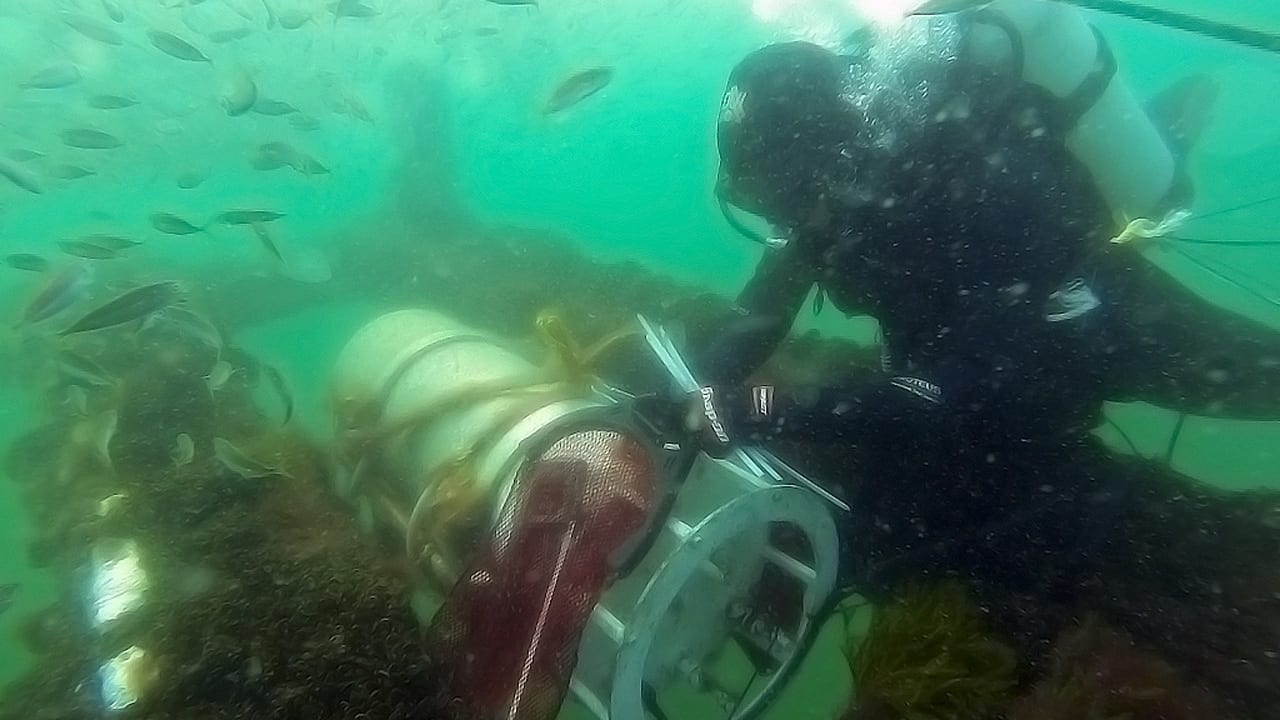
A new multiyear study from scientists at the Woods Hole Oceanographic Institution (WHOI) has shown for the first time how changes in ocean temperature affect a key species of phytoplankton. The study, published in the October 21 issue of the journal Science, tracked levels of Synechococcus – a tiny bacterium common in marine ecosystems – near the coast of Massachusetts over a 13-year period. As ocean temperatures increased during that time, annual blooms of Synechococcus occurred up to four weeks earlier than usual because cells divided faster in warmer conditions, the study found.
Read MoreSwirling Currents Deliver Phytoplankton Carbon to Ocean Depths
A new paper published March 26 in the journal Science that highlights the significant role that swirling currents, or eddies, play in pushing non-sinking carbon to ocean depths.
Read MoreScientists Discover New Trigger for Immense North Atlantic Ocean Spring Plankton Bloom
On this July 4th week, U.S. beachgoers are thronging their way to seaside resorts and parks to celebrate with holiday fireworks. But across the horizon and miles out to sea…
Read MoreScientists Discover Huge Phytoplankton Bloom in Ice Covered Waters
A team of researchers, including scientists from Woods Hole Oceanographic Institution (WHOI), discovered a massive bloom of phytoplankton beneath ice-covered Arctic waters. Until now, sea ice was thought to block…
Read MoreA ‘B-12 Shot’ for Marine Algae?
Studying algal cultures and seawater samples from the Southern Ocean off Antarctica, a team of researchers from Woods Hole Oceanographic Institution (WHOI) and the J. Craig Venter Institute have revealed a key cog in the biochemical machinery that allows marine algae at the base of the oceanic food chain to thrive. They have discovered a previously unknown protein in algae that grabs an essential but scarce nutrient out of seawater, vitamin B12.
Read MoreIdentical Virus, Host Populations Can Prevail for Centuries, WHOI Researcher Reports
A Woods Hole Oceanographic Institution (WHOI) scientist, analyzing ancient plankton DNA signatures in sediments of the Black Sea, has found for the first time that the same genetic populations of a virus and its algal host can persist and coexist for centuries. The findings have implications for the ecological significance of viruses in shaping algae ecosystems in the ocean, and perhaps fresh water as well.
Read MoreWHOI Study Sheds Light on Tunicate Evolution
Woods Hole Oceanographic Institution (WHOI) researchers have filled an important gap in the study of tunicate evolution by genetically sequencing 40 new specimens of thaliaceans, a gelatinous type of tunicate. Their study was featured on the cover of the June issue of the Journal of Plankton Research.
Read MoreNewly Discovered Fat Molecule: An Undersea Killer with an Upside
A chemical culprit responsible for the rapid, mysterious death of phytoplankton in the North Atlantic Ocean has been found by collaborating scientists at Rutgers University and the Woods Hole Oceanographic…
Read MoreAirborne pollutants can be toxic to marine algae
A newly published paper by ocean scientists shows that airborne particles off the continents can have deadly effect on some marine phytoplankton. The findings, published in the online early edition…
Read MorePhytoplankton Cell Membranes Challenge Fundamentals of Biochemistry
Get ready to send the biology textbooks back to the printer. In a new paper published in Nature, Benjamin Van Mooy, a geochemist with the Woods Hole Oceanographic Institution (WHOI),…
Read MoreOceanic Storms Create Oases in the Watery Desert
A research team led by Dennis McGillicuddy of the Woods Hole Oceanographic Institution has shown that episodic, swirling current systems known as eddies act to pump nutrients up from the deep ocean to fuel such blooms.
Read More