
News Releases
Autonomous underwater robot discovers hidden coral reef “hotspots”
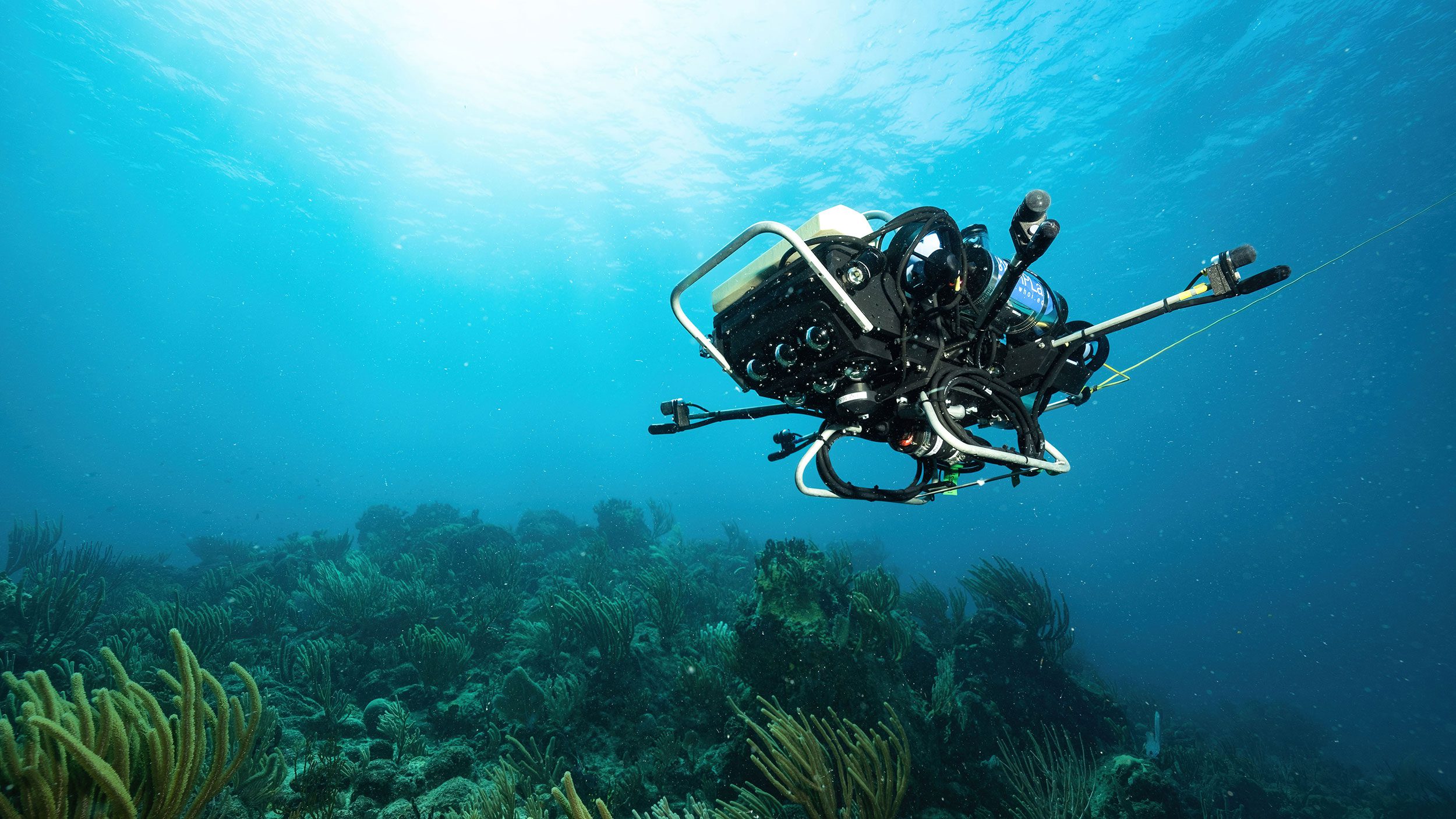
New underwater robot opens new possibilities in coral reef conservation by autonomously identifying biodiversity “hotspots”
Read MoreSunlight Reduces Effectiveness of Dispersants Used in Oil Spills
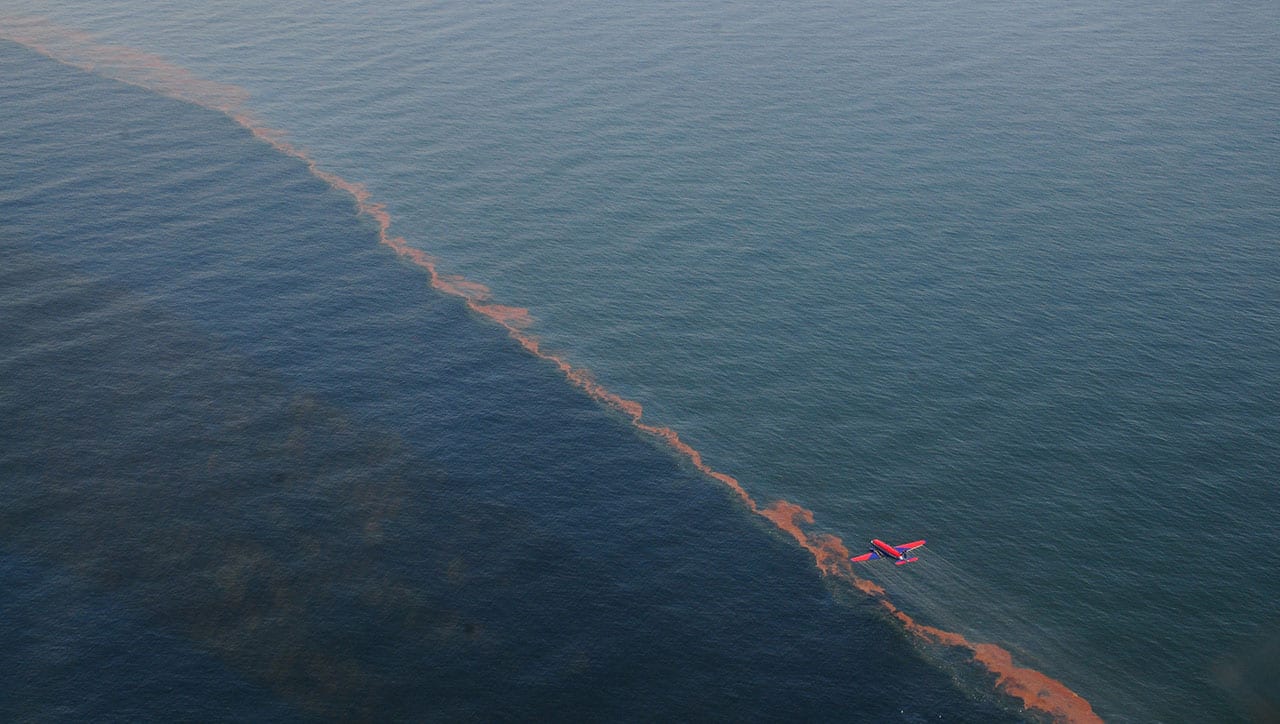
A research team led by Woods Hole Oceanographic Institution (WHOI) found that sunlight chemically alters crude oil floating on the sea surface within hours or days. In a follow-up study the team reported that sunlight changes oil into different compounds that dispersants cannot easily break up. The results of these two studies could affect how responders decide when, where, and how to use dispersants.
Read MoreStudy Reveals Climate Change Impacts on Buzzards Bay
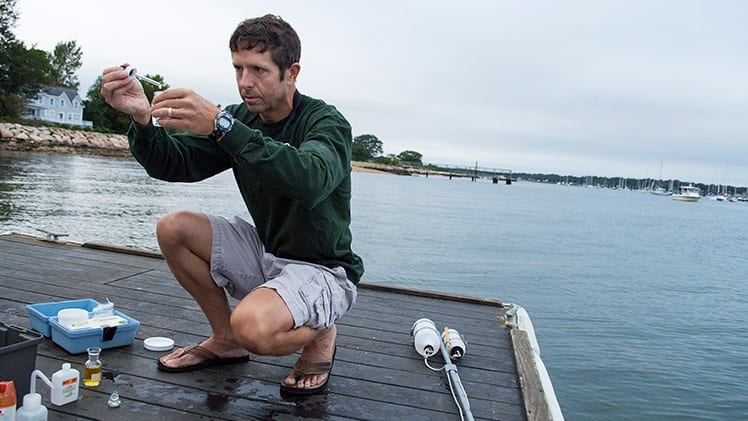
Utilizing 22 years of data collected by a network of citizen scientists, researchers from the Woods Hole Oceanographic Institution (WHOI) and their colleagues at the Buzzards Bay National Estuary Program, the Buzzards Bay Coalition, and the Marine Biological Laboratory found that average summertime temperatures in embayments throughout Buzzards Bay warmed by almost 2 degrees Celsius—roughly 4 degrees Fahrenheit.
Read MoreResearchers from WHOI and MBL Receive $1.2 Million Grant for Collaborative Salt-Marsh Study
Scientists from the Marine Biological Laboratory (MBL) and the Woods Hole Oceanographic Institution (WHOI) were recently awarded a $1.2 million collaborative grant from the National Science Foundation (NSF) for studies on the role of sulfur-oxidizing bacteria in salt marsh nitrogen and carbon cycling. The fieldwork will be conducted at the Plum Island Ecosystem Long-Term Ecological Research (LTER) site on the North Shore of Boston.
Read MoreStudy Assesses Nations’ Vulnerabilities to Reduced Mollusk Harvests from Ocean Acidification
Changes in ocean chemistry due to increased carbon dioxide (CO2) emissions are expected to damage shellfish populations around the world, but some nations will feel the impacts much sooner and more intensely than others, according to a study by scientists at Woods Hole Oceanographic Institution (WHOI).
Read MoreBuried, Residual Oil is Still Affecting Wildlife Decades After a Spill
Nearly four decades after a fuel oil spill polluted the beaches of Cape Cod, researchers have found the first compelling evidence for lingering, chronic biological effects on a marsh that…
Read More