Ocean tech
Life at the Edge
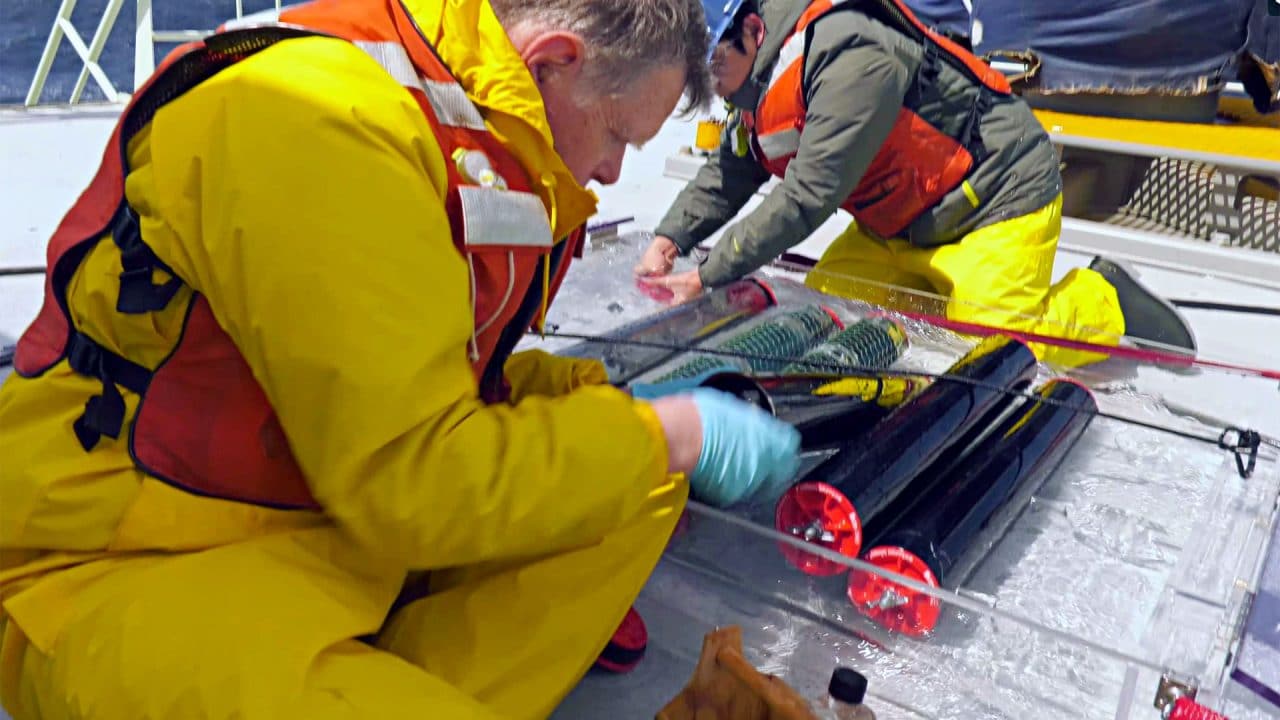
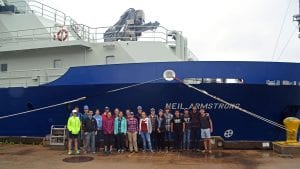
What makes the shelf break front such a productive and diverse part of the Northwest Atlantic Ocean? A group of scientists on the research vessel Neil Armstrong spent two weeks at sea in 2018 as part of a three-year, NSF-funded project to find out.
The Discovery of Hydrothermal Vents
In 1977, WHOI scientists made a discovery that revolutionized our understanding of how and where…
Students Get Their Sea Legs
Woods Hole Oceanographic Institution is known for its ocean-going research. But some incoming graduate students…
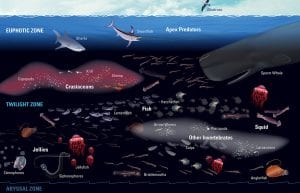
Mission to the Ocean Twilight Zone
The twilight zone is a part of the ocean 660 to 3,300 feet below the…
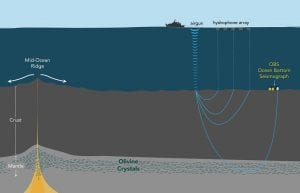
How Is the Seafloor Made?
An ultrasound for the Earth? Using sound waves, a graduate student peers into the crystalline…
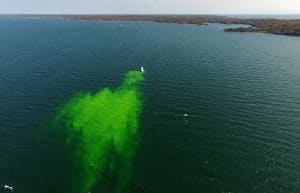
To Track an Oil Spill
WHOI scientists are helping to develop a robotic underwater vehicle that can track oil spills…
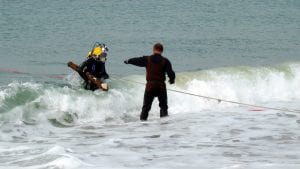
Tracking Unexploded Munitions
U.S. coastlines still have a lot of unexploded ordnance, or UXOs, left offshore by military exercises in…
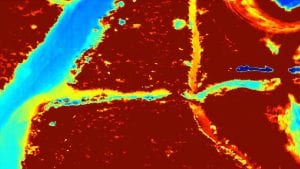
Up in the Sky!
Nope, it’s not a bird or a plane. It’s a drone on a scientific mission…
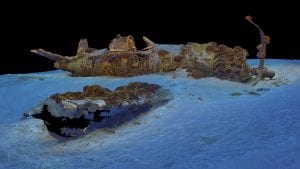
Re-envisioning Underwater Imaging
A revolutionary new underwater imaging system developed at Woods Hole Oceanographic Institution can generate ultrahigh-definition television…
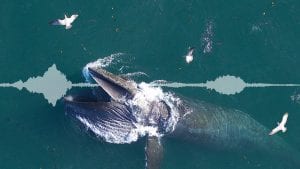
Scientists Reveal Secrets of Whales
Researchers have known for decades that whales create elaborate songs. But a new study has…
Ocean Observatories Initiative
Sailors and scientists have gone to sea for centuries to unravel the inner workings of…
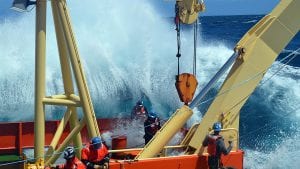
Aqua Incognita
There is a jar of money in the conference room of the Mooring Operations &…
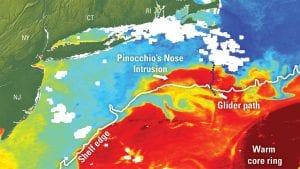
Pinocchio’s Nose
It took only a month for the new Ocean Observatories Initiative (OOI) to reveal insights…
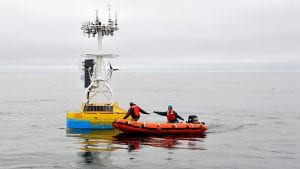
Thinking Global
The Global Array component of the Ocean Observatories Initiative initially included four remote, high-latitude locations,…
Diving for Data
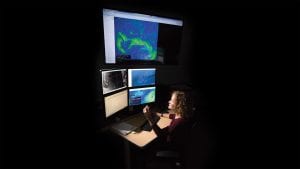
It’s the middle of the night on Cape Cod, Mass. Thousands of miles away in…
The Young Woman and the Sea
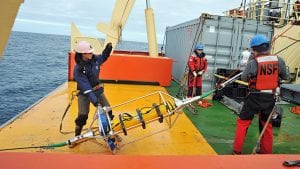
Meghan Donohue always wanted a career in oceanography. She earned an undergraduate degree in physical…
A Pioneering Vision
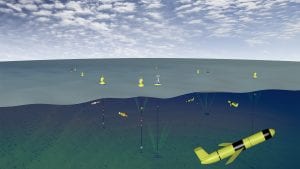
In 2005, scientists at Woods Hole Oceanographic Institution devised a revolutionary plan: They would deploy…
How Do Fish Find Their Way?
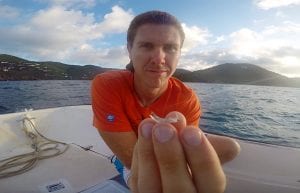
An MIT-WHOI Joint Program graduate student is exploring how tiny larvae hatched in the open…
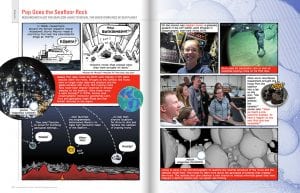
Pop Goes the Seafloor Rock
WHOI scientists used the human-occupied submersible Alvin and the autonomous underwater vehicle Sentry to explore a surprising discovery: gas-filled…
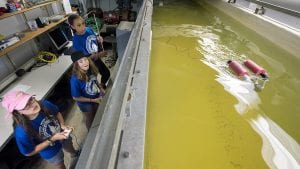
Girls Just Wanna Be Engineers
“Very few women go into engineering,” said Anna Michel, “because girls just don’t get the…
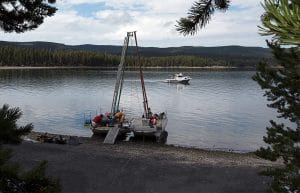
The Hot Spot Below Yellowstone Park
WHOI scientist Rob Sohn brought an arsenal of deep-sea technology normally used to explore the…
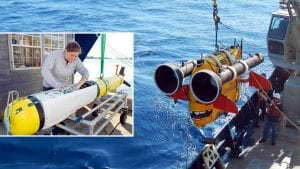
PlankZooka & SUPR-REMUS
Much of marine life begins as microscopic larvae—so tiny, delicate, and scattered in hard-to-reach parts…
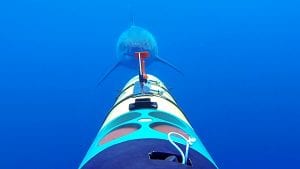
When the Hunter Became the Hunted
In waters off Mexico’s Guadalupe Island, Woods Hole Oceanographic Institution (WHOI) engineers deployed the REMUS…
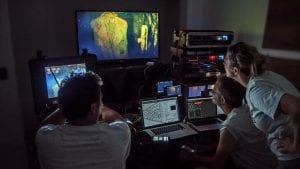
Inside the Sunken USS Arizona
Mike Skowronski (above left) pilots a remotely operated vehicle into the remains of the battleship…