Squishy survivor
How the world’s deepest-living fish survives the ocean’s most extreme pressures
Estimated reading time: 2 minutes
 This article printed in Oceanus Summer 2026
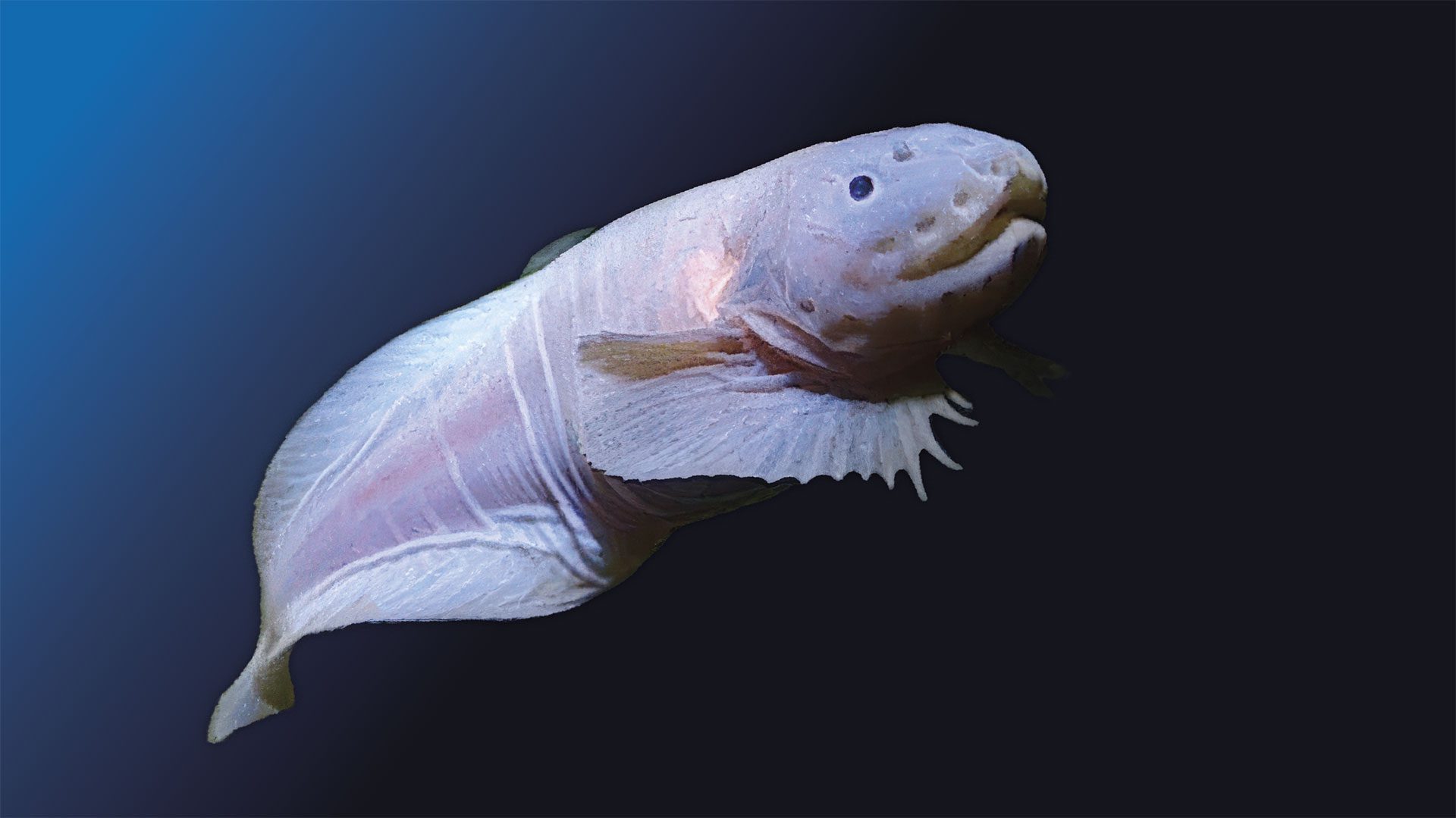
Soft bones. Translucent skin. Delicate frame. All in a body about the size of a pen.
It doesn’t sound like one of the deep ocean’s top predators, but with the hadal snailfish (Pseudoliparis), looks can be deceiving.
The gelatinous, fragile-looking fish—currently the deepest-known fish in the ocean—has evolved to tolerate the extreme pressure of the hadal zone, which extends from 6,000 to 11,000 meters deep (20,000 to 36,000 feet). This part of the ocean is not only frigid and sunlight-barren, but the pressure is 1,100 times greater than that of the atmosphere. So for a squishy fish that looks a bit like an oversized tadpole, something had to give—at least from an evolutionary standpoint.
At some point during its 18-million-year history, the snailfish lost its swim bladder; high pressure likely made it too difficult for a gas-filled bladder to inflate. To compensate, the fish adapted to life in the extreme deep with soft bones, a less dense skeleton, and a gooey, gelatinous substance that helps it stay buoyant.
The snailfish has also adapted by producing a compound called trimethylamine N-oxide (TMAO, for short) that helps stabilize its proteins under high pressure. “This compound is essential for the fish to survive at these depths,” said Mackenzie Gerringer, an associate professor of biology at the State University of New York and an HOV Alvin user who uses the submersible to look for snailfish in the deep. “TMAO keeps water from being pushed into the proteins.”
The proteins themselves have adapted to the pressure as well. They contain an extra molecule, Gerringer explained, that helps the fish’s metabolic enzymes work better when pressurized—something she and her team have seen in lab experiments.
Lab experiments are one thing; studying hadal animals in the deep ocean is another. Dr. Annette Govindarajan, a deep-sea molecular ecologist at WHOI, said the hadal environment is challenging to study and requires advanced technology to access due to the extreme depths and pressure. “But it’s important to remember that while the hadal environment is harsh for us, it is home for the snailfish, as well as many other fascinating creatures with intriguing evolutionary adaptations.”
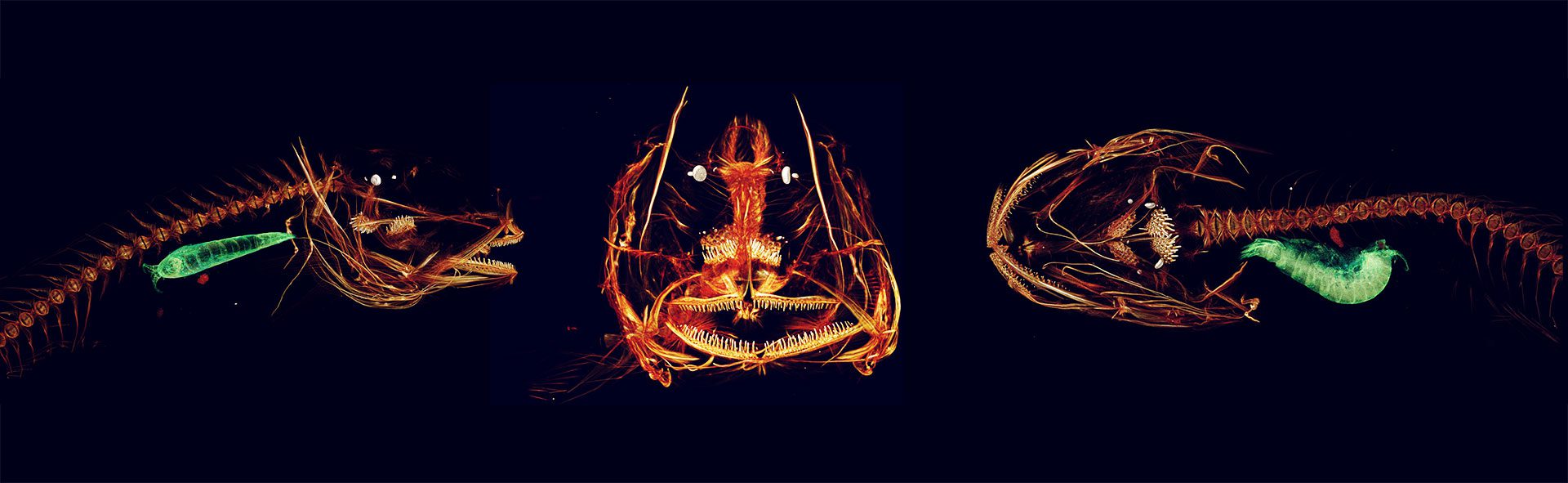
The snailfish doesn’t just survive in the hadal zone; it thrives there. It has a powerful second set of pharyngeal jaws in the back of its throat that are well adapted for feasting on crustaceans—an abundant food source in deep-sea trenches. It uses a suction-feeding strategy, opening its mouth very quickly to create a vacuum force and then pulling in its prey before chomping them up with its second pair of jaws.
The hadal snailfish’s quirky adaptations remind us that deep-sea animals aren’t the aliens or monster-like creatures they’re often made out to be. Survival, after all, doesn’t always belong to the biggest or the fiercest—sometimes it belongs to the most delicate.