The human cost of Brazil’s floods
New research maps social vulnerability after the 2024 deluge
Estimated reading time: 3 minutes
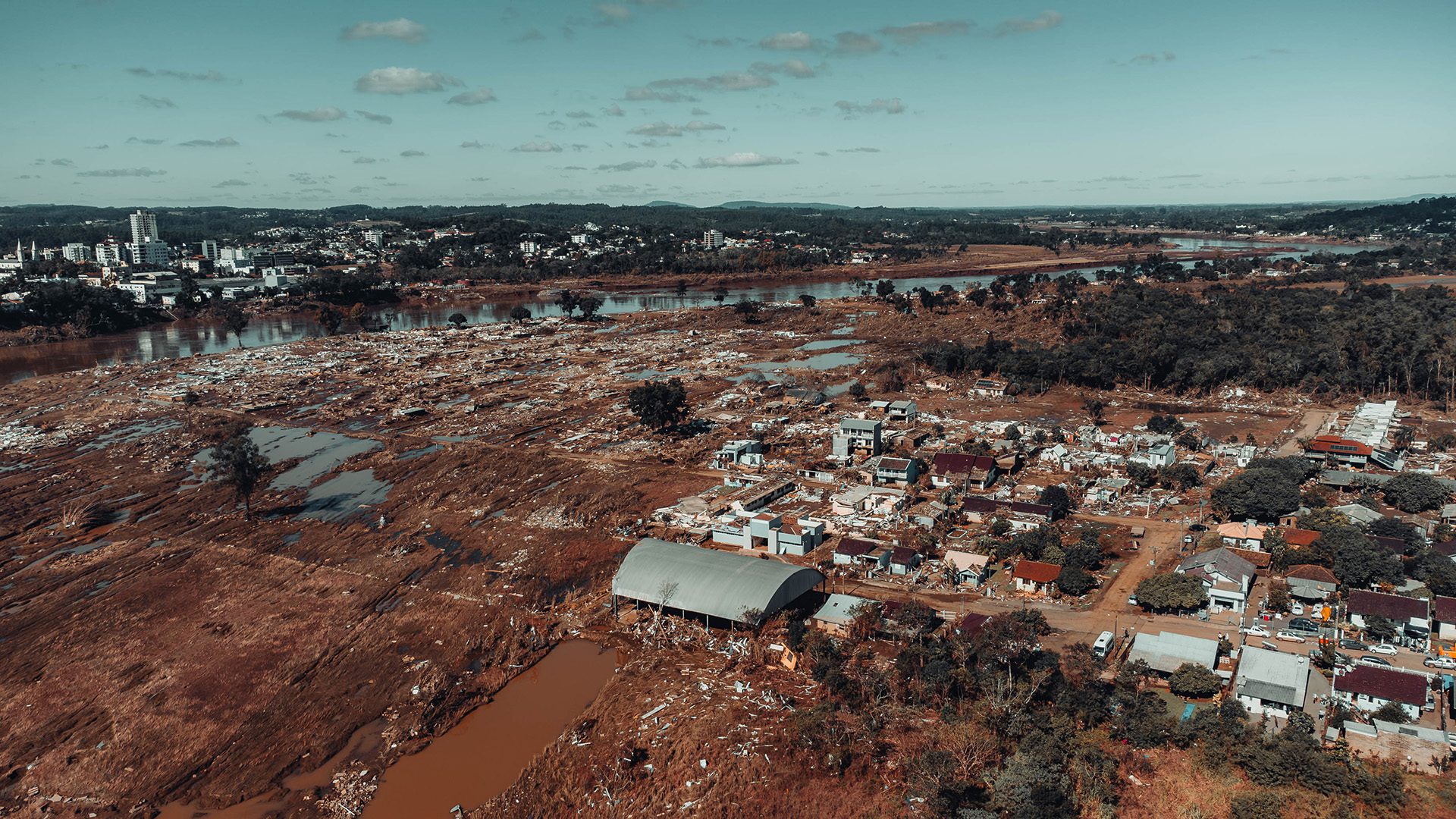
“It seemed like a movie,” Juliana Ferrari Mancio said, reliving the fear and disbelief she felt as she watched the streets of her childhood slip underwater. “People were outside their homes. We could go through some streets, but the water was covering everything. The shelters had no water. It was contaminated with everything you can imagine. I mean, it really seemed like we were not living a real situation.”
In May 2024, Brazil’s Rio Grande do Sul was hit with historic, catastrophic rainfall that upended the lives of more than two million residents. Ferrari Mancio, an oceanographer in São Paulo, no longer lives in the region, but had been visiting immediate family in Porto Alegre at the time of the catastrophic floods.
As the water receded, an unsettling truth emerged: the damage from the floods may be deeper and longer lasting than the physical destruction itself. WHOI physical oceanographer Iury Simoes-Sousa led a study using NASA’s SWOT satellite system not only to help identify the drivers of the deluge, but also to understand its human impacts.
“With the SWOT satellite, we get this 3D perspective, so we can see the distribution of the volume of the water,” Simoes-Sousa said. “We overlaid that data with land usage information, so we could look at how the region was overall impacted. One area hit hard was croplands, specifically those used for rice.”
Southern Brazil is the largest rice producer in the Western Hemisphere and one of the biggest exporters of the crop globally. A report released one month after the catastrophe forecasted the country would import 1.3 million tons of rice in 2024 to make up for the damaged farmland, marking the highest import level in over two decades.
“Most of these croplands impacted by flooding were rice plains that are designed to be flooded, but it was far beyond an average amount. The flooding brought in a lot of sediment and things that were not supposed to be there, basically changing the complexity of the environment,” Simoes-Sousa explained. “We can see that from the disturbance index that some of these places might not be recoverable or recover to the stage that they were pre-flood.”
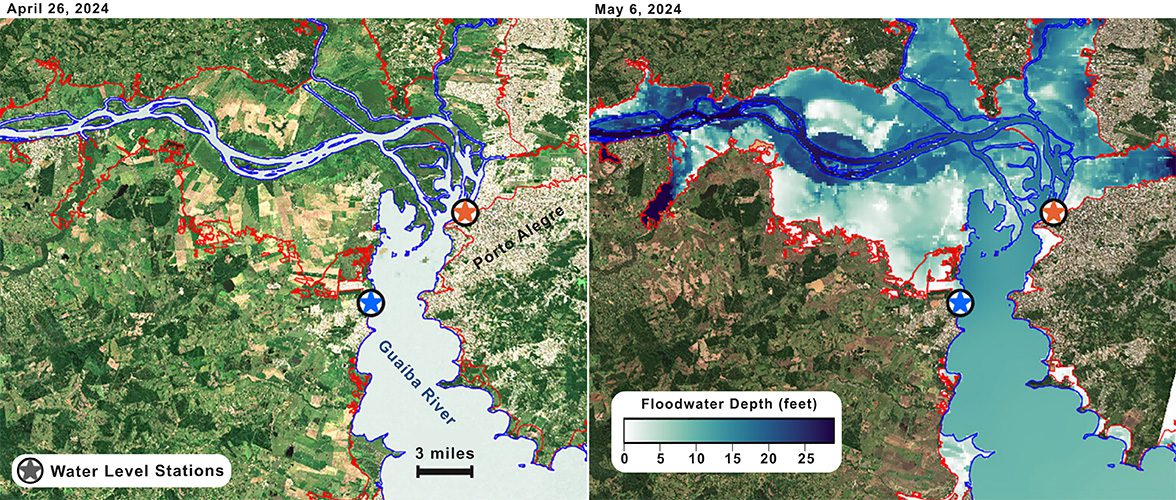
Then, Simoes-Sousa and colleagues focused on the metropolitan region of Rio Grande do Sul’s capital, Porto Alegre, where approximately 420,000 people were impacted by the floods. Taking socioeconomic factors into consideration, such as income levels and healthcare outcomes, they identified 16% of them as “socially vulnerable” as defined by the Brazilian Institute for Applied Economic Research.
While this event was caused by a series of atmospheric anomalies, forming what experts are calling a “disastrous cocktail,” Simoes-Sousa worries warming oceans will increase the frequency of similar, large-scale events. The research points to the Madden-Julian Oscillation, a tropical convective-circulation system that strengthened over the Indian Ocean before moving eastward, helping create a persistent high-pressure system that stalled a cold front over South America and unleashed heavy, localized rains in southern Brazil.
“My goal is to get this data to stakeholders and policy makers,” Simoes-Sousa continued. “We are at a point where we need to take action. Not only in terms of saying to people that the temperatures are going to rise, but more in terms of how this is going to really impact people.”
Ferrari Mancio, who has visited her family regularly since the floods of 2024, says things “are not normal,” with many people still struggling to recover what they lost. She hopes analyses like this one can draw attention to the growing climate crisis and better emergency planning.
“People in better financial conditions are more resilient. Unfortunately, they stop talking when it's just with the more vulnerable community,” she explained. “People are scared that every rain will go to that same place.”