A Mysterious Disease Afflicts Lobster Shells
Something's rotten in the state of New England's favorite crustacean
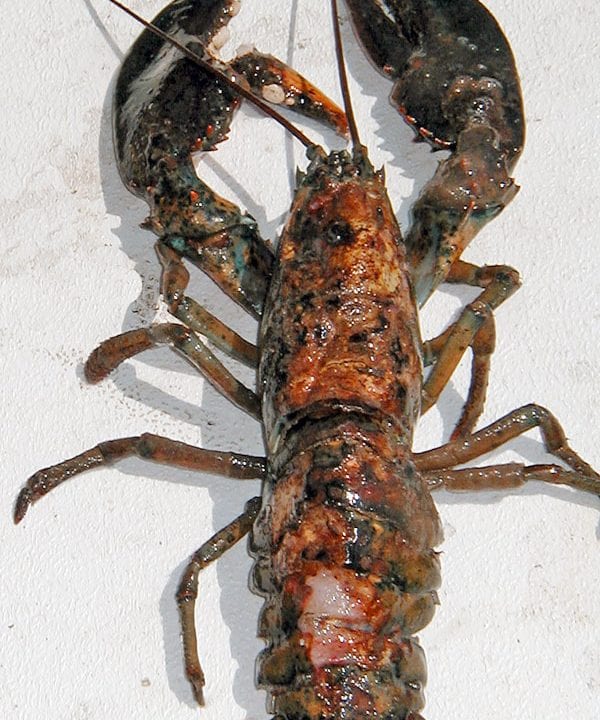
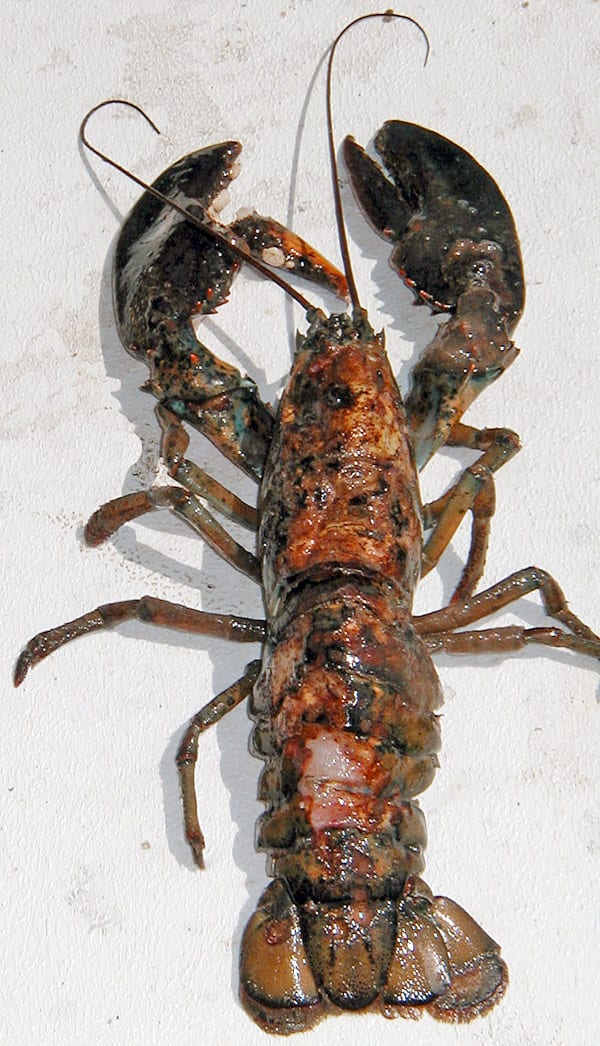
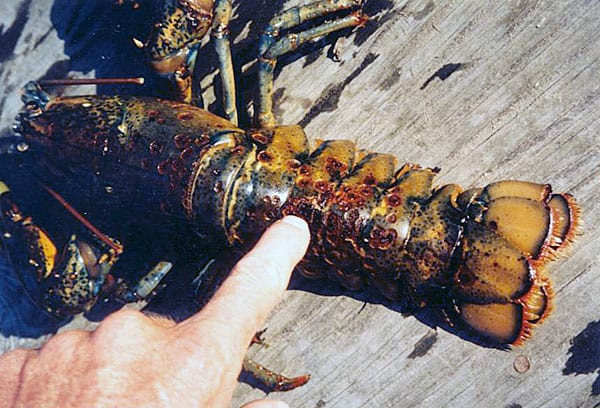
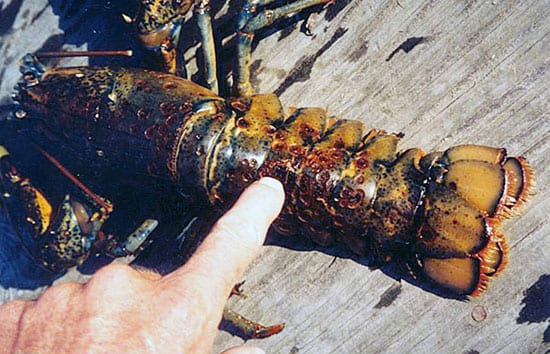
In the late 1930s, lobstermen in Rhode Island began to notice strange black spots on the shells of lobsters being held in tanks. By the 1980s, a similar condition, now known as lobster shell disease, started to appear in wild populations.
Then in the mid-1990s, a more virulent form of the disease emerged in southern New England waters. The black spots turned into deep holes in lobsters’ outer shells. Holes often fully penetrated the shell, causing the hard shell to fuse with soft membranes underneath. The disease left lobsters susceptible to bacteria or viruses and interfered with their ability to molt their shells and grow. In extreme cases, the entire shell rotted, killing the lobsters.
Although the lobster meat itself is not affected, the unappetizing appearance of afflicted lobsters makes them much harder to sell whole.
“Nobody would want to eat the thing,” said Bill Adler, executive director of the Massachusetts Lobstermen’s Association. The disease was a big factor in the 50-percent decline in lobster catches in Buzzards Bay between 1998 and 2004, which forced many lobstermen out of business, he said. At the time more than half of the lobsters in coastal areas of southern New England and Long Island Sound were affected by shell disease.
More recently stocks have begun to recover somewhat, Adler said, but up to 30 percent of southern New England lobsters are still affected, and the disease has started to show up in other areas, including Nova Scotia and Maine.
What makes lobsters susceptible?
Researchers do not yet know what causes the disease or makes lobsters susceptible, said Tim Verslycke, a biologist at Woods Hole Oceanographic Institution. That point is reflected by the disease’s name: epizootic shell disease. “Epizootic” simply means an outbreak of a disease affecting many animals of one kind at the same time.
“Similar shell disease can be seen in any crustacean, but never to this extent,” he said. “The levels we’re seeing here are really unusual.”
The epidemic could be the result of an accumulation of factors, Verslycke said. Marine animals face many threats these days, including warming ocean temperatures, fishing pressures, and increased exposure to chemical pollution from industrial sources and pesticides.
Researchers have found that the disease is not contagious from lobster to lobster, as is often the case with other lobster diseases. That leads to suspicions that physiological imbalances or compromised immune systems may be impairing lobsters’ ability to fight off the disease, he said. Previous studies have found higher levels of certain chemicals in shell-diseased lobsters than have been found in healthy lobsters. These chemicals have been shown to disrupt the crustaceans’ hormones systems, which could lead to a wide range of detrimental effects.
“At this point we’re trying to get an idea if these lobsters are indeed exposed to chemicals at such levels that it leads to a lesser capacity for them to cope with these diseases,” Verslycke said.
One clue comes from observations that make lobstermen especially nervous: reports of egg-carrying female lobsters shedding diseased shells with unhatched eggs still attached.
“This obviously means something is going wrong with their hormone regulation,” Verslycke said. “It doesn’t make sense for them to molt while they’re carrying broods. Normally, that is a very finely tuned process that is hormonally regulated.”
“That’s where the fear of shell disease comes in,” Adler said. “There goes the future stock.”
The Lobster Shell Disease Initiative
Verslycke has examined the effects of human-made chemicals on invertebrate hormone systems, including those that regulate molting.
“Lobsters can actually molt out of shell disease,” he said, “but if they are exposed to a chemical that limits their capacity to molt or otherwise interferes with their hormone systems, it would make them more vulnerable to any kind of additional stress.”
In 2006, Verslycke and WHOI colleagues John Stegeman and Judith McDowell were among nine teams of researchers funded by the $2.3 million New England Lobster Research Initiative, established by Congress to study the causes and consequences of lobster shell disease. Under the initiative, scientists from several institutions (including the University of Massachusetts, the University of Rhode Island, the New England Aquarium, Boston University, and the Marine Biological Laboratory) are investigating the roles that microbes, contaminants, and other environmental factors, such as warmer ocean temperatures, may play in increasing lobsters’ vulnerability and fostering the spread of the disease.
The WHOI study will examine how environmental stresses, such as chemical exposure, might change the way specific genes are expressed, or turned on or off, in diseased lobsters, as compared to non-diseased ones. These genes produce proteins that regulate the lobsters’ immune and hormone regulation systems.
“Our approach would allow us to evaluate whether genes associated with these processes are indeed differentially expressed between healthy and shell-diseased animals,” Verslycke said. “In other words, we are hoping to find clues at the molecular level that indicate why some animals are getting diseased and others not.”
The New England Lobster Research Initiative is managed by the National Marine Fisheries Service, the University of Rhode Island, and Rhode Island Sea Grant.
Slideshow