Transparent Animal May Play Overlooked Role in the Ocean
Swarming by the billions, gelatinous salps transport tons of carbon to the depths
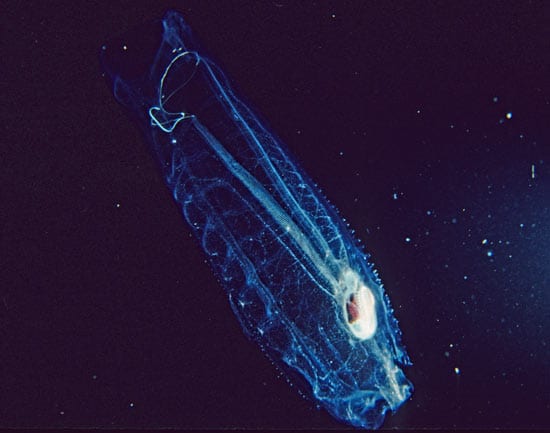
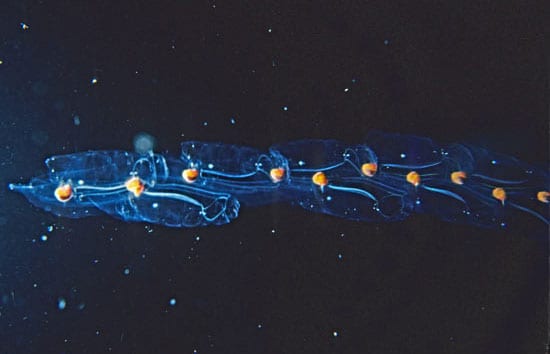
Salps don’t get much respect. They’ve been around for millions of years, but hardly anyone even knows they exist.
Even many who have heard about these transparent, jelly-like creatures consider them a dead-end in the ocean food web: They cruise around, vacuuming up microscopic plants, but don’t get eaten by other animals, making them a marine equivalent of inedible cows.
But in the May issue of Deep Sea Research, scientists report that salps may play an important and overlooked role in determining the fate of the greenhouse gas carbon dioxide in the ocean. Swarming by the billions in salp “hot spots,” they transport tons of carbon per day from the ocean surface to the deep sea and keep it from re-entering the atmosphere, the scientists say.
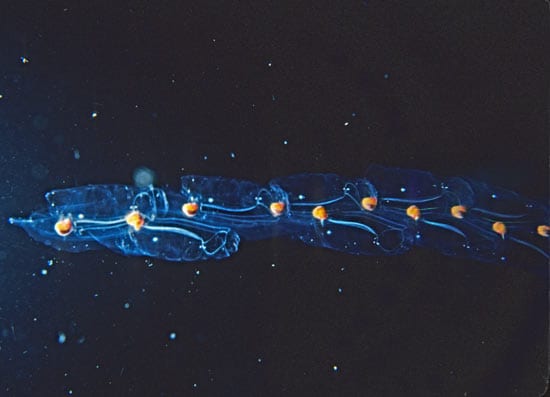
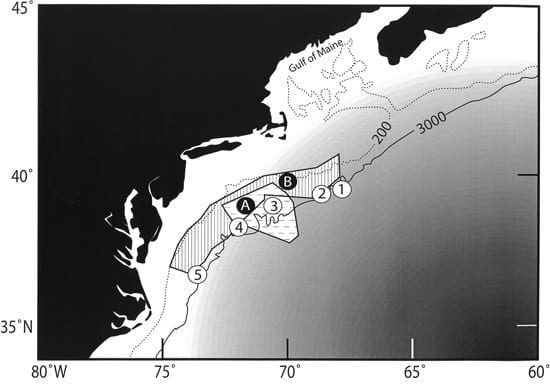
Biologists Laurence Madin of Woods Hole Oceanographic Institution and Patricia Kremer of the University of Connecticut led researchers to the Mid-Atlantic Bight region (between Cape Hatteras and Georges Bank) in four summers since 1975, and each time found that one species, Salpa aspera, multiplied into dense swarms that lasted for months.
One swarm covered 38,600 square miles (100,000 square kilometers) of the sea surface, containing perhaps trillions of thumb-sized salps. The scientists estimated that the swarm consumed up to 74 percent of microscopic carbon-containing plants from the surface water per day, and their sinking fecal pellets transported up to 4,000 tons of carbon a day to deep water.
Sending carbon to the depths
The oceans absorb carbon dioxide from the atmosphere, including some of the carbon dioxide emitted by fossil-fuel burning. In sunlit surface waters, tiny marine plantsâ¯phytoplanktonâ¯use it to grow. Animals then consume phytoplankton and incorporate the carbon, but most of it dissolves back into the oceans when the animals defecate or die. The carbon can be used again by plants, or it can return to the air as heat-trapping carbon dioxide.
Salps send carbon down a third path by making heavy, fast-sinking fecal pellets that efficiently ship carbon to the deep sea, where it is sequestered from the atmosphere.
“Salps swim, feed, and produce waste continuously,” Madin said. “They take in small packages of carbon and make them into big packages that sink fast.”
In previous work, Madin and WHOI biologist Richard Harbison found that salp fecal pellets sink as much as 3,280 feet (1,000 meters) a day, far faster than most pellets. The scientists also showed that when salps die, their bodies also sink fast—up to 1,575 feet (475 meters) a day. If salps are really a dead-end in the food web and remain uneaten on the way down, they send even more carbon to the deep.
Night migrations to the surface
Salpa aspera swims long distances down in daylight and back up at night. Madin and Kremer and colleagues—Peter Wiebe and Erich Horgan of WHOI and Jennifer Purcell and David Nemazie of the University of Maryland—found that the salps stay at depths of 1,970 to 2,625 feet (600 to 800 meters) during the day, coming to the surface only at night.
“At the surface,” Madin said, “salps can feed on phytoplankton. They may swim down in the day to avoid predators or damaging sunlight. And swimming up at night allows them to aggregate to reproduce and multiply quickly when food is abundant.”
Because of this behavior, salps release fecal pellets in deep water, where few animals eat them. This enhances the transport of carbon away from the atmosphere.
In 2004 and 2006, Madin and Kremer studied salp swarms in a different ecosystem, the Southern Ocean near Antarctica. Some scientists have reported larger salp populations there in warmer years with less sea ice. If this proves true and if Antarctica’s climate continues to warm, salp swarms could have a greater effect on phytoplankton and carbon in the Southern Ocean ecosystem.
[The author, who has a Ph.D. in invertebrate zoology, is married to Madin and occasionally studies salps with him.]Funding for this study was provided by the National Science Foundation, National Oceanic and Atmospheric Administration, and the Rinehart Initiative for Access to the Sea at Woods Hole Oceanographic Institution.
Slideshow