Worlds Apart, But United by the Oceans
A conversation with geophysicist Jian Lin
As an 11-year-old boy in Fuzhou, China, Jian Lin recalls his father explaining why the dangling light in their house had begun to swing wildly: A major earthquake had hit Taiwan.
Lin came of age in an era of seismic shifts in China—both geological and political. “The mid-1970s were an unusually apprehensive period when several major earthquakes struck China, and the whole nation felt as if quakes could occur anywhere at any time,” he said. He became a voluntary “earthquake watcher,” keeping a diary of ground tilting and water level changes in wells and sending his readings to a local seismological center.
In 1976, an earthquake near the city of Tangshan killed more than 242,000 people and severely injured 170,000 more. “It left an imprint on me and other Chinese that is perhaps as profound and indelible as September 11 on today’s generation,” Lin said. (See Earthshaking Events.)
It was the deadliest quake in the 20th century, but little was heard about it in the West because China was shrouded in the Cultural Revolution, a period of anti-bourgeois social upheaval that halted China’s economy and education system. By a twist of fate, Lin came to the United States to pursue a scientific career.
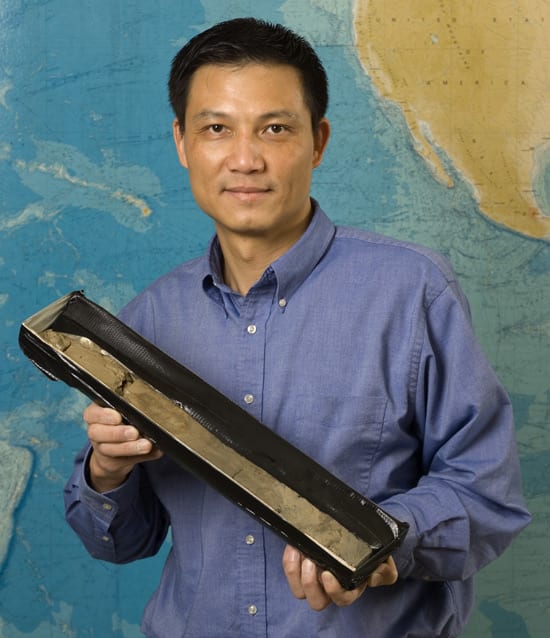
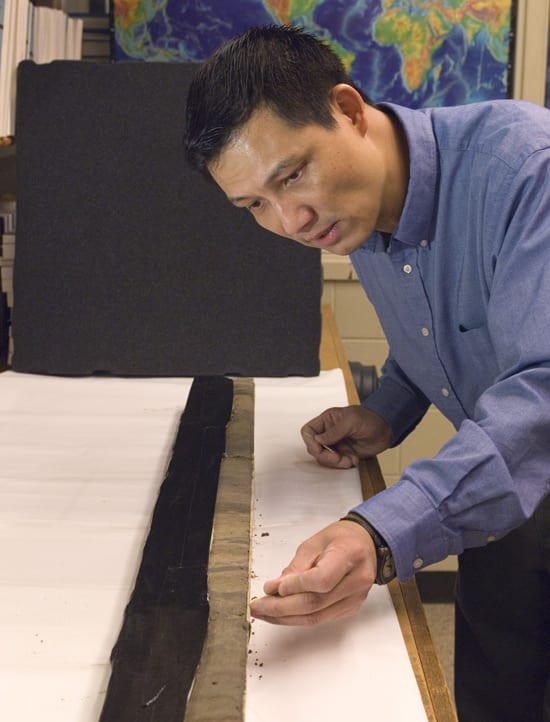
Now a geophysicist at Woods Hole Oceanographic Institution, he has studied mantle convection, undersea volcanism, hotspots, and earthquakes. A paper he co-authored was the most-cited earthquake research article of the 1990s. (See An Interview by Institute for Scientific Information.) It established basic tenets for the concept that earthquakes can shift stress onto neighboring faults and increase the chances of earthquakes on them.
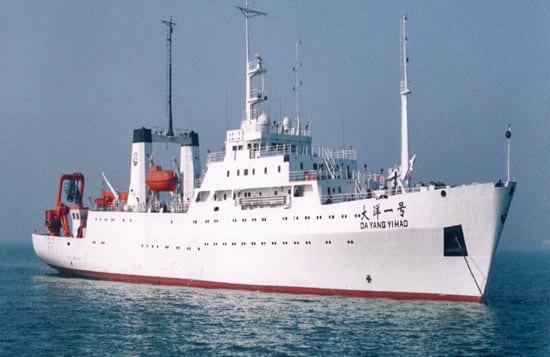
To study the submarine quake that sparked the devastating 2004 Indian Ocean tsunami, he sailed off Sumatra aboard China’s new research vessel, Dayang 1, as the first U.S. scientist ever invited to co-lead a Chinese deep-ocean expedition. He spent more than 80 days at sea during a yearlong, around-the-world mission that heralds China’s re-emergence in oceanography.
What do you remember about the Tangshan earthquake?
A series of small tremors began near the city of Haicheng in northeast China in the fall of 1974. On Feb. 3, 1975, they became more frequent. In the early morning of Feb. 4, the local government issued warnings, shutting down factories and urging people to remain outdoors. A magnitude-7.3 quake struck at 7:38 p.m. It destroyed more than one million buildings, but the death toll was low—1,328. The successful prediction probably saved tens of thousands of lives.
On July 28, 1976, a magnitude-7.8 quake struck Tangshan, a city 280 miles southwest of Haicheng. It released the energy equivalent of 400 Hiroshima atomic bombs. There were no foreshocks, no warning. The quake struck at the worst time, 3:42 a.m., when most people were sleeping.
Most of the bamboo harvest that year from my home province was sent to Tangshan to construct emergency shelters. I also recall vividly that my home city shipped out a huge quantity of large plastic bags to bury all the dead.
These events encouraged me to become a geophysicist—to seek to understand the fundamental physics of earthquakes and learn, for example, why foreshocks preceded the quake in Haicheng, but not in Tangshan. We must better understand the forces of nature to live peacefully with them.
So you prepared for a geophysics career even in high school?
No, I prepared to be “re-educated,” to experience the life of a peasant and work in rice fields on a poor, remote farm, as my older brothers and sister did. That was required during the Cultural Revolution. I did not even know how many years I would be on the farm.
Then in 1976, Chairman Mao Zedong died, the radical Gang of Four was arrested, and the whole course of China changed suddenly. Deng Xiaoping became leader, and rumors began to circulate that universities, which had been closed for 10 years, might reopen.
Then the announcement: “Everyone can now take a national entrance exam.” I was lucky. I was fresh out of high school, and I got into the first group of students after the Cultural Revolution to go to university. We studied like mad. Think about 10 years, there’s no science, and then suddenly, you have the opportunity.
How did you come to America?
Just as I finished university, Deng Xiaoping said China should modernize, open the door to the outside, and send students to study abroad. Deng himself went on a youth work-study program in France when he was a teenager. Again, I was among the first group that the government said, “You can go now.”
I had no idea what America was like. I also had no money. My parents were making $30 a month. Brown University opened its door to me.
Was coming to the United States a culture shock?
It was like going to another world. China was so poor. We had no telephones, no TVs, no cars, no refrigerators. At Brown, I remember a fellow Chinese student showed a refrigerator on the floor of his dorm room to another Chinese student and said, “This is a nice shoebox. You open it and can put your shoes in there.”
Now I get shocked by how much China has developed since I left; how capitalistic it has become; how modern Shanghai is today. Students from China today will still experience some culture shock, but not nearly as powerfully as I did.
Did you maintain scientific contacts in China?
No. I went back occasionally to visit my parents, but I only began to give scientific talks in China in 1997. I wanted to encourage Chinese scientists to do ocean research.
People began to know me, and one day a young researcher said, “Our new research ship is being refitted. Could you come to take a look?” I went to the shipyard in Shanghai, and I met a brilliant program manager of the China Ocean Minerals Research and Development Association. We toured refitted labs and then stopped at a room. He said, “We made a VIP room for guests—like you, for example.” And three years later I was in that room.
Does Dayang 1 signal a resurgence in Chinese oceanography?
China has recognized the importance of resources from the oceans: manganese nodules and cobalt-rich ferromanganese crusts on the seafloor; hydrothermal deposits rich in precious metals; also biological resources, genes and enzymes from life in extreme environments, which are useful for pharmaceuticals and for exciting microbiological work.
In 2005, Dayang 1 went on an ambitious 300-day mission that circumnavigated the globe to search for all these. It coincided with the 600th anniversary of the first epic voyage of the famous Chinese admiral Zheng He.
Who was Zheng He?
Zheng He led seven expeditions between 1405 and 1433 that visited what is now Vietnam, Thailand, Indonesia, India, Sri Lanka, Mecca, the Red Sea, all the way to the east coast of Africa. There is a famous painting of a giraffe that Zheng He brought back to the Ming Dynasty court.
On each trip, he commanded fleets of as many as 300 ships with more than 27,000 people, including a nine-masted ship that was 120 meters (400 feet) long, longer than Dayang 1, which is 104 meters in length. The voyages promoted cultural and economic exchanges between China and many countries, but then the dynasty felt insecure and suddenly ended the expeditions. China has always had periods of being open and closed.
Do you perceive an opening again to work with the Chinese?
Chinese scientists were eager to go to places I also wanted to study. No country alone has the resources to do all the oceanographic research it wants, so we should collaborate. The biggest McDonald’s is in China. If McDonald’s can collaborate, why can’t ocean scientists?
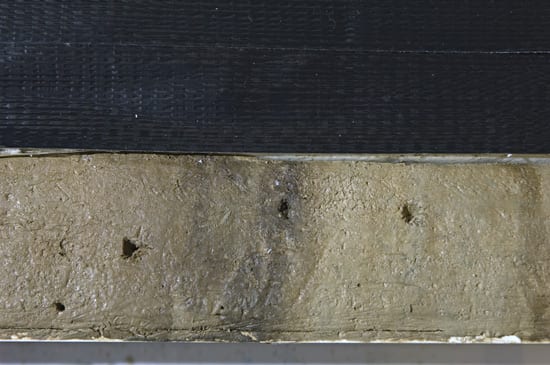
The cruises I co-led aboard Dayang 1 were successes. We made many co-discoveries (see A ‘Book’ of Ancient Sumatran Tsunamis.)
Do you think the door is about to swing wide open?
There are folks in China who will say, “We’ve learned all we need to; now we can do it alone.” But there are also many Chinese who have been to other countries and see the great many advantages of collaboration.
Chinese society is very complex. It has old and new ideas, and a history of humiliations by Western powers. Imposing on China will backfire. Instead we must build mutual respect and trust between the U.S. and China, between ordinary folks, and between kids. In this critical transitional period when China is growing fast, we have a unique opportunity to help China become more open and be an important contributor to sciences.
Slideshow