
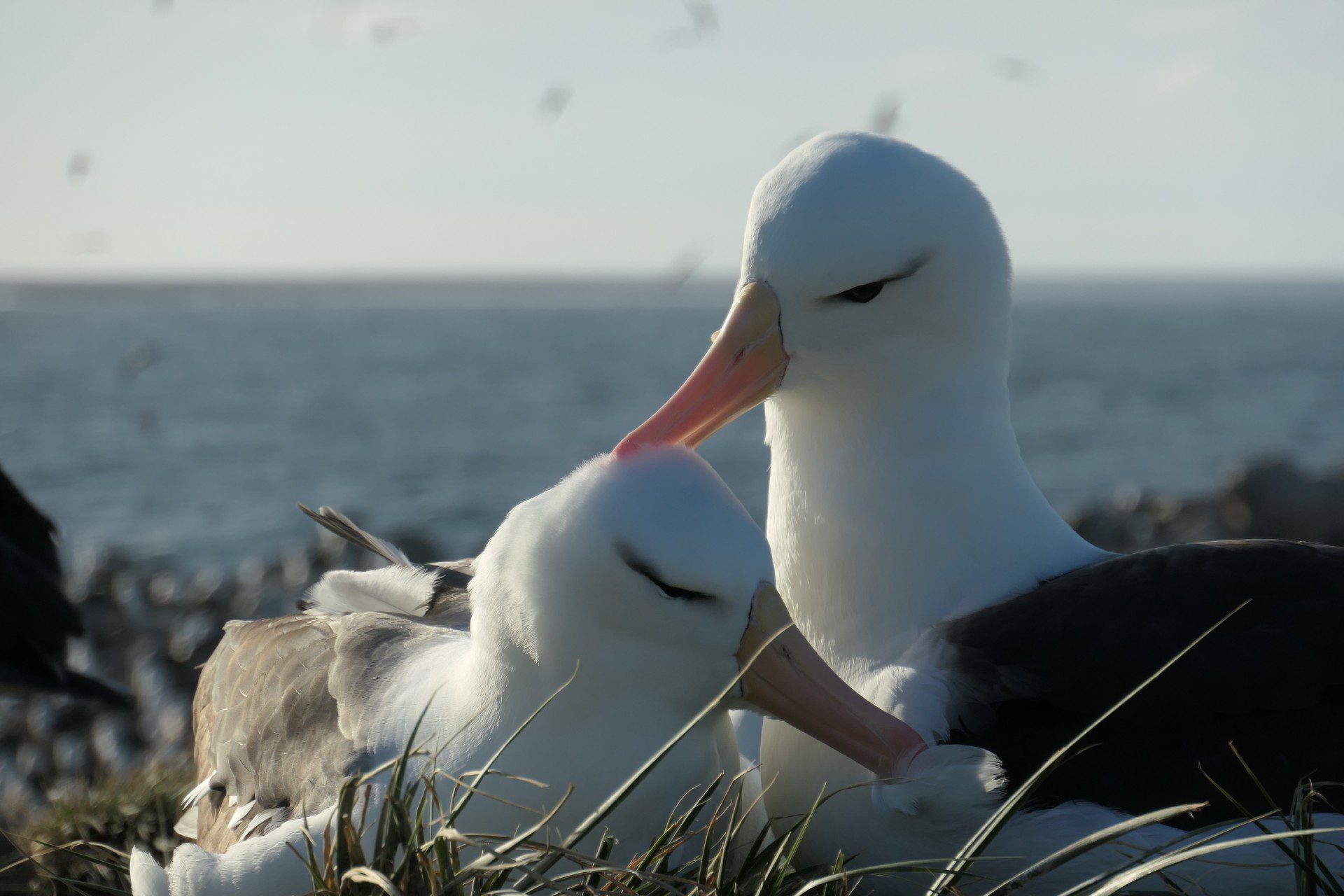
Albatross mates preening each other. Albatrosses are socially monogamous, forming long-term bonds and often remaining with the same partner for life. Image courtesy of Francesco Ventura.
During breeding, despite having to periodically return to their nest, albatrosses routinely travel thousands of miles to forage over large ocean areas in search of food. They do so by adopting a flight behavior known as “dynamic soaring,” through which albatrosses extract energy from the wind for their long journeys. Thanks to the small GPS and accelerometry loggers attached to the back of albatrosses with tape, the team will understand where the animals went in search for food over the ocean, and how much energy they used to go there.
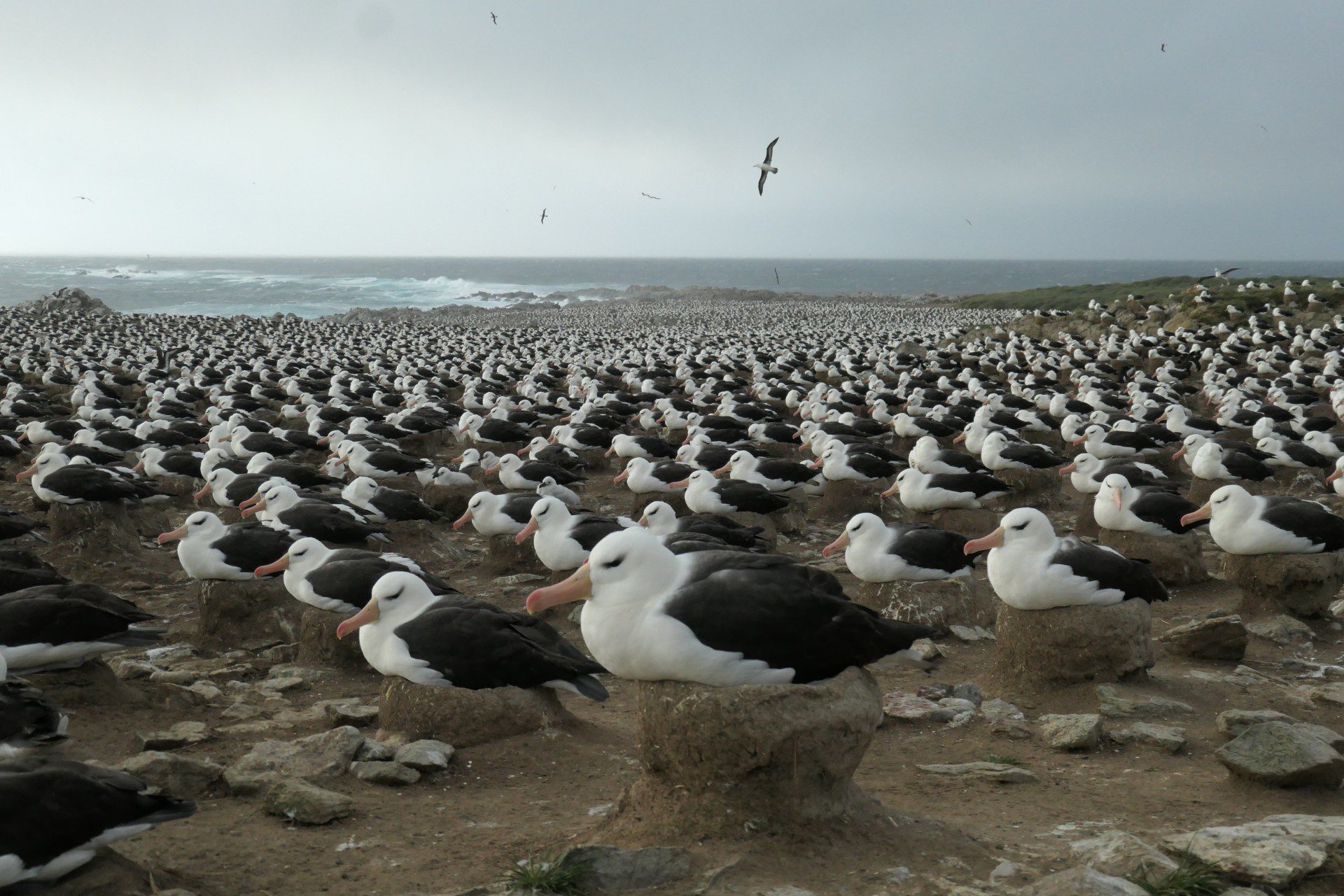
The breeding colony on Steeple Jason. As a storm approached, albatrosses sat tightly on their nests, all facing into the strong wind. Image courtesy of Francesco Ventura.
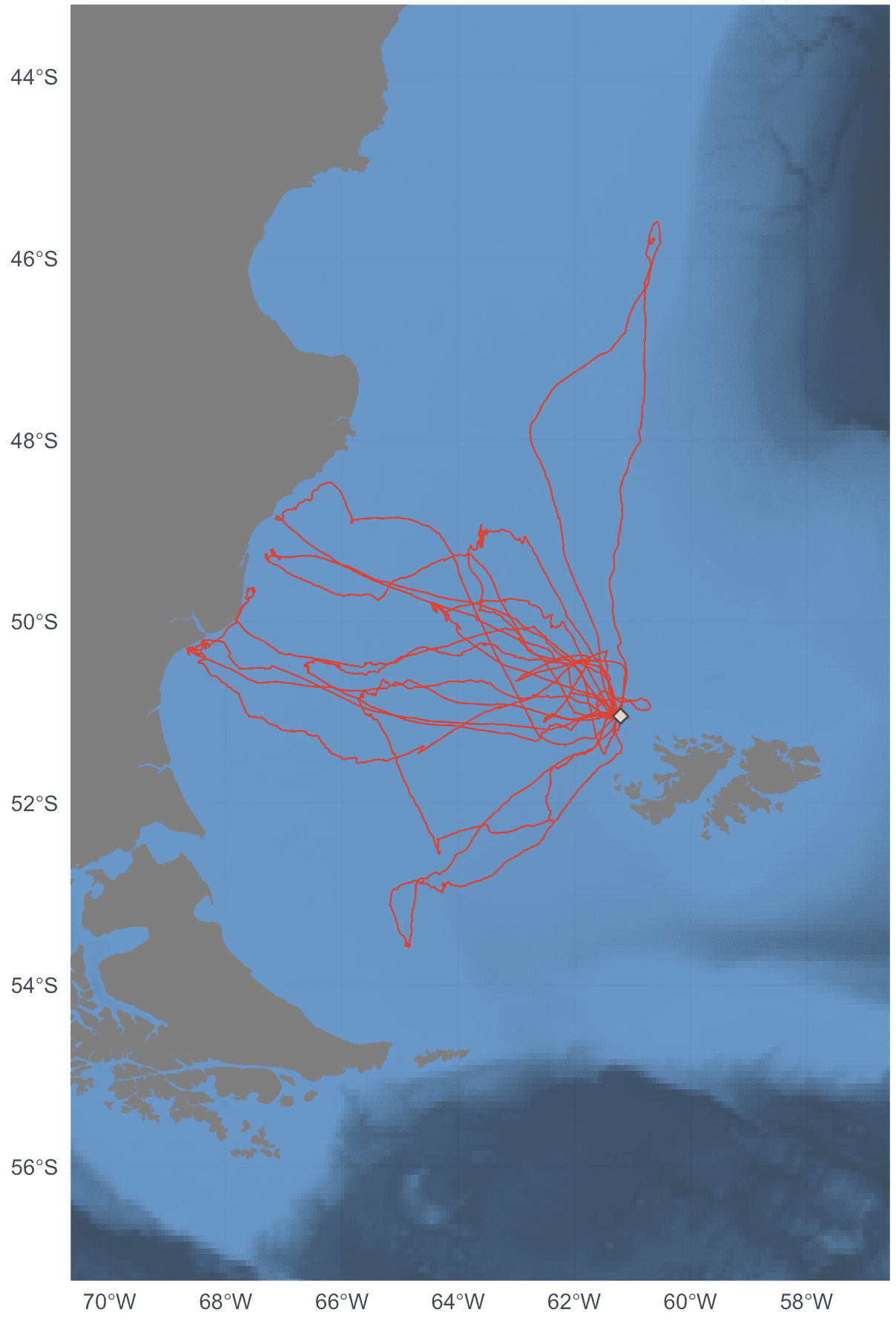
Map showing some of the foraging trips carried out by black-browed albatrosses tracked between December 2025 and January 2026. The data collected will enable the team to understand where the albatrosses traveled, the wind conditions they used, and how much energy they expended to reach their foraging areas. Map courtesy of Francesco Ventura.