WHOI/NASA Summer School in Sea Level Science
17-30 May 2026 • Woods Hole, Massachusetts
17-30 May 2026
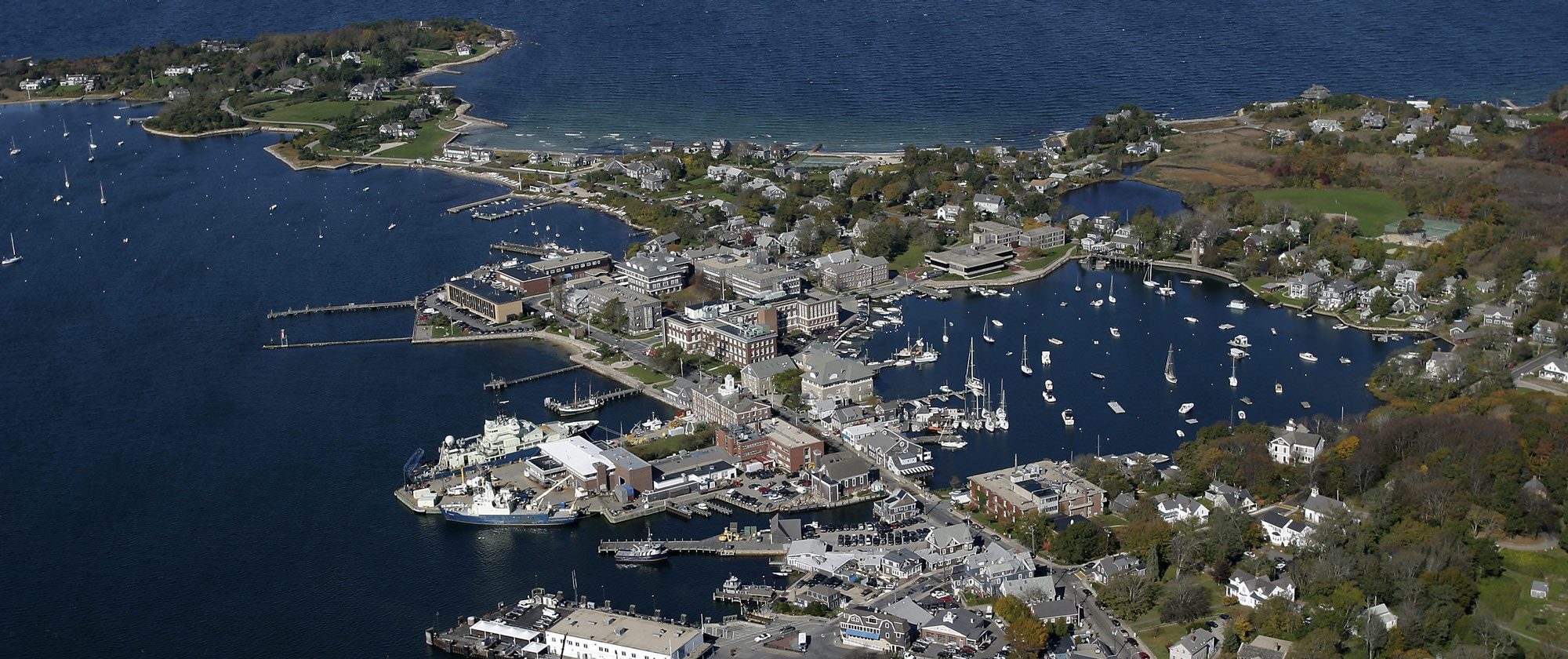
Marine Biological Laboratory, Woods Hole, Massachusetts
20 March 2026 DEADLINE
For graduate students, postdoctoral researchers, and other early-career scientists
Rationale
Sea level rise is one of the greatest planetary challenges we face. As rates continue to climb, and the impacts grow more costly, it becomes more important to generate and deliver accurate, physics-based future sea level rise forecasts and projections to support coastal resilience, planning, and decision making.
Generating future sea level estimates requires deep knowledge of Earth system processes that influence sea level changes across space and time. Sea level science is inherently interdisciplinary, drawing on oceanography, geodesy, hydrology, geophysics, cryospheric science, statistics, modeling, science communication, and coastal resilience. However, since there are no programs or curricula dedicated to this interdisciplinary field, it can be challenging for early career sea level researchers to receive the mentorship they need, to establish the necessary foundation of basic sea level science, and to form the collaborative relationships required to tackle urgent questions at the forefront of the field.
To address this challenge, we are organizing the 2026 Summer School in Sea Level Science (SSiSLS) for graduate students, postdoctoral researchers, and other early career scientists to be held at the Marine Biological Laboratory (MBL) in Woods Hole during 17-30 May 2026.
Goals, outcomes, and impact
The Summer School in Sea Level Science will bring together graduate students, postdoctoral researchers, and other early career sea level scientists alongside leading faculty and experts in theories, models, and observations of sea level change.
The main goals of the summer school will be to provide attendees with training in the physical mechanisms, drivers, and impacts of global and regional sea level changes as well as hands-on experience with both the global satellite and in situ observing and monitoring systems used for tracking sea level changes across space and time as well as major modeling frameworks used to understand and attribute past sea level changes and to forecast and project future sea level changes.
Format will feature traditional lectures on physical science, observing systems, and modeling tools; hands-on practical sessions where students will have opportunities to actively interact with faculty and put into practice principles learned during the lectures; and free and open project time, when the students will work with one another towards team capstone projects to be presented at the end of the summer school. This will create a forum for active discussion, collaboration, and shared learning by bringing together scientists across a range of disciplines for a dedicated period of time, enabling early career researchers to make peer connections, form mentoring relationships, and forge their own sense of scientific identity.
Application process
The application deadline was March 20, 2026. Applications are no longer being accepted.
Curriculum
The topics to be covered in the summer school may include (but not be limited to)
- Processes: large-scale ocean dynamics including the meridional overturning circulation, coastal ocean processes, the physics of glaciers and ice sheets including instability processes, groundwater processes, sea level-permafrost interactions, glacial isostatic adjustment, hydrological cycle, air-sea interaction, geodesy
- Modeling: Estimating the Circulation and Climate of the Ocean (ECCO), Ice-Sheet and Sea-level System Model/Sea-Level Projection System (ISSM-SLPS), Framework for Assessing Changes to Sea-Level (FACTS), Ice Sheet Model Intercomparison Project (ISMIP), Coupled Model Intercomparison Project (CMIP)
- Observations: tide gauges, satellite altimetry (Sentinel-6A, SWOT, ICESat-2), satellite gravimetry (GRACE/GRACE-FO), Argo, interferometric synthetic aperture radar (InSAR), ocean observing systems, global navigation satellite system (GNSS)/global positioning system (GPS)
- Applications: extremes, compound events, high-tide flooding, ecosystem impacts, interactions with stakeholders and practitioners
Summer School Faculty—
Week 1 (17-23 May):
- Roger Creel, Texas A&M University
- Beata Csatho, University at Buffalo
- Sönke Dangendorf, Tulane University
- Denis Felikson, Goddard Space Flight Center
- Ian Fenty, Jet Propulsion Laboratory
- Geoffrey (Jake) Gebbie, Woods Hole Oceanographic Institution
- Julia Guimond, Woods Hole Oceanographic Institution
- Praveen Kumar, Rutgers University
- Isabela Le Bras, Woods Hole Oceanographic Institution
- Christopher Piecuch, Woods Hole Oceanographic Institution
- Jessica Rich, Virginia Tech
- Angelica Rodriguez, Jet Propulsion Laboratory
- Michael Willis, Virginia Tech
Week 2 (24-30 May):
- Surendra Adhikari, Jet Propulsion Laboratory
- Sloan Coats, University of Hawaii
- Sophie Coulson, University of New Hampshire
- Benjamin Hamlington, Jet Propulsion Laboratory
- Shannon Hulst, WHOI Sea Grant
- Felix Landerer, Jet Propulsion Laboratory
- Steven Lentz, Woods Hole Oceanographic Institution
- Sophie Nowicki, University at Buffalo
- Christopher Piecuch, Woods Hole Oceanographic Institution
- Elizabeth Ultee, Goddard Space Flight Center
- Catherine Walker, Woods Hole Oceanographic Institution
For a more concrete sense of the school, please see the draft agenda here, which is subject to change.
Costs
Other than travel (see below), there is no cost to attend the summer school. If selected from the applicant pool, all costs of room and board are covered by the summer school sponsors. All participants will stay in Marine Biological Laboratory housing—the Swope Building, which sits directly on iconic Eel Pond in Woods Hole (https://www.mbl.edu/about/campus-facilities-resources/housing/housing-buildings/swope-building).
Financial support (for travel)
Note that travel to and from the venue is not covered and has to be organized and paid for by each participant. Students who seek financial support can apply as part of the application process. Please note that financial support is limited.
Travel
If traveling by plane, Woods Hole is ~2 hours by bus or car from Logan International Airport in Boston, which flies direct to and from many locations within the United States. If traveling by train, plan to travel to Boston’s South Station and to catch a bus from there. We recommend booking bus travel through Plymouth&Brockton (www.p-b.com) or Peter Pan (www.peterpanbus.com), as both have routes that regularly travel between Logan Airport, South Station, and Woods Hole during the day. (Both bus lines have services later into the evening that travel to Sagamore Beach on the Cape Cod Canal; if arriving late and taking the bus to Sagamore Beach, please coordinate with the meeting organizers to arrange for travel from Sagamore to Woods Hole.) Note that the Woods Hole bus terminal is ~5 minutes’ walk from the summer school venue in Woods Hole village. Less conveniently, Woods Hole is also ~1.5 hours’ drive from T.F. Green Airport in Providence, Rhode Island, but there are no regular bus routes to Woods Hole.
Organization and Selection
Applicant Selection Committee:
- Denis Felikson, Goddard Space Flight Center
- Julia Guimond, Woods Hole Oceanographic Institution
- Sophie Nowicki, University at Buffalo
- Christopher Piecuch, Woods Hole Oceanographic Institution
Local Organizing Committee:
- Cora Hersh, Woods Hole Oceanographic Institution
- Kelly McKeon, Woods Hole Oceanographic Institution
- Christopher Piecuch, Woods Hole Oceanographic Institution
17-30 May 2026
Marine Biological Laboratory, Woods Hole, Massachusetts
20 March 2026 DEADLINE
For graduate students, postdoctoral researchers, and other early-career scientists
SPONSORED BY