
Scientists outline case for next-generation ocean iron fertilization field trials
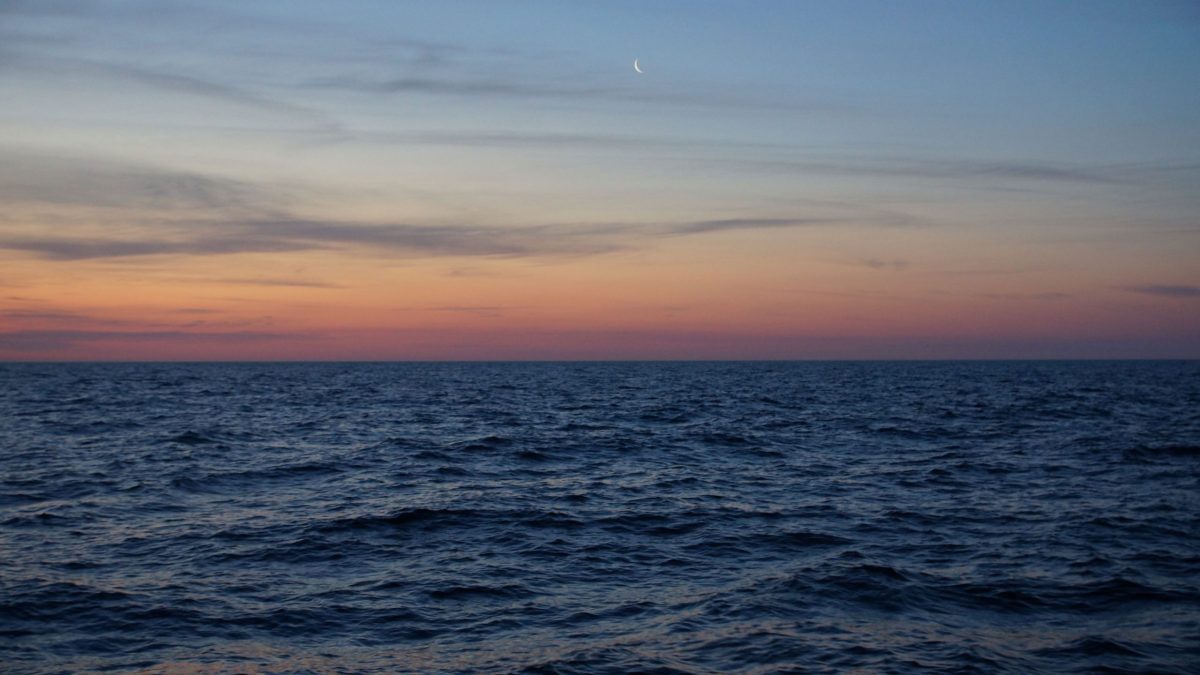 (Photo by: Rachel Mann, ©Woods Hole Oceanographic Institution)
 February 5, 2026
Woods Hole, Mass. (Feb. 5, 2026) — A team of ocean and climate researchers is calling for a new generation of carefully designed ocean iron fertilization (OIF) field trials to determine whether this marine carbon dioxide removal (mCDR) method can safely and effectively leverage a natural ocean process to pull the greenhouse gas carbon dioxide (CO2) out of the atmosphere. The paper, which is published in Dialogues on Climate Change, argues that larger, longer studies with rigorous monitoring and clear “go/no-go” safeguards are needed to accurately assess OIF as a potential long-term CO2 storage solution to help mitigate human-induced climate change.
“The only possible way to solve the climate crisis is to both cut emissions and pursue the widest possible range of science-based carbon dioxide removal strategies,” said lead author Ken Buesseler, Executive Director of the ExOIS program and Emeritus Research Scholar at the Woods Hole Oceanographic Institution (WHOI).
In their peer-reviewed article, the authors note that past OIF field studies found that relatively tiny additions of iron in some parts of the ocean can stimulate the growth of small, plant-like organisms known as phytoplankton that live in the surface ocean. These organisms use sunlight and carbon dioxide dissolved in seawater to grow and multiply, which in turn pulls more carbon dioxide out of the atmosphere into the surface ocean in the process. However, those early experiments were not designed to assess the efficacy, durability, and feasibility of OIF, nor did they specifically evaluate the broader ecological and biogeochemical impacts of large-scale additions of iron.
The next generation of trials would need to be substantially larger and longer than prior studies to capture not only phytoplankton bloom development, but also the process of bloom decay, the fate of newly produced carbon, and any potential ecosystem impacts. The authors propose experiments lasting more than three to six months and spanning an area of about 1,000 square kilometers, with an explicit requirement to document a return to natural conditions after iron additions end as a core “go/no-go” criterion.
A key objective they identify is to quantify the amount of additional carbon exported to depths beyond what would occur without intervention, largely through natural ocean processes. This “additionality,” as well as the durability, or length of time that carbon would be removed from the surface ocean, are key quantities that they argue need to be the focus of monitoring, reporting, and verification (MRV) systems. In addition, they point to the need for environmental MRV, or eMRV systems, tracking ecological and biogeochemical responses to OIF.
For an initial site, the authors point to the Gulf of Alaska in the Northeast Pacific as a promising location based on the region’s low-iron conditions, the availability of decades of research in the area at Ocean Station Papa, evidence of natural iron-driven blooms in the past, and physical characteristics that may help keep the iron-fertilized patch from dispersing too rapidly.
“While the Southern Ocean has the largest carbon removal potential, international governance and logistical hurdles make working there far riskier for a first large-scale experiment, as well as more expensive. Demonstrating MRV/eMRV at scale and with credible controls would be more promising in the NE Pacific”, said Margaret Leinen, professor and oceanographer at Scripps Institution of Oceanography of the University of California – San Diego.
The field trial concept includes creating and tracking a large patch (on the order of 30–50 kilometers per side) of iron-fertilized surface ocean using established iron delivery methods, paired with modern ocean observation tools, surface drifters, autonomous vehicles, satellite-based sensors, and ship-based measurements of key oceanographic variables. The authors also outline predefined “off-ramps” designed to halt iron release or further experimentation if key environmental thresholds are approached or crossed. Although they were not seen in prior studies, potential concerns include deoxygenation, production of other greenhouse gases, or the onset of a harmful algal bloom. In addition, they emphasize the critical importance of engaging key coastal communities and rightsholder groups near the region of iron fertilization, and consider concerns and input as part of the experimental design.
“In addition to a rigorous science plan, it is important to see that community outreach and engagement are considered early in the process, with impact assessment plans laid out in an open and transparent manner following international protocols for OIF research on the high seas,” said Brad Warren, CEO of Global Ocean Health.
###
About Woods Hole Oceanographic Institution
Woods Hole Oceanographic Institution (WHOI) is a private, non-profit organization on Cape Cod, Massachusetts, dedicated to marine research, engineering, and higher education. Established in 1930, its mission is to understand the ocean and its interactions with the Earth as a whole, and to communicate an understanding of the ocean’s role in the changing global environment. WHOI’s pioneering discoveries stem from an ideal combination of science and engineering—one that has made it one of the most trusted and technically advanced leaders in fundamental and applied ocean research and exploration anywhere. WHOI is known for its multidisciplinary approach, superior ship operations, and unparalleled deep-sea robotics capabilities. We play a leading role in ocean observation and operate the most extensive suite
of ocean data-gathering platforms in the world. Top scientists, engineers, and students collaborate on more than 800 concurrent projects worldwide—both above and below the waves—pushing the boundaries of knowledge to inform people and policies for a healthier planet. Learn more at whoi.edu
About ExOIS
Exploring Ocean Iron Solutions is a non-profit consortium comprised of international experts that seeks to foster partnerships for scientific research with a view that global problems require global solutions and wide participation. ExOIS is hosted by the Woods Hole Oceanographic Institution, a 501(c) (3) non-profit, and is not participating in carbon markets by selling carbon credits. For more information, visit oceaniron.org.
Authors
Ken O. Buesseler1, Daniele Bianchi2, Wil Burns3, Fei Chai4, Jay T. Cullen5, Margaret Estapa6, Makio Honda7, Seth John8, David M. Karl9, Christine Klaas10, Dou Li2, Zihua Liu1, Dennis J. McGillicuddy Jr1, Paul J. Morris1, Jun Nishioka11, Melissa M. Omand12, Kilaparti Ramakrishna1, Katherine M. Roche1, David A. Siegel13, Sarah R. Smith14, Benjamin S. Twining15, Mark Wells16, Angelicque White9, Peng Xiu4, Joo-Eun Yoon17
Affiliations
1 Woods Hole Oceanographic Institution, Woods Hole, MA, United States
2 Department of Atmospheric and Oceanic Sciences, University of California, Los Angeles, Los Angeles, CA, United States
3 Institute for Responsible Carbon Removal, American University, Washington DC, United States
4 State Key Laboratory of Marine Environmental Science & College of Ocean and Earth Sciences, Xiamen University, Xiamen, China
5 School of Earth and Ocean Sciences, University of Victoria, Victoria, British Columbia, Canada
6 School of Marine Sciences, Darling Marine Center, University of Maine, Walpole, ME, United States
7 Japan Agency for Marine-Earth Science and Technology, Yokosuka, Kanagawa, Japan
8 Department of Earth Sciences, University of Southern California, Los Angeles, CA, United States
9 Center for Microbial Oceanography: Research and Education, University of Hawai‘i at Mānoa, Honolulu, HI, United States
10 Alfred Wegener Institute, Helmholtz Centre for Polar and Marine Research, Bremerhaven, Germany
11 Pan-Okhotsk Research Center, Institute of Low Temperature Science, Hokkaido University, Hokkaido, Japan
12 Graduate School of Oceanography, University of Rhode Island, Narragansett, Rhode Island, United States
13 Earth Research Institute/Department of Geography, University of California Santa Barbara, Santa Barbara, CA, United States
14 Moss Landing Marine Laboratories, San José State University, Moss Landing, CA, United States
15 Bigelow Laboratory for Ocean Sciences, East Boothbay, ME, United States
16 School of Marine Sciences, University of Maine, Orono, ME, United States
17 Center of Remote Sensing & GIS, Korea Polar Research Institute, Incheon, Republic of Korea