
News Releases
Scientists Aboard R/V Atlantis Discover Deep-Sea Coral Reefs in the Galápagos
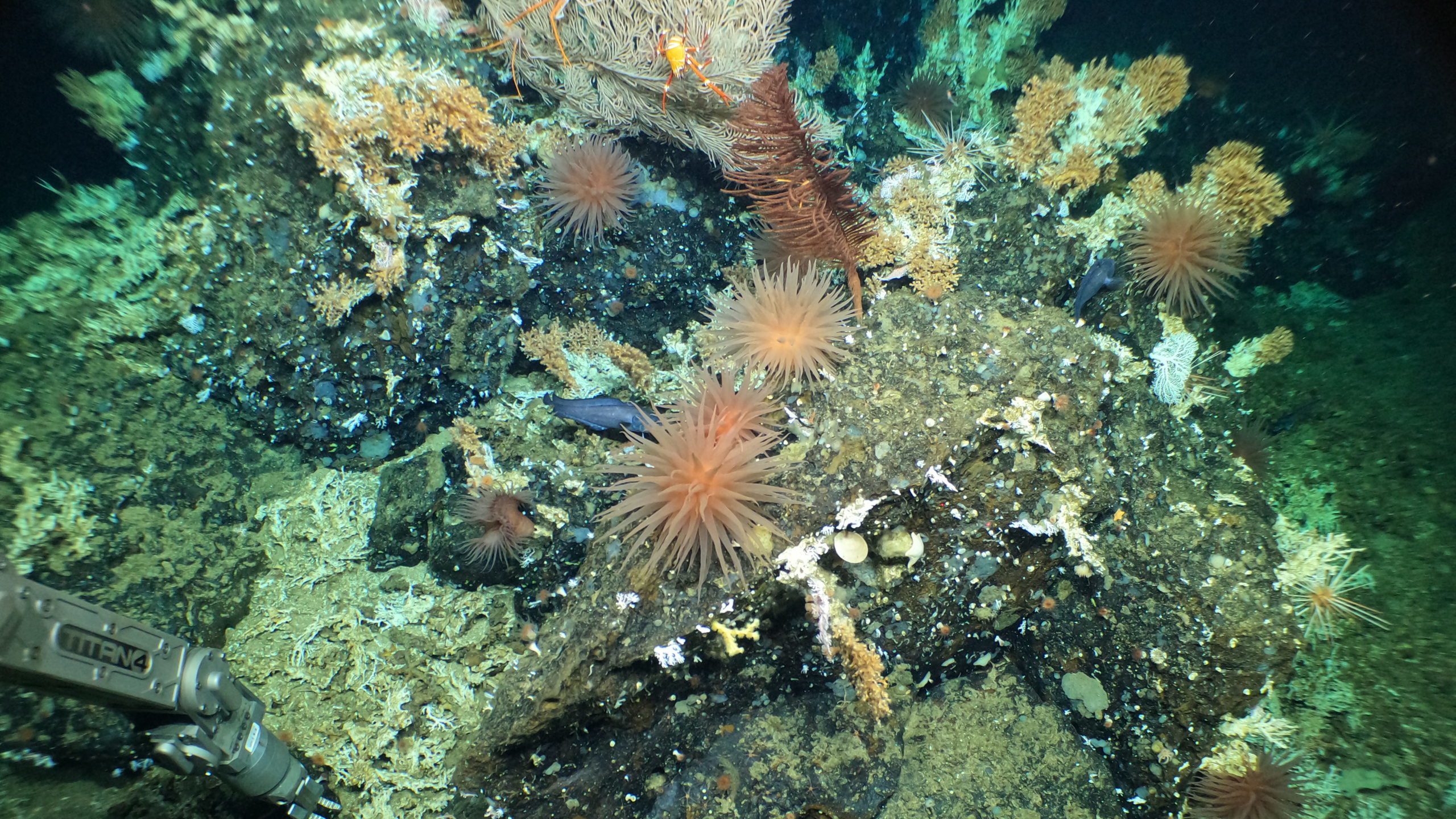
Observations using the newly upgraded human-occupied vehicle Alvin are the first of a deep-water coral reef in the Galápagos Marine Reserve.
The reefs are located at depths between 400-600 m, atop previously unmapped seamounts.
Panel to Discuss Deep-Sea Mining at AAAS Meeting
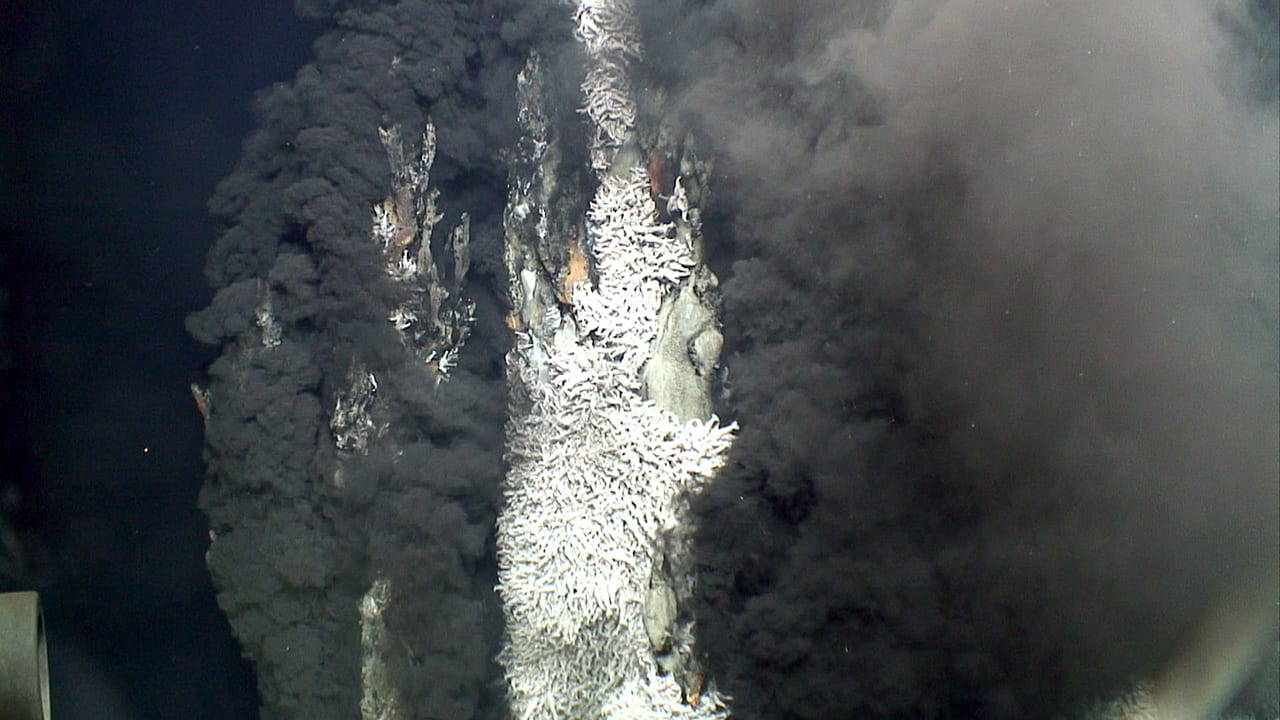
Home to an immense diversity of marine life, the deep ocean also contains valuable minerals with metals such as nickel, copper, cobalt, manganese, zinc, and gold, and rare-earth elements used in electronic technology like smart phones and medical imaging machines. As demand for these resources increases and supplies on land decrease, commercial mining operators are looking to the deep ocean as the next frontier for mining.
Read MoreSwarming Red Crabs Documented on Video
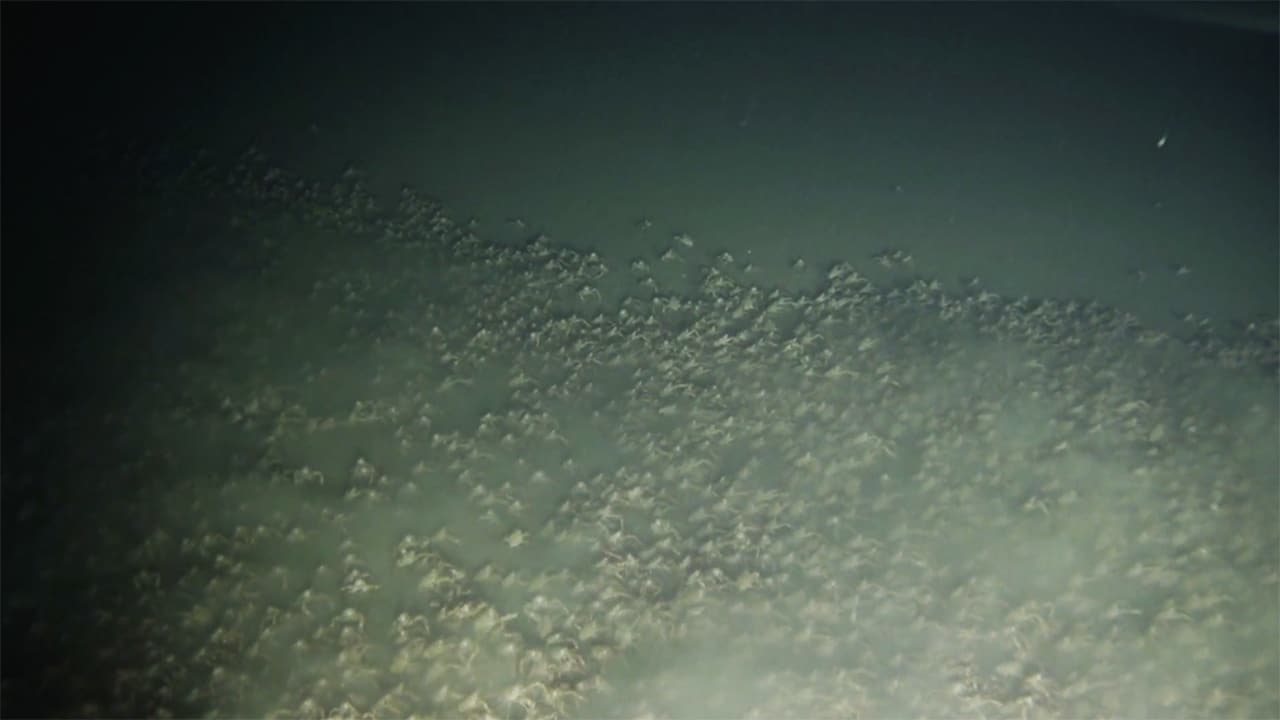
A research team studying biodiversity at the Hannibal Bank Seamount off the coast of Panama has captured unique video of thousands of red crabs swarming in low-oxygen waters just above the seafloor.
Read MoreGalapagos Expedition Reveals Unknown Seamounts, New Species
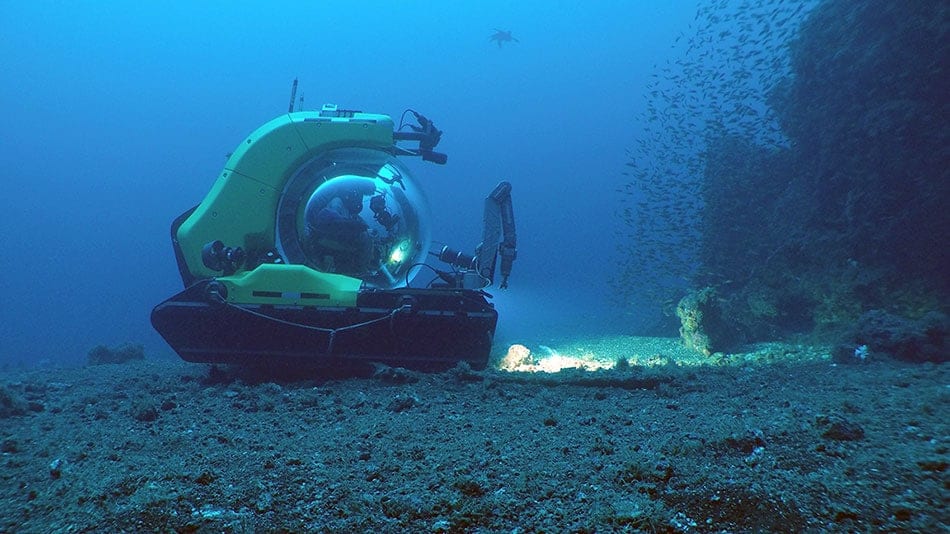
During a three-week expedition in August, an international team led by the Woods Hole Oceanographic Institution (WHOI), in partnership with the Charles Darwin Foundation for the Galápagos Islands and in close collaboration with the Galápagos National Park Directorate, conducted the first scientific expedition to map and characterize the seamounts on the Galápagos platform and the diverse marine life that these underwater mountains support.
Read MoreWHOI contributes to special seamount issue of Oceanography magazine
Woods Hole Oceanographic Institution (WHOI) biologist Timothy M. Shank is among five guest editors of a newly published special edition of the research journal Oceanography on the oceans? seamounts, submerged isolated mountains in the sea. Shank is also a contributor to the special Oceanography edition.
Read MoreCold Water Corals Conference to be Held in Woods Hole
On October 24, 2008, scientists from North America and Europe will meet at the Woods Hole Oceanographic Institution (WHOI) to develop the first coherent plan for studying and conserving cold-water…
Read MoreTrawling Leaves Lasting Scars on Deep Ocean Coral Habitat
More than a decade after fishing stopped near the Corner Rise Seamounts in the North Atlantic, researchers have found that the seafloor still has patches that are almost completely devoid…
Read MoreScientists Explore New England Seamounts for Clues to Climate Change
Scientists are exploring the New England Seamounts, a chain of extinct, undersea volcanoes about 500 miles off the east coast of North America, searching for clues to climate change in deep sea corals. The public can join the expedition via the web at http://www.divediscover.whoi.edu.
Read MoreScientists Find Active Underwater Volcano East of Samoa
Marine geologists from the Woods Hole Oceanographic Institution (WHOI) and the Scripps Institution of Oceanography (SIO) have confirmed the existence of an active underwater volcano east of Samoa. The volcano, recently named VailuluA?u by local students, is located about 28 miles east of TaA?u Island and rises more than 16,400 feet from the seafloor to within 2,000 feet of the ocean surface. The scientists found billowing “smoggy” water in the summit and extending out for more than five miles.
Read MoreActive 14,000 Foot Submarine Volcano Found near Samoa in South Pacific
An active volcano rising more than 4,300 meters (over 14,100 feet) from the ocean floor in the Samoa Islands has been discovered by a team of U.S. scientists, providing more evidence to the scientific debate over the formation of hot spot island chains. The volcano, more than 35 kilometers (about 22 miles) across at its base, rises to within 600 meters (about 2,000 feet) of the surface; its peak is marked by a circular caldera some two kilometers (over 1 mile) across and 400 meters (1,300 feet) deep. It is similar in size to Mt. Whitney in California, the largest mountain in the contiguous 48 U.S. states.
Read More