
News Releases
New Deep-Sea Worm Discovered at Methane Seep Off Costa Rica Named after Alvin Pilot Bruce Strickrott
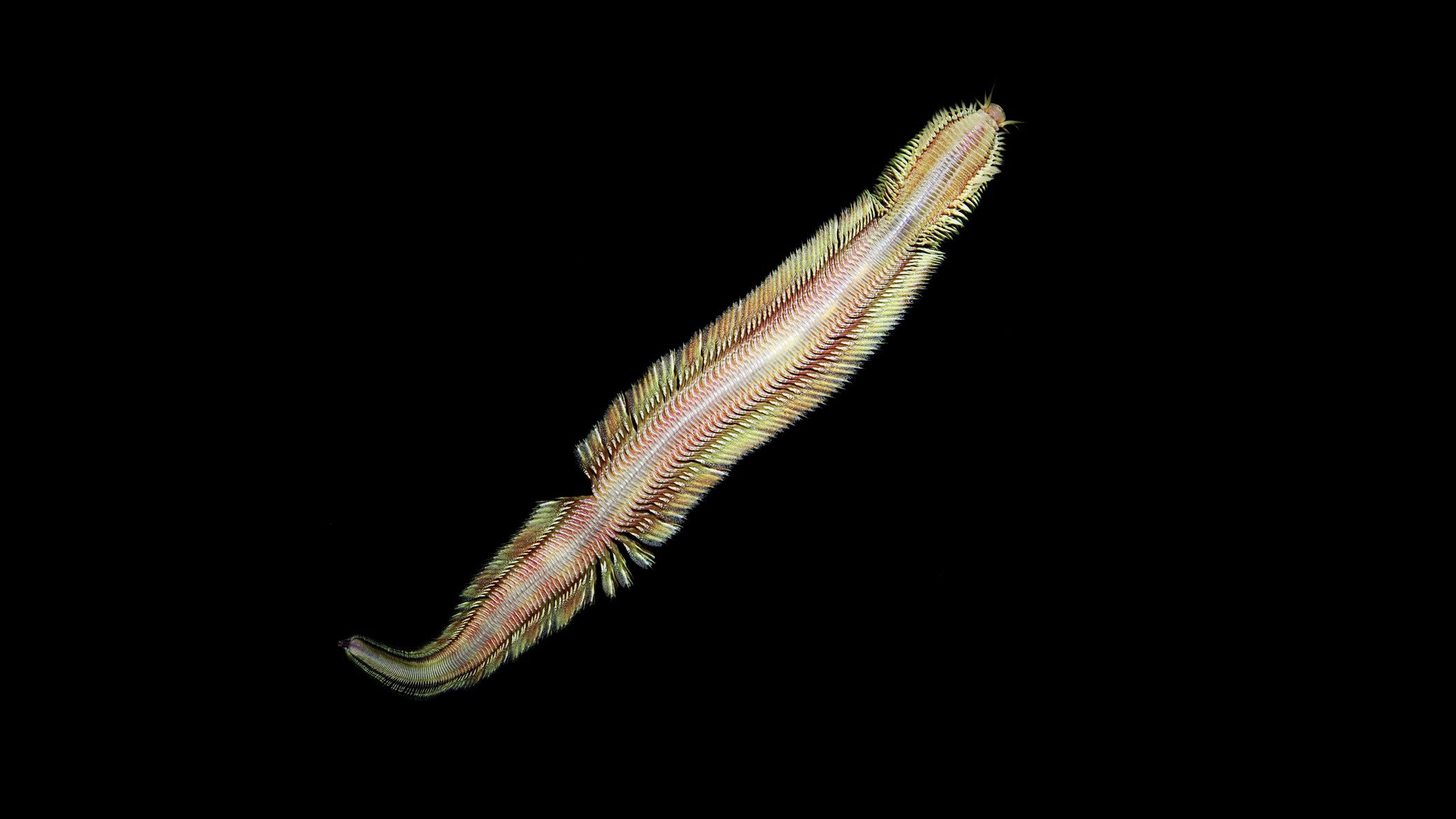
The creature raises the number of new species found by scientists studying these seemingly inhospitable ecosystems to 48 Woods Hole, Mass. — Woods Hole Oceanographic Institution (WHOI), along with…
Read MoreArctic Hydrothermal Vent Site Could Help in Search for Extraterrestrial Life
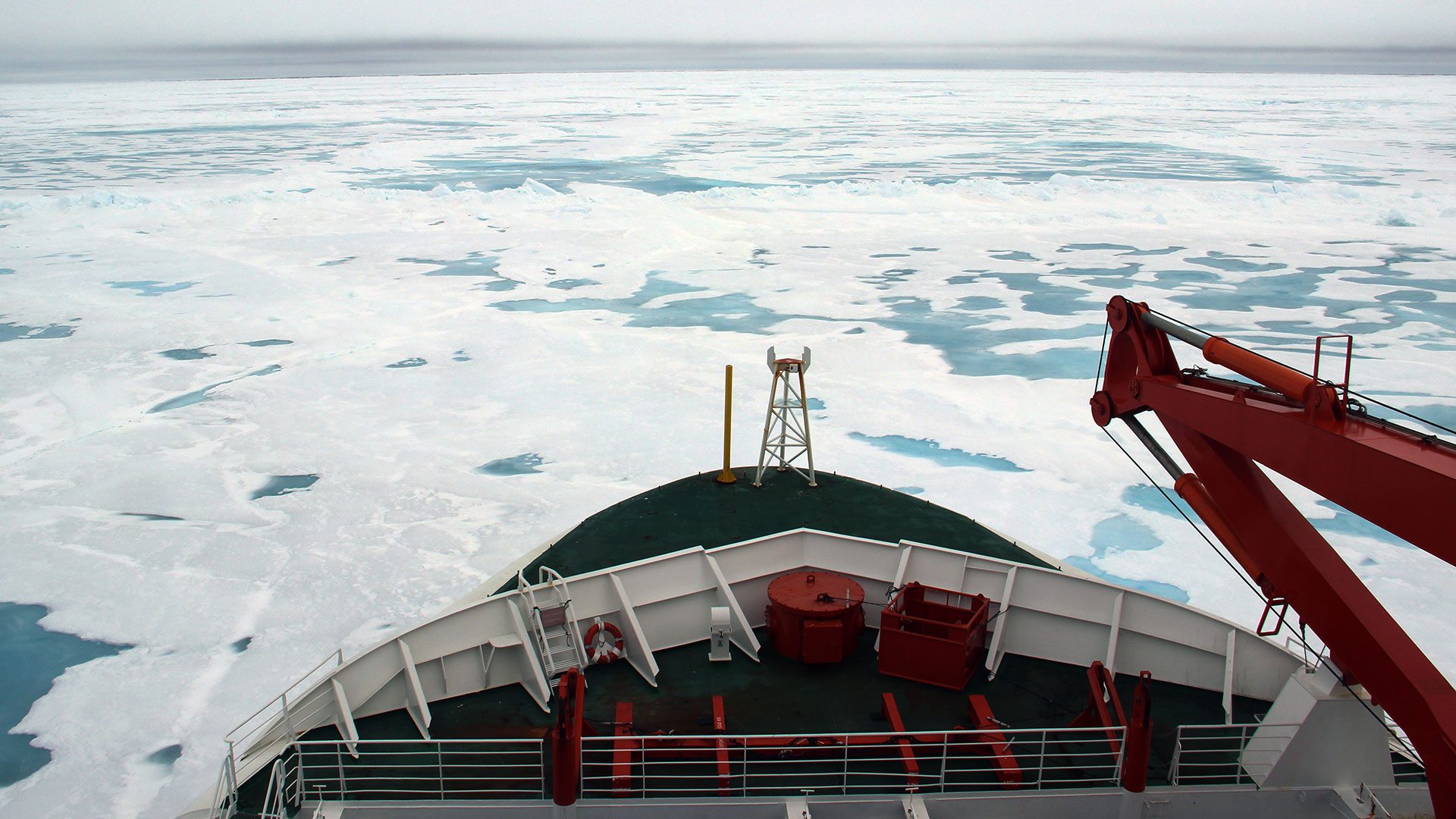
When scientists discovered a hydrothermal vent site in the Arctic Ocean’s Aurora hydrothermal system in 2014, they did not immediately realize just how exciting their discovery was.
Read MoreDeep-Sea Images Give New View of Arctic Ocean Methane Seeps
Working with colleagues from the Centre for Arctic Gas Hydrate, Environment and Climate (CAGE) in Norway, Dan Fornari from Woods Hole Oceanographic Institution’s (WHOI) Geology & Geophysics Department collected nearly 30,000 high definition images at known methane release sites in the Arctic Ocean north of Norway. The detailed images will provide new insights into the most remote areas of natural methane releases in the world.
Read MoreNew Museum Exhibit Explores Deep Ocean Environment
The Woods Hole Oceanographic Institution (WHOI) in collaboration with the Ocean Explorium in New Bedford, Mass., has created new digital content for museum-based spherical display systems that brings high-definition images and video of dynamic, deep ocean ecosystems to the public.
Read MoreOnline Science Expedition Brings Deep Sea Vents to the Computer Screen
Scientists and engineers using advanced technology and a unique robotic vehicle to study the deep sea will also be using their computers to interact with students, teachers, and the public about the research they are conducting.
Read MoreWHOI Researchers, Collaborators Receive $1.4 Million to Study Life in Ocean’s Greatest Depths
Scientists from the Woods Hole Oceanographic Institution (WHOI), University of Hawaii, Whitman College and international colleagues will conduct the first systematic study of life in the deepest marine habitat on…
Read MoreNSF Announces Major Awards for Biodiversity Research, WHOI Scientists Selected
A WHOI-led project is one of several major awards recently announced by the National Science Foundation’s (NSF) Dimensions in Biodiversity research program. The multi-disciplinary, international collaborative effort will advance our understanding of deep-sea hydrothermal vent microbial communities and their global impact.
Read MoreExpedition to Mid-Cayman Rise Identifies Unusual Variety of Deep Sea Vents
deep-sea hydrothermal vents Mid-Cayman Rise Woods Hole Oceanographic Institution (WHOI) Proceedings of the National Academy of Sciences NASA-funded search extreme environments origins and evolution life
Read MoreLong-Distance Larvae Speed to New Undersea Vent Homes
Working in a rare, ?natural seafloor laboratory? of hydrothermal vents that had just been rocked by a volcanic eruption, scientists from the Woods Hole Oceanographic Institution (WHOI) and other institutions have discovered what they believe is an undersea superhighway carrying tiny life forms unprecedented distances to inhabit the post-eruption site.
Read MoreSeafloor bacteria are multi-tasking with the carbon cycle
Scientists have long known that microorganisms can use one of two different methods to convert carbon dioxide into a form that living things can use for energy. What they didn’t…
Read MoreNew Technology for New Exploration of Hydrothermal Vents
Advances in undersea imaging systems, the development of new vehicles and instruments, and improved seafloor mapping capabilities have enabled scientists to explore areas of the deep sea in unprecedented detail. …
Read MoreDiving to the Rosebud Vents – Galápagos Rift
In 2002, researchers diving in the submersible Alvin returned to the Galápagos Rift, a mid-ocean ridge about 250 miles from the Galápagos Islands in the eastern Pacific Ocean where hydrothermal…
Read MoreMajor Cruise to Galapagos Rift Marks 25th Anniversary of Deep Sea Hydrothermal Vent Discovery
In 1977, scientists made a stunning discovery on the bottom of the Pacific Ocean that forever changed our understanding of our planet and life on it. They discovered the first deep-sea hydrothermal vents, andA?to their complete surpriseA?a lush community of exotic life thriving around them.
Read MoreColonizing The Deep Sea: WHOI Scientist Helps Find Answers to Hydrothermal Vent Puzzle
For nearly 25 years, scientists have wondered how giant red-tipped tubeworms and other exotic marine life found at hydrothermal vents on the deep sea floor get from place to place and how long their larva survive in a cold, eternally dark place. Now Woods Hole Oceanographic Institution Biologist Lauren Mullineaux and colleagues have helped answer those questions.
Read MoreScientists Release First Images of Hydrothermal Vents Found in the Indian Ocean
Scientists exploring a remote area of the central Indian Ocean seafloor two and one-half miles deep have found animals that look like fuzzy snowballs and chimney-like structures two stories tall spewing super-heated water full of toxic metals. The findings, released on the Woods Hole Oceanographic Institution’s Dive and Discover Web site (http://www.divediscover.whoi.edu/) were made at the start of a month-long expedition funded by the National Science Foundation. Images and data from the seafloor may provide critical answers to long standing questions about the diversity of life in the deep sea, how animals move from place to place and how the ocean crust is changing. A Japanese team is reported to have discovered hydrothermal vents in the Indian Ocean last fall, but little information has been publicly available.
Read More