
by Caroline Ummenhofer
The Woods Hole Sea Grant Educator workshop, Fishing for Data: Real world applications for oceanographic observations, took place on January 23, 2026, in Woods Hole, MA. It was targeted at educators in STEM fields for grades 6-12 and focused on ecosystem dynamics and how biotic and abiotic factors intersect. Educators learned how scientists and fishermen are working together to document and understand the rapidly changing ocean conditions off the Northeast U.S. and its impacts on fisheries. The Educator workshop related to a collaborative project “Tracking local ocean conditions through a new partnership with the fishing community to support sustainable Cape Cod fisheries on a changing New England shelf” (PIs: Caroline Ummenhofer, Glen Gawarkiewicz, and Svenja Ryan) between PO and Cape Cod Commercial Fishermen’s Alliance (CCCFA) and included presenters from both, as well as NOAA Fisheries. Presentations and hands-on tutorials were led by Caroline Ummenhofer and Finn Wimberly in PO. In addition to learning about various oceanographic concepts, educators participated in hands-on tank experiments to explore ocean stratification, were given an opportunity for exploration of the Cape Cod Ocean Watch dashboard that visualizes various datasets, and examples were given how educators and students can use the data collected by the fishing community to engage with oceanographic concepts.
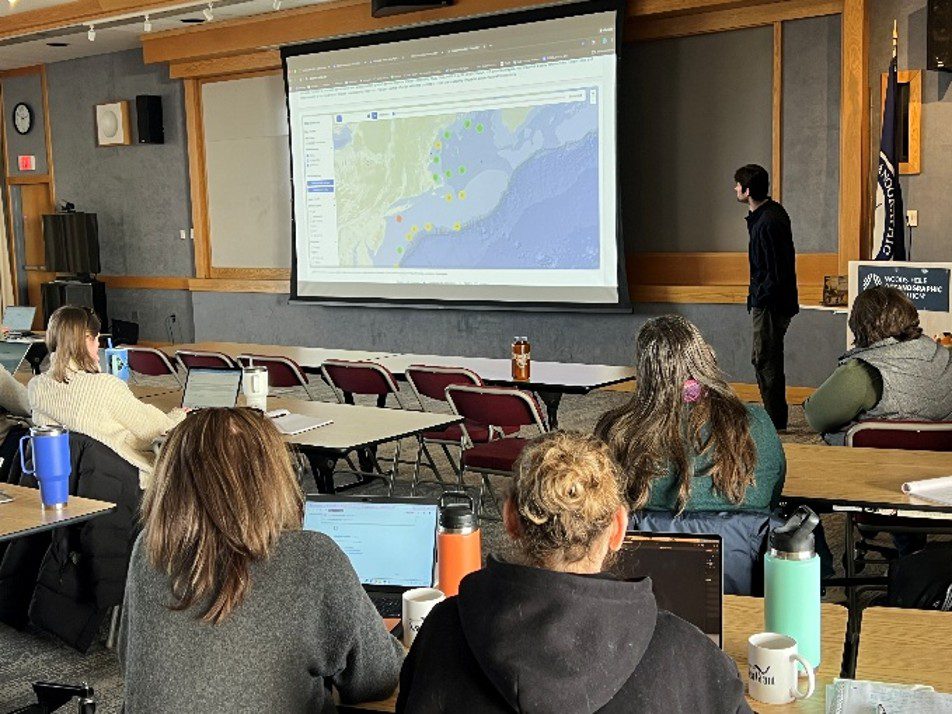
Finn Wimberly presents the Cape Cod Ocean Watch dashboard to ~25 STEM educators from across New England at the Woods Hole Sea Grant Educator workshop. Photo credit: Caroline Ummenhofer (WHOI).
During the afternoon, the educators were given a tour of Clark South and David Center, led by Jessica Kozik. During the tour, they had the opportunity to learn more about oceanographic instrumentation and technological developments first-hand by visiting the Argo/Float labs and UNOLS Wire Pool at WHOI, as well as a tour of the R/V Neil Armstrong in Woods Hole. They heard about the Argo program from Bill Dullea, gliders from Patrick Deane, and the UNOLS WirePool and mooring operations from Andrea Harvey and Barbara Callahan.
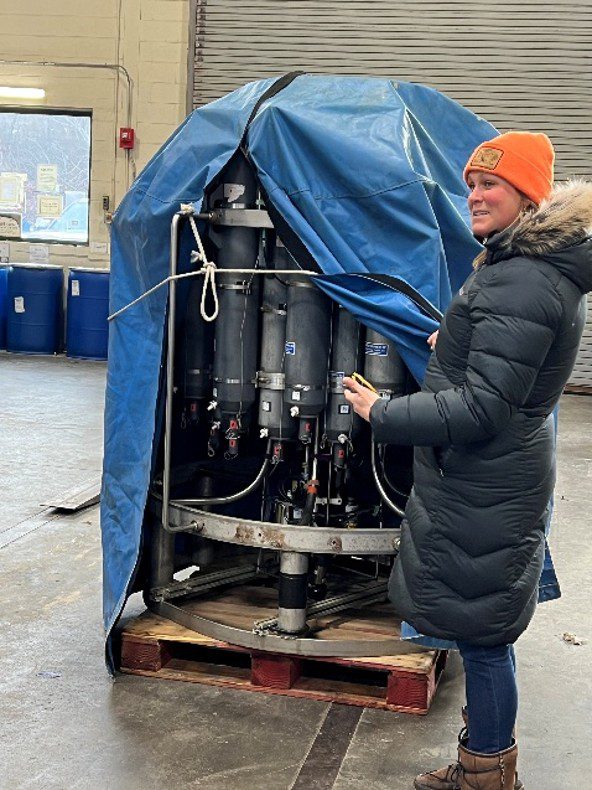
Jessica Kozik leads the tour of labs and facilities for the educators, here introducing a CTD in the Clark South high bay area. Photo credit: Caroline Ummenhofer (WHOI).
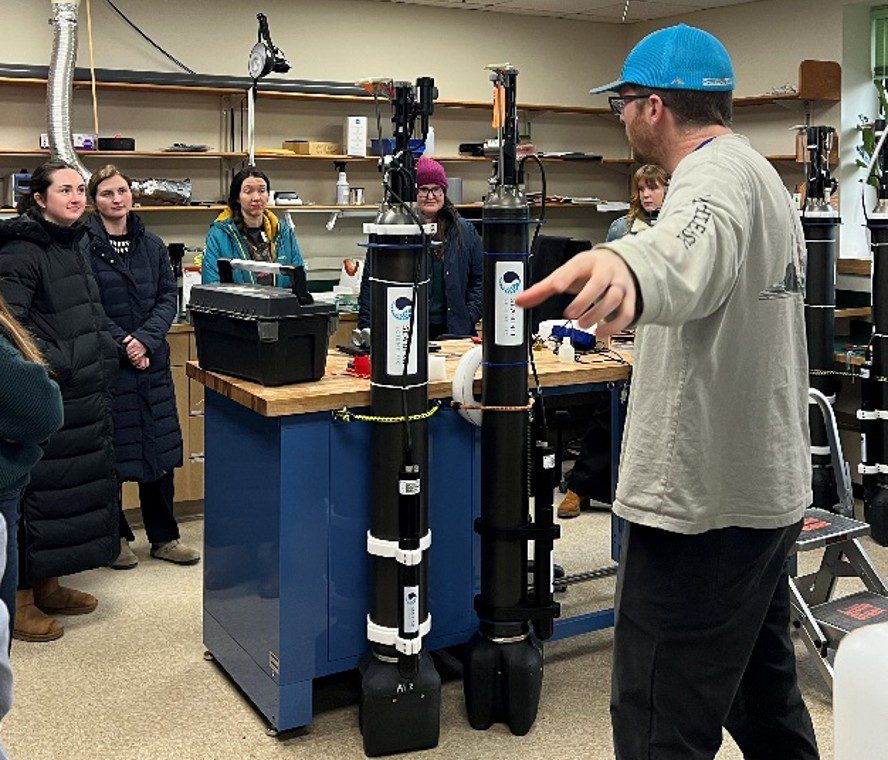
Bill Dullea explains the Argo program to the educators, pointing out the suite of new floats to be deployed. Photo credit: Caroline Ummenhofer (WHOI).
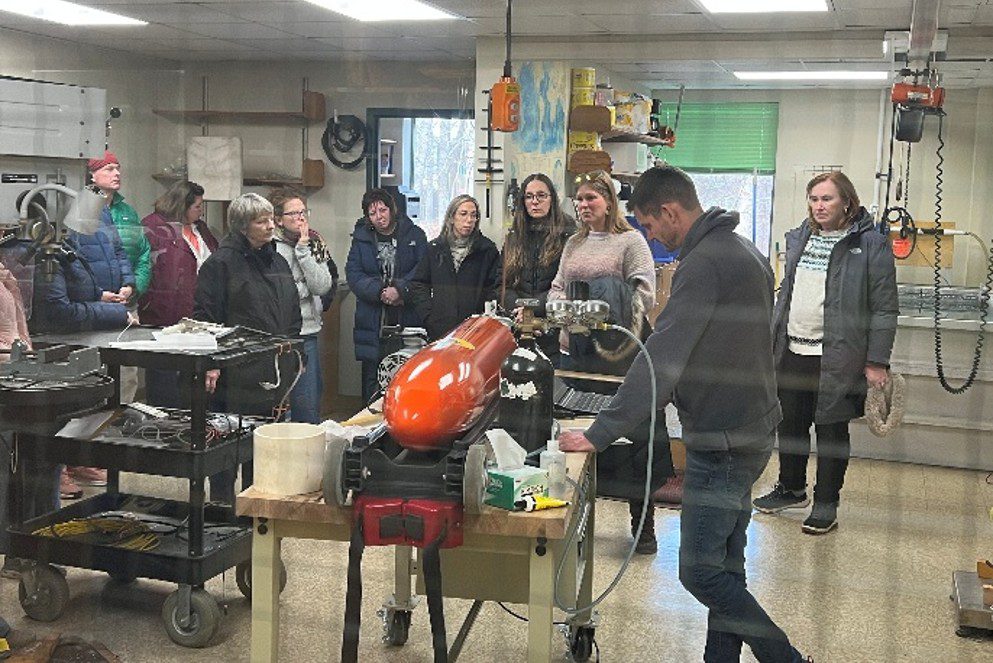
Patrick Deane showcases various gliders to the STEM educators. Photo credit: Caroline Ummenhofer (WHOI).
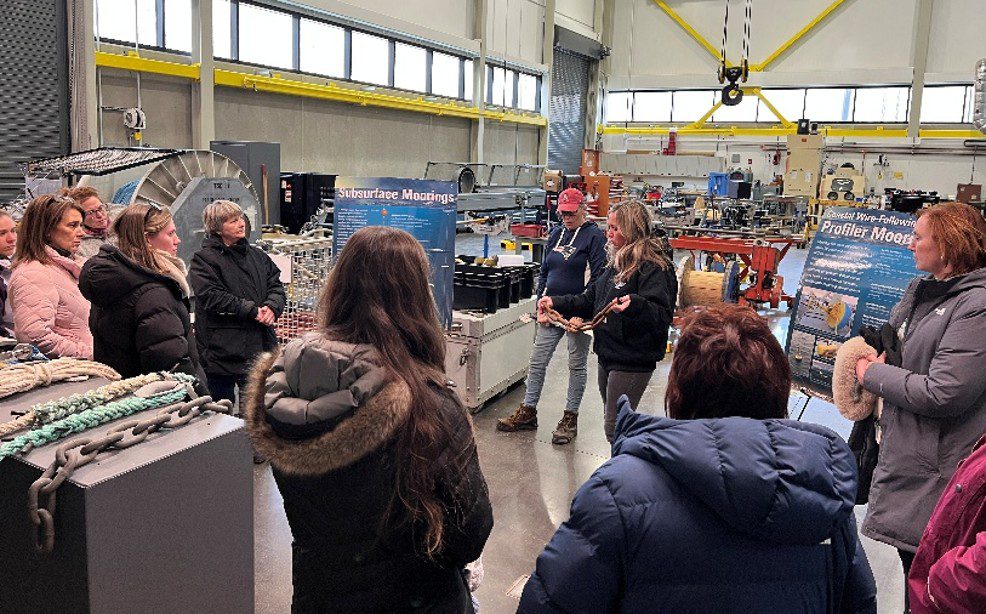
STEM educators learn about the UNOLS WirePool and mooring operations from Andrea Harvey and Barbara Callahan. Photo credit: Caroline Ummenhofer (WHOI).
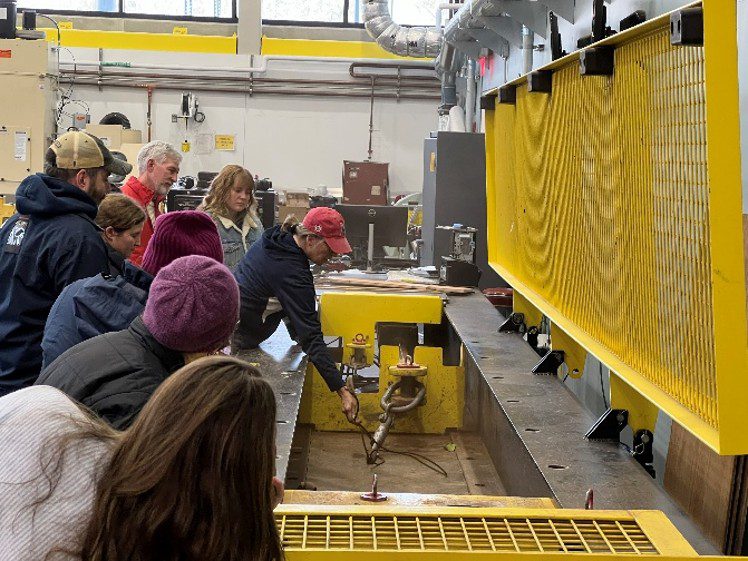
Barbara Callahan demonstrates how mooring cables are evaluated by undergoing a break test in the David Center. Photo credit: Caroline Ummenhofer (WHOI).