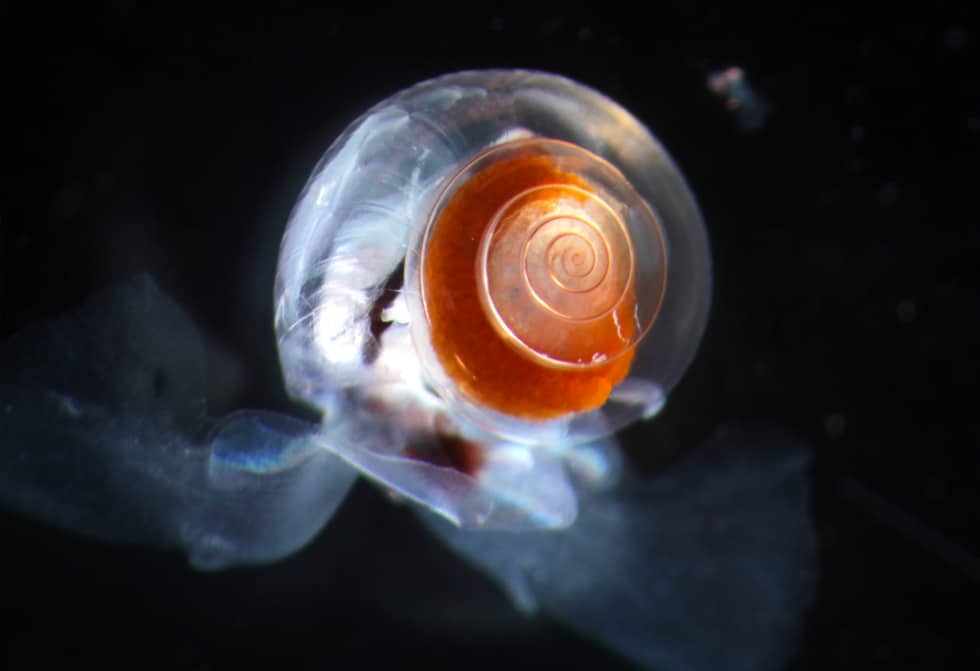
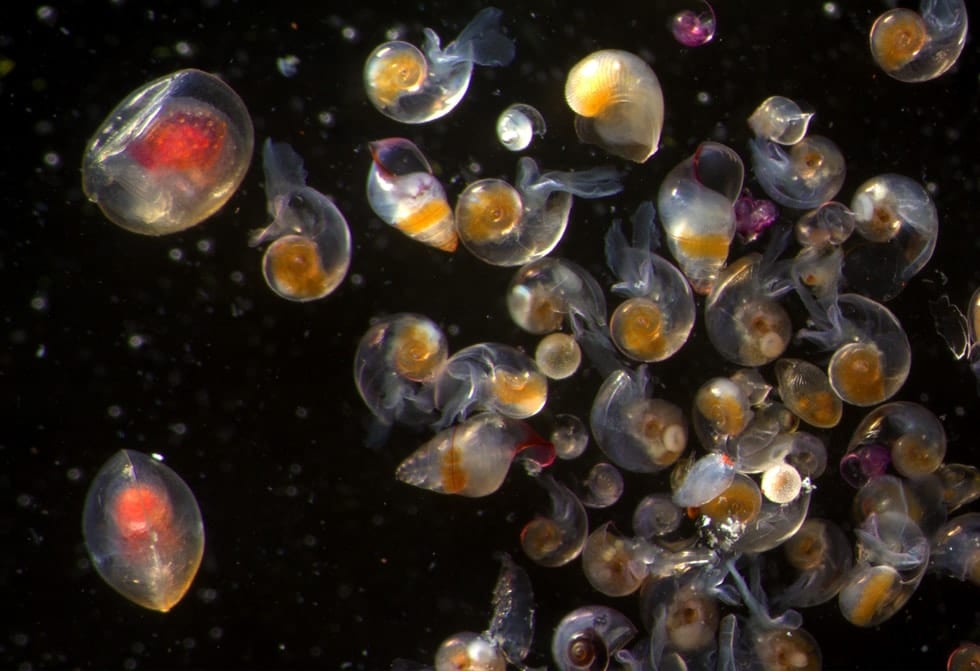
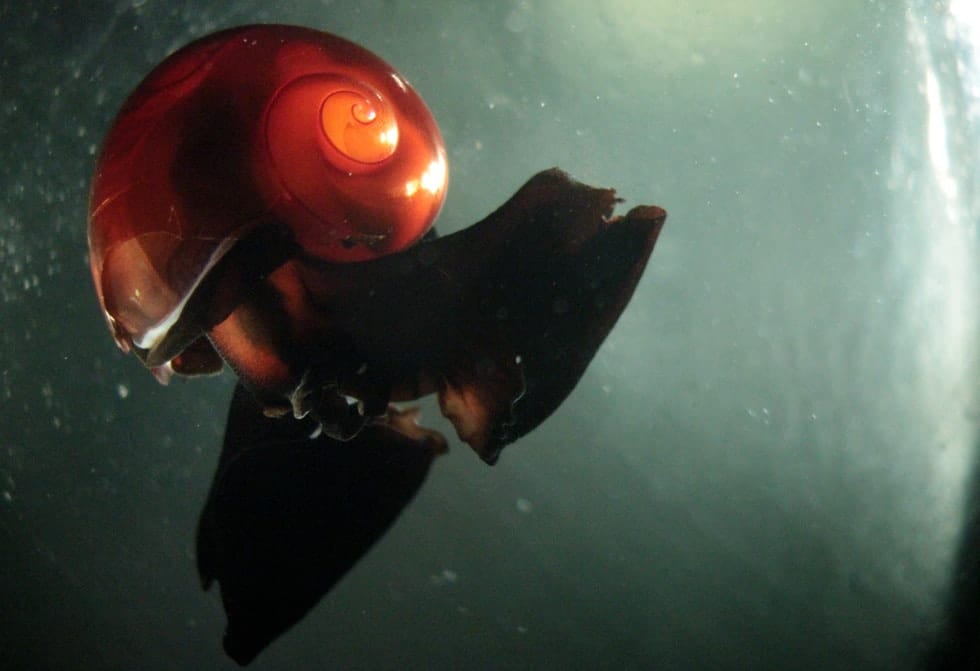
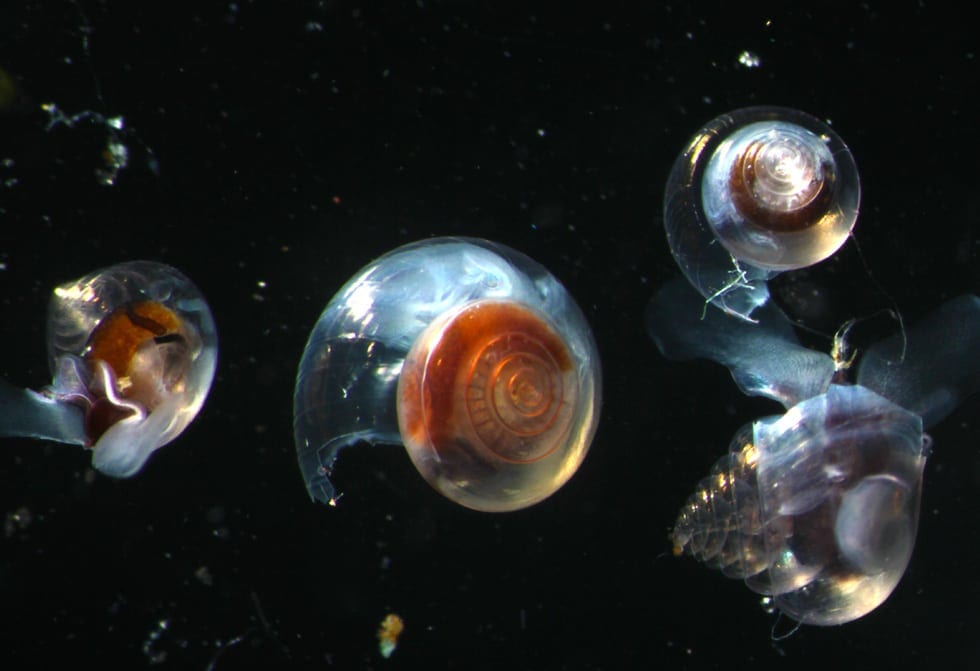
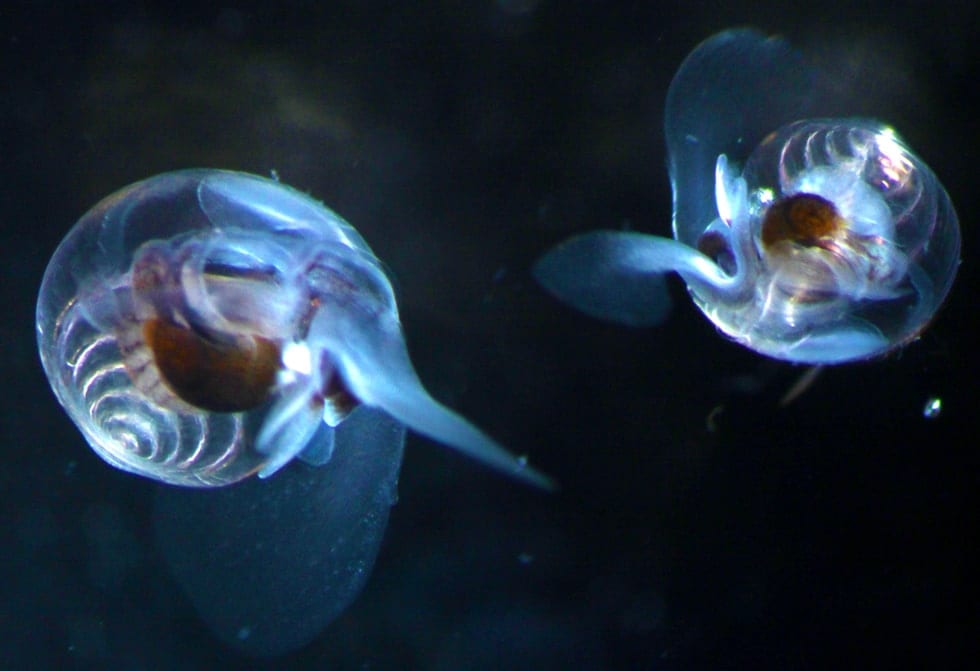
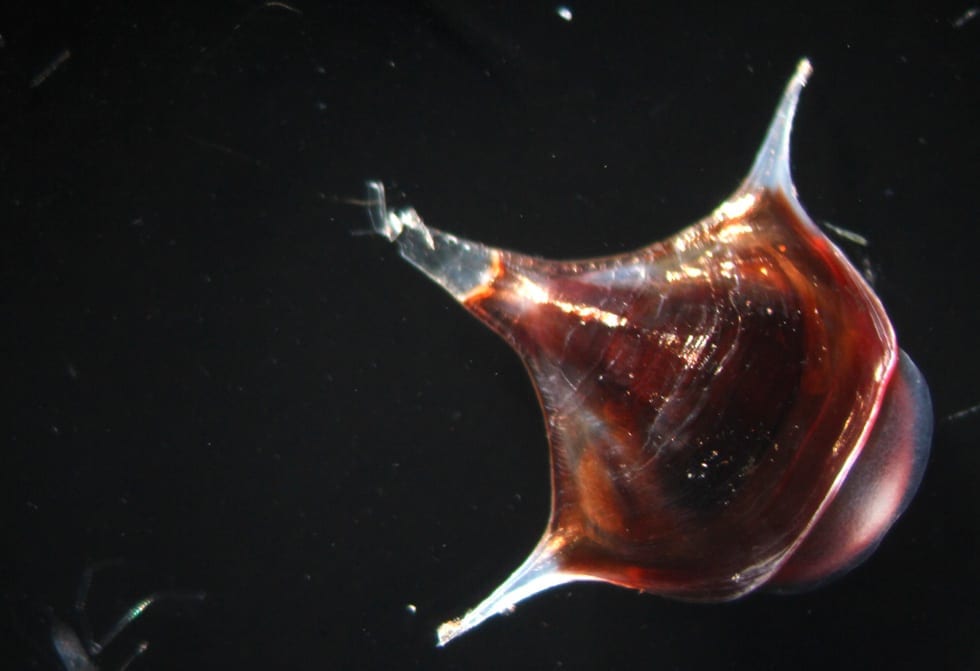
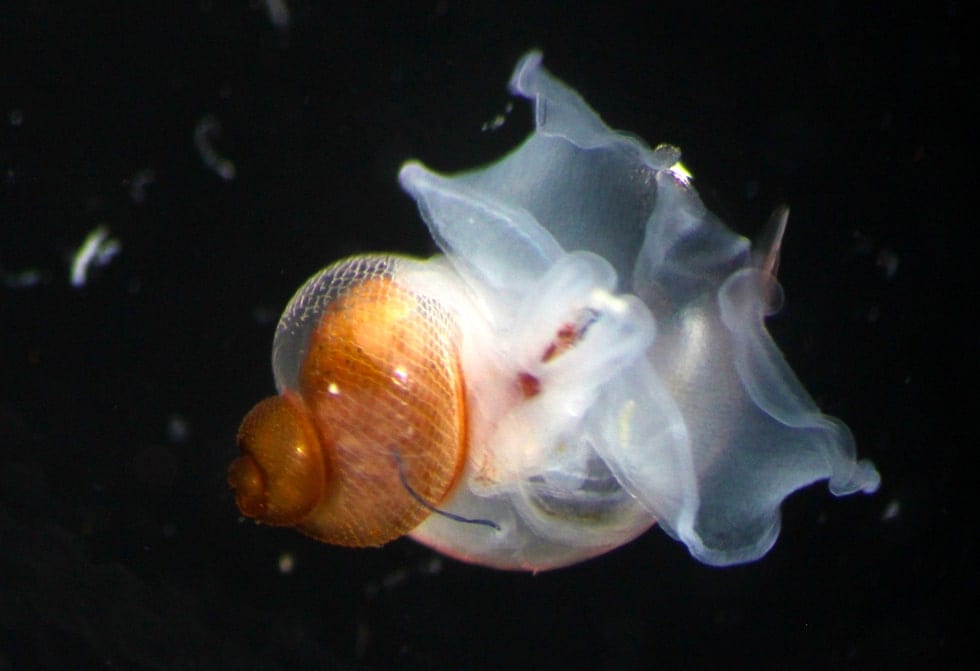
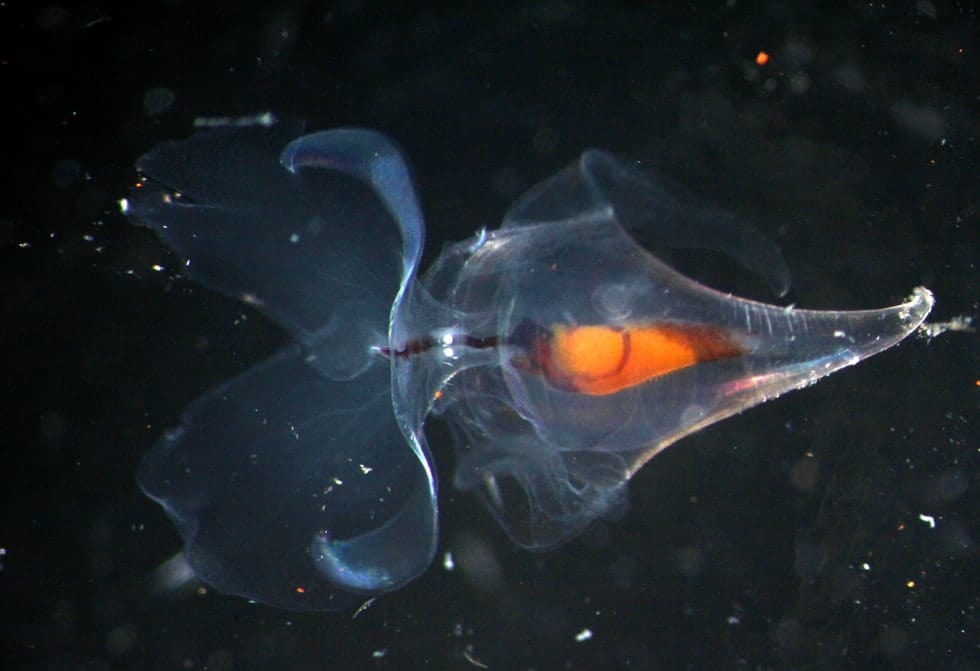
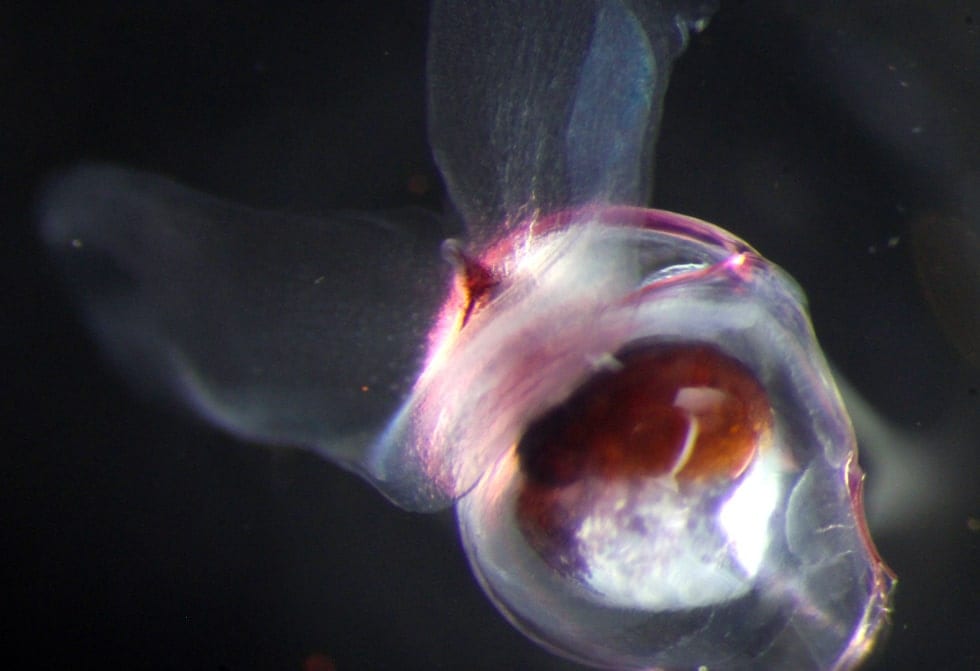
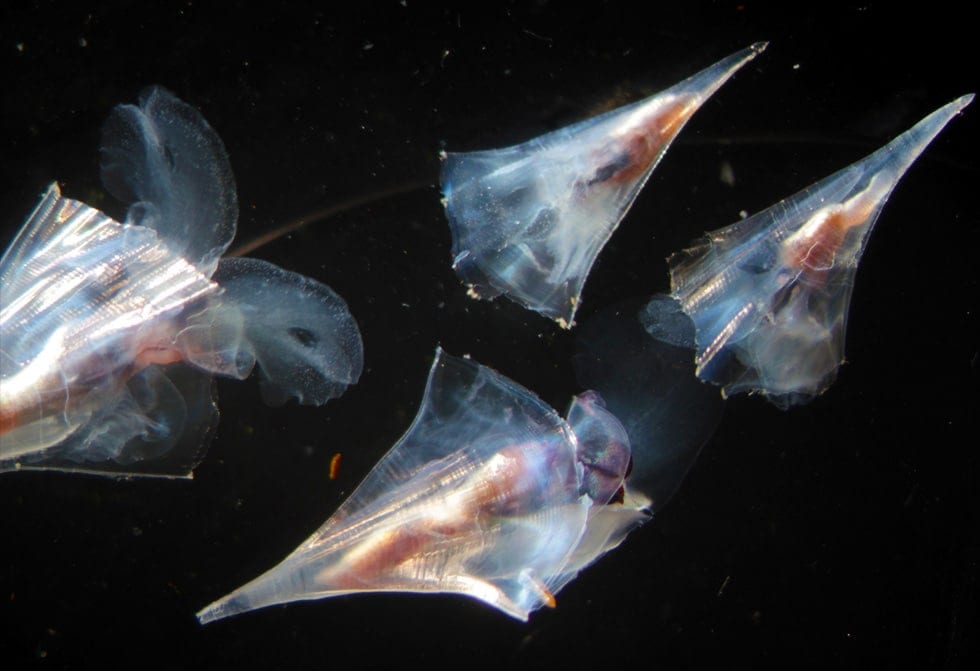
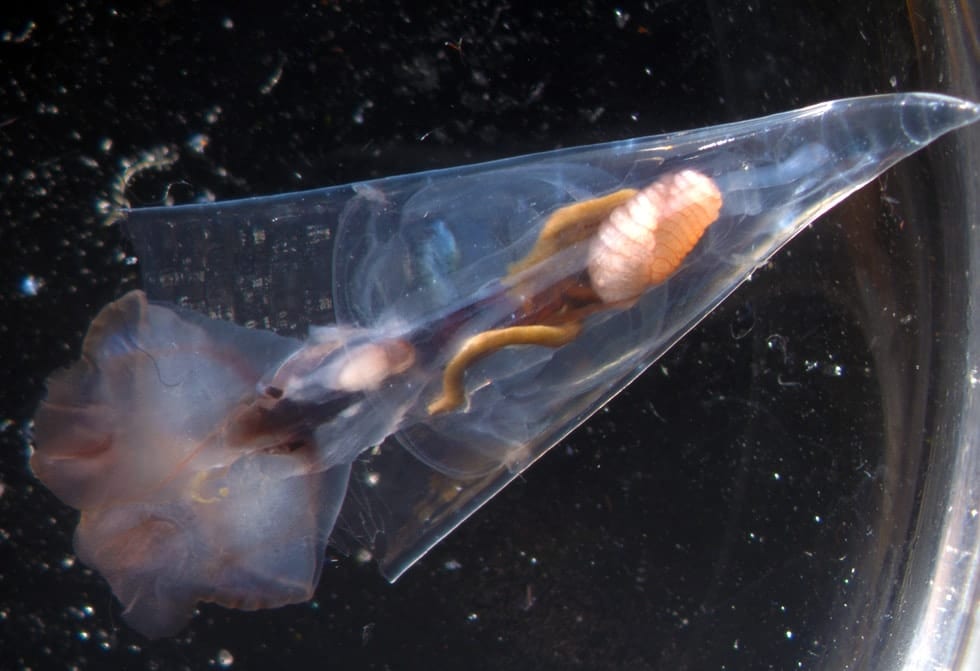
 These marine snails are also called “sea butterflies” because of their winglike swimming appendages. Masses of pteropods drift with currents in the open ocean, where they provide food for fish and whales. Like garden snails, their earthbound relatives, pteropods build calcium carbonate shells. But pteropods’ thin, fragile shells may be vulnerable to the ocean’s changing chemistry. At WHOI, biologists Gareth Lawson and Amy Maas have championed pteropods, investigating how these beautiful creatures and key links in the food chain will be affected by ocean acidification, comparing pteropods in ocean regions with normal acidity and regions already showing acidification. Lawson also collaborated with sculptor Cornelia Kavanaugh, whose sculptures of pteropods were recently seen at the Smithsonian Institution. (Photo by Nancy Copley/WHOI. Additional photos by Amy Maas, Nancy Copley, and Gareth Lawson, Woods Hole Oceanographic Institution.)
Tiny. Ubiquitous. Vital. Delicate. Vulnerable.
All these words describe pteropods ("wing-foot")
|
October 23, 2013