Oceanus Online Archive
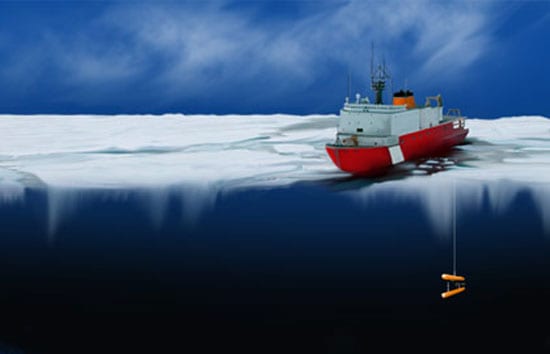
Unique Vehicles for a Unique Environment
For climatologists and physical oceanographers, it is often said that the Arctic is a canary in the environmental coal mine. In the isolated Arctic Ocean Basin, a variety of oceanographic and other processes have conspired to create a layer of cold, salty water called a halocline, which shields the sea ice from underlying warmer waters that would otherwise melt it.
Read MoreVoyage to Vailulu’u
It was like a pirate’s treasure map. A dotted line clearly showed the trail, but at the end of it, no “X” marked the spot. Then a telltale clue caught…
Read More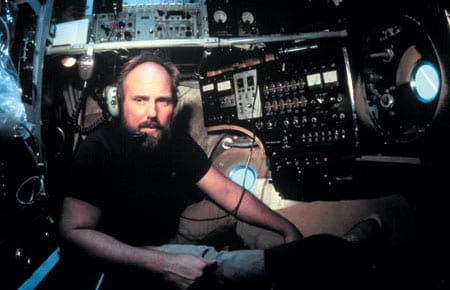
“Nothing Could Diminish the Excitement Of Seeing the Animals for the First Time”
The scientists who made the surprising discovery of teeming life around hydrothermal vents of the Galápagos Rift in 1977 were geologists and geochemists. They had not expected to find spectacular colonies of previously unknown, large animals on the deep seafloor.
Read More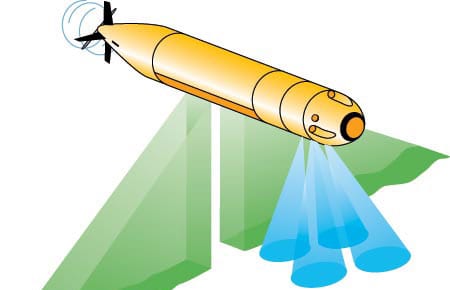
WHOI and Access to the Sea
In the mid-term future, two WHOI ships (Knorr in about 2006 and Oceanus in about 2009) will reach the end of their planned service lives. There is general agreement that WHOI should work to replace them with two vessels.
Read More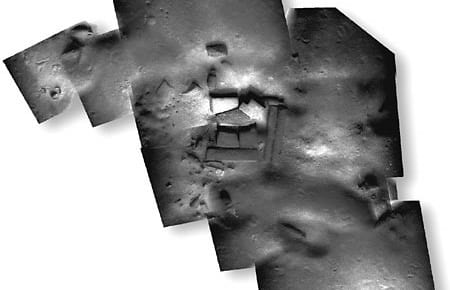
“What a Year!”
Four technologies that have been developing separately for some time were brought together this year by WHOI’s Deep Submergence Laboratory (DSL) to serve three very different user communities. With images from the towed vehicle Argo II and the remotely operated vehicle Jason, DSL scientists and engineers created mosaic images of a sunken British cargo ship and 20-meter-tall hydrothermal vent chimneys, both in the Pacific Ocean, and ancient shipwreck sites in the Mediterranean. The three expeditions thus served the marine safety, scientific, and archaeological communities.
Read More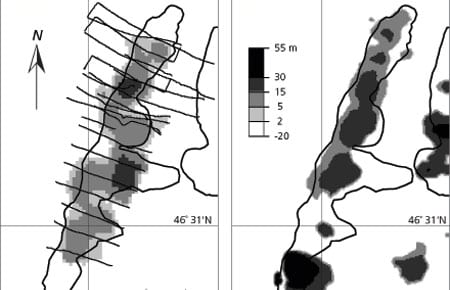
The Magnetic Thickness of a Recent Submarine Lava Flow
Submarine lava flows and their associated narrow feeder conduits known as dikes constitute the basic building blocks of the upper part of the ocean crust. We are only beginning to understand how lava erupts and forms on the seafloor by flooding topographic lows, flowing through channels or tubes, centralizing into volcanoes, or some combination of all of these.
Read More