
Raising Awareness
News
NEWS RELEASES
New international coalition establishes shared principles for responsible research into ocean iron-based carbon removal
The coalition aims to advance scientific understanding through greater coordination, information sharing, transparency, and common standards for responsible research.

Can a species evolve fast enough to avoid extinction under a changing climate?
New WHOI-led study of black-browed albatrosses finds that climate mitigation may matter more than evolution for population persistence
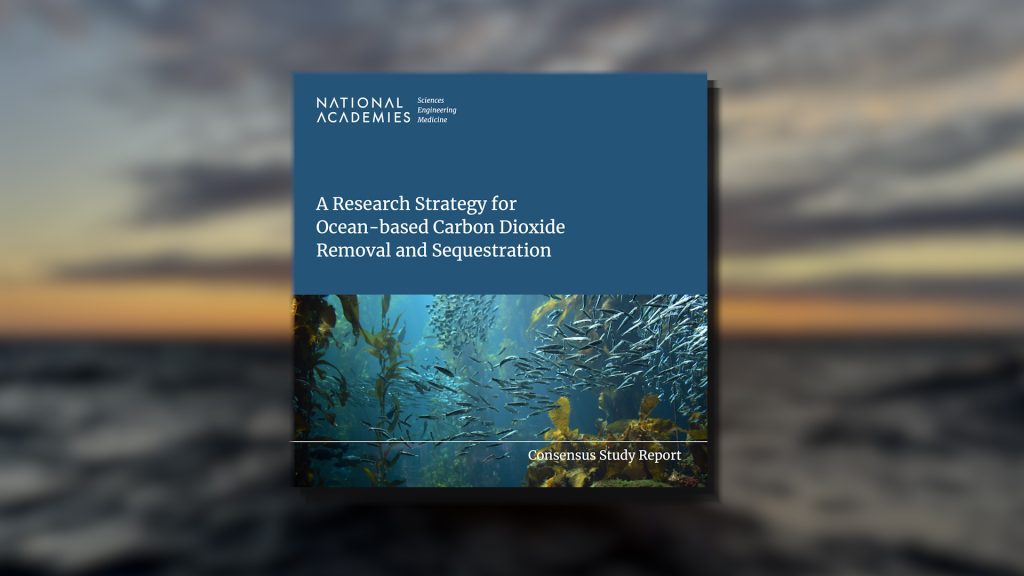
Marine carbon dioxide removal is advancing, but questions remain about viability, says new digital report
A new National Academies report lays out a research strategy for studying the ocean’s ability to sequester carbon
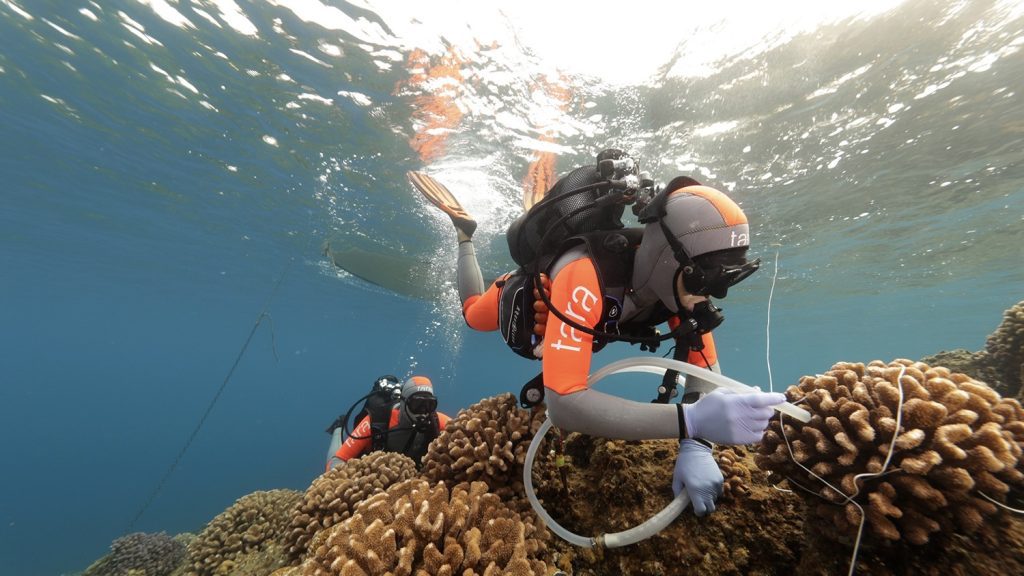
WHOI scientist joins global Tara Coral expedition to unlock secrets of climate-resilient reefs
A two-year mission across the Coral Triangle will probe how viruses and reef ecosystems could help some corals withstand rising ocean temperatures.
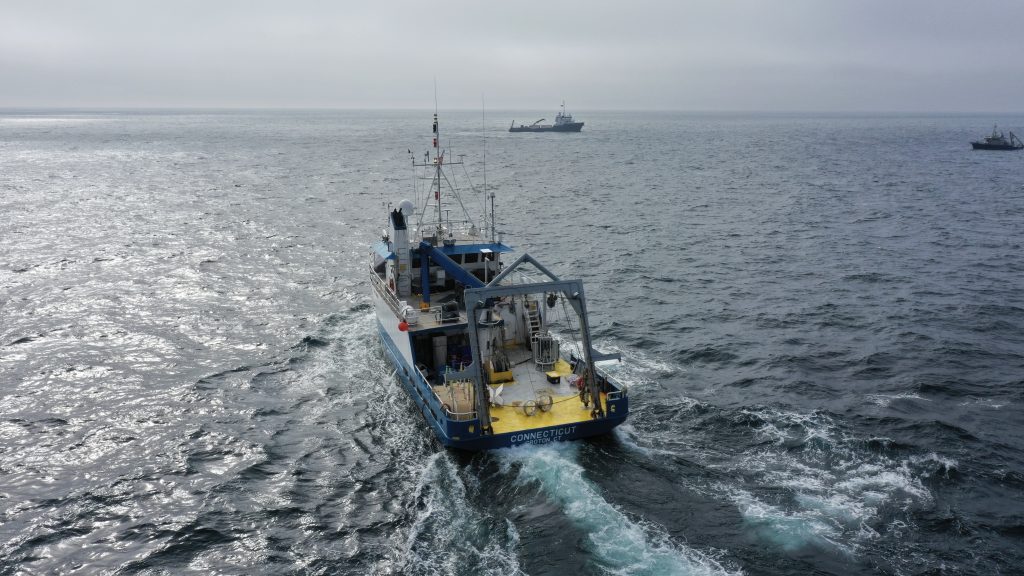
Preliminary results from the first EPA-permitted ocean alkalinity enhancement (OAE) field trial
LOC-NESS project team shares findings at annual Ocean Sciences Meeting
WHOI | OCEANUS
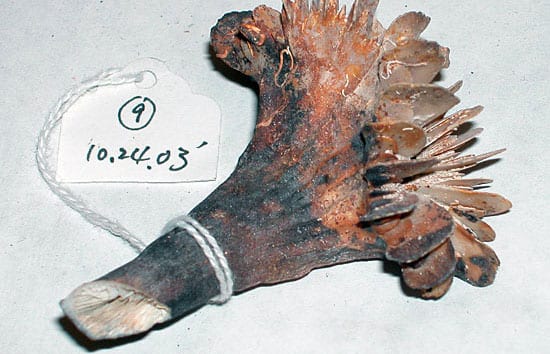
What Other Tales Can Coral Skeletons Tell?
In 2003, we traveled by ship to the New England Seamounts—a chain of extinct, undersea volcanoes about 500 miles off the East Coast of North America—to help collect dead corals that have been on the bottom of the ocean for thousands of years. For scientists, these corals are like deep-sea time machines. As they grew, the skeletons of these long-living corals incorporated trace chemicals from surrounding seawater. By analyzing chemical variations in the corals’ annual…
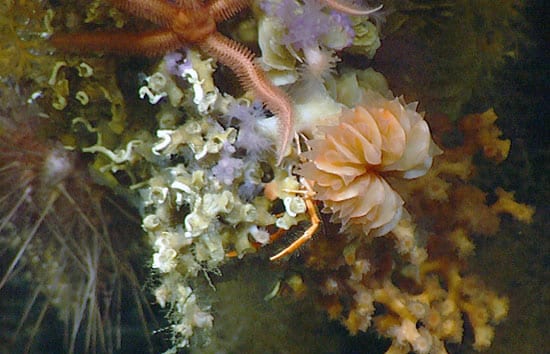
The Coral-Climate Connection
Are the climate changes we perceive today just part of the Earth system’s natural variability, or are they new phenomena brought about by human activities? One way to find out is to look back at the past to get a long-term picture of how Earth’s climate has fluctuated. But it is a major challenge to find records of past climate with sufficiently high resolution to capture evidence of abrupt and brief climate shifts. Scientists have…
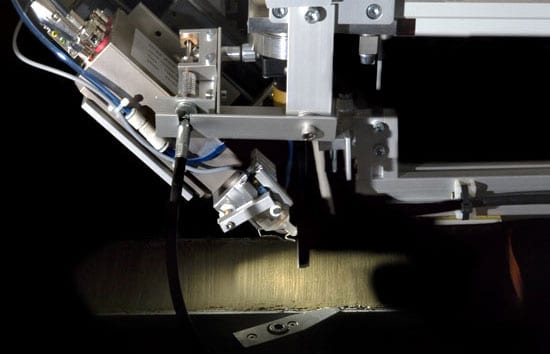
Analyzing Ancient Sediments at Warp Speed
Like a toy out of a science fiction story, the X-ray fluorescence core scanner reveals intimate details of the composition of ancient mud and sediment–which can contain a variety of clues about past climate and environmental conditions on Earth–without breaking the surface. In a matter of hours, the XRF simultaneously captures digital photographs and X-ray images of every millimeter of a core sample, while detecting the presence of any of 80 chemical elements.
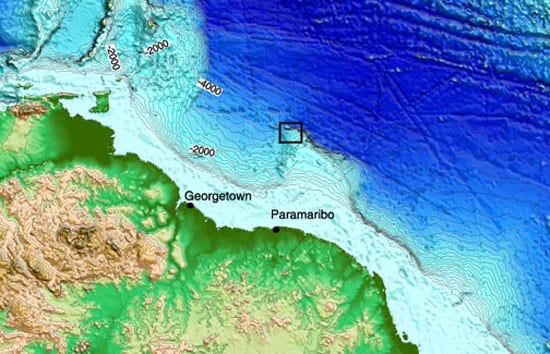
An Ocean Warmer Than a Hot Tub
Scientists have found evidence that tropical Atlantic Ocean temperatures may have once reached 107°F (42°C)—about 25°F (14°C) higher than today. The surprisingly high ocean temperatures occurred millions of years ago when carbon dioxide levels in Earth’s atmosphere were high, the scientists said. The findings, if confirmed, indicate that future ocean warming from the buildup of heat-trapping carbon dioxide may be much greater than predicted by computer models now used by scientists and policymakers to forecast…
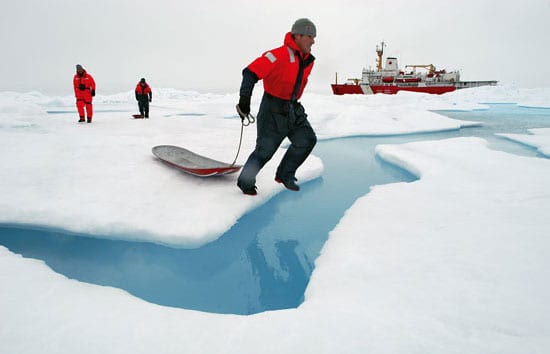
The Flywheel of the Arctic Climate Engine
A key component of the Arctic climate clockworks is the Beaufort Gyre?a bowl of cold, icy, relatively fresh waters north of Alaska that is swept by prevailing winds into a circular swirl larger than the Gulf of Mexico.
Publications
IN THE NEWS - RESEARCH HIGLIGHTS
Study offers first definitive proof that Gulf Stream has weakened
“New research from the Woods Hole Oceanographic Institution offers the first conclusive evidence that the Gulf Stream has weakened. The powerful ocean current off the East Coast influences regional weather, climate and fisheries, and the finding could have significant implications both for New England and the global climate.”
What Happens to Marine Life When There Isn’t Enough Oxygen?
In September of 2017, Woods Hole Oceanographic Institution postdoctoral scholar Maggie Johnson was conducting an experiment with a colleague in Bocas del Toro off the…
Maine’s having a lobster boom. A bust may be coming.
The waters off Maine’s coast are warming, and no one knows what that’s going to mean for the state’s half-billion-dollar-a-year lobster industry—the largest single-species fishery in North America. Some fear that continued warming could cause the lobster population to collapse. To understand what’s happening to the ecosystem of the Gulf of Maine, says Glen Gawarkiewicz, an oceanographer at Woods Hole Oceanographic Institution, in Massachusetts, you have to look beyond it—see how it’s affected by the atmosphere, ocean currents, and rivers that flow into it.