Skip to content

Dana Yoerger Learn more

Keep exploring!

Join us—for our ocean, our planet, and our future.

yoerger
yoerger

Dana Yoerger

Scientist Emeritus, Applied Ocean Physics and Engineering

Dr. Collin P. Ward is an Associate Scientist in the Department of Marine Chemistry & Geochemistry at the Woods Hole Oceanographic Institution. His group characterizes how fast organic molecules, like those in natural organic matter, crude oil, and plastics, are transformed in the environment. A core element of his scientific approach is to understand the fundamental controls of transformation reactions and their timescales. This opens the door to make predictions of how important these reactions will be in the future and to design new materials that are simultaneously useful to consumers and demonstrably degrade if leaked into the environment. He also builds new instruments and methods that make science cheaper, faster, and more accessible. He received the 2024 James J. Morgan Environmental Science & Technology Early Career Award from the American Chemical Society. He earned a BS and MS in Environmental Sciences from The Ohio State University and a PhD in Earth and Environmental Sciences from the University of Michigan.

See Collin Ward's Lab website

Ocean Twilight Zone

Ocean Topic: Ocean Twilight Zone

What is the Ocean Twilight Zone, who lives there, and why is it important 

Twilight Zone Technology

Scientists use specialized tools and robots to explore the ocean’s dark, cold twilight zone and uncover its hidden life
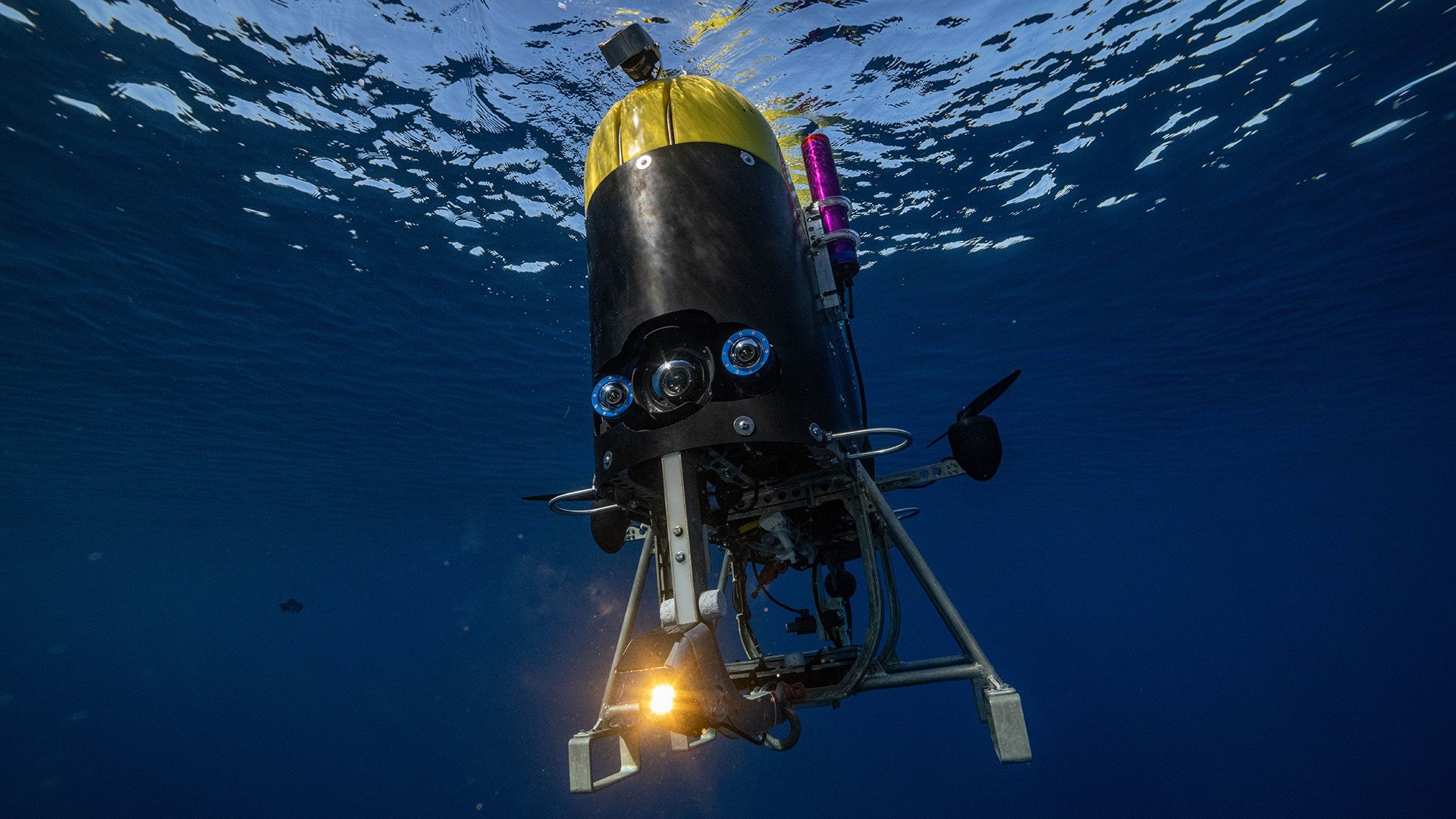
Mesobot

Mesobot is a hybrid underwater robot that quietly tracks, observes, and samples twilight-zone marine life autonomously or via tether up to 1,000 m

Ocean Twilight Zone

Ocean Topic: Ocean Twilight Zone

What is the Ocean Twilight Zone, who lives there, and why is it important 

Twilight Zone Technology

Scientists use specialized tools and robots to explore the ocean’s dark, cold twilight zone and uncover its hidden life

Mesobot

Mesobot is a hybrid underwater robot that quietly tracks, observes, and samples twilight-zone marine life autonomously or via tether up to 1,000 m

Related Multimedia

A robot to explore the dark ocean!

Meet Mesobot, a deep-sea robot designed to follow ocean twilight zone creatures without disturbing them—capturing stunning footage and collecting eDNA samples

Rare look at animals in the ocean twilight zone

The ocean is vast, so scientists use two ocean robots to better spot and study elusive creatures from the deep, dark twilight zone

Breaking down plastics together

Through a surprising and successful partnership, WHOI and Eastman scientists are reinventing what we throw away.

Related Multimedia

Ocean Encounters: Ocean Plastics

Plastics are everywhere–even in our ocean. Discover the surprising and costly impacts of plastic pollution on us and our ocean planet

What are marine microplastics?

Discover what microplastics are and their potential impacts on ocean life, ecosystems, and human health

Dive Deeper

WHOI scientists discover fastest degrading bioplastic in seawater

A new version of CDA was found to be the fastest degrading bioplastic material tested in seawater and is a promising replacement for other long-lasting foam plastic materials.

Some plastic straws degrade quicker than others, new study shows

WHOI researchers determine lifetimes of drinking straws in the coastal ocean and develop a prototype bioplastic straw that degrades even faster than paper

WHOI researchers say accounting for plastic persistence can minimize environmental impacts

WHOI researchers develop a new sustainability metric for plastic products

Scroll To Top