
Multimedia
Not So Simple

Taking pictures of Alvin on the surface is relatively easy compared to photographing it at work. This device, nicknamed “ElevatorCam, includes the yellow floats in the background and is what’s…
Read MoreWear it Proudly
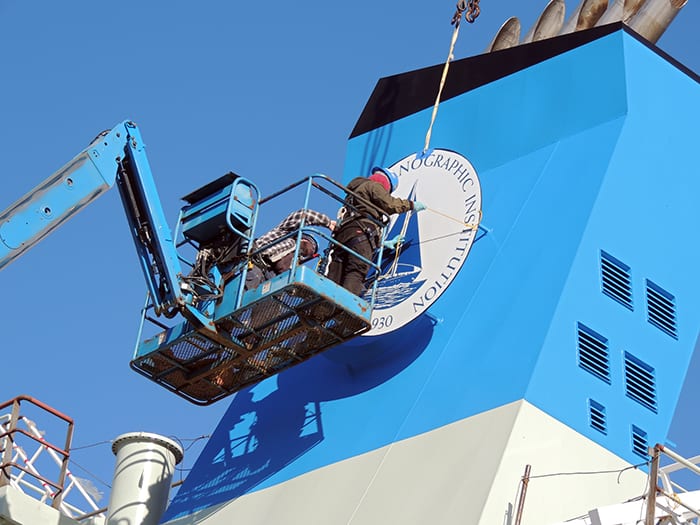
The R/V Neil Armstrong took another step closer to becoming part of the WHOI fleet recently when it had the Insitution’s logo attached to its stack. The ship was launched…
Read MoreA Drop in the Ocean
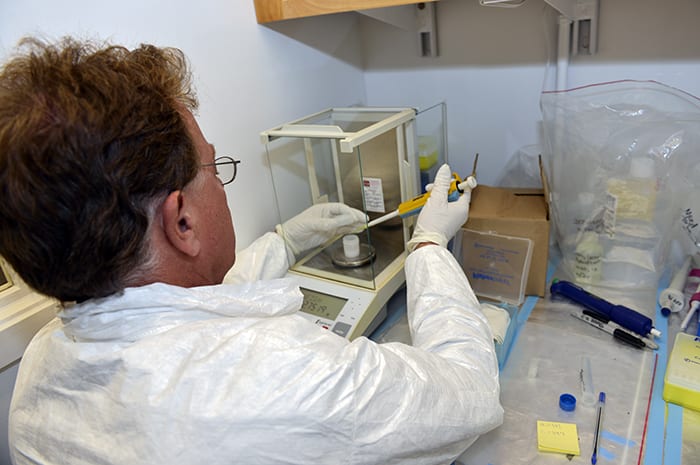
WHOI research assistant Steve Pike adds a uranium-233 “spike” to a sample of seawater from the Pacific Ocean that he will measure for the presence of uranium-236. By adding a…
Read MoreI Can See Clearly Now
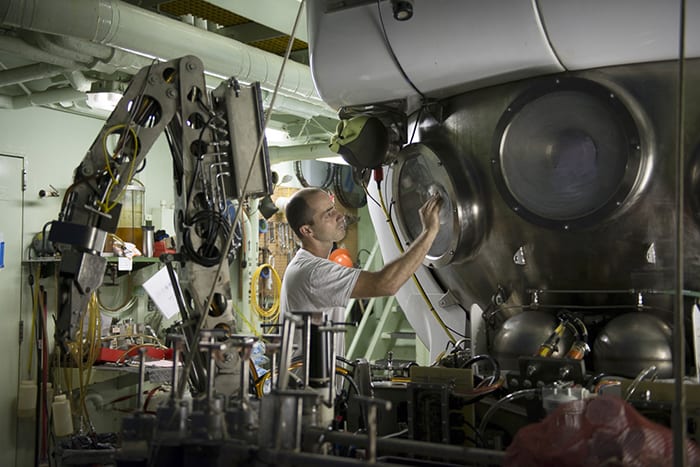
Nathan Brown, an Alvin pilot-in-training, cleans a viewport on the sub in the early-morning hours before Alvin was launched from research vessel Atlantis into the Gulf of Mexico on March…
Read MoreIn the Hot Seat
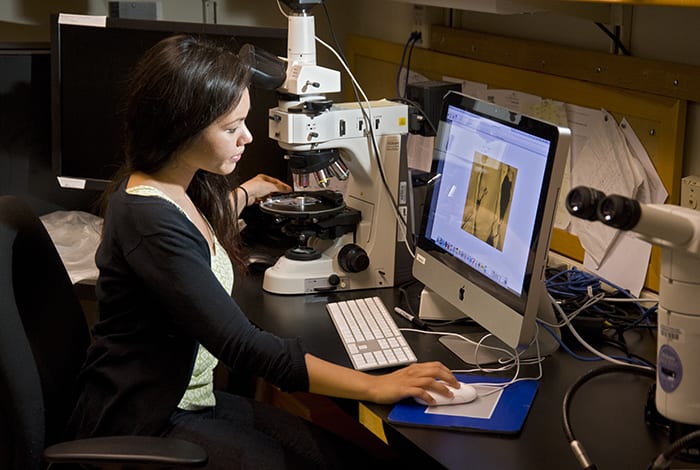
Summer Student Fellow Ashley Grey investigates a coral’s response to rising ocean temperatures while working in the lab of WHOI scientist Anne Cohen. During the summer of 2013, Grey located…
Read MoreReturn to Sender
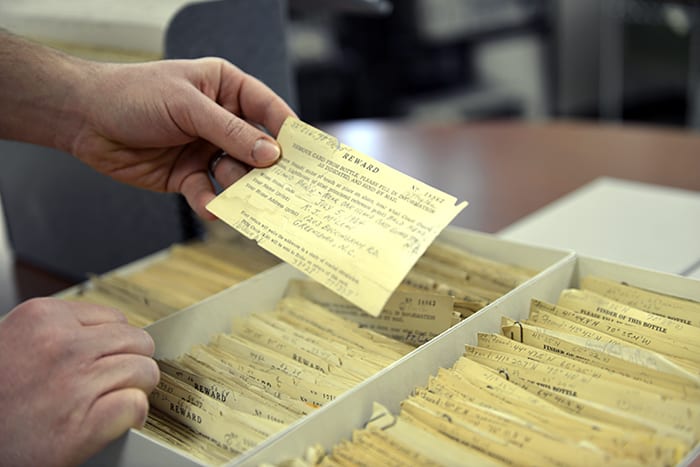
Between 1956 and 1972 WHOI oceanographer Dean Bumpus dispatched nearly 300,000 messages in bottles, asking people to notify him where and when they found them. To encourage a response, Bumpus…
Read MoreCommunities at Risk
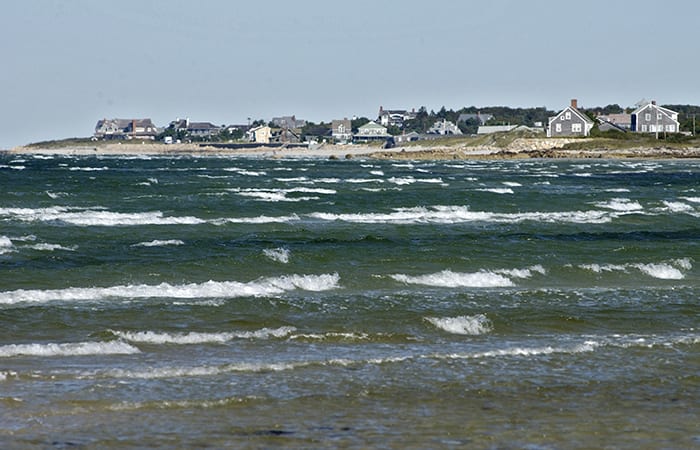
The shore of Buzzards Bay just north of Woods Hole illustrates at least one of the problems that many coastal communities will face in the future as sea level rises:…
Read MoreLittle Alvin
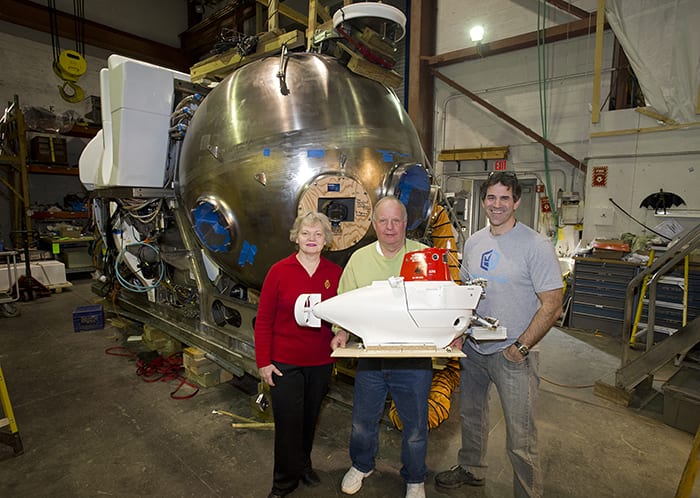
To keep busy after he retired, professional deep-sea diver Tom Ryder (center) launched into a three-year project to build a 1/8-scale, fully operational, radio-controlled model of Alvin. When Alvin pilot…
Read MoreA Cold, Hard Look
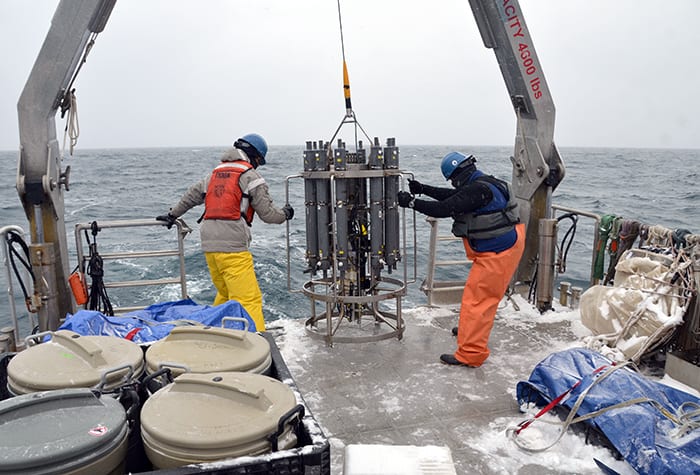
Air temperatures in the teens and icy seas were no match for WHOI postdoctoral researcher Mike Lowe (right) and graduate student Alex Bergan during a two-day research cruise on R/V…
Read MorePlaying in the Cold
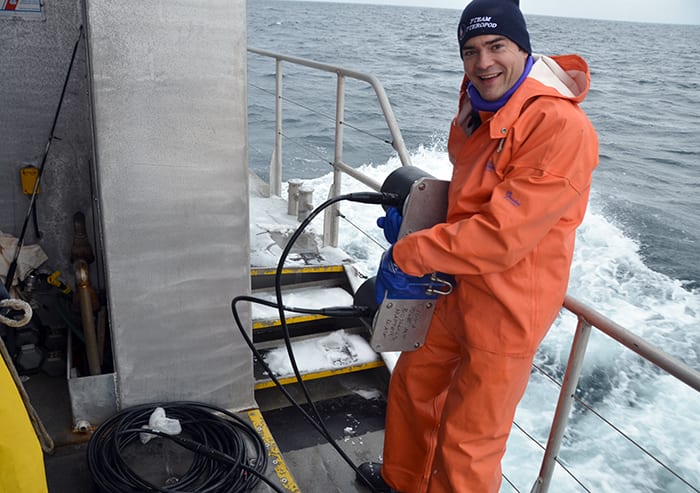
Despite an icy New England winter, research continued this winter off the Atlantic coast using the research vessel Tioga. WHOI biologist Gareth Lawson and colleagues spent two chilly days in late January…
Read MoreAnyone Home?
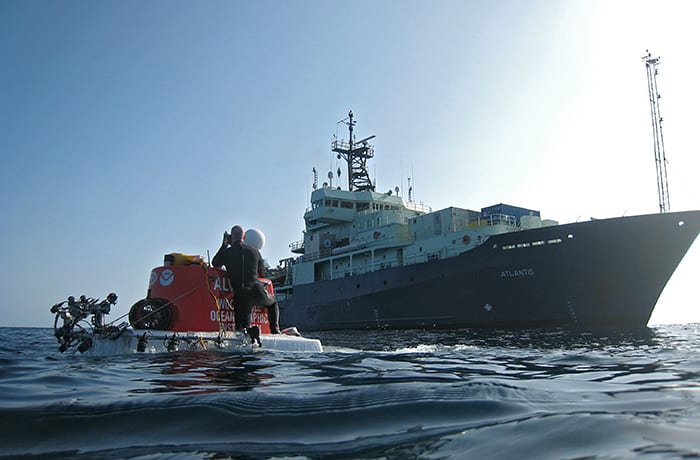
Patrick Neumann, an able-bodied seaman on the research vessel Atlantis, communicates with the pilot of the submersible Alvin as the sub is recovered during dives in November off the coast…
Read MoreMud and Monsoons
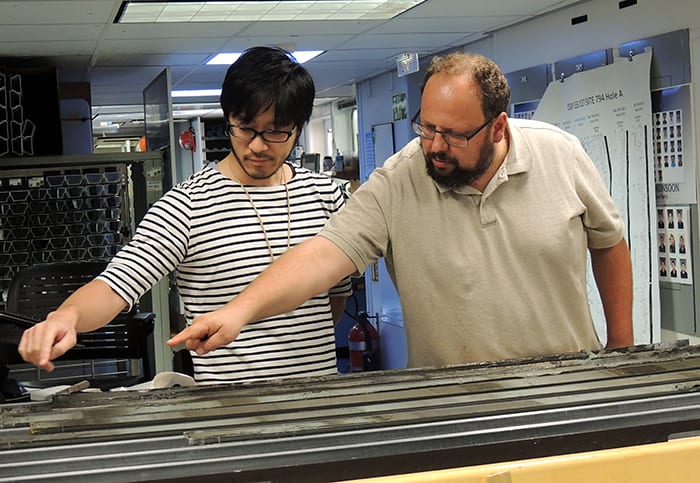
Marine geologists Takuya Sagawa, left, of Kyushu University, and WHOI’s Liviu Goisan examine sediments cores extracted from the seafloor on an expedition in the Sea of Japan and East Sea…
Read MoreAnton Dohrn
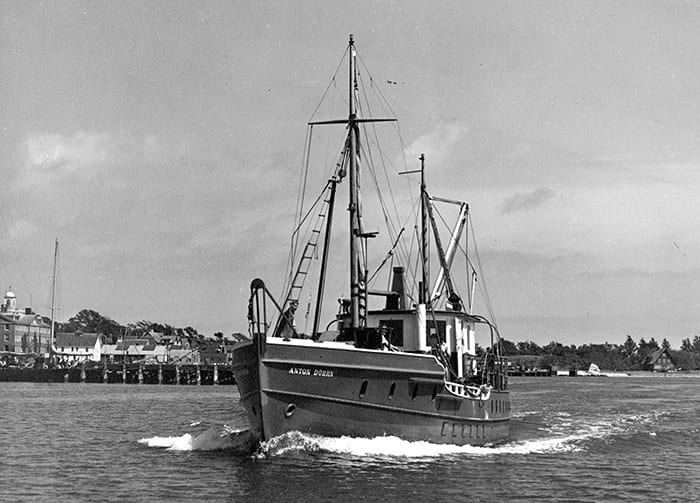
After arriving at WHOI in 1940, the research vessel Anton Dohrn made at least 40 cruises from Maine to New Jersey, testing bathythermographs, underwater cameras, and other newly-designed instruments. Scientists also used Anton…
Read MoreNext Stop: Gulf of Mexico
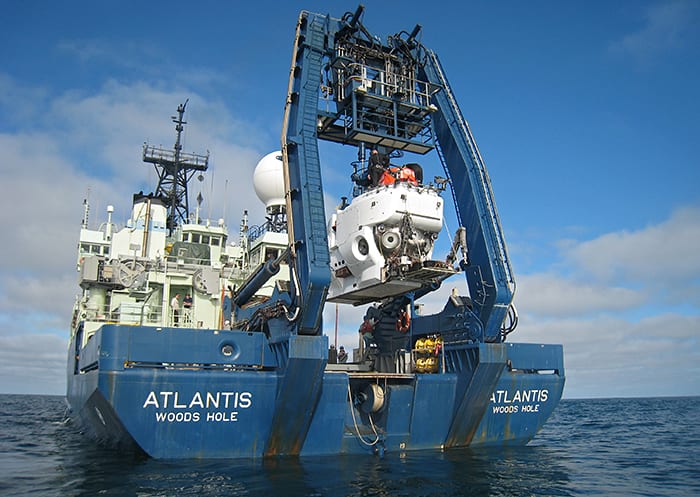
After a three-year major overhaul and upgrade, the submersible Alvin was in the water in November for 14 recertification dives off the coast of California. The upgrade included new lighting,…
Read MoreJelly Problem
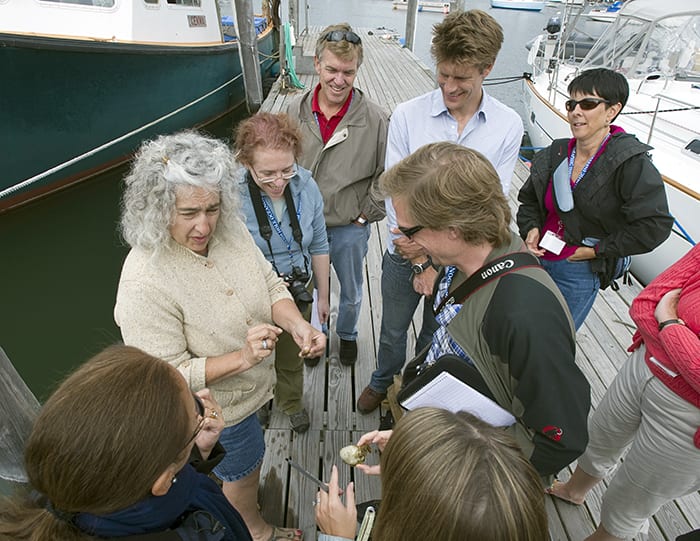
WHOI scientist Mary Carman fielded questions from journalists participating in the annual WHOI Ocean Science Journalism Fellowship about little sea squirts causing big problems in New England. Six species of invasive…
Read MoreThe Great Outdoors
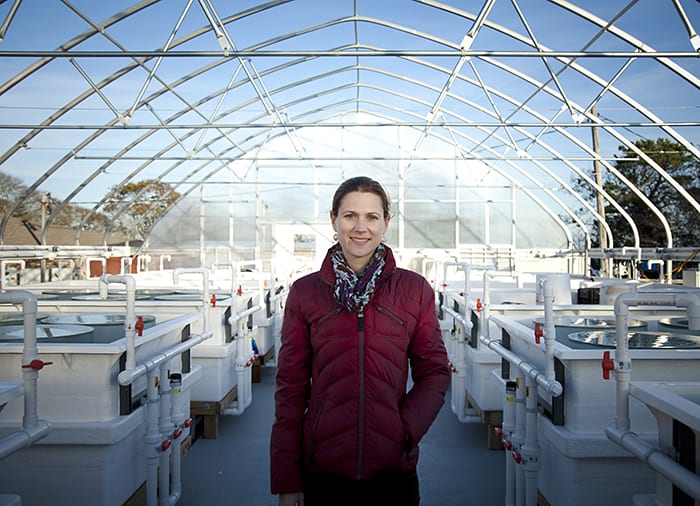
WHOI assistant scientist Amanda Spivak recently designed a new open-air Mesocosm Lab that can replicate various natural marine ecosystems, from shallow pelagic to benthic habitats. This permits her to study…
Read MoreTough Neighborhood
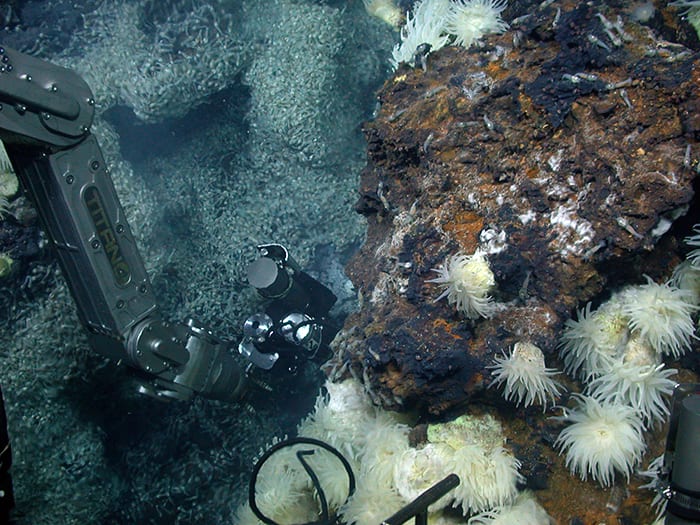
The remotely operated vehicle (ROV) Jason takes a sample of hydrothermal fluids from a location known as Shrimp Gulley at the Piccard Hydrothermal Field on the Mid-Cayman Rise. The clear…
Read MoreLooking for New Lava
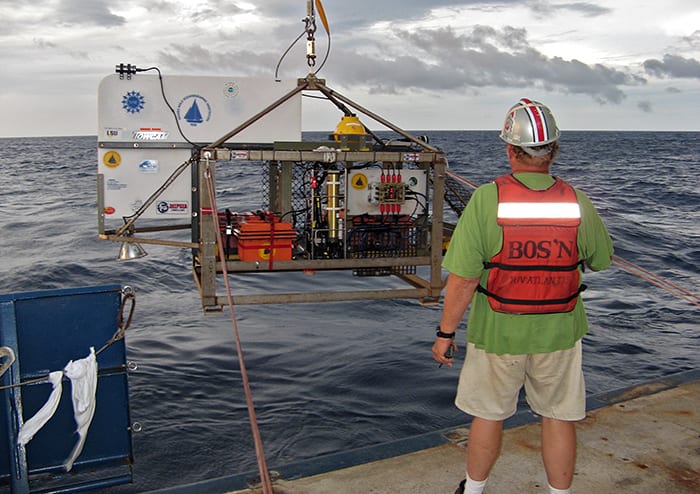
Bosun Wayne Bailey oversees the deployment of the WHOI TowCam, a specially designed digital camera system that photographs the seafloor as it is towed a few meters above the ocean bottom…
Read MoreBear-ing Away
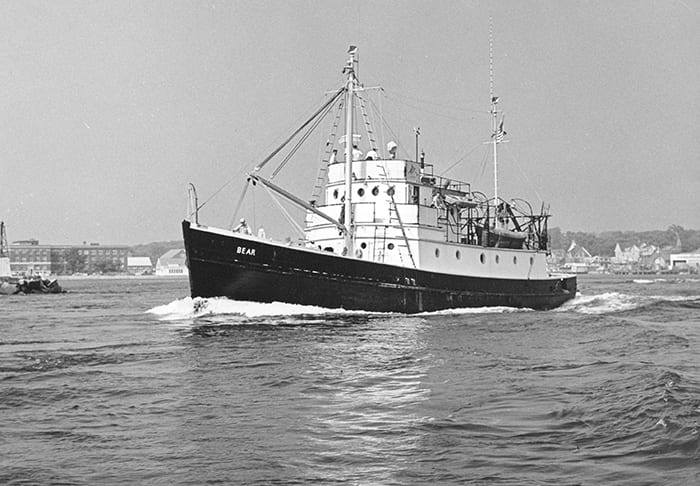
The research vessel Bear, shown here steaming out of Woods Hole, was built during World War II to carry troops in the South Pacific. After the war, WHOI saw the…
Read MoreBringing it Back
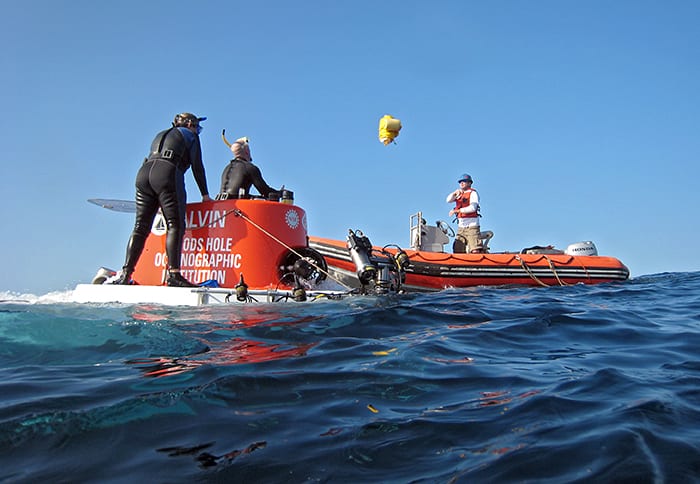
After a dive off the coast of California, Alvin pilot Mike Skowronski throws a sea anchor to Patrick Neumann while Allison Heater stands by to help bring the submersible back to…
Read MoreSpinal Signs
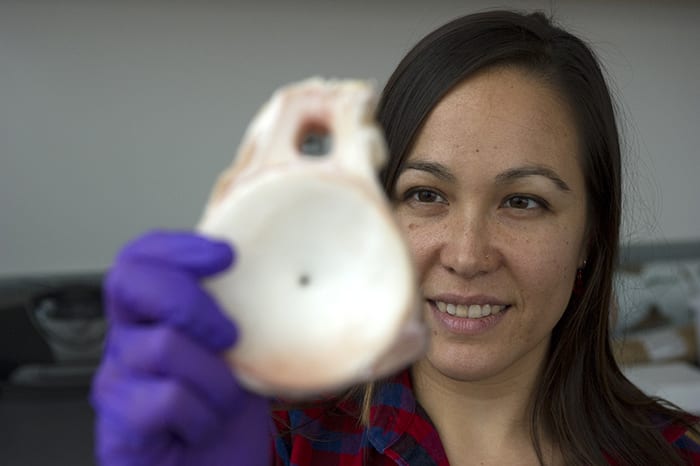
Marine biologist and MIT-WHOI Joint Program student Li Ling Hamady displays a vertebra of a white shark. The large, white, circular portion is the body of the vertebra and the…
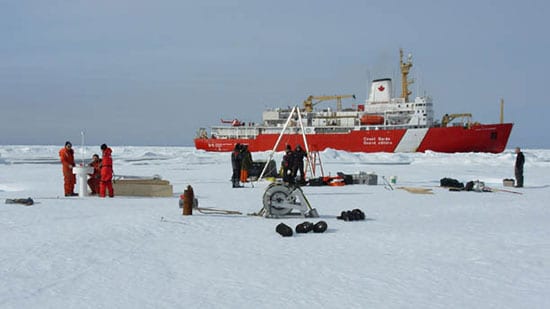
Read MoreITP Recovery: Getting it back out of the ice
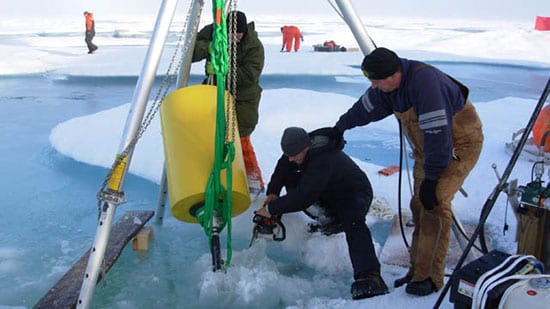
ITP Deployment: Getting an instrument through Arctic ice
A Glittering Find
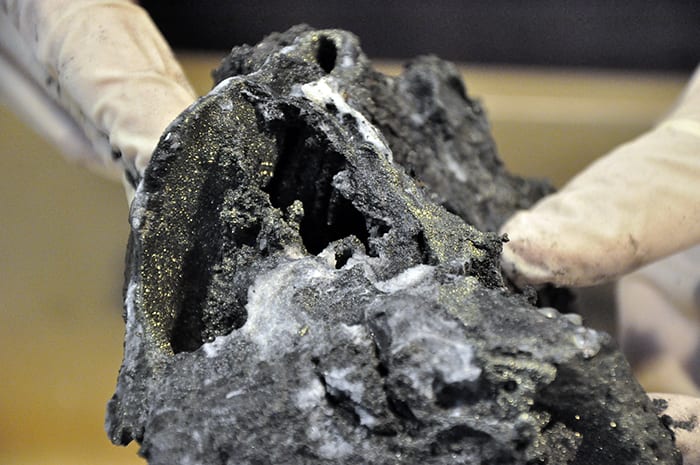
A chimney sample from a hydrothermal vent, collected on a January 2014 research expedition, shows deposits of glittering yellow iron sulfide, or pyrite. Also known as “fool’s gold,” the mineral…
Read More