
Multimedia
What a Drag
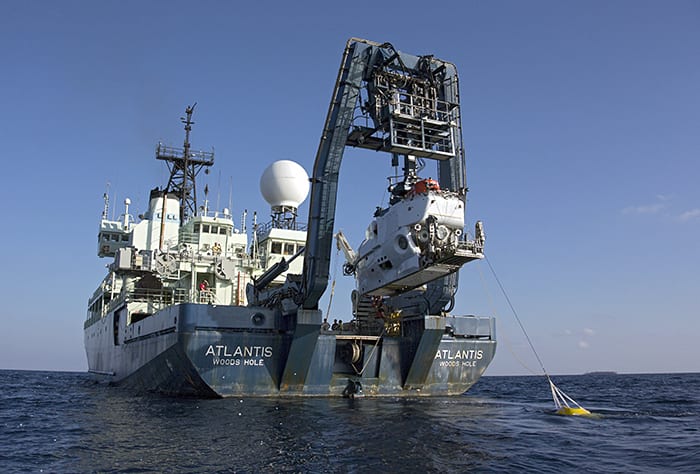
A bright yellow sea anchor trails in the water as the huge A-frame and winch aboard research vessel Atlantis lift the human-occupied vehicle Alvin. Divers attached the sea anchor to…
Read MoreWeighty Subject
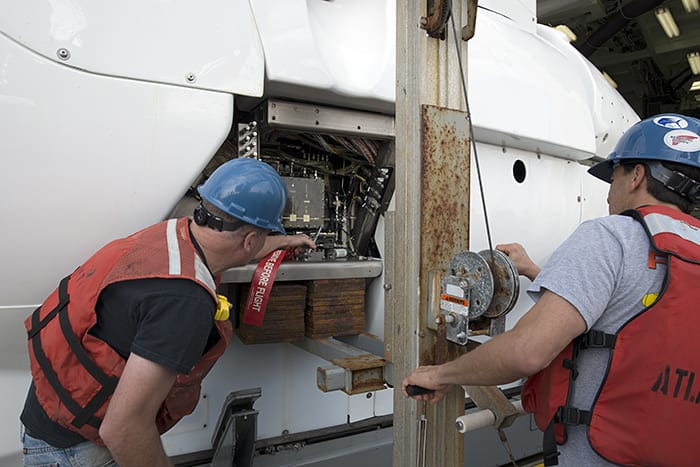
WHOI technicians Rick Sanger (left) and Phil Santos load iron plates onto the research submersible Alvin before a dive. The plates help Alvin descend through the water to the seafloor…
Read MoreExpert Analysis
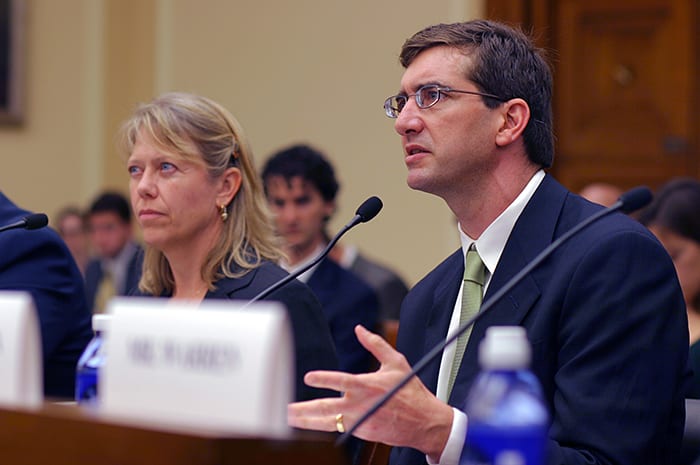
In 2008, WHOI chemist Scott Doney (pictured) testified before the U.S. House of Representatives Committee on Science and Technology’s subcommittee on Energy and Environment about the Federal Ocean Acidification Research…
Read MoreDialysis for Diatoms
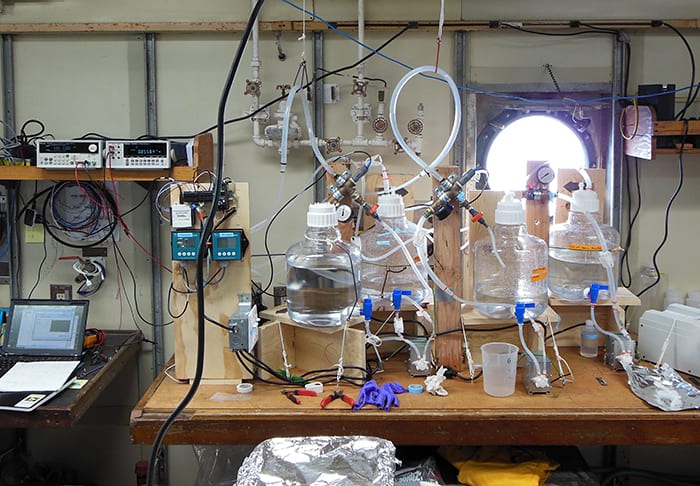
WHOI scientist Krista Longnecker built this small-scale electrodialysis system to remove salt from seawater collected during the DeepDOM reseach cruise in the spring of 2013. After running samples from the…
Read MoreBloom Buoys
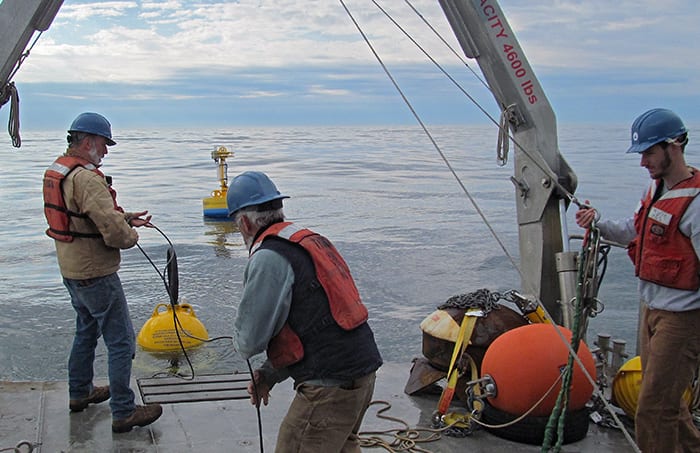
WHOI engineers Neil McPhee and Will Ostrom and Northeastern University student Ethan Edson (left to right) were part of a team who deployed three Environmental Sample Processors (ESPs) in early…
Read MoreThe ‘Dirty Bathtub’ Effect
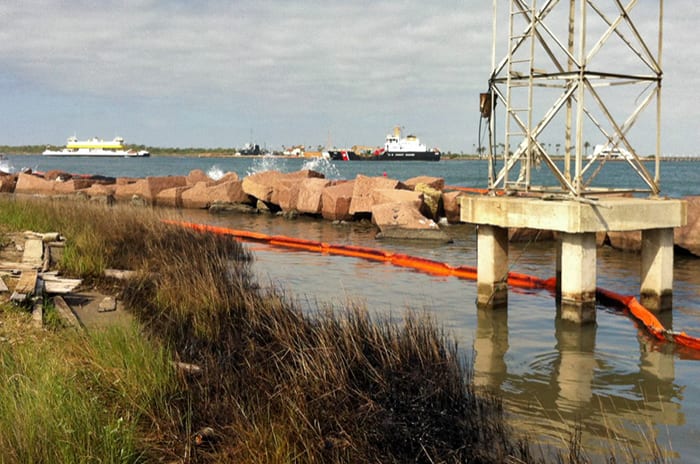
Over 168,000 gallons of intermediate fuel oil were released into Galveston Bay on March 22, 2014, when a collision occured in the bay’s shipping lane. Over 200 miles of Texas…
Read MoreDeepDOM Logjam
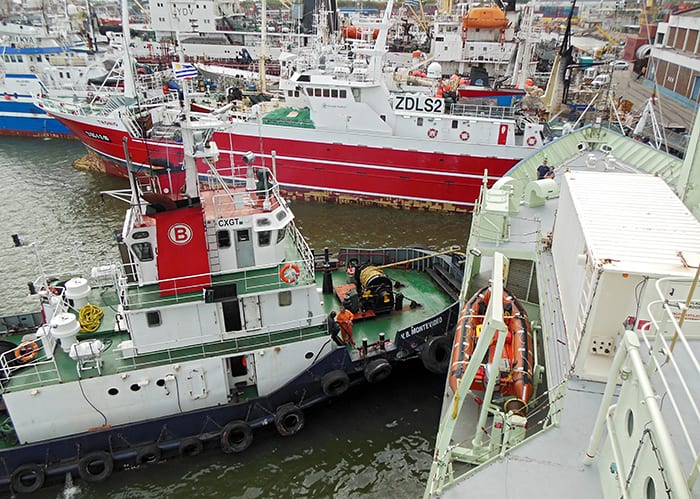
A tugboat assists the WHOI research vessel Knorr in its March 2013 departure from a jam-packed port in Montevideo, Uruguay. An interdisciplinary team of scientists aboard the DeepDOM cruise investigated…
Read MoreCellular Pumps
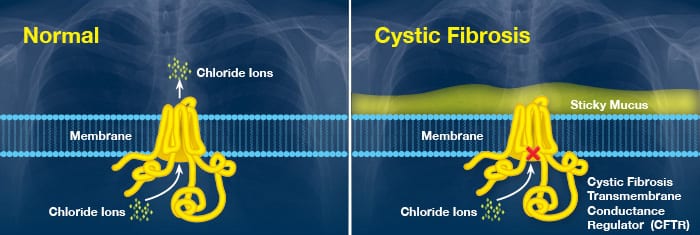
Cystic fibrosis is a disease that afflicts tens of thousands of people in the United States. The disease is caused by a mutation in a protein, called the cystic fibrosis…
Read MoreSet for Sea
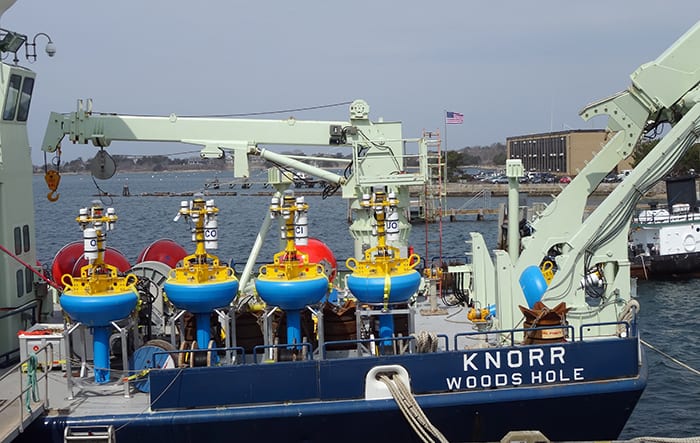
Buoys line the rail of R/V Knorr prior to its departure in mid-April for the Pioneer Array, a network of moorings and autonomous robotic vehicles programmed to monitor waters of the continental…
Read MoreSuperbug from the Deep
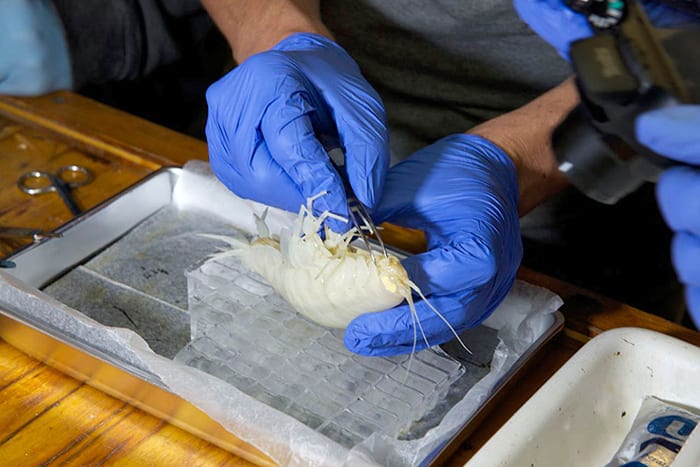
A researcher examines a supergiant amphipod (Alicella gigantea), a crustacean brought up in a fish trap from 7,200 meters (nearly 4-1/2 miles) deep in the Kermadec Trench. How this and…
Read MoreMasked Man
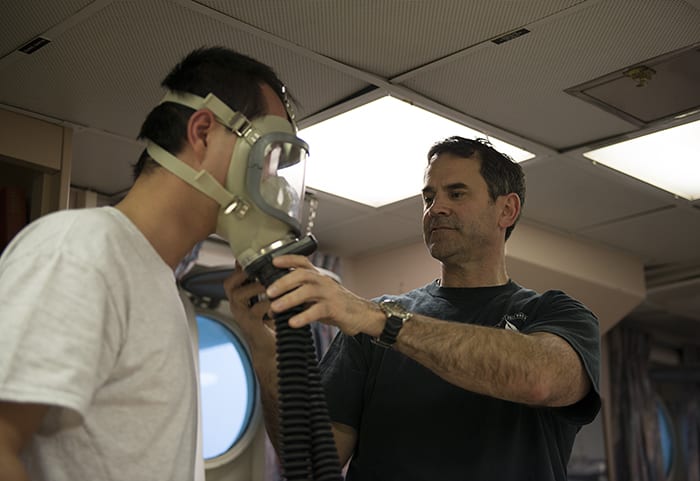
The Alvin submersible is equipped with Emergency Breathing Apparatus, or EBAs, and pilots and scientists diving in the sub are scrupulously briefed on how to use them in case of…
Read MoreA Sentry in the Sea
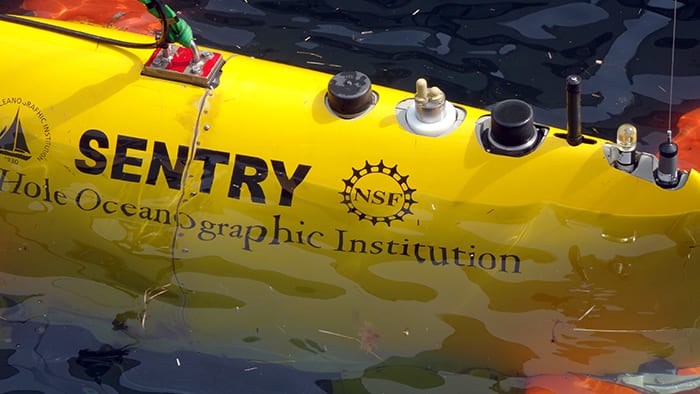
A variety of communication and tracking devices line the top of Sentry, allowing scientists to stay in continuous touch with the nearly 10-foot-long autonomous underwater vehicle. Keeping track of the vehicle…
Read MoreFinal Broadcast
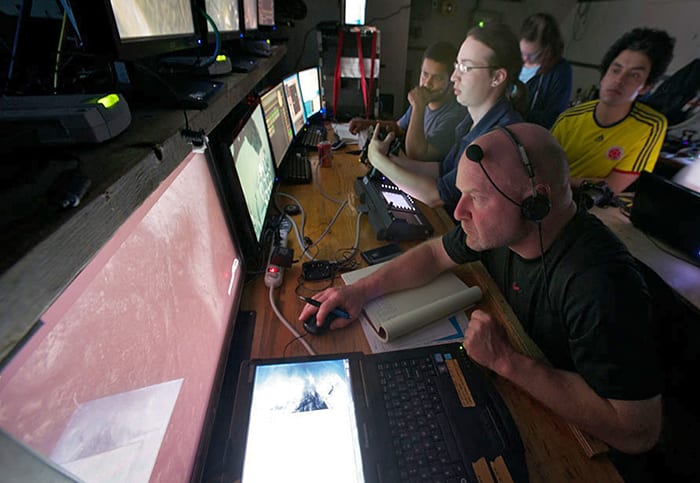
WHOI biologist Tim Shank (front), engineer Casey Machado (behind Shank), and graduate student Santiago Herrera (yellow shirt) view live, high-def video of the deep seafloor during the final dive of…
Read MoreFollow the Birds
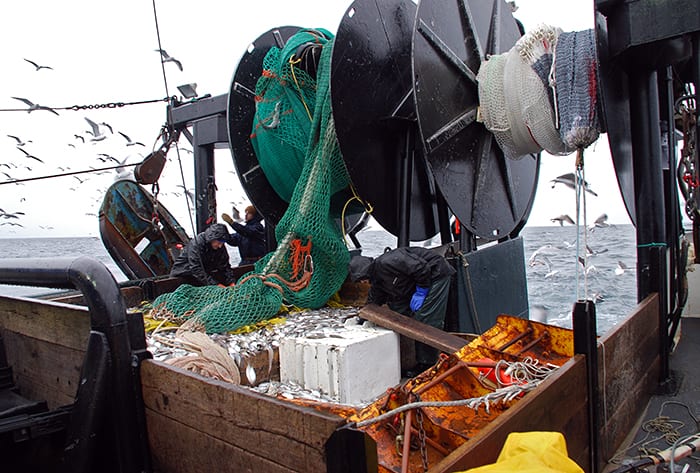
Birds ride in the wake of F/V Karen Elizabeth as crew members recover a bottom trawl filled with butterfish at the New England continental shelf edge. Working with fishermen from…
Read MoreBuff Mussels
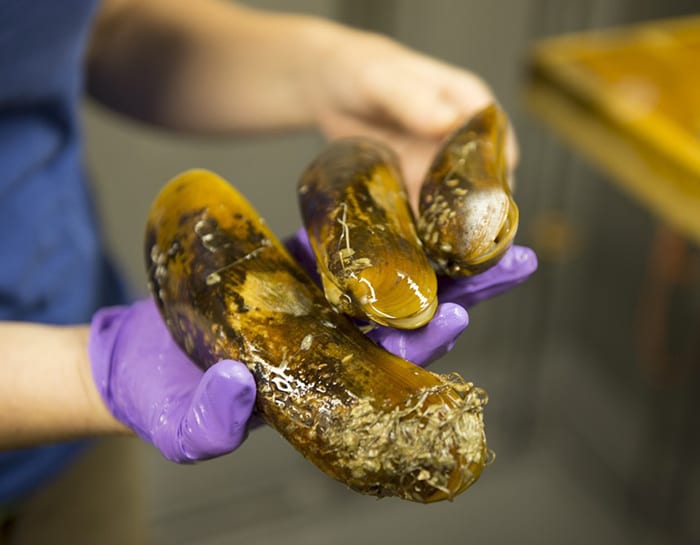
These deep-sea mussels were collected on an Alvin dive to the Florida Escarpment in the Gulf of Mexico. This rocky platform, 1.6 miles below the surface, is made of long-dead…
Read MoreBack to Work
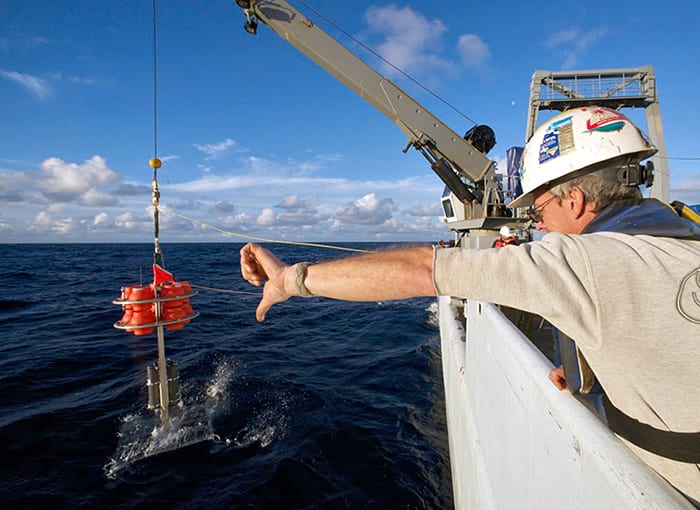
A crew member on research vessel Thomas G. Thompson signals the crane operator to lower a hadal lander into the water above the Kermadec Trench northeast of New Zealand. The…
Read MoreSupporting the Future of Ocean Science
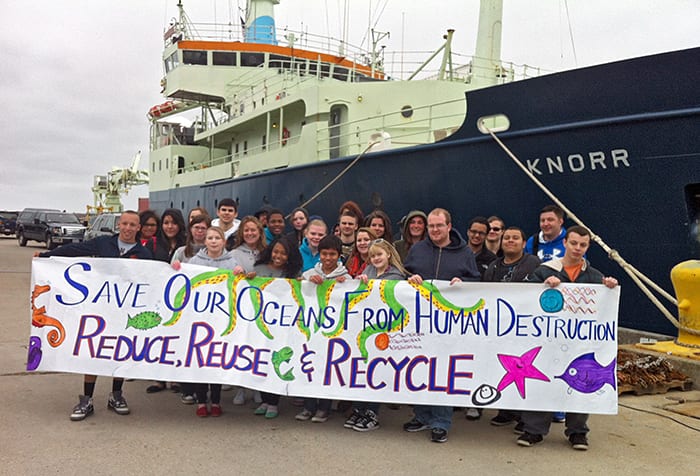
Thirty-one students from the Joseph P. Keefe Regional Technical High School in Framingham, Mass., got a first-hand look at how scientists use ships to study the ocean during a recent tour…
Read MoreSearching for the Ice Edge
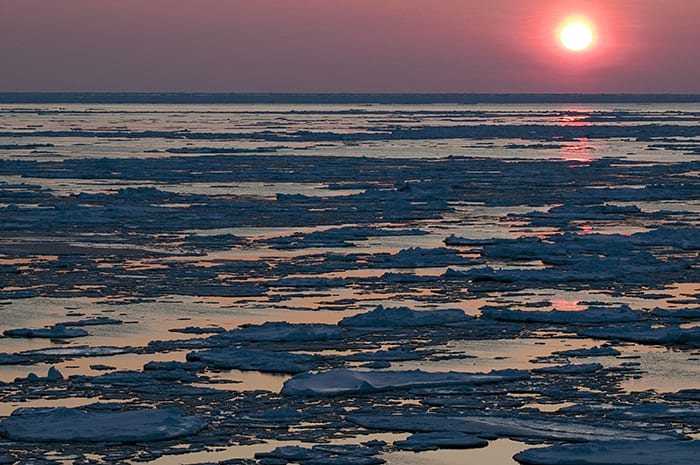
An 11 p.m. sunset reflects off the ice during the Bering Sea Ecosystem Study (BEST) research cruise in 2009. Scientists from WHOI and other institutions across the United States spent 38 days…
Read MoreRiver Mud
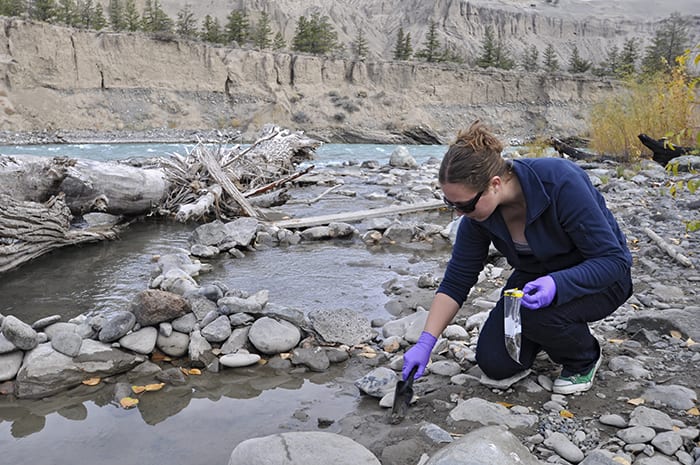
MIT-WHOI Joint Program student Britta Voss samples riverbank sediment from the Chilcotin River in British Columbia in October 2010, when low water levels exposed its banks. The Chilcotin, a tributary…
Read MoreTrench Tidbits
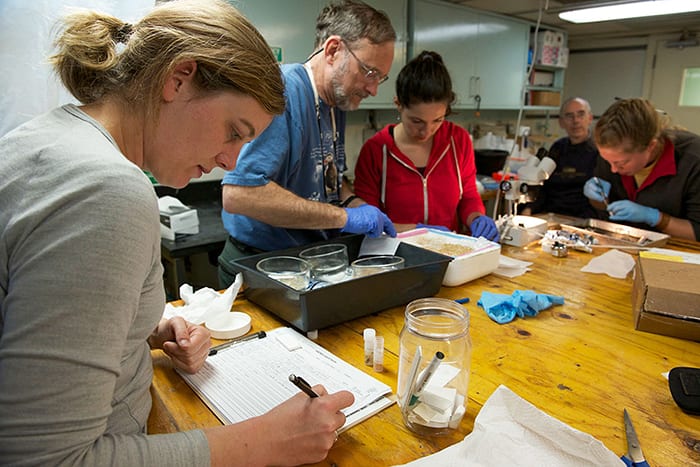
Sadie Mills, from the National Institute of Water and Atmospheric Research in New Zealand, keeps track of specimens being prepared by colleagues on the research vessel Thomas G. Thompson. Scientists…
Read MoreSymbiotic Survival
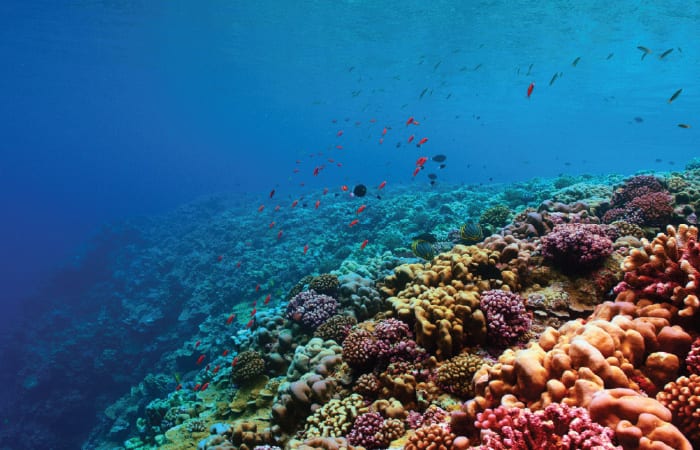
Scientists have long known that corals have symbiotic relationships with algae, called zooxanthellae, which use sunlight to make food for coral animals in exchange for a home. Microbes may also…
Read MoreCrowdsourcing Fukushima
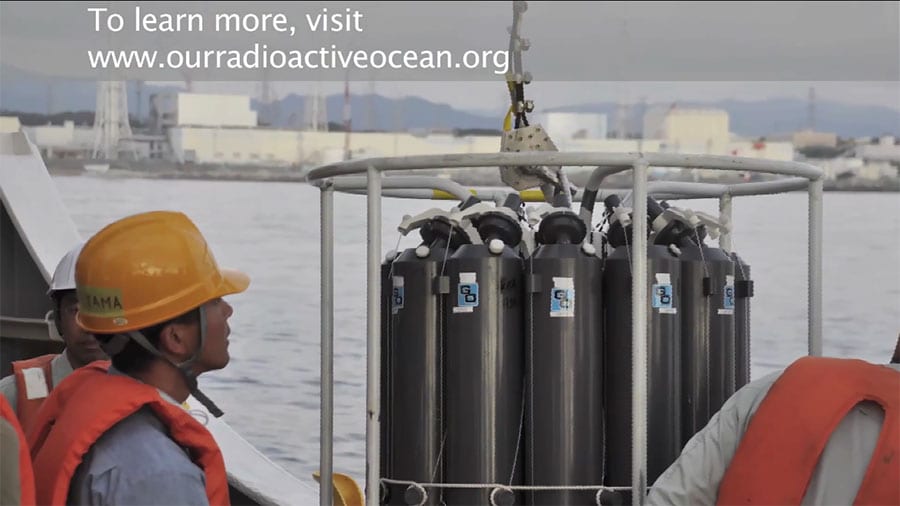
WHOI and citizen scientists team up to monitor Fukushima radiation in the Pacific, tracking cesium levels through crowdsourced seawater sampling.
Read MoreSweet Stowaway
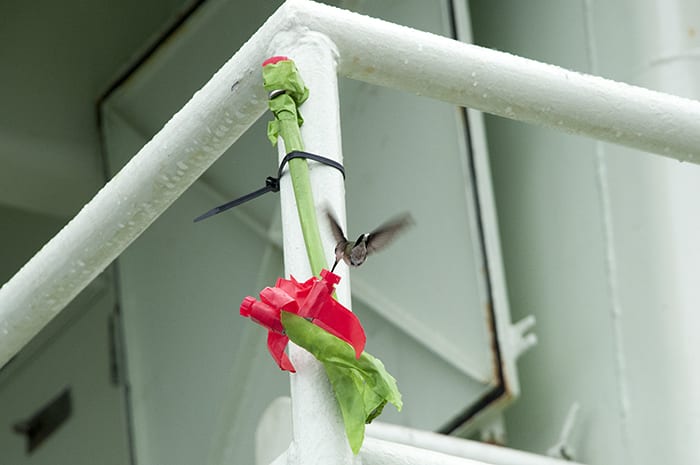
The Gulf of Mexico is not full of flowers. Nor is the WHOI-operated research vessel Atlantis bedecked with gardens. Still, if you are an itinerant hummingbird—migrating perhaps, or blown out…
Read MoreMessage to Mom
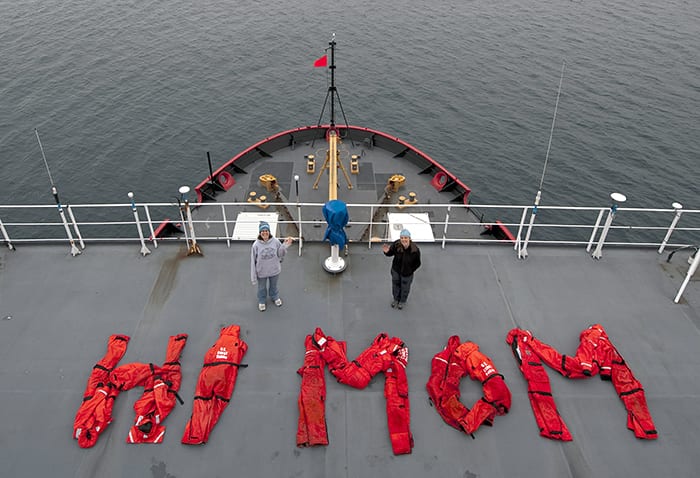
During a 2009 Arctic expedition aboard the U.S. Coast Guard Cutter Healy, science writer Helen Fields (left) and technician Megan Bernhardt from the University of Washington arranged a Mother’s Day salute using cold-weather…
Read More