
Multimedia
Ironing Out the Details
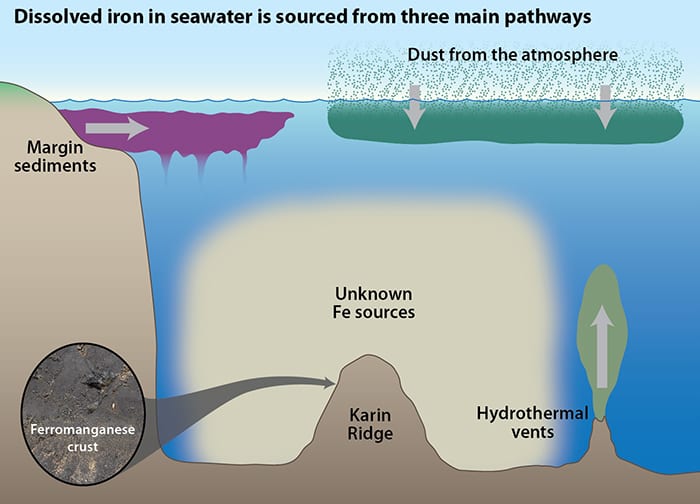
Scientists have long thought the majority of the ocean’s iron—a key biological nutrient—comes from atmospheric dust, with smaller inputs from terrestrial sediment and hydrothermal vent fluids. Although iron is soluble in…
Read MoreTaking the Plunge
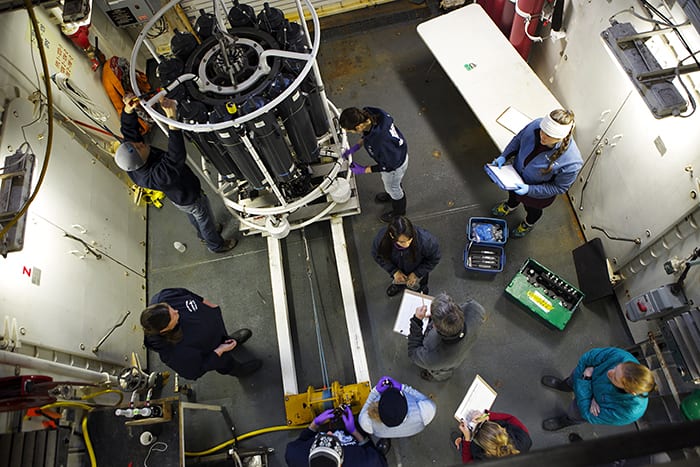
The science crew aboard US Coast Guard cutter Healy prepare a CTD sampler for deployment during the 2014 Arctic Spring expedition to the Chukchi Sea. In search of under-ice phytoplankton blooms, scientists…
Read MoreCarbon Around the World
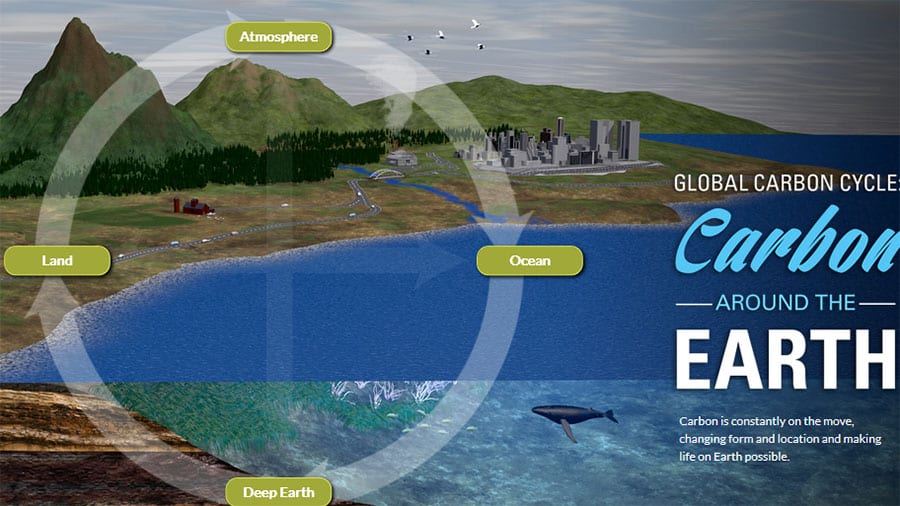
Carbon makes up the backbone of all life on Earth. It’s found in the cells of all living things, is abundant in rocks and sediments, and is also found in the atmosphere and ocean.
Read MoreTest Ride
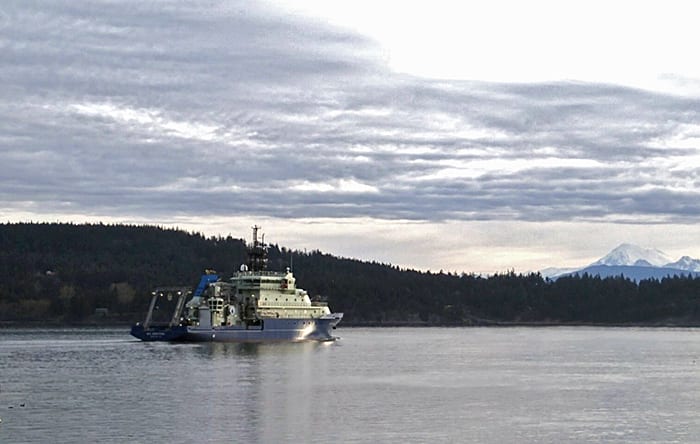
R/V Neil Armstrong took a step closer to delivery recently when it began builder’s trials in the waters of the Pacific Northwest. The ship, shown here off Anacortes, Wash., with Mt.…
Read MoreSurf’s Up
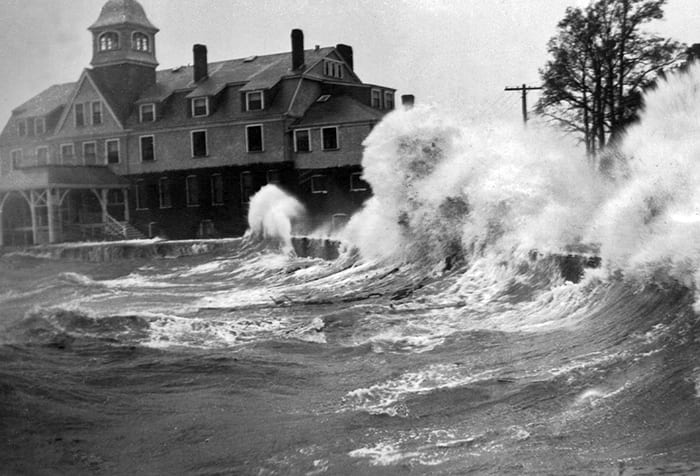
The storm surge from the Great New England Hurricane of 1938, which made landfall as a category 3 storm on Long Island battered the shore of Woods Hole, Mass. In addition…
Read MoreCape-Able Partners
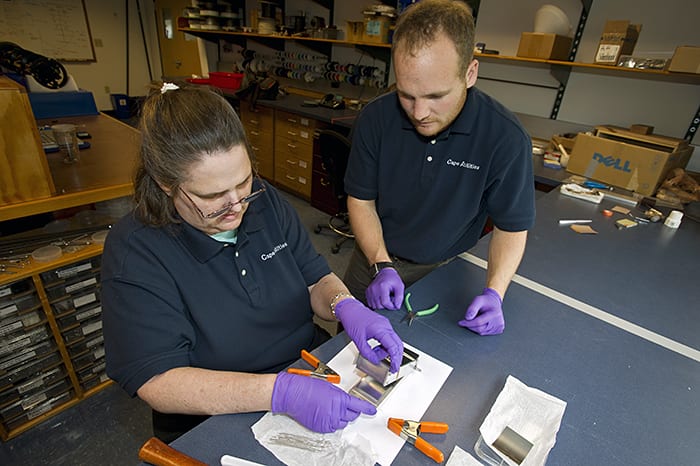
A new grant from The Peter and Elizabeth C. Tower Foundation will help WHOI fund a three-year collaboration with Cape Abilities—a nonprofit organization dedicated to finding good jobs for disabled…
Read MoreArctic Springs Eternal
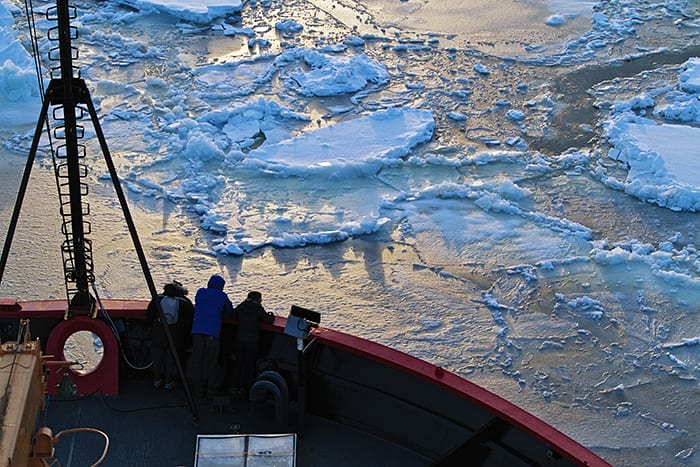
Researchers got a breathtaking view from the bow of icebreaker Healy during the 2014 Arctic Spring expedition to the Chuchki Sea. Though the sun never fully set during the expedition, twilight…
Read MoreVolunteer for Science
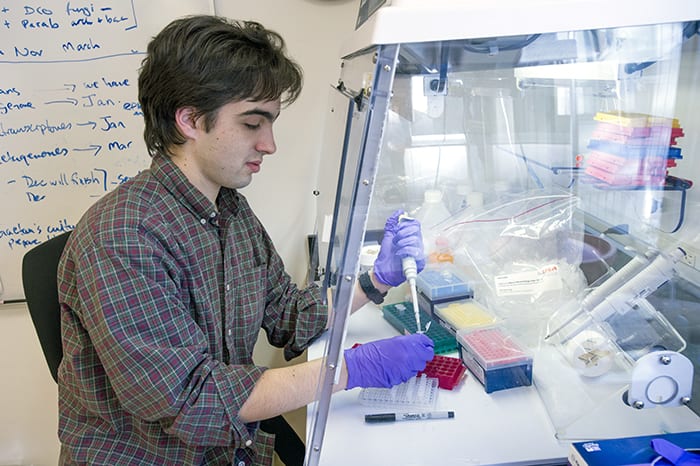
High school student Alec Cobban works inside a sterile environment in WHOI scientist Virginia Edgcomb‘s lab, setting up a method to amplify and examine genes involved in nitrogen metabolism. This…
Read MorePreparing for HADES
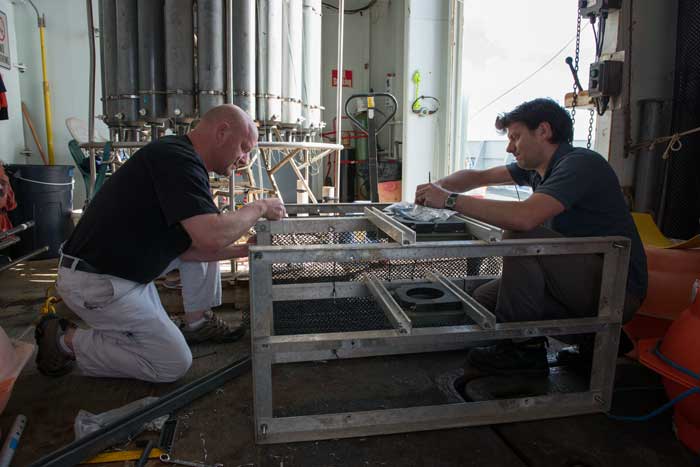
In 2014 two expeditions organized by WHOI biologist Tim Shank‘s played a starring role in the HADES (Hadal Ecosystem Studies) project, a collaborative research program investigating the role that environmental factors…
Read MoreHighlighting WHOI
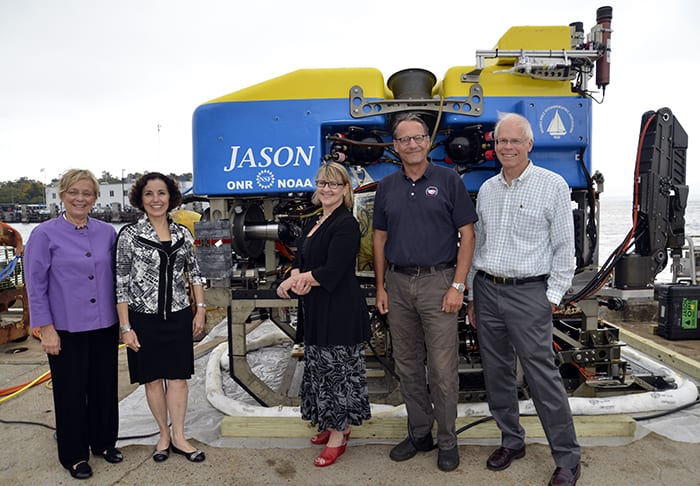
NSF Director France Córdova (second from left) and former Ocean Sciences Division Director Debbie Bronk (middle) visited WHOI in September of 2014. While here, they managed a rare photo op…
Read MorePreserving History
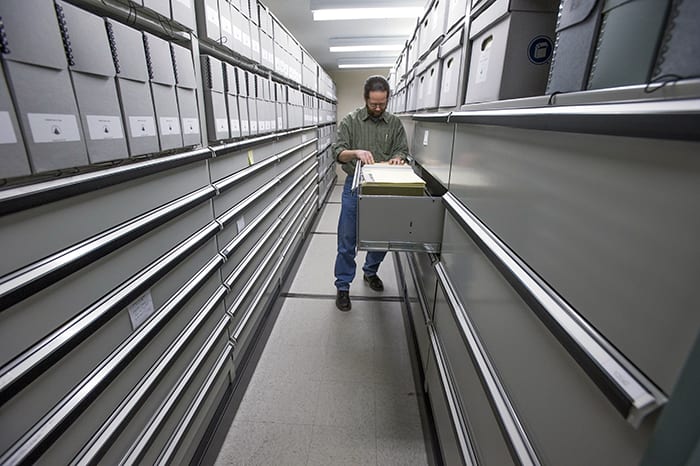
Archivist Dave Sherman works in the WHOI Data Library, where a diverse collection of scientists’ personal papers, oral histories, visuals, publications, and other documents are housed. The archives—part of the…
Read MoreLong Row to Hoe
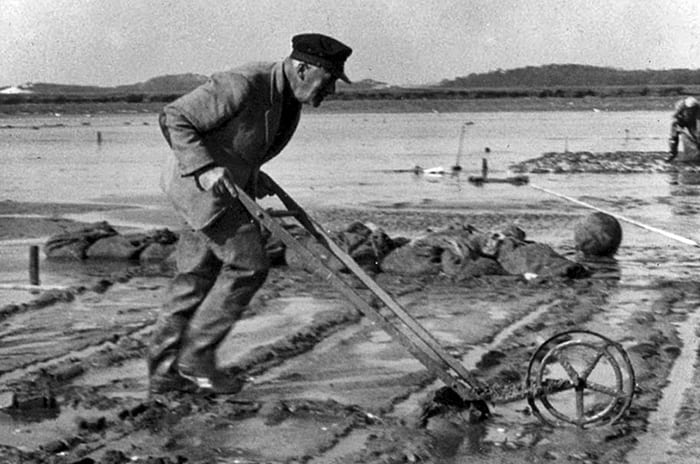
From the late 1940s to the 1960s, a research team led by WHOI biologist Alfred Redfield looked into clam farming and the biology of softshell clams in a large harbor in Barnstable,…
Read MoreOcean Iron Links
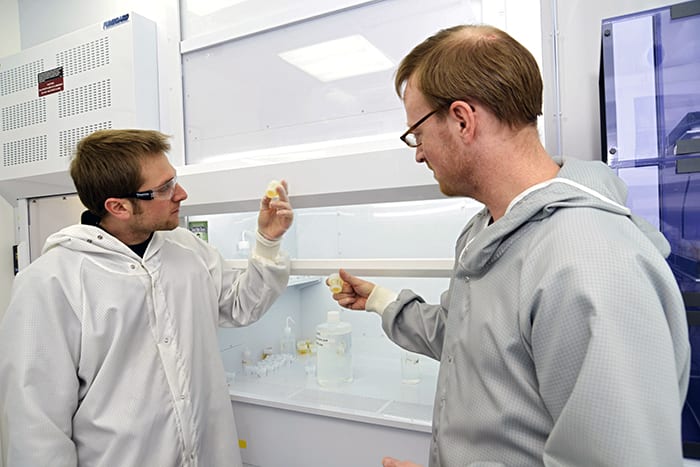
Many areas of the ocean are nutrient-rich, but lack iron, which fuels the growth of phytoplankton, tiny plant-like organisms that form the base of the ocean food chain and play…
Read MoreThe Hole Story
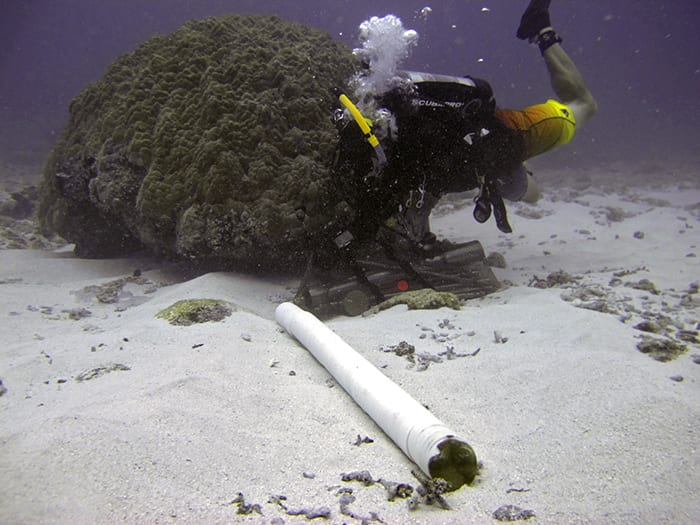
WHOI senior research assistant Justin Ossolinski collects gear after helping core a Porites lobata coral colony off Danger Island in the Chagos Archipelago. The bright white coral skeleton visible in…
Read MoreBefore and After

In 1946, some 40 WHOI staff participated in work to study the effects of a nuclear blast and subsequent radiation on the ocean and marine life. From left, Arnold Clarke, Ruthann…
Read MoreDeep Discussions
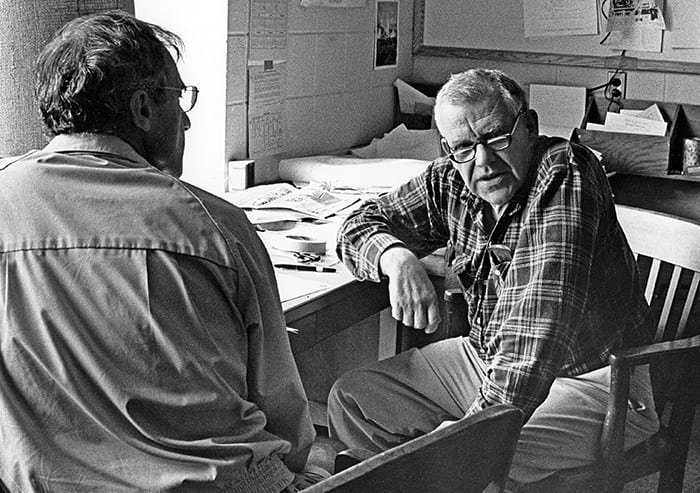
Rigorous discussion and free exchange of ideas were hallmarks of Henry Stommel‘s intellectual style. Here, the renown physical oceanograher engages in one such discussion with George Veronis, of Yale University.…
Read MoreEnd of the Earth
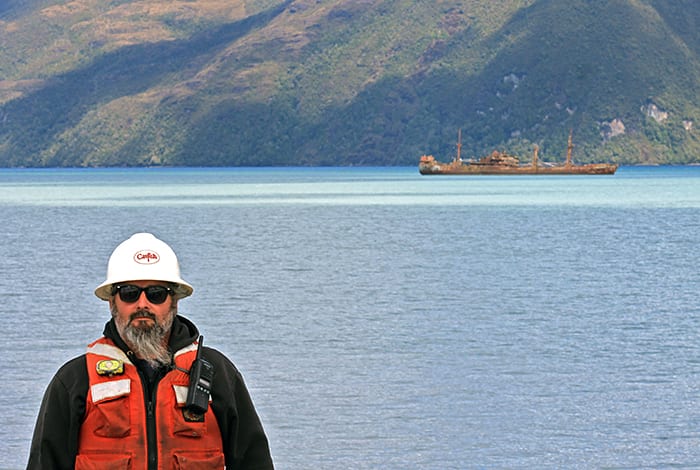
Ed “Catfish” Popowitz, bosun of R/V Atlantis stood on the bow of the ship as it sailed through the Straits of Magellan and passed the wreck of the Captain Leonidas. The Leonidas ran aground while…
Read MoreRemembering a Legend
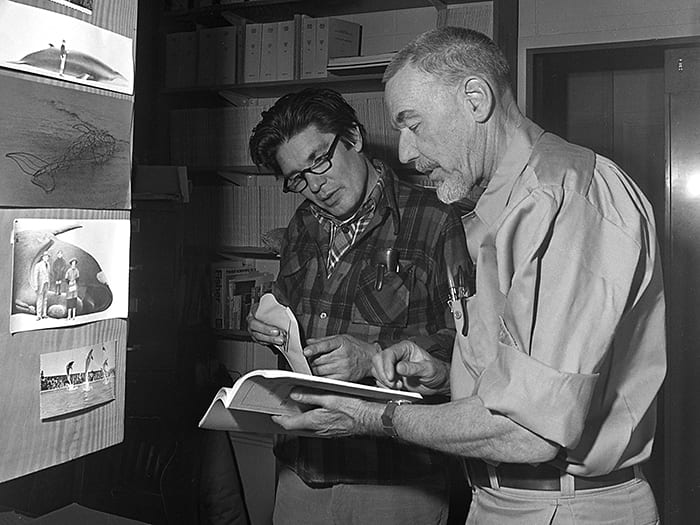
Bill Schevill, right, founded the field of marine mammal bioacoustics after World War II, but when Bill Watkins, left, joined him in Woods Hole in 1958, they began what former…
Read MoreWinter Break Teaching
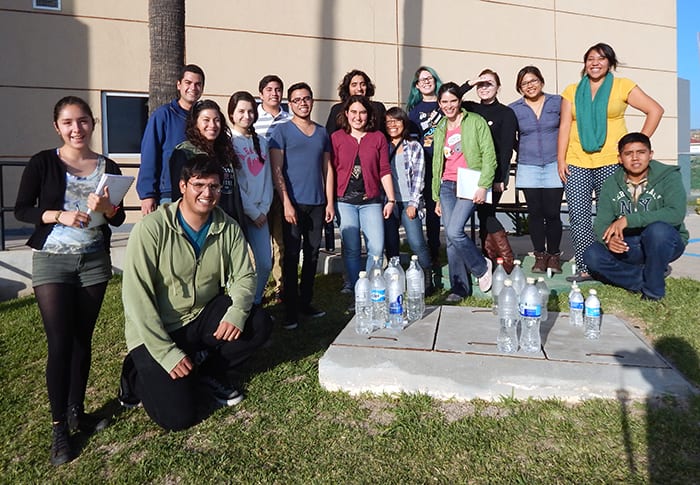
This January, MIT-WHOI Joint Program student Isabela Le Bras became a teacher at a residential course in Ensenada, Mexico, through the organization Clubes de Ciencia, which pairs young U.S. and…
Read MoreBouquet of Tubeworms
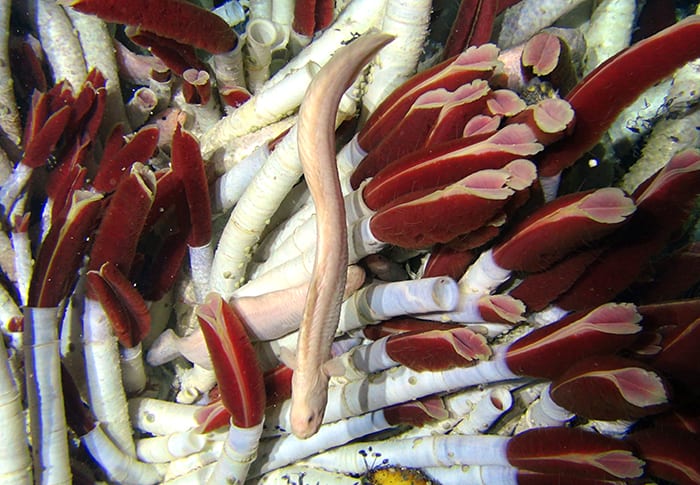
Fish swim amid this vibrant community of tubeworms around hydrothermal vents on the seafloor near the East Pacific Rise. The fish are zoarcids—predators that eat tubeworms, crabs, and other animals living…
Read MoreClean Your Room
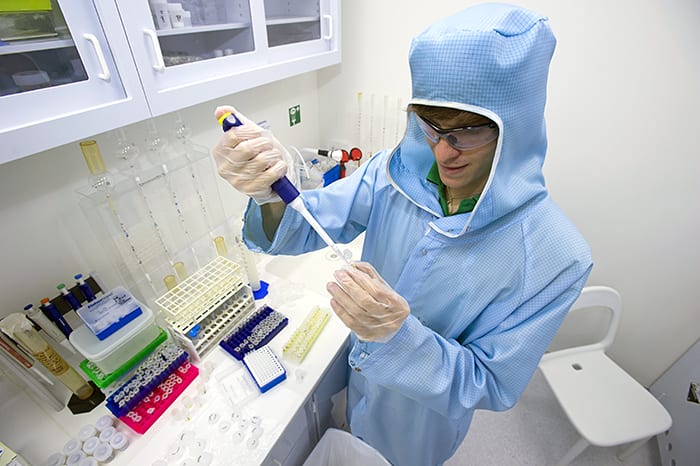
Benjamin Birner, a 2013 WHOI Summer Student Fellow prepares sediment samples in the NIRVANA clean room at WHOI. Birner measured the sediments radiogenic isotopic composition in hopes of identifying how certain…
Read MoreHeady on Healy
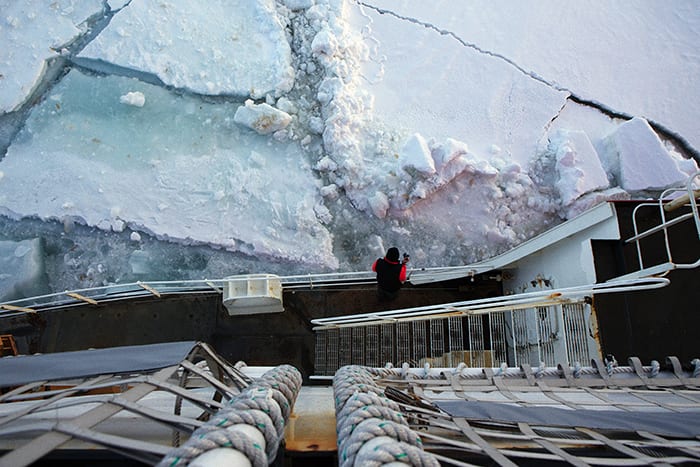
This heady view of the Chuchki Sea comes from aboard the US Coast Guard cutter Healy, which hosted scientists aboard the Arctic Spring research cruise in 2014. Among other science…
Read MoreBuilding a Legacy
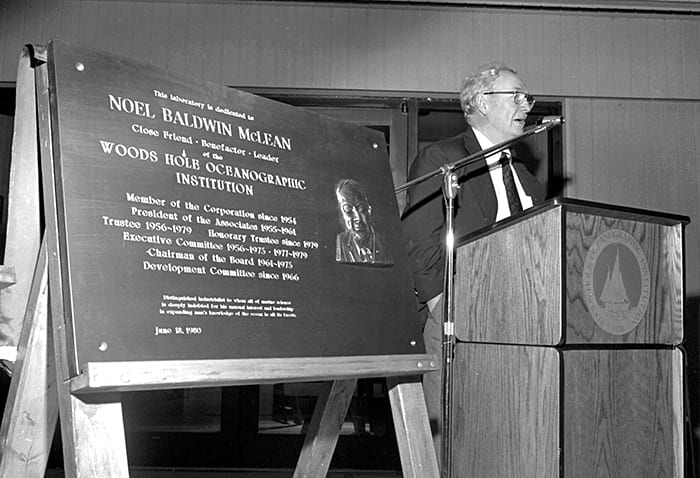
Long-time WHOI Board chairman Noel McLean spoke during the 1980 Associates Dinner dedication of the laboratory building named after him that was built to house geoscience laboratories along with a…
Read MoreNorth with the Spring
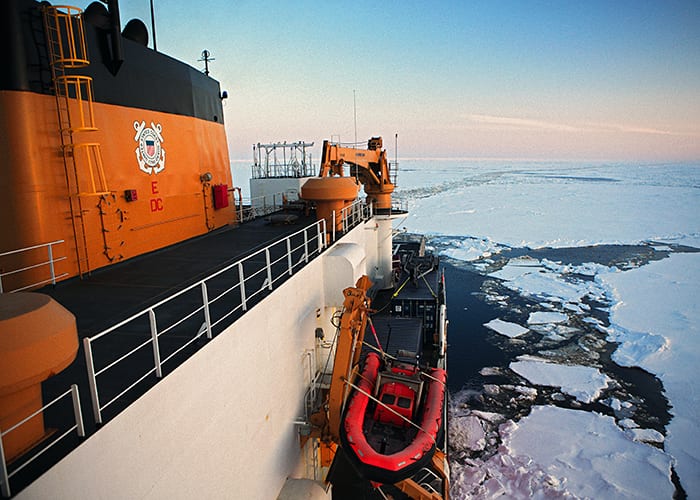
The U.S. Coast Guard Cutter Healy is the nation’s newest and most advanced polar icebreaker. It is also designed to conduct a variety of scientific activities in difficult conditions. It…
Read More