
Multimedia
Living Laboratory
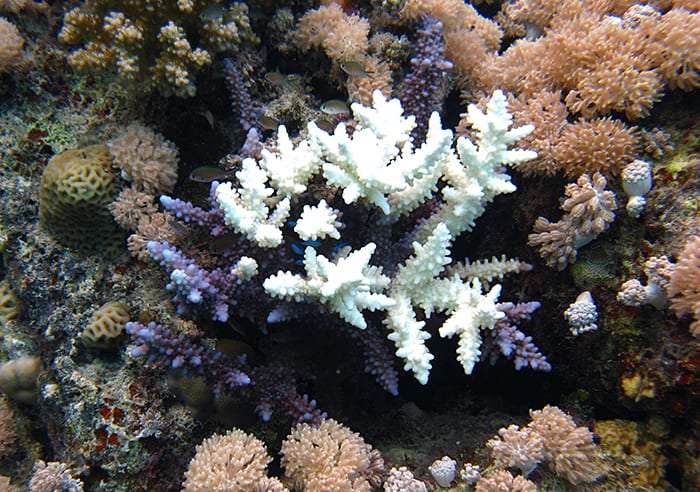
The colors in coral come from symbiotic algae cells living inside individual corals organisms, or polyps. This “bleached” coral has expelled much of its algae in response to the stress of unusually…
Read MoreGone Fishin’
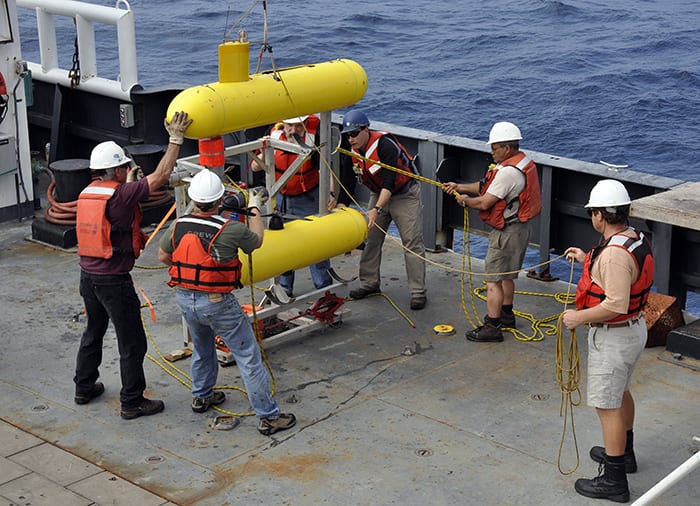
In August 2011, an interdisciplinary team launched a SeaBED-class autonomous underwater vehicle named Mola Mola from the NOAA research vessel Henry B. Bigelow. Scientists on the team came from NOAA, Rutgers…
Read MoreNot a Creature Was Stirring
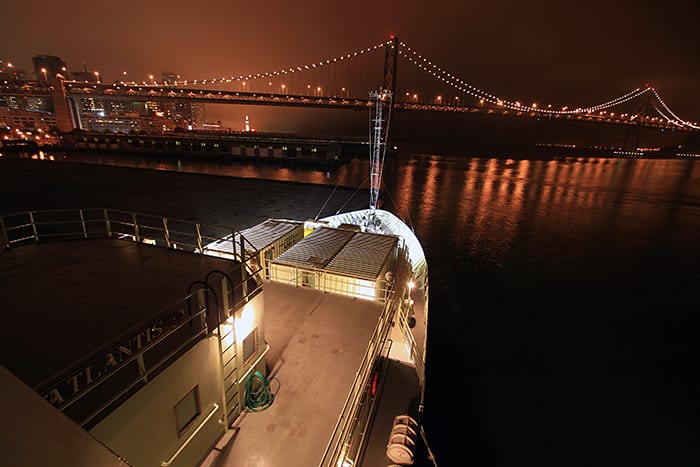
In 2008, the research vessel Atlantis passed a quiet night tied up in the glow of the Bay Bridge between San Francisco and Oakland. Not every night on the water can be this peaceful,…
Read MoreSpring at the Beach
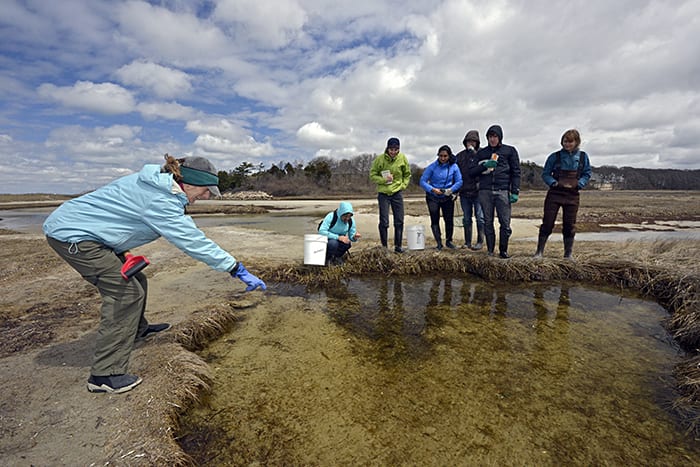
Research specialist Stace Beaulieu points to the location of worm burrows on the bottom of a tide pool during an early spring field trip as part of the Biological Oceanography…
Read MoreSurfing In
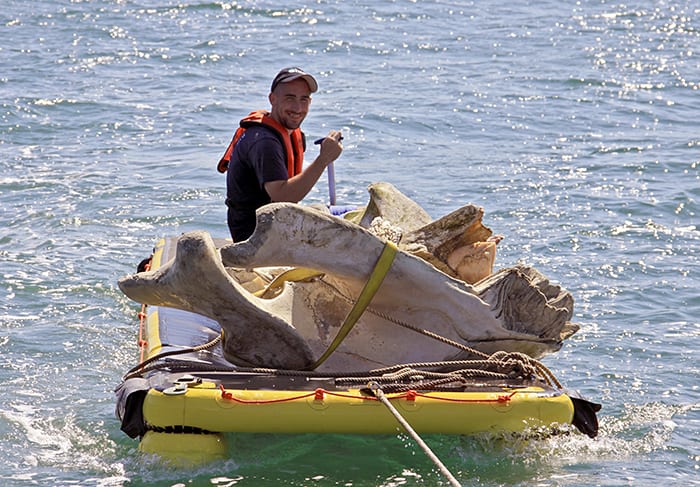
In August 2014, a team that included WHOI biologist Michael Moore was called to examine a decomposing right whale carcass on an isolated rocky beach in Newport, R.I. The team…
Read MoreArt in the Details
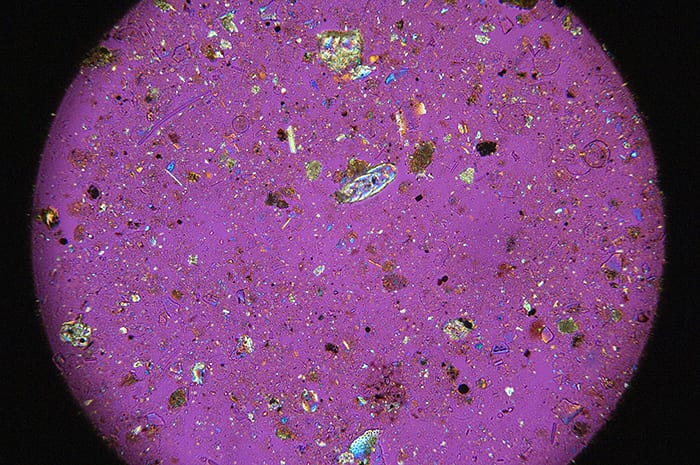
Like each speck of paint in a piece of art, minerals, animal skeletons, and remnants of sea sponges provide a colorful mix when sediment samples from the the Sealoor Samples…
Read MoreRoyal Pain
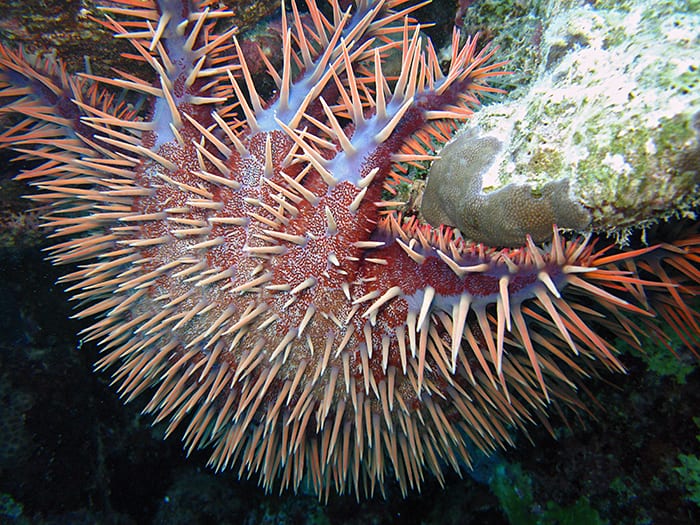
Gliding on hundreds of tiny suction-cup feet, a crown-of-thorns sea star roams the reef, consuming immobile corals and leaving bare coral skeleton behind. Common in the Pacific and Indian Oceans…
Read MoreRescue Mission
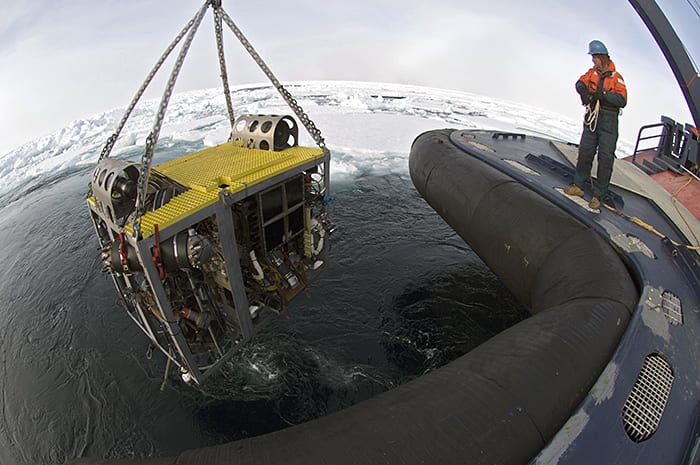
WHOI engineer John Kemp supervised deployment of the towed vehicle Camper from the fantail of the Swedish research vessel Oden during the 2007 Arctic Gakkel Vents Expedition. The vehicle was mobilized to find the autonomous underwater…
Read MoreSnow Below
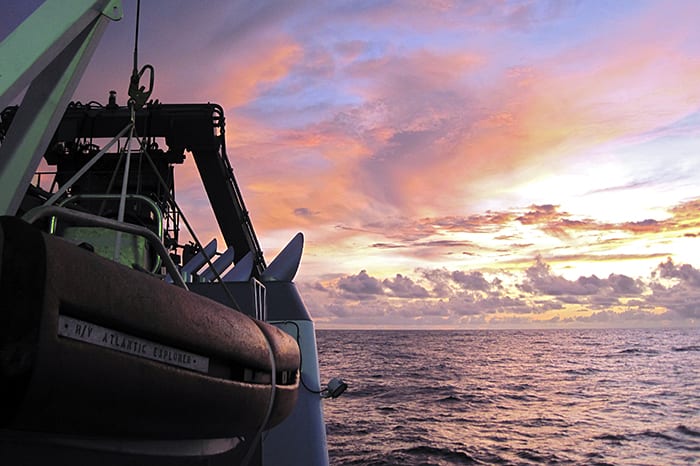
Crew on the RV Atlantic Explorer enjoyed a spectacular sunset during a research cruise in September 2009 in the Sargasso Sea as part of the Twilight Zone Explorer research project led by Ken Buesseler. The…
Read MoreBarnacle Hunt
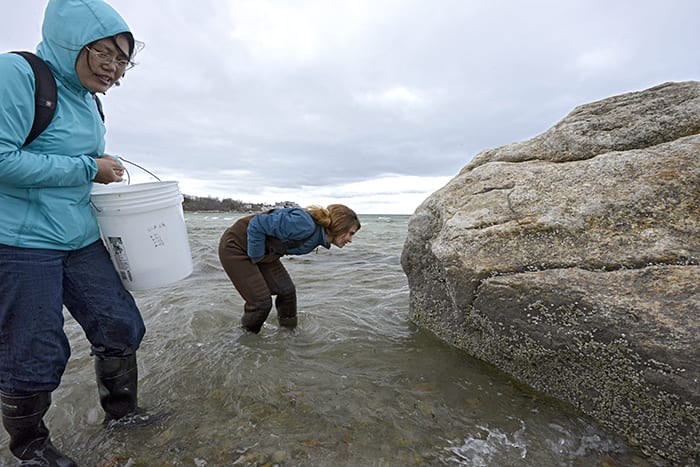
On a chilly spring trip to a rocky beach near Woods Hole, Ping Zuo (left) from Nanjing University and WHOI research specialist Annette Frese Govindarajan look for barnacles recently settled on rocks exposed…
Read MoreNo Autographs
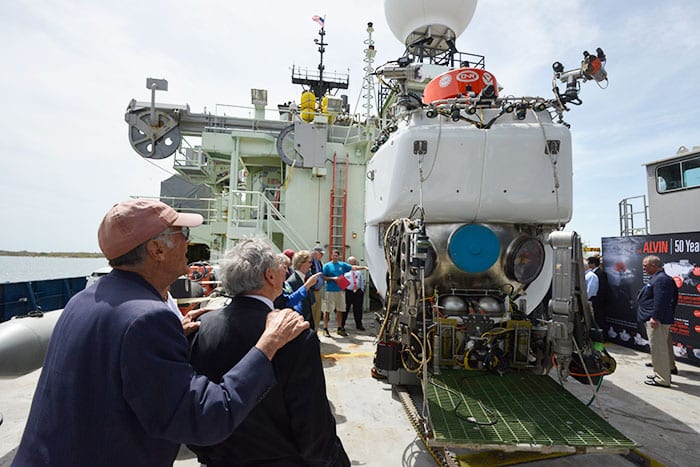
Alvin generates excitement, no matter where it goes. The deep-diving submersible and its support ship, R/V Atlantis, happen to be in Woods Hole at a time that coincides with the Institution’s…
Read MoreOne Extreme to Another
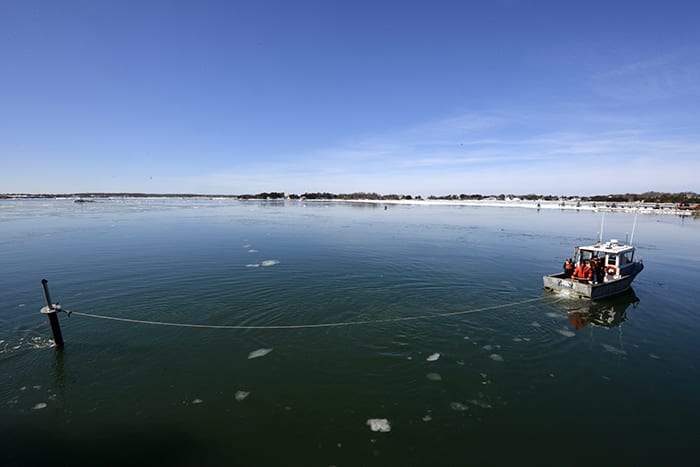
A team on R/V Mytilus keeps a watch on an expendable spar (X-spar) buoy during testing in an unseasonable February cold snap. WHOI Ocean and Climate Change Institute director Carol Anne Clayson…
Read MoreThe Right Tool
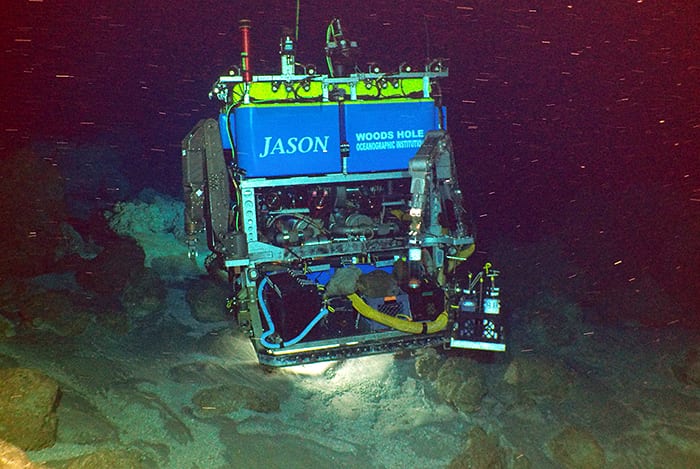
The remotely operated vehicle (ROV) Jason works on the seafloor near the Havre underwater volcano northeast of New Zealand earlier this year. The volcano erupted in 2012 with a force that…
Read More98 in the Shade
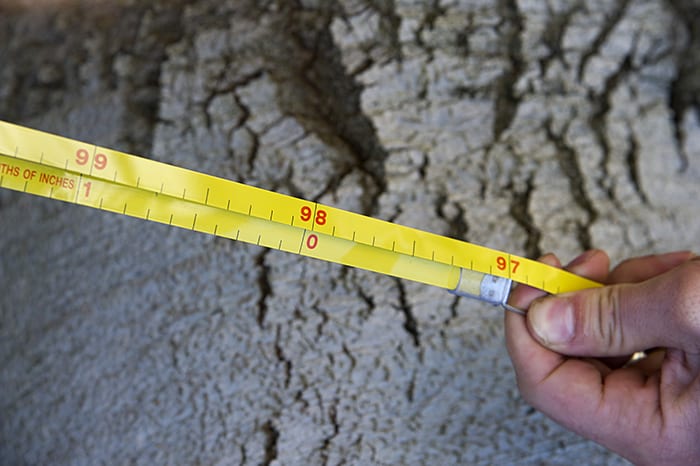
Arborists measure the girth of a massive copper beech tree on Challenger Drive on the WHOI village campus that has provided the Woods Hole community with shade and inspiration for…
Read MoreDeep-sea Takeout
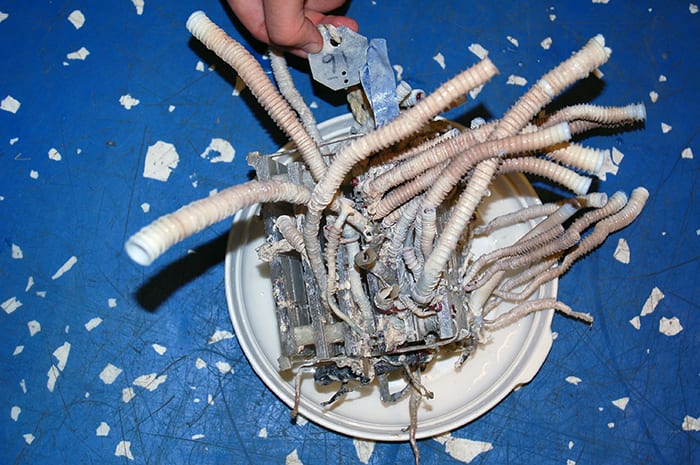
Tevnia jerichonana tubeworms sprout from a “sandwich”—an artificial colonization surface made of non-toxic plastic. This sandwich was recovered from the seafloor after spending 11 months in a hydrothermal vent habitat along…
Read MoreCatch
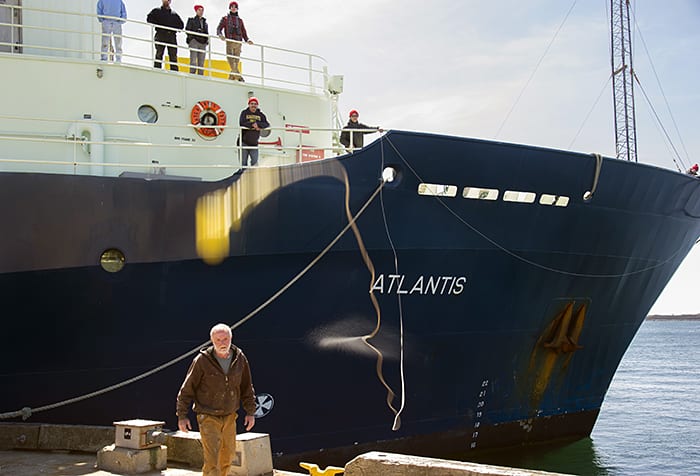
When a ship arrives in port, the first line over the side is usually a thin heaving line with a balled “monkey fist” knot on the end that acts as…
Read MoreEndangered Species Day 2015
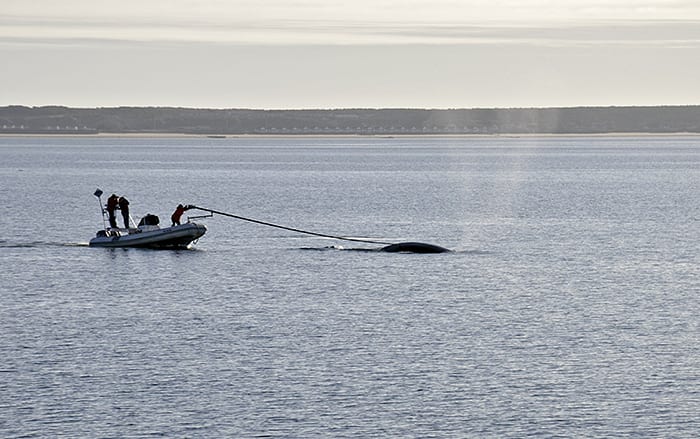
May 15 is Endangered Species Day. In 2010, a team that included experts from WHOI placed non-invasive DTAGs on one of the largest endangered species, and one that frequents the…
Read MorePrepare to Dive
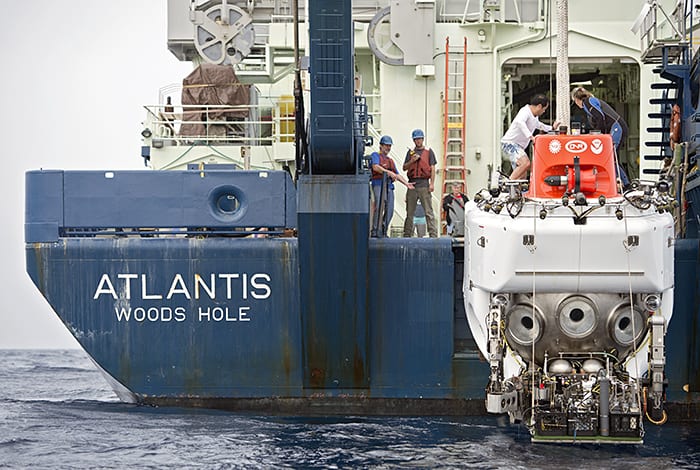
Alvin, the nation’s only deep-sea research submersible, underwent an extensive upgrade between 2011 and 2014. In March 2014, scientists and engineers tested the new sub in a series of dives under…
Read MoreBit O’ Coral
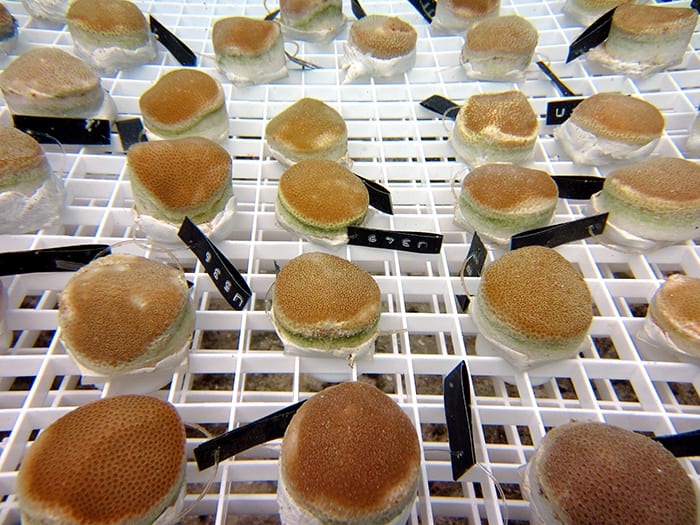
They look like pancakes, but they are actually bits of living coral called “nubbins” with a green band of algae growing inside their skeleton. Coral animals form their hard skeleton…
Read MoreEarning his Stripes
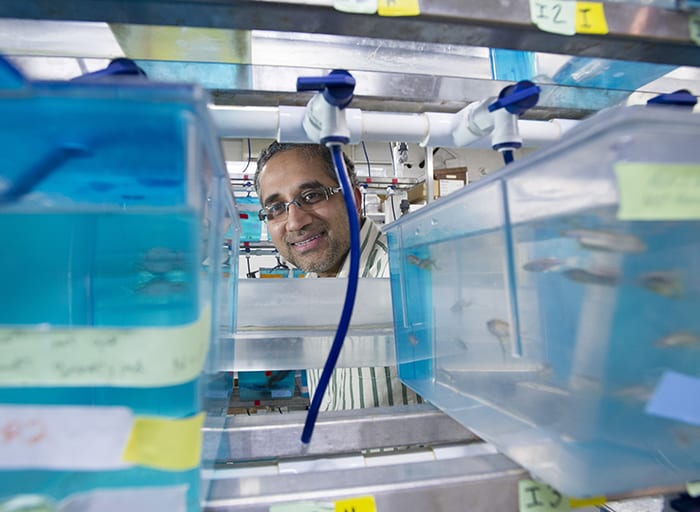
WHOI biologist and environmental scientist Neel Aluru recently received an Outstanding New Environmental Scientist award from the National Institute of Environmental Health Sciences (NIEHS). NIEHS created the award to encourage the…
Read MorePenguins on (Shrinking) Ice
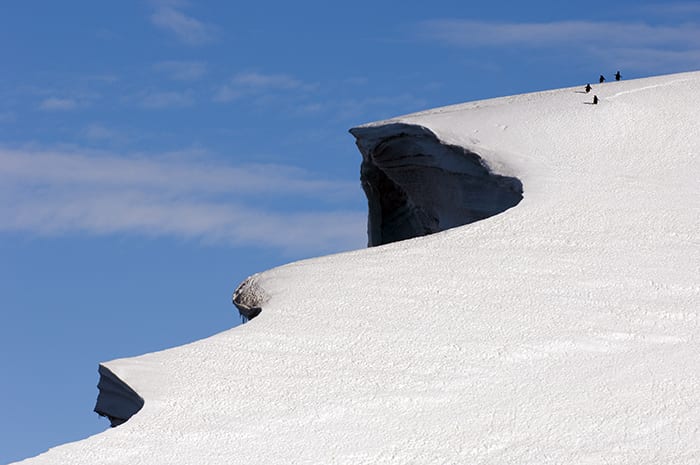
Four penguins march over a massive cornice on their way to a secluded part of the Cape Crozier colony, on the rim of the Ross Sea in Antarctica. The birds,…
Read MoreRemembering Nereus
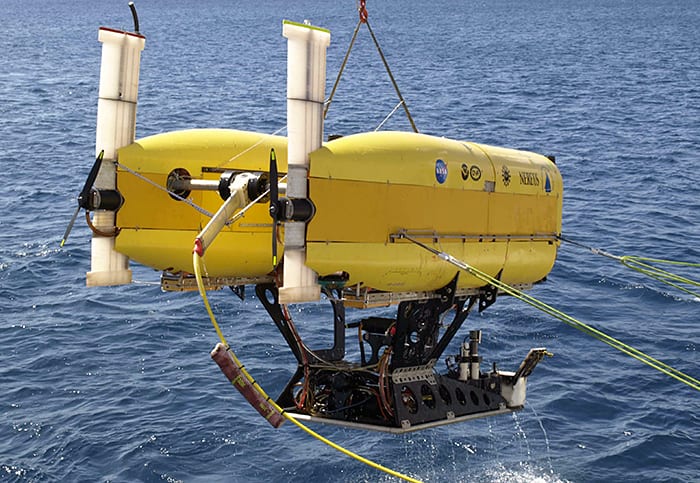
“Nereus was an amazing, groundbreaking robot and the only currently active vehicle in the world that could reach the extreme depths of the ocean trenches,” wrote explorer and filmmaker James…
Read MoreRisk Assessment
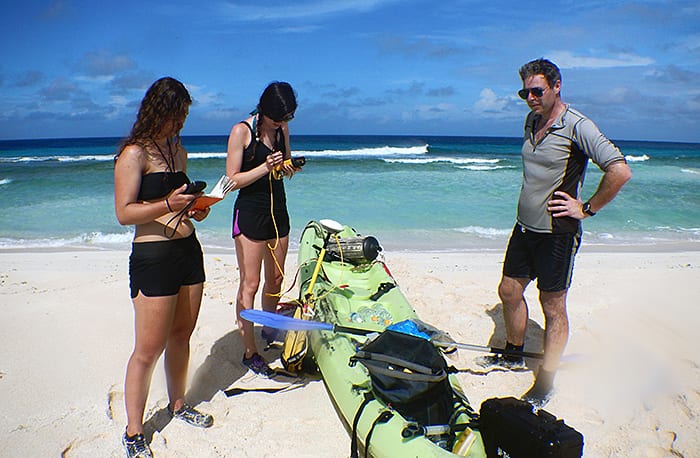
A WHOI team led by research assistant Richard Sullivan and including guest student Charlotte Wiman (left) and research assistant Mollie McDowell prepares to survey waters off the island of Ebadon in…
Read MoreCircle of Life
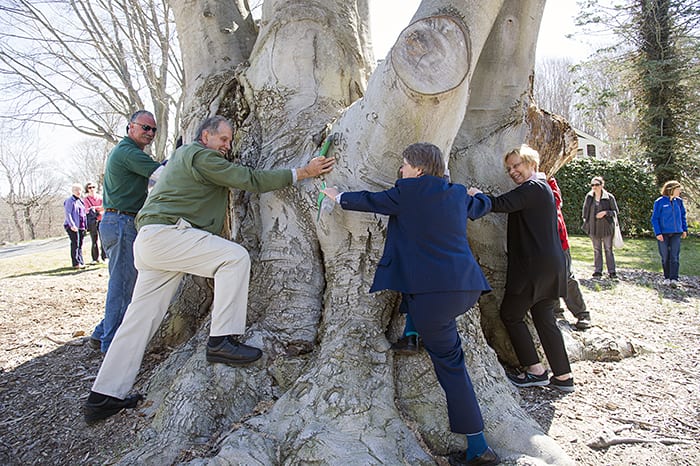
On Earth Day 2015, members of the Woods Hole and WHOI communities gathered to celebrate the life of a European beech tree that has stood on campus for the last…
Read More