
Multimedia
Serving Up Synechococcus
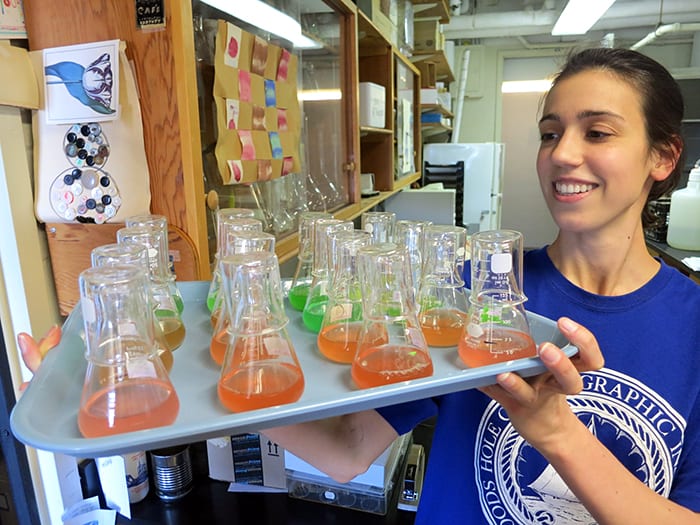
Kristen Hunter-Cevera investigates abundant organisms in the ocean, a photosynthetic bacteria called Synechococcus, that are also an important food source in the marine food chain and produce a significant portion of…
Read MoreDeep-sea Workhorse
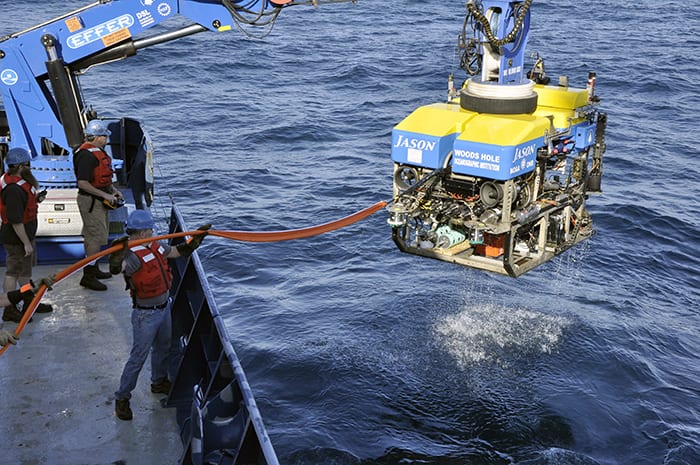
Designed and built by WHOI scientists, the original vehicle Jason was launched in 1988. A more advanced, second-generation Jason (pictured) launched in 2002. Jason is a remotely operated vehicle—a tether links it to a control room on a research…
Read MoreNewbie NUI
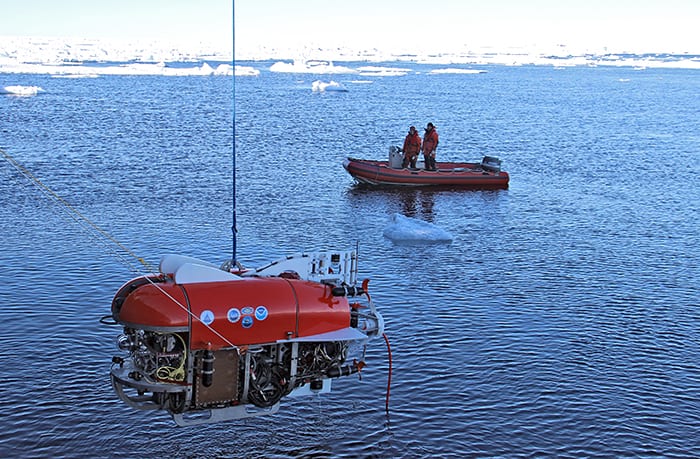
One of the newest vehicles developed at WHOI with funding from the National Science Foundation, Nereid Under Ice (NUI) enables researchers to explore the fascinating extreme habitat under sea ice.…
Read MoreHannibal’s Secrets
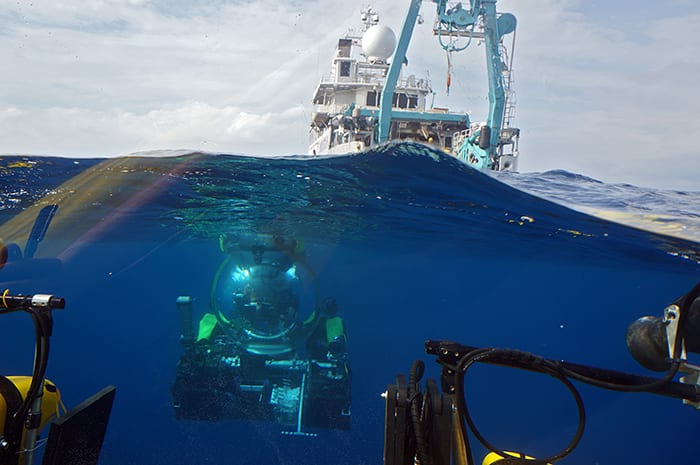
Researchers Jesús Pineda and Vicke Starczak had a front-row view in April 2015 as DSV Rover (pictured) and DSV Nadir descended from the research vessel Alucia to Hannibal Seamount in the Panamanian Pacific. At…
Read MoreSummer Studies
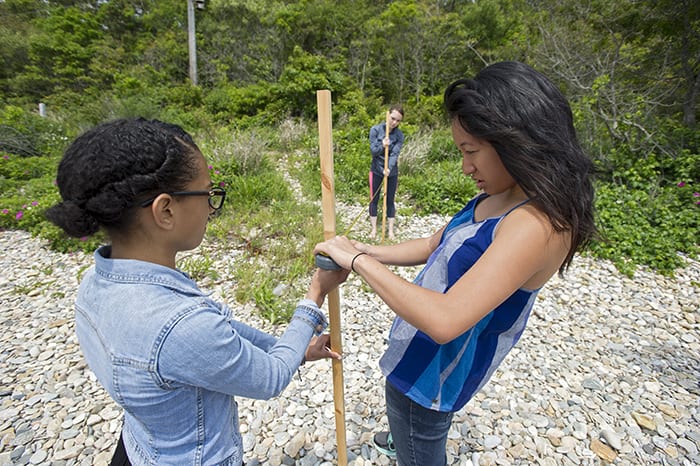
Berlinda Batista of Bridgewater State University, Ellin Rittler of University of San Francisco, and Kelly Luis of Columbia University (left to right) learn how to perform a beach survey in the…
Read MoreBackyard Show-and-Tell
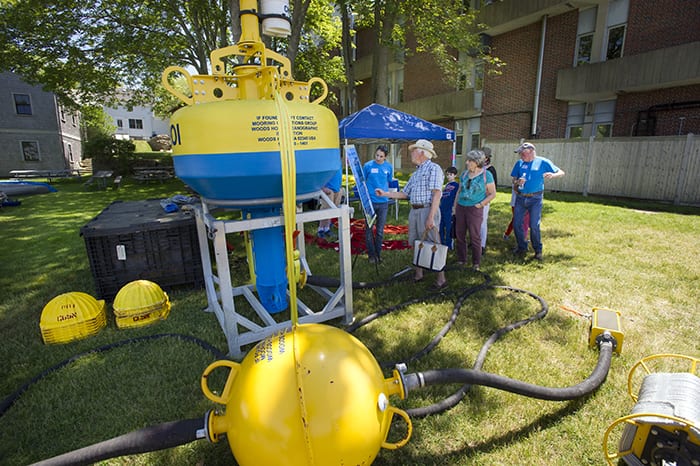
Visitors learned about the the Woods Hole Oceanographic Institution whale detection mooring during a public event in June 2015. The listening system allows researchers to detect the location of right…
Read MoreTwo Men, a Boat, and a Float
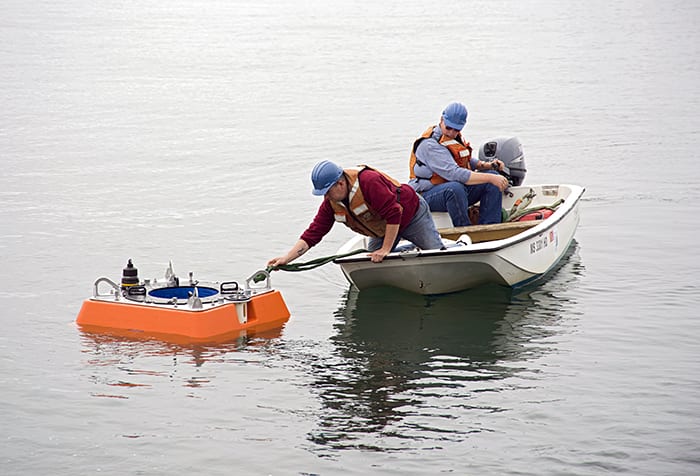
WHOI engineers Jim Dunn (foreground) and Matt Gould test an acoustic-release float in Woods Hole Harbor. The float is packed with thousands of feet of line and designed to sit…
Read MoreEarly Diver
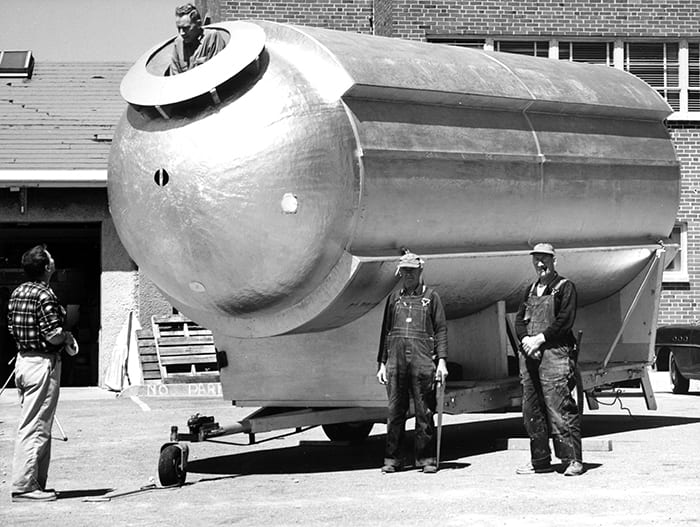
The deep submergence vehicle (DSV) Aluminaut, shown at WHOI in 1961, was owned by the Reynolds Metals Co. (later Reynolds Aluminum) and operated briefly by WHOI in the early 1960s. In…
Read MoreMoored profiler testing
A moored profiler, made by McLane Research Laboratories, is tested in a test tank.
Read MoreSummer Seining
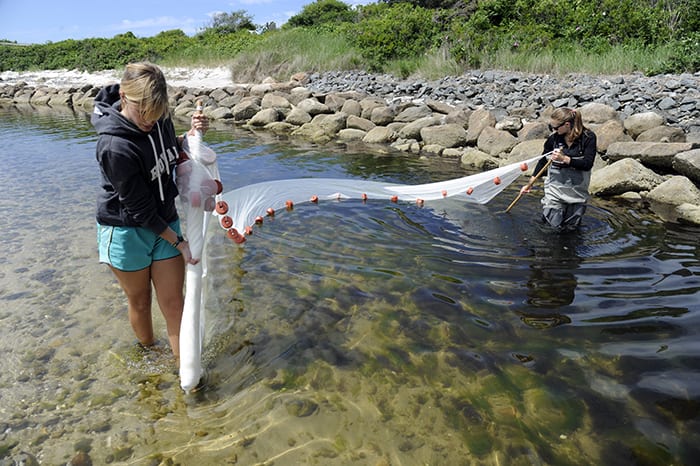
Summer Student Fellow Sara Hamilton (left) and Julie Pringle, a laboratory assistant in the Biology Department, use a seine net during a recent fieldtrip to Wood Neck Beach in Falmouth,…
Read MoreLine on Science
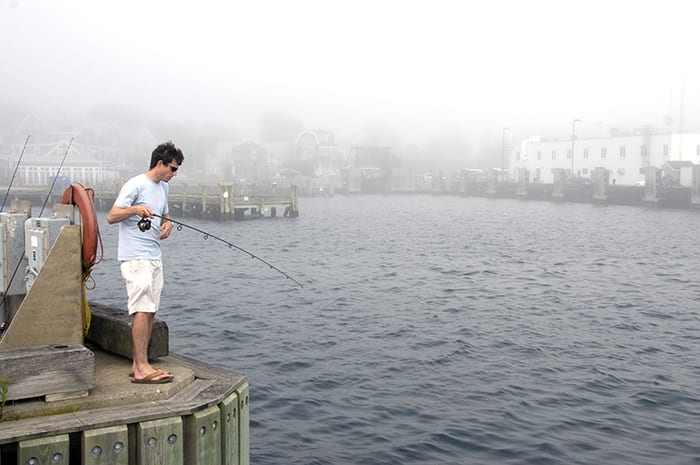
During his time at WHOI as a Summer Student Fellow, William Goldsmith was occasionally seen fishing for research subjects off the Iselin dock. The summer-long program gives undergraduate students an…
Read MoreLab Mates
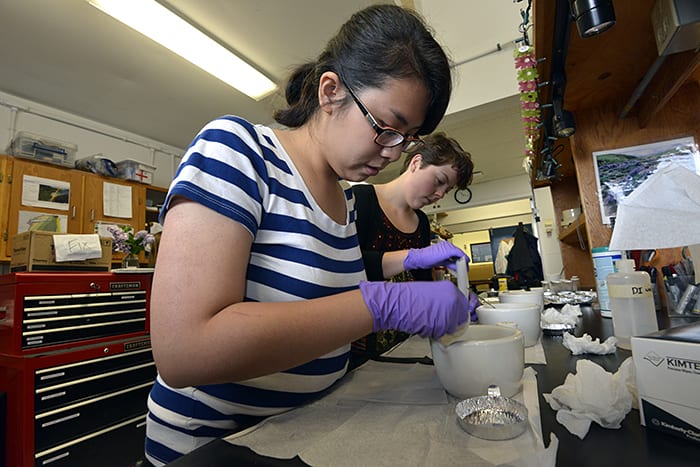
Summer Student Fellow Miranda Cashman (front) and Northeastern University student Michelle O’Donnell prepare samples for a germanium gamma detector in the Coastal Systems Lab run by WHOI geologist Jeff Donnelly.…
Read MoreGreenland GPS
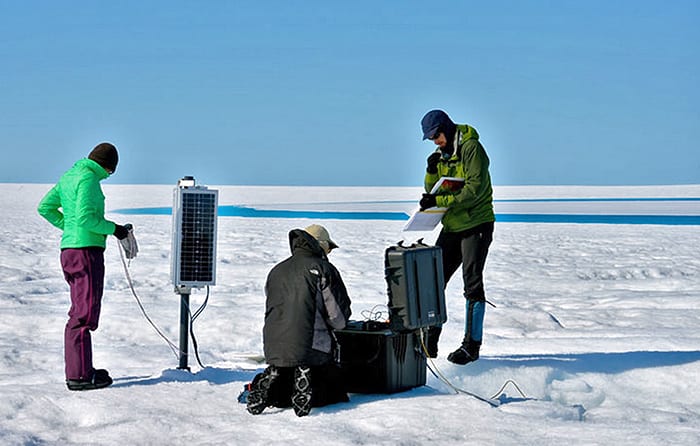
Each spring, the melting ice sheet forms large lakes. A decade ago, scientists discovered that cracks can form suddenly in the bottom of these lakes and drain them within hours. To learn how…
Read MoreWarming Waters
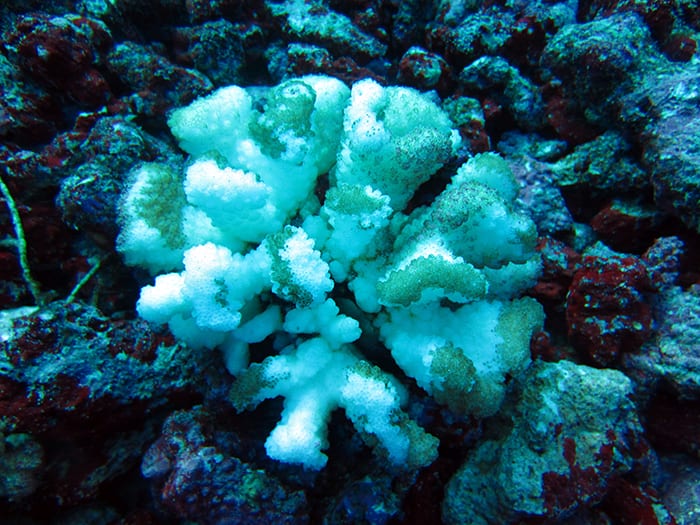
Warming seawater threaten coral reefs by disrupting the relationship between corals and symbiotic algae they host. The corals provide a protected place for the algae to live and chemical compounds…
Read MoreShells at Risk
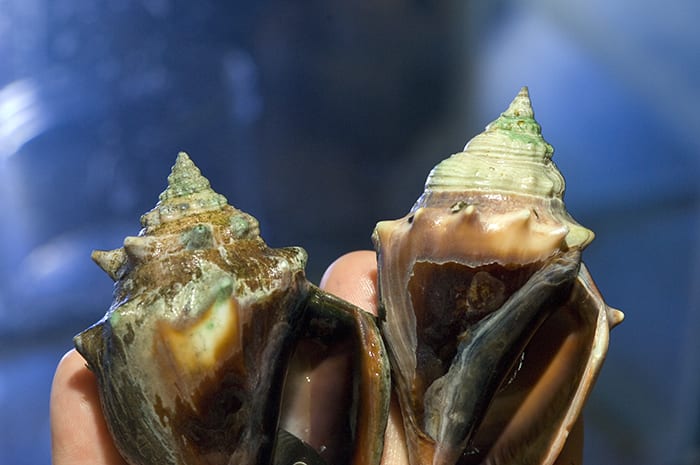
For years WHOI researchers have been studying ocean acidification and its impacts on marine life. In 2009, WHOI postdoctoral scholar Justin Ries (now at Northeastern University) with WHOI scientists Anne…
Read MoreA Stream in the Ocean
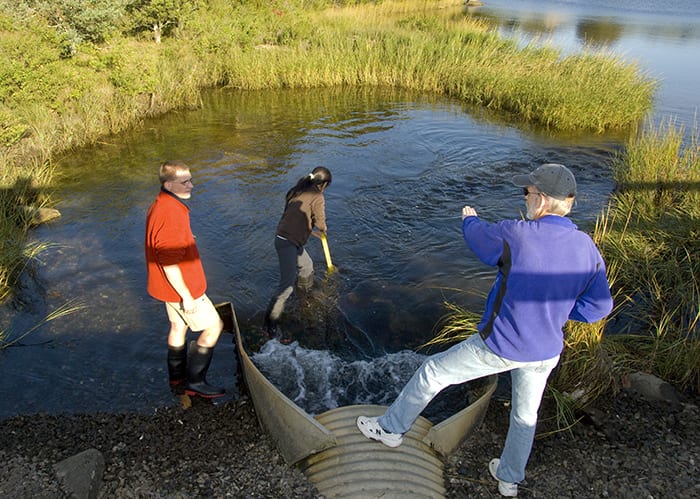
WHOI scientists are often spotted around Cape Cod leading teams of students on class fieldtrips. Sometimes common features on land can even fill in as simplified examples of larger, more…
Read MoreThe More Things Change
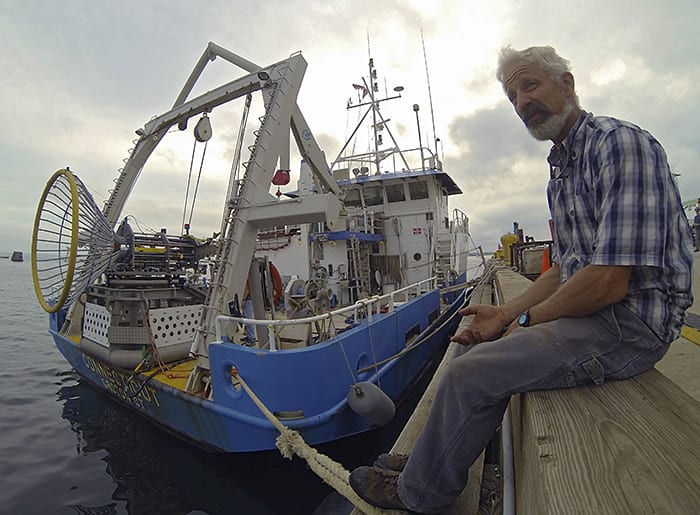
Will Ostrom has seen ocean science change quite a bit in his 40-year career as a technician at WHOI. Here, he takes a break after helping load a REMUS docking…
Read MoreTREET View
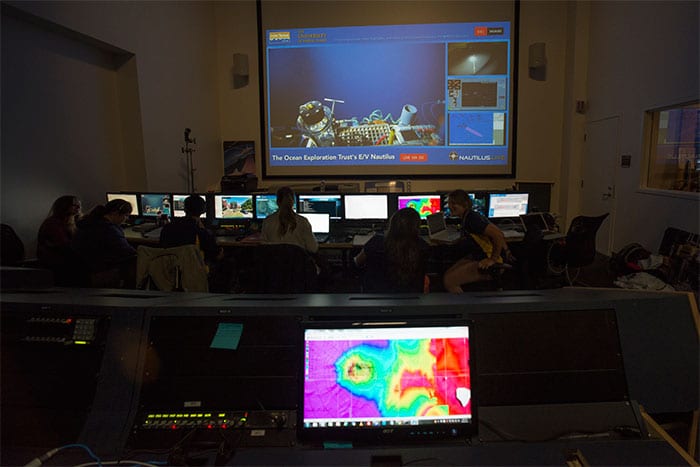
In the fall of 2014, undergraduate science students watched live video and data from the Caribbean in the University of Rhode Island’s Inner Space Center during an expedition investigating deep-sea…
Read MoreKicking Off Summer
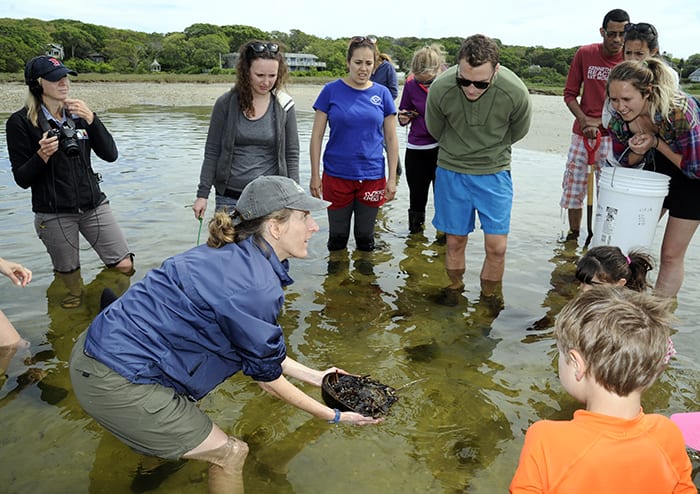
WHOI biologist Stace Beaulieu led a group of undergraduate Summer Student Fellows on a tour of beach ecology during a recent fieldtrip to Wood Neck Beach in Falmouth. The goal…
Read MoreESP Power
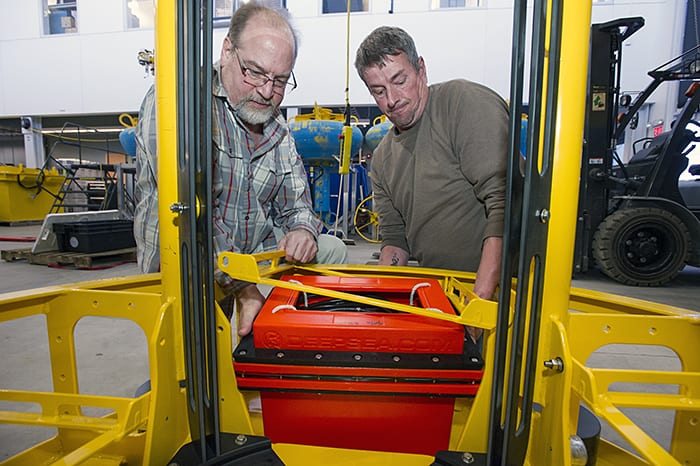
Research associate Bruce Keafer and senior engineering assistant Jim Dunn wrestle a battery pack onto a frame to hold an Environmental Sample Processor (ESP), a computerized mini-laboratory to be moored…
Read MoreWith the Flow
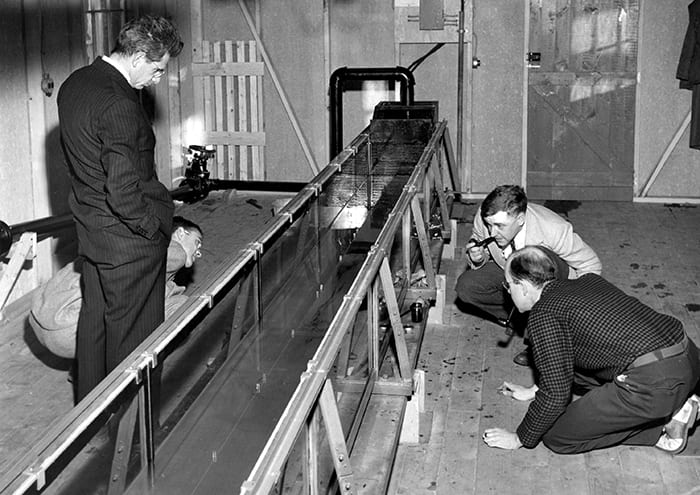
In 1948, this WHOI flume was located in a small building behind the Bigelow Laboratory, and was used for studies of phenomena that included the flow of fresh-water into saltwater.…
Read MoreOil in the Ocean
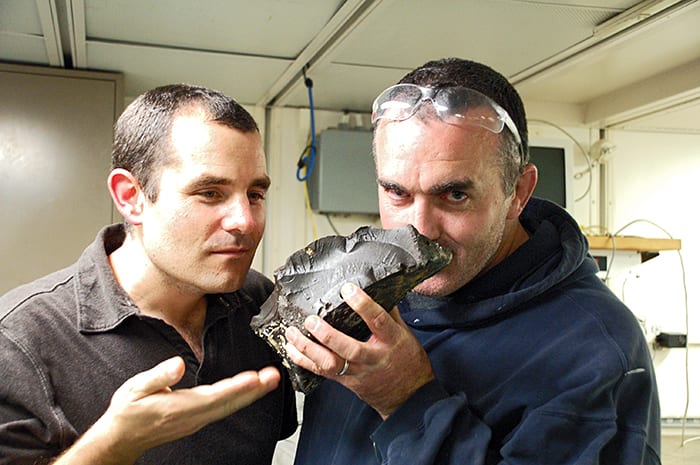
Each year, thousands of barrels of oil seep out of the ocean floor. On a 2009 cruise aboard the R/V Atlantis, WHOI chemist Christopher Reddy (right) and David Valentine of…
Read MoreBuilding the Observatory
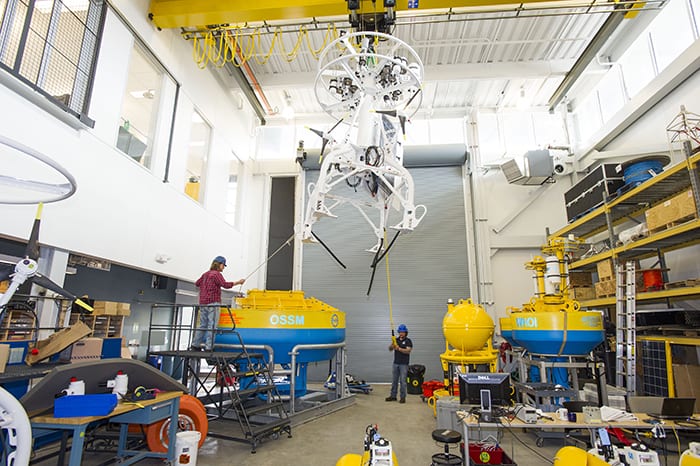
In the high bay of WHOI’s Laboratory for Ocean Sensors and Observing Systems (LOSOS), Jared Schwartz (left) and Steve Caldwell guide a surface mooring tower onto its base, for the…
Read MoreUp From the South
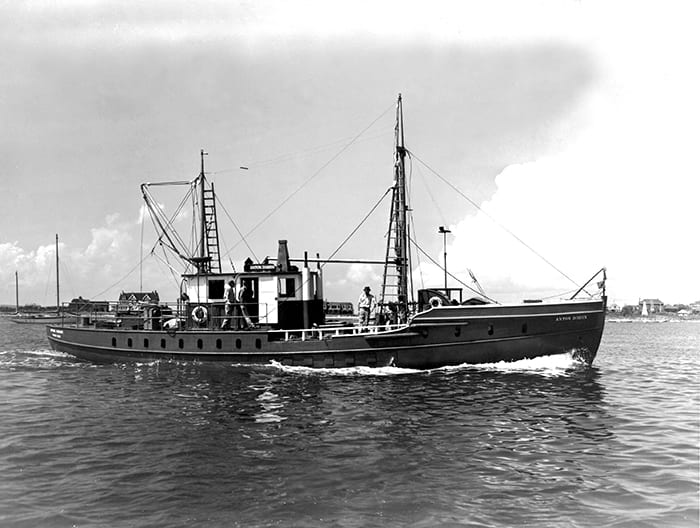
A gift from the Carnegie Institution’s Dry Tortugas laboratory when it closed, the 70-foot (21-meter) Anton Dohrn made 40 cruises from 1940 to 1947 for WHOI investigations from the Gulf…
Read More