
Multimedia
Day Trip
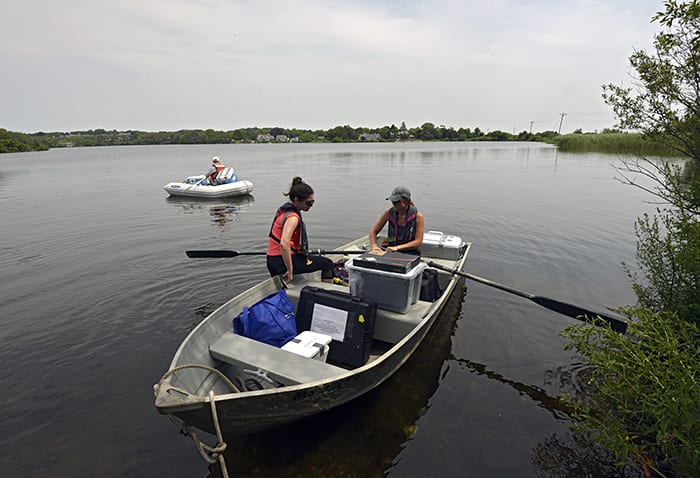
What looks like a well-stocked boat trip is actually a local scientific expedition, as University of California Santa Cruz chemist Carl Lamborg, WHOI post-doctoral scholar Julia Diaz, and WHOI biogeochemist…
Read MoreCores for Climate Change
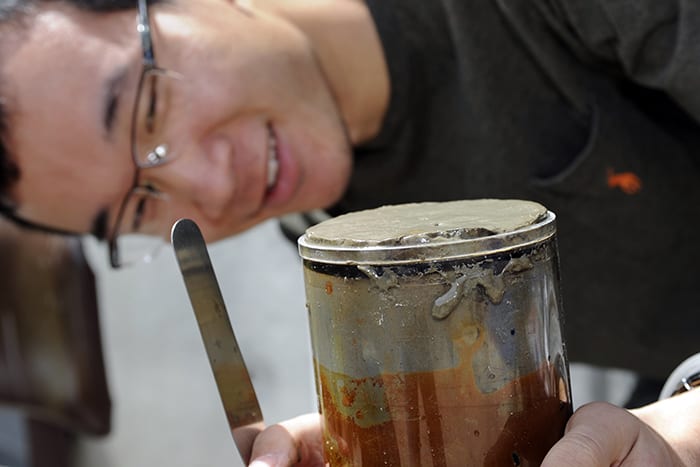
Summer Student Fellow Yuxin Zhou, working with WHOI geologist Delia Oppo and physical oceanographer Jake Gebbie, cuts off sections of a multi-core taken from the research vessel Endeavor in spring of 2014…
Read MoreBatteries Included
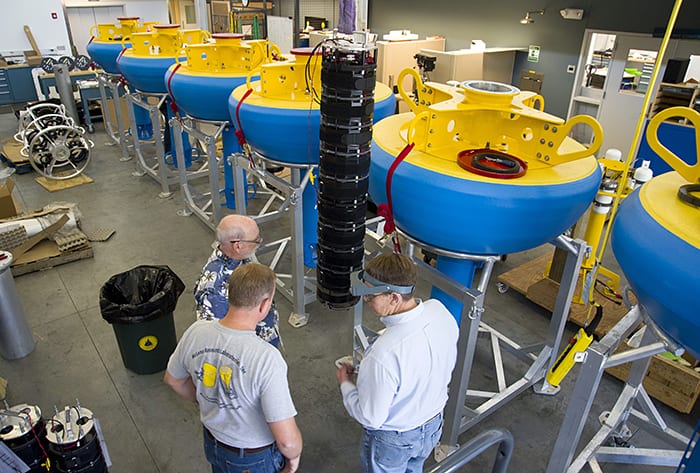
WHOI engineers Rick Sisson, John Lund, and Brian Kelly (left to right) inspect the wiring and leak detector at the bottom of a battery pack that will be inserted in…
Read MoreGuess Your Age?
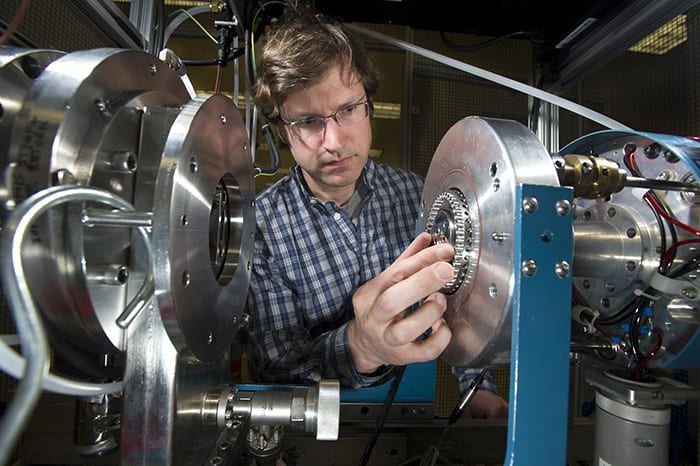
Brett Longworth, research associate in the Geology & Geophysics department, loads a wheel of samples into the ion source of the National Ocean Sciences Accelator Mass Spectrometry (NOSAMS) facility. The…
Read MoreReady to Ride
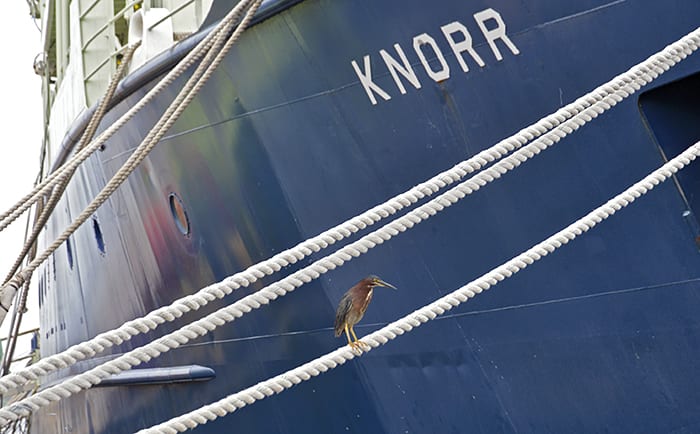
A green heron watched while perched on the R/V Knorr’s dockline in July as WHOI Summer Student Fellows boarded the coastal research vessel R/V Tioga for a day trip in Buzzards Bay.…
Read MoreSubs Away!
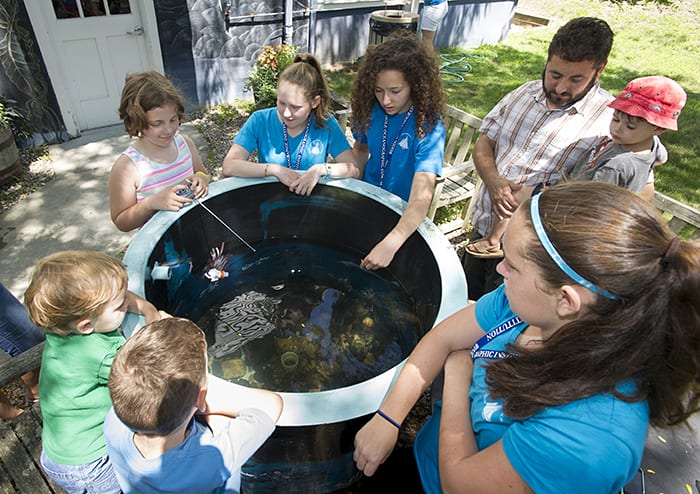
WHOI voluteers show a group of visitors how to pilot a remote-controlled submarine outside the Ocean Science Exhibit Center recently. The popular activity with be part of the Woods Hole…
Read MoreOn Display
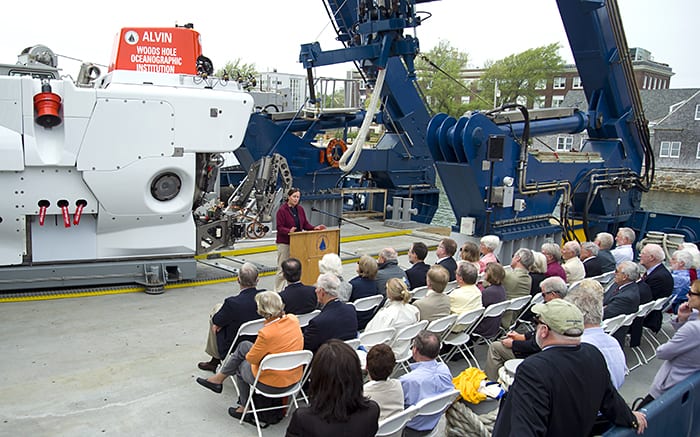
HOV Alvin project manager Susan Humphris spoke to members of WHOI’s Board of Trustees in 2014 in front of the newly refurbished submersible on board R/V Atlantis. On August 9,…
Read MoreTesting, Testing
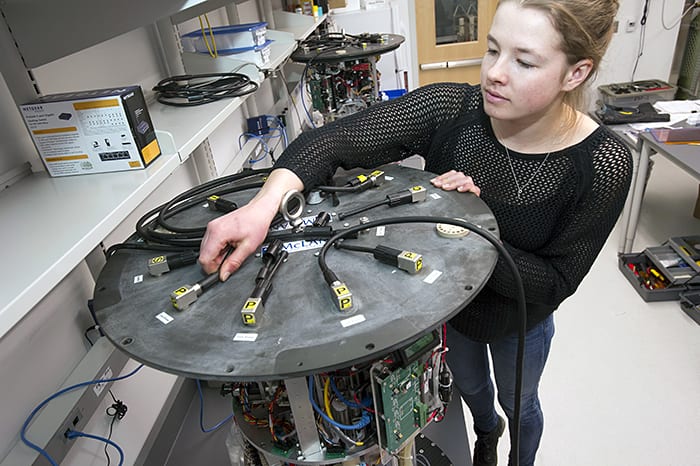
Victoria McGruer, a Northeastern University student working in the lab of WHOI biologist Don Anderson, preps and tests ESPs (Environmental Sample Processors) in the Laboratory for Ocean Sensors and Observing Systems…
Read MoreFamily Portrait
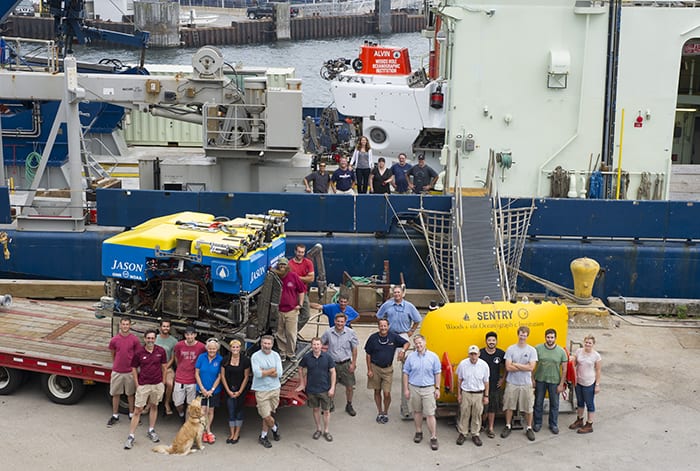
The National Deep Submergence Facility is a National Science Foundation-funded center operated by WHOI for the benefit of the entire US oceanographic community. It includes three deep-diving assets: the human-occupied submersible…
Read MoreAlvin Aloft
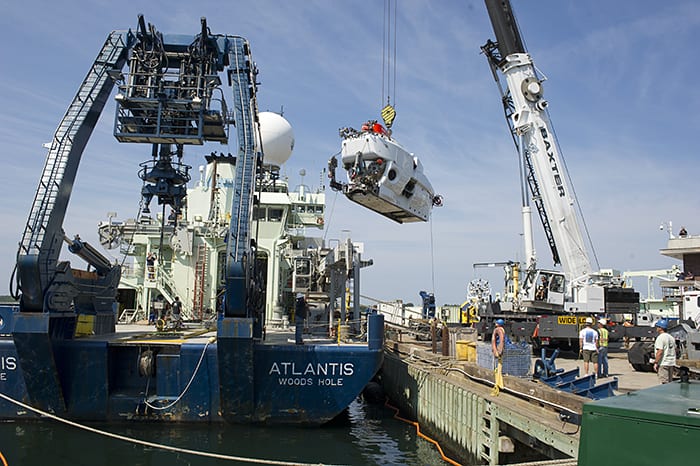
A team carefully unloaded the submersible Alvin from its support ship R/V Atlantis last week, as Atlantis prepares for a series of trips to recover and deploy instruments associated with the NSF-funded Ocean Observatories…
Read MoreMytilus Fine Day
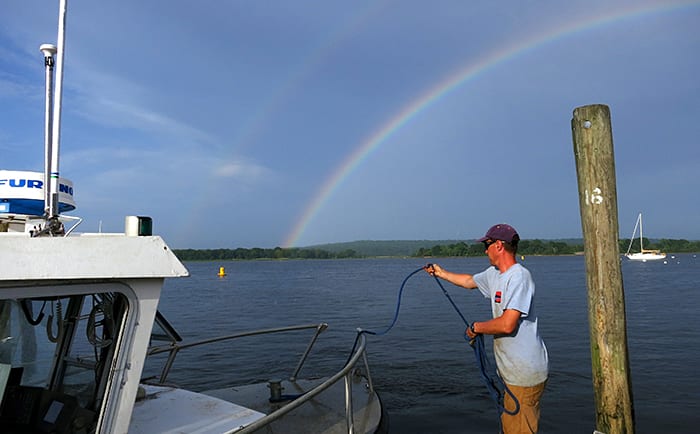
A double rainbow arches over WHOI Associate Scientist Dave Ralston as he ties up the Mytilus, one of several vessels in WHOI’s small boat fleet. Ralston used the Mytilus to deploy…
Read MoreTele-commuting
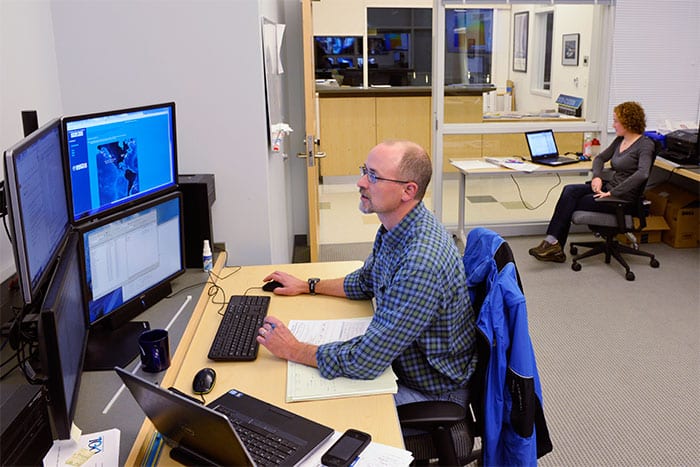
WHOI engineers Peter Brickley (foreground) and Diana Wickman monitored glider deployments occurring from R/V Knorr while sitting in the comfort of the Coleman and Susan Burke Operations Room at WHOI. The…
Read MorePlaying a Part
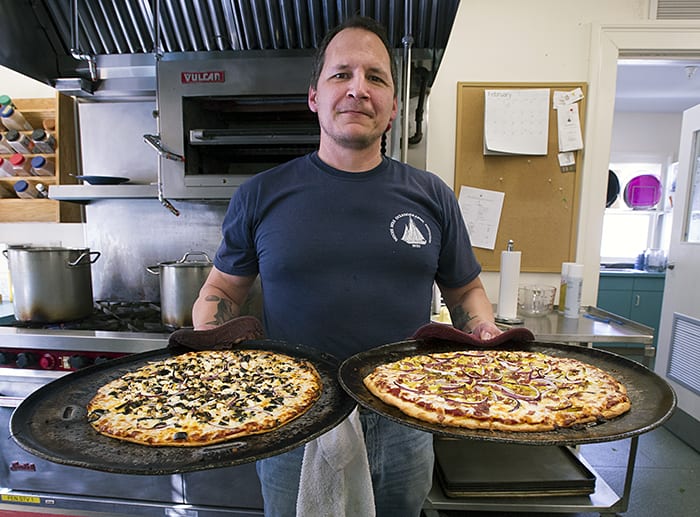
Stephen Drew, WHOI Food Services Planner and cook serves up fresh, hot pizza daily at WHOI’s caffeteria, the Buttery. Drew and the other staff do more than just feed hungry scientists and…
Read MoreCoral Thermometers
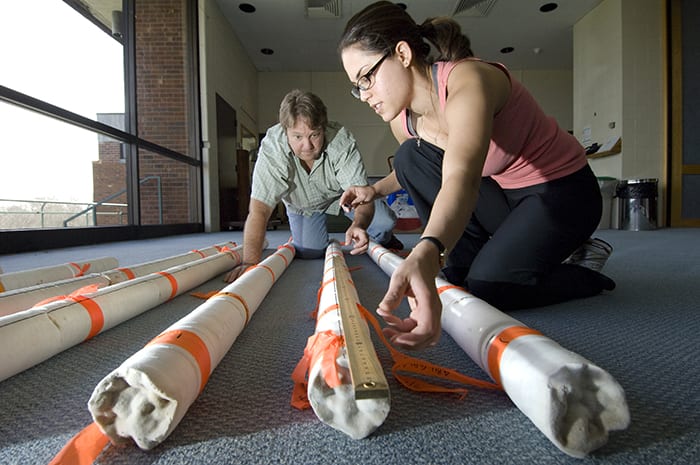
MIT-WHOI Joint Program student Whitney Bernstein and her advisor, Konrad Hughen of the Marine Chemistry & Geochemistry Department, sort and measure cores taken from massive Porites corals in November 2008. After splitting the cores, they…
Read MoreRadiation Detectives
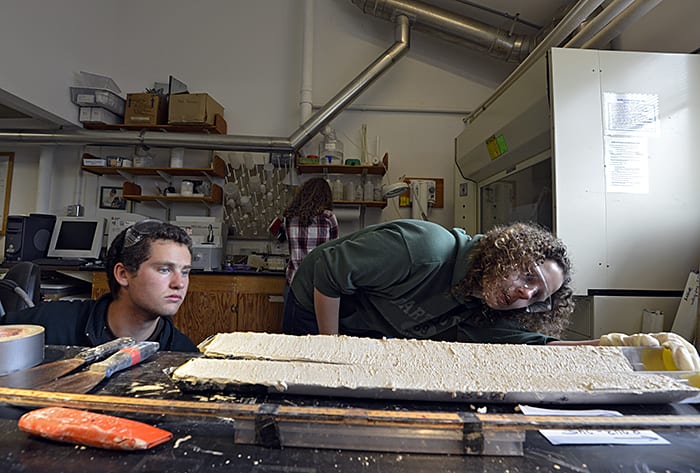
MIT-WHOI Joint Program student Erin Black (right) and guest student Ben Duncan sliced open a marine sediment core taken in January 2015 from the Marshall Islands, site of U.S. nuclear…
Read MoreFeeding Frenzy
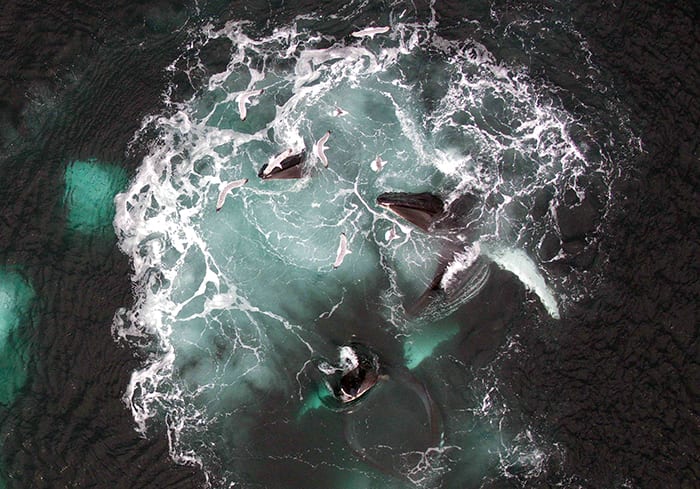
WHOI biologist and Marine Mammal Center director Michael Moore, along with John Durban of NOAA National Marine Fisheries Service Southwest Fisheries Science Center and colleagues, ventured out into Stellwagen Bank…
Read MoreEyes on Plankton
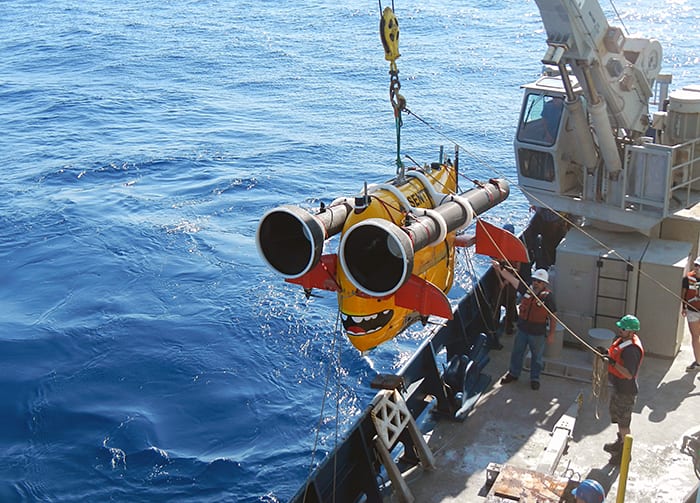
WHOI engineers, together with scientists from Duke University and the University of Oregon Institute recently deployed a novel plankton sampler attached to the autonomous underwater vehicle Sentry from R/V Atlantis.…
Read MoreCool Blue Recovery
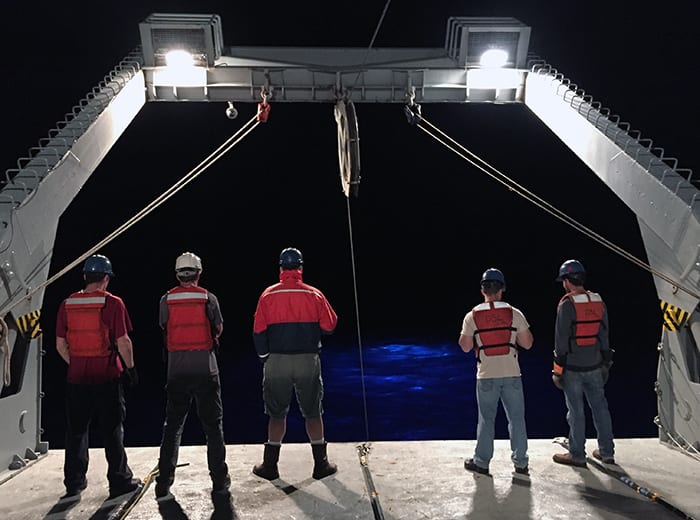
Onboard the R/V Roger Revelle in March 2015, the crew that pilots and oversees the remotely operated vehicle (ROV) Jason awaited the return of Medea, Jason‘s partner vehicle, to the ship…
Read MoreOutlaw Algae in Alaskan Waters
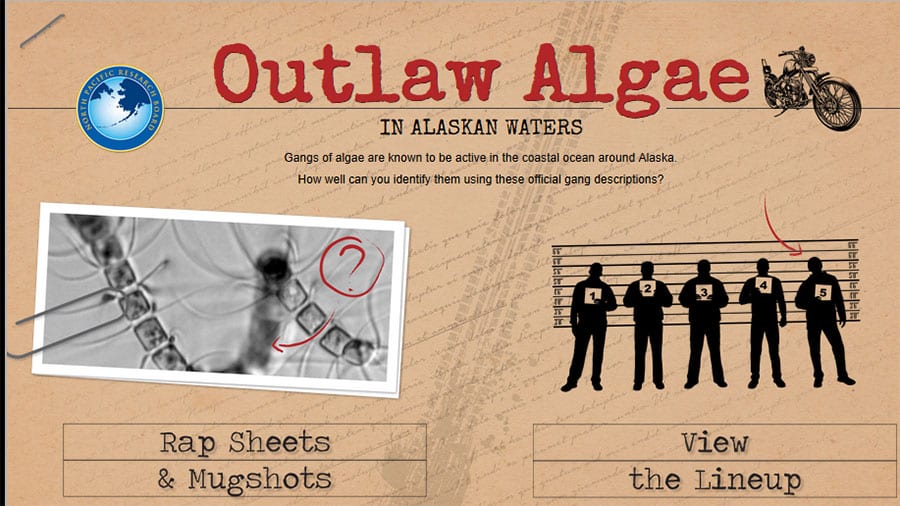
Algae gangs are on the move in Alaska! From “Chain Gangs” to “Cloudmakers,” test your skills and see if you can ID these microscopic troublemakers.
Read MoreMonitoring the Ice
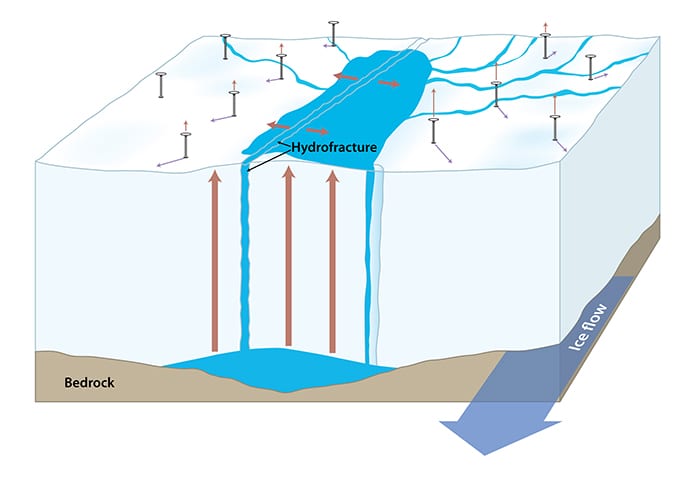
In 2006, scientists at WHOI and the University of Washington discovered that cracks can form suddenly at the bottom of lakes on the Greenland Ice Sheet and drain the lakes…
Read MoreMercury Rising?
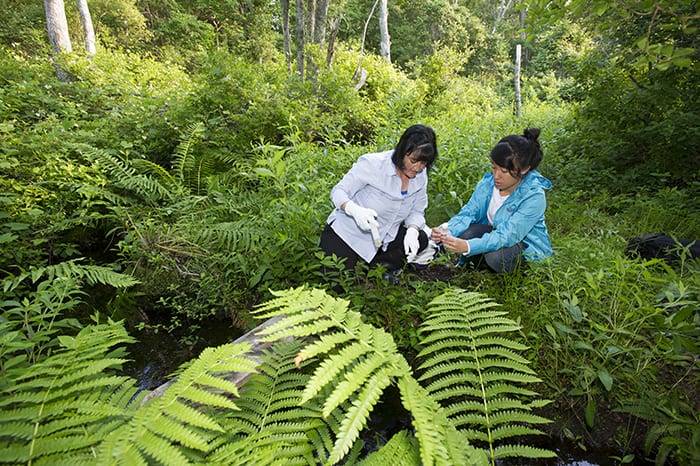
Every summer, up to 15 college students get to work side-by-side with WHOI researchers as part of the Partnership Education Program (PEP), a program founded by six science institutions in Woods…
Read MoreUndersea Constellation
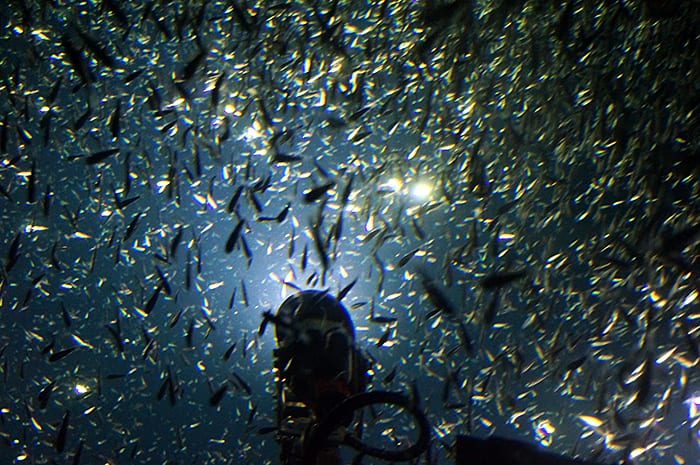
In April, WHOI biologist Jesús Pineda worked aboard the research vessel Alucia, to study the ecology and oceanography of Hannibal Seamount, an undersea mountain rising from 1,377 to 130 feet…
Read MoreOcean Weather Station
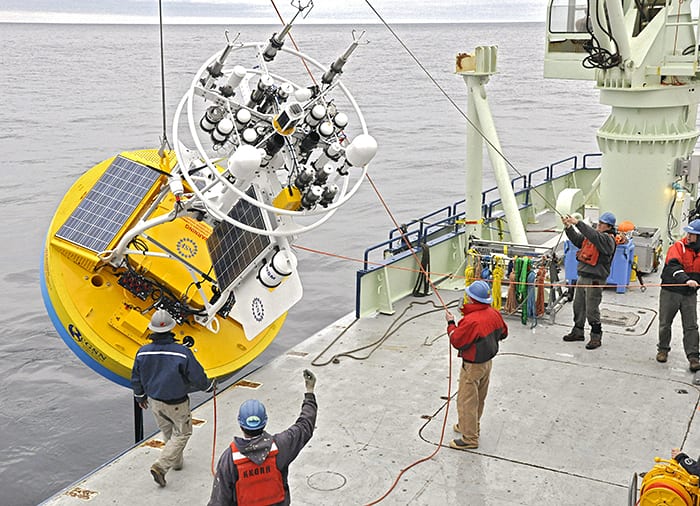
Heavily instrumented buoys like this Coastal Surface Mooring (CSM) being recovered aboard the R/V Knorr, are part of the NSF-funded Pioneer Array, a network of moorings, gliders, and autonomous underwater vehicles (AUVs)…
Read MoreGlide Path
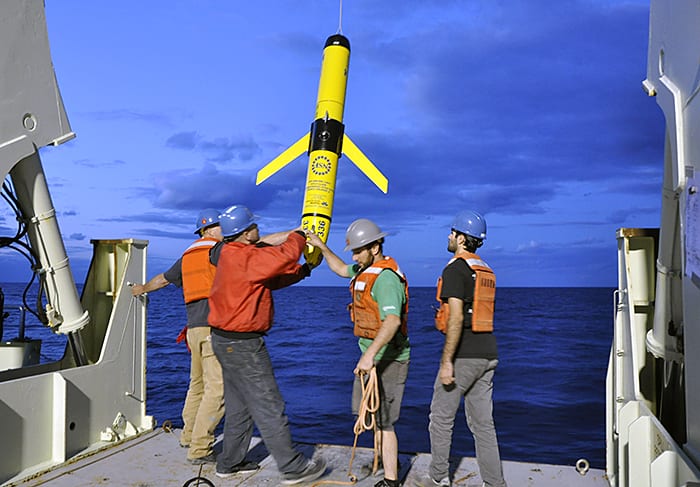
An ocean glider is brought back aboard the R/V Knorr by a WHOI engineering team including (left to right) Jim Ryder, John Lund, Jeff Pietro and Aidan Alai. The glider…
Read More