Multimedia
Hot fluid on a cold seafloor
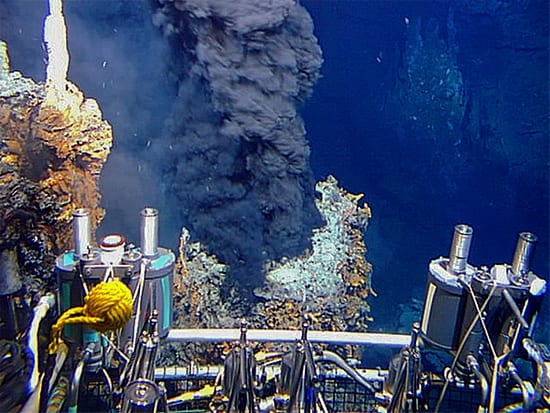
Researchers inside the submersible Alvin watch a black smoker chimney erupt from seafloor vents. Hot hydrothermal fluids surge through the chimneys at velocities of 1 to 5 meters per second.…
Read MoreYippee!
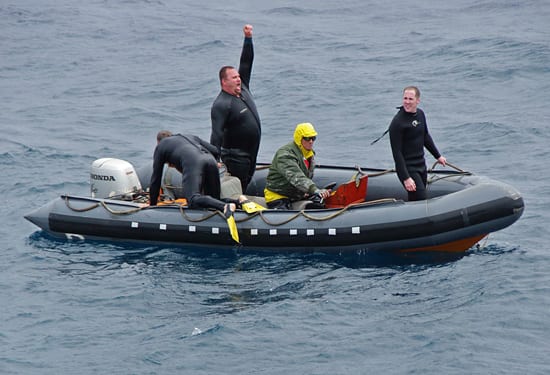
James Brennan II spread the good news last summer after requalifying to become an Alvin “swimmer,” or person who enters the water to assist with the launch and recovery of…
Read MoreFish dish
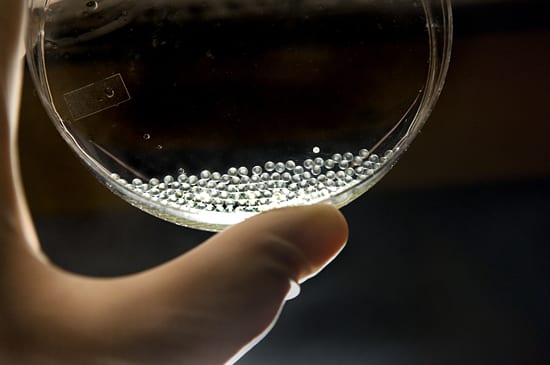
Summer student Lauren Watka from the University of Massachusetts, Dartmouth holds a petri dish of fish eggs from mummichogs, Fundulus heteroclitus. Working with post-doctoral fellow Matthew Jenny in WHOI biologist…
Read MoreChangeable clowns
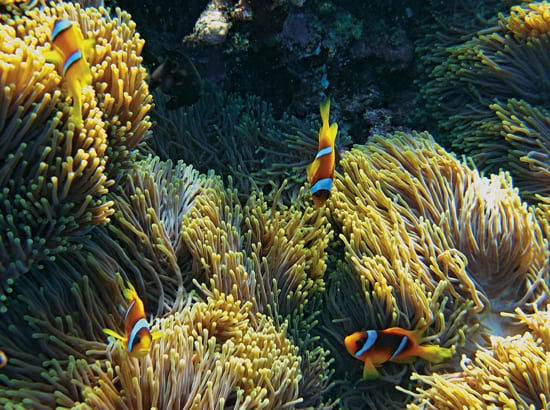
Clownfish, or anemonefish (now commonly referred to as “Nemos,”) swim through what looks like waving wheat—actually the tentacles of their massive sea anemone home, moving with the water’s surge. A…
Read MoreReef’s edge
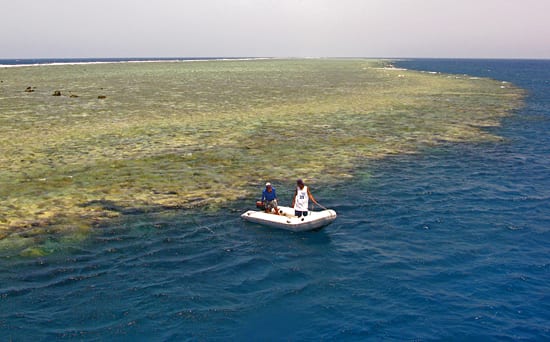
An inflatable boat and dive-tour operators stand by at a coral reef’s edge in the Red Sea, where WHOI scientists are studying the unique, pristine reef ecosystems along Saudi Arabia’s…
Read MoreProfiling below the ice
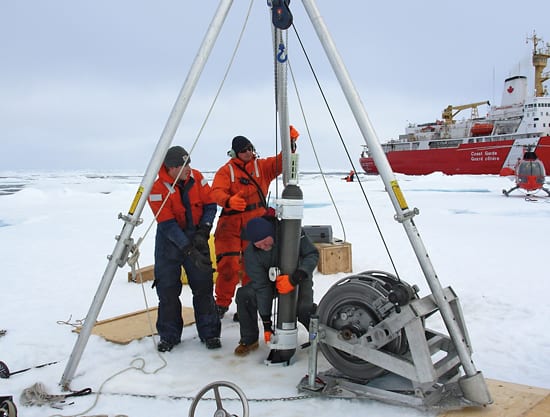
WHOI engineering assistant Kris Newhall (left) and crewmember of the Canadian icebreaker Louis V. St. Laurent Brian Mackenzie (middle) prepare to assist WHOI research specialist Rick Krishfield in deploying an…
Read MoreArctic summer night
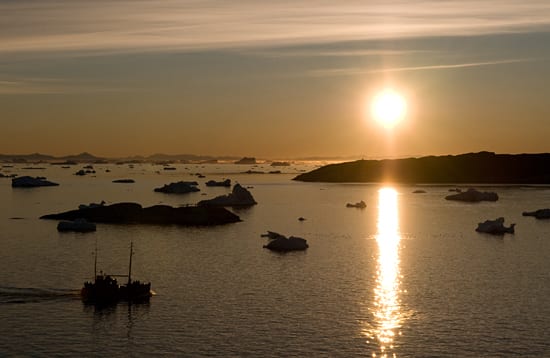
Midnight in Greenland, in the summer, means the sun still shines. “For recent arrivals, the round-the-clock daylight streaming in the hotel windows have wreaked havoc on our internal clocks,” wrote…
Read MoreNew faces at old places
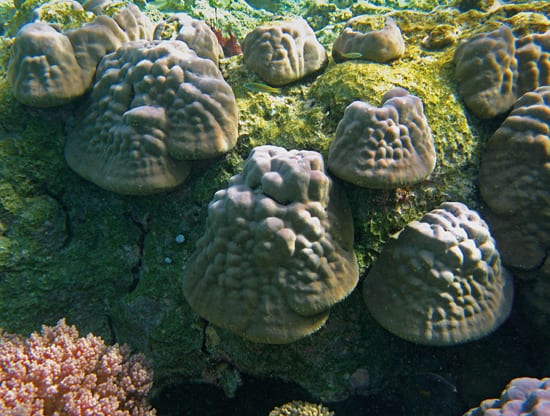
Small mushroom-shaped coral colonies are young recruits that have settled on a large dead coral in the Red Sea. Juvenile corals are continually colonizing hard substrates, including ancient colonies that…
Read MoreMooring away
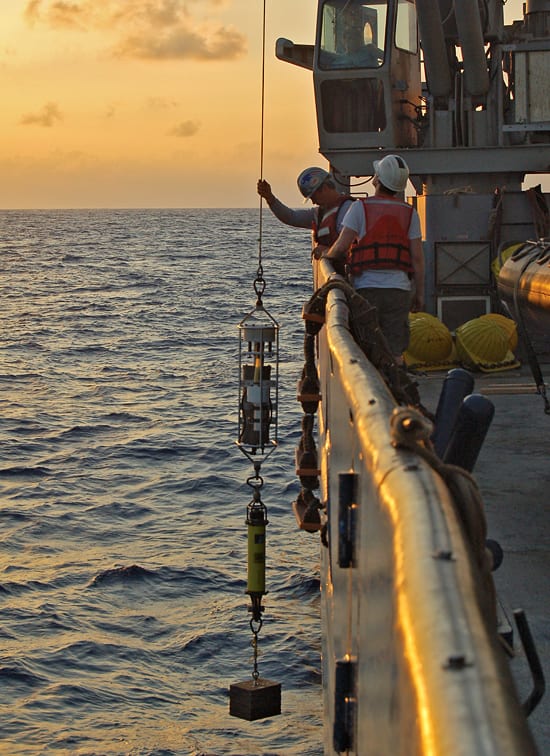
In November 2007, R/V Atlantis Bosun Patrick Hennessy (left) and MIT/WHOI Joint Program graduate Benjamin Walther deploy a pump mooring during the LADDER III (LArval Dispersal on the Deep East…
Read MoreWhat Makes the Great Ocean Currents Flow?
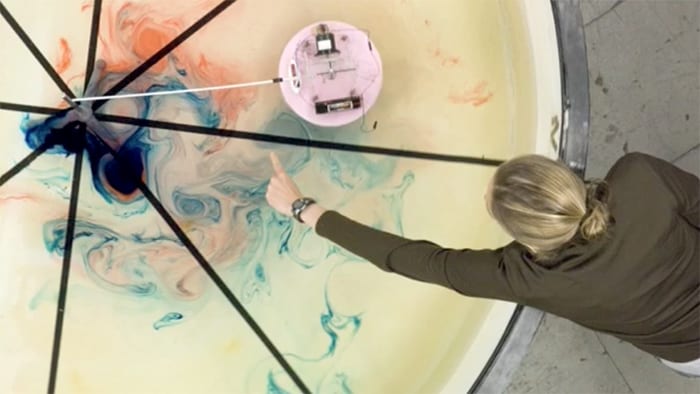
A graduate student explores the Gulf Stream and the Kuroshio
Read MoreTracking reef fish larvae
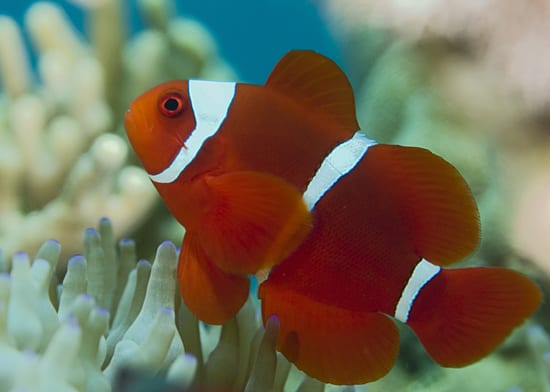
A spine-cheek anemonefish (Premnas biaculeatus), or maroon clownfish, swims along a coral reef in Kimbe Bay, Papua New Guinea. As part of an international collaboration, WHOI biologist Simon Thorrold and…
Read MoreA Deep-sea Chemical Sniffing Bloodhound
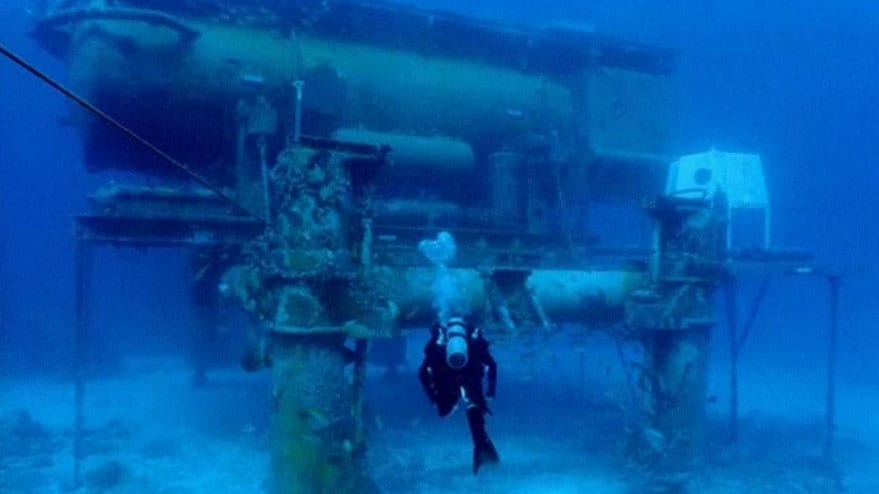
Learn why WHOI deployed a compact, deep-sea mass spectrometer—an underwater “bloodhound”—to sniff and analyze trace chemicals in the ocean.
Read MoreSlow motion destruction
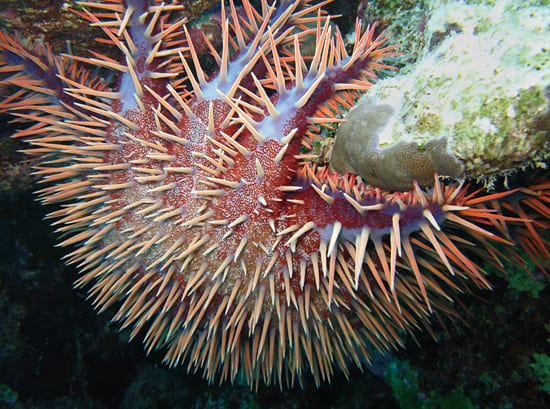
Gliding on hundreds of tiny suction-cup feet, A Crown-of-thorns sea star roams the reef, consuming immobile corals and leaving bare coral skeleton behind. Common in the Pacific and Indian Oceans…
Read MoreExperimental crystals
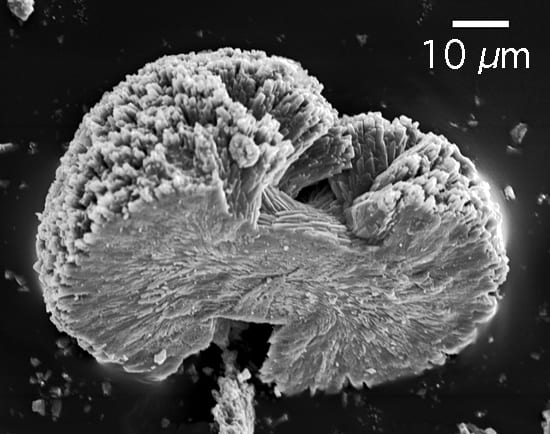
Crystals of aragonite, a form of calcium carbonate, grew together in a “bowtie” bundle—a classic mineral crystal growth pattern—when grown in the laboratory under controlled experimental conditions. This experiment is…
Read MoreBuoys hunting for data
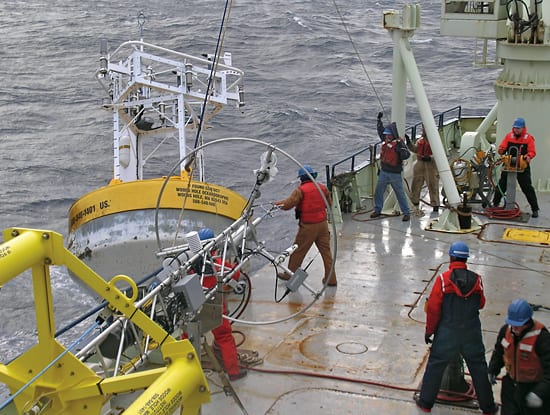
Researchers and crew on the research vessel Knorr prepare to recover a meteorological buoy that had broken loose in February 2007. They were in transit to the fourth of six…
Read MoreChristmas Coral
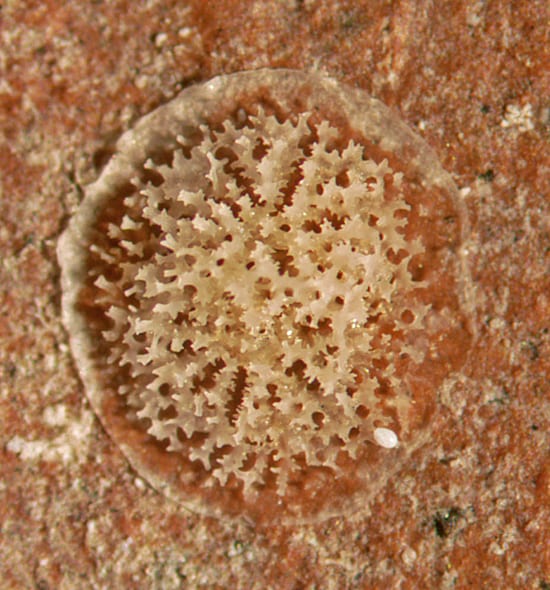
New skeleton made by a two-week old baby Porites “porous” coral reared in an experimental aquarium at the Bermuda Institute for Ocean Sciences looks like a miniature Christmas tree. The…
Read MoreA warning
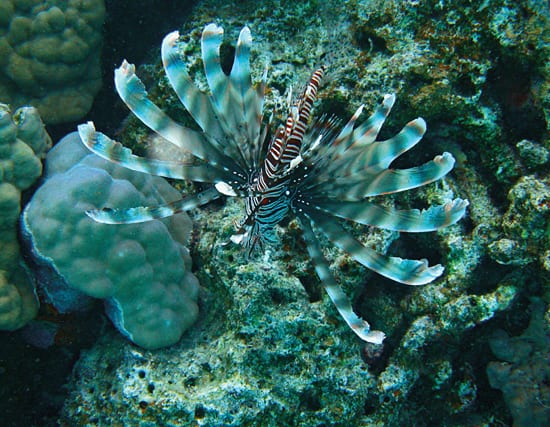
A lionfish spreads out distinctively-patterned fins around its body and shows its zebra stripes. Such striking beauty hides a deadly secret: the lionfish has venomous spines hidden among the dorsal…
Read MoreBacterial conversations
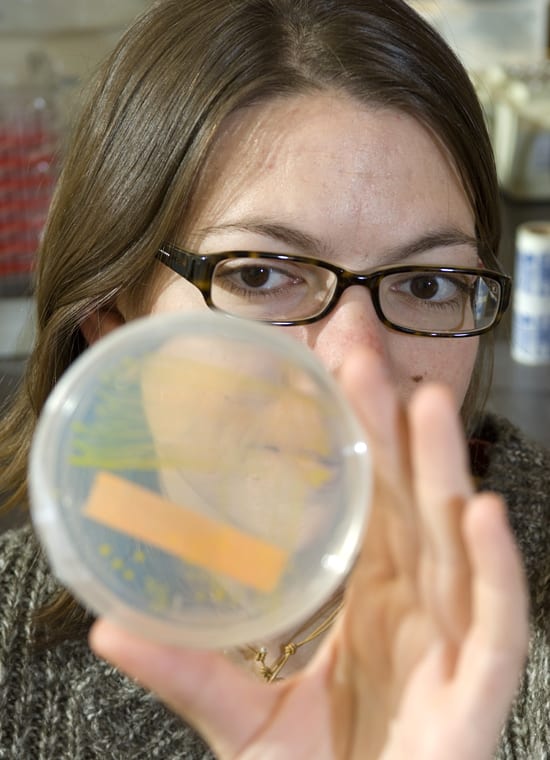
Holding up a culture plate, Joint Program student Laura Hmelo checks the growth of bacterial colonies. Hmelo is studying a phenomenon called bacterial “quorum sensing”— how marine bacteria found in…
Read MoreA very long corer
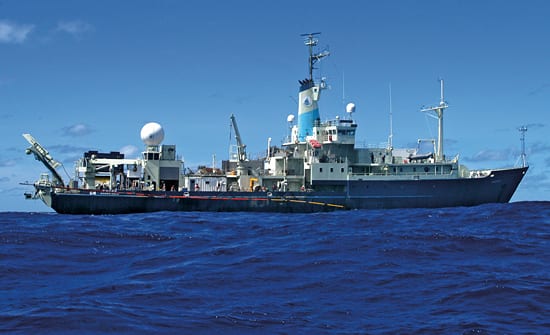
In 2007, WHOI geologists retrieved the first sediment cores with the newly installed “long-corer” on the research vessel Knorr. Bill Curry, Jim Broda, and several WHOI colleagues conceived and built…
Read MoreWhen corals bleach
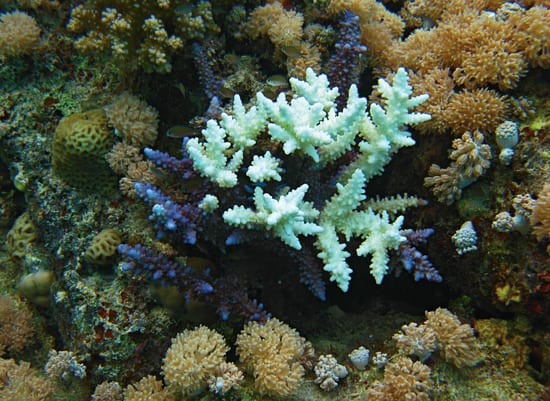
Coral’s colors come from symbiotic algae cells living inside individual corals, or polyps. This “bleached” coral has expelled much of its algae in response to the stress of unusually warm…
Read MoreOnce a lake, now a canyon
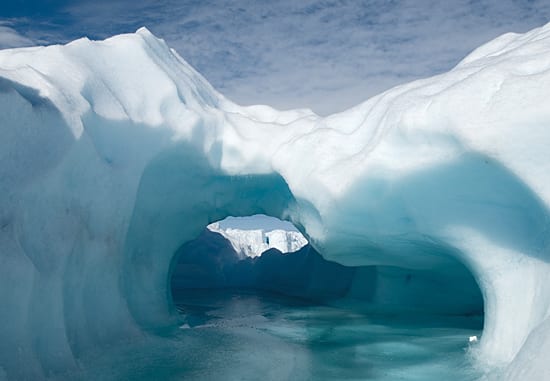
WHOI researchers took a 40 minute hike from their camp on Greenland’s ice sheet this summer to this lake bed (full, it measured more than 3 kilometers in diameter). An astounding…
Read MorePeek-a-boo grouper
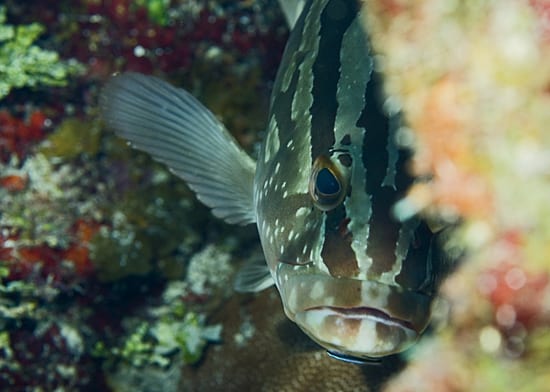
A Nassau grouper (Epinephelus striatus) peeks out from his hiding place along Glover’s Reef in Belize. These large fish have a breeding behavior that makes them especially vulnerable to overfishing…
Read MoreReady for a lift?
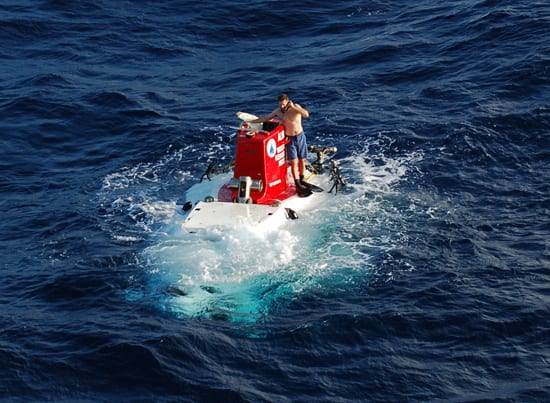
Alvin breaks the surface and engineering assistant Mike McCarthy talks to the pilot in preparation for recovery operations after a LADDER III project dive to a hydrothermal vent site in…
Read More