
Multimedia
Floating without imploding
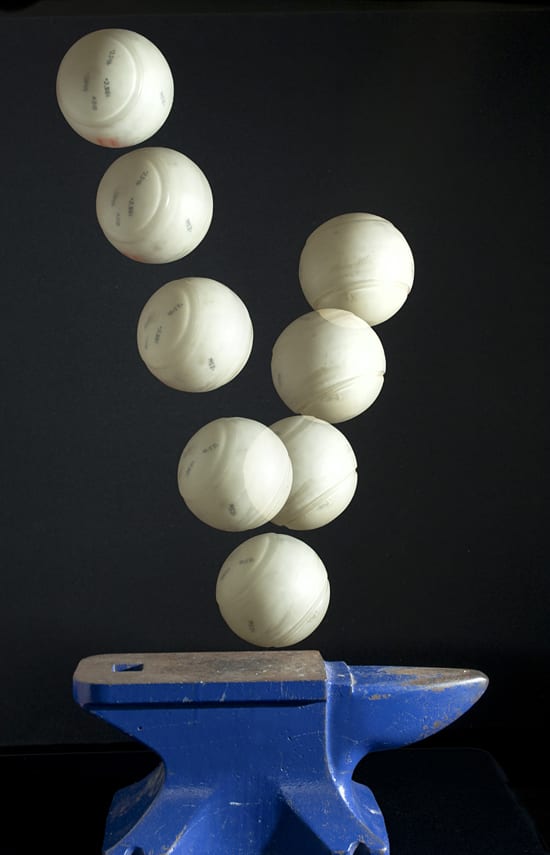
To allow a heavy deep-sea vehicle like Nereus to float in the deepest depths, engineers at Woods Hole Oceanographic Institution (WHOI) used an entirely new system of ceramic spheres to…
Read MoreSummer Fellows
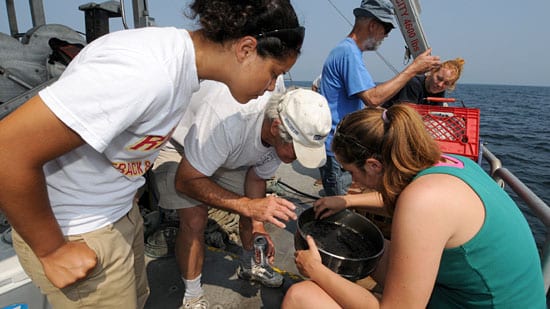
2009 Summer Picnic
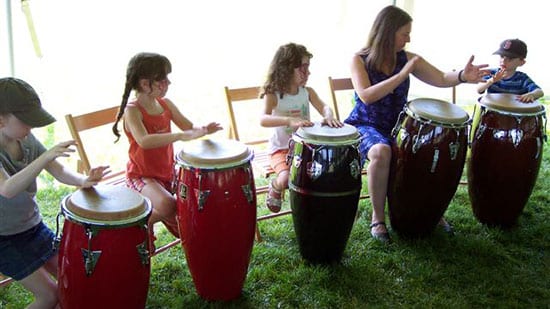
Finding Titanic
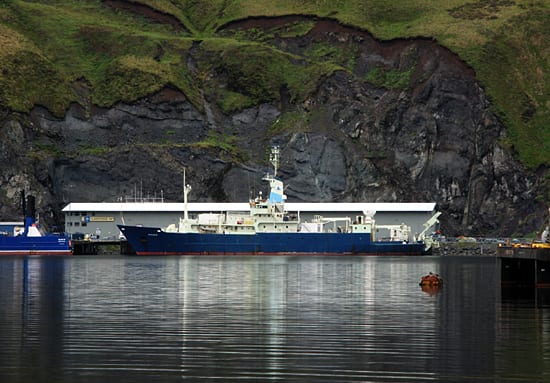
The sunken luxury liner R.M.S. Titanic was located on September 1, 1985 by the Woods Hole Oceanographic Institution’s new imaging vehicle Argo, towed from the Research Vessel Knorr. Today the…
Read MorePartially bleached
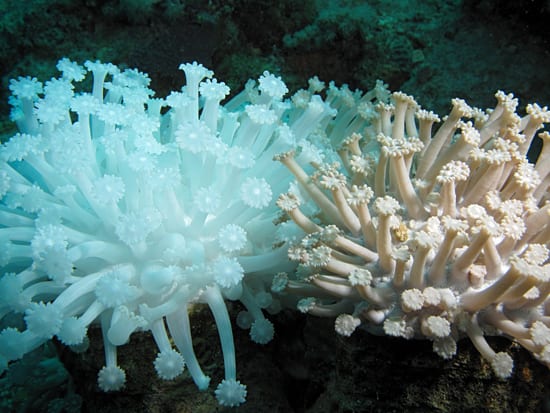
Many corals and other marine animals contain dinoflagellate symbionts that provide nutrition to the host from photosynthesis. These symbionts can be expelled from the host following exposure to elevated temperature…
Read MoreDeep in the Delta
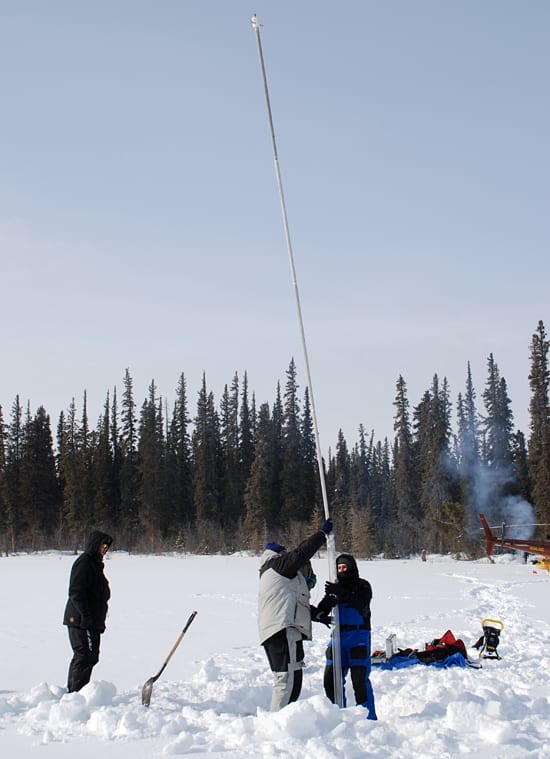
After their helicopter landed on a remote lake in the Mackenzie River Delta, marine geochemist Daniel Montluçon (in blue), geologist Liviu Giosan (in grey), and Allen Firth (Gwich’in observer, in…
Read MoreSizing up zooplankton
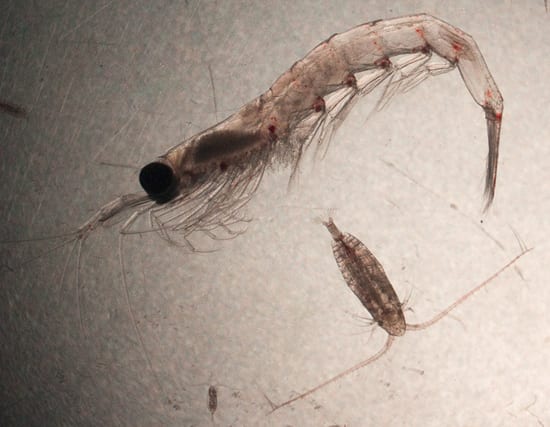
Zooplankton come in a wide range of sizes, for comparison, here’s a Calanus copepod next to a krill. The krill or euphausiid is about one and one-half centimeter long while…
Read MoreCollecting and counting
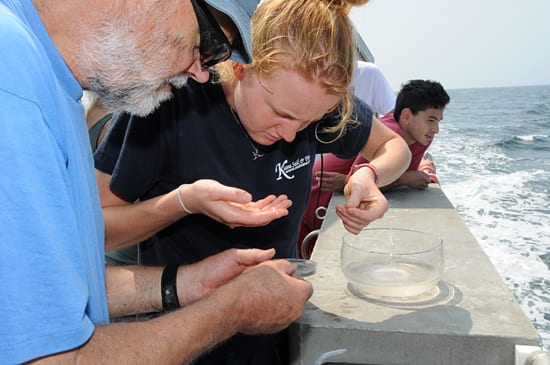
Retired WHOI researcher Hovey Clifford instructs Summer Student Fellow Tara Hetz in collecting animals derived from towed samples during the recent cruise onboard R/V Tioga. The glass dish they are…
Read MoreRing around the ear bone
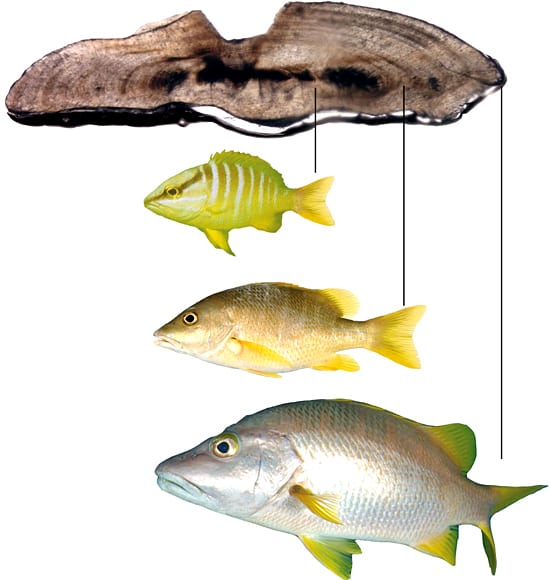
As a schoolmaster snapper grows, its ear bones, or otoliths, form sequential rings, much like a tree trunk, corresponding to different times in the fish’s life. Each ring in the…
Read MoreNereus at Work
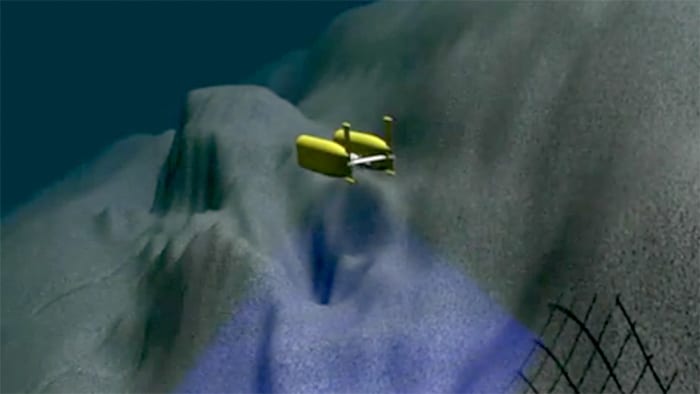
HROV Nereus can operate either as an autonomous, free-swimming robot for wide-area surveys, or as a tethered vehicle for close-up investigation.
Read MoreCooking up marine asphalt
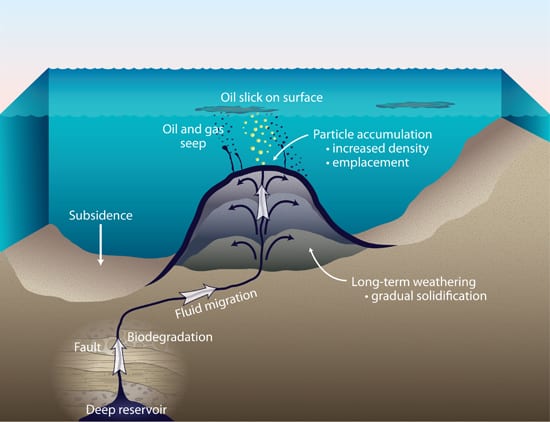
Remnants of natural explosions of oil from the seafloor (asphalt volcanoes) are now being observed. Marine chemist and Coastal Institute director Chris Reddy and Dave Valentine of University of California,…
Read MoreWho is observing whom?
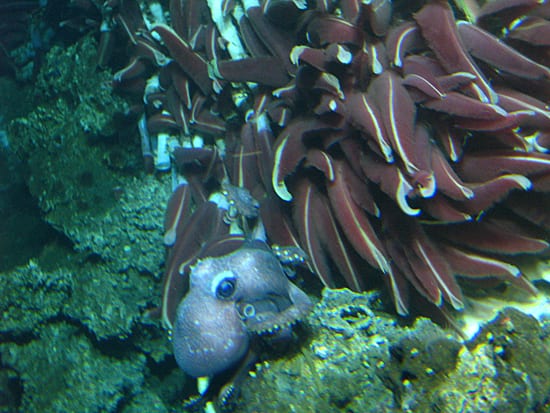
During a dive to the deep-sea hydrothermal vents at Guyamas Basin (Gulf of California, Mexico), an octopus eyes the submersible Alvin. The dive was conducted as part of an R/V…
Read MoreOrca rising
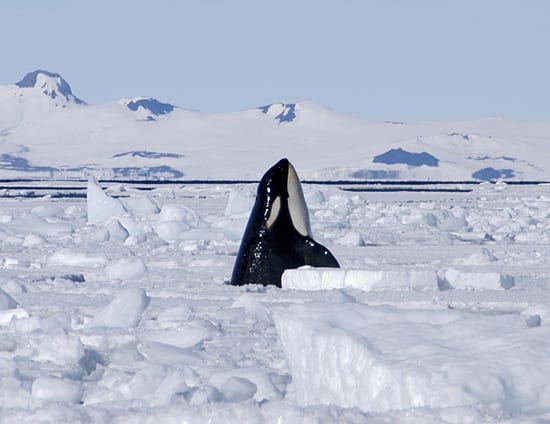
Orcas (Orcinus orca) are toothed whales that hunt large single prey, such as fish, squid, penguins and seals. Marine chemist Mak Saito photographed this Orca on McMurdo Sound sea ice…
Read MoreHurricane season
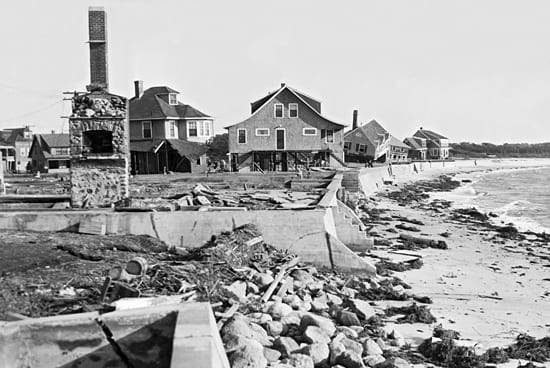
A look at Silver Beach in North Falmouth, Ma., after the hurricane of 1938 shows the extensive damage a hurricane can do to the coast. Researchers at Woods Hole Oceanographic…
Read MoreCharting their course
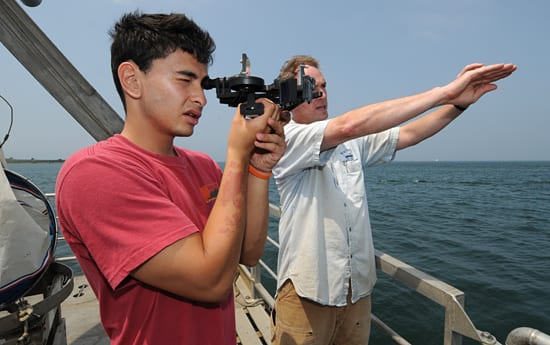
Jordan Aoyama, a student in the Woods Hole Partnership Education Program (PEP) sponsored by the Woods Hole Diversity Advisory Committee, learns sextant skills from R/V Tioga captain Ken Houtler during…
Read MoreLong legs, short body
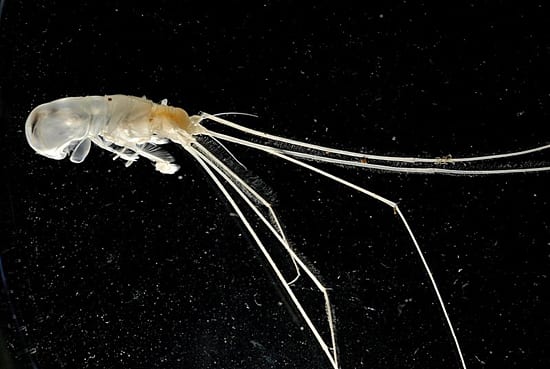
On a 2006 cruise to explore the deep Celebes Sea, expedition scientists collected this 3-centimeter (1.25-inch) isopod — a relative of land-based pill bugs — using a collection chamber mounted…
Read MoreTag, you’re it!
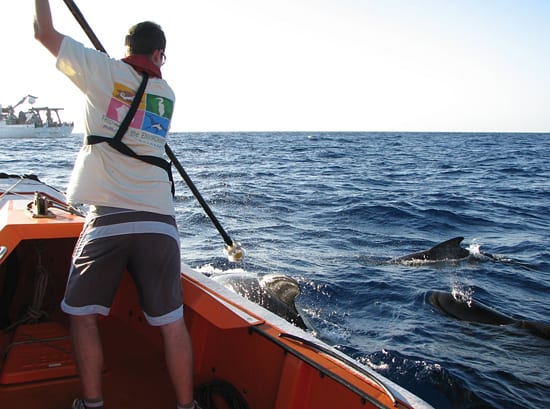
Researcher Leigh Hickmott tags a pilot whale using a digital recording tag (D-Tag) during the Mediterranean 2009 research cruise — part of an ongoing, international and interdisciplinary effort to better…
Read MoreA Flash in the Gut
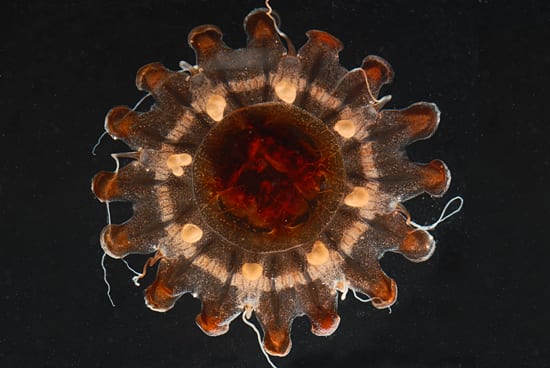
In 2007 WHOI biologist Laurence Madin led a team of scientists and photographers from the U.S. and the Philippines on an expedition to explore biodiversity in the deep Celebes Sea.…
Read MoreSpy-hopping
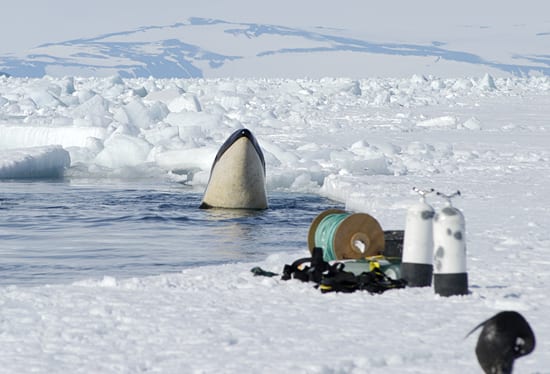
Orcas (Orcinus orca), also called Killer Whales, sometimes spy-hop — hold their heads and upper bodies out of the water to look for prey. This Orca bides his time as…
Read MoreBubbly ‘fire bodies’
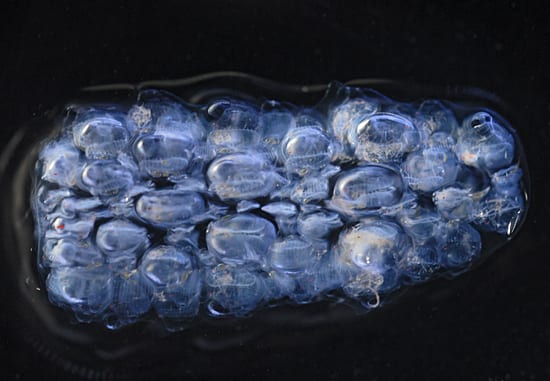
Looking like a collection of bubbles, this pyrosome (the name means “fire body”) is a cylindrical colony, 7 centimeters (2.75 inch) long, made up of individual animals (the “bubbles”.) Each…
Read MoreWhat a summer!
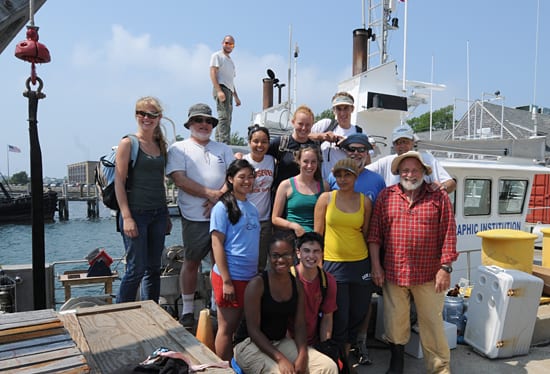
Students from the WHOI Summer Student Fellowship Program and the Woods Hole Partnership Education Program (PEP) spent a sunny August day out on R/V Tioga learning basic oceanographic sampling techniques…
Read MoreThe lives of larvae
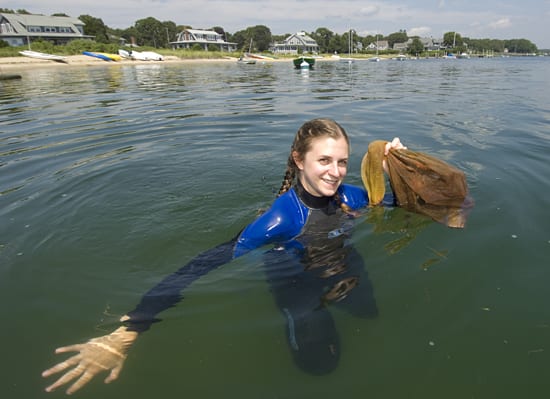
MIT/WHOI Joint Program student Christine Mingione of the Biology Department, collects larvae samples in spat collector bags. Many familiar marine invertebrates such as shellfish have lesser known larval stages that…
Read MoreInner-space colonies
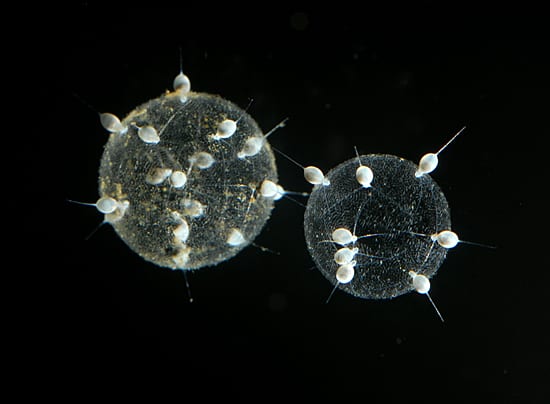
They look like space stations, but actually are colonial forms of single-celled organisms called radiolarians, collected in the deep Celebes Sea. The white blobs are individual cells, and the geodesic…
Read MoreReady, set, race!
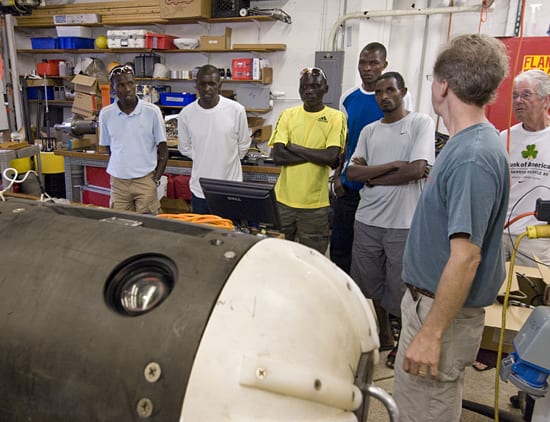
Norman Farr, of the Applied Ocean Physics & Engineering department, shows a group of elite runners from Kenya — (from left to right) Richard Limo, James Koskei, Felix Limo, Gilbert…
Read More