
Multimedia
Will you be my Naphthalene?
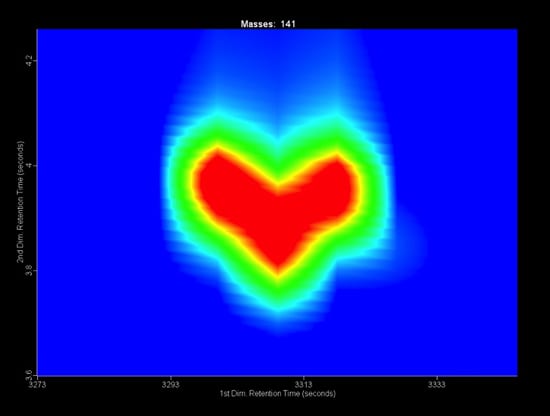
This image of a single molecule of crude oil from the Gulf of Mexico appears to have an intrinsic sense of romance on Valentine’s Day. WHOI scientists Bob Nelson and…
Read MoreLife in the sea
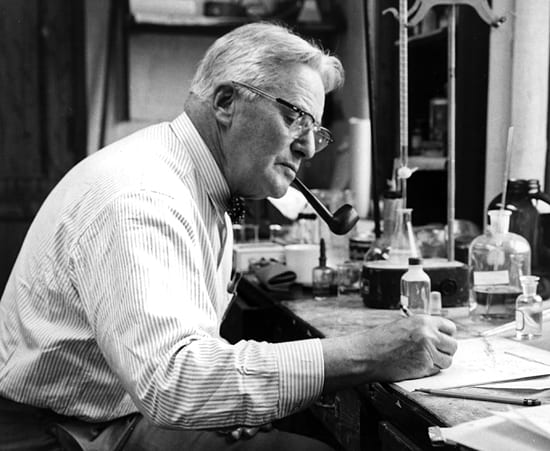
Biologist Alfred Redfield in his lab, circa 1955. Redfield joined the WHOI staff as senior biologist in 1931 and was Associate Director from 1942 to 1956. His broad marine research…
Read MoreFlow of the Hudson Strait
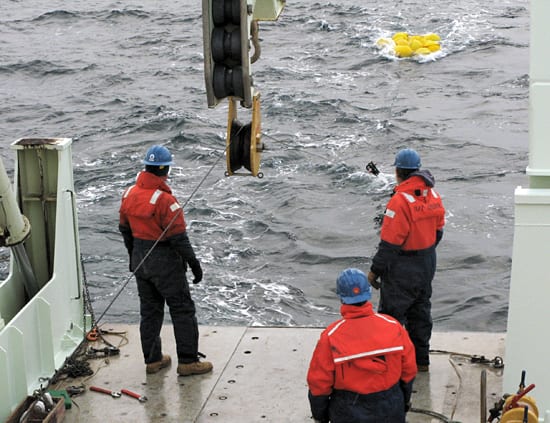
Aboard the R/V Knorr in the Hudson Strait, engineer John Kemp (left), Knorr Bosun Pete Liarikos (right), and Dara Tebo of the Physical Oceanography department, work to recover a mooring.…
Read MoreStretch it
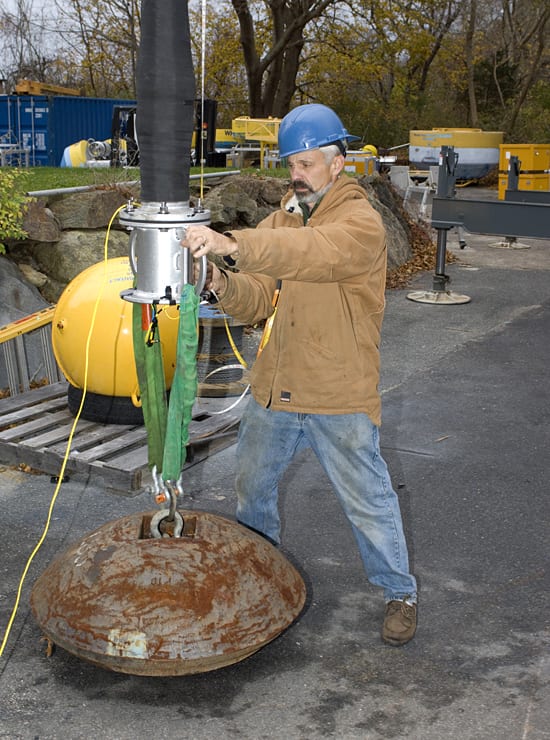
Senior engineering assistant William Ostrom tests a stretch hose that will be utilized on moorings and buoys for the Ocean Observatory Initiative (OOI). The specially designed cable, which stretches like…
Read MoreHands across the water
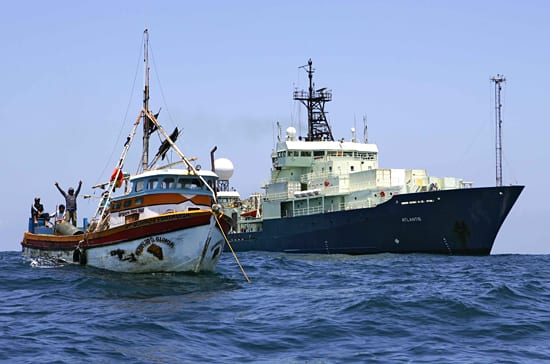
The crew aboard the R/V Atlantis extended a helping hand to a fishing vessel in distress off the coast of Peru on Jan. 20, 2010. The vessel, the Peruvian long…
Read MoreSound sources
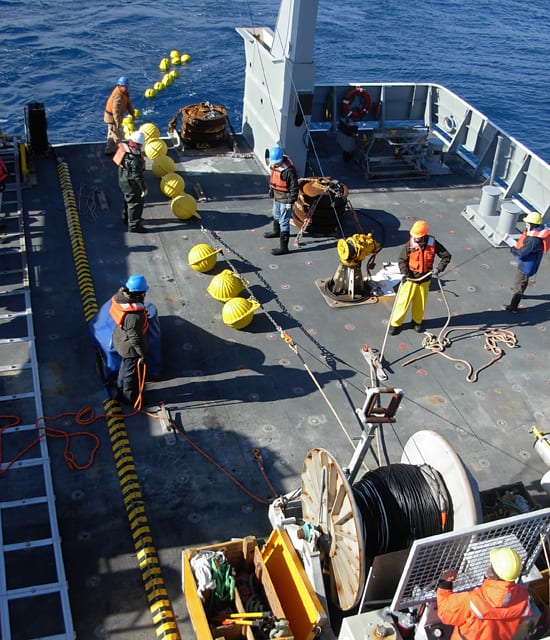
WHOI senior engineering assistant Brian Guest (top of photo) leads a team to deploy the first of two sound source moorings in the Southeast Pacific as part of a Diapycnal…
Read MoreOceanInsight
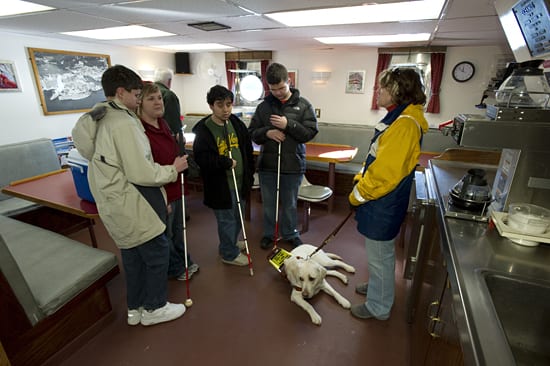
Amy Bower, of the WHOI Physical Oceanography department, gives a tour of the R/V Oceanus to a group of students from the Perkins School for the Blind. Bower, who is…
Read MoreTracking warm eddies in a cold sea
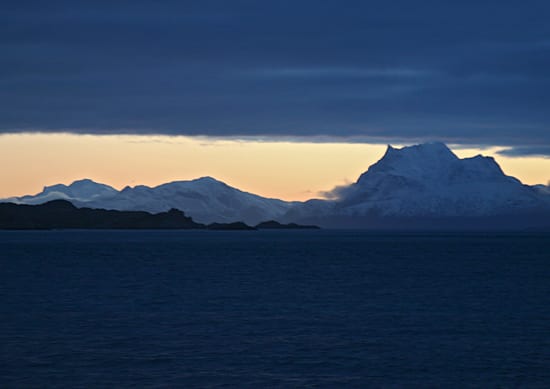
Water in the ocean is always on the move, with big currents flowing like rivers in different directions and at different layers in the sea. These ocean currents help carry…
Read MoreA new addition
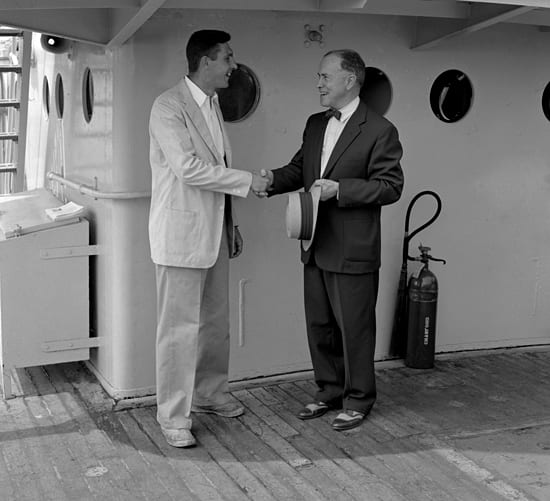
Edward H. Smith (right) WHOI director from 1950 to 1956, greets Crawford master David Casiles upon the ship’s arrival in Woods Hole in 1956. Smith spent 40 years in the…
Read MoreCoral climate clues
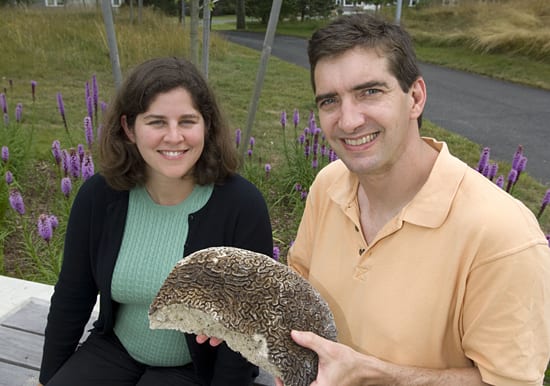
Former MIT/WHOI Joint Program student Nathalie Goodkin and Scott Doney of the Marine Chemistry and Geochemistry department pose with a piece of Bermuda brain coral. Corals accrete seasonal and annual…
Read MorePacific plates
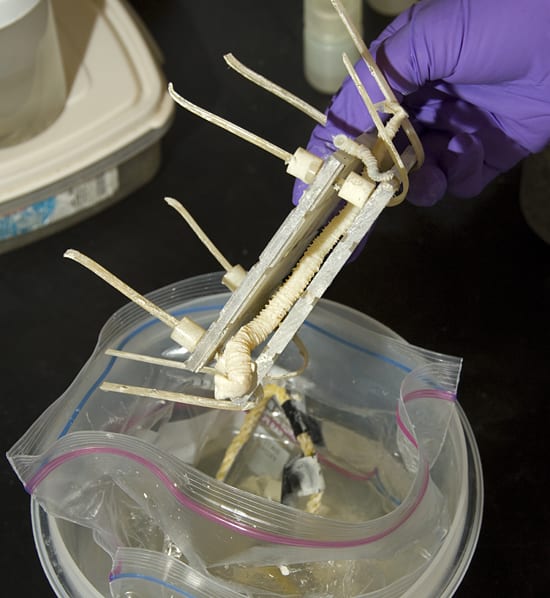
Stacked plastic plates, called “sandwiches” (left), used as artificial substrates for larvae of vent animals. As part of the research project LADDER (Larval Dispersal on the Deep East Pacific Rise),…
Read MoreCharting the Aegean
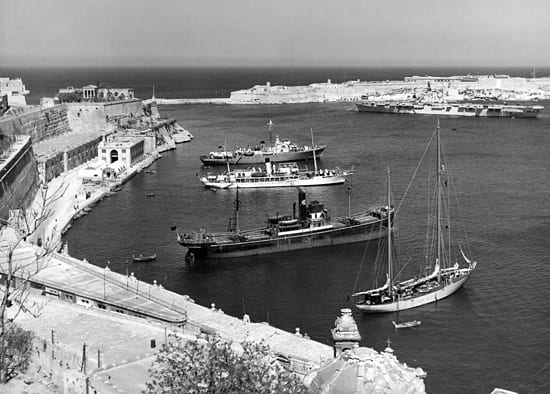
Valletta, Malta, was among the ports Atlantis (right) visited during “the Med cruise,” a six-month, 1948 cruise to the Mediterranean Sea. The cruise was funded by the Hydrographic Office and…
Read MoreIt’s a buoy for OOI
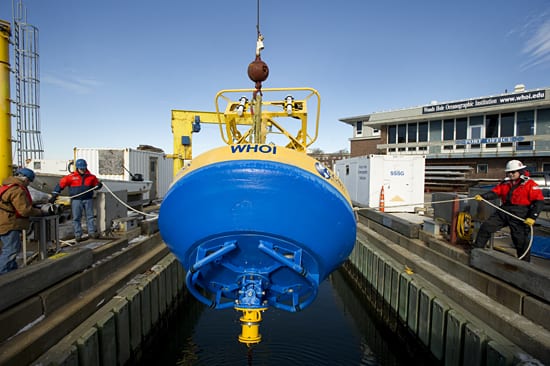
The first buoy designed for the Ocean Observatory Initiative (OOI) undergoes testing at the dock. Holding the lines to steady the suspended buoy are senior engineer Tim Scholz, left, and…
Read MoreFree-living barnacle?
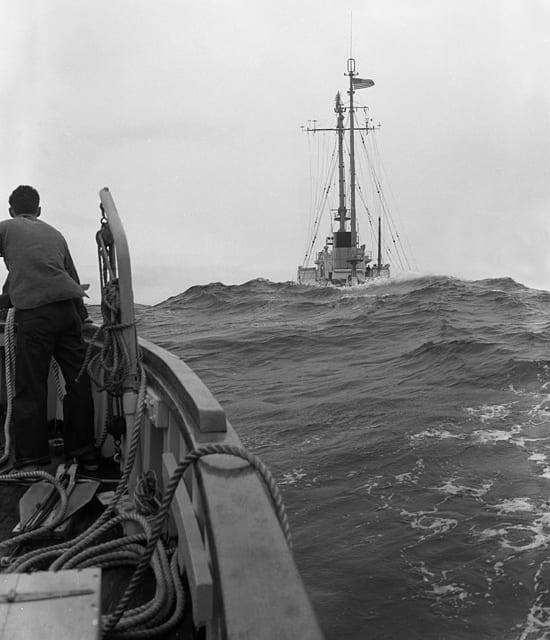
The USCG Campbell towing Balanus Circa 1948. Balanus was part of the WHOI fleet from 1946 to 1950. It was a rather uncomfortable craft that biologist Gordon Riley said was…
Read MoreSingle file line
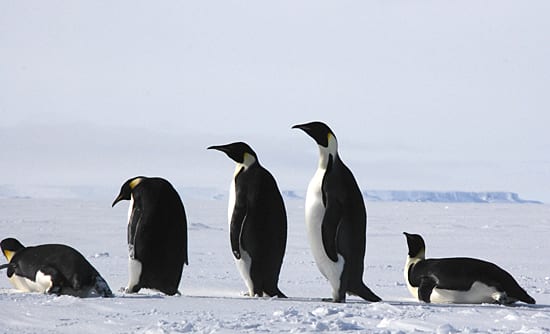
For all its ice, cold, and six months of darkness, the oceans around Antarctica are teeming with life. Penguins, whales, and seals inhabit the area where sea ice meets open…
Read MoreTrojan horses
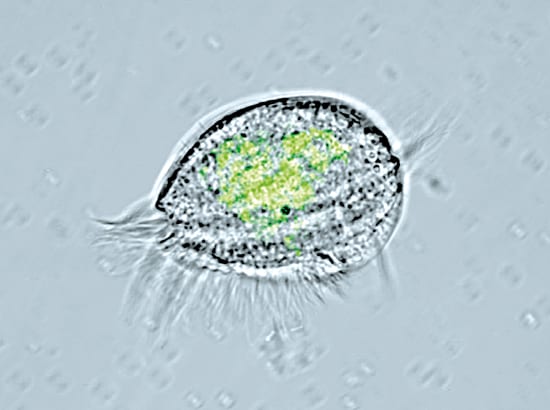
A single-celled organism has eaten bacteria, which are easily visible because they were treated with green dye. Some bacteria can live within organisms, waiting to be released back into the…
Read MoreRigging up
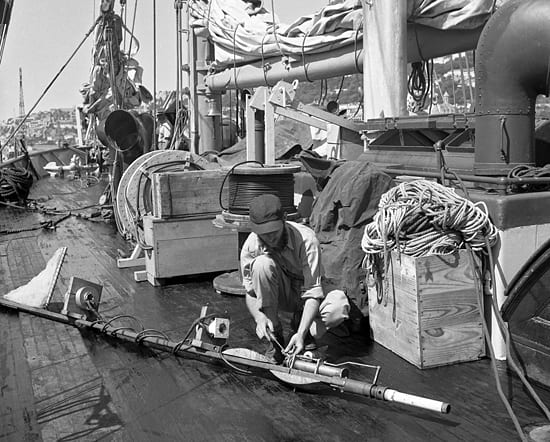
Photographer Dave Owen rigging up his camera system on deck of Atlantis. Owen conducted extensive deep-sea camera operations on many expeditions, including three cruises between 1972 and 1974 near the…
Read MoreExploring ocean acidification
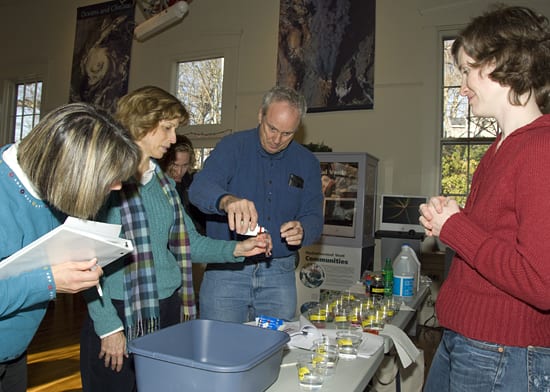
Postdoctoral Investigator Sarah Cooley (right), of the Marine Chemistry & Geochemistry department, leads a group of teachers through a classroom laboratory exercise exploring ocean acidification and its effects on marine…
Read MoreMowing the lawn
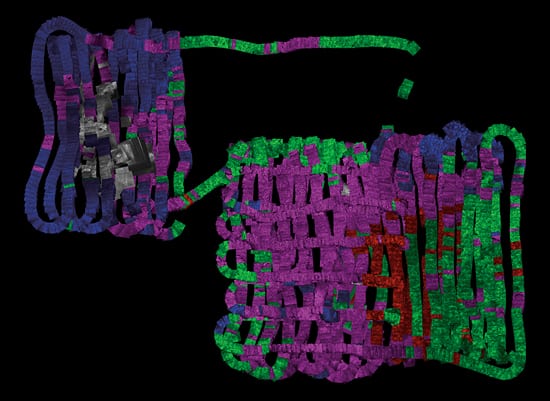
The WHOI-operated deep-sea vehicle ABE systematically tracked over the seafloor on the volcanic Mid-Atlantic Ridge, midway between Africa and South America, photographing the ocean bottom. Some 3,000 overlapping photos were…
Read MoreChanging landscape
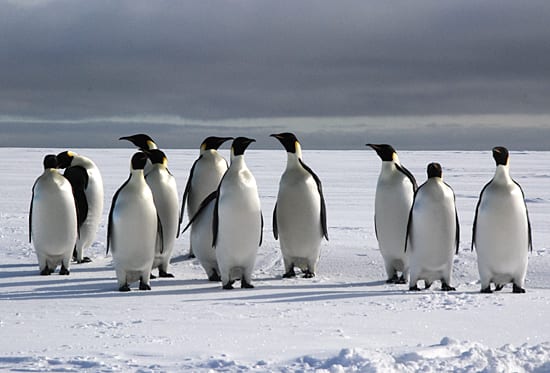
Emperor penguins, which delighted audiences of the Academy Award-winning documentary March of the Penguins, could be sliding on the path toward extinction—the victims of climate change, according to a study…
Read MorePlease pass the saline
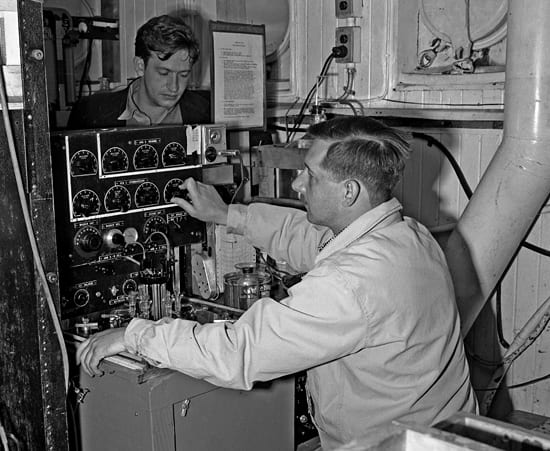
The principal developers of the salinometer —Karl Schleicher, right, and Alvin Bradshaw— are at work with their first model, in the mid-1950s, in the main lab of the research vessel…
Read MoreInto the sunset
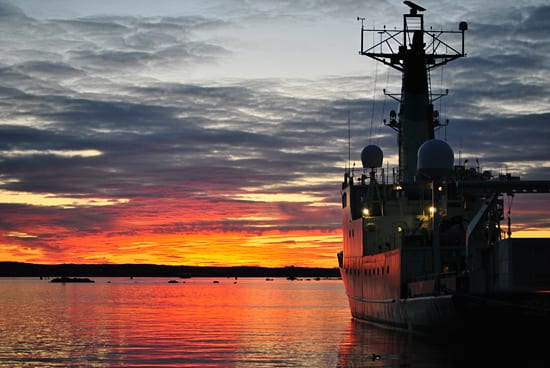
A beautiful, winter sunset casts an amber glow on the R/V Oceanus docked at the WHOI pier in January 2010. Oceanus is the North Atlantic workhorse of the WHOI-UNOLS fleet,…
Read MoreIce drilling
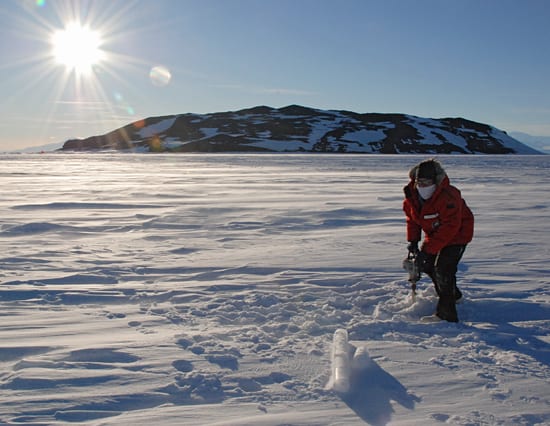
Over the past two years, WHOI marine biogeochemist Mak Saito and his colleagues at J.C. Venter Institute have been studying life at the bottom of the food chain in Antarctica.…
Read MoreAnalyzing ancient sediments
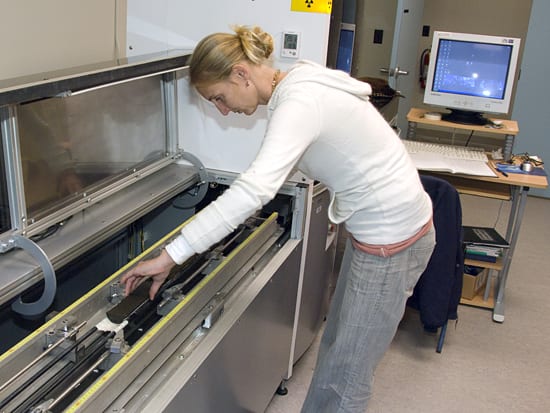
Research Assistant Skye Moret-Ferguson of the Geology & Geophysics department prepares a core for analysis in the X-ray fluorescence (XRF) core scanner. The scanner, which produces nondestructive, high-resolution elemental analysis,…
Read More