
Multimedia
Sediment sampling
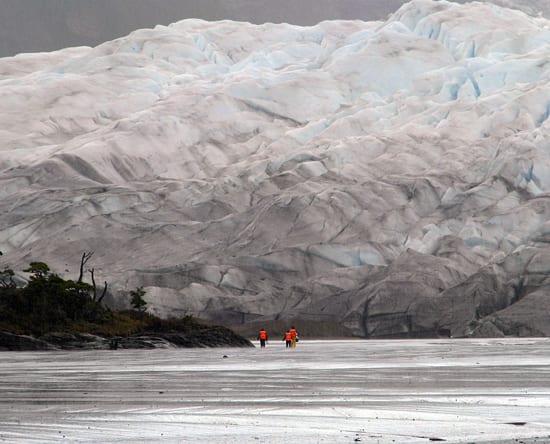
A team of researchers led by Sebastien Bertrand, of the WHOI Marine Chemistry and Geochemistry department, took sediment samples during five weeks of field work in the fjords of Chilean…
Read MoreTurtle rescue
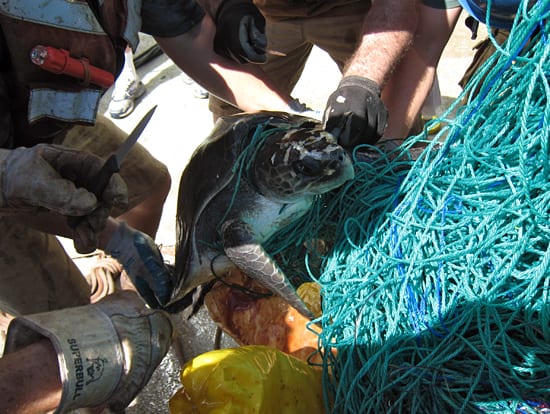
The R/V Atlantis crew was working off the Galapagos Islands with the human occupied submersible Alvin, when Captain AD Coburn noticed a yellow object floating approximately 1000 meters off in…
Read MoreReadying REMUS
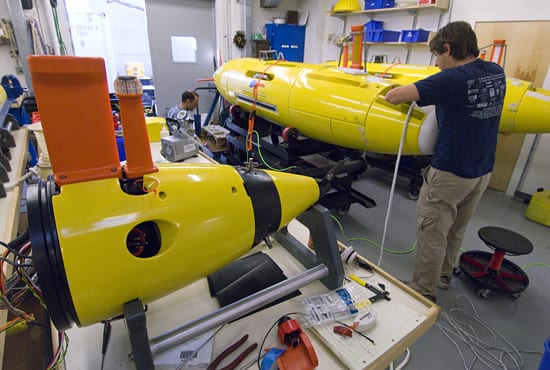
Brennan Phillips (right) and Greg Packard (background) work on two Remote Environmental Monitoring UnitS — or REMUS vehicles — in the Ocean Systems Laboratory at WHOI. Three REMUS 6000 vehicles…
Read MoreEverything in its place?
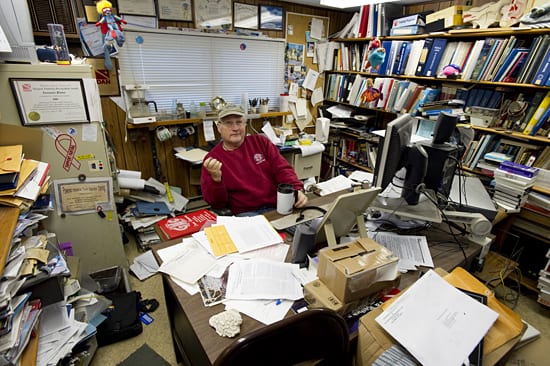
Diving safety officer Terry Rioux (shown here in his office) is responsible for all day-to-day aspects of scuba diving at Woods Hole Oceanographic Institution (WHOI), including review and enforcement of…
Read MoreChain and the A-boat
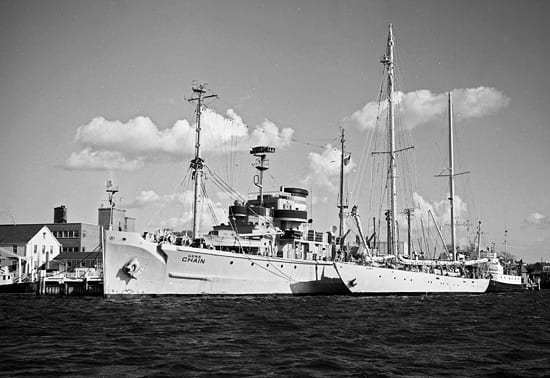
Woods Hole Oceanographic Institution (WHOI) research vessels Chain and Atlantis at the WHOI dock in 1958. Atlantis was the first WHOI research vessel and the first ship built specifically for…
Read MorePrepping a glider
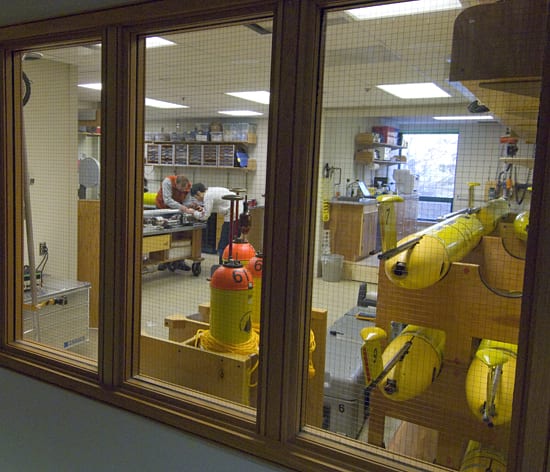
John Lund, left, and Ben Hodges work in the glider lab on a Spray glider, an autonomous underwater vehicle, or AUV. The Spray glider—about six and a half feet long…
Read MoreCyst survey
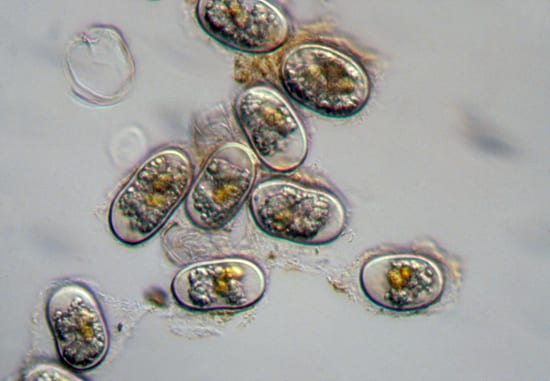
Harmful algal bloom (HAB) cells shown under a microscope. WHOI scientists issued an outlook for a significant regional bloom of a toxic alga that can cause ‘red tides’ in the…
Read MoreFlowing stream
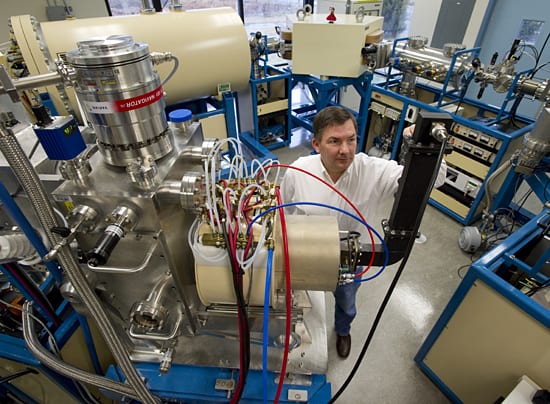
Mark Roberts works on the gas ion source of the Continuous Flow Accelerator Mass Spectrometer (CFAMS), a Carbon 14 measurement system at WHOI. CFAMS was designed specifically for the continuous…
Read MoreMore autonomy
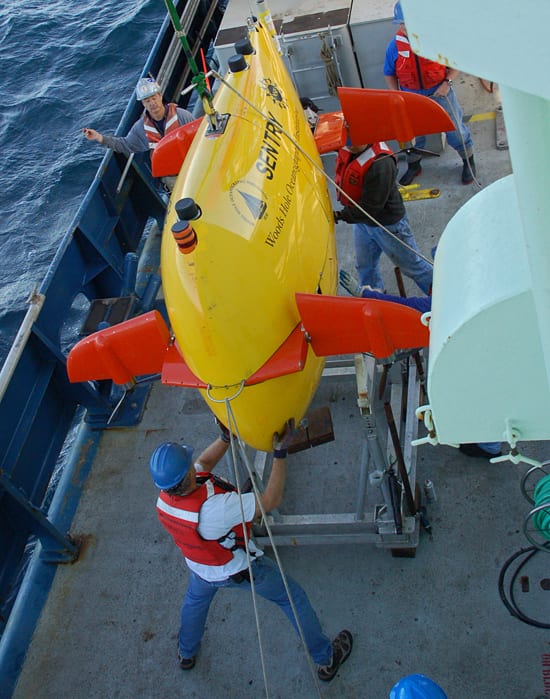
WHOI’s new deep-diving autonomous underwater vehicle Sentry was launched from the research vessel Atlantis off the coast of Santa Barbara, Calif., in September 2009 to search for cold seeps—naturally occurring…
Read MoreAlgerian quake clues
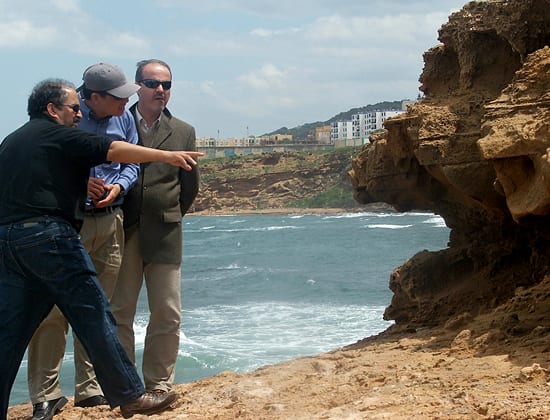
Senior Scientist Jian Lin (in blue shirt) and colleagues examine geological evidence of past earthquakes near the Mediterranean coast of Algeria. A study of the interplay of stresses surrounding a…
Read MoreWhere currents converge
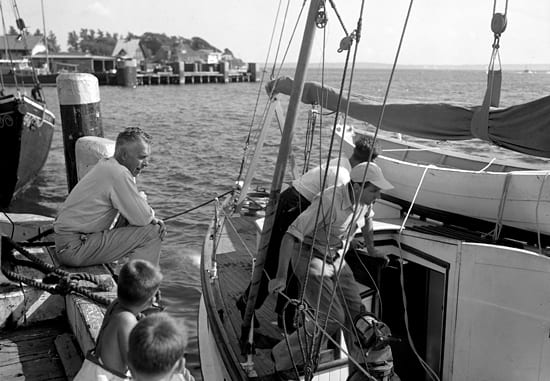
Columbus O’Donnell Iselin, the second director of the Woods Hole Oceanographic Institution, sees Edmund Watson and others off on a 1950 Gulf Stream cruise aboard a boat called Seal. Iselin,…
Read MoreSidekick
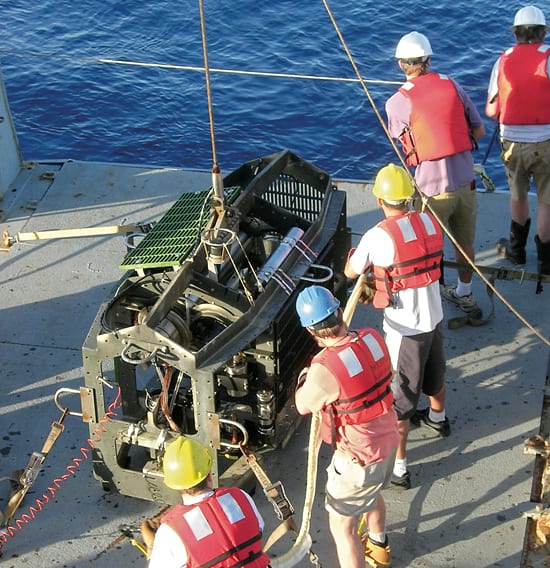
Engineers in the Deep Submergence Laboratory at WHOI designed the remotely operated vehicle Jason II and its sidekick Medea —shown here on the fantail of a ship— for scientific study…
Read MoreReady for spring!
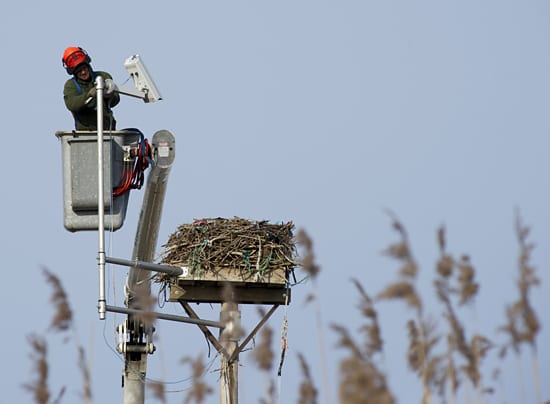
John Lovett, from W.S. Schultz Co., removes the old camera above the osprey nest located on the WHOI Quissett Campus in early March. A new camera was installed in preparation…
Read MorePhysophora hydrostatica
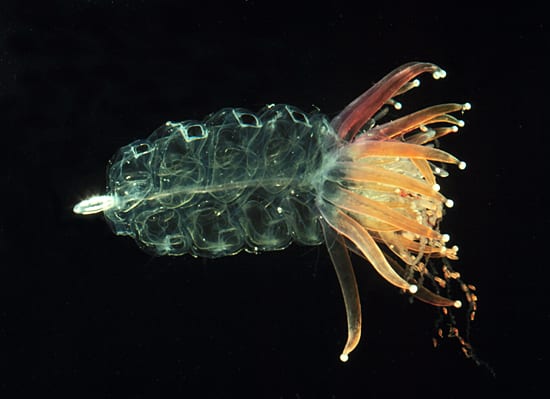
Physophora hydrostatica, a siphonophore, is made up of multiple units, each specialized for a function like swimming, feeding, or reproduction. This “modular” construction allows some siphonophores to grow very large…
Read MoreResearch on the reefs
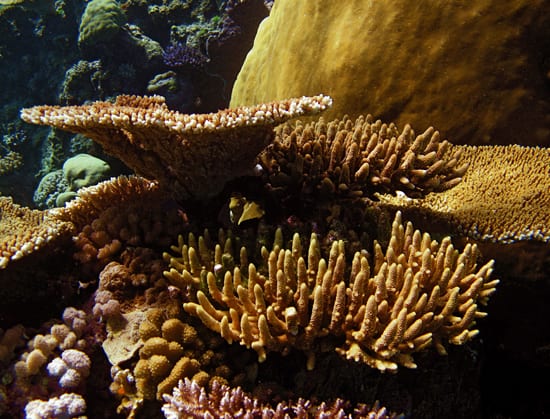
Coral reefs are among the most diverse, productive ecosystems on Earth, but they are also among the most threatened. Fragile reefs are particularly sensitive to environmental changes, such as warming…
Read MorePS: Earthquakes generate waves
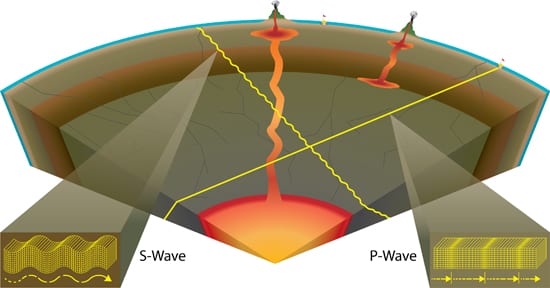
Earthquakes, including the recent major quakes in Chile and Haiti, release energy that radiates two kinds of seismic waves: compression waves (P waves) and shear waves (S waves). P waves…
Read MoreGlide surfing
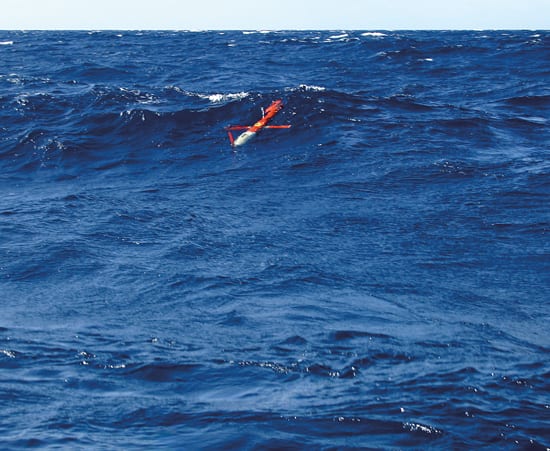
A Spray Glider climbs a wave on the sea surface. The gliders, which are robotic submarines that navigate underwater without a human crew onboard and without cables connecting them to…
Read MoreA new dawn
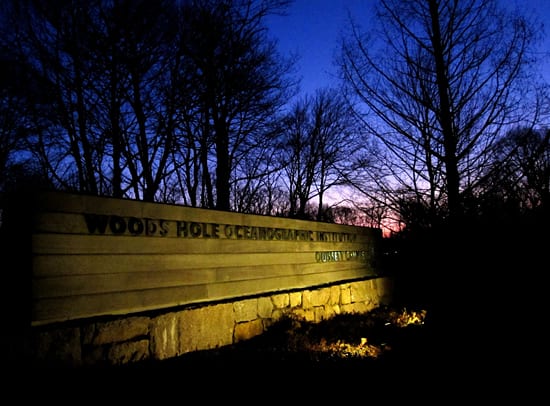
A February 2010 sunrise illuminates the entrance to the Woods Hole Oceanographic Institution (WHOI) Quissett campus. WHOI received funding earlier this year for a new addition to the campus —…
Read MoreOn top of the A-boat
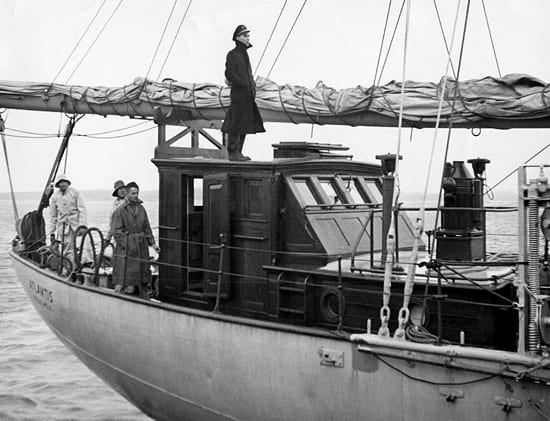
Atlantis master Adrian K. Lane stands on top of the deck house of the vessel in 1949. Atlantis was the first Woods Hole Oceanographic Institution research vessel and the first…
Read MoreOnce and Future Corals
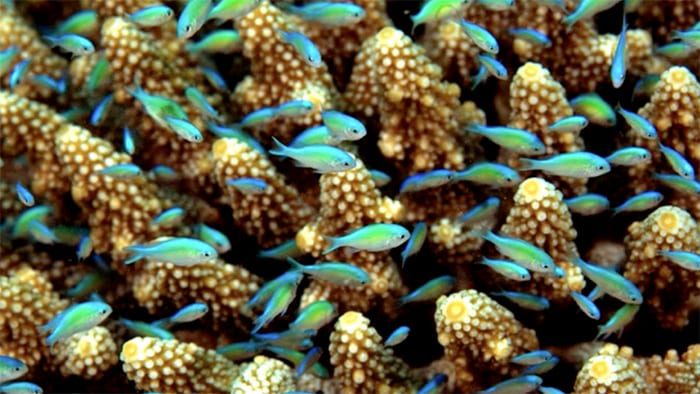
WHOI scientist Conrad Hughen shares insights on studying coral reefs and the challenges they face for the future.
Read MoreThe Once and Future Corals
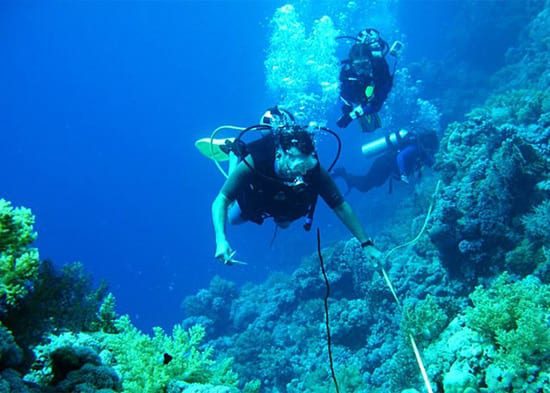
Earth’s history is inscribed in corals. But what’s the future of corals on Earth?
Read MoreNew optical system tested
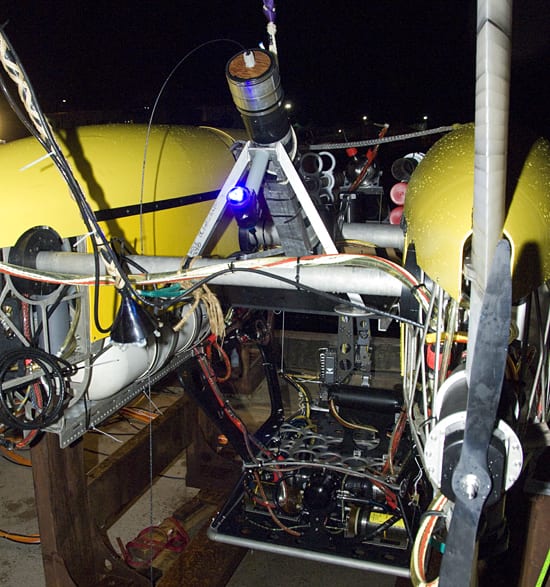
The modem for the newly developed optical communications system is mounted for testing onto the Nereus, WHOI’s new hybrid remotely operated vehicle (HROV). The system, devised by a team led…
Read MoreFarewell ABE
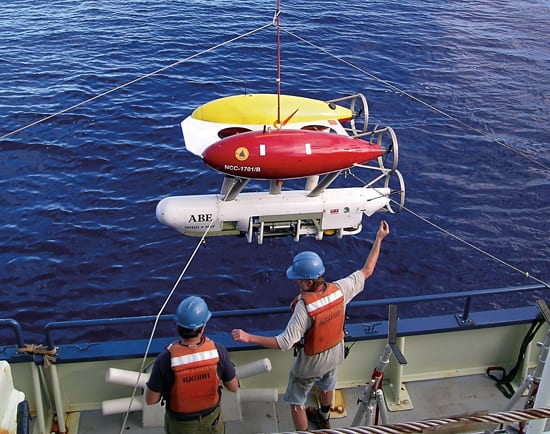
The Autonomous Benthic Explorer, affectionately known as ABE, was one of the first successful submersible vehicles that was both unmanned and untethered to surface ships. First launched in 1995, ABE…
Read MoreSubsampling
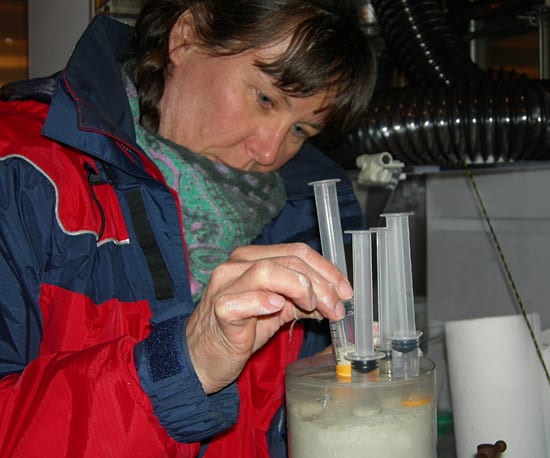
WHOI scientist Joan Bernhard — shown here in a cold van subsampling multicores for FLEC (Fluorescently Labeled Embedded Core) analyses — and colleagues from Monterey Bay Aquarium Research Institute tested…
Read More