
Multimedia
Chemist Jean Whelan
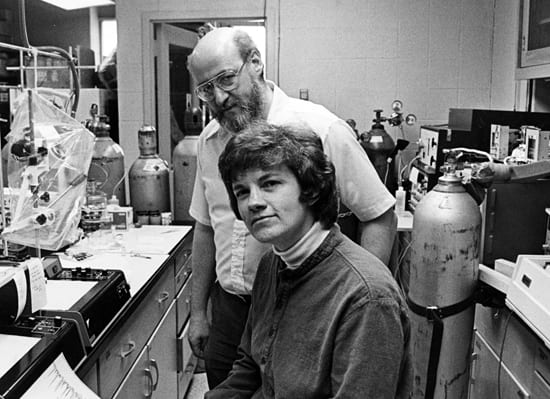
Jean Whelan, Oceanographer Emeritis in the Marine Chemistry & Geochemistry department, remembers building this analytical equipment as a technician in chemist John Hunt’s lab, about 1980. “A new technique had…
Read MoreSteady rosette
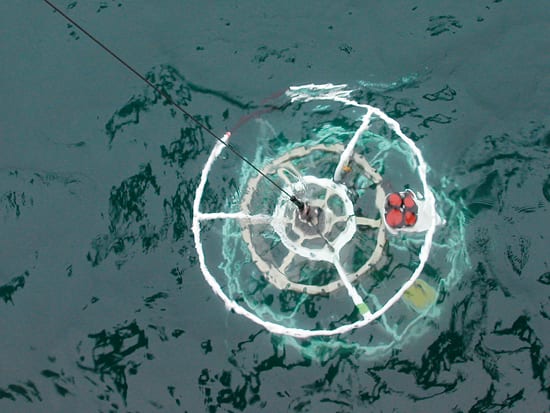
Putting scientific equipment into Arctic waters —such as this conductivity-temperature-depth (CTD) rosette — requires an intricate balance of motion and timing. The shipboard CTD is made up of a set…
Read MoreThe future Alvin
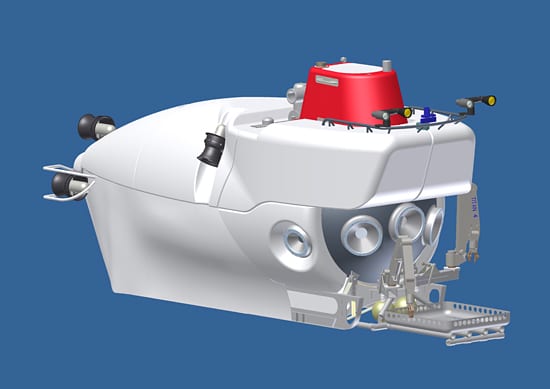
A conceptual illustration of the next-generation research submersible: The WHOI-operated research submersible Alvin is a workhorse of deep sea science and exploration. Built in 1964, Alvin has made more than…
Read MoreEarth, the original recycling system
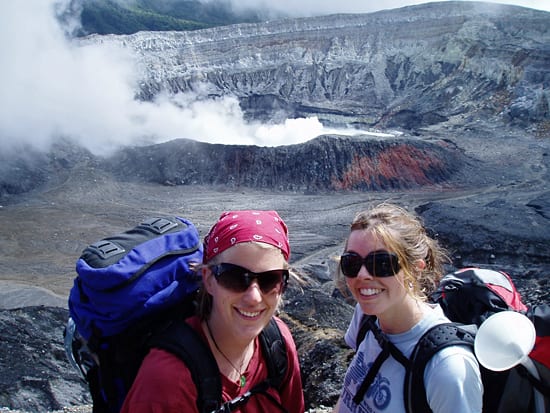
Post-doctoral Fellow Nicole Keller and associate scientist Alison Shaw, both of the Department of Geology and Geophysics at WHOI, pause during their hike to the Poas volcano in Costa Rica…
Read MoreThe Ketchum Award: coastal science, leadership, and society
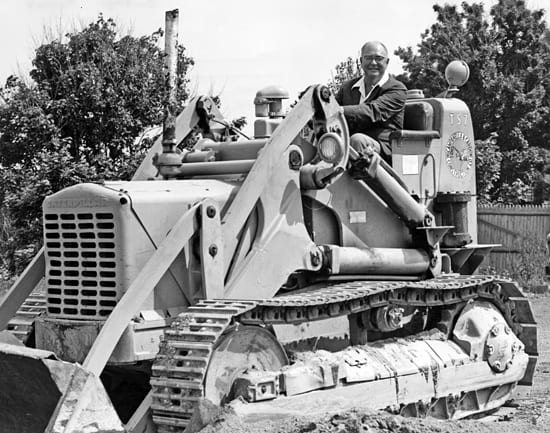
Bostwick (“Buck”) Ketchum (1912-1982) served WHOI for more than forty years, studying topics from ocean physics to biology, but focused much of his attention on the coastal zone and human…
Read MoreForms of communication
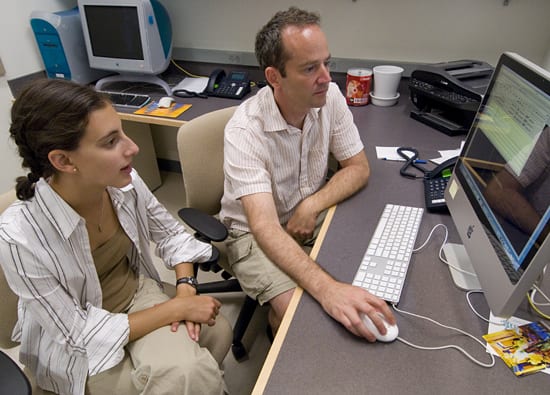
As a 2009 WHOI Summer Student Fellow, Rose Kantor, (Carleton College) worked with adviser, marine chemist Tracy Mincer to study bacteria that communicate chemically, through a process called quorum sensing.…
Read MoreJudy McDowell: benchmarks in research and education
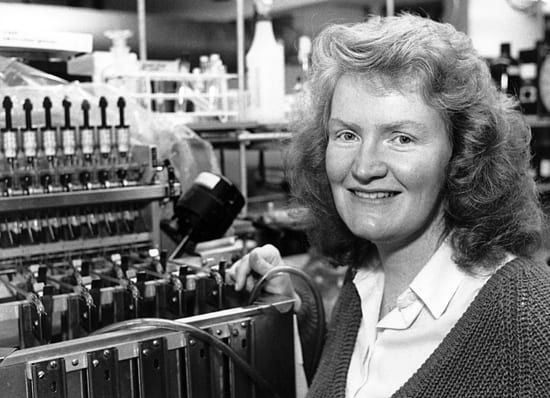
WHOI biologist Judith McDowell measures respiration of lobster larvae in her lab in about 1986. Since the 1970s she has done landmark research on lobster biology and how contaminants affect…
Read MoreRemote camp
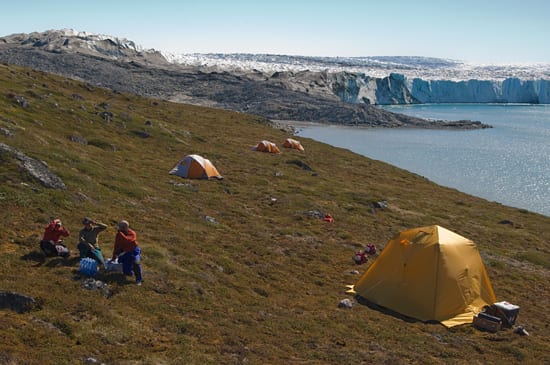
In starkly beautiful surroundings, MIT-WHOI joint program students Maya Bhatia (center) and Alison Criscitiello (left), along with Matthew Evans (a scientist at Wheaton College) camped on the Greenland coast for…
Read MoreArmed for science?
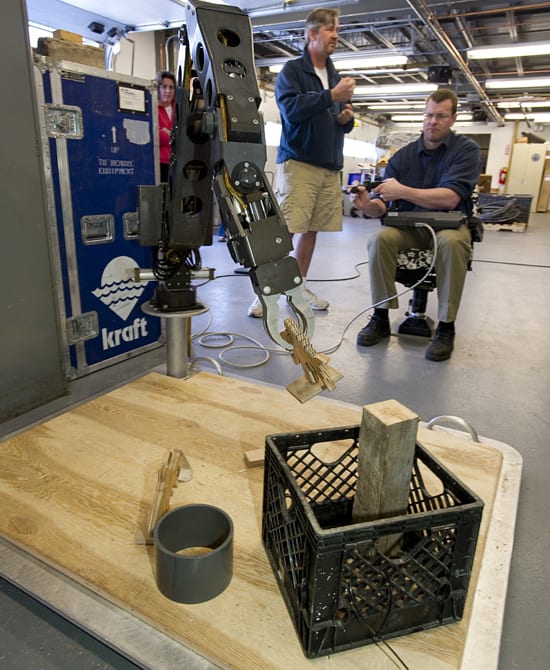
Tito Collasius (standing), of the Applied Ocean Physics & Engineering Department, gives Matt Rigney pointers on how to operate the HROV Nereus manipulator arm during a one-day workshop for local…
Read MoreUpgraded buoys
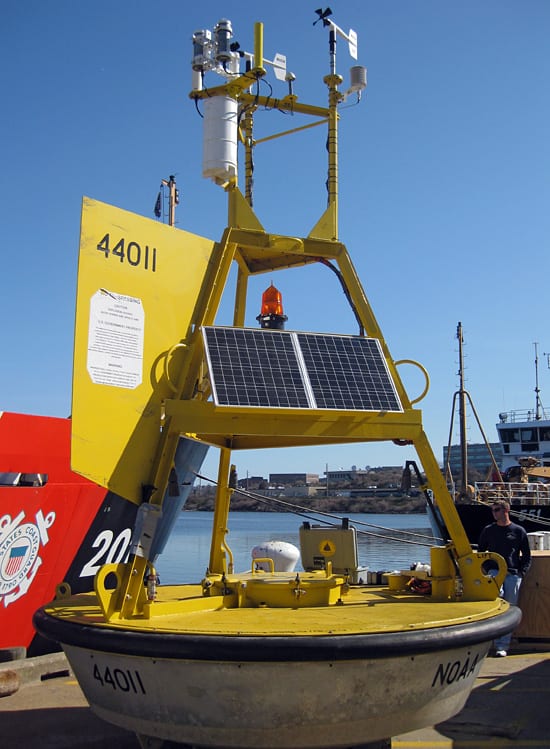
A partnership between the WHOI Upper Ocean Processes Group, the Commonwealth of Massachusetts, and NOAA’s National Data Buoy Center (NDBC) is aimed at augmenting four weather buoys with instruments to…
Read MoreInto the deepest blue
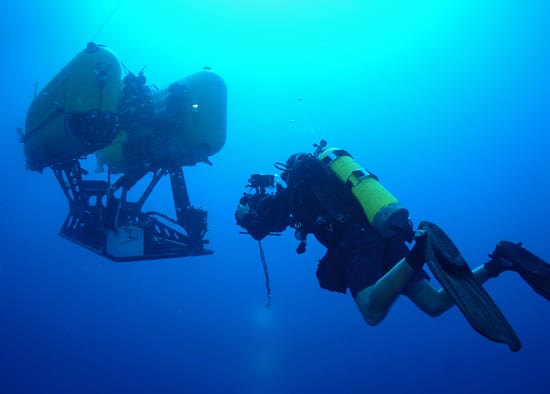
A diver films the deep-sea explorer Nereus from the water during its second expedition in 2009 to investigate hydrothermal vents along Earth’s deepest mid-ocean ridge in the Cayman Trough. On…
Read MoreOn a roll
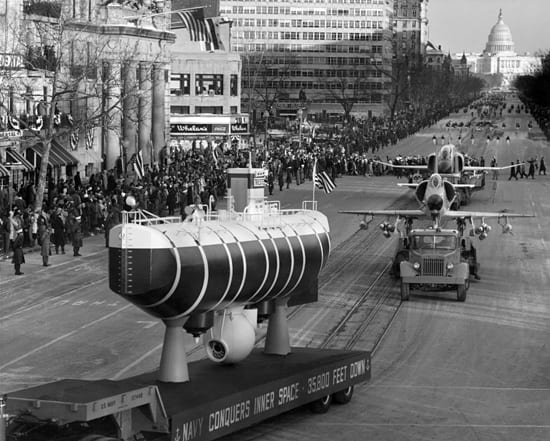
On January 20, 1961, in the midst of the Cold War, the bathyscaphe Trieste rolls down Pennsylvania Avenue in the Inauguration Day parade in Washington, D.C. The float celebrated the…
Read MoreReady to mow

A Remote Environmental Monitoring Unit (REMUS) 6000 vehicle sits on the deck of a ship during a 2009 mission. Three REMUS 6000 vehicles, designed by the Ocean Systems Laboratory at…
Read MoreSleuthing for contaminants
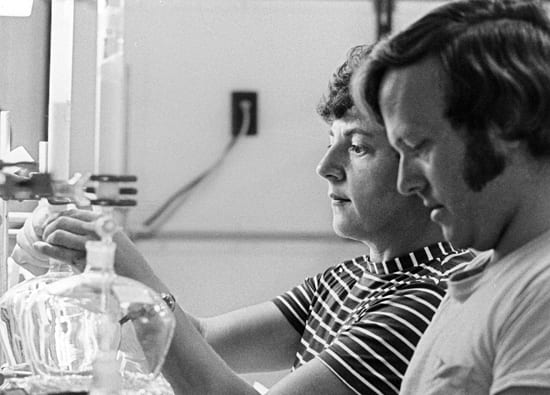
In a WHOI chemistry laboratory in the mid-70s, researchers Helen Mikelas and Bruce Tripp extracted and concentrated organic contaminants from seawater, including PCBs (polychlorinated biphenyls—toxic compounds used in industrial manufacturing,…
Read MoreArctic footprints
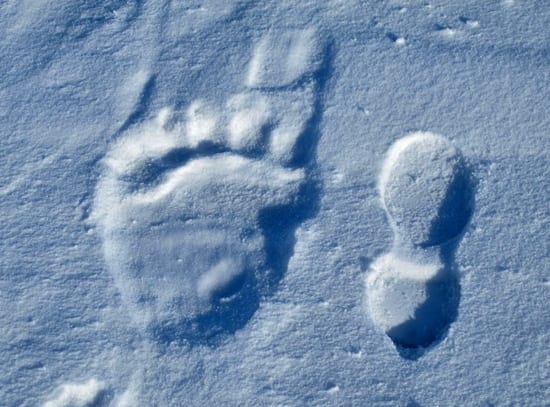
Bone-chilling temperatures, biting winds, and rapidly changing sea ice conditions make the Chukchi Sea off Point Barrow, Alaska, a particularly difficult place to work. And then there are the curious…
Read MoreAt sea with a pioneer
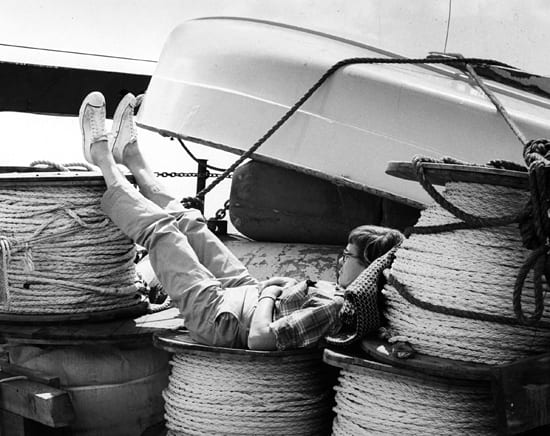
Elizabeth (“Betty”) Bunce waits for a sediment core to come up, aboard R/V Chain circa 1958. One of the first woman oceanographers, Bunce (1915-2003) was kind and loyal as well…
Read MoreFor the love of rock
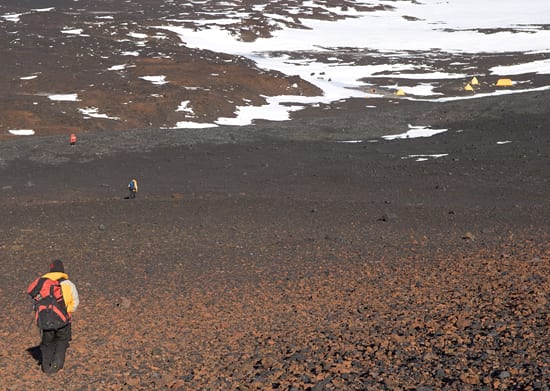
One reason geologists love Antarctica: the ice-free areas are frozen in time. There are no rainstorms, roots, worms, or gophers to disturb the landscape, and no leaves, grass, or wildflowers…
Read MoreAzure pools of summer
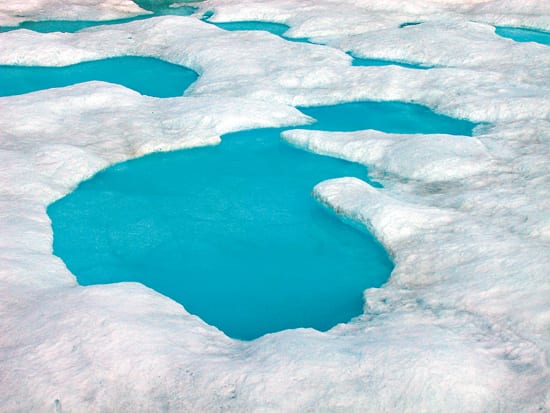
The Arctic, a crucial part of Earth’s ocean and atmospheric systems, is experiencing rapid warming, and WHOI scientists are studying the region and its interactions with the global ocean and…
Read MoreFlying under ice
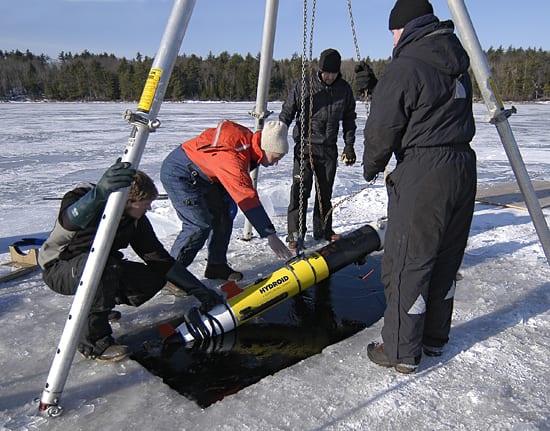
A team from the Oceanographic Systems Lab at Woods Hole Oceanographic Institution (WHOI) test a REMUS (Remote Environmental Monitoring UnitS) 100 vehicle in a frozen pond in New Hampshire to…
Read MoreWoman Pioneer
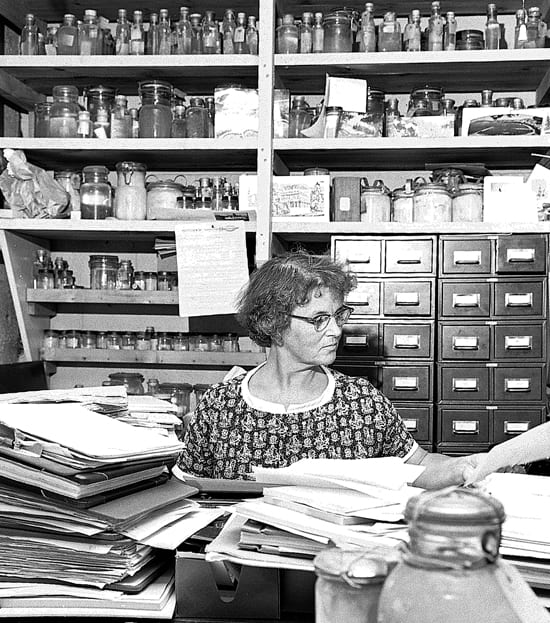
In this 1960 photo, Mary Sears is surrounded by papers and biological samples in her Bigelow Laboratory office. Sears was the first recipient of the original Woman Pioneer in Oceanography…
Read MoreHigh-profile job
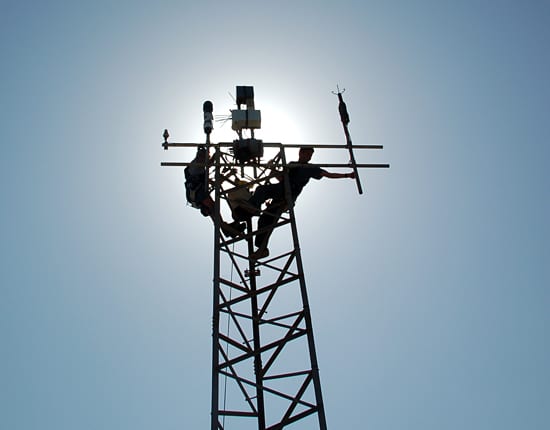
With the hot Saudi sun behind them during a 12-hour job, WHOI’s Paul Bouchard (left) and Tom Farrar replace instruments on a 10-meter-high meteorological tower on the campus of King…
Read MoreBones about it
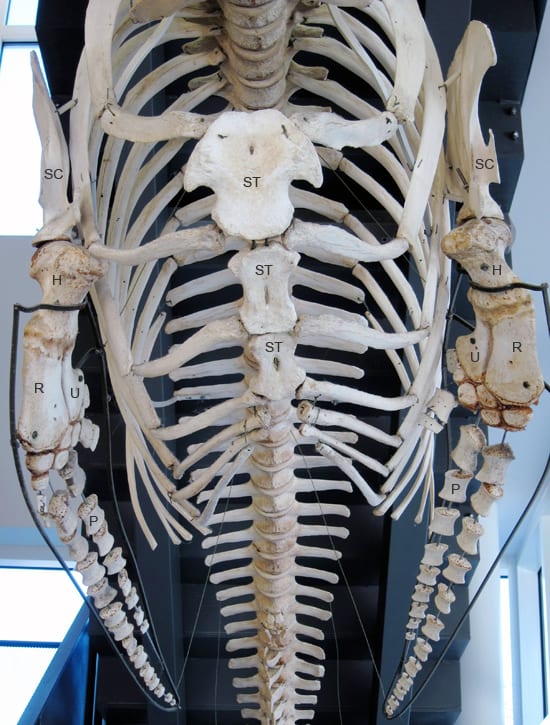
The skeleton of a pilot whale (Globicephala melaena) hangs in the lower-level foyer of the Marine Research Facility on the Quissett campus of Woods Hole Oceanographic Institution (WHOI). The whale…
Read MoreEaster Island
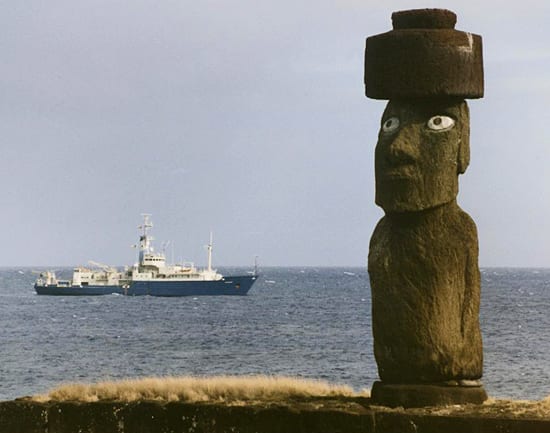
The research vessel Knorr shown anchored off the port of Hanga Roa, Rapa Nui (Easter Island) during an expedition in May 1992. R/V Knorr is probably best known as the…
Read MoreTest buoy deployed
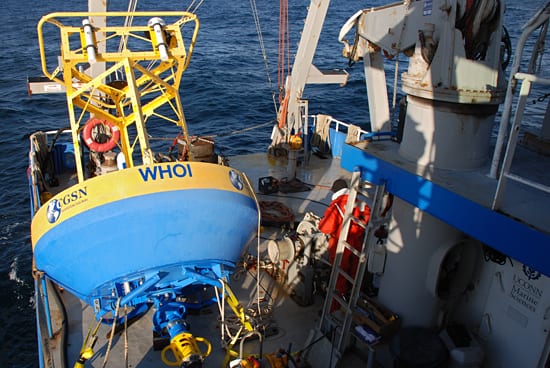
The Electro-Optical-Mechanical (EOM) test buoy for the Ocean Observatories Initiative (OOI), stowed on the fantail of the R/V Connecticut, was deployed in January on a mooring in 152 meters of…
Read More