
Multimedia
A High-Impact Career
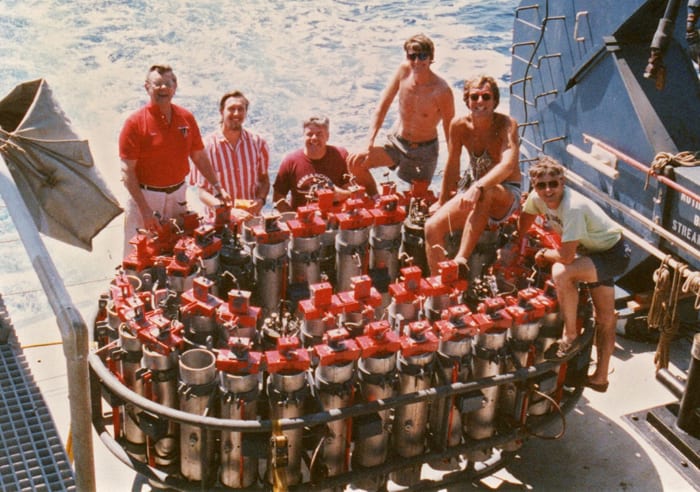
Don Koelsch (far left) and other WHOI engineers and seismologists with the Near Ocean Bottom Explosives Launcher (NOBEL) system on the fantail of R/V Atlantis II in 1991. Koelsch helped…
Read MoreMidnight camp
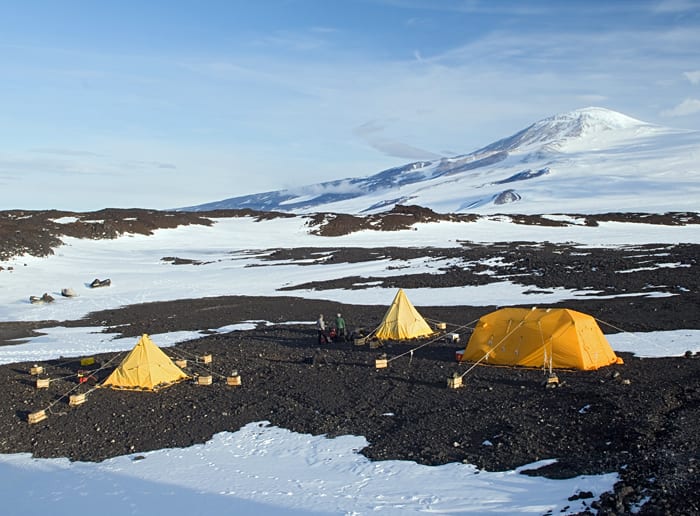
Sunny yellow tents on stark lava and snow mark a temporary home for a WHOI research team in Antarctica to study the weathering of ancient lava flows from a long-dormant…
Read MoreOceanus, the Early Days
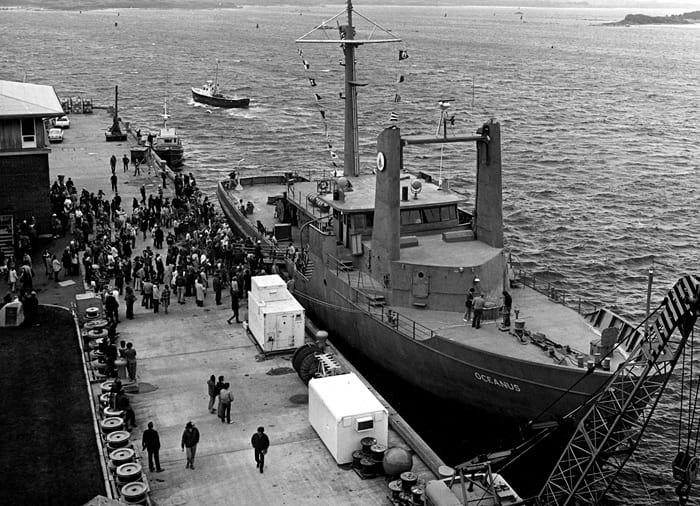
Brand new and not yet painted, R/V Oceanus arrived at WHOI on November 21, 1975 to cheers and celebration. Funded by the National Science Foundation, the 177-foot ship took its…
Read MoreAll Hands for the Thresher
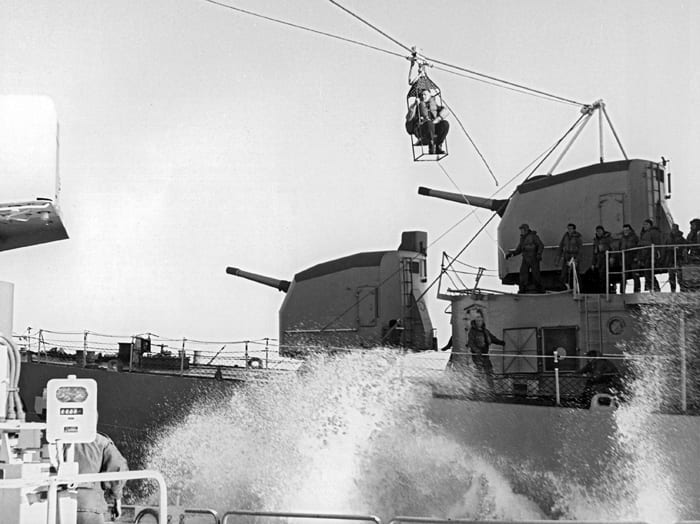
On April 10, 1963, the U.S. nuclear attack submarine USS Thresher was conducting deep-diving trials about 220 miles east of Cape Cod when communication with the sub was suddenly cut…
Read MoreLights, Camera, Action
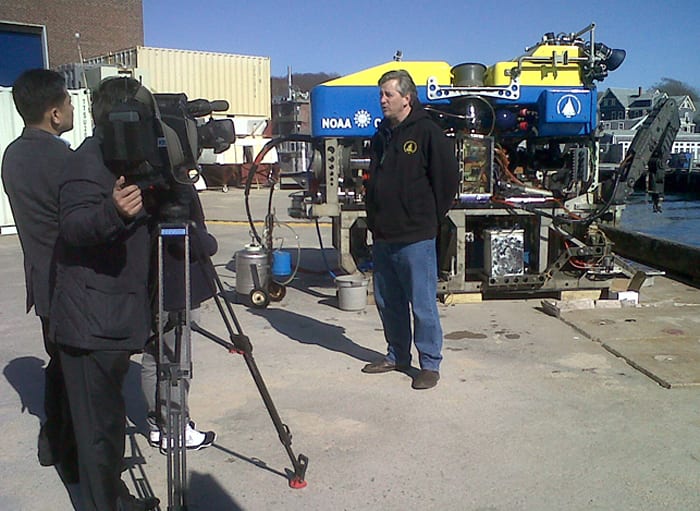
Tito Collasius, expedition leader with the remotely operated vehicle (ROV) Jason filmed an interview recently with a crew from the Korean Broadcasting System for a documentary about deep-sea exploration. Jason…
Read MoreAUVs Assist in Search
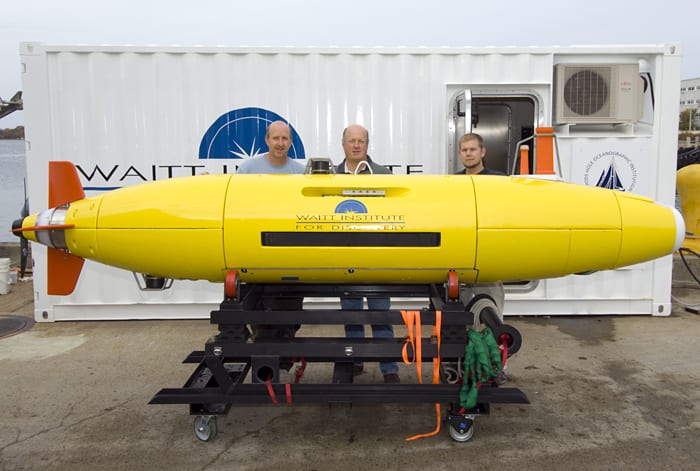
Members of the REMUS Operations Group Steve Murphy, Mark Dennett, and Robin Littlefield (left to right), pose with one of the REMUS 6000 autonomous underwater vehicles (AUVs) built in 2008…
Read MoreWhen Colleagues Came Calling
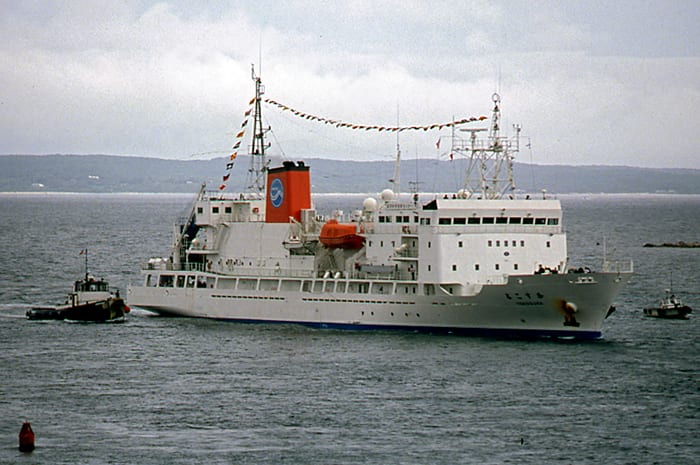
Bedecked with pennants, the 105-meter R/V Yokosuka carrying the Shinkai 6500 submersible, operated by the Japan Agency for Marine-Earth Science and Technology (JAMSTEC), visited WHOI in 1994 after a joint…
Read MoreA Sight to Behold
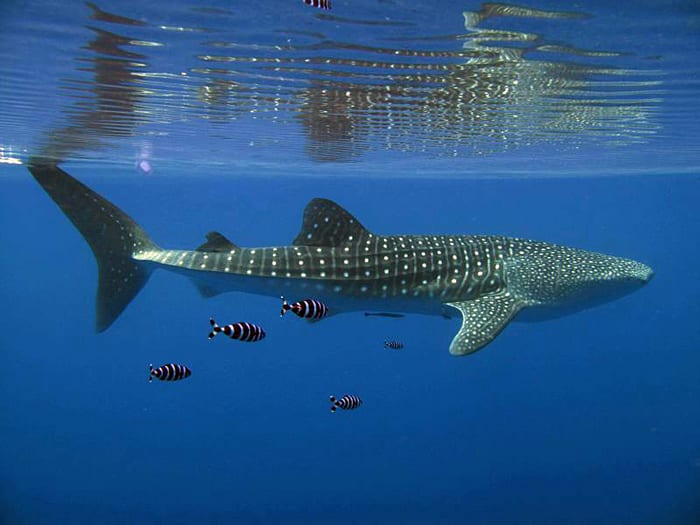
WHOI Senior scientist and Director of the Ocean Life Institute Simon Thorrold is tagging whale sharks in the Red Sea with the support of King Abdullah University of Science and…
Read MoreMaking the Best of a Hostile Environment
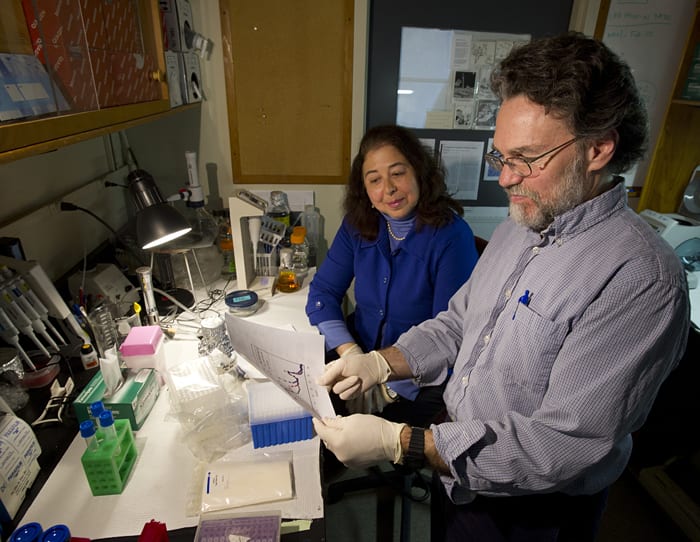
WHOI’s Diana Franks and Mark Hahn, shown working in the lab, joined colleagues from New York University and NOAA to report that Atlantic tomcod living in New York’s Hudson River…
Read MoreSearch for Air France Flight 447
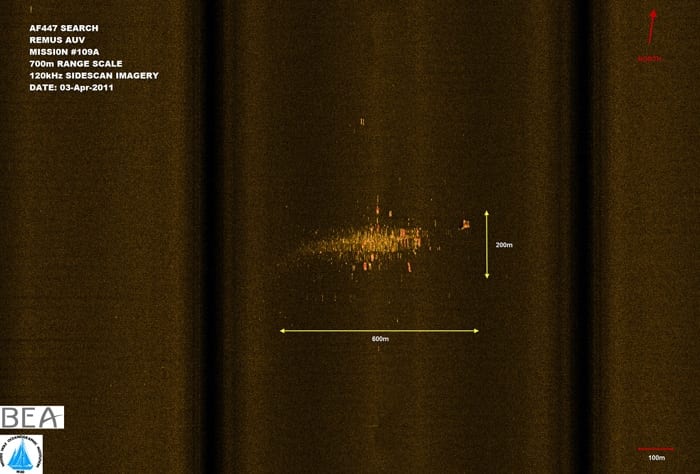
A Good Old Buoy
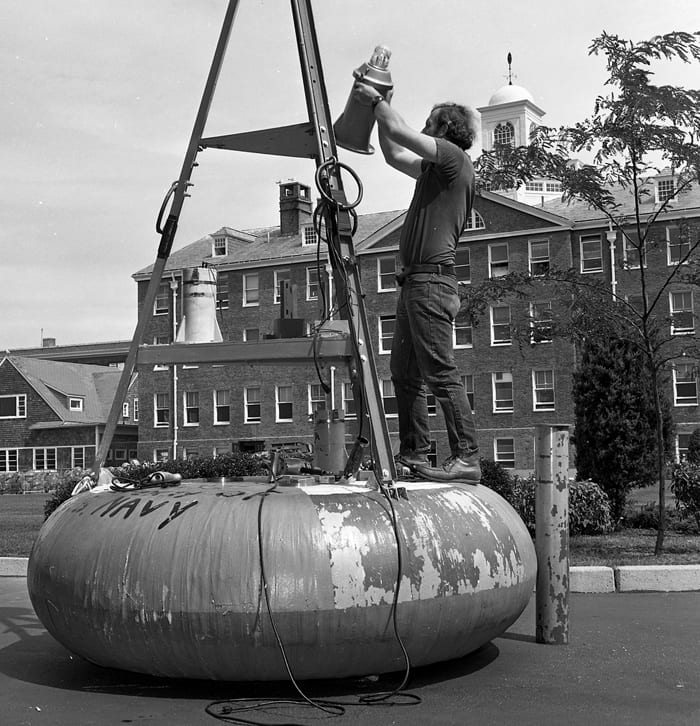
A member of the WHOI Buoy Group mounts a flashing light on a toroid, or donut-shaped, buoy prior to its deployment in the mid-1960s. The buoy was used to suspend…
Read MoreOil and Water
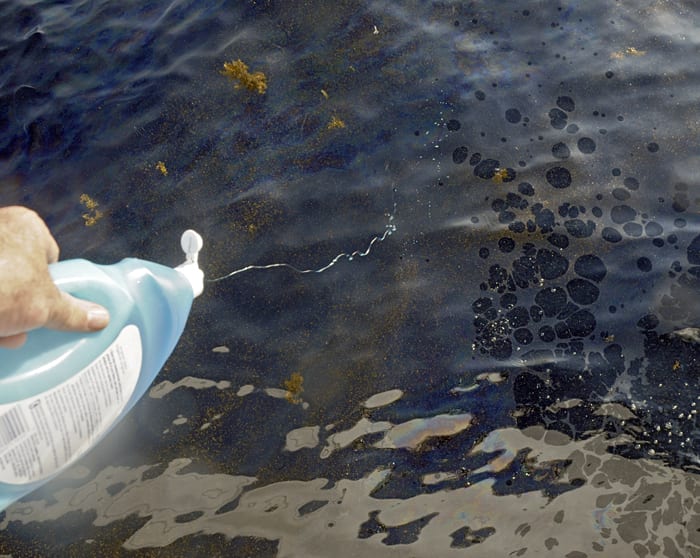
After an oil spill, oil in the water can interfere with instruments scientists use to study the spill and its aftermath. WHOI scientists working in the Gulf of Mexico after…
Read MoreOn-Call in the Gulf
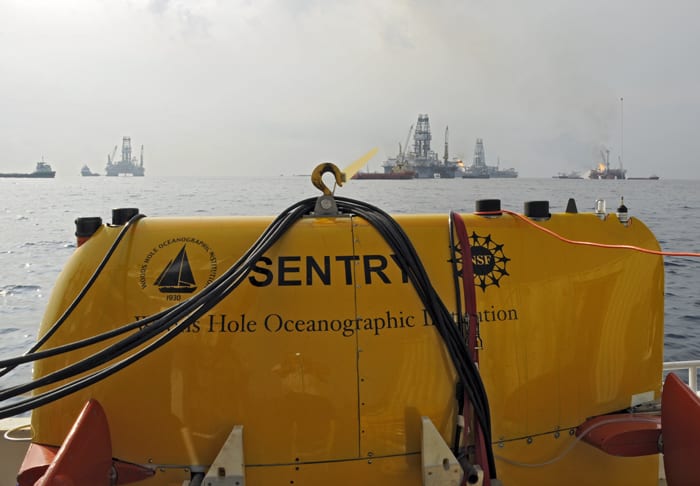
In June 2010 WHOI investigators aboard the R/V Endeavor used the autonomous underwater vehicle (AUV) Sentry to map a large, underwater hydrocarbon plume in the Gulf of Mexico arising from…
Read More(Re)-Examining Lipids
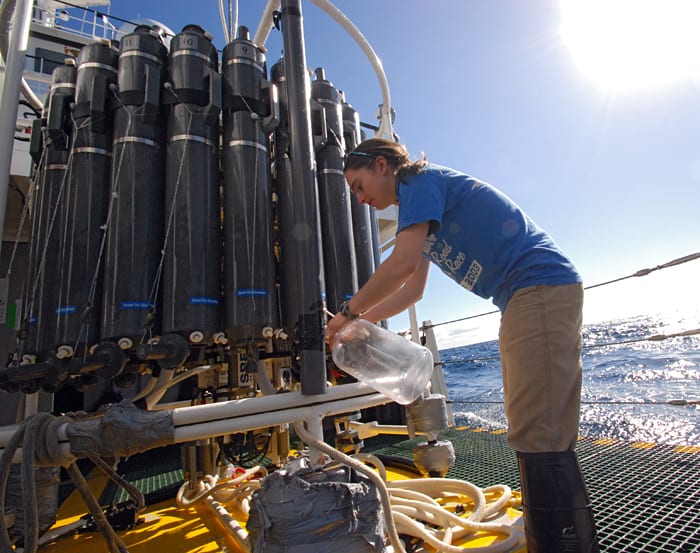
WHOI’s Laura Sofen assists with water sampling during a recent cruise to the North Atlantic led by Associate Scientist Benjamin Van Mooy. The cruise focused on examining the role of…
Read MoreOn the Surface
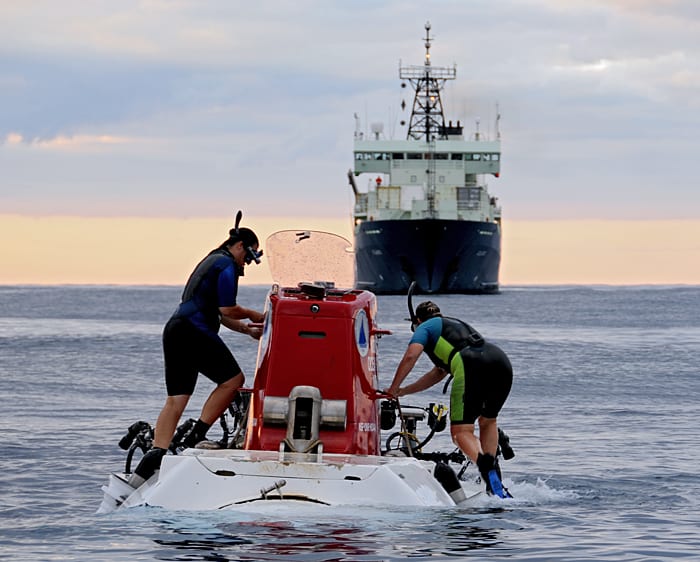
With R/V Atlantis in the background, third mate Kami Bucholz (left) and Shipboard Scientific Services Group (SSSG) technician Allison Heater act as recovery swimmers for Alvin on the surface of…
Read MoreTaking a Bite Out of Lines
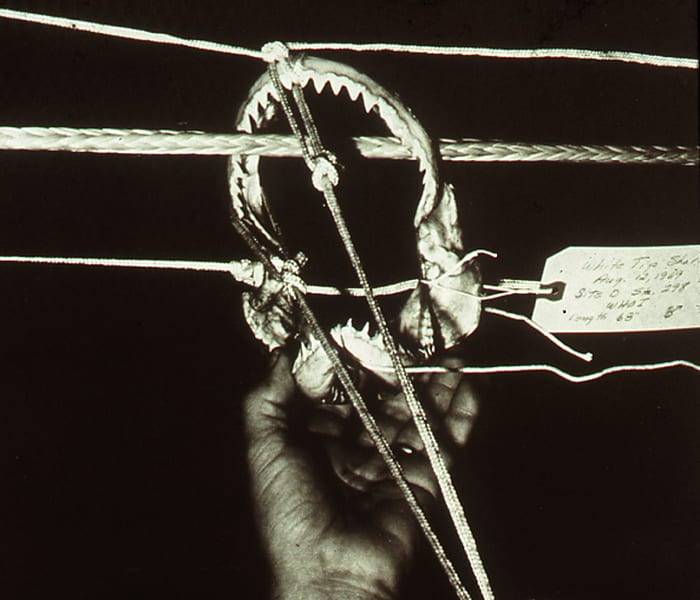
Deep-sea moorings face many hazards, including waves, storms, saltwater, vandalism—and hungry fish. Suspecting that fish were biting through their mooring lines, in the late 1960s the WHOI Buoy Group began…
Read MoreA Thorny Problem
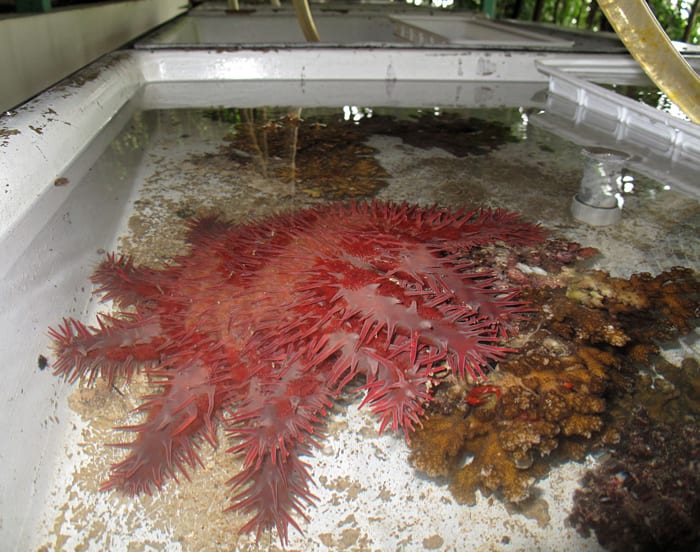
Acanthaster (the crown-of-thorns starfish) preys on coral polyps and, when numerous, can damage coral reefs. WHOI biologist Ann Tarrant collected this specimen at the Liquid Jungle Lab (LJL) in Panama…
Read MoreMedusa at Sea
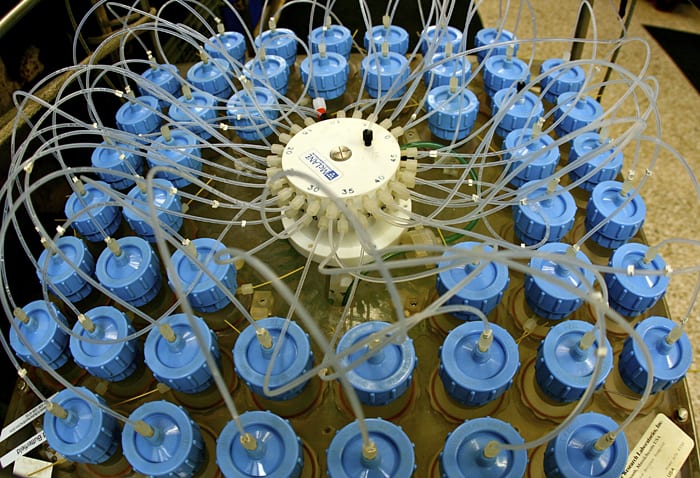
The Medusa-like head of a programmable water sampler is prepared for deployment. The sampler, which is made by McLane Research Laboratories of East Falmouth, Mass., can collect up to 48…
Read MoreGreenland’s disappearing lakes
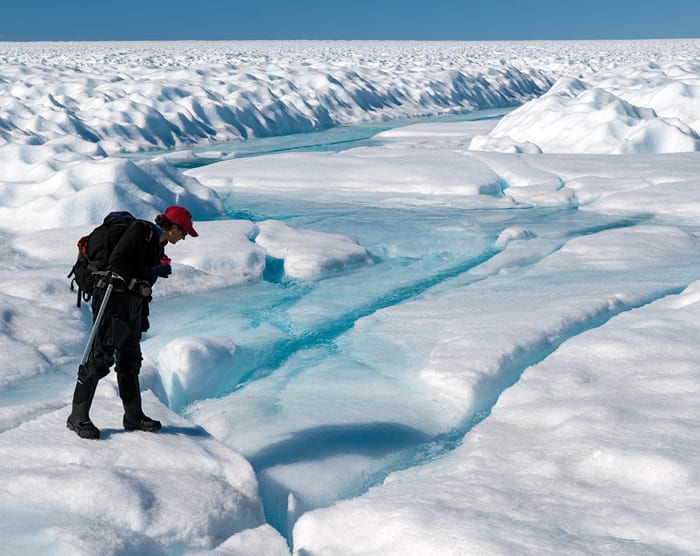
Associate Scientist Sarah Das studies the relationship between ice sheets and global climate, and that often means long walks on frozen expanses. When lakes on the surface of the Greenland ice…
Read MoreNight Launch for Sentry
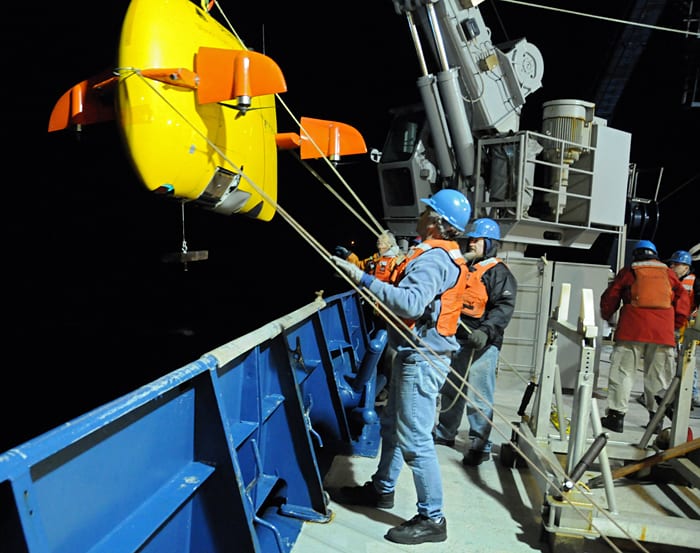
In December 2010, the autonomous underwater vehicle (AUV) Sentry, was in the Gulf of Mexico helping investigate possible impacts from the Deepwater Horizon oil spill. The cruise marked the first…
Read MoreSimple, yet complex
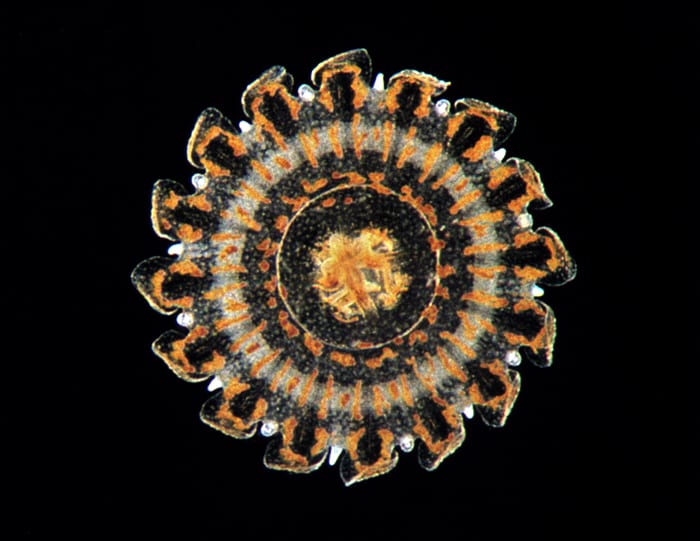
Probably the most familiar jellies are jellyfish, such as the Nausithoe punctata (above). Jellyfish are predators that use tentacles studded with stinging cells to catch and kill their prey, usually…
Read MoreJason Central
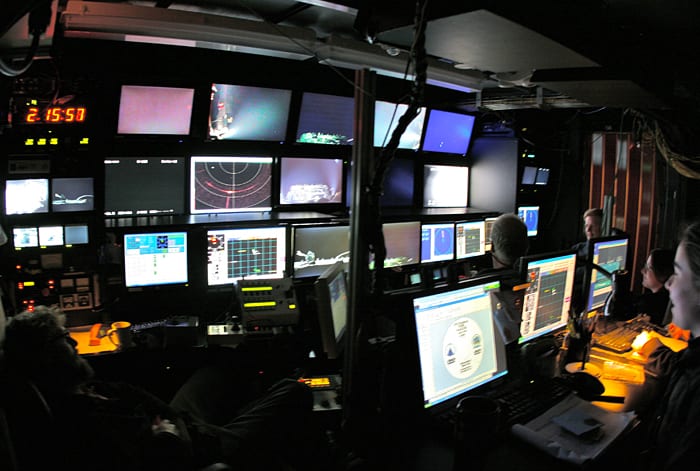
Pilots and scientists controlling the remotely operated vehicle (ROV) Jason work from a darkened control room to monitor Jason’s instruments and video feed. The Jason control room is made up…
Read MoreA Long Look Back
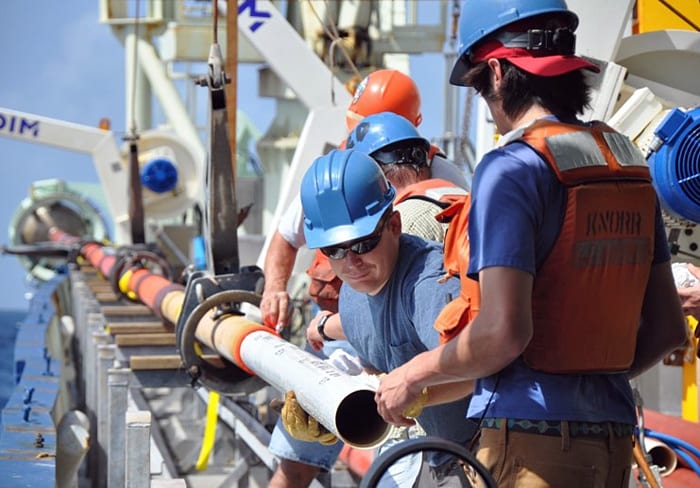
Tom Lanagan of WHOI (right) and Paul Walsczak of Oregon State University (facing camera) insert a section of pipe into the barrel of the Long Core during a research cruise…
Read MoreA Piece of the Past
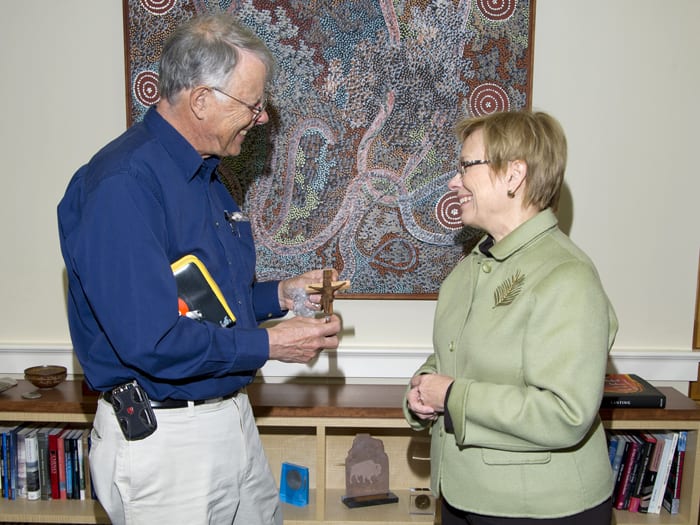
In January, WHOI Scientist Emeritus Sandy Williams presented the Institution’s President and Director Susan Avery with a small, wooden crucifix, given to him by an Argentinean naval architect. The architect…
Read More